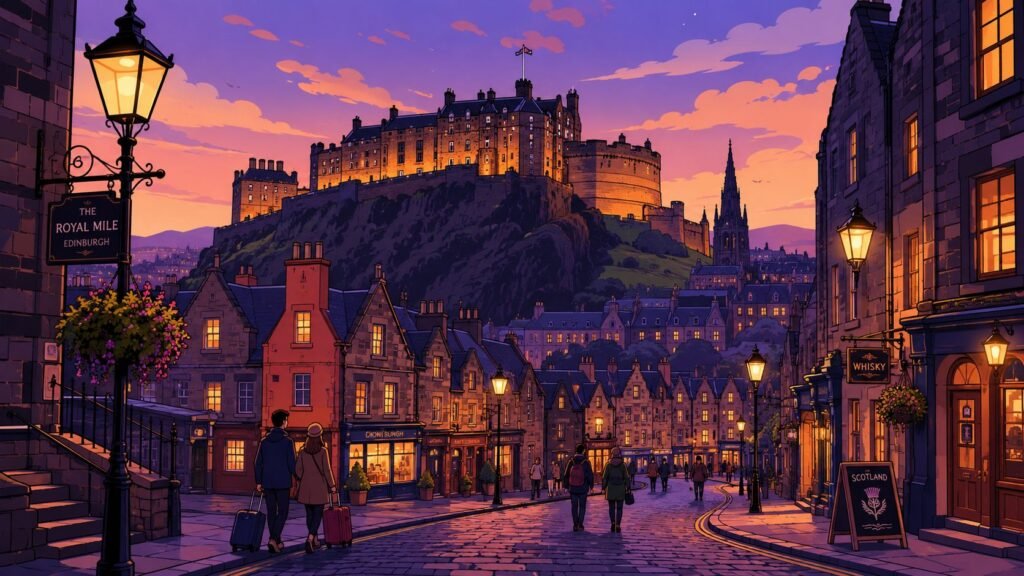
You've got a long weekend pencilled in, a car that gives you freedom beyond the city, and a growing list of Edinburgh “must-sees” that somehow ignores the time spent parking, climbing hills and queueing. The answer isn't to rush harder. It's to use the city as a compact base, walk the historic centre intelligently, then spend one carefully chosen half-day on the coast, in the Pentlands or at Rosslyn Chapel.
An Edinburgh city break rewards that balance. The Old Town supplies medieval drama, the New Town brings Georgian order, and the surrounding countryside lets you turn a city visit into a small Scottish road trip. This is the practical version, with honest trade-offs, sensible timings and neighbourhood advice for couples, families and solo travellers.
Why Edinburgh Works So Well for a Short City Break
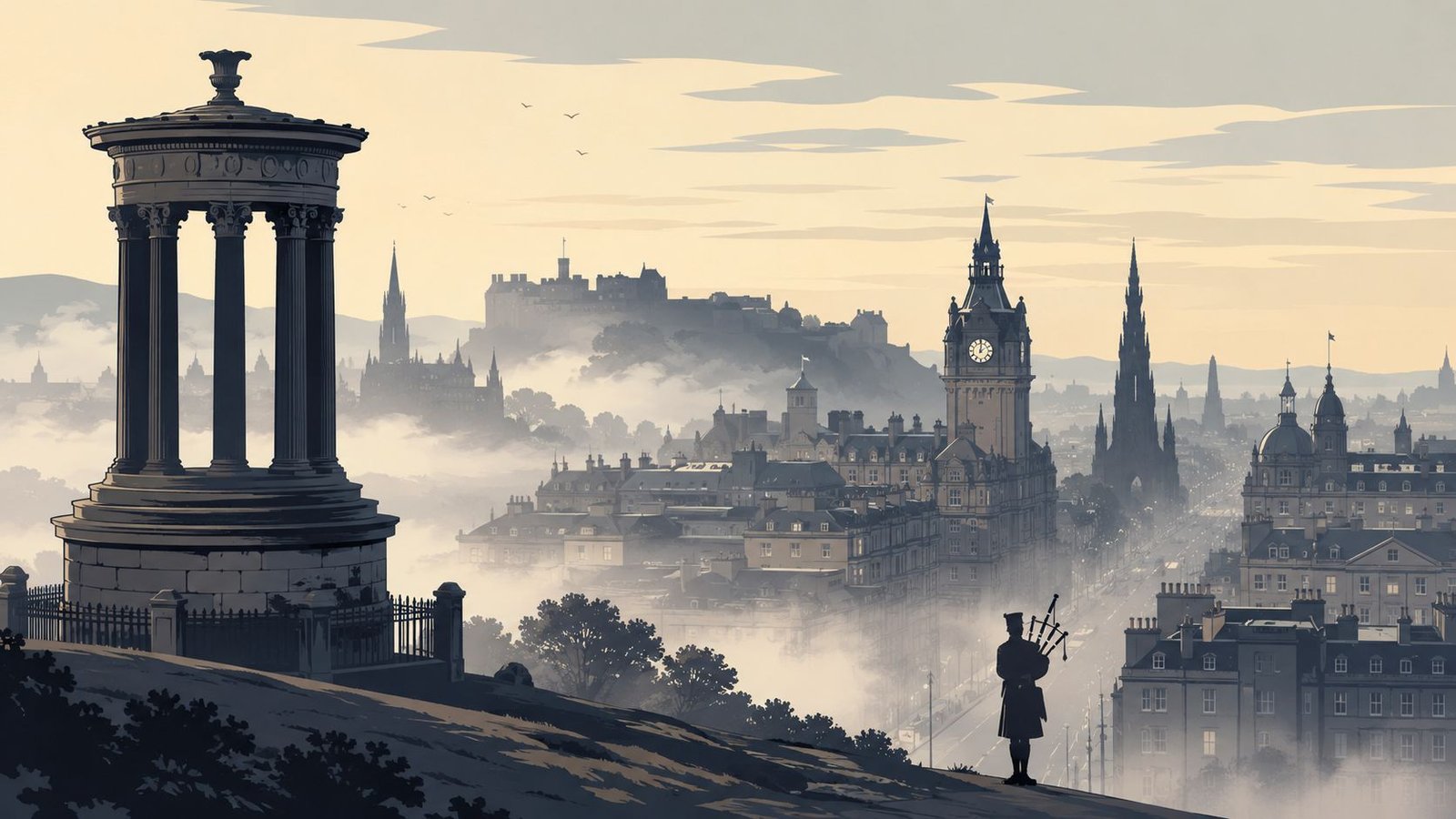
Morning mist lifts from Calton Hill as a single bagpipe drifts up from Princes Street. Below, the city unfolds in layers, from medieval closes and the castle rock to Georgian crescents, green parks and the changing waterfront beyond. Few British cities pack such different experiences into such a walkable centre.
Edinburgh's main advantage is density. You can move from the Old Town to the New Town in a short walk, cross Princes Street Gardens, pause for coffee, then climb towards the castle without spending your day on public transport. The Old and New Towns together form a UNESCO World Heritage Site, with the New Town developed between 1767 and 1890 as a group of seven new towns on the plain north of the medieval core (UNESCO's description of the site).
The city also works because you can leave it without abandoning it. A self-drive base gives you flexibility for the coast, Rosslyn Chapel or the Pentlands, all within a manageable drive, while the airport-to-centre connection is refreshingly straightforward. Keep the car parked for the central sightseeing days, then use it when distance and scenery matter.
That flexibility suits the way people now visit Edinburgh. The city recorded 5.05 million overnight tourism visits and £2.565 billion in overnight tourism spend in 2024, while the wider Edinburgh and the Lothians area reached 5.41 million overnight visits and £2.659 billion in spend (VisitScotland regional research). It's a substantial, high-demand destination, not a sleepy stopover.
My practical rule: use two days for Edinburgh itself, then add a scenic drive only when you've already seen the landmarks that brought you here.
Summer brings packed streets, festival energy and expensive rooms. Winter offers atmospheric cobbles, quieter museums and a city that feels more lived-in, although rain and short daylight can alter outdoor plans. The rest of this guide is designed around those realities, with timings, bases and budgets rather than another generic checklist.
For a broader road-trip perspective before you set off, compare Edinburgh's compact centre with the slower rhythm of a Bath city break.
Must-See Edinburgh Attractions and How Long to Spend
The mistake most visitors make is treating every attraction as a quick photo stop. Edinburgh's hills, queues and interiors add up, so give each anchor the time it deserves and keep your car out of the centre while you explore.
Build the historic core around timed visits
Start at Edinburgh Castle, allowing two and a half to three hours for the ramparts, Crown Square, the museums and the One O'Clock Gun. Buy a timed ticket online. Adult admission is £23.50 online or £26.00 at walk-up, with other concession, child, flexi and family prices available on the official ticket page, where prices are also subject to change (Edinburgh Castle tickets).
The castle has no on-site visitor parking. Use Castle Terrace NCP or another central car park, then walk uphill. That approach is less stressful than trying to edge through the Old Town looking for a space.
Allow 90 minutes for the Royal Mile and St Giles' Cathedral. Walk downhill from the castle, look into the closes rather than staying on the main pavement, and enter St Giles' if it's open. Cathedral entry is free, although donations are welcome.
Palace of Holyroodhouse needs about one and a half hours. Check its opening pattern before you commit, as it's closed on Tuesdays. If the weather is good, combine it with Holyrood Park rather than crossing the city again.
Add one museum and one view
The National Museum of Scotland deserves two to three hours, particularly for families. It's free, broad enough to absorb mixed interests and a useful refuge when rain makes Arthur's Seat a poor choice.
Arthur's Seat takes around two hours return, depending on your route and pace. Don't attempt it in heavy rain or smooth-soled shoes. Calton Hill is the better low-effort alternative, needing around 45 minutes for sunrise or sunset views.
Princes Street Gardens and the Scott Monument make a neat 30-minute pause between Old and New Town sightseeing. On a car-free day, use Princes Street trams for longer hops, but walk whenever the route passes through the historic centre.
| Attraction | Time Needed | Adult Entry | Nearest Parking |
|---|---|---|---|
| Edinburgh Castle | 2.5 to 3 hours | £23.50 online, £26 walk-up | Castle Terrace NCP |
| Royal Mile and St Giles' Cathedral | 90 minutes | Cathedral entry free | Castle Terrace or Greenside |
| Palace of Holyroodhouse | 1.5 hours | Check official pricing | Metered bays near Holyrood |
| Arthur's Seat | 2 hours return | Free | Holyrood area, subject to restrictions |
| National Museum of Scotland | 2 to 3 hours | Free | NCP or city-centre car parks |
| Calton Hill | 45 minutes | Free | Central car parks, then walk |
| Princes Street Gardens and Scott Monument | 30 minutes | Check monument access | St James Quarter or central car parks |
Best Edinburgh Neighbourhoods and Where to Stay
Choose your base around the kind of morning you want, not the attraction you've circled first. Edinburgh's centre is compact enough that a quiet neighbourhood can still leave you within easy reach of the castle.
Six bases, six different moods
Old Town is the obvious choice for first-time visitors who want the Royal Mile outside the door. Couples get maximum atmosphere, solo travellers get easy access to tours and pubs, and families benefit from short distances between headline sights. The trade-off is noise, steep streets and limited parking, especially during festival periods.
New Town is my strongest all-round recommendation. Georgian streets, better mid-range accommodation and calmer evenings make it especially good for couples and solo travellers, while families appreciate the broader pavements and straightforward routes towards Princes Street, Stockbridge and the museum quarter.
Stockbridge feels like a village with excellent cafés, independent shops and food-led pubs. It's my couples' pick for a relaxed break, and it suits solo travellers who'd rather spend an afternoon walking the Water of Leith than queuing for another attraction. Families can enjoy it too, but the uphill return to the centre may test younger legs.
Leith brings waterfront dining, a creative atmosphere and often cheaper rooms. Couples who prioritise restaurants over castle views will enjoy it, as will solo travellers looking for lively evenings. Families should choose accommodation close to a tram or bus route, rather than assuming all of Leith is equally convenient.
Bruntsfield and Southside are the practical family choices. You'll find cafés, residential streets and self-catering flats, with easier access towards the A702 and the southern edge of the city. Couples wanting a local feel may prefer them to the Old Town, while solo travellers get a calmer base with easy café culture.
Edinburgh South works best when the car matters as much as the city. It's less atmospheric and less walkable to the main sights, but it makes a sensible launch point for a scenic drive towards the Pentlands or Rosslyn Chapel.
| Neighbourhood | Best For | Price (3 nights) | Parking Reality |
|---|---|---|---|
| Old Town | First-time visitors and sightseeing-focused couples | Mid-range to premium | Limited, usually paid off-site |
| New Town | Couples, solo travellers and first visits | Budget to premium | Better choice of nearby car parks |
| Stockbridge | Couples and food-focused stays | Mid-range to premium | Street spaces are limited |
| Leith | Restaurants, nightlife and value | Budget to mid-range | Easier in some areas, check property details |
| Bruntsfield and Southside | Families and self-catering | Budget to mid-range | More realistic than the historic core |
| Edinburgh South | Drivers adding scenic excursions | Budget to mid-range | Often simpler, but farther from sights |
For a three-night shoulder-season stay, expect broad variation from budget rooms to premium hotels, and check parking before booking rather than assuming it's included. Most central hotels don't include it. Set aside £15 to £25 per night for secure facilities such as NCP or Q-Park, and treat that as part of the room cost.
Day-by-Day Edinburgh Itineraries for Every Traveller
A good itinerary respects energy. Edinburgh's map looks compact, but the slopes change the effort required, so group nearby sights and use public transport when it prevents an unnecessary climb.
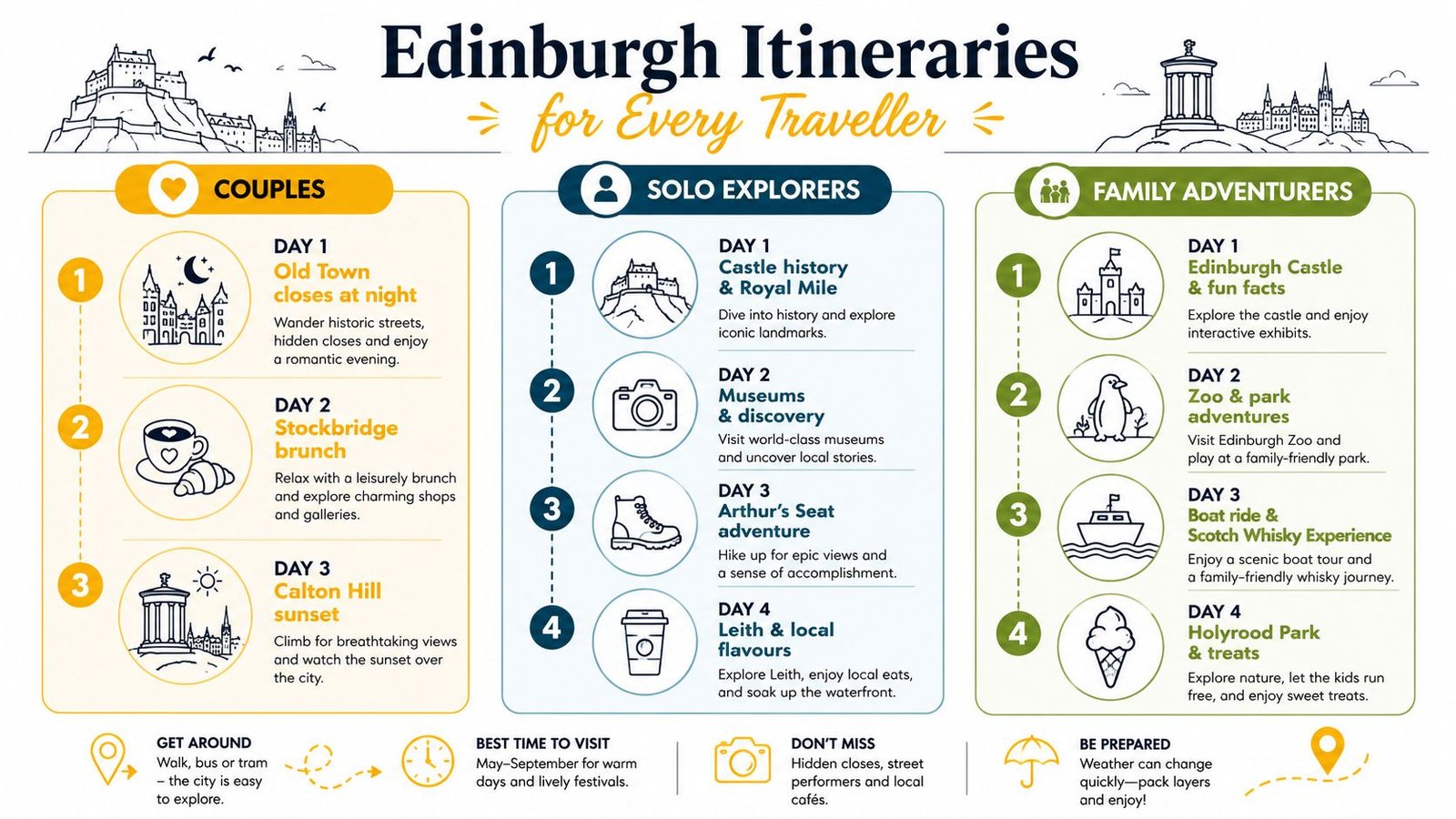
Couples who want atmosphere, not a race
Day one, Old Town and closes
- Morning: Start at Edinburgh Castle, allowing three hours.
- Afternoon: Walk the Royal Mile downhill, pause at St Giles' Cathedral and explore two or three closes. Allow around 90 minutes for this section.
- Evening: Eat in the Old Town, then take a slow, atmospheric walk through the closes after the day crowds thin.
Day two, New Town and Stockbridge
- Morning: Walk Princes Street Gardens and the New Town, then continue towards Stockbridge. The central route takes around 20 minutes before the neighbourhood wander.
- Afternoon: Have brunch or a long lunch in Stockbridge, then follow part of the Water of Leith.
- Evening: Return towards Calton Hill for a 45-minute sunset visit, then make Leith your dinner destination.
Day three, views and a flexible drive
- Morning: Choose Arthur's Seat if the weather is dry and you're comfortable with uneven ground. Otherwise, visit the National Museum.
- Afternoon: Drive to the coast or Rosslyn Chapel, keeping the excursion focused rather than trying to add several distant stops.
- Evening: Return the car to its secure parking and finish with a quiet New Town bar.
Families who need variety and shorter transfers
Day one, castle and hands-on museums
- Morning: Book the castle early, before tired legs and crowds become a problem.
- Afternoon: Walk downhill only as far as the Museum of Childhood, then use a short bus or taxi hop instead of forcing everyone up and down the Royal Mile.
- Evening: Choose an early meal near your accommodation.
Day two, Dynamic Earth and Holyrood
- Morning: Visit Dynamic Earth, then keep lunch nearby.
- Afternoon: Explore the Palace of Holyroodhouse or Holyrood Park, depending on weather and attention spans.
- Evening: Use a short ride back to base rather than adding another major walk.
Day three or four, museum and coast
Use the National Museum of Scotland for a rain-friendly morning. With an extra day, drive towards the coast, stopping for views rather than building a complicated attraction chain.
Solo travellers who prefer easy conversation
Day one: Base yourself in the New Town, start with a café, then visit the National Museum for two to three hours. Walk towards Dean Village in the afternoon, allowing time to photograph the Water of Leith. Spend the evening in a traditional pub where sitting at the bar makes conversation natural.
Day two: Explore the castle and Old Town at your own pace. Join a walking tour if you want context and company, then choose live music around the Grassmarket or New Town.
Day three: Take a tram or bus to Leith for a waterfront lunch and an unhurried wander. If the weather holds, return to Calton Hill for sunset.
For a route that combines all three travel styles in visual form, use this Edinburgh itinerary video.
Getting to Edinburgh and Getting Around the City
Self-drive travellers should treat the car as an escape hatch, not a sightseeing vehicle. Park once, walk the Old and New Towns, and bring the car back into play for the coast, the Pentlands or a wider Scottish route.
From Edinburgh Airport, the tram is usually the cleanest city-centre option, particularly if your accommodation sits near Princes Street or the New Town. A taxi wins when you have heavy luggage, children or a hotel away from the tram line. Trains are useful from Glasgow or Newcastle, especially when you're staying centrally and don't need the car until later.
Within the centre, walking beats every other option for the castle, Royal Mile, museum and New Town. The hills are the catch. Lothian buses help when you're crossing town, taxis and Uber make sense for tired children or luggage, and trams earn their keep on airport and longer north-eastern journeys.
Edinburgh Trams lists adult fares from £2.20 in the City Zone and £7.90 for the airport-and-city zone (official Edinburgh Trams fares). Contactless-enabled cards and devices can pay for adult single fares, while the tap-on/tap-off system applies the standard adult single fare to City Zone journeys (Edinburgh Trams contactless information).
| Option | Best For | Typical Cost | Time to City Centre |
|---|---|---|---|
| Airport tram | Predictable airport-to-centre travel | From £7.90 for airport and city zone | Direct, traffic-free journey |
| Airport taxi | Luggage, families and door-to-door arrivals | Variable | Traffic-dependent |
| Train from Glasgow or Newcastle | Central arrivals without parking | Variable | Direct rail journey to the centre |
| Walking | Old Town, New Town and nearby sights | Free | Often fastest for short central hops |
| Lothian bus | Cross-city journeys and neighbourhoods | Variable | Traffic-dependent |
| Taxi or Uber | Hills, children, luggage and late returns | Variable | Usually direct |
| Ingliston park-and-ride | Festival overflow and airport-side access | Variable | Tram connection onwards |
| Sheriffhall park-and-ride | Drivers approaching from the south | Variable | Bus connection onwards |
| NCP Charlotte Square or Q-Park Omni | Central stays needing secure parking | Paid parking | Walk onward |
Check restricted streets, resident permit areas and the city's low-emission rules before driving into the centre. The A720 City Bypass can be useful, but it's easy to choose the wrong branch when following a sat-nav in a hurry. Keep a printed or saved plan for your first arrival, and use these UK road-trip driving tips before setting off.
Best Time to Visit Edinburgh and Festival Calendar
Edinburgh's calendar changes the feel of the city more than the weather does. Late June through late August brings the Fringe, Tattoo, International Festival and Book Festival on top of normal summer demand. Prime accommodation and restaurant slots should be secured by January if you're travelling during the busiest festival weeks.
Late April to mid-May and September are the smart shoulder choices. Daylight is generous, museums are easier to enjoy and restaurants are less punishing to book. School holidays still create pressure, so check dates before assuming a shoulder month will be quiet.
Winter has its own appeal. Christmas markets and Hogmanay create a festive city, while February and early November can feel noticeably calmer. Expect shorter days and Atlantic rain, and build indoor alternatives into every outdoor plan.
The table below uses qualitative crowd and weather guidance. Precise average temperatures vary by source and location, so I'd rather not pretend an exact figure will help you pack correctly.
| Month | Crowd Level | Avg Temp (°C) | Key Events | Book Ahead? |
|---|---|---|---|---|
| January | Low to moderate | Cool | Winter city atmosphere | For popular restaurants |
| February | Often quieter | Cool | Museums, cafés and walks between showers | Usually not, except weekends |
| March | Moderate | Cool to mild | Early spring sightseeing | For headline attractions |
| April | Moderate | Mild | Shoulder-season city breaks | Useful for weekends |
| May | Moderate | Mild | Longer days and gardens | Restaurants for weekends |
| June | Rising | Mild to warm | Early summer events | Yes for popular stays |
| July | High | Mild to warm | Summer events and outdoor performances | Yes |
| August | Very high | Mild | Fringe, Tattoo, International Festival and Book Festival | Absolutely |
| September | Moderate | Mild | Strong shoulder-season choice | Restaurants and special events |
| October | Moderate | Cool | Autumn walks and museums | For weekends |
| November | Often quieter | Cool | Indoor culture and early festive atmosphere | Usually not |
| December | Rising around festivities | Cold | Christmas markets and Hogmanay period | Yes for festive dates |
Choose the festival premium only if the performances are your reason for visiting. Otherwise, September or early November gives you more room to appreciate the city's architecture without fighting every pavement.
Where to Eat, Drink and Spend Your Evenings
Edinburgh's food scene makes more sense when you eat where you're staying rather than crossing town for every meal. Stockbridge suits a slow brunch, the Old Town delivers tradition and Leith is the strongest choice for a destination dinner.
Stockbridge is made for mornings. Try Urban Angel for brunch or Peter's Yard for a pastry and coffee before walking beside the Water of Leith. If hotel coffee matters to your routine, this practical coffee in hotels guide is useful when comparing accommodation rather than treating breakfast as an afterthought.
In the Old Town, order haggis, neeps and tatties when you want the classic plate. The Witchery offers a grand setting, while The Scran and Scallie takes a more modern gastro-pub approach. Whisky-tasting rooms around the Royal Mile are convenient, but book popular evening slots.
Leith's Shore is where I'd send food-focused couples. Timberyard, Heron and Fhior represent different versions of ambitious Scottish cooking, and the waterfront setting gives dinner a sense of occasion without needing another landmark.
| Area | Signature Food/Drink | Best For | Book Ahead? |
|---|---|---|---|
| Stockbridge | Brunch, pastries and independent cafés | Slow mornings and couples | Popular brunches can fill |
| Old Town | Haggis, whisky and historic dining rooms | First visits and traditional meals | Yes for headline restaurants |
| Leith | Waterfront dinners and contemporary Scottish food | Food-focused evenings | Yes for Timberyard, Heron and Fhior |
| Grassmarket | Pubs, live music and casual meals | Social nights and solo travellers | Usually walk-in options exist |
| New Town | Cocktail bars, restaurants and traditional pubs | Mixed-age evenings | Weekend restaurants often need planning |
For classic pub culture, try the Sheep Heid Inn, the Bow Bar or Sandy Bell's. Grassmarket venues and New Town bars are better for live music and a livelier night, while the Old Town gives you whisky rooms within easy walking distance of the castle.
Low-energy evenings needn't mean a disappointing trip. Watch the sunset from Calton Hill, see a film at the Dominion or catch summer theatre during the Fringe. Families can eat early, return to a comfortable base and still experience the city's night-time atmosphere without dragging tired children across cobbles.
Planning Checklist for a Smooth Self-Drive Break
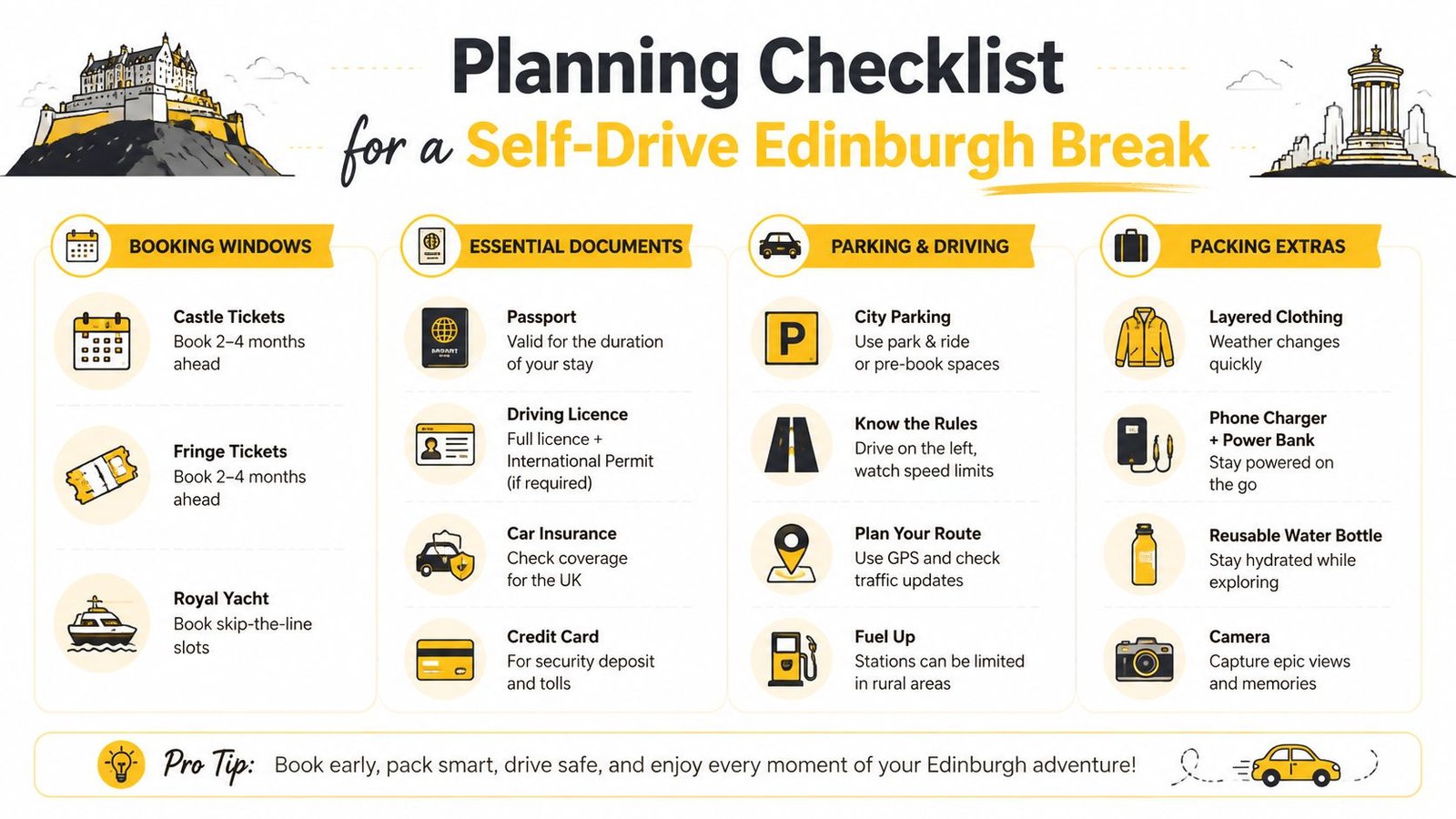
The easiest Edinburgh arrival is organised before the first motorway sign. Book the attractions that control your day, choose parking before you reach the centre and keep the car parked once you're within walking distance of the historic sights.
Book the fixed points first
- Castle tickets: Reserve timed entry online around two to four months ahead for busy travel periods.
- Fringe tickets: Book headline shows around two to four months ahead, then leave space for spontaneous performances.
- Royal Yacht Britannia: Secure skip-the-line slots if the yacht is central to your plan.
- Weekend restaurants: Book four to six weeks ahead, especially for Leith dining rooms and festival dates.
- Accommodation: Lock in festival-period rooms as early as possible, particularly if you need parking.
Check Edinburgh's city-centre low-emission-zone rules before driving in, and investigate any petrol or diesel surcharges attached to your accommodation or car-hire agreement. Motorhomes should avoid assuming the Royal Mile or Old Town will accommodate them. Restrictions, narrow streets and limited stopping space make a secure base outside the core a better option.
Q-Park OMNI, NCP Castle Terrace and St James Quarter are practical central choices. Ingliston park-and-ride can help during festival overflow, while arriving outside rush hour reduces the chance of losing your first afternoon to congestion. Save the route in advance, especially if the A720 City Bypass forms part of your approach.
Accessibility needs advance checking. Edinburgh Castle has a step-free lift route available on request, the New Town generally offers level pavements, and the Royal Mile's cobbles can be hard work for wheelchairs, prams and tired feet. Contact attractions before arrival rather than relying on a last-minute workaround.
Pack layered waterproofs, sturdy shoes, a compact umbrella and a torch for late walks back to your accommodation. A simple pre-trip cost check can also help you avoid surprise costs while travelling, from parking and attraction tickets to meals and last-minute transport.
Before choosing a vehicle for the wider route, compare car rental options across Europe. A smaller car is usually easier in Edinburgh's tight streets, while luggage space matters if the city break is part of a longer Scottish journey.
BTOURS offers curated Edinburgh city breaks that combine the medieval Old Town, Georgian New Town and flexible self-drive time beyond the centre. Visit BTOURS to explore a paced itinerary with selected accommodation and practical support for building Edinburgh into a wider Scotland road trip.