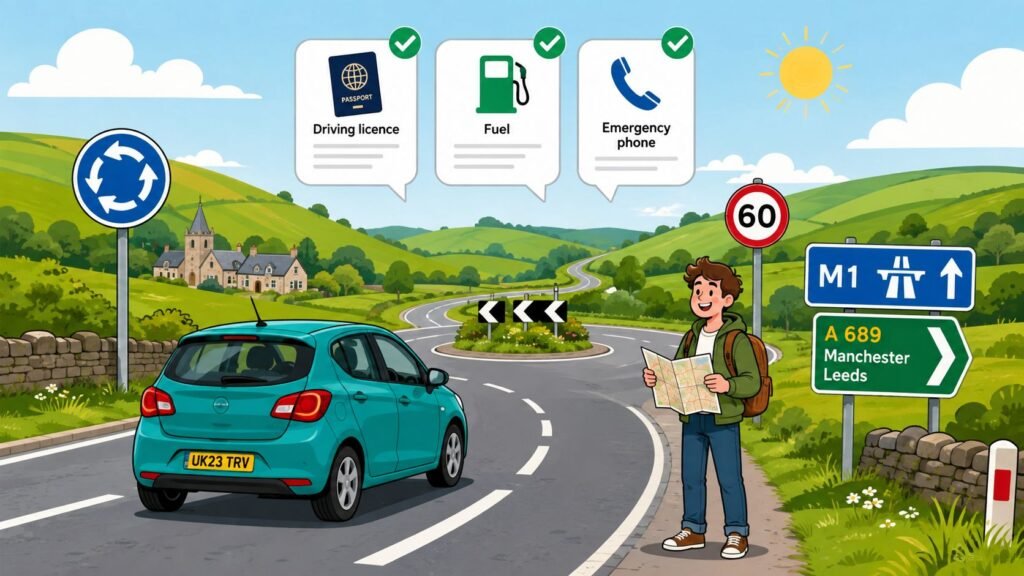

You've just landed, the queue's moving too slowly, and the desk agent is sliding a thick rental agreement towards you while your credit card sits in your hand. The car is almost ready, but the critical decision is happening now, not out in the car park. Car rental insurance explained means understanding what's already included, what still leaves you exposed, and what you're agreeing to pay if something goes wrong before you drive away.
Most travellers don't need a legal lecture at the counter. They need a calm way to judge the offer in front of them, compare it with cover they already have, and decide whether the extra fee is buying genuine peace of mind or just shrinking a risk they could already live with.
What Car Rental Insurance Really Means for Travellers
The counter moment that matters
At the rental desk, the decision is usually one of three. You accept the rental company's package and its bundled protection, decline the extras and rely on cover you already have, or buy a separate excess reimbursement policy that sits alongside the hire agreement. That choice looks small, but it sets your financial exposure before you turn the key.
The confusion starts because rental insurance is not one product. It is a bundle of protections, each tied to a different kind of loss, with its own wording, exclusions, and excess. GOV.UK warns renters to check exactly what is included before signing, because the headline daily price may not cover all damage-related costs and you remain liable for exclusions, optional extras, and excess charges, which is why the fine print matters so much GOV.UK consumer guidance on hiring a car.
Practical rule: never ask only, “Am I insured?” Ask, “What do I still pay if the car is scratched, stolen, or written off?”
The real question is liability, not just cover
In the UK, rental cars typically already include third-party liability insurance and a basic Collision Damage Waiver or similar protection, but that standard cover usually comes with a large excess. Independent UK guidance says basic CDW excesses are commonly around £1,000 to £2,000, and some policies reimburse up to £7,500 to £10,000 per trip or claim, which shows how wide the gap can be between the hire desk's included cover and your real out-of-pocket exposure.
That gap is where travellers get caught out. A short road trip can still end with a large bill if the agreement excludes the exact type of damage involved, or if the claim triggers the excess before any reimbursement cover kicks in. Treat the desk conversation as a budgeting decision, not a formality. The amount blocked on your card, and the amount you may later have to absorb, are often the parts that hurt most.
Core Cover Types Explained in Plain Language
CDW, LDW, and what they do
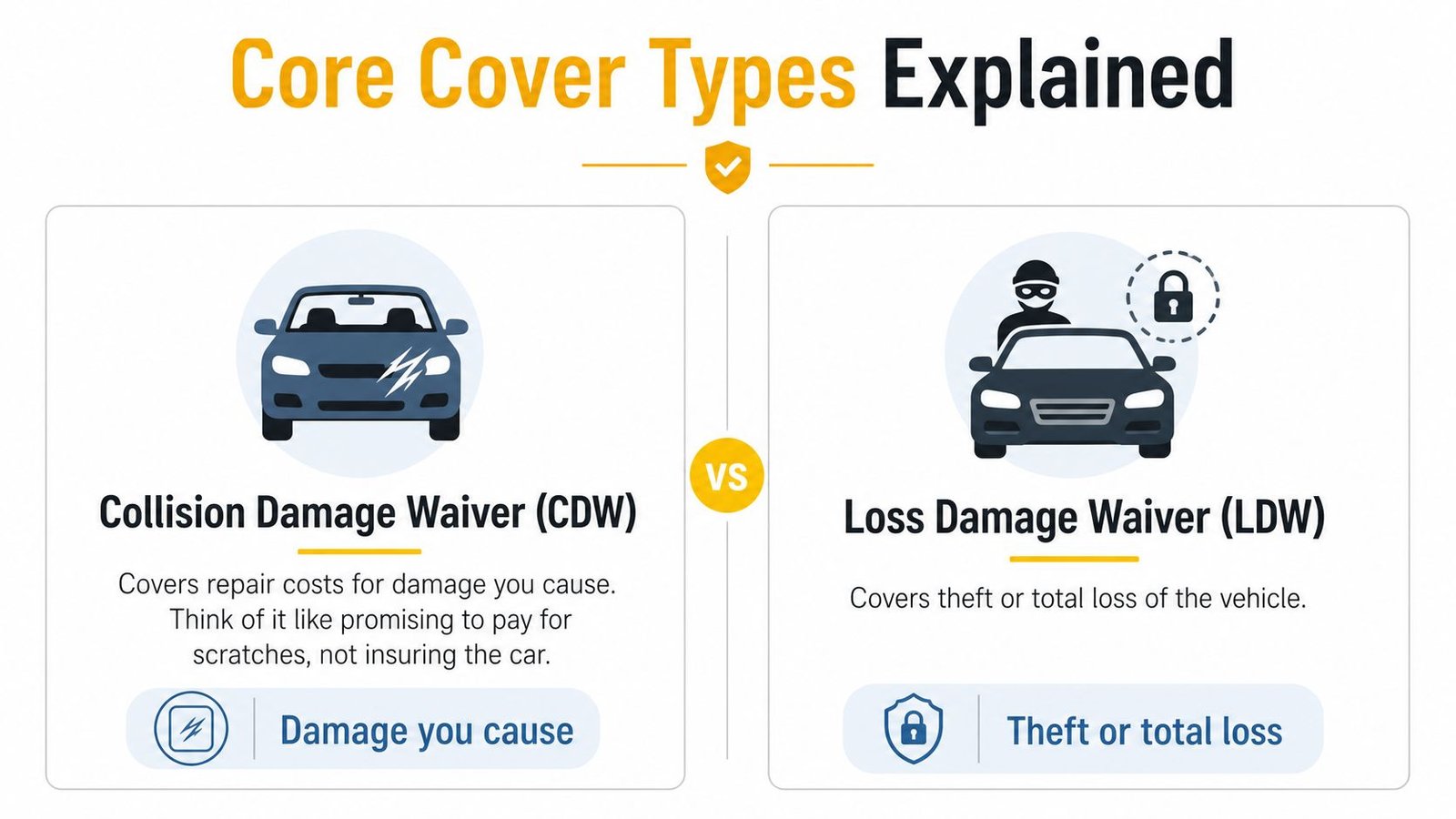
Collision Damage Waiver is the part many drivers hear about at the rental desk when they ask for “insurance”. In practice, it is the rental company's agreement on how it will handle certain damage to the hire car itself, while your own excess can still remain on the hook. Which? notes that the excess on a rental can be between £200 and £2,500, even when CDW is included, so the amount you may need to cover yourself can still be significant Which car hire insurance advice.
Loss Damage Waiver works on the same basic idea, but the wording is broader. It usually extends to theft or total loss, rather than only accidental damage, so it matters if the car disappears or is damaged beyond repair. CDW covers damage to the hire car, while LDW extends that protection to theft and write-off events.
What else sits in the package
Third-party liability is the cover that responds if you damage someone else's vehicle, property, or person. Rental companies usually have to meet local legal minimums, so this layer is commonly built in. It protects the other party's losses, not yours, and many travellers assume the desk package solves more than it really does.
Super CDW or a zero-excess upgrade is an optional add-on. It does not change the underlying claim, but it can reduce what you owe to nothing or close to it. Personal Accident Insurance and Personal Effects Cover work differently again, because they deal with the people in the car rather than the vehicle. Hertz's UK waiver information shows fixed-sum benefits of £42,000 per insured person under one option and £126,000 per insured person under another, which shows that some add-ons pay a set amount instead of covering every loss in full Hertz UK insurance waiver options.
Read the rental agreement, not the sales pitch at the counter. Tyres, windscreens, roof, underbody, and interior damage are common exclusions, so the verbal summary can sound safer than the contract is.
For readers comparing options before travel, it can help to compare rental car insurance options alongside the cover you already carry, because the gaps are often easier to spot when the layers are side by side.
Understanding the Excess and Why It Matters
The excess is money, not a technicality
The excess is the amount you still have to pay yourself after a claim before the rental company's cover starts to bite. That makes it a real budgeting and liquidity issue, not a footnote. If the car is damaged or stolen, the hire firm can still hold you responsible for that amount even when you did nothing reckless, because the contract is built that way.
Recent UK-oriented guidance puts typical excess amounts around £500 to £2,000, with some categories reaching £2,500, and some explainers note standard liabilities that can sit much higher on larger vehicles. The practical point is simple. The number isn't abstract when you're at the desk. It's the amount that may be tied to your card, or the amount that might come off it later if the worst happens Which car hire insurance advice, UK excess guidance, Cover4Rentals UK explanation.
What that means for your card and your trip budget
A deposit or pre-authorisation usually sits alongside the excess figure. In practice, that can mean a chunk of your available credit is reserved before you leave the depot, then the same card is used again if damage occurs. For a self-drive holiday, that matters because you're not just paying for the hire, you're also keeping enough headroom available for hotels, fuel, meals, and the unexpected.
A two-week road trip becomes awkward when the card limit is tight. If a rental company blocks a large amount at pickup, you may have less room for ordinary travel spending even before any claim appears. That's why the desk conversation should include the exact excess figure, the deposit amount, and the release timing, not just the daily hire rate.
| Vehicle Category | UK Excess (GBP) | Greece Excess (EUR) | Risk Level |
|---|---|---|---|
| Standard car | Typical UK cover often sits in the lower to middle range | Varies by supplier and class | Moderate |
| Larger SUV | Higher than a standard car, often nearer the top of the range | Varies by supplier and class | Higher |
| Premium vehicle | Usually the highest exposure band | Varies by supplier and class | High |
Why excess reduction can be worth it
Rental companies often sell Super CDW or similar upgrades to cut the excess down or remove it. Third-party excess policies do something different, they reimburse the excess if a claim happens. That difference matters, because one product changes your upfront liability at the counter, while the other helps you recover money afterwards. For some travellers, the small daily fee buys a much lower worst-case exposure, which is a sensible trade if you'd rather protect your cash flow than gamble on nothing happening.
How Personal Auto and Credit Card Cover Interact with Rental Insurance
Three layers, three different jobs
Rental company cover, your own motor policy, and credit card benefits all sit in different places. The rental desk package protects the hire car under the contract. A personal auto policy may protect you at home, but it often doesn't carry over cleanly to a rental abroad, and some policies exclude rentals altogether. Credit card benefits can help with damage or theft, but they're usually secondary unless the card terms say otherwise.
NerdWallet's guidance notes that credit card rental cover is often secondary, that it usually requires you to pay with the eligible card and decline the rental company's collision coverage, and that the listed driver must be on the agreement NerdWallet on credit card rental car coverage. It also explains that credit-card cover generally focuses on collision damage waiver or loss damage waiver type losses, rather than liability or injury claims.
Where the gaps usually appear
The biggest blind spots are easy to miss. Card benefits usually don't pay for liability, injury, or other people's property, and they often exclude expensive or unusual vehicles. They also tend to leave out tyres, glass, roof, and underbody damage, which is exactly the sort of damage that can happen on narrow roads or in tight car parks. Some cards also exclude certain countries, with Ireland appearing in the list of excluded places for some major card networks in the background research.
A practical way to think about it is this. Your own motor policy may help first, your credit card may reimburse what your policy doesn't fully absorb, and an excess policy can sit on top as the cash-flow shield. If you're touring across borders, the line between “covered” and “not covered” can turn on a vehicle type, a country, or whether the rental is personal rather than commercial use.
| Coverage Source | What It Typically Covers | Common Gaps | Geographic Limits |
|---|---|---|---|
| Rental company package | Damage waiver for the hire car, plus mandatory local liability minimums | Excess, exclusions, tyres, glass, roof, underbody, interior | Set by the rental contract |
| Personal auto policy | Often liability and, in some cases, some vehicle damage terms | Rental-use exclusions, foreign-use limits, work use | Depends on policy wording |
| Credit card cover | Damage or theft reimbursement for eligible rentals | Liability, medical, personal items, some vehicle types, some fees | Can exclude certain countries and vehicle classes |
If you want a broader planning lens before you commit, BTOURS also publishes practical tour information that helps travellers compare cover needs against route plans and vehicle use, which can be a useful starting point when the trip crosses more than one country.
Country-Specific Notes for UK, Ireland and Greece
UK rentals
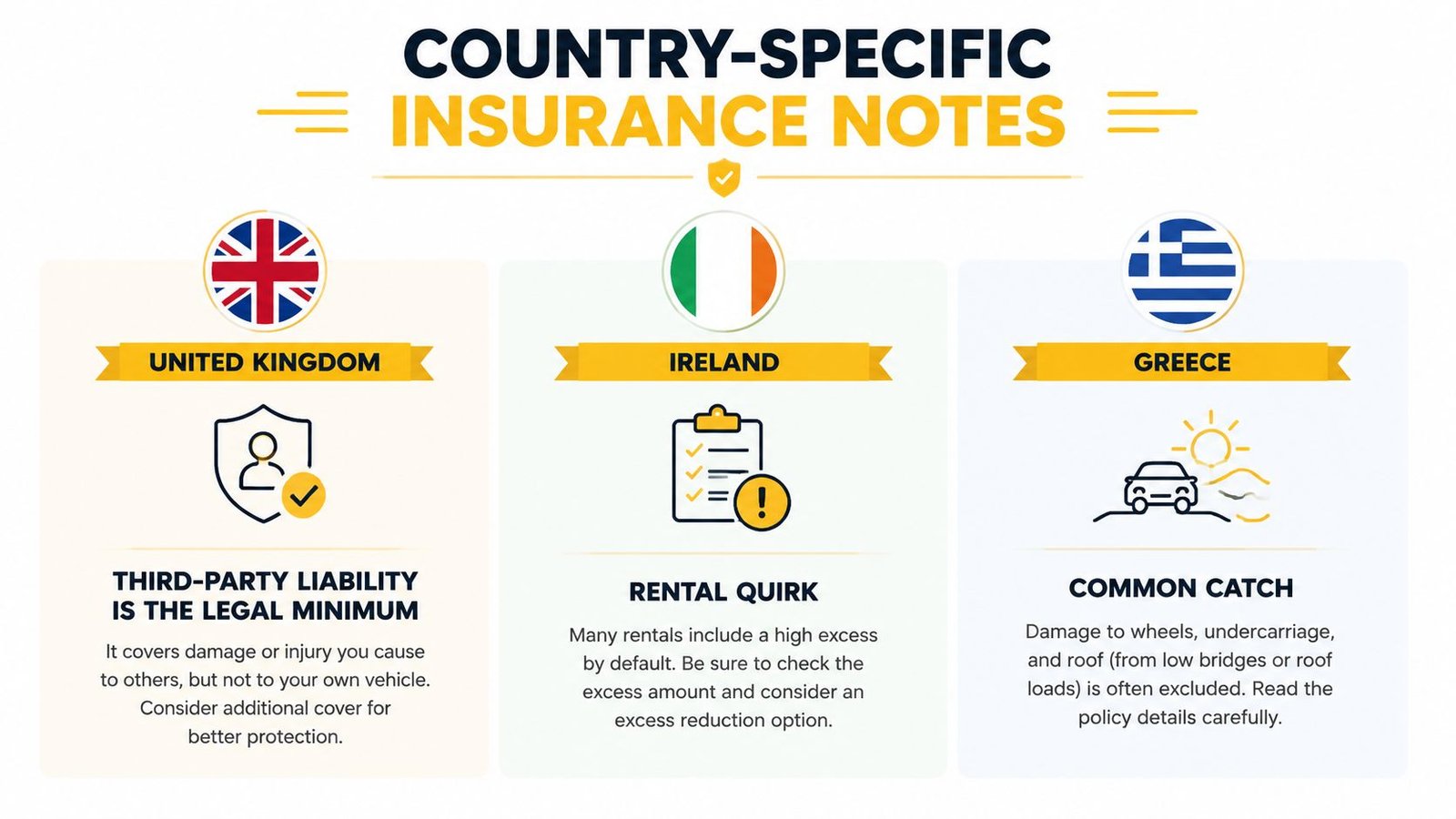
In the UK, the starting point is usually simple. Rental vehicles often include third-party liability, and the hire quote may also bundle a basic damage waiver. That still leaves the core question open at the counter, because cover on paper does not always match the damage you could genuinely face if something goes wrong.
Ask directly about excess, tyres, glass, and any other excluded damage in the written agreement before you sign. That question matters more than a vague “insurance included?” because the contract decides what you pay if the car comes back with a ding, a cracked windscreen, or a tyre problem.
Ireland and Greece
Ireland can feel familiar enough to lower your guard, especially on a short trip. The contract still needs a careful read, particularly if your licence is outside the EU. For some non-EU licences, an International Driving Permit may be needed, so check before you reach the desk instead of sorting it out in the car park.
Greece brings a different set of pressure points. The mandatory third-party minimum is only the starting line, and island driving can add gravel roads, rough shoulders, and ferry rules that travellers miss until they are already planning the route. If the agreement bans ferry transport or cross-border driving without written permission, breaking that term can leave you outside the cover you expected.
A short route can still be expensive to an insurer. Crete and the islands may look easy on the map, but road surface, distance from a main depot, and use outside approved areas matter more than the booking screen suggests.
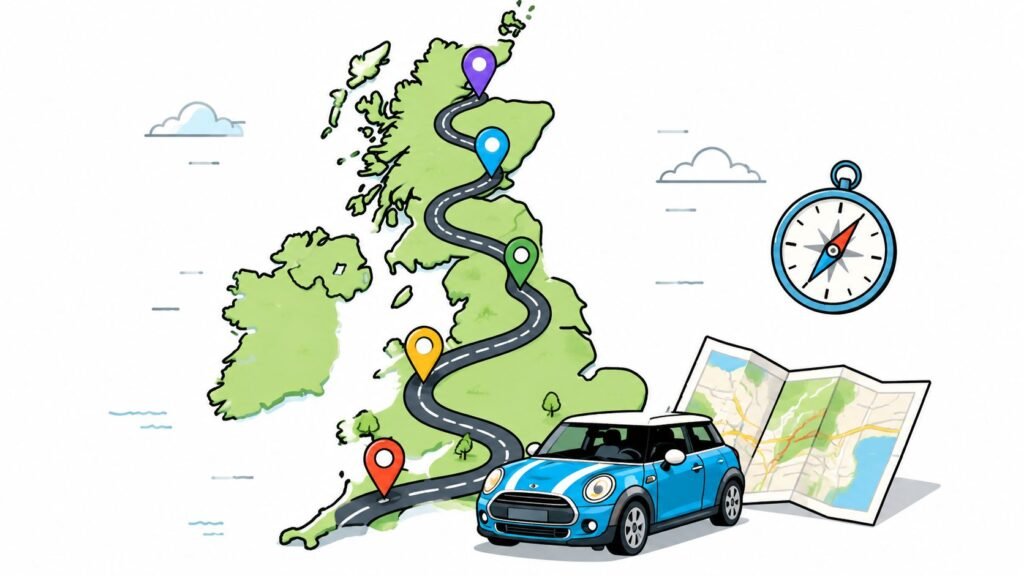
For a route-planning reference that fits these country notes, see this UK road trip guide image, especially if you are matching the car to the roads you expect to drive.
Verifying Your Cover at the Rental Desk
The walk-around is part of the insurance check
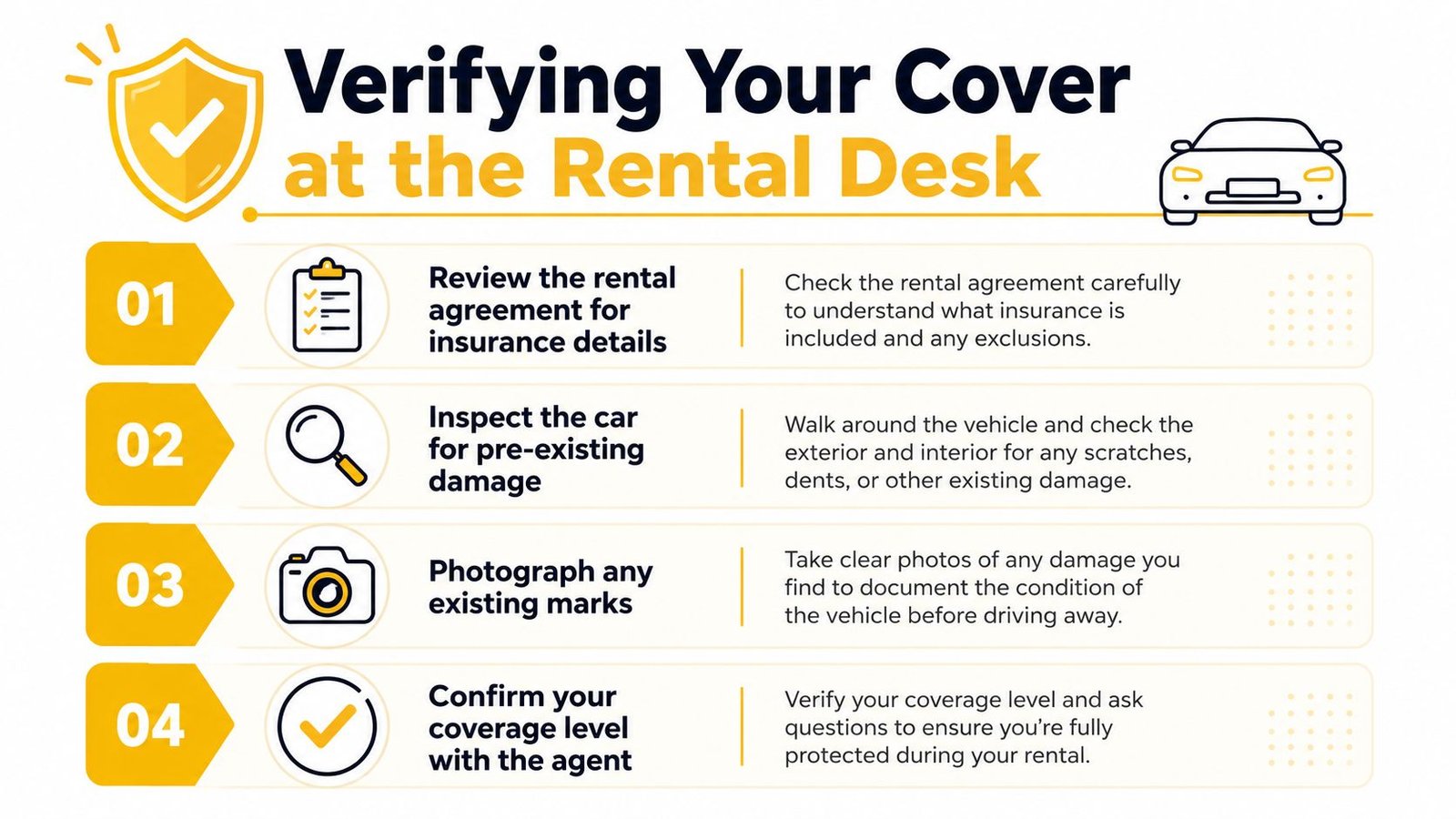
The calmest rental desk experiences start outside the car. Before you drive away, inspect the vehicle slowly and compare every existing mark with the condition diagram on the report. If a scratch or dent isn't already written down, ask for it to be added before you leave, because the claim process is much harder once you've driven off.
The desk agent may try to summarise the cover in a few quick lines. Don't rely on that. Ask them to show you the excess amount in pounds, the exact scope of the waiver, and any items that sit outside the standard package. The written agreement is what matters if the claim is challenged later.
A simple pickup checklist
- Review the insurance details first. Read the section that names the waiver, the excess, and any exclusions before you sign.
- Match damage to the form. If a mark is on the car but not on the report, point it out and get it recorded.
- Photograph everything. Take pictures of all sides, the roofline, wheels, mirrors, and any pre-existing damage.
- Confirm the driver list. Make sure every person who might drive is named on the rental agreement.
Don't treat the vehicle handover as a handoff of trust. Treat it as an evidence-gathering moment.
Once you've done the circle check, the rest becomes easier. You're no longer arguing from memory, you're working from timestamps, photos, and a signed report. If you want an extra planning reference before you reach the desk, BTOURS also points travellers to route-focused travel material, including this car-rental preparation image, which can help you think through the handover before you arrive.
Documentation and the Claims Process Step by Step
What to do the moment something happens
If damage occurs, stop safely first. Then take photos of the scene, the car, the other vehicle if there is one, and any relevant road signs or surface conditions. Exchange details with the other party, contact the rental company immediately, and complete the incident report before you leave the depot if at all possible.
The rental company's claim, a third-party claim, and any reimbursement claim through a card or standalone excess policy are not the same thing. Each one has its own paperwork and its own deadlines. A claim can stall if the rental agreement is missing, the report isn't signed, or the documents don't match the story you later tell the insurer.
Documents that usually matter
- Rental agreement. This shows the vehicle, the named driver, and the agreed cover.
- Damage report. This records the incident and the condition of the car.
- Police report. Needed in some situations, especially where theft, injury, or a hit-and-run is involved.
- Repair invoice or estimate. Used to support the amount being charged.
- Credit card statement. Often requested to prove the rental was paid with the eligible card.
If you need a deeper reference point on claim valuation and what can affect the numbers, the SnapClaim appraisal for rental DV is a useful place to understand how damage valuation arguments can unfold after a rental incident.
Practical advice: ask for English copies of any paperwork while you're still at the depot. That one request can save days of confusion later.
Language barriers are one of the biggest reasons renters lose time. If the desk can't provide English versions, photograph everything, keep the originals, and follow up while the details are fresh. When the bill feels inflated, challenge it in writing and keep the tone factual, because claims often move faster when the paperwork is complete and the timeline is clear.
Smart Tips to Reduce Excess and Frequently Asked Questions
The easiest way to lower the risk is to plan the layer cake
The smartest travellers don't try to eliminate every risk. They choose the parts they can live with and cut the parts that would hurt their budget. That usually means picking a vehicle with a lower excess band, paying with a credit card that offers the right kind of rental benefit, and buying standalone excess cover before departure if the trip is long, the roads are unfamiliar, or the card benefit is thin.
Redundant upgrades are the easiest thing to buy and the easiest thing to regret. If your card already offers solid coverage and your own policy fills the gaps, the desk add-on may just be a duplicate. If you want a trip-planning reference that keeps insurance in the context of route and vehicle choice, the UK road trip planner illustration is a handy visual reminder that cover decisions should match the journey, not just the booking screen.
For a broader consumer angle on protecting travel valuables and accessories alongside hire cover, Maxess Locks LTD insurance advice is a useful reminder that key-related losses can sit outside the standard car rental package.
Budgeting mindset: decide what you can afford to lose, what you'd rather reimburse later, and what must be removed from the equation before you leave the counter.
Quick FAQ for self-drive travellers
Does excess work the same on a multi-country itinerary? Usually not. Each country, vehicle category, and supplier can change the wording, so check the contract before you cross a border.
Do gravel roads or ferries void cover? They can if the agreement forbids them. If the route includes islands or rough roads, get the permission in writing.
What about a one-way rental? One-way returns can change the fees and the admin, so confirm that the cover still applies for the full trip.
Do named additional drivers matter? Yes. The wrong person behind the wheel can cause a claim to fail.
When are deposits and holds released? After the vehicle is checked in and any charges are reconciled, but the timing depends on the supplier and the card issuer.
If you're organising a road trip and want the logistics handled with less guesswork, BTOURS builds self-drive itineraries across the UK, Ireland, Greece, and beyond, with route planning and handpicked stays designed around the kind of travel that makes rental cover worth getting right. Visit BTOURS to start planning a trip where the car desk feels like a small detail, not the hardest decision of the day.