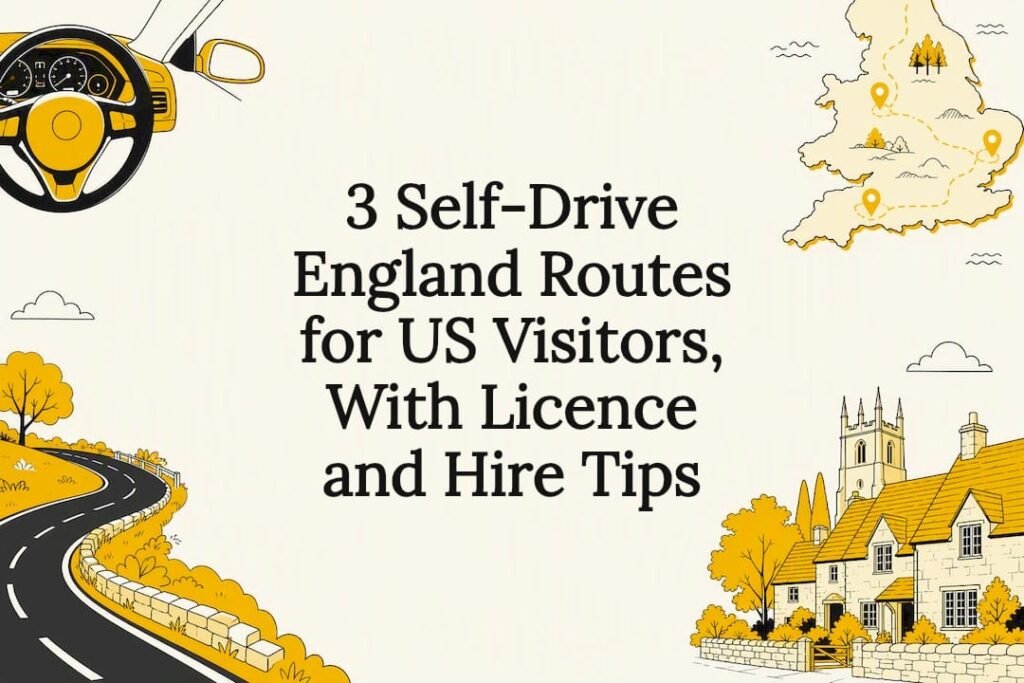
Self-driving in England works brilliantly for independent travellers who want their own pace without sacrificing structure. The main hurdles, driving on the left, narrow rural roads, and roundabouts, are all manageable with a little preparation. Your first move is simple: pick a trip length, three to four days, a week to ten days, or a full two-week loop, and let that decision shape everything else.
Sample self-drive itineraries for every trip length
The route you choose should match how much time you have and how much driving you actually want to do each day. Here’s how the three main trip lengths typically break down.
Short breaks (3–4 days) suit anyone easing into English roads for the first time. A popular loop runs London to the Cotswolds: pick up your car in central London, drive roughly 90 minutes to Bourton-on-the-Water, spend a day wandering Bibury and Chipping Campden, then loop back via Oxford. Total driving rarely exceeds a moderate distance across the whole trip.
Classic week (7–9 days) gives you room to properly explore without rushing. A well-tested route looks like this:
- London to Bath (2.5 hours) — Roman Baths, Georgian architecture
- Bath to Cardiff or Stonehenge day trip
- Bath to the Cotswolds — two nights based in one village
- Cotswolds to Stratford-upon-Avon — Shakespeare’s birthplace
- Stratford to the Lake District — Windermere, Beatrix Potter’s farm
- Lake District exploration day with short drives only
- Lake District back to London or fly out of Manchester
Extended trips (10–14 days) let you stretch into Yorkshire, the Peak District, or across the border into Scotland. A two-week loop might add York’s medieval streets and the North York Moors before heading north. A ferry or overnight stop is factored in if you’re continuing into Scotland’s Highlands.
Themed options work well too. Coastal drivers gravitate toward Cornwall and Devon’s cliff roads. History and literature fans favour the Cotswolds, Bath, and Stratford. National park enthusiasts head for the Lake District and Yorkshire Dales, where single-track lanes and seasonal parking squeezes are worth building slack into your schedule for.
What driving licence and rules do visitors need?
American visitors can drive small vehicles in Great Britain for up to 12 months from their date of entry using a valid US driver’s licence. No UK licence or additional paperwork is required for that period, which covers virtually every self-drive holiday.
Speed limits are where things trip people up, mostly because England measures in miles, not kilometres.
UK speed limits at a glance: 70 mph on motorways and dual carriageways, 60 mph on single carriageways, and typically 30 mph in built-up areas — with some urban zones dropped to 20 mph, especially near schools.
A few other rules matter more than people expect:
- Roundabouts run clockwise; give way to traffic already on the roundabout, approaching from your right.
- Overtaking happens on the right on motorways, never the left.
- The Highway Code’s motorway rules cover lane discipline and slip road etiquette, worth a quick skim before you set off.
Enforcement is strict and speed cameras are common, particularly on stretches of motorway and through village centres. Check the GOV.UK speed limits page and Highway Code before you travel, since local rules occasionally shift.
Hiring a car: automatics, insurance and paperwork
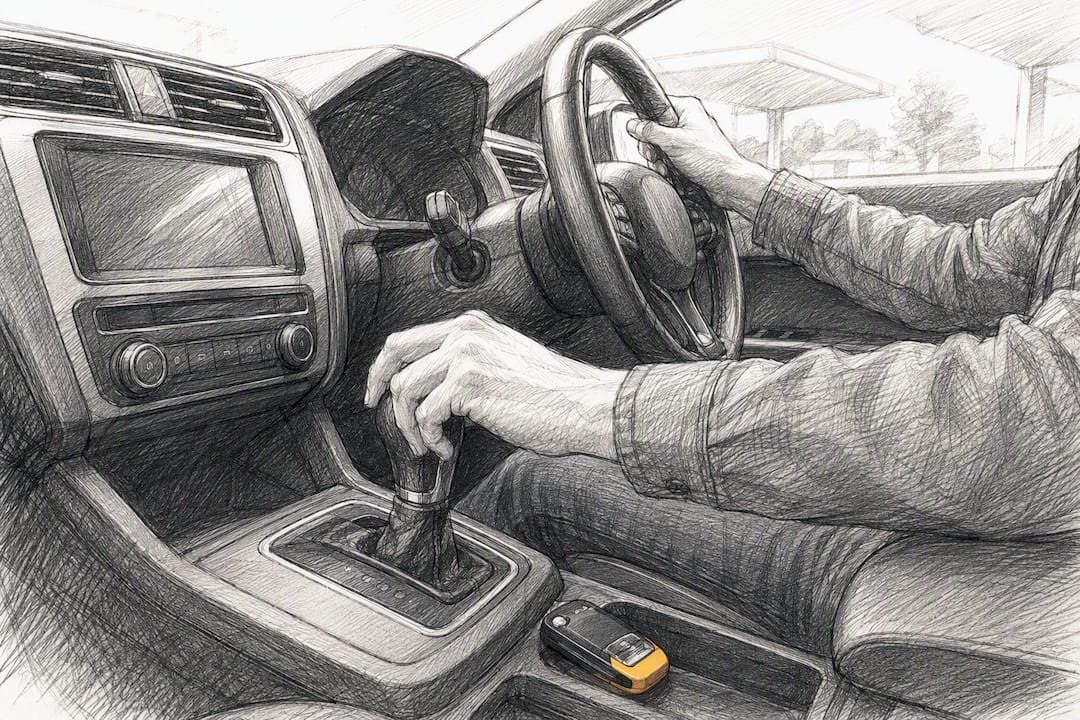
Manual transmission still dominates British car hire fleets, so if you want an automatic, book it weeks ahead rather than assuming one will be available at the counter. Rental firms routinely run out of automatic stock during peak summer months.
A few things to sort before you fly:
- Confirm minimum driver age (usually 21 or 23) and check for young-driver or additional-driver surcharges.
- Basic insurance typically includes third-party cover with a substantial excess; ask about excess reduction or Collision Damage Waiver if you’d rather not risk a four-figure bill for a scraped wing mirror.
- An International Driving Permit is recommended as a communication aid, even though it’s not a legal requirement for US visitors carrying a valid US licence. Rental desks often ask for it anyway.
- Always carry your physical licence and passport together, never just a photo of them.
- Expect a credit card hold for the excess amount, and photograph every panel of the car at pickup before you drive off.
Pro Tip: Choose the smallest car that fits your luggage. Village lanes, church car parks, and pub courtyards in England were built for horses, not SUVs, and a compact hatchback will save you from three-point turns down single-track roads.
When to plan your trip for the best driving conditions
Late spring through early autumn (May to September) gives you the mildest weather and the longest daylight, both of which matter enormously when you’re navigating unfamiliar roads. Shoulder months, April and October, trade a little weather risk for noticeably thinner crowds at popular stops like Bourton-on-the-Water or Stonehenge.
Daylight shapes your driving window more than most visitors expect. Winter days in England can lose usable light by 4pm, which compresses sightseeing badly if you’re relying on natural light for photos or countryside walks.
Booking cadence matters too:
- Lock in accommodation and any ferry crossings for July, August, and school holiday weeks well in advance.
- Leave two or three nights flexible mid-trip if your route includes rural stretches, since weather or a slower pace can shift your plans.
- Ferries connecting to Scotland or Ireland need advance reservations in peak season, particularly on popular summer crossings.
How to pace your daily driving and plan stops
A relaxed self-drive day means one to three hours behind the wheel. Push to four or five hours only on transition days when you’re covering serious ground with few planned stops, and never stack two long driving days back to back.
A typical relaxed day might run like this:
- Morning: two to three hours exploring your current base (market town, castle, garden)
- Midday: a scenic drive of 60 to 90 minutes with a pub lunch stop en route
- Afternoon: a second sight or short walk near your next overnight base
- Evening: arrive with daylight to spare, settle in before dinner
Before any multi-day trip, run through this checklist:
- Download offline maps for rural stretches where signal drops out.
- Note fuel stations along remote routes, they can be sparser than expected in the Lake District and parts of Wales.
- Save UK emergency numbers (999 for emergencies, 101 for non-urgent police matters).
- Confirm parking apps for towns you’re visiting, since many English town centres run pay-and-display only.
Choosing accommodation that works for drivers
Country inns and small hotels tend to offer the easiest parking and the most forgiving arrival times if you’re running late. Self-catering cottages give you flexibility and a kitchen, useful after a long drive, but often sit down narrow approach lanes that need checking in advance. B&Bs strike a nice middle ground: home-cooked breakfast, local knowledge from your host, and usually a driveway or nearby car park.
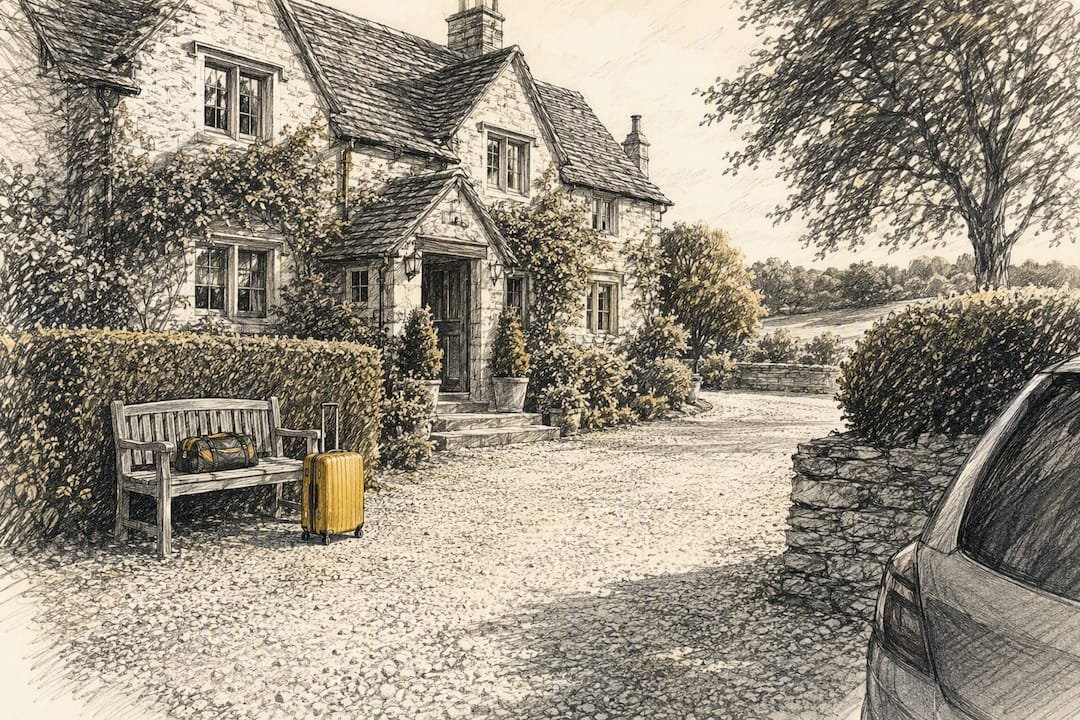
Read listings carefully for parking and access notes before booking, particularly in villages where street parking is limited or restricted to residents. If you’re weighing a self-catering stay, this guide to enjoying self-catering accommodation covers what to check before you commit. Time your bookings so you’re never facing a two-hour drive after a full day of sightseeing.
Common mistakes and how to avoid them
Roundabouts trip up more visitors than any other single feature of English roads. Signal left as you approach if you’re taking the first exit, stay in the correct lane on multi-lane roundabouts, and watch for cyclists holding their lane rather than exiting early.
Single-track roads with passing places are a routine part of rural driving: if a car is coming towards you and you’re not near a passing place, it’s usually you who reverses to the nearest one. It feels awkward the first time. By day three, it’s second nature.
- Check London’s congestion charge and ULEZ zones before driving into the city; both apply daily and carry real fines if ignored.
- Buy a UK SIM or activate roaming before you land, offline maps only get you so far.
- Add UK breakdown cover through your rental company or a standalone provider.
Pro Tip: If you’re not confident reversing to a passing place, take the long way round on the map. A five-minute detour beats a stressful stand-off on a blind bend.
Theo’s take: start smaller than you think you need to
If you’ve never driven on the left, book a shorter first trip. I’ve watched confident drivers get rattled by their first multi-lane roundabout, not because it’s genuinely hard, but because everything is mirrored and your instincts fight you for the first hour. Rent the smallest sensible car; you’ll thank yourself on the first single-track lane in the Cotswolds.
— Theo
Let BTOURS build your route while you enjoy the drive
Planning a self-drive trip from scratch means juggling accommodation bookings, route timing, and local knowledge you won’t have until you’ve already made the mistakes. BTOURS is the alternative to piecing it together yourself: personalised itineraries built around your interests, whether that’s history, nature, or food, paired with curated accommodation and expert support if anything goes sideways mid-trip.
BTOURS makes sense when your trip spans multiple regions, when you’d rather not spend evenings researching parking restrictions in villages you’ve never heard of, or when you simply want handpicked stays instead of a gamble on booking sites. The Taste of England | 8 Days Self-Drive Tour and other England-focused routes on the BTOURS England page give you a fully mapped week without the planning overhead. For a wider look at available packages across England, Scotland, Wales, Ireland, and Greece, browse the self-drive tour collection and request a bespoke itinerary built around your own pace.
FAQ
What is a good self-drive itinerary for Great Britain?
A well-paced week to ten days works best for most first-time visitors, covering London, the Cotswolds, Bath, Stratford-upon-Avon, and the Lake District with driving days kept under three hours. Shorter three to four day loops suit visitors who want to sample one region deeply, such as the Cotswolds or Cornwall, without long transfer days.
Is full self-driving coming to the UK?
Fully autonomous self-driving cars are not yet available for public use in the UK; current legislation and infrastructure still require a licensed human driver behind the wheel. “Self drive” in the context of England road trips refers to renting and driving your own hire car, not autonomous vehicle technology.
What’s the best way to travel around England by car?
Renting a compact automatic or manual car and building a route around two or three overnight hubs, rather than moving hotels every single night, gives you the most relaxed pace. Pairing that with an International Driving Permit as a communication aid and offline maps for rural stretches covers most practical concerns.
Do I need an International Driving Permit to drive in England?
US visitors with a valid US licence can legally drive in Great Britain for up to 12 months without one, but an IDP is recommended as a useful communication aid and rental companies often ask for it at pickup regardless. Carry your physical US licence and passport alongside it at all times.
Can BTOURS plan a custom self-drive route for me?
Yes, BTOURS builds personalised self-drive itineraries across England with curated accommodation and on-trip support, including packages like Keep Calm & Travel On: London 4 Days City Break on the England tours page. Pricing varies by route and length, with current package details listed on the site.