You've probably got the same tab open as every first-time Iceland traveller. Flights. Car hire. A map of the Ring Road. A rough list of waterfalls, black sand beaches and geothermal pools. It all looks wonderfully simple until one practical question lands in the middle of the excitement: can I drive this comfortably and safely?
The answer is yes, often. But an Iceland road trip works best when you stop treating it like a fixed route and start treating it like a live conditions journey. In Iceland, the map matters less than the road surface under your tyres, the wind pushing at the car door, and the daylight still left in the sky.
That shift is where many UK travellers either relax into the trip or make it harder than it needs to be. If you learn to read Iceland the way locals and experienced self-drive travellers do, the country opens up beautifully.
Why an Iceland Road Trip Feels Like Freedom on Four Wheels
You land at Keflavik, collect the keys, load your bags, and point the car towards an open road with no tour bus in front of you and no timetable on your phone. In that first hour, Iceland can feel unusually open. The country gives you space to choose your own pace, stop when the light changes, and turn a simple drive into the main part of the trip.
That freedom is practical as well as emotional. Iceland's road system covers about 12,000 km, road transport carries about 96% of passenger traffic, and UK travellers have long formed a noticeable share of visitors, including a strong winter market, according to Iceland tourism statistics. In simple terms, Iceland is a country you experience most naturally by car.
But the freedom here works a little differently from a long UK motorway run.
In Britain, freedom often means covering distance quickly. In Iceland, freedom usually means being able to adjust. A 90-minute stretch can stay easy and calm, or it can slow down because the wind stiffens, the road surface changes, or a bright clear afternoon turns grey and slippery. The map still matters, but the day's real route is shaped by conditions.
That is why an Iceland road trip feels best when you treat it as a live-conditions journey. The road works a bit like a conversation. You make a plan in the morning, then the surface, the weather, and the daylight answer back. Good self-drive travellers listen and adapt instead of trying to force the day to match yesterday's schedule.
A useful mindset looks like this:
- Plan the day loosely, then refine it once you see the conditions
- Measure progress by road quality and weather, not just kilometres
- Keep spare time for unplanned photo stops, detours, or a slower stretch
- Let safety decide the pace, even on famous routes
For UK drivers, that shift can feel surprisingly relaxing. You are still independent, but you are not trying to “complete” Iceland like a checklist. You are reading it as you go, much as a sailor reads the water rather than trusting only the chart.
If you already enjoy the feel of a Highlands style coastal journey, Iceland will feel familiar in spirit but bigger in scale. The distances between villages are longer. The weather has more say. The views can change from broad and bright to stark and dramatic within a short drive.
That is appeal of freedom on four wheels in Iceland. You are not only moving between landmarks. You are learning how to travel well in a place where the best drivers stay flexible, observant, and happily unhurried.
Understanding How Driving in Iceland Really Works
The first few miles in Iceland often feel easy. The road may be quiet, the view wide open, and the sat nav reassuring. Then the country starts asking better questions. Can you spot when tarmac turns slick with spray. Can you feel a side wind pushing at the door. Can you tell whether the daylight you have left is generous or deceptive.
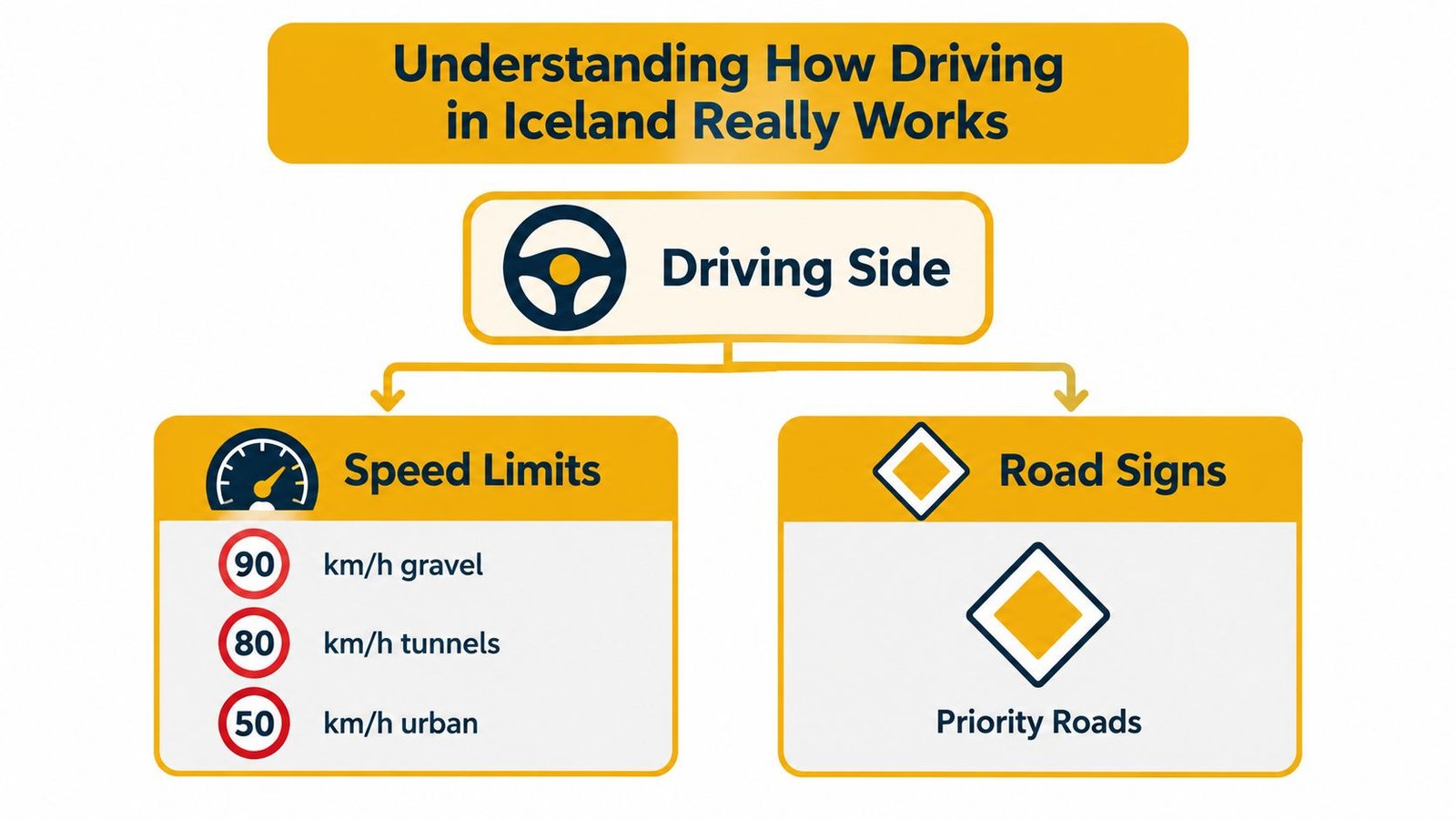
For UK drivers, the biggest adjustment is not only driving on the right. It is learning that Iceland rewards reading conditions minute by minute. A familiar road sign matters, but the surface under your tyres often matters more.
Start with the differences you feel behind the wheel
You will drive on the right, not the left. That catches people most often when leaving a petrol station, joining a quiet road, or turning at a junction with no traffic around to copy. Habit is strongest when the road feels empty.
The speed limits commonly referenced for Iceland are 50 km/h in built-up areas, 80 km/h on gravel roads, and 90 km/h on paved rural roads, according to the RAC guide to driving in Iceland. Those numbers help, but they do not promise a certain pace. In Iceland, a posted limit is closer to an upper frame than a target for the whole day.
Why a short distance can take longer than expected
UK drivers are used to roads that explain themselves clearly. Icelandic roads can change their mood much faster. A stretch that feels simple at noon can feel exposed an hour later if rain moves in or the wind starts hitting from the side.
Single-lane bridges show this well. The rule is straightforward, but the approach requires calm judgment. You slow early, check who is closest, give way when needed, and cross without rushing. On a still, bright day that may feel routine. In wind or poor visibility, it asks for much more care.
The practical lesson is simple. Drive to the condition you have, not the road you expected.
Read surface, wind, and light in that order
Road reading in Iceland works a bit like reading coastal weather before a ferry crossing. You do not ask only, "How far is it?" You ask what the road is doing today.
Start with the surface. Dry tarmac, wet tarmac, loose gravel, old patched sections, ice, and compacted snow all ask for a different touch on the steering, brakes, and accelerator. Gravel in particular rewards smooth inputs. If you brake late or steer sharply, the car can feel skittish in the same way a bicycle does on loose stones.
Then assess exposure. An inland stretch with hills around it may feel settled, while an open coastal road can take a gust and turn it into a firm shove against the side of the car. That surprises many visitors because the road itself still looks easy.
Check the light last. In Iceland, daylight is not just about whether the sun is up. It affects contrast, visibility, road-edge definition, and how quickly a safe relaxed drive becomes tiring.
A simple scan before each leg helps:
- Surface: paved, gravel, wet, icy, mixed, or broken
- Wind exposure: sheltered valley, open plain, stretch, or coast
- Road shape: narrow lane, blind rise, sharp bend, bridge, or long straight
- Light: clear daylight, flat grey light, low sun, twilight, or darkness
If you are travelling in a mixed-nationality group, document checks are easier when you sort them before pickup day. This guide on a US license accepted in Iceland can help travellers compare what different drivers may need.
Good road manners do a lot of the work
Smooth habits matter more here than bold ones. The UK government guidance summarised in the Avis Iceland road rules guide notes basics such as following speed limits, using dipped headlights year-round, and fitting suitable tyres, including winter tyres when conditions require them.
That may sound ordinary. In Iceland, ordinary habits are what keep the day easy.
A careful Iceland driver is not trying to "make up time." They are constantly making small, sensible adjustments. Ease off before the gravel deepens. Hold the wheel a little firmer when the valley opens out. Accept that forty careful miles can be a better piece of driving than eighty rushed ones.
That is how driving in Iceland really works. It is less about following a fixed route perfectly, and more about noticing what the road, the wind, and the light are asking from you right now.
Choosing Your Route From Ring Road to Hidden Alternatives
Route choice in Iceland works less like picking one perfect line on a map and more like choosing the right size of sail before you leave harbour. The map shows distance. Your real day is shaped by wind, surface, daylight, and how fresh you still feel after several hours at the wheel.
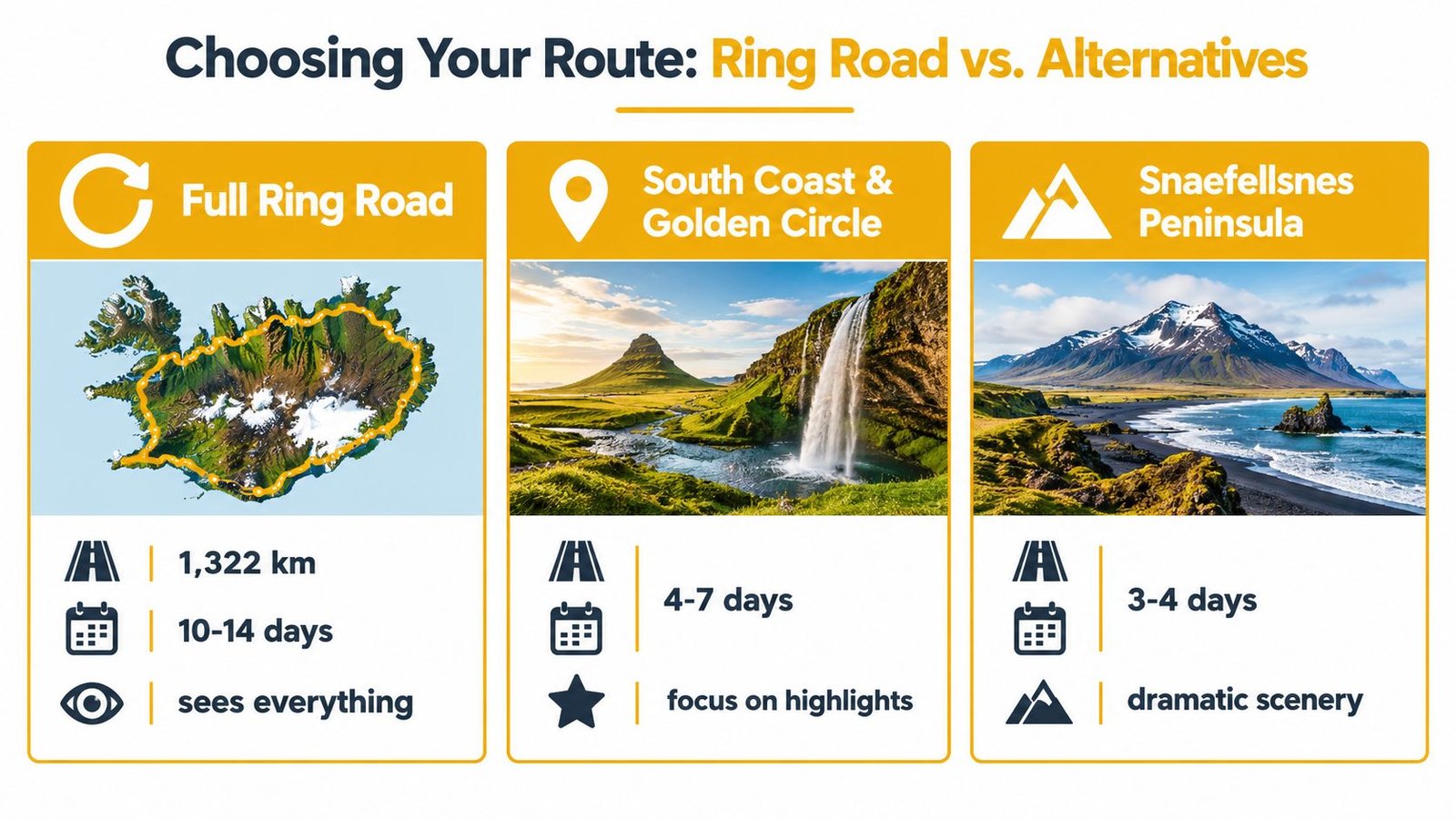
A good Iceland road trip, then, is not the biggest route you can fit into your dates. It is the route that still gives you room to adapt when a calm morning turns into a windy afternoon, or when a short scenic stop becomes the highlight of the day.
The Ring Road is the classic framework, not a duty
The Ring Road appeals to first-time visitors for a simple reason. It gives the island a clear shape. You keep following the main loop and Iceland gradually changes around you. One day may feel wide and coastal. The next may bring lava fields, glacier views, long farming valleys, or black-sand stretches.
That structure is helpful, especially for UK drivers who are used to planning from A to B. In Iceland, though, the Ring Road is best treated as a framework rather than a promise to complete every mile. If weather, road conditions, or energy levels start tightening the day, shortening the loop can be the smarter decision.
Some travellers enjoy the satisfaction of circling the whole island. Others have a better trip by choosing one region and giving it proper time.
Iceland Road Trip Routes Compared
| Route | Typical Distance and Days | Best For |
|---|---|---|
| Full Ring Road | Long multi-day loop, usually best with a generous schedule | Travellers who want variety and are comfortable changing bases often |
| South Coast and Golden Circle | Shorter trip over several days | First-time visitors who want famous highlights without committing to a full loop |
| Snæfellsnes Peninsula | Compact route over a shorter break | Travellers who want dramatic scenery in a smaller area |
| Westfjords | More remote and slower-going | Return visitors who enjoy quiet roads and isolation |
| Interior highland tracks | Seasonal and specialist driving | Experienced drivers with the right vehicle and a strong tolerance for unpredictability |
How these routes feel once you are actually driving
Full Ring Road
This route suits travellers who enjoy steady movement and regular change. It can feel wonderfully broad, but only if the schedule has breathing room. If each day becomes a race to the next bed, the loop stops feeling free and starts feeling like a delivery run.
South Coast and Golden Circle
This is often the easiest starting point for UK visitors. You get famous sights, shorter repositioning days, and more chances to adjust plans without upsetting the whole trip. It also gives you more practice reading Icelandic conditions before you commit to longer stretches elsewhere.
Snæfellsnes Peninsula
Snæfellsnes works like a concentrated sample of the country. The scenery changes quickly, yet the distances stay manageable. It suits drivers who want variety without the constant rhythm of packing, driving, and checking in again.
Westfjords
The Westfjords reward patience. A line on the map may look short, but the driving day can stretch because roads curve around fjords instead of crossing them directly. This is a route for travellers who enjoy remoteness and are happy to let the road set the tempo.
One simple test helps here. Ask not only, "How far is it?" Ask, "How changeable does this day look if the wind rises, visibility softens, or the road turns rougher than expected?"
Hidden alternatives often suit first trips better
A region-based drive can be stronger than a full-island loop. Staying longer in the south, combining Snæfellsnes with West Iceland, or building an out-and-back route from Reykjavík often produces calmer days and better stops. You spend less time relocating and more time noticing what is around you.
For many drivers, that is where Iceland starts to feel less like a checklist and more like a live journey.
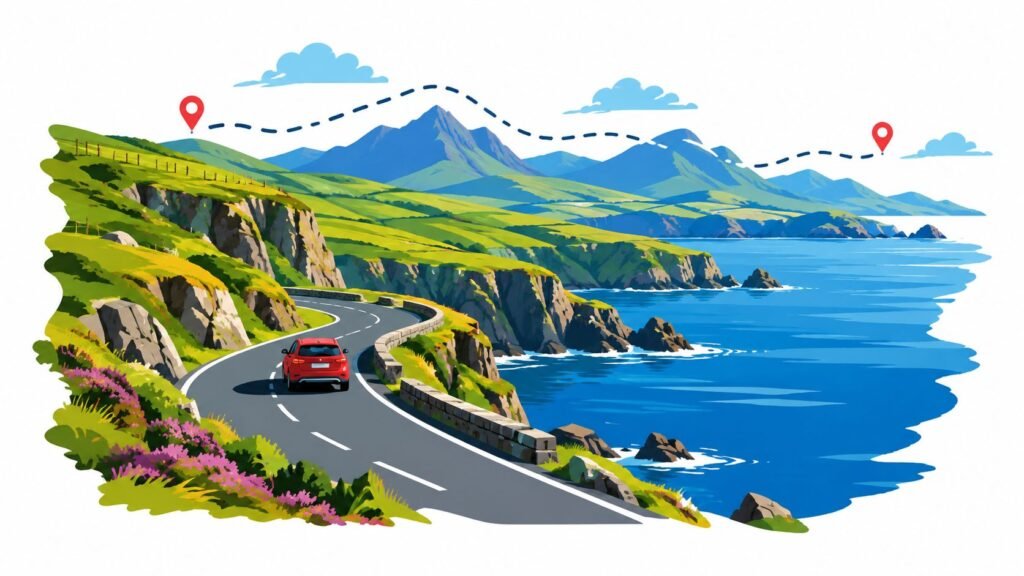
If you want a visual example of how different self-drive shapes can feel, this illustrated multi-stop route layout makes it easier to compare a loop, an out-and-back, and a region-based plan.
The route people misjudge most often
Interior highland roads belong in a separate category. These are not ordinary add-ons for a spare afternoon. Surface quality, river crossings, remoteness, and access windows can change the whole character of the trip. Official UK travel advice notes that 4WD is required on some interior roads.
That matters because a highland route is not just "more scenic Ring Road." It asks for a suitable vehicle, better timing, and a much more flexible attitude. Walking boots are a useful comparison. You choose them for the ground underfoot, not for the view in the brochure.
Choose your route the same way. Start with the kind of driving day you can handle well, then pick the map that fits it.
When to Go and How Seasons Shape Your Drive
Season changes everything in Iceland. The same road can feel relaxed in one period and demanding in another. That's why “best time” is never just about scenery. It's about what kind of driver you are and how much flexibility you're prepared to keep.
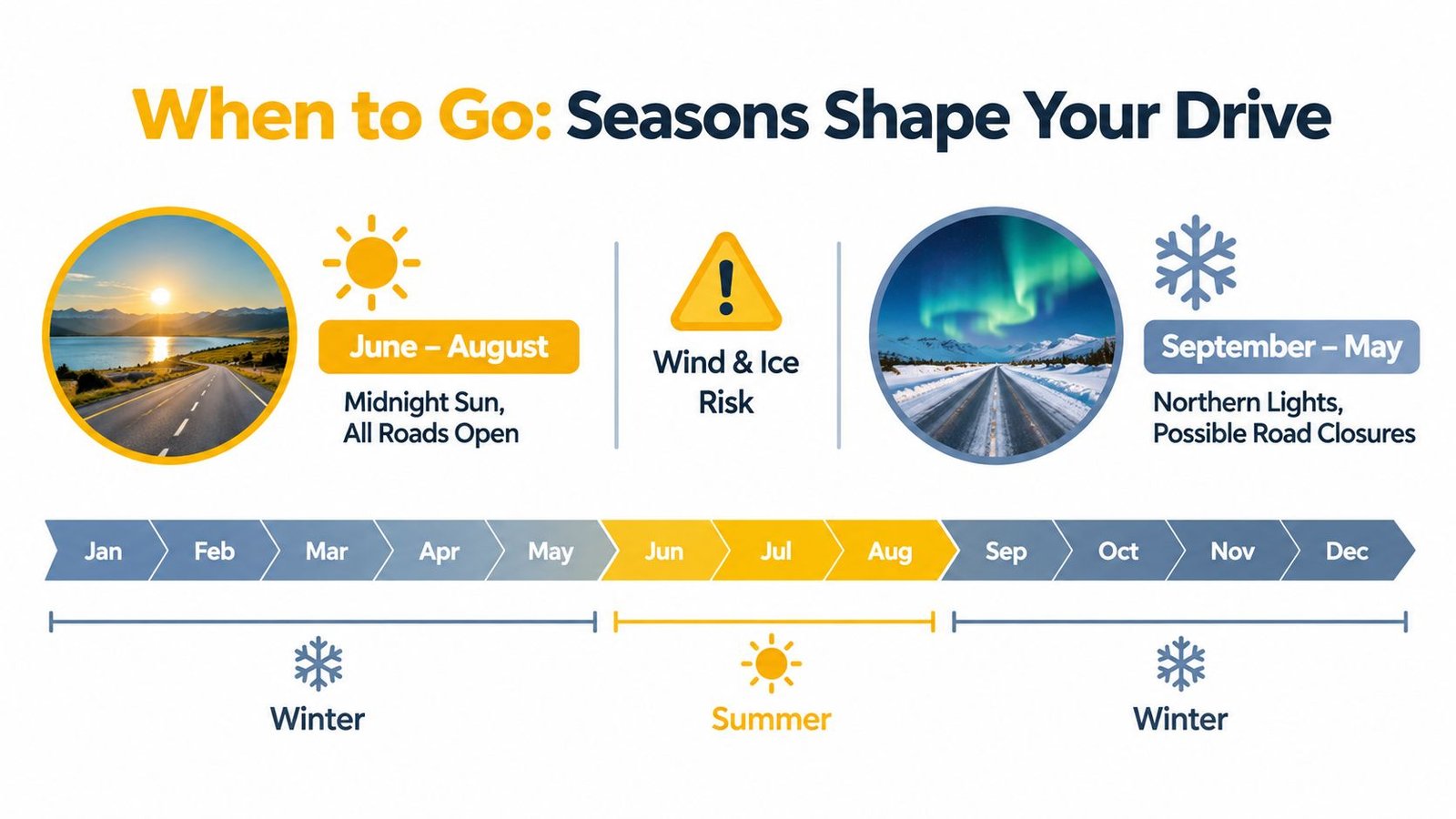
Summer gives you room
Summer is the forgiving season. Daylight stretches, roads are generally more accessible, and the pressure eases. You can stop more often without worrying so much about darkness swallowing the day.
That doesn't mean summer is effortless. It gives you more margin. More time to recover from a late start. More confidence when choosing a scenic detour. More freedom to spread a route naturally.
A short visual overview helps make that contrast clearer:
Winter is about honesty
Winter is where UK travellers most need a mindset reset. Many guides focus too narrowly on whether the Ring Road is “open”. That's not the only question that matters. A road can be maintained year-round and still become a poor choice for your day because of wind, ice, visibility or very short daylight.
The more useful question is whether you can drive your planned stretch comfortably if conditions deteriorate halfway through.
Recent guidance aimed at winter driving in Iceland notes that closures can change quickly from green to red or purple, and that winter risk often concentrates in the south, east and exposed mountain sections, not just in deep snow conditions, as discussed in this winter driving guide for Iceland. That's an important distinction. Many UK drivers expect snow to be the main issue. Often it's the combination of wind, ice and exposure.
If winter driving already makes you tense at home, Iceland won't cure that feeling. It will amplify it.
When to avoid winter self-drive altogether
Winter self-drive may not suit you if:
- You dislike uncertainty: Plans may need to change on the day.
- You're uncomfortable on narrow or exposed roads: Iceland offers plenty of both.
- You strongly prefer driving after dark as little as possible: Winter gives you less margin.
- You want a rigid schedule: Icelandic weather doesn't care about your booking spreadsheet.
That doesn't mean winter is a bad idea. It means winter is best for travellers who can treat the itinerary as flexible and still enjoy the trip.
The daily check matters more than the season label
The single most important habit is checking live conditions before every drive. Not once at the start of the holiday. Every day. Conditions can shift within hours, especially on exposed routes.
If you go in winter, build each day around three questions:
- What do the road conditions say this morning?
- What is my fallback if the main plan becomes unwise?
- Can I finish the drive well before fatigue and darkness combine?
That's the difference between a winter road trip that feels cinematic and one that feels stressful.
Must See Stops and Flexible Multi Day Itineraries
A strong Iceland road trip itinerary doesn't try to predict every minute. It creates a sensible shape for the day, leaves breathing room between major stops, and gives you a fallback if weather or energy levels change.
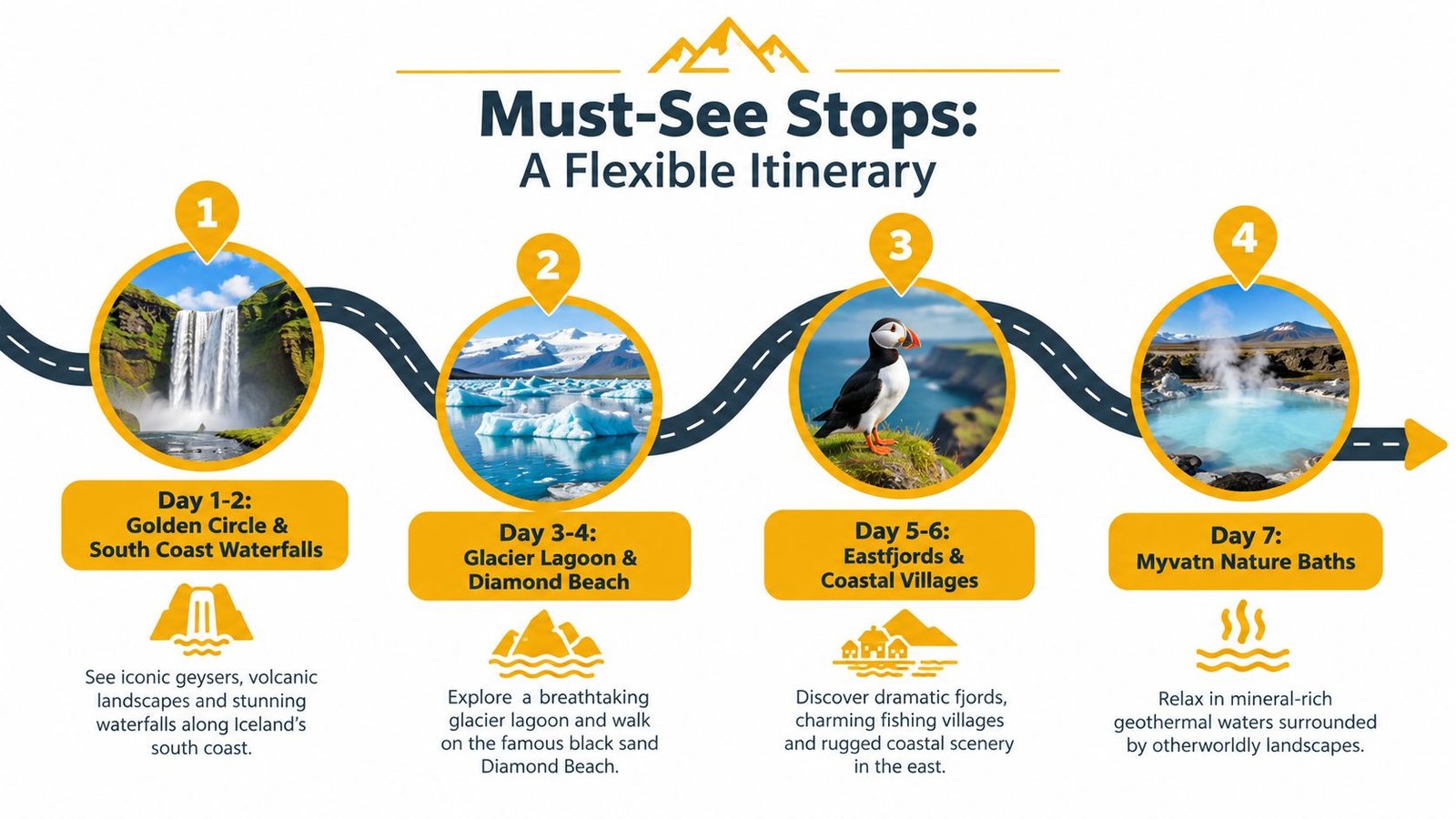
Build around anchor stops
The easiest way to plan is to choose one or two anchor stops per day. These are the places you'd be disappointed to miss. Everything else becomes optional texture around them.
A waterfall, glacier lagoon, black sand beach, geothermal area or fjord village can all work as anchors. Once those are set, you shape the day around realistic driving, meal breaks and a cushion for weather slowdowns.
Flexible itinerary ideas
Three days
Keep it simple. Focus on the Golden Circle and South Coast. Think in broad strokes rather than a long checklist. This works well for travellers who want a first taste without long daily mileage.
Five days
A five-day trip gives the South Coast more breathing room. You can combine waterfalls and black sand beaches early, then push farther east toward glacier scenery and give yourself the option of retracing your route without feeling rushed.
Seven days
Seven days is where the trip starts to feel balanced. You can cover a larger stretch of the country or go deeper on one half of it. This is often the sweet spot for travellers who want variety but still value a civilised pace.
Ten days
Ten days lets the journey breathe. Villages become more than fuel stops. Weather delays become manageable rather than disruptive. You can pause when a place deserves it instead of glancing at the clock.
A sample way to think through each day
Use this simple structure:
- Morning priority: Put your most important drive or stop here, when energy is highest.
- Midday flexibility: Add one or two optional stops that can be skipped without ruining the day.
- Afternoon decision point: Reassess light, weather and fatigue before committing to anything extra.
- Evening base: Arrive with enough time to settle in calmly rather than finishing the day in a rush.
Route habit: Plan a good day, then remove one stop. Iceland usually fills that space with weather, viewpoints, or unplanned pauses.
Why overloading the day backfires
Many first itineraries are too ambitious because the map hides effort. A drive that looks straightforward may include a gravel transition, strong crosswinds, and slower bridge approaches. You'll also stop more than you expect because Iceland keeps pulling you toward lay-bys, viewpoints and unnamed stretches of coast.
That's why the best itineraries don't just list famous places. They leave room for the road itself.
If you like the idea of a scenic route flowing from one atmospheric stop to the next, a road-trip style illustrated route card captures the same planning logic well. The best journeys feel sequenced, not crammed.
Keep a fallback day in your pocket
A fallback option can be as simple as this:
- swap a long driving day for a local scenic loop
- spend longer in one region instead of pushing onward
- trade a far-flung stop for a geothermal bath, village walk, or coastal viewpoint nearby
That's not “missing out”. In Iceland, flexible travellers usually enjoy the trip more because they're not fighting the conditions.
Car Hire Insurance Accommodation and Budgeting Made Simple
A sensible Iceland budget starts with one idea. You are not buying a fixed route from A to B. You are buying room to adjust when the road surface changes, the wind picks up, or daylight shrinks faster than expected.
That shift matters for UK drivers. In Britain, many hires and hotel bookings work well because roads are predictable and distances often mean what they look like on the map. In Iceland, a cheaper booking can cost more later if it leaves you with the wrong car, a poor insurance fit, or a bed that is too far down the road when conditions slow the day.
Choose the car for the road you will actually drive
Start with surfaces, not vehicle image.
If your trip stays on the Ring Road and other well-used paved roads in milder conditions, a standard 2WD car is often enough. If you expect loose gravel, steep rural approaches, winter conditions, or permitted highland driving on suitable roads and in the right season, more ground clearance and 4×4 capability can make the day far less tiring.
A good rental choice works like choosing walking boots. Trainers are fine on a dry town pavement. They are much less reassuring on wet stones and uneven ground.
Ask these questions before you book:
- Which roads are definitely on my plan?
- Which roads might become my backup if weather changes the day?
- Will I be driving in months when ice, snow, or strong wind are more likely?
- Do I want comfort on rough sections, or only the cheapest headline rate?
The best car is the one that still feels suitable after the morning conditions check, not just the one that looked cheapest three months earlier.
Licence rules and rental conditions
UK travellers can use a UK photocard driving licence for up to 30 days in Iceland, while paper licences may require an updated photocard licence or a 1968-version international driving permit, according to Holdur car hire guidance for UK drivers.
Rental company rules can be stricter than the legal minimum. Age limits, credit card requirements, and minimum driving experience vary from firm to firm.
That catches people out. Being allowed to drive in Iceland does not automatically mean every rental desk will hand over every category of vehicle.
Insurance should match Icelandic hazards
Insurance choices make more sense once you stop viewing them as abstract extras.
In Iceland, the common worries are easy to picture. Gravel can flick up like small shot from the tyres. Wind can grab a door if you open it carelessly in an exposed car park. Melt, rain, and freeze can change the road from dark and wet to glassy in a short stretch. Cover should reflect those real risks.
Check the policy wording for points such as:
- what collision damage is included
- whether gravel damage is covered
- whether sand and ash protection is offered where relevant
- what the excess is
- which roads or driving situations are excluded
Health cover sits in the same planning box. If you want a wider safety net around the trip, it can help to browse My Policy Quote's options and compare the level of international cover that suits you.
Accommodation should make the next driving day easier
Treat each overnight stop as part of your driving plan.
The best guesthouse is often not the prettiest one on the map. It is the one that lets you stop before fatigue sets in, park without drama, eat nearby, and start the next morning already close to the area you want to explore. In Iceland, that practical advantage is often worth more than a glamorous detour.
For self-drive trips, these details matter more than people expect:
- easy parking
- flexible check-in or clear arrival instructions
- cancellation terms you can live with
- location near the next day's route, not just near tonight's photo stop
- food options nearby if late weather slows you down
A warm room in the right place can save more stress than an upgraded car.
Budget in working parts, not one giant total
Iceland is easier to budget for when you split the trip into moving pieces. That gives you a clearer view of where flexibility is worth paying for.
Use four simple buckets:
- Car hire and insurance
- Accommodation
- Fuel and meals
- Activities, baths, and parking
Then add a fifth line in your own notes. Adaptation money.
That is the small reserve that covers a pricier last-minute room, an extra tank of fuel from a weather detour, or the decision to pause for the night rather than push on. It is less exciting than booking another attraction, but on an Iceland road trip it often protects the whole experience.
Cheap plans can look tidy on a spreadsheet. Good plans still work when the day changes shape.
Drive Safe Stay Inspired and Enjoy Every Mile
You set off after breakfast under a bright sky, and an hour later the road feels different. The light has flattened, the wind is pushing at the car door, and a stretch that looked simple on yesterday's map now asks for more attention. That is normal in Iceland. A good road trip here works less like following a fixed script and more like reading the day as it unfolds.
For UK drivers, that shift in mindset makes a huge difference. Success on an Iceland road trip comes from treating each day as a live-conditions journey. You are not only following Route 1 or heading for the next waterfall. You are reading three moving parts together: road surface, wind, and daylight. Once you start doing that, the drive feels calmer and more enjoyable.
A few habits keep that freedom safe. Keep dipped headlights on at all times. Match your tyres to the season and the roads you will use. Ease off early before single-lane bridges, gravel changes, and open sections where side wind can nudge the car sideways. If your route includes river crossings and your vehicle is suitable for them, go slowly and steadily, as noted earlier, because water depth and flow can change quickly.
The mindset that changes everything
Yesterday's easy drive does not guarantee today's.
Treat every morning as a fresh check, the same way a sailor studies the sea before leaving harbour. Iceland's roads can change character fast. Tarmac can turn to gravel. Calm air can become a hard crosswind. A comfortable afternoon drive can feel very different if cloud lowers and daylight shortens earlier than you expected.
Use a simple morning routine:
- Check live road status
- Check weather and wind
- Check daylight against your route
- Check whether your backup plan still makes sense
This is not about worrying. It is about clearing away surprises before you load the boot and turn the key.
Why flexible travellers enjoy Iceland more
Flexibility protects the best parts of the trip. It gives you room to stop when the evening light turns a lava field silver, to linger at a glacier lagoon, or to call it a day early when the wind has been draining your concentration for hours.
That last point catches many UK drivers out. In Iceland, fatigue does not only come from distance. It also comes from constant small adjustments: steering against gusts, slowing for surface changes, and judging whether the next stretch will be easier or more exposed. A day that looks short on the map can still feel full.
The most rewarding Iceland road trips usually follow a simple pattern. Check the conditions. Drive the road you have, not the road you hoped for. Let the day breathe a little. That is how you stay safe and still keep the sense of freedom that makes self-drive travel here so memorable.
BTOURS creates self-drive journeys for travellers who want that balance of freedom and structure, with handpicked stays and thoughtfully paced routes that make scenic driving feel easy rather than overwhelming. If Iceland's live-conditions style of travel appeals to you, visit BTOURS to explore curated road trips designed around flexibility, comfort and memorable scenery.