If you have seven days, follow an anticlockwise loop from Newquay through St Ives, Penzance and the Lizard before finishing on the south coast. It gives you the best mix of surf beaches, fishing villages and dramatic cliffs without rushing. With three days, base yourself in one spot and pick either the north coast or west Penwith. Narrow lanes and single-track roads mean early June or September, outside school holidays, are the easiest months to drive.
Choosing your Cornwall road trip route: a shortlist by trip length
Every good Cornwall itinerary starts with an honest look at how many days you actually have, because trying to circle the whole peninsula in three days is how people end up spending more time driving than looking at the sea. Here’s the shortlist that works for most first-time visitors, built around a 7-day and 3-day route structure that covers the coast without constant backtracking.
- 3 days: Newquay to St Ives to Penzance, or a tight west Penwith loop from Penzance. Around 60 to 90 miles total, with 1.5 to 2 hours of driving per day.
- 5 days: Padstow to Newquay to St Ives to Penzance to the Lizard, roughly 120 to 150 miles, adding one or two proper hiking days.
- 7 days: The full anticlockwise loop, Newquay to St Ives to Penzance to Lizard Peninsula to Falmouth, around 180 to 220 miles at a relaxed two to three hours of driving most days.
- 10 days: The 7-day route extended east to Fowey, Looe and the south coast, or slowed right down with rest days built into St Ives and Falmouth, typically 220 to 260 miles overall.
Pick your route by matching it to what you actually want from the trip. Surfers and families with younger kids gravitate towards the north coast, where the beaches are wider and the swell is more consistent. Walkers and photographers tend to prefer west Penwith and the Lizard, where the coast path delivers scenery every few hundred metres. If you’re travelling with a partner who isn’t fussed about hiking, a slower itinerary with fewer transfers between bases beats a route that ticks off every headland.
For navigation, don’t rely on your phone alone. Download an offline map app such as Maps.me or Organic Maps before you leave signal-patchy areas like the Lizard or west Penwith, and pair it with a printable sketch map or GPX file from a route-planning site so you have a paper backup. A guide to driving safely in Cornwall recommends carrying a paper atlas as a genuine fallback, not just a nice-to-have, because satnav apps routinely route drivers onto lanes barely wide enough for one car. Cross-reference your planned route against Visit Cornwall’s scenic driving guides before you set off, since they flag which stretches are worth slowing down for and which are best driven straight through.
Day-by-day Cornwall itineraries you can copy
These plans assume you’re driving yourself, staying flexible on timing, and want a genuine mix of coastline, food and walking rather than a box-ticking exercise. Adjust drive times upward by 15 to 20 minutes in July and August, when traffic on the A30 and A39 slows everything down.
The 3-day itinerary: north coast or west Penwith
Day 1: Newquay to St Ives (via Bedruthan Steps and St Agnes)
Drive time: around 1 hour 15 minutes direct, but budget half a day with stops.
- Morning in Newquay: Fistral Beach for a look at the surf, then coffee in the town centre before the roads get busy.
- Bedruthan Steps (30 minutes from Newquay): arrive by 10am for parking and low-tide access to the beach below the cliffs.
- St Agnes for lunch: the Trevaunance Cove area has good pasty shops and a proper village pub.
- Continue to St Ives by late afternoon, checking into your accommodation before the evening rush for parking in the old town.
- Evening: Porthmeor Beach at sunset, then dinner near the harbour.
Day 2: St Ives exploring
No long drive today. Spend the morning at Tate St Ives or wandering the narrow streets of Downalong, then walk part of the coast path towards Zennor if the weather holds. Afternoon free for the beach or a studio visit at Barbara Hepworth’s garden.
Day 3: St Ives to Penzance via St Michael’s Mount
Drive time: 40 minutes direct.
- Leave St Ives by mid-morning, taking the coast road rather than the A30 for the views.
- Stop at St Michael’s Mount near Marazion; check tide times before you go, since the causeway is only walkable at low tide.
- Penzance for lunch and an afternoon browsing the harbour and Chapel Street.
- Optional detour to Mousehole for a late-afternoon coffee if you have energy left before heading home or on to your next base.
The 5-day itinerary: north coast, west Penwith and the Lizard fringe
Days 1 and 2 follow the 3-day plan above, ending in Penzance rather than looping back.
Day 3: Penzance to Land’s End and Sennen Cove
Drive time: 25 minutes to Land’s End.
- Early start for Land’s End itself, ideally before 10am to beat coach parties and get easier parking.
- Sennen Cove for a late-morning surf lesson or a walk on the sand.
- Porthcurno in the early afternoon: the Minack Theatre grounds are open outside performance times and worth the detour even if you’re not seeing a show.
- Return to Penzance for the evening.
Day 4: Penzance to the Lizard Peninsula
Drive time: 45 minutes to Lizard Point.
- Head south via Helston, stopping for provisions if you’re planning a beach picnic.
- Kynance Cove is the highlight, but it’s tide-dependent: check tide times the night before, since the sand disappears at high water, and aim to arrive before 9.30am in summer months to get a parking space at all.
- Lizard Point itself for a short walk and the most southerly point in mainland Britain.
- Base for the night in Helston or Falmouth depending on which direction you’re heading next.
Day 5: Return leg via Falmouth
Drive time: 30 to 45 minutes depending on your start point.
Morning in Falmouth, taking in the harbour and the National Maritime Museum Cornwall if you have children with you, before heading home or on to further travels.
The 7-day itinerary: the full anticlockwise loop
This is the itinerary Cornwall road trips are built around, and for good reason: it covers the north coast, west Penwith, the Lizard and the south coast without a single day feeling rushed.
- Day 1: Arrive Newquay, settle in, evening at Fistral Beach.
- Day 2: Newquay to Padstow via Bedruthan Steps, exploring Padstow’s harbour and food scene in the afternoon.
- Day 3: Padstow to St Ives (around 1 hour 20 minutes), stopping at St Agnes en route.
- Day 4: St Ives day trip to Land’s End, Sennen Cove and Porthcurno, returning to St Ives or moving on to Penzance.
- Day 5: Penzance, St Michael’s Mount and Mousehole, overnight in Penzance.
- Day 6: Penzance to the Lizard Peninsula (Kynance Cove, tide permitting, and Lizard Point), continuing to Falmouth for the night.
- Day 7: Falmouth exploring, or a detour to St Mawes across the harbour by ferry, before the drive home.
Single-driver groups or families with young children should consider stretching this into eight days by adding a full rest day in St Ives or Falmouth, since two consecutive days of driving plus sightseeing tends to wear people out by day five.
The 10-day itinerary: extending east to the south coast
Follow the 7-day loop above, then add:
- Day 8: Falmouth to Fowey (around 50 minutes), an afternoon in this quieter, less-visited harbour town.
- Day 9: Fowey to Looe or Polperro, short coastal walks and a slower pace after a week of driving.
- Day 10: Return leg towards your departure point, or an extra buffer day if weather has disrupted earlier plans.
Pro Tip: Build one genuinely free day into any itinerary of five days or more. Cornwall’s weather changes fast enough that you’ll want a spare day to reschedule a tide-dependent stop like Kynance Cove or Pedn Vounder if the forecast turns against you.
How do you drive safely on Cornwall’s narrow lanes?
Cornwall’s back roads are a different driving experience from most of England, and the single biggest adjustment is accepting that you won’t always have the road to yourself, even on routes that look empty on a map. Many lanes are single-track with passing places cut into the hedgerows, and local etiquette matters more than satnav instructions here.
The core rule is simple: give way to vehicles coming uphill whenever you can, since it’s harder for them to find momentum again after stopping on a slope. If you meet another car and there’s no passing place directly beside you, reverse to the last one you passed rather than expecting the other driver to do it, especially if they’re local and clearly know the road better than you.
- Pull into passing places fully, don’t just slow down and hope the other driver squeezes past.
- A brief, polite tap of the horn on blind bends warns oncoming traffic without being aggressive.
- Use lower gears on steep hills rather than riding the brakes, which overheats them on long descents.
- Keep speeds well below the posted limit on unclassified lanes. Fifteen to twenty miles an hour is often sensible even where the limit is higher.
- Watch for tractors, livestock and cyclists, particularly around farm entrances and in early morning or early evening.
Rural roads carry a fatality risk that’s roughly 72% higher than urban routes, which in practice means treating every blind bend as though something might be coming the other way, because on Cornish lanes something usually is. Rural road safety guidance also recommends building extra buffer time into any satnav estimate, since narrow lanes and unexpected livestock crossings routinely add ten or fifteen minutes to a journey that looked quick on paper.
A mid-sized car or a compact SUV handles Cornwall’s lanes far better than anything wide or long. If you’re driving a large motorhome or a car with a roof box, plan routes that stick to A and B roads rather than the scenic-looking lanes your satnav might suggest. Park only in designated bays. Verges look solid but often hide soft ground or drainage ditches that can leave you stuck.
Pro Tip: Keep a torch, a stash of pound coins for pay-and-display machines that don’t take cards, a phone charger, and the What3words app in the car at all times. Several coastal car parks and coves have no phone signal, and What3words lets you give the coastguard or breakdown recovery an exact location.
How far apart are Cornwall’s main towns, and how long does driving take?
Distances in Cornwall look short on a map and take longer in the car than you’d expect, mostly because the roads twist constantly and speed limits drop sharply through villages. Budget more time than Google Maps suggests, particularly in July and August.
| Route | Distance | Typical drive time |
|---|---|---|
| Newquay to St Ives | around 30 miles | 50 minutes to 1 hour |
| St Ives to Penzance | 9 miles | 25 minutes |
| Penzance to Land’s End | 9 miles | 20 to 25 minutes |
| Penzance to Lizard Point | around 20 miles | 45 minutes to 1 hour |
| Lizard Point to Falmouth | 25 miles | 45 minutes to 1 hour |
| Falmouth to Fowey | around 20 miles | 45 minutes to 1 hour |
Parking pressure is the biggest single source of wasted time on a Cornwall road trip; for strategies on managing busy car parks and seasonal congestion, see tips for Holwert. Popular sites regularly fill their car parks before 10.30am during peak season, so arriving before 9am or after 4pm avoids the worst of it. This applies as much to St Ives town car parks as it does to coastal beauty spots like Kynance Cove.
Fuel stations thin out west of Penzance and around the Lizard Peninsula, so fill up in a larger town before heading into these areas rather than assuming you’ll find a garage along the way. On navigation, favour signed A and B roads over your satnav’s shortest route wherever the two disagree. Satnav apps frequently suggest lanes that are technically shorter but far slower and more stressful to drive, particularly around St Just and the Lizard.
Where should you stay on a Cornwall road trip?
Your choice of base towns shapes the whole trip more than almost any other decision, because Cornwall’s geography means backtracking is easy to fall into if you don’t plan carefully.
- Newquay: best for surfers and families, with easy access to Fistral Beach and the north coast’s bigger swells.
- Padstow: a strong food-focused base with a genuinely lovely harbour, well positioned for Bedruthan Steps and the Camel Trail.
- St Ives: the obvious choice for art, beaches and atmosphere, though summer parking in the town itself is genuinely difficult.
- Penzance: a practical hub for west Penwith, Land’s End and St Michael’s Mount, with more affordable accommodation than St Ives.
- Falmouth or St Mawes: ideal for the south coast leg, with a quieter, more maritime feel than the north coast towns.
For trips of five days or fewer, moving base every night rarely pays off. Pick two hubs, say St Ives and Falmouth, and do day trips from each. For seven to ten days, three or four bases spread along the loop keeps driving manageable while still letting you see the whole coast.
Camping and touring parks are widespread and often better value than hotels, particularly around Newquay and the Lizard, though sites near the coast book out months ahead for July and August. Several accept dogs, but always confirm directly rather than assuming, since policies vary a lot between sites. Whatever your accommodation type, book your peak-season nights as early as you can. Cornwall’s popularity has made last-minute summer availability genuinely scarce in the most sought-after towns.
What are the must-see stops on a Cornwall coastal drive?
Certain places come up in every serious Cornwall itinerary, and each one rewards a bit of planning around timing.
- Tintagel: dramatic castle ruins linked to Arthurian legend. Visit early morning for the best light and to beat coach parties on the bridge.
- Bedruthan Steps: rock stacks visible from clifftop paths. Check tide times if you want to walk the beach itself, since access closes at high water.
- St Ives: galleries, beaches and narrow streets. Park on the edge of town and walk in. Driving into the centre in summer is genuinely painful.
- Minack Theatre: an open-air theatre carved into cliffs above Porthcurno. Visit outside performance hours for a quieter look and better photographs.
- Kynance Cove: turquoise water over white sand, but tide-dependent and prone to filling its car park by mid-morning in summer.
- St Michael’s Mount: a tidal island castle near Marazion. Confirm causeway times before you go, since it’s only walkable at low tide.
- Eden Project: biomes and gardens near St Austell, well suited to a rainy-day plan or a family day away from the coast.
- Padstow: seafood restaurants and a working harbour, best visited slightly out of season if you want a table without booking weeks ahead.
Families tend to gravitate towards Bedruthan Steps and the Eden Project for their combination of space and structure. Walkers get more out of the coast path around St Michael’s Mount and the Lizard. Photographers should prioritise Kynance Cove and Tintagel at either end of the day, when the light is softer and the crowds are thinner.
When should you go, and how do you avoid the crowds?
June and September consistently offer the best balance for a Cornwall trip: warm, stable weather, long daylight hours and noticeably smaller crowds than the school-holiday peak. September often has the year’s warmest sea temperatures, which makes it a strong pick if swimming or surfing matters to you.
July and August bring the worst combination of pressures: the A30 and A39 slow to a crawl on Saturdays as changeover traffic moves between holiday lets, and car parks at sites like Kynance Cove and St Ives fill within a couple of hours of opening. If you’re locked into travelling then, shift your daily schedule earlier. Get to popular sites before 9am and treat midweek days as your priority for the busiest attractions, saving weekends for quieter, less-visited spots.
Shoulder-season travel also makes the driving itself easier, since narrower lanes feel far less stressful with fewer cars sharing them.
What should you pack for a Cornwall road trip?
Cornwall’s weather shifts fast, often within the same afternoon, so layering matters more than any single item of clothing.
- Waterproof jacket and a warm mid-layer, even in June and September.
- Sturdy walking shoes or boots for coast path sections, since flip-flops don’t cope with wet rock or mud.
- Swimwear and a quick-dry towel, packed even on cooler-looking days.
- Torch, phone charger and a stash of pound coins for car parks that don’t take cards.
- Offline maps app downloaded in advance, plus a printed route map as backup.
- Booking confirmations saved offline, since signal drops out around the Lizard and west Penwith.
Pro Tip: Pack an old towel specifically for the car boot. Wet dogs, sandy children and damp wetsuits are a near-daily occurrence on a Cornwall coastal trip, and a dedicated car towel saves your seats.
Where to eat and drink along the way
Cornwall’s food scene is one of the trip’s genuine highlights, and building it into your route beats treating meals as an afterthought. Padstow is the obvious food stop, home to several well-known seafood restaurants and a Saturday market worth timing a visit around. St Ives has a strong café culture clustered around Fore Street and the harbour, good for a slow breakfast before a beach day.
For pasties, skip the tourist-strip shops in favour of bakeries a street or two back from the seafront in towns like Falmouth and Penzance, where prices tend to be lower and the pastry is usually better. Fish and chips by the harbour in Newquay or Looe makes a reliably good evening option after a long driving day, and most coastal towns have at least one pub doing a proper Cornish cream tea, jam first, if you’re that way inclined.

Roadside farm shops along the A30 and smaller B roads are worth a stop for local cheese, cider and baked goods, particularly around Wadebridge and Helston. Building one farm shop stop into each day’s drive breaks up the journey and usually turns up something better than a service station sandwich.
Beyond sightseeing: hiking, surfing and wildlife on the coast
Driving between viewpoints only gets you so far in Cornwall. The coast path itself is where the trip really opens up, and even a short section, an hour or two around St Michael’s Mount or the Lizard, gives you a different sense of the landscape than any car park view.
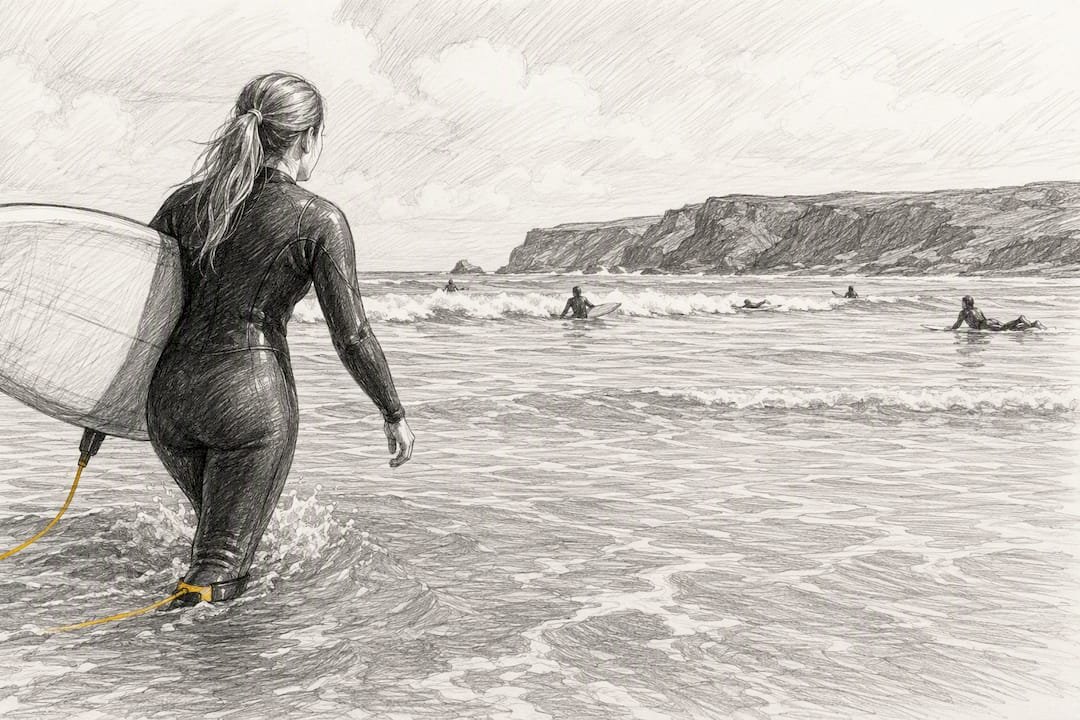
Surfing is genuinely accessible to beginners here, with Newquay’s Fistral Beach and Sennen Cove both home to established surf schools offering lessons for people who’ve never stood on a board. Even non-surfers can watch from the cliffs above Fistral, where the swell often puts on a proper show.
Wildlife watching rewards patience more than planning. Seals haul out on rocks around the Lizard and near Mousehole, and dolphin or basking shark sightings aren’t unusual from clifftop paths in summer months, particularly around St Ives Bay. Bring binoculars if you can, since most sightings happen well offshore.
If you want a longer walk without committing to a full day, the stretch of coast path between Land’s End and Porthcurno is manageable in two or three hours and delivers some of the best cliff scenery in west Penwith. Cycling is another option worth building in. The Camel Trail near Padstow is flat, well-surfaced and suitable for families, a welcome contrast to the hillier roads you’ll have been driving.
Cornwall weather and how to plan around it
Cornwall’s weather is genuinely changeable, sometimes shifting from sunshine to rain and back within a single afternoon, because the peninsula sits exposed to Atlantic systems on both coasts. Don’t plan a rigid schedule around a single forecast. Build flexibility into tide-dependent stops instead.
Wind is often the bigger factor than rain, particularly on exposed clifftops like Land’s End and the Lizard, where a calm-looking morning can turn genuinely blustery by early afternoon. A windproof outer layer earns its place in the car even when the sky looks clear.
Coastal fog, known locally as a sea fret, can roll in fast on the north coast, cutting visibility and turning a scenic drive into a slower, more cautious one. If this happens, reduce your speed and switch on fog lights rather than pushing on at your original pace.
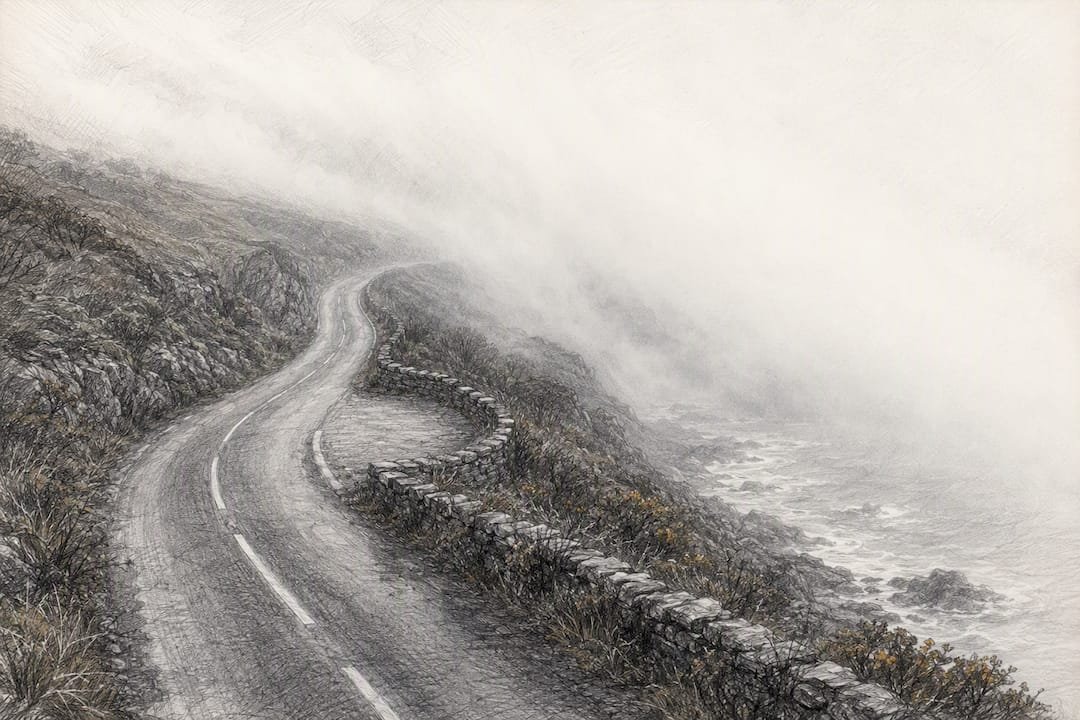
Pack for four seasons in one day regardless of the month. A warm layer, a waterproof, and sun protection all deserve space in the car even in high summer, since a bright forecast in Penzance can look completely different by the time you reach the Lizard an hour later.
What does a Cornwall road trip cost?
Accommodation is the biggest variable in any Cornwall budget. Camping and touring pitches run from modest nightly rates up to premium prices at coastal sites in peak season, while B&Bs and mid-range guesthouses typically cost more, with St Ives and Padstow commanding a noticeable premium over Penzance or Falmouth for equivalent standards.
Food costs vary widely depending on how often you eat out. A pasty and coffee lunch on the move costs far less than a sit-down seafood dinner in Padstow, and self-catering even one meal a day, using local farm shops and supermarkets, cuts costs substantially over a week-long trip.
Activities are mostly free or low-cost if you stick to coastal walking, beaches and viewpoints. The main costs come from paid attractions like the Eden Project, St Michael’s Mount and the Minack Theatre, plus any surf lessons or boat trips you book. Parking adds up too: most coastal car parks charge for the day, and a week of daily parking fees across multiple stops is worth budgeting for rather than treating as an afterthought.
Fuel is a meaningful line item given the distances covered, though Cornwall’s compact geography means even a full loop rarely runs to more than a few hundred miles of driving overall.
Getting around Cornwall without a car
A self-drive trip is the most flexible way to see Cornwall’s coast, but it isn’t the only option, and mixing in some public transport can ease pressure on peak days. The branch line between Par and Newquay, and the St Ives Bay Line connecting St Erth to St Ives, are both scenic routes that also solve the parking problem in St Ives entirely, since the town’s car parks are notoriously tight in summer.
Local bus networks connect most coastal towns, though services thin out considerably in rural areas and on Sundays, so check timetables carefully before relying on a bus for a tide-sensitive stop like Kynance Cove. Bike hire is widely available in towns like Padstow and Wadebridge, particularly useful for the flat, traffic-free Camel Trail, which makes a genuinely pleasant half-day break from driving.
For a road trip built around multiple bases and daily flexibility, a car remains the practical backbone of the trip. Treat trains and bike hire as smart supplements on specific days, particularly into St Ives, rather than a replacement for driving.
Designing routes that actually match how people drive
Most Cornwall guides read like they were written by someone who’s never actually reversed a hire car into a passing place at dusk with a queue building behind them. The gap between a route that looks good on a map and one that’s genuinely pleasant to drive is where most itineraries fall down, and it comes down to underestimating how much narrow lanes, tide times and parking pressure shape a real day out here.
The itineraries above assume realistic pacing precisely because Cornwall punishes over-ambition. A route that looks like four hours of driving on paper regularly takes five once you’ve factored in a passing-place stand-off near St Just or a queue for the Kynance Cove car park. Building slack into the plan matters more than squeezing in one extra stop.
This approach to self-drive itineraries involves pacing routes around realistic driving times, selecting accommodations in towns that suit the day’s plan, and providing support if a tide table or a diversion disrupts the schedule. Good route design isn’t about cramming in every highlight. It’s about making sure the driving itself doesn’t become the hardest part of the holiday.
— Theo
Let BTOURS build your Cornwall route for you
A self-drive booking service offers a paced day-by-day route built around your available time, selected accommodation in suitable base towns for each leg, and support if a tide table or road closure disrupts your plan mid-trip.

This suits readers who want the freedom of driving themselves without spending weeks cross-referencing tide times, parking windows and passing-place etiquette. It works particularly well for families and first-time Cornwall visitors who want the reassurance of a properly paced plan rather than a route copied from a map. If you’re travelling in July or August, book early. Popular base towns like St Ives and Padstow sell out their best accommodation months ahead of peak season. Get in touch to see what a self-drive tour package should include before you start building your own Cornwall route from scratch.
Sources
Visit Cornwall’s scenic drives guide is the best starting point for official, curated routes and stop suggestions. For driving safety specifically, Cornwall by car covers passing-place etiquette and narrow-lane hazards in detail, while a 12-tip driving guide adds practical notes on reversing and giving way. For timing your visit around tides and crowds, the Kynance Cove FAQ page is worth bookmarking before you set off.
- Cornwall by car – a guide to driving safely
- Great scenic Cornish drives
- Cornwall road trip itinerary – 7-day & 3-day routes
FAQ
How many days is enough for Cornwall?
Three days covers one coast or a tight cluster of highlights, but seven days is enough to complete a full anticlockwise loop of the north coast, west Penwith, the Lizard and the south coast without rushing.
What is the best road trip itinerary for Cornwall?
For most travellers, the seven-day anticlockwise loop from Newquay through St Ives, Penzance and the Lizard to Falmouth offers the strongest mix of beaches, villages and coastal walking, and BTOURS can build this route around your own pace and preferred bases.
How long does it take to drive around Cornwall?
A full loop covering the north coast, west Penwith, the Lizard and the south coast runs to roughly 180 to 260 miles depending on detours, with realistic daily driving times of two to three hours once you allow for narrow lanes and stops.
Is Cornwall or Devon nicer for a road trip?
Both counties offer strong coastal driving, but Cornwall has a higher concentration of dramatic clifftop scenery and iconic single stops like Land’s End and St Michael’s Mount packed into a smaller area, which suits travellers who want more highlights per mile driven.