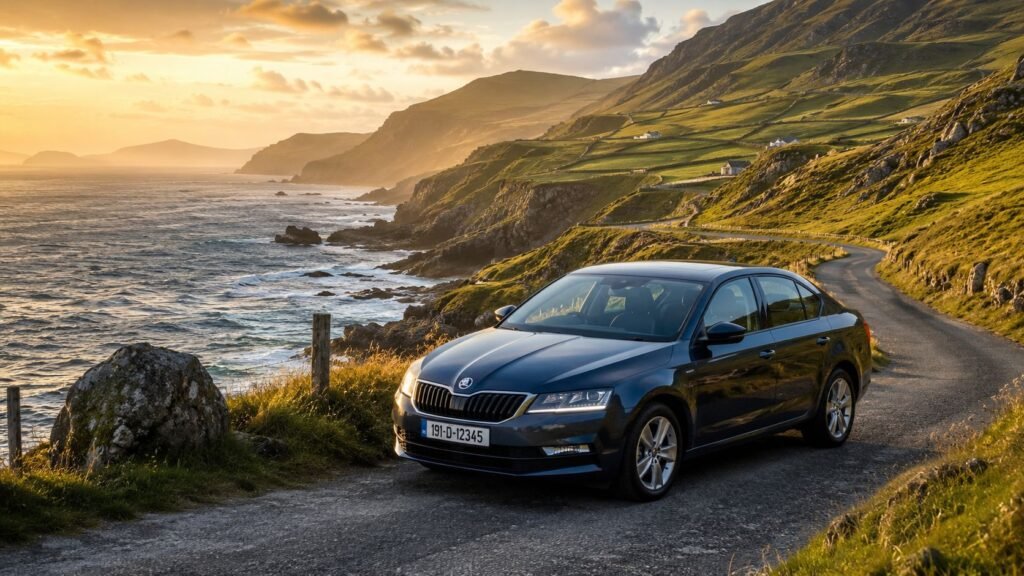
You've just landed on the west coast with a rental car, a full tank, and a route that looks simple until you realise how much Ireland has packed into that Atlantic edge. One hour you're staring at a cliff top in clean sea light, the next you're choosing between a famous stop with a coach park and a quieter detour that lets you breathe. That's the challenge with the best stops on Wild Atlantic Way, not finding them, but choosing the ones that fit your time, your patience, and your tolerance for crowds.
What the Wild Atlantic Way Feels Like Behind the Wheel
A couple pulls into their first viewpoint and does the same thing almost everyone does. One person gets out slowly, wind in the hair, camera still in the bag. The other checks the sat nav, glances at the road behind them, and asks whether they should keep going or stop again in ten minutes. That's the Wild Atlantic Way in one gesture, a route that can feel both cinematic and slightly overwhelming the moment you start driving it.
The self-drive format suits this coast because the route rewards pauses, detours, and small decisions made on the fly. Coach tours can cover the headline landmarks, but they usually flatten the day into a sequence of arrivals and departures. A rental car gives you room to stay longer at a viewpoint that earns it, and to skip a stop that looks better in photos than it does in real life.

That freedom matters because the Wild Atlantic Way is not a short, neat loop. It's a coast road with weather, light, and local traffic changing the mood hour by hour. If you want the best stops on Wild Atlantic Way to feel rewarding rather than rushed, you need a plan that treats the road as part of the experience, not just the connector between landmarks.
Practical rule: Stop less often, but stop better. A single strong viewpoint with time to enjoy it beats three rushed pull-ins that blur together.
Understanding the Wild Atlantic Way as a Route
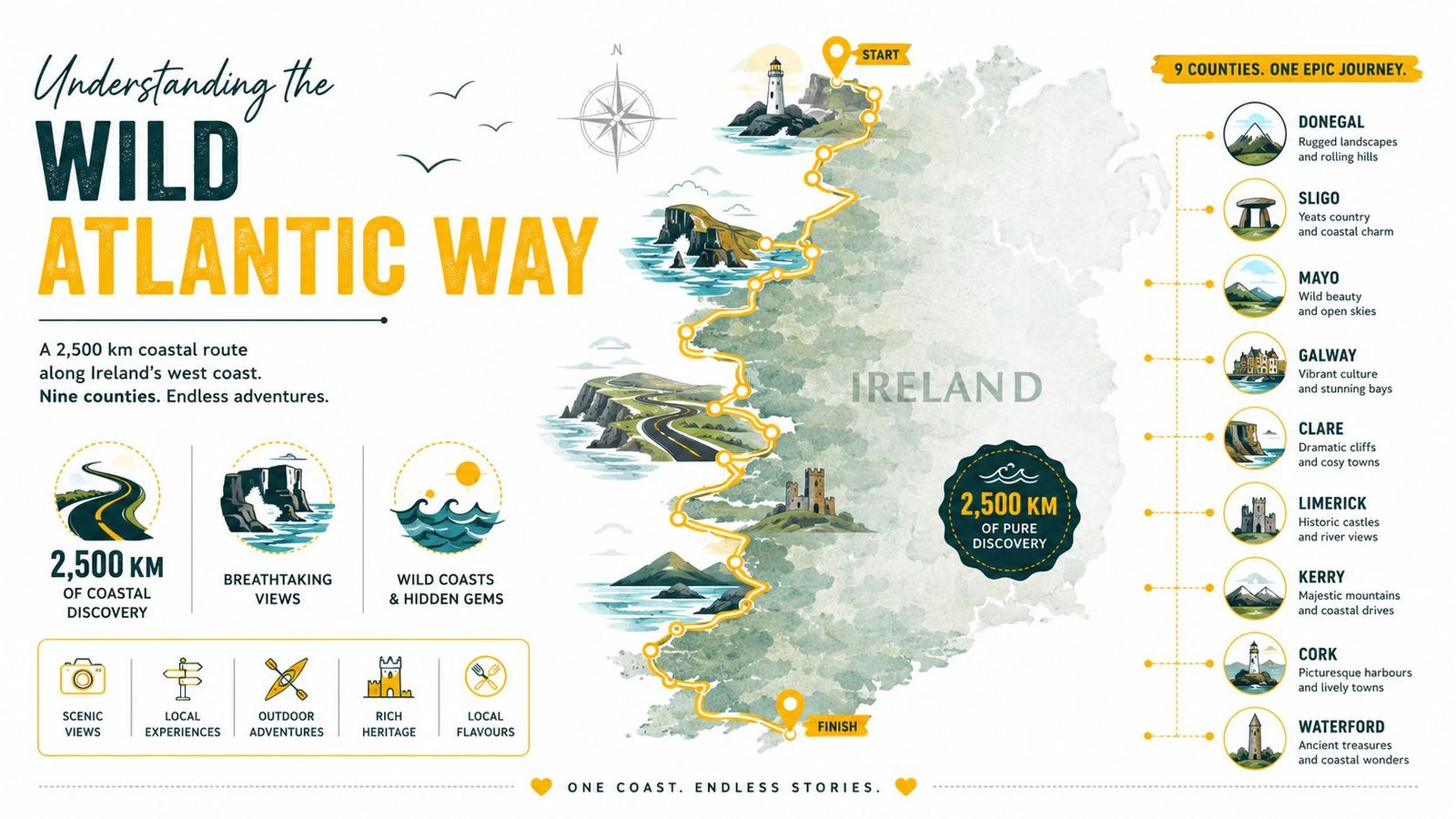
The Wild Atlantic Way is 2,500 km of Atlantic coastline, it links nine counties, and it is organised around 157 discovery points and around 1,000 attractions. That scale changes how you should judge the best stops on Wild Atlantic Way. A famous landmark is never the whole journey, it is only one part of a much longer coastal route, as shown in the route overview from Bon Traveler's Wild Atlantic Way guide.
Treat the coast as a set of regions
The right way to plan the route is to break it into regional sections. Donegal in the north has a different pace from Mayo and Galway in the west, and both feel different again from Clare and Kerry in the south. That is why the strongest stops belong to specific stretches of coast, not to one huge list with no driving logic.
If you try to read the route as one uniform drive, you will misjudge how long it takes to move between highlights. You also miss a basic reality of the coast. Some areas are worth a short stop, while others deserve a regional base for a night or two. Build in buffer time from the start, because the route does not reward tight, overpacked days.
Match the route style to the trip you actually have
A short break and a full coast drive are not the same trip. The best planning move is to match your trip length to the kind of route you want to run, rather than forcing every holiday into the same shape, as noted in Your Irish Adventure's route overview. Travellers who skip that step usually end up with a list that looks good on paper and feels punishing on the road.
Start with one direct question. Are you doing a sampler, a highlights run, or the full coast? Once you answer that, the shortlist becomes much cleaner, and you stop wasting time on stops that do not fit the trip.
Crowd pressure should shape your choices
Headline stops draw coach traffic, and that matters. If you want calmer viewpoints and more room to enjoy the coast, prioritise places that sit slightly off the main tourist funnel, or arrive early and move on before the busiest window. The best self-drive days on the Wild Atlantic Way are not the ones that cram in the most names, they are the ones that leave you enough space to look around.
That is the filter I use when I plan the route. Put the major crowd magnets on your list if they suit your pace, but do not let them dictate the whole itinerary. A good coastal stop should earn its place because it fits your drive length, your patience for crowds, and the amount of time you want to spend out of the car.
The Northern, Western and Southern Stop Clusters
The smartest way to plan the best stops on Wild Atlantic Way is by cluster, not by trying to rank every famous place against every other one. The route's headline names sit in a few clear pockets, with the Cliffs of Moher singled out as the most popular stop and other major anchors including Slieve League, Glenveagh National Park, Carrickfinn Beach, Malin Head, Achill Island, Keem Beach, the Ring of Kerry, and Connemara in Stena Line Travel's route guide. That concentration helps you see where the route really delivers and where it only looks appealing because the name is familiar.
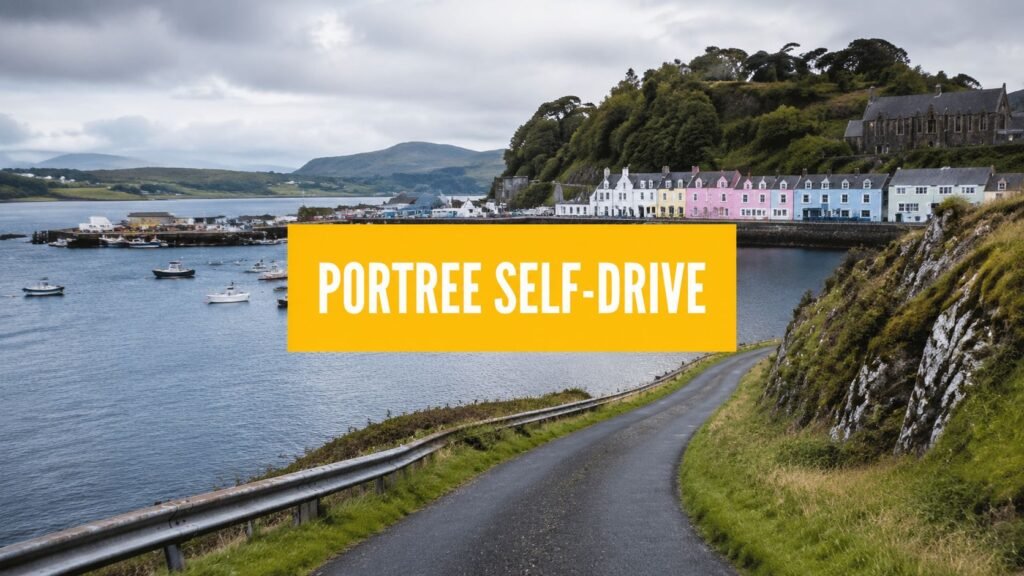
Northern cluster
If your drive reaches Donegal and the far north, Malin Head and Slieve League are the stops to prioritise. They suit travellers who want dramatic edges, longer regional loops, and the feeling that the road has run out in a satisfying way. Glenveagh National Park and Carrickfinn Beach belong in the same conversation. They work best when you have already committed to the region, rather than trying to bolt them onto a southern itinerary and pretend the day still feels relaxed.
Western cluster
The western stretch is where Achill Island, Keem Beach, and Connemara matter most. These are the stops for people who want a slower drive with room to wander and fewer pressure points on the day. Achill Island is the one I would choose if you only want a single western detour, while Keem Beach is the payoff when the weather behaves and you have enough time to enjoy the return journey instead of racing it.
Southern cluster
The south is where many first-time visitors should start, and the reason is simple. The Cliffs of Moher are the route's most popular stop, and the Ring of Kerry still deserves its place as a major discovery area. If you want one clean, high-impact segment, the Cliffs of Moher, Doolin and Burren corridor is the best fit. The managed visitor site, the compact base in Doolin, and the Burren's distinctive rock formations give you a lot to see without forcing a long and tiring day.
| Cluster | Headline Stops | Best For | Drive Effort |
|---|---|---|---|
| Northern | Malin Head, Slieve League, Glenveagh National Park, Carrickfinn Beach | Longer loops, dramatic edges, less rushed days | High |
| Western | Achill Island, Keem Beach, Connemara | Flexible road trips, scenic detours, slower pacing | Medium to high |
| Southern | Cliffs of Moher, Doolin, Burren, Ring of Kerry | First-timers, short breaks, efficient sightseeing | Medium |
The mistake is not picking the wrong famous stop. The mistake is trying to stack too many of them into one day and turning a good drive into a tired one.
Matching Sample Itineraries to Your Trip Length
The route only makes sense when you match it to the time you have. A short break needs a tight focus, while a longer trip can handle a wider sweep of the coast. That is why the strongest stop lists keep returning to the Cliffs of Moher, Ring of Kerry, Connemara, Dingle and Achill Island, even though the full route has 157 discovery points, as noted by Little Wanderbook's route summary. A weekend on the road should not pretend to cover the whole coastline.

Short-break sampler
A short break works best in one region, with one headline stop and one sensible base. Choose the Cliffs of Moher with the Doolin-Burren corridor, or commit to one western detour such as Achill Island. That gives you a proper look at the coast without turning the trip into a drive with a few rushed photo stops attached.
Crowd-sensitive travellers should be strict here. The big-name stops draw coach traffic, and the famous viewpoints can feel clogged if you arrive at peak hours. If you want less pressure and more breathing room, keep the itinerary focused and use the less frantic parts of the day for the busiest sites.
Week-long highlights loop
A week gives you room to link a few strong areas without pretending to cover everything. The cleanest version pairs a southern anchor with one western or northern highlight. Ring of Kerry plus Connemara works well if you want a varied drive, while a Cliffs of Moher base paired with a northern detour suits travellers who care more about scenery than ticking off every major stop.
This is the point where pacing matters more than bragging rights. Pick clusters that fit together cleanly, stay in each base long enough to enjoy the area, and avoid building a route that spends half its time on transfer days. A good week on the Wild Atlantic Way should feel full, not frantic.
Full-route adventure
A full-route trip suits travellers who want the coast in chapters, not as a checklist. Build it around regional bases and accept that some famous places only need a brief visit while others deserve a full day. That is the right way to handle the route if you have the time and patience for a slower sweep.
The smartest full-route plan also respects crowd pressure. Hit the headline stops early, leave space for smaller places between them, and do not force every major name into the same stretch of road. The Wild Atlantic Way itinerary infographic works best as a pacing guide, not a shopping list.
| Trip length | Recommended focus | What to avoid |
|---|---|---|
| Short break | One region, one headline stop | Crossing between far-apart clusters |
| Week-long | Two strong clusters | Packing in every famous landmark |
| Full route | Multiple regional bases | Treating the coast like a day trip |
Driving, Ferries, Stays and Daily Budgets
The practical win on this route is simple. Stay put longer, drive less each day, and pick overnight bases that reduce backtracking. Coastal roads can be slower than they look on a map, so the itinerary that feels ambitious on paper often feels exhausting in the car.
For a smart short drive, the Cliffs of Moher-Doolin-Burren corridor is one of the best legs because it combines a managed visitor site, a compact base in Doolin, and the Burren's unique geology into a route with high sight-density per kilometre, according to The Irish Road Trip. That's the model to copy. Pick one base, see more than one thing, and avoid wasting half the day on empty miles.
What to book first
Start with the ferry if you're coming from Britain, then book the rental car in the right size for narrow roads, then lock in accommodation. On the west coast, two nights in one base is usually smarter than moving every night, because check-in stress and packing time eat into sightseeing. If your route includes a famous stop, book any attraction tickets or timed entries early if they're offered.
Keep your budget realistic
Do not build a tight budget and hope for the best. A self-drive trip here needs room for fuel, accommodation, food, and admission charges, especially if you're visiting several major sites. If you want a calmer trip, spend less time on price hunting and more time choosing a base that shortens the day's driving.
Use the road, but don't fight it
Narrow roads reward calm driving and smaller daily ambitions. The route is at its best when the itinerary feels relaxed enough to allow a pull-in for a beach, a café stop, or a sudden change in weather. Once you stop chasing mileage, the coast starts working for you.
Best practice: Build each day around one anchor stop and one flexible add-on. That keeps the route structured without making it rigid.
When to Go and How to Beat the Crowds
Timing matters more than itinerary glamour. The same place can feel generous and wild at dawn, then cramped and tour-heavy by late morning. If you only choose the right stop and ignore the clock, you're giving away half the experience.

Peak summer works, but on the route's terms
Peak summer gives you long daylight and the easiest weather windows, but it also brings the most pressure to headline sites. That means the Cliffs of Moher and other famous stops need early starts, and parking becomes part of the planning, not an afterthought. If you travel then, use the morning light and leave the biggest site for first thing.
Shoulder season is the sweet spot
If I were choosing one time to drive this coast for pleasure rather than convenience, I'd pick shoulder season. The route feels calmer, the light is often better for scenery, and you're less likely to be trapped in the coach-tour rhythm at the major names. It's the best balance for independent travellers who want the route to feel open rather than processed.
Off-season suits the right traveller
Winter and the deeper off-season are for people who want emptier roads, moodier skies, and fewer expectations. You trade comfort for atmosphere, and that trade can be worth it if you like dramatic coastal weather and don't need every day to be sunny. Just be honest about what kind of trip you're booking.
A few timing rules do most of the work:
- Go early at headline stops: Arrive before the day fills with tour traffic, especially at the most famous viewpoints.
- Use weekdays when you can: Popular areas feel looser during the week than on weekends.
- Keep one weather-flex slot: Leave one stop per day flexible, so a storm or low cloud doesn't wreck the whole itinerary.
- Prefer late light for quieter views: Some places improve late in the day once the crowds thin out.
How BTOURS Curated Self-Drive Trips Simplify the Route
The appeal of a curated self-drive trip is that it cuts out the decisions that usually slow people down. Instead of wrestling with ferry timings, overnight bases, and which landmark goes with which region, you get a route that already respects the coast's geography. That matters on a 2,500 km route with nine counties and 157 discovery points, where planning fatigue can spoil the fun before the keys are even in your hand, as highlighted in Your Irish Adventure's route guide.
What a good curated trip removes
A good self-drive package removes the noise, not the freedom. You still drive yourself, choose your pacing, and stop where you want, but the route logic is already sorted. That means you're less likely to overpack the day with incompatible stops or waste energy on avoidable logistics.
Why handpicked stays matter
On a coast like this, accommodation is not just a place to sleep. The right base keeps the drive manageable and makes the next morning easy. Handpicked stays with local character are a better fit than anonymous stops, because they keep the trip grounded in place instead of turning it into a chain of identical hotel nights.
When curated beats DIY
DIY works if you enjoy route planning and don't mind spending time on detail. Curated wins when you want the coast without the admin, or when you're building a trip around limited days and need every mile to count. For most travellers, that's the difference between seeing a route and enjoying it.
Booking Checklist and Quick Answers Before You Go
Before you book anything, pin down the order that prevents mistakes. Ferry slots first if you're travelling from Britain. Rental car size next, because narrow roads punish overconfidence. Then lock accommodation lead times, check any attraction tickets that need advance booking, and finish with weather prep so you're not scrambling at the roadside.

Quick answers
How long should you go for? Match the trip to your time. The route rewards short-break, week-long, and full-route planning rather than forcing one shape onto every traveller, as stated in Your Irish Adventure's route overview.
Is a Northern Ireland add-on worth it? Yes, if you've got enough time and want the northern anchor stops like Malin Head and Slieve League to sit in their proper regional context.
What's the best month to drive? The honest answer is shoulder season if you want the best balance of calmer roads and strong touring conditions.
Is it good for families with young children? Yes, if you keep the daily drive modest and focus on clustered stops rather than chasing too many viewpoints.
If you're ready to stop planning in fragments and build a proper self-drive route, BTOURS can sort the details that slow most travellers down. Visit BTOURS and turn the Wild Atlantic Way into a route with the right stops, the right pace, and the right places to stay.