Forget racing through a checklist of sights. Slow travel is about something far more profound: choosing to truly experience a place by connecting with its culture, its people, and its soul. It’s a mindset, a deliberate shift from quantity to quality, turning a simple holiday into a journey that genuinely stays with you.
The True Meaning of Slow Travel
Think of it like this: you could either wolf down a quick takeaway or linger over a home-cooked meal, savouring every flavour. One is just fuel; the other is an experience. That’s the heart of slow travel. It swaps the frantic pace of a typical tourist dash for something more intentional and deeply satisfying.
At its core, slow travel is about putting connection before checklists. Instead of hopping between cities just to say you've 'done' them, you might settle into one village for an entire week. This is where the magic happens. You start to learn the rhythm of daily life—the familiar scent from the local bakery in the morning, the quiet buzz of the pub as evening draws in. You're no longer just a visitor; you're invited to be present and soak it all in.
This approach isn’t just about slowing your physical pace; it fundamentally changes your perspective. You start to find joy in the unexpected detours—that winding country lane that reveals a breathtaking viewpoint or the chat with a local artisan that uncovers the story behind their craft. These are the moments that never make it onto a postcard, but they become the memories you cherish most.
This visual captures the essence of that shift, contrasting the surface-level glimpse of conventional tourism with the rich, immersive connections of slow travel.
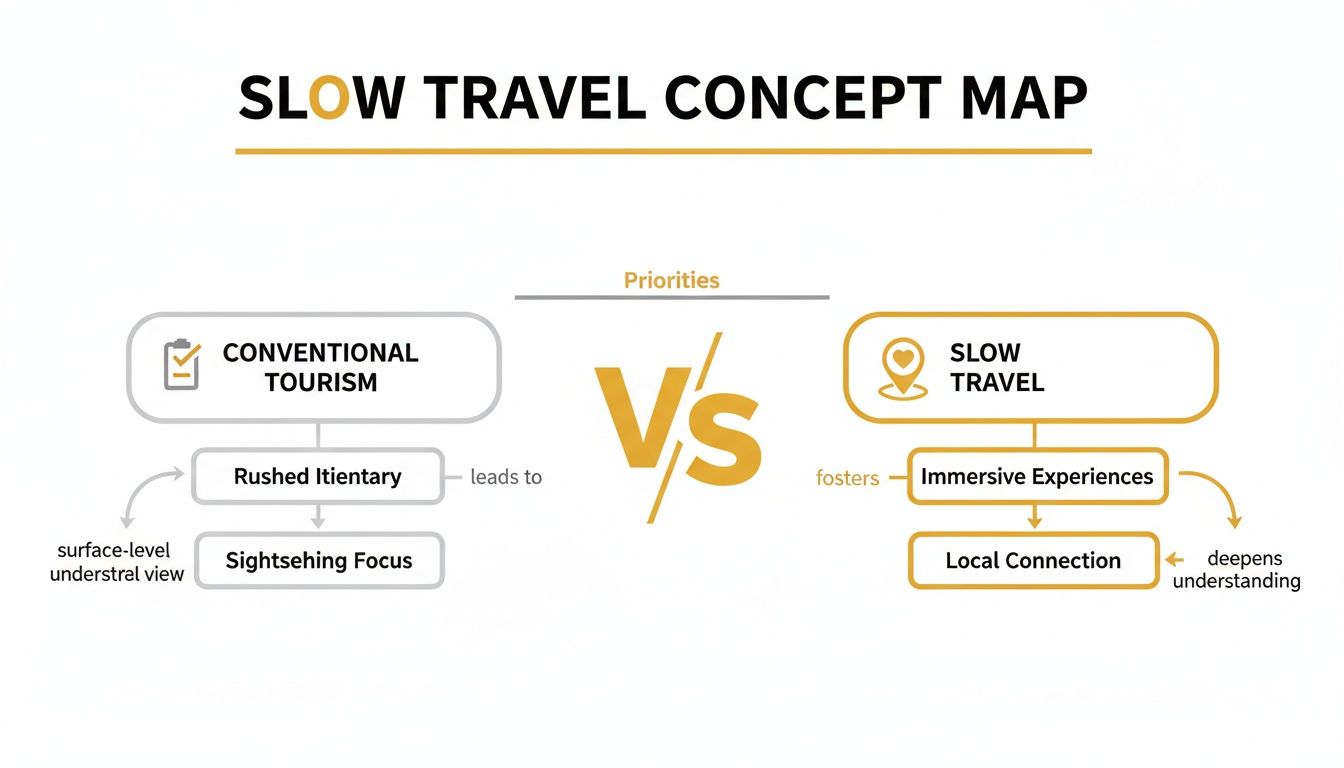
The real difference lies in moving from simply observing to actively participating. Your trip becomes a living, breathing experience, not just a passive tour.
Redefining Your Holiday
When you embrace this mindset, you completely redefine what makes a holiday a success. It’s no longer about how many photos you've taken or how many landmarks you've ticked off. Success becomes about the quality of your experiences and the depth of your connection. You might spend an entire afternoon getting lost in the history of a single Scottish castle or dedicate a whole day to meandering along Ireland's coastal paths with no destination in mind.
This mindful approach unlocks some incredible benefits:
- Deeper Cultural Immersion: You actually have the time to understand local traditions, taste authentic regional food far from the tourist traps, and have real conversations.
- Reduced Travel Burnout: By ditching the breakneck schedules and constant packing and unpacking, you come home feeling energised and inspired, not like you need another holiday.
- Greater Authenticity: Staying put allows you to uncover the hidden gems—the places the locals love—and see a destination through their eyes.
To make the distinction even clearer, let's break it down side-by-side.
Slow Travel vs Conventional Tourism at a Glance
This table shows how these two travel philosophies differ at their core, from planning right through to the memories you bring home.
| Aspect | Slow Travel Approach | Conventional Tourism Approach |
|---|---|---|
| Pace | Deliberate and relaxed; staying longer in fewer places. | Fast-paced and rushed; covering maximum ground. |
| Focus | Immersive experiences and cultural connection. | Sightseeing and ticking off major landmarks. |
| Itinerary | Flexible and spontaneous, allowing for unplanned discoveries. | Rigid and packed with pre-booked activities. |
| Accommodation | Often local guesthouses, self-catering cottages, or B&Bs. | Typically large chain hotels in central tourist areas. |
| Outcome | Feeling refreshed, connected, and culturally enriched. | Often feeling exhausted and needing a holiday from the holiday. |
| Goal | To understand a place. | To see a place. |
Ultimately, the choice comes down to what you want to gain from your travels: a collection of snapshots or a collection of stories.
A Journey, Not a Race
So, what is slow travel? It's the simple, powerful idea that a journey is not a race to be won. It's an opportunity to forge a genuine connection—with a place, with its people, and even with yourself.
By choosing depth over distance, you transform your trip from a highlights reel into a story rich with detail and meaning. Exploring the different travel styles available can help you find the approach that truly speaks to your sense of adventure. It’s a philosophy that ensures every holiday becomes an exploration you’ll never forget.
Why Mindful Journeys Are Reshaping UK Travel
In a world that feels like it’s always ‘on’, the need to properly switch off and escape has never felt more urgent. So many of us are grappling with ‘booking burnout’—that all-too-familiar pressure to squeeze every last drop out of a holiday, leaving us more exhausted than when we left. It’s this feeling that’s sparking a real shift in how we travel, especially here in the UK.
More and more, we’re looking for something that goes deeper than a jam-packed itinerary. We’re swapping fleeting moments for genuine connection, crowded hotspots for quiet corners, and fleeting trends for sustainable choices. Slow travel is the beautiful answer to this call. It’s about falling back in love with the journey itself, not just racing towards the destination.
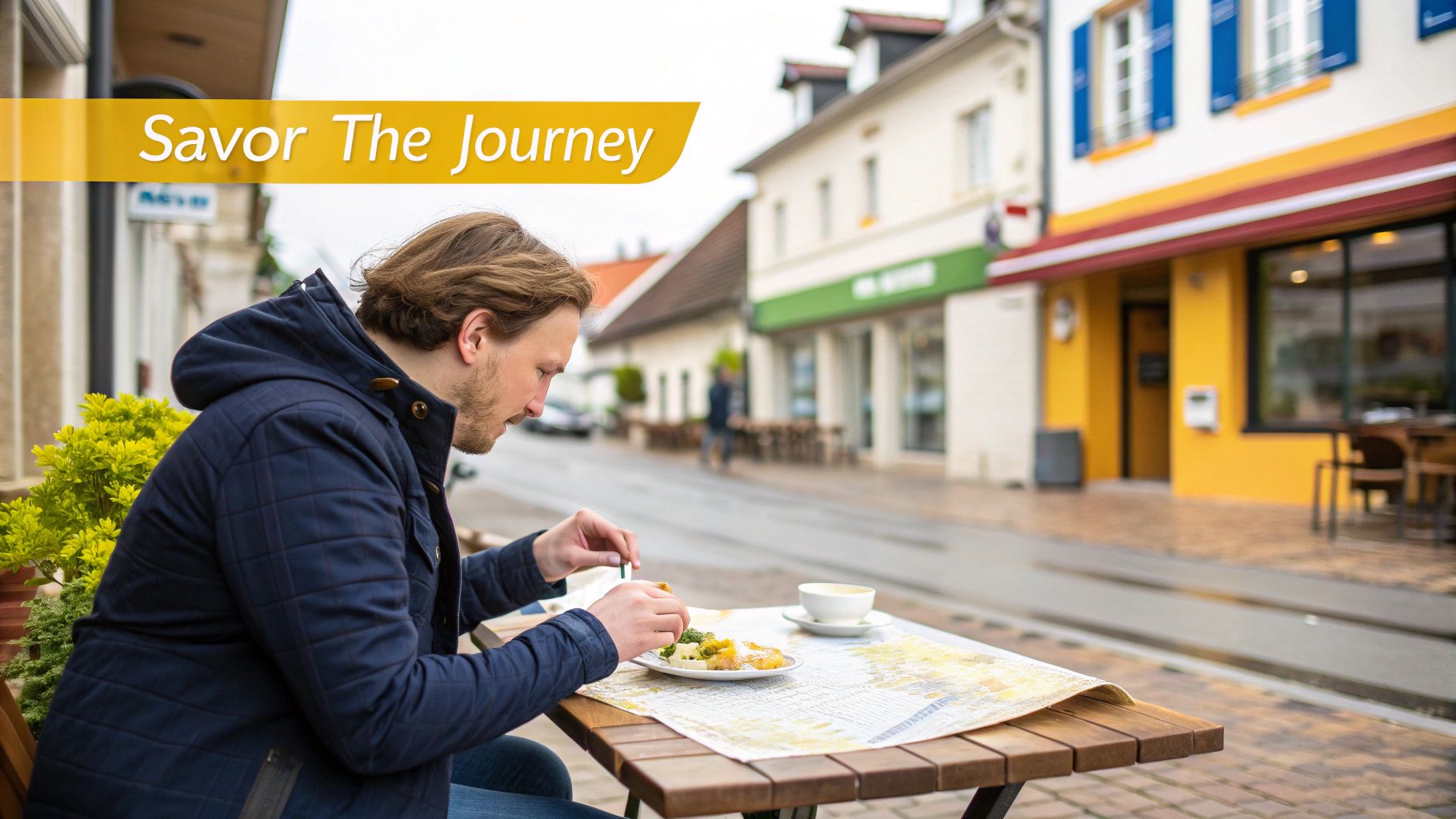
Think about it. It’s taking that spontaneous turn down a winding lane in the Cotswolds and discovering a cosy pub where you end up chatting to the owner for an hour. It’s losing all track of time exploring a single Scottish castle, simply because you have nowhere else you need to be. That's the heart of it all—trading stress for serenity and checklists for pure, unadulterated curiosity.
The Rise of Deeper, More Valuable Experiences
This isn’t just a feeling; the numbers back it up. There's a fascinating trend emerging where people are choosing to invest more in richer, more memorable trips, even if it means they travel a little less often.
Take January 2025, for example. Domestic overnight trips in England saw 6.3 million visits. While that number dipped by 4% from the year before, the total spend shot up by a staggering 39% to £2.4 billion. This tells a powerful story: we’re moving away from quantity and towards quality, favouring deeper explorations over whirlwind tours. You can see the full picture in the latest Great Britain tourism report.
This philosophy is perfectly suited for self-drive tours, giving history buffs and nature lovers the freedom to drink in the views at their own pace. It’s about tracing the stories etched into medieval castle walls or stumbling upon hidden coastal villages, all without the frantic energy of mass tourism.
"Slow travel invites you to become part of the landscape, not just a spectator passing through. It’s about allowing a place to reveal its secrets to you, one unhurried moment at a time."
Connecting with Places and People Authentically
At its core, slow travel is a conscious decision. It’s about lightening your environmental footprint while putting your support directly into the communities you’re visiting. When you stay longer in one area, your presence has a much more meaningful and positive impact on the local economy.
Choosing a family-run B&B over a faceless hotel chain, picking up fresh produce from a village market, or having dinner at an independent restaurant—these small acts create a wonderful ripple effect. They help build a kinder, more sustainable model of tourism that honours and protects local culture for generations to come.
The benefits go far beyond just sustainability:
- Fosters Genuine Connections: You create the space for those spontaneous conversations that turn into cherished memories and give you a true feel for a place.
- Supports Local Economies: Your money goes directly to small business owners, artisans, and communities, helping them to flourish.
- Enhances Personal Wellbeing: By letting go of a rigid schedule, you give yourself permission to truly relax, reflect, and just enjoy the moment.
The magic of this approach is that it works for any kind of trip, from a winding road trip through Wales to a scenic rail adventure. For a little inspiration, see how this mindset can shape an incredible journey with our guide to seeing the Best of Britain by Train.
Ultimately, this growing movement is reshaping UK travel by reminding us of a simple truth: the most profound experiences are often the ones we give ourselves time to find. It’s an invitation to slow down, look closer, and come home with memories that aren’t just beautiful, but truly meaningful.
How to Plan Your Perfect Self-Drive Holiday
This is where the dream of slow travel meets the open road. Turning that beautiful philosophy into a real-world plan is where the adventure truly sparks to life, and a self-drive holiday is the ultimate way to do it. It gives you that perfect mix of freedom and focus, letting you design a journey that unfolds at the speed of pure curiosity.
Forget those frantic, jam-packed schedules. The aim here is to build a trip that has room to breathe, one that invites those wonderful, unexpected moments to happen. Let's walk through how to craft a slow, thoughtful, and completely unforgettable self-drive experience.
Build an Itinerary That Bends
The heart and soul of any great slow travel plan is a flexible itinerary. Instead of racing to tick off five cities in seven days, why not choose just one or two regions to be your anchors? This simple shift lets you go deep, to really get a feel for a place instead of just skimming its surface.
Think of your plan as a friendly suggestion, not a set of rigid rules. After all, the real magic of a self-drive trip is the freedom to follow a whim.
- Pick one or two highlights per day: Maybe it’s exploring a ruined castle in the morning and finding a perfect coastal walk in the afternoon. That’s it.
- Leave the gaps wide open: The space between those plans is where spontaneity lives. See a sign for a tiny village down a winding lane? Go and explore it. Spot a cosy-looking pub with smoke curling from its chimney? Pull over for a pint.
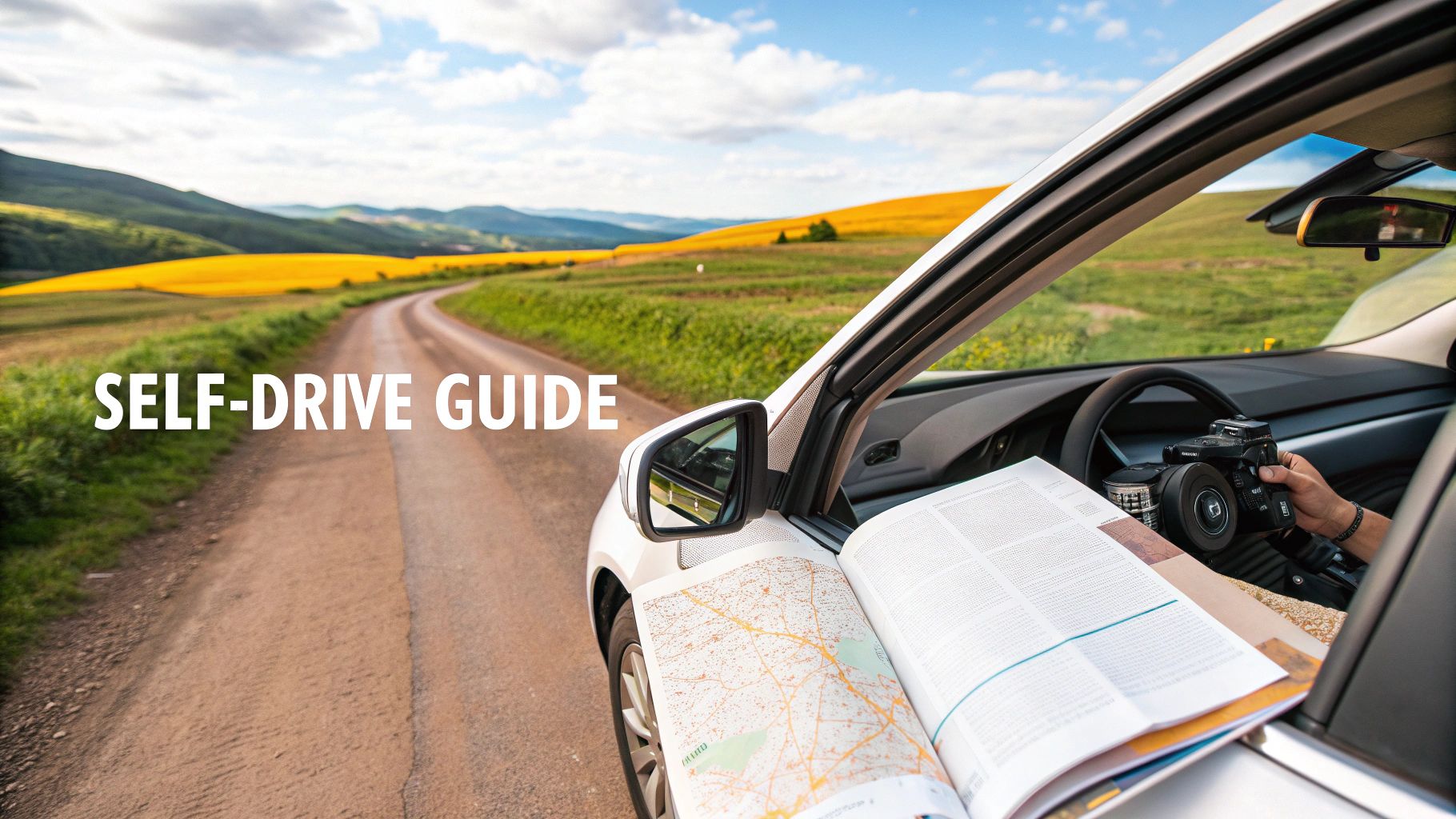
- Bring a proper map: Of course, your phone's GPS is handy, but there’s a different kind of discovery that comes from spreading a paper map across the bonnet of the car. It reveals hidden parks, scenic B-roads, and tiny hamlets you’d never find otherwise.
This approach gives you a sense of direction without robbing you of the joy of getting delightfully lost.
Choose Accommodation with a Soul
Where you lay your head at night is a huge part of the experience. It’s not just a bed for the night; it’s your temporary home, your connection to the local culture. Swapping a faceless chain hotel for a place with real character can transform the entire feel of your journey.
Look for places that encourage you to slow down and settle in:
- Locally-owned inns and B&Bs: This is where you get a warm welcome and priceless local advice. The owners can point you to the best walking trail that’s not in the guidebook or the most authentic family-run restaurant in town.
- Self-catering cottages: Renting a little cottage for a few nights lets you play at being a local. You can browse the village market, try cooking with fresh regional ingredients, and simply enjoy the peace and quiet of your own space.
- Farm stays: For a truly memorable stay, you can’t beat connecting directly with the countryside and the people who work the land.
A great place to stay becomes a destination in its own right. It offers more than a bed; it gives you a sense of place, a story, and a real connection to the community you're visiting.
Budget for Memories, Not Miles
People often assume that travelling slowly must cost more. The reality is, by staying longer in one area, you slash one of the biggest holiday expenses: constant travel. Your budget naturally shifts from paying for petrol and train tickets to investing in genuinely meaningful experiences.
Instead of burning through your funds getting from A to B, you’re spending it on things that create lasting memories. That might be hiring a local guide for a private walking tour, taking a regional cooking class, or simply savouring a long, unhurried meal at a pub buzzing with locals. You're choosing the quality of your time over the quantity of ground you cover.
For those who love this idea but want the logistics handled, exploring curated self-drive tours can be a brilliant starting point. They provide the framework, leaving you free to focus on the discovery.
Master the Art of Doing Nothing
This is one of the most important parts of planning a slow holiday, and honestly, one of the hardest to get right: you have to schedule days for doing absolutely nothing. This isn't about being lazy; it's about giving yourself the gift of being truly present.
These are the days for waking up without an alarm, for finding a bench in a village square and just watching the world go by. It’s for spending a whole afternoon in a café with a good book. It’s in these quiet, unscripted moments that you really soak up the atmosphere of a place and let your mind properly unwind. By building this empty space right into your plan, you ensure your trip isn't just a holiday, but a true restoration.
Real Itineraries for Immersive Exploration
The best way to get your head around the idea of slow travel is to see it in action. So, let's move beyond the theory and imagine you’re actually on the open road, free to explore at a pace set by your own curiosity. A self-drive holiday is the perfect canvas for this kind of adventure, giving you just enough structure to feel supported without ever boxing you in.
Here are a couple of mini-itineraries that paint a picture of what these immersive journeys through the UK and Ireland really feel like.
A Week Immersed in Ireland’s Wild Atlantic Way
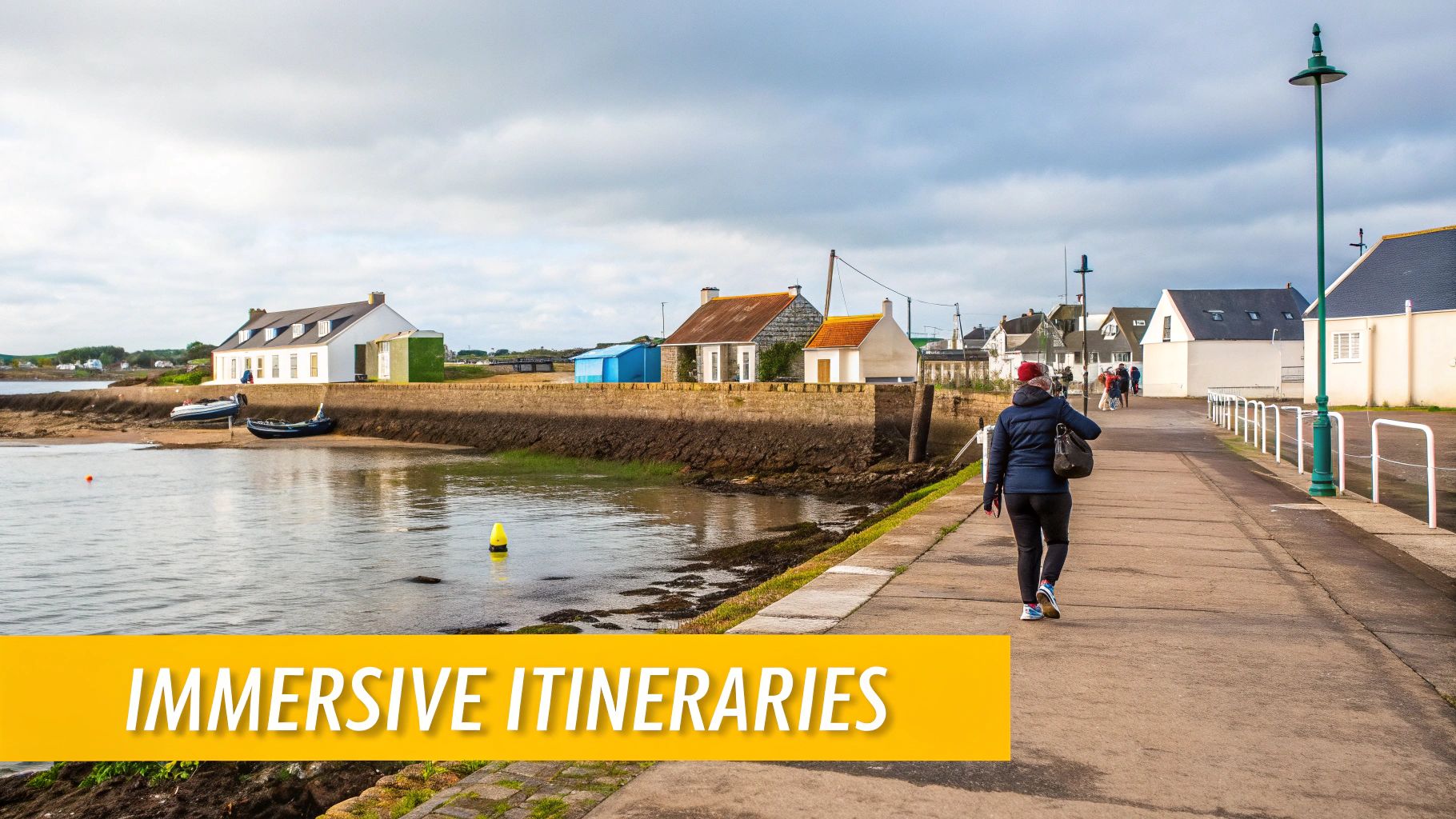
Instead of trying to tick off the entire 2,500-kilometre route in one go, a slow traveller picks one captivating stretch and truly gets to know it. Imagine basing yourself for a whole week in a cosy, family-run guesthouse in County Clare. Your days are unhurried, shaped by the tides and your mood, not a rigid schedule.
- Day 1-2: Settle in and explore your local village. Find the best pub for traditional music, wander the nearby coastal paths, and strike up a conversation with the shopkeepers.
- Day 3: Drive to the Cliffs of Moher, but get there early before the coaches arrive. Spend the entire morning there, discovering different viewpoints and just feeling the raw power of the Atlantic.
- Day 4: A day for pure spontaneity. Maybe you'll take a ferry to the Aran Islands or follow a sign down a narrow lane that leads to a hidden, windswept beach perfect for a quiet picnic.
- Day 5-6: Delve into the region’s musical heart in Doolin. You aren’t just passing through for a photo; you’re staying long enough to feel the rhythm of the place.
- Day 7: One last leisurely breakfast, perhaps picking up some local crafts to take home, before heading off feeling restored, not rushed.
This approach transforms a famous tourist route from a scenic drive into a deep, personal connection with a corner of Ireland you’ll never forget.
A Highland Retreat in Scotland
Scotland’s Highlands are vast and mythical, a landscape that practically begs you to slow down and appreciate its majesty. A slow travel itinerary here isn't about covering maximum ground; it’s about absorbing the unique atmosphere of one breathtaking area.
Picture yourself in a small cottage near a serene loch in the Cairngorms National Park. This becomes your home base for a week of unhurried exploration, where the journey itself is as important as any single destination.
Your itinerary becomes less of a checklist and more of a compass, pointing you towards authentic experiences. You’re not just seeing the Highlands; you’re feeling them.
This might look like:
- Exploring Local Glens: Dedicating entire days to walking through ancient forests and alongside rushing rivers, keeping an eye out for red deer or golden eagles.
- Visiting a Distillery: Don’t just take the quick tour. Instead, opt for an in-depth tasting, and hear the stories behind the whisky from the very people who craft it.
- Discovering Ancient History: Spending an afternoon at a single ruined castle, letting its stories sink in, rather than trying to cram three into one day.
It's a world away from a whistle-stop tour. For those inspired by the rich flavours of the region, a trip like the Scotland Culinary Self-Drive Tour provides a perfect template for this kind of deep dive.
This mindful approach is really catching on. Recent travel analysis shows UK travellers are increasingly choosing shorter, more focused trips. The average holiday length is dropping from 14 days to just 8-9 days, a shift that perfectly suits the slow travel ethos of deep immersion over long-haul endurance. It just goes to show, you don't need a month to have a meaningful adventure; you just need the right mindset.
Using Technology to Enhance Your Journey
Let’s be honest, the idea of slow travel can sometimes conjure images of ditching all technology and going completely off-grid. But that's not the whole story. When you use it thoughtfully, technology can actually be your best friend on the road, unlocking more spontaneity and connection, not less.
Think of your phone less like a distraction and more like a key to freedom. It's all about finding that sweet spot—being fully present in the moment while having powerful, simple tools in your pocket that make your journey even smoother.
Technology That Frees You
The real magic of a self-drive adventure is the ability to follow a whim. You're cruising through the Scottish Highlands, you spot a village that steals your heart, and you think, "I have to stay here tonight." That’s where a little bit of tech makes all the difference.
In just a few taps, you can book a room at a cosy local inn, grab a last-minute train ticket for a side quest, or add another day to your car rental. This kind of flexibility empowers you to say yes to the unexpected detours that make a trip unforgettable. It's a growing trend, too; in the UK travel market, a massive 46% of all online travel bookings now happen on mobile devices.
Technology shouldn't pull you out of the moment; it should give you the freedom to stay in it longer. It’s the tool that lets you turn a fleeting impulse into a cherished memory.
This approach lets you lean into spontaneity, knowing you have the backup to make it happen without a fuss.
Smart Tools for Mindful Navigation
There's a definite romance to unfolding a paper map, but let's not discount the value of modern navigation. Digital tools are brilliant for guiding you down scenic backroads, finding that perfect picnic spot, or locating a petrol station without any stress.
The trick is to use them as a guide, not a dictator.
- Plan, then put it away: Set your route for the day, then tuck your phone away. Let your focus be on the incredible landscapes unfolding outside your window, not on a screen.
- Discover local gems: Use map apps to pinpoint those locally-loved cafés, independent shops, or hidden viewpoints that you’d never find in a generic guidebook.
- Travel more sustainably: If you're driving an electric vehicle, technology is a must. Planning your route is a breeze when you can use one of the top UK apps for finding EV charging stations to ensure a seamless, eco-friendly trip.
When used with intention, these tools help you navigate with confidence while your attention stays where it belongs: on the world around you. Technology simply becomes a quiet co-pilot, supporting your adventure so you can stay fully immersed in the experience.
Your Journey to Mindful Exploration Begins Now
Think of this guide not just as a collection of tips, but as an invitation. An invitation to see the world differently. We’ve journeyed through the idea that slow travel is more than a style of holiday; it’s a conscious choice to experience deeper connection, less stress, and a more meaningful kind of exploration.
The real magic of travelling this way is its beautiful simplicity. When you choose depth over distance, you open the door to the unexpected. Those are the moments that stick with you – the quiet sunrise, the unplanned detour down a country lane, the spontaneous chat with a local artisan.
A self-drive tour puts you right in the driver's seat for this philosophy, handing you the keys to unlock authentic experiences at your own pace.
Imagine your next trip not as a race against the clock, but as a journey of discovery. It’s an adventure filled with serendipitous moments and stories that will last a lifetime.
Of course, to truly embrace this way of seeing the world, a flexible lifestyle can make all the difference. If you're curious, you can find some fantastic, practical advice on how to blend remote work with travel, which can open up possibilities for much longer, more immersive trips.
Your next great adventure is waiting just over the horizon. It doesn’t start with a sprint, but with a single, mindful step onto the open road. Are you ready to answer the call?
Your Slow Travel Questions Answered
Dipping your toes into the world of slow travel often brings up a few questions. It’s a beautifully simple idea, but thinking through the practical side of things can help you see just how easily it can shape your next holiday. Let's walk through some of the things people often ask.
Does Slow Travel Have to Be Long or Expensive?
Not in the slightest. This is probably the biggest misconception out there, but the truth is, slow travel is a mindset, not a duration or a budget. A deeply immersive weekend spent exploring one small town can be far more rewarding than a whirlwind two-week trip that has you racing across an entire country.
Think about it: by staying put in one area, you’re cutting down on one of your biggest costs – transport. That money can then go towards what really matters, like savouring local food at a family-run restaurant or lingering over a coffee at a market. The whole point is the depth of your experience, which makes this approach work for almost any holiday length or budget.
Is Slow Travel a Good Fit for Family Holidays?
It's a fantastic fit. In fact, you might find it’s the perfect way to travel with family. Slow travel naturally removes the biggest stress points of a typical family trip: rigid schedules, the constant packing and unpacking, and dragging tired kids from one place to the next.
It leaves room for those little moments of unexpected joy. Imagine letting the kids spend an extra hour exploring a castle simply because they're fascinated, or having a long, lazy picnic at a beautiful spot you just happened to find. A self-drive holiday, especially, gives families the freedom they need, allowing everyone to move at their own, comfortable pace.
A slow family holiday is less about ticking off sights and more about creating memories together without the pressure of a deadline. It's about simply enjoying each other's company in a new and exciting place.
How Do I Avoid Overplanning a Slow Travel Trip?
The trick is to build a 'skeleton' itinerary, not a rigid, minute-by-minute schedule. This gives your trip a gentle sense of direction without sacrificing the spontaneity that makes slow travel so special.
Start by booking your main accommodation and maybe one or two absolute must-do activities. Beyond that, leave big chunks of your days completely free. Instead of a strict plan, you could jot down a list of possibilities for an area—a scenic walking trail, a highly-rated pub, a local market—and then just see what you feel like doing when you wake up that morning. It’s the perfect balance between having enough structure to feel prepared and enough freedom to let a little magic in.
Ready to discover the UK and Ireland at a pace that feels right for you? At BTOURS, we specialise in creating unforgettable self-drive holidays that let you lead the way. Take a look at our thoughtfully curated itineraries and start dreaming up your journey today at https://www.btours.com.