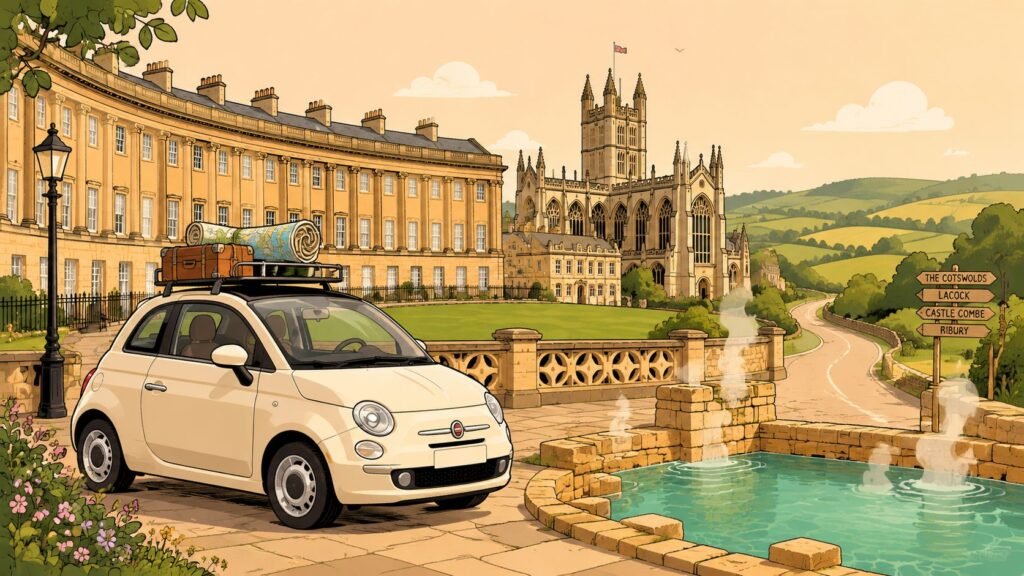
Most Bath city break advice starts with the same instruction: arrive on Friday, see the Roman Baths, stroll to the Royal Crescent, and leave on Sunday. That plan works on paper, but it ignores the part that can make or break a self-drive visit, getting into the city, leaving the car somewhere sensible, and moving between a compact historic centre and the wider countryside without wasting half your stay in traffic.
Bath rewards a more deliberate approach. It has been a UNESCO World Heritage Site since 1987 and joined the transnational Great Spa Towns of Europe inscription in 2021, alongside 11 historic spa towns across seven countries. The city's heritage appeal supports a substantial visitor economy, with about 5.8 million visitors a year, around £405 million in visitor spend, and roughly 9,300 to 10,000 jobs, according to UNESCO UK's assessment of the Great Spa Towns. This isn't a sleepy museum town. It's a busy, high-demand destination where timing and parking deserve as much attention as sightseeing.
Why Timing Matters More Than You Think
The standard Friday-to-Sunday Bath city break is convenient, but it isn't automatically the best choice. Weekends bring energy, open doors, busy restaurants, and a satisfying sense that the whole city is enjoying itself. They also bring more pressure to the streets, attractions, accommodation, and car parks, especially when good weather or seasonal events draw extra visitors.
For drivers, the difference is sharper. Bath's historic core has limited street capacity, and the council reports that 12% of movements in the city centre are through trips with no origin or destination there. That figure appears in VisitWest's visitor economy facts and figures, and it explains why a route that looks short on a map can become awkward at the wrong time. You're not only sharing the road with visitors heading for the Roman Baths. Local journeys, deliveries, buses, taxis, and through traffic all compete for space.
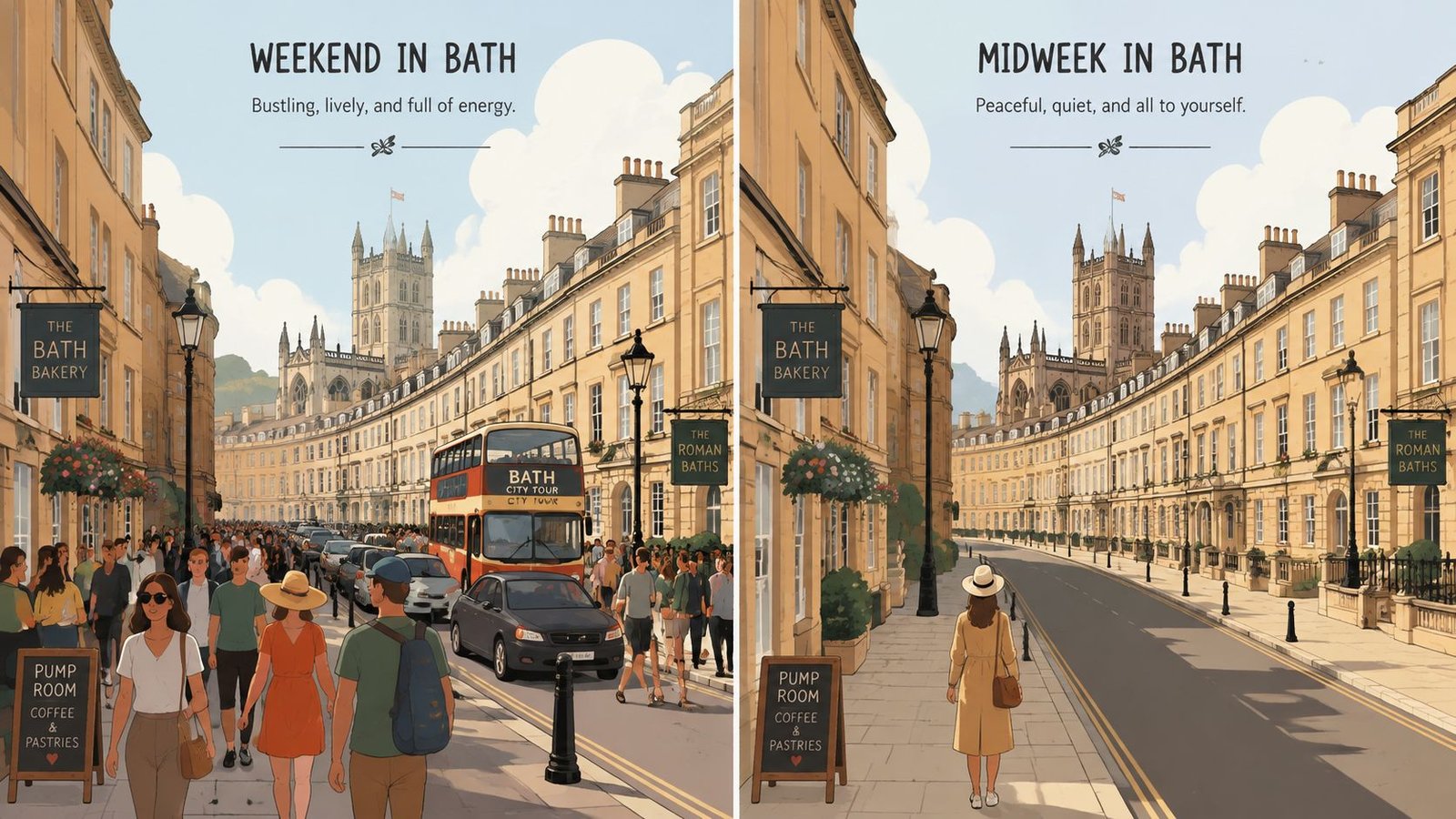
Why midweek works better for drivers
Midweek travel gives you more control. Arrive after the morning commuter movement has eased, settle the car before lunch, and explore on foot while the city feels less compressed. You'll still find lively restaurants and the major heritage sights, but your itinerary won't depend on pushing through the busiest arrival window.
Visit Bath presents Bath as a year-round destination, while EasyJet's Bath travel guidance specifically warns that weekends and peak summer periods are busy and recommends midweek travel. That advice fits the practical reality of a self-drive break. A quieter Tuesday or Wednesday lets you spend your energy on the city rather than circling for a space or arriving late to a timed booking.
The value argument matters too. VisitWest reports that Bath hotel occupancy was only slightly higher in its latest reporting period, while average daily rates rose by just over 4%, making timing a meaningful consideration for travellers watching costs. Treat that as a planning signal rather than a universal price rule. Accommodation varies by date, but midweek often gives you more flexibility to compare room types, parking arrangements, and cancellation terms.
Practical rule: If you're driving, book the stay that makes arrival easy, not the weekend that looks traditional.
Choose the weekend when atmosphere is your priority, or when a specific event dictates the dates. Otherwise, a midweek Bath city break is the smarter default. You'll get a more relaxed first afternoon, a better chance of fitting in a spa session, and fewer reasons to move the car once you've arrived.
Mastering Bath Parking and Transport Logistics
Bath is easy to explore without a car once you're settled, but difficult to improvise with a car once you're inside the historic centre. Decide your parking strategy before departure, then treat the vehicle as a tool for arrival and day trips, not as part of your sightseeing plan.
Choose the right arrival method
Bath has three Park & Ride sites, all operating seven days a week. Official Visit Bath parking guidance says services run until 11:30pm from Monday to Saturday and until 6:00pm on Sundays and public holidays. That makes Park & Ride viable for late dining on most evenings, but not for assuming a Sunday night service will run late.
The combined Park & Ride capacity is 2,806 spaces, and buses run every 15 minutes throughout the day directly into the city centre. The published offer includes 10 single journeys for £14.80, as detailed by Bath and North East Somerset Council's Park & Ride update. Check the current ticket terms before travelling, particularly if your group size or return pattern makes another option more suitable.
Follow these parking steps
Check your accommodation first. A central hotel with confirmed private parking can be worth choosing even when the room rate is higher. Never assume “central” means a usable space. Ask whether parking is on-site, reserved, charged separately, or located away from the property.
Use Park & Ride when you don't need the car. Bus access removes the stress of historic streets and leaves you free to walk between the Roman Baths, Bath Abbey, Pulteney Bridge, and the Georgian terraces.
Plan evening return times. The later Monday-to-Saturday service supports dinner and evening sightseeing, but Sunday and public holiday operating hours finish earlier. If your plans extend beyond the service, leave the car at accommodation or choose a city-centre car park with a clear exit plan.
Read the overnight rules. Park & Ride sites are open 24 hours a day, and overnight parking is permitted at the owner's risk when payment is made. Drivers using the bus and returning the same day can park free, while anyone leaving the car without using the bus must pay for parking, according to Visit Bath's Park & Ride rules.
Check emissions-based charges before entering a council car park. Bath's council-owned car parks introduced an emissions-based charging system in September 2023. Pricing follows DVLA vehicle excise duty bands. Non-diesel vehicles below 131 grams per kilometre don't see prices increase under the stated system, while more polluting vehicles, including diesel vehicles, pay a higher rate, according to Visit Bath's travel information.
| Option | Best For | Key Cost/Rule |
|---|---|---|
| Park & Ride | Drivers staying outside the centre or visiting for the day | Bus offer includes 10 single journeys for £14.80. Same-day users travelling by bus can park free. |
| Hotel or apartment parking | Visitors who want to unload once and walk | Confirm whether a space is private, reserved, charged separately, and suitable for your vehicle. |
| Council car park | Central access when Park & Ride doesn't fit | Charges use vehicle emissions and DVLA vehicle excise duty bands. |
| Street parking | Only when you've checked restrictions carefully | Historic streets, controlled zones, and limited capacity make improvisation a poor strategy. |
The simple answer is to park once, then walk. Bath Spa railway station opened in 1840, and rail-linked accommodation can be particularly useful for visitors who want central access without taking a car into the core, as noted in Bath's World Heritage Site Management Plan.
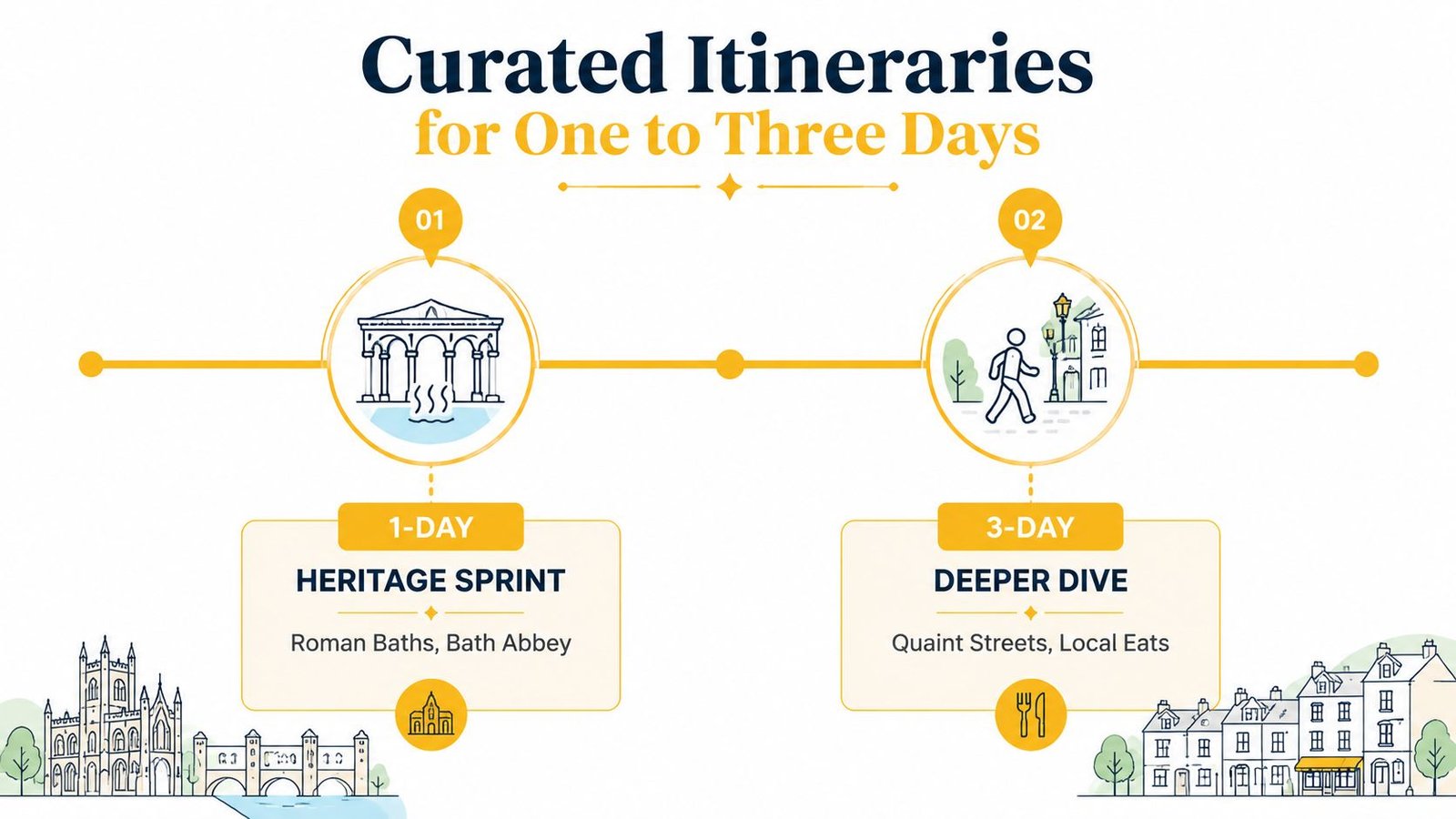
Curated Itineraries for One to Three Days
A good Bath itinerary should become slower as the stay gets longer. The first day earns its name through concentrated heritage, the second adds Georgian architecture and gardens, and the third gives the spa and surrounding area enough room to breathe.
The 24-hour Heritage Sprint
Arrive in the late morning, ideally after the main commuter period, and go straight to your chosen parking base. Don't attempt to drive from sight to sight. Bath's central attractions sit close enough together that walking is quicker, more enjoyable, and far less stressful.
Book the Roman Baths for the earliest practical timed entry after arrival, or reserve the first slot on your full morning. The attraction welcomed more than 850,000 visitors in 2022 and ranked 28th among the UK's most visited attractions that year, according to the city's World Heritage Site Management Plan. Follow it with Bath Abbey, a walk through the surrounding streets, and a late lunch rather than trying to force another major ticketed attraction into the same block.
Use the afternoon for Pulteney Bridge, the river, and the lanes around the centre. The golden stone photographs well in softer late-day light, so save the Royal Crescent for the approach to sunset if your energy holds. Dinner should be booked before arrival, especially if you're travelling at a weekend.
The 48-hour Georgian and Gastronomy route
On day two, start at the Royal Crescent before the streets fill. Walk through the crescent and Royal Victoria Park, then continue towards the city centre. Add No. 1 Royal Crescent if you want interiors and social history rather than another exterior photograph.
After lunch, go out to Prior Park Landscape Garden. It's a better use of a second day than repeating the central checklist, particularly when the weather is clear. Keep the car parked if you've arranged an easy bus or taxi connection, or use it only for the transfer and return it to your accommodation afterwards.
Reserve afternoon tea for a deliberately late slot, then leave the evening for a restaurant rather than another attraction. For travellers extending the same slow, detail-focused style to another destination, this extended Montreal stay itinerary offers a useful example of how extra time can create a richer city experience.
The 72-hour Spa and Surrounds plan
Use the third morning for Thermae Bath Spa, then take the afternoon gently. A thermal session followed by a rushed museum circuit defeats the point. Leave the city later for a short countryside drive, choosing one route and returning before dinner.
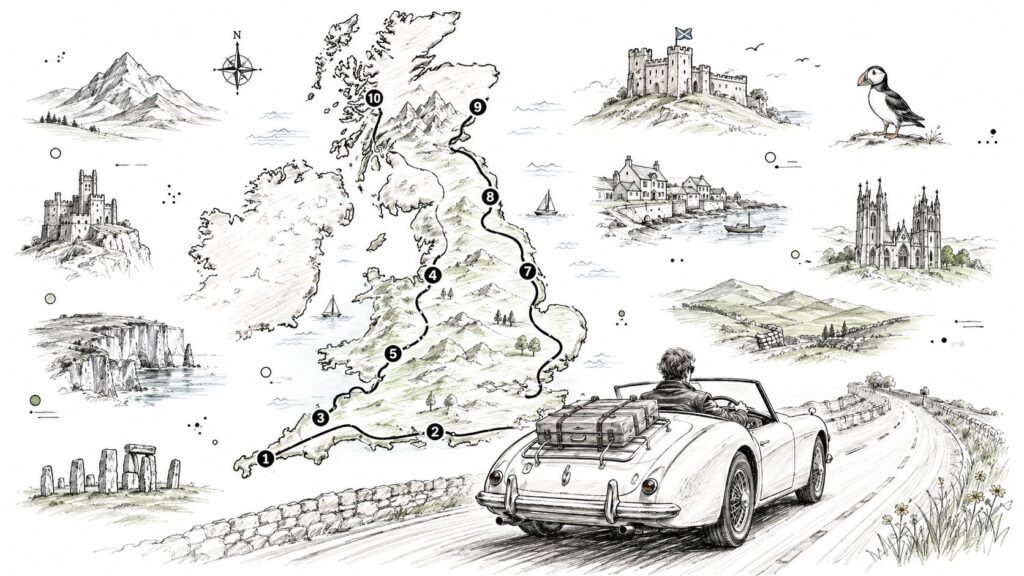
For visual route inspiration before you set off, save this UK road-trip planning image. The principle is simple: keep Bath as your walking base, and let the extra day absorb the driving.
Choosing Your Neighbourhood and Accommodation
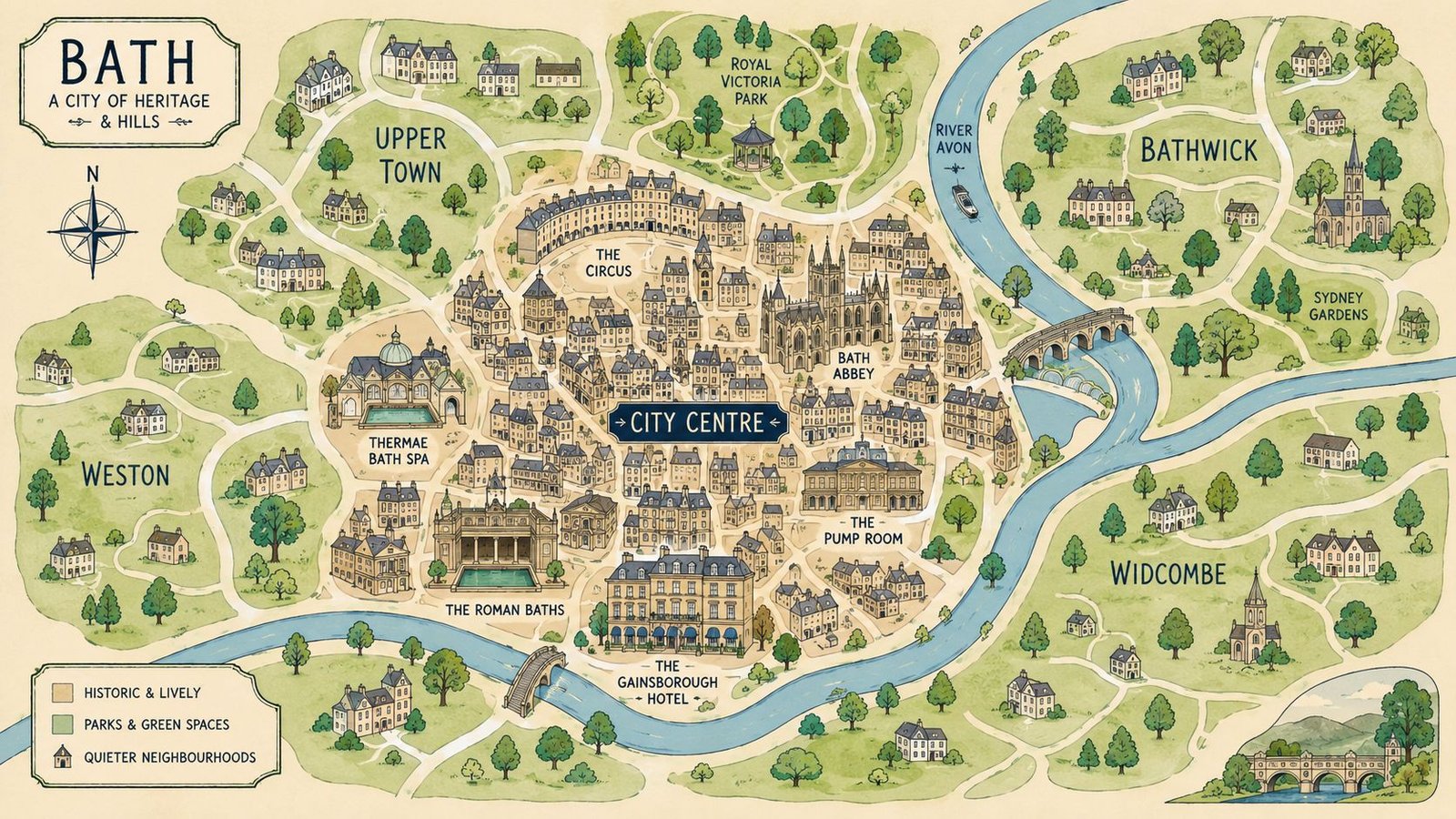
Your accommodation decides whether self-driving feels effortless or unnecessarily complicated. The city centre offers the shortest walks to Bath Abbey, the Roman Baths, restaurants, and evening drinks, but central addresses often come with restricted access, awkward unloading, or limited private parking.
Widcombe and Bathwick suit travellers who want a calmer base and a more straightforward departure for countryside excursions. They're close enough to reach the centre on foot or by local transport, yet they can feel less hemmed in than the narrowest central streets. The trade-off is that you'll need to plan the return journey after dinner and check the walking route rather than assuming every central attraction sits on level ground.
Compare the main bases
City centre: Choose it for a first visit, a short stay, or a car-free sightseeing plan. Prioritise accommodation that confirms parking in writing. A boutique hotel can give you character and an excellent location, but don't pay for atmosphere and then discover that your car is several streets away.
Widcombe: This is a strong compromise for self-drive travellers who want access to cafés and neighbourhood life without placing the car deep in the historic core. Check the route to the centre and the property's approach before booking.
Bathwick: Choose Bathwick when you want a quieter residential setting and an easier launch towards Prior Park or the surrounding roads. It works particularly well for a longer stay, provided you're comfortable walking back uphill after an evening in town.
Serviced apartment: Apartments make sense for families, longer stays, and anyone who wants breakfast or a packed lunch without searching for a table. Confirm parking, stair access, check-in arrangements, and whether the vehicle can stop nearby for luggage.
A countryside cottage can be appealing for drivers who plan several regional excursions, but it changes the character of the trip. You'll gain space and easier parking while sacrificing the ability to step outside and immediately join Bath's evening life. Browse ideas for a rural-style stay through this self-catering accommodation image, then judge each property by its road access rather than by photographs alone.
Before paying, ask five direct questions:
- Is parking guaranteed or merely available?
- Can you unload outside the entrance?
- Is the route restricted or narrow?
- Can you walk to the centre without moving the car?
- Is the exit convenient for your planned day trip?
The right answer is rarely the most glamorous address. It's the place that lets you park once, sleep well, reach the centre easily, and leave Bath without a morning manoeuvring battle.
Dining and Spa Experiences Worth Booking
Bath's dining and wellness traditions work best when you treat them as part of the city's identity, not as filler between attractions. The historic Pump Room sits beside the Roman Baths, making afternoon tea there a natural pairing with a heritage visit. Book a late-afternoon sitting if you want to turn the transition from sightseeing to evening into one unhurried experience.
For a more informal rhythm, choose a Bath bun or a café stop during the day and reserve dinner for a restaurant that suits your pace. The city has everything from traditional tea rooms and hotel dining rooms to modern menus, cocktail bars, and international food. Don't leave the main dinner booking until you're already tired and hungry. That's when a carefully planned city break turns into a search for any table with space.
Build the spa around the sightseeing
Thermae Bath Spa deserves a protected block of time. Schedule it after your main heritage touring, not between two attractions on opposite sides of the centre. You'll need time to change, use the thermal facilities, and leave without rushing back into clothes and cobbled streets.
The rooftop pool is the obvious draw, but the atmosphere improves when you stop treating the visit like another item to tick off. Twilight sessions can create a more atmospheric experience, particularly when the city lights begin to replace the day's sightseeing glare. Check availability and book directly before finalising dinner.
The Cross Bath offers a more historic setting and should be considered separately from a general spa visit. It suits travellers who want to connect the wellness experience with Bath's Roman and Georgian story. Availability varies, so confirm the session before building the rest of the day around it.
Scheduling rule: Put the spa before dinner, leave a changeover window, and book the restaurant within easy walking distance.
A sensible 48-hour sequence is Roman Baths and Bath Abbey on day one, then Georgian architecture in the morning of day two, spa in the late afternoon, and dinner afterwards. That order protects the spa from becoming an afterthought and keeps your final evening relaxed. If you're staying three days, move the spa to the third morning and use the afternoon for a nearby garden or gentle countryside drive.
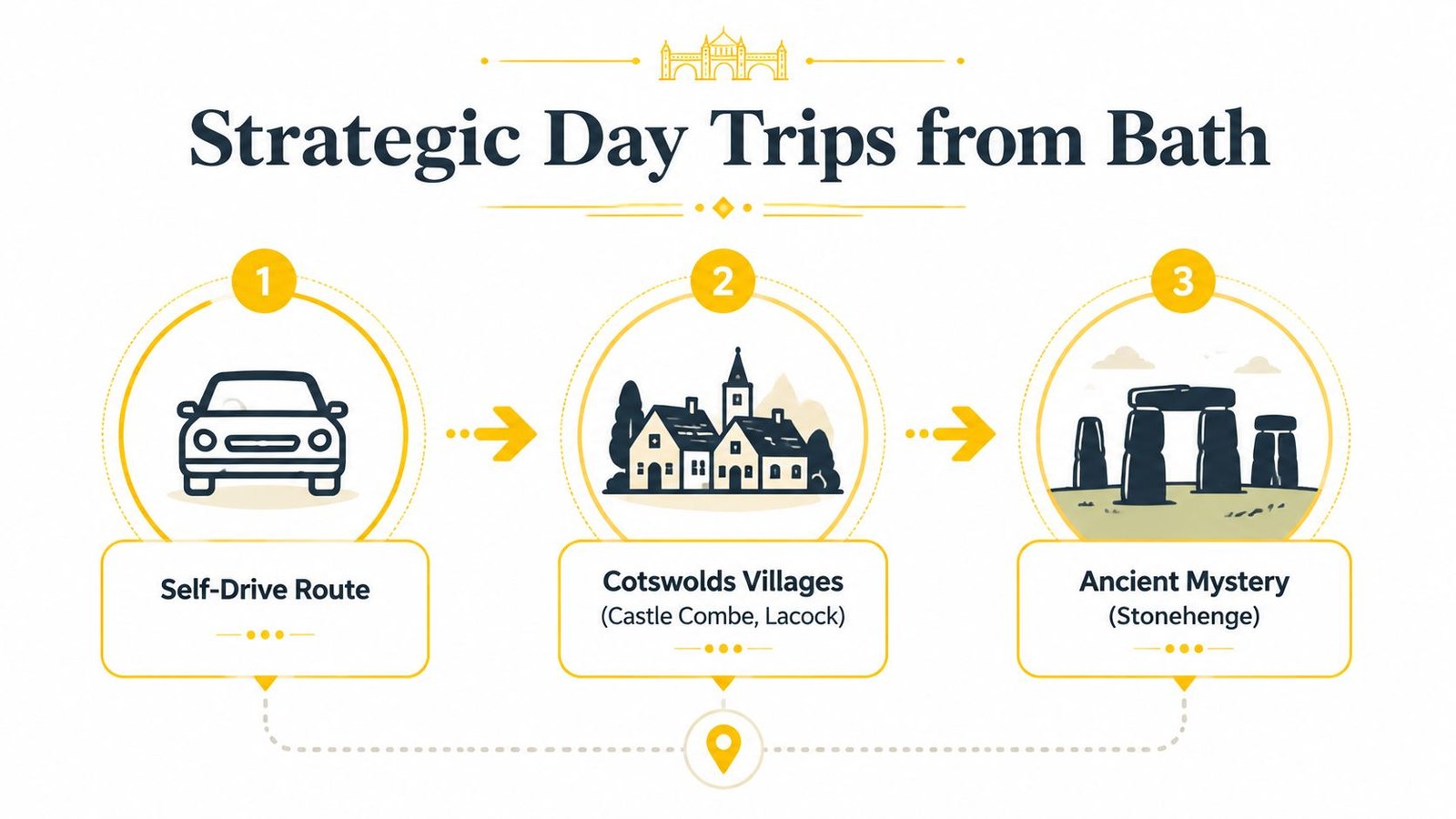
Strategic Day Trips from Bath
Bath makes a strong base for regional driving because the city itself is compact, while the surrounding area offers a sharp change of pace. The mistake is trying to combine every famous place in one loop. Pick a theme, keep the route coherent, and return before the final stretch becomes tiring.
Cotswolds villages
Castle Combe is the obvious first choice for a village-focused outing, with Lacock offering another historic stop. Pairing them can work when roads are flowing, but the route needs flexibility. Narrow lanes, village parking pressure, pedestrians, and slow-moving traffic can stretch an apparently simple drive.
Leave Bath after the commuter period and avoid planning your entire day around a rigid lunch reservation. Visit the most popular village first, then use the second stop as the adjustable part of the route. If the first location is crowded, stay briefly and move on rather than spending the best part of the day searching for a space.
Stonehenge
Stonehenge is a different kind of excursion. It's a single headline attraction rather than a village-hopping route, so it's easier to plan as a dedicated day trip. Leave enough time for the drive, the visitor experience, a proper break, and the return journey. Don't bolt it onto a full Cotswolds circuit unless you're prepared for a long day with little margin.
Traffic around the A36 and routes connecting Bath with wider regional roads can be unpredictable, while M4-related movement can affect the approach to other destinations. Use live navigation on the morning, but don't let the app tempt you into an impractical shortcut through narrow residential lanes. A slower, clearer route often protects the day better than a theoretical saving.
Make the car earn its place
Bath's city-centre transport constraints mean the car is most valuable outside the centre. Park before sightseeing, then collect it only for a planned loop. That approach avoids moving in and out of the historic core and gives you a realistic chance of returning for dinner.
For broader route ideas, this UK coastal road-trip planning image is useful inspiration, but Bath should be treated as a base camp rather than a place to begin every drive from the front door.
Route discipline: One major regional objective per day is enough. Add a second stop only when it lies naturally on the same road.
A self-drive Bath city break works when each day has a clear purpose. Use the centre for walking, heritage, food, and spa time. Use the car for villages, scenery, and attractions that truly sit beyond the city.
Final Planning and Packing Essentials
Book the elements that can sell out first, especially accommodation with private parking, Roman Baths entry, spa sessions, and popular restaurants. Keep confirmations together on your phone, but save key details offline in case reception drops during a rural drive.
Pack shoes with firm grip and cushioning. Bath's historic streets can be uneven, steep, and tiring when you're walking between attractions all day. Bring a light waterproof layer, a compact umbrella, and a separate bag for wet swimwear after Thermae Bath Spa or the Cross Bath.
Drivers should carry the vehicle documents they normally need, check fuel or charging plans before leaving the city, and keep the parking strategy visible in the itinerary. Don't rely on finding a convenient space at the end of a long sightseeing day. Reserve accommodation parking or commit to Park & Ride before you set off.
For travellers who want the freedom of driving without assembling every hotel, route, and activity themselves, BTOURS offers curated city breaks and self-drive itineraries with selected accommodation and planning support. That format suits anyone who wants an independent Bath experience with a clearer framework for logistics.
A successful Bath city break is not built by cramming in more attractions. It comes from choosing the right arrival day, parking once, booking the experiences that matter, and leaving enough space for the city's streets, gardens, food, and thermal waters to feel enjoyable.
Plan your Bath city break with BTOURS, which combines self-drive flexibility with curated accommodation, route planning, and destination support. Visit the site to explore a city break that lets you enjoy Bath on foot while keeping the wider South West within easy reach.