TRAVEL STORIES & GUIDES
Thessaloniki Food Markets: 6 Places to Eat and Shop
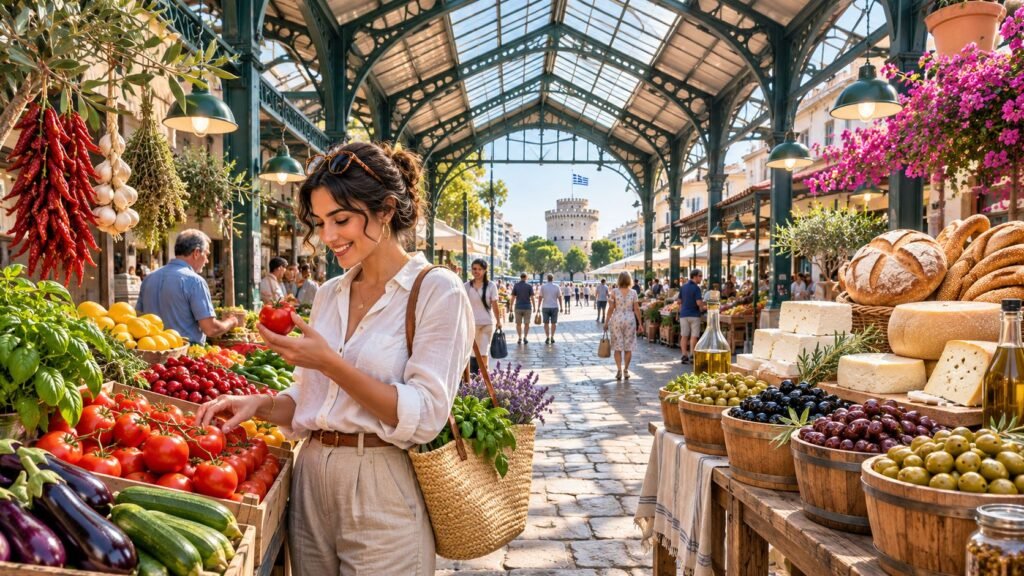
A traveller with one morning in central Thessaloniki can easily turn breakfast into a logistical puzzle: a market hall, a taverna, a pastry stop and the waterfront all competing for the same appetite. Thessaloniki food markets work better as a sequence than a dash. Kapani's shopping lanes and Modiano's covered hall belong in the morning plan, Bezesteni provides a landmark and architectural pause, and Ladadika makes more sense later, over meze, than during a search for fresh produce.
The practical roundup below brings together six places and experiences, including an independent walking idea, rather than promising that every stall will be open or that the same route suits every pace. A neighbourhood laiki, or open-air market, is worth adding only when its trading day and location fit the stay.
Start with the morning, not the menu. Check market access and individual opening hours locally, then leave enough room for a proper meal rather than grazing through every stop.
1. Modiano Market
Modiano is the covered-hall stop, useful for understanding a different side of the city's food trade from Kapani's narrow lanes. Close to Ermou and Aristotelous, it belongs geographically within a central shopping morning, not as a separate cross-city excursion.
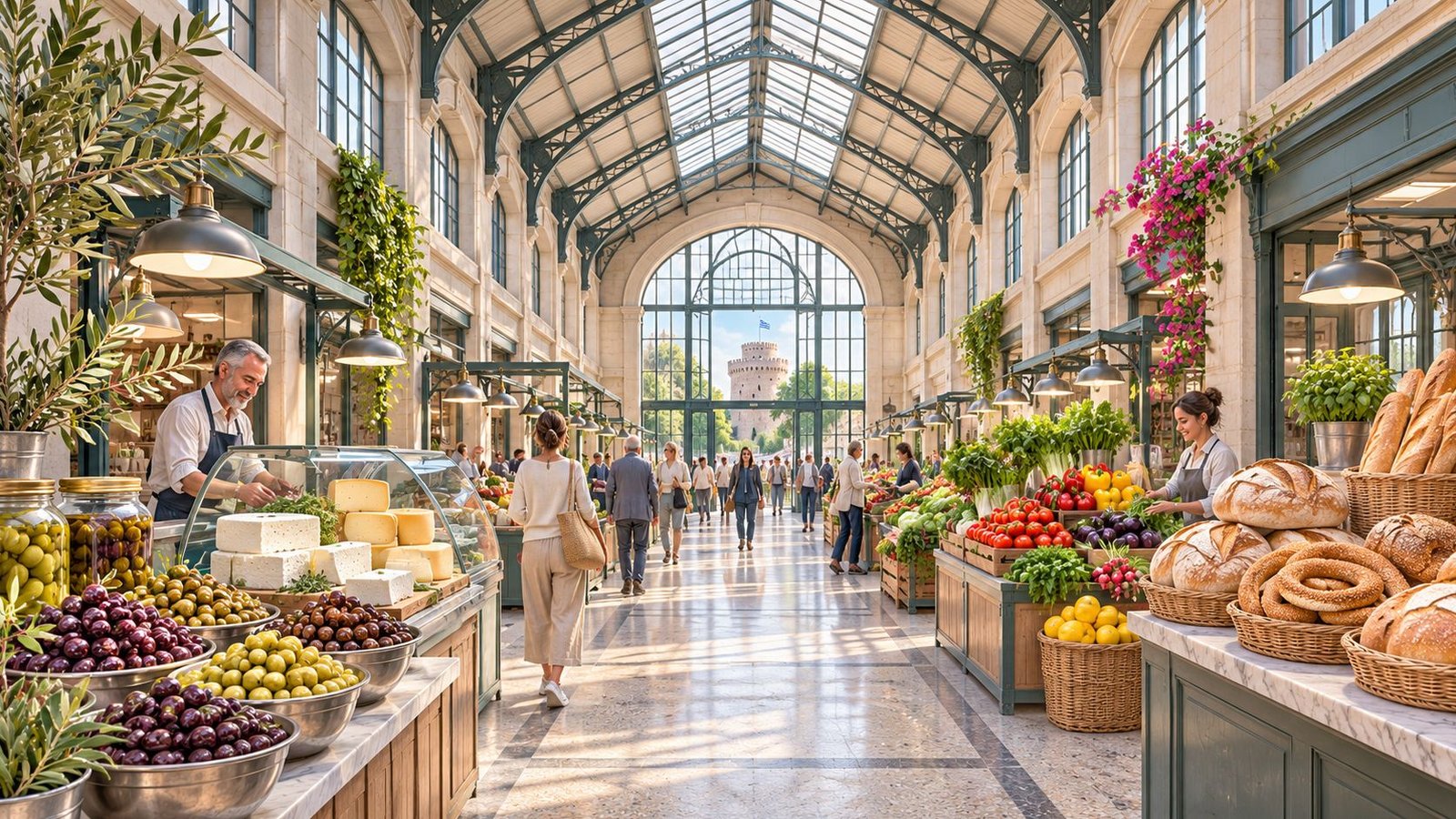
Current access needs checking before plans depend on it. Modiano has undergone changes in operation, so descriptions of a full hall of traders shouldn't be treated as a guarantee of what will be available during a particular stay.
A hall shaped by the city's rebuilding
Modiano's significance goes beyond shopping. The Municipality of Thessaloniki's market history places the city's central-market development within reconstruction after the Great Fire of 1917, and identifies architect Eli Modiano with the market that bears his name.
That history sits within a wider mixture of Greek, Ottoman and Sephardic Jewish commercial traditions. The building deserves attention even when its trading arrangements don't match an older guidebook description.
For a couple planning a waterfront picnic, the practical approach is to check the hall first, then buy bread, olives and cheese from whichever nearby food shops are trading. Perishable purchases should go straight into lunch or back to refrigeration, rather than accompany an afternoon of sightseeing.
- Taste politely: Ask whether sampling cheese or olives is possible before committing to a purchase.
- Buy for the day: Small portions leave room for a pastry and a later meal.
- Keep an alternative: Nearby bakeries and delicatessens can replace a hall-based lunch if access is limited.
For a broader cultural journey, the Northern Greece cultural heritage itinerary provides a separate planning reference. Its published arrangements should be considered independently from this self-guided market morning.
2. Kapani Market
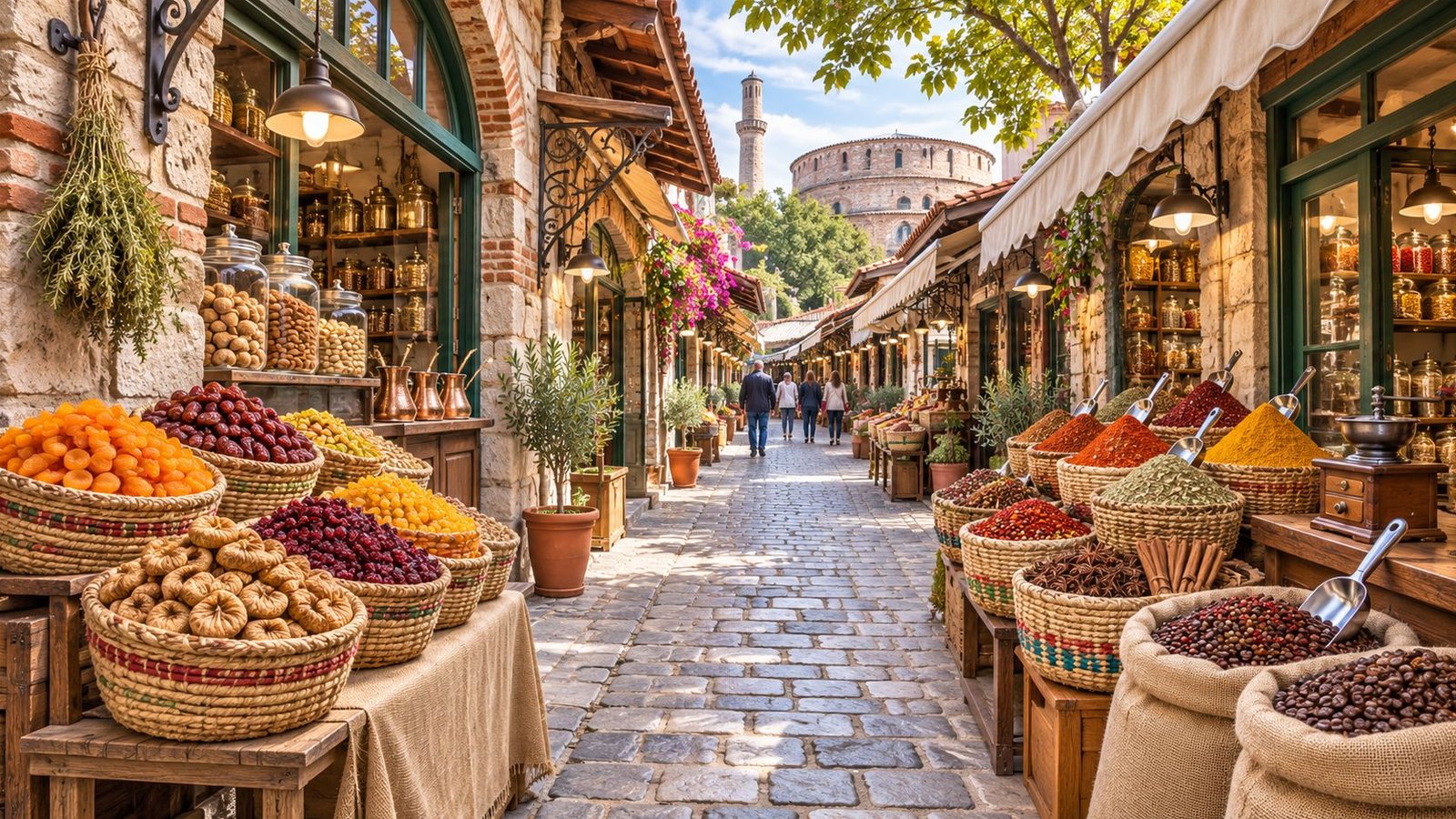
A bag of coffee or spices makes more sense in Kapani than another souvenir chosen at the airport. This old bazaar quarter is a place for everyday food shopping, with narrow lanes, provisions shops, fresh-food traders and small places to eat.
Its Ottoman roots help explain the district's market layout, but the useful distinction for visitors is simpler: Kapani is somewhere people come to buy ingredients. Browsing works best when visitors leave shop entrances clear and avoid stopping in the middle of a transaction.
Shop with a purpose, then wander
Coffee, dried fruit, nuts and spices are useful starting points because they invite a closer look without requiring a kitchen. For travellers buying gifts, sealed packaging and clear ingredient labels are more useful than an attractive loose display, particularly when food must cross an international border.
A workable visit might begin with browsing the fresh-food lanes, continue with a small purchase of coffee or herbs, and finish at a nearby café. Those heading towards Ano Poli afterwards should keep purchases light, rather than carrying a heavy bag through an extended sightseeing walk.
Colours Hotel's guidance on Kapani and Modiano describes them as primarily Monday-to-Saturday markets, with the strongest activity in the morning and many shops closed on Sundays. Eating venues can follow different schedules, so an open restaurant doesn't mean the surrounding food stalls will also be trading.
Shopping rule: Buy food that fits the rest of the day. Coffee and dried herbs travel more easily than fresh fish or soft cheese without a cool bag.
Comfortable shoes help on uneven sections, while a zipped bag keeps valuables secure in busy lanes. Small cash purchases are easier when money is ready before reaching the counter.
3. Bezesteni Market Building
Bezesteni is a landmark, not a lunch stop. The historic covered-market building anchors the old trading district and gives a Kapani visit an architectural pause between food shops.
Its Ottoman trading history concerns valuable goods rather than the fresh ingredients visitors seek in the surrounding streets. That distinction matters: a traveller arriving hungry should look to the neighbouring food businesses, not assume that a building called a market will contain somewhere to eat.
Make the building the pause
The enclosed form and domed roof offer a useful contrast with Kapani's open lanes. Rather than adding another shopping task, this is the point to slow down, look at the structure and regain a sense of direction.
Present-day access and uses should be checked locally. Visitors interested in an exhibition or cultural event need to confirm the actual programme, rather than assume that an event space or interior visit will be available.
- Use it for orientation: Save the building's location on an offline map before entering the market lanes.
- Pair it with Kapani: Treat it as part of the same neighbourhood visit, not a separate expedition.
- Keep the stop flexible: An exterior look still works if interior access isn't available.
For friends with different interests, Bezesteni offers a natural compromise. Those drawn to architecture can pause at the building while others choose coffee or a sweet nearby, with an agreed meeting point that doesn't depend on finding a particular stall.
There's no need to stretch the stop just to complete a sightseeing list. Its value lies in making the historic market district easier to read, while leaving enough morning for shopping and tasting before traders begin winding down.
4. Ladadika Food District
By evening, the shopping bag can stay at the accommodation. Ladadika is for sitting down, ordering food and letting dinner take longer than a market snack.
Near the port, this restored quarter of former commercial buildings now accommodates tavernas, restaurants and bars. It isn't a traditional produce market, and treating it as one leads to the wrong expectations: the reason to come is a meal, not ingredients for tomorrow's breakfast.
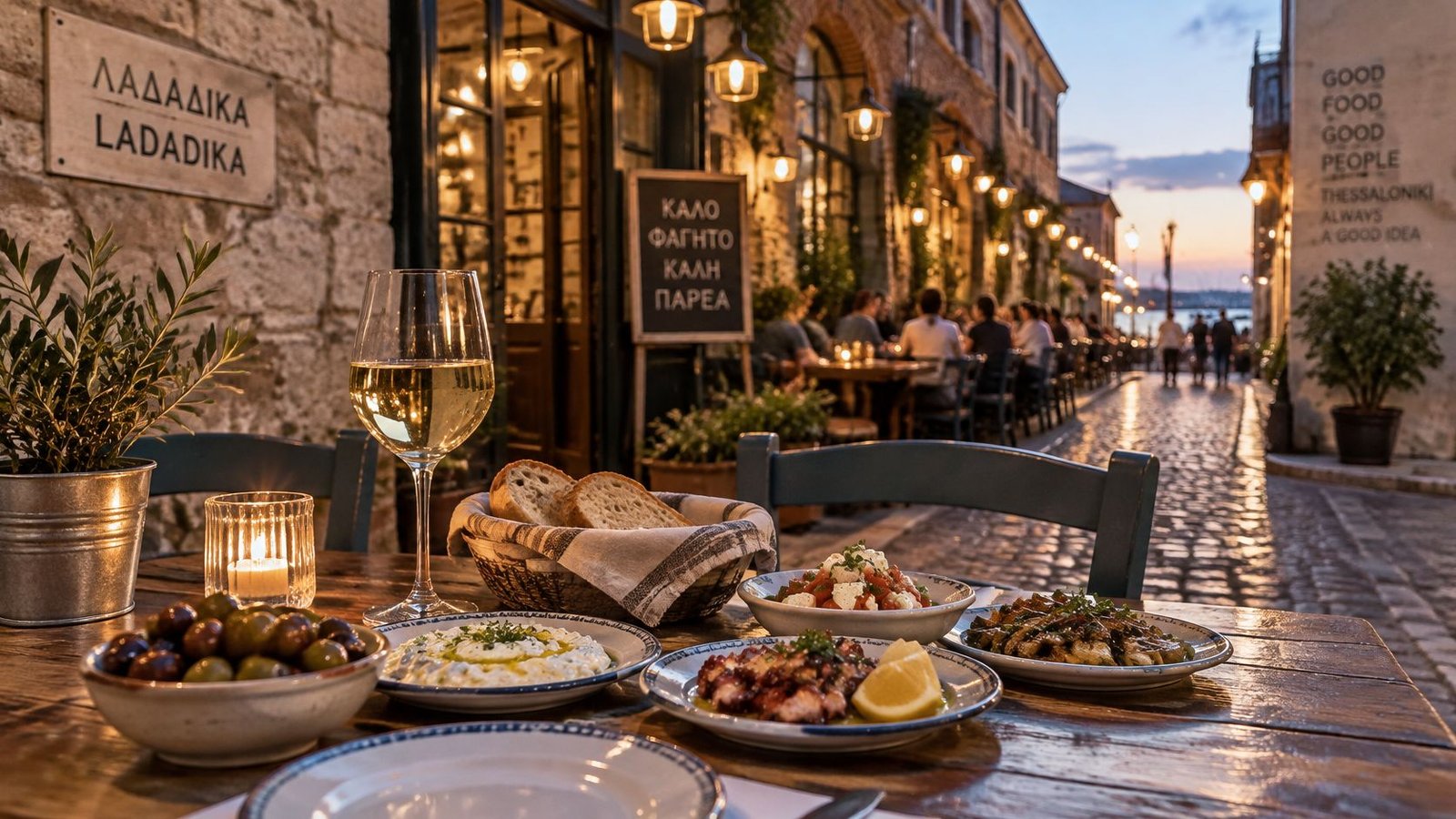
Order for the table
For a couple or a small group, mezedes, small sharing dishes, provide a flexible way to eat. Starting with a modest selection of vegetables, dips and a fish or meat dish makes it easier to judge appetite before ordering more.
A practical example is a table sharing an aubergine dip, a salad and grilled seafood, then deciding whether another warm plate is needed. Ordering everything at once can leave little room to respond to portion sizes or an appealing suggestion from the kitchen.
- Reserve when timing matters: A weekend dinner with a fixed start is worth arranging ahead.
- Check the whole menu: Wine, seafood choices and accompaniments can change the final bill substantially.
- Choose the setting deliberately: A lively street table and a quieter dining room offer different evenings.
The morning markets and an evening meal serve different purposes. There's no need to turn every purchase into a tasting or every tasting into lunch.
Greek wine by the glass, where offered, lets companions make different choices without committing to a bottle. A waterfront walk afterwards provides a simple finish, though anyone seeking quiet should choose a route and stopping place that suit the evening's activity rather than expect complete calm.
5. Laiki Agora Neighbourhood Markets
An apartment stay changes the value of a market visit. Tomatoes, bread and fruit become breakfast and lunch ingredients rather than awkward purchases carried between attractions.
Thessaloniki's laiki agora markets are open-air neighbourhood markets held according to a local timetable. They're particularly useful for self-catering travellers, but they shouldn't be inserted into a city-centre walking route without checking where that day's market takes place.
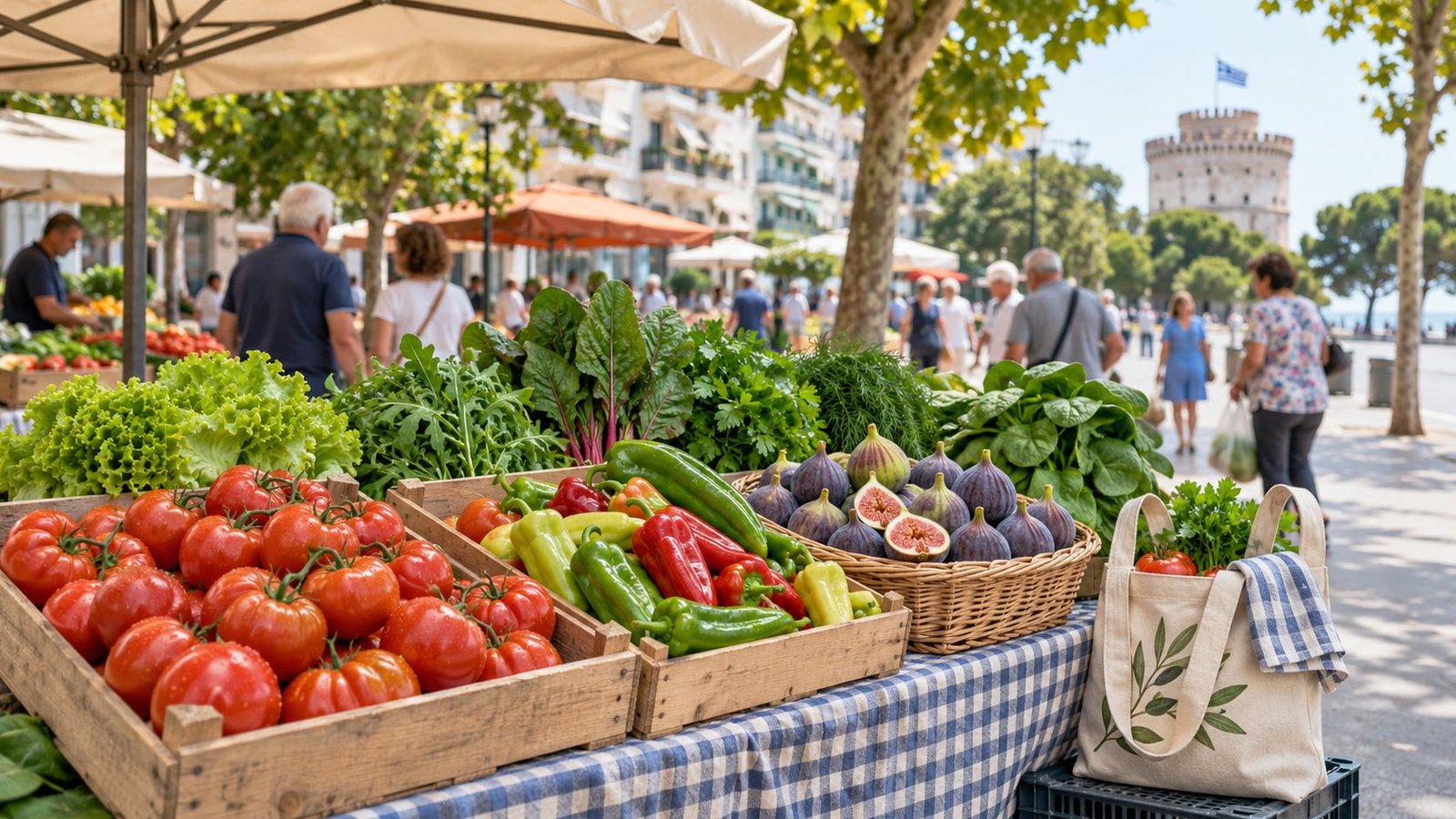
Choose the day before choosing the market
Nikana's guide to Thessaloniki's local markets explains that these markets operate in different districts on different days, often from early morning until about 14:00. Early arrivals generally have the broadest choice, while vendors may reduce prices near closing to clear fresh stock.
That creates a real trade-off. A traveller seeking good ingredients for cooking should prioritise selection; someone happy to improvise dinner may prefer to browse later, accepting that preferred items could be gone.
The same guide notes that prices can vary by neighbourhood and that stalls also sell clothing, shoes and household goods. A laiki isn't automatically a food-only event or a guarantee of the lowest price.
- Confirm the location: Ask the accommodation or tourist office for the current neighbourhood and trading day.
- Buy usable quantities: A short apartment stay rarely needs a large bag of the same vegetable.
- Pack for shopping: A reusable bag and small change make transactions simpler.
For a late-summer self-catering meal, tomatoes, peppers and figs are sensible products to look for, subject to what's available. Travellers without refrigeration are better served by fruit for immediate eating than by accumulating cheese or fish during a sightseeing day.
6. Kapani to Modiano Food Walk
Kapani, Bezesteni, Modiano, then Aristotelous makes a coherent central walking idea. It moves from everyday retail lanes to a historic landmark and covered hall, before opening out towards a café stop and the waterfront.
This is an independent itinerary, not a fixed tour with guaranteed tastings or admission. A morning leaves room to browse, make purchases and sit down without treating each stop as a timed appointment.
Follow the food, not a rigid schedule
Begin in Kapani while shopping is active, using Bezesteni as the nearby pause. Continue towards Modiano, with its current access checked beforehand, then choose a pastry and coffee near Aristotelous rather than committing to a distant breakfast address.
For example, friends interested mainly in tasting could make a small purchase in Kapani, skip ingredient shopping and spend longer over coffee. Travellers assembling lunch could instead prioritise provisions and head towards the waterfront once shopping is finished.
- Carry lightly: Cash, a reusable bag and drinking water are more useful than a packed sightseeing bag.
- Keep stops optional: A closed hall or busy café shouldn't derail the morning.
- Separate bookings: A guided food walk has its own meeting point, inclusions and cancellation terms.
There's little reason to add the wholesale market to make the route broader. The Thessaloniki gastronomy network's stakeholder directory distinguishes the city's wider food-supply infrastructure from the retail and dining settings that suit casual visitors; Lachanagora is a commercial supply hub, not a substitute for this central walk.
Travellers considering a longer food-led journey can consult the Northern Greece food and culture itinerary separately. Nothing in this walking suggestion should be assumed to form part of a booked package.
How Thessaloniki's Food Markets Compare
Each stop suits a different part of the day: browse Kapani and Modiano in the morning, use Bezesteni as a historic landmark, and leave Ladadika for dinner. Neighbourhood laiki markets are the practical choice for everyday groceries.
| Item | Type | Best time | Best for | What to expect |
|---|---|---|---|---|
| Modiano Market | Covered food market | Morning | Local food shopping and casual lunch | Covered historic hall; check current access and which traders are open before relying on it |
| Kapani Market | Historic bazaar and food market | Morning | Spices, coffee, sweets and edible gifts | Narrow, lively lanes with independent shops and stalls |
| Bezesteni Market Building | Historic market building | During scheduled exhibitions or events | Architecture and trading history | Restored Ottoman-era building; opening depends on events |
| Ladadika Food District | Restaurant and dining district | Evening | Meze, Greek food and local wine | Lively warehouse quarter with tavernas and bars |
| Laiki Agora Neighbourhood Markets | Open-air weekly markets | Early morning on market days | Seasonal produce and everyday local life | Neighbourhood stalls selling food and household goods |
| Kapani to Modiano Food Walk | Self-guided food walk | Morning | Exploring markets and tasting local foods | Flexible route through bazaar lanes, market hall and toward the waterfront |
Keep the Day to One Corridor
The most useful market day doesn't include everything at once. Kapani and Bezesteni first, Modiano while the morning still allows for shopping, then a pastry near Aristotelous gives the centre a sensible order without turning breakfast into an endurance event.
Modiano needs particular care because access and trading arrangements can change. If the hall isn't available, the surrounding food shops can still support the morning, and there's no reason to sacrifice the rest of the route while searching for an entrance or a business mentioned in an older guide.
Leave the evening separate
Ladadika belongs later, after time to put purchases away and recover an appetite. A dinner reservation makes sense for travellers with a firm evening plan, while a flexible meal works better for those who prefer to decide after an afternoon out.
Self-catering visitors can add a laiki once the neighbourhood and trading day are confirmed. A market close to the accommodation is usually a more useful choice than a detour across the city made only to tick off another food experience.
Planning priority: Protect the morning shopping window, but leave the meal itself unhurried.
Before setting out, confirm opening hours locally, take some cash and carry a bag that's comfortable when full. Food bought for immediate eating, groceries for an apartment and edible souvenirs each need different handling, so deciding the purpose of a purchase prevents waste and unnecessary carrying.
Any guided food walk should remain a separate booking from independent sightseeing unless a selected package explicitly includes it. Travellers can use the BTOURS Travel Inspiration hub for further journey ideas, then save the central route, confirm Modiano's status and the relevant laiki timetable, and choose a Ladadika dinner spot before departure.
Links disclosure: This article may contain external links, including affiliate links. If you book or buy through an affiliate link, BTOURS may earn a commission.