
TRAVEL STORIES & GUIDES
Where to Stay in London First Time: 8 Areas Compared
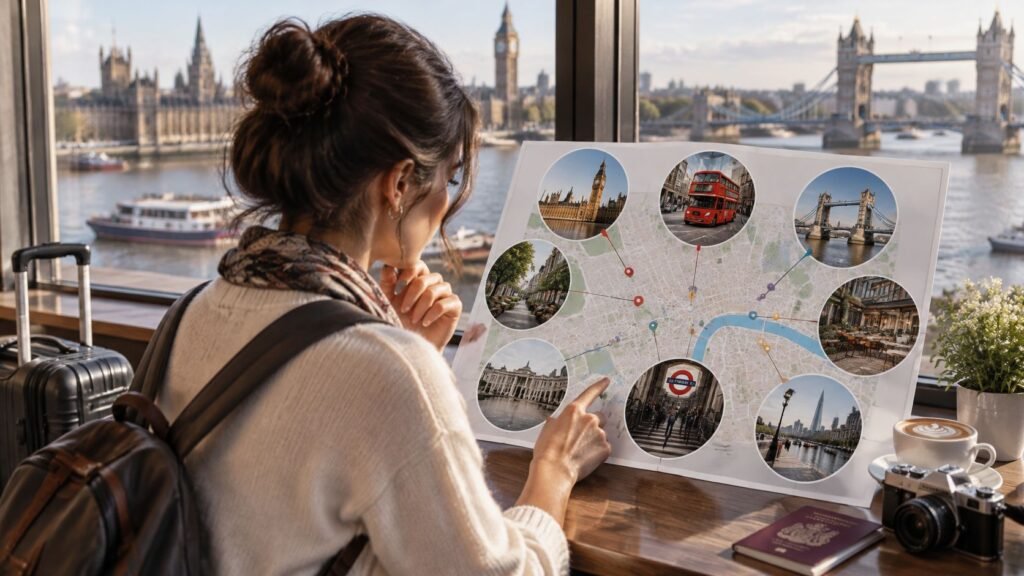
A suitcase has landed at Heathrow, the landmark list includes Buckingham Palace and the British Museum, and the hotel search has produced appealing rooms scattered across London. A room beside a royal park promises a peaceful evening. Another above the West End puts dinner and a theatre within walking distance, but raises questions about sleep.
For most first-time visitors, Covent Garden offers the strongest balance of sightseeing and evenings out. Westminster suits landmark-led days, while Bloomsbury works better for museums and calmer nights. The useful question isn't which postcode sounds most central, but which base fits the first day's route and the journey back after dinner.
The Approved Experiences Traveler London neighbourhood guide provides another perspective on the city's neighbourhood choices. The distinction that matters most when choosing where to stay in London first time is between walking to the sights and walking home from the evening.
A hotel beside the right station can be more convenient than a hotel beside the wrong landmark.
These areas offer different compromises. Arrival routes, station entrances and the street outside the bedroom matter just as much as the neighbourhood name.
1. Westminster and St James's
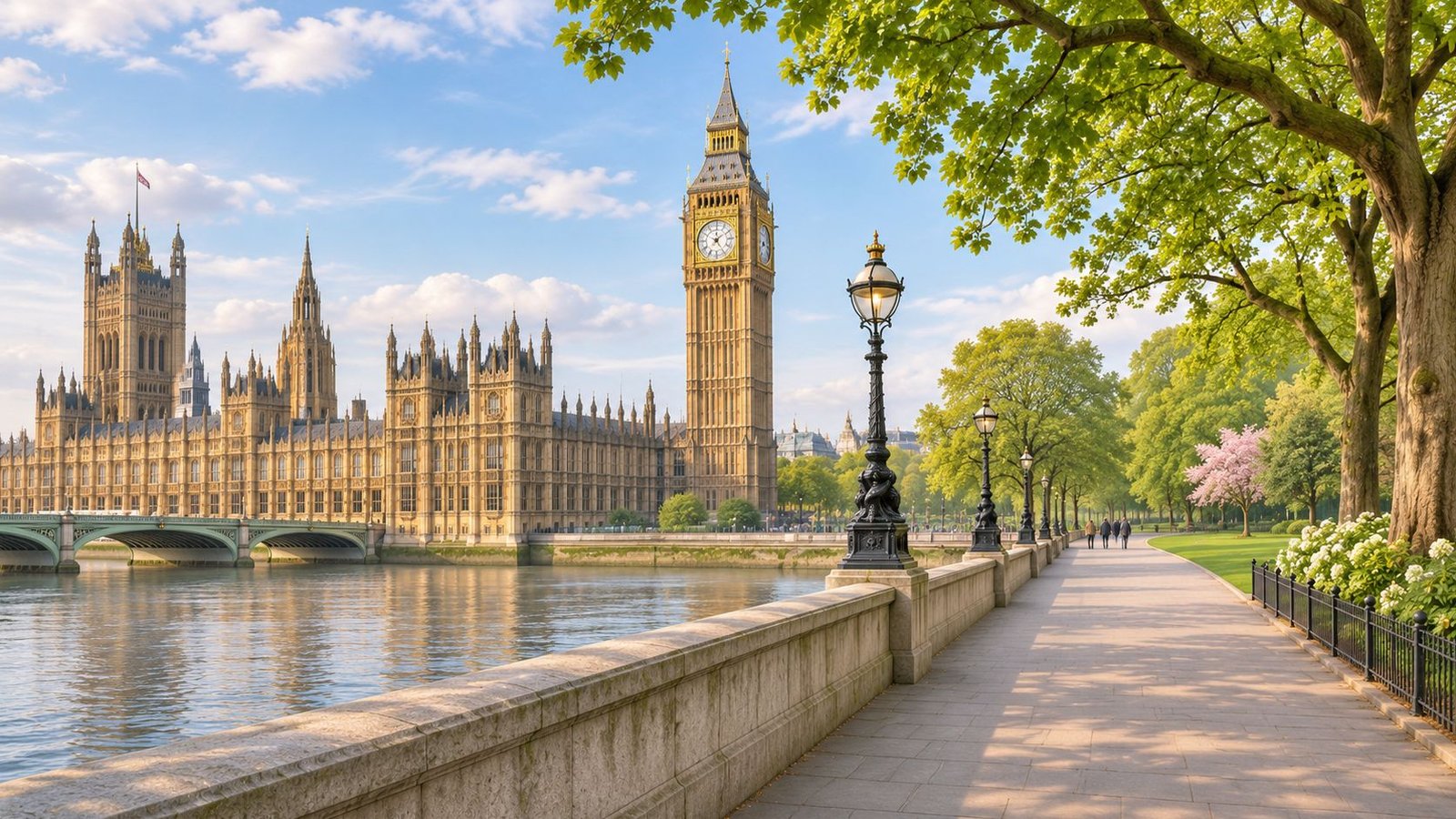
Westminster is the clearest choice for a first day built around London's royal and political landmarks. Elizabeth Tower, which houses Big Ben, the Houses of Parliament, Westminster Abbey and the Thames form a coherent walking route rather than a series of separate Tube journeys.
St James's lies towards Buckingham Palace and the West End, with formal streets, clubs and green space giving it a more restrained character than Soho. The distinction matters after dark: this is a base for landmark access and quieter evenings, not a concentration of late-night restaurants.
A first-day route that makes the location worthwhile
Start at Westminster Abbey and Parliament Square, follow Whitehall to Horse Guards Parade, then continue through St James's Park towards Buckingham Palace. The park provides a useful rest between palace sightseeing and a later walk towards Trafalgar Square.
- Arrival route: Westminster station serves the Jubilee, District and Circle lines; St James's Park serves the District and Circle lines. A Heathrow arrival requires a route choice rather than an assumption that central means direct.
- Sightseeing alternative: Crossing Westminster Bridge puts the South Bank within reach without another station entrance.
- Booking detail: Check current Abbey admission arrangements and Parliament tour availability before fixing the day's sequence.
The trade-off is evening variety. A hotel near Whitehall suits an early landmark start, but theatre-goers may prefer the St James's end of the area. Once the familiar sights are covered, BTOURS' guide to unusual places to visit in London offers ideas for a less predictable next outing.
2. Covent Garden
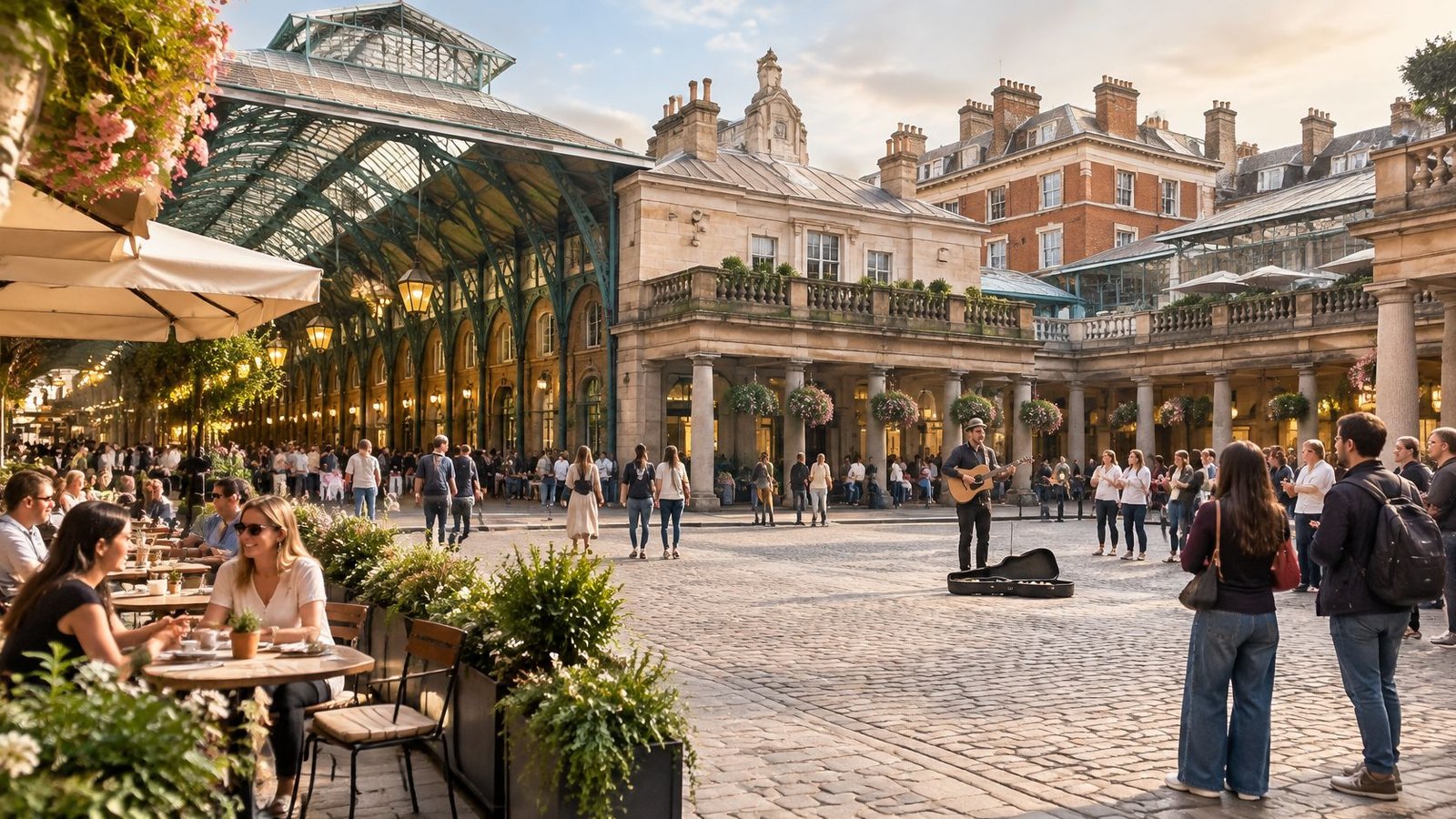
An early dinner on Neal Street, a West End performance and a walk back through the piazza make a strong case for Covent Garden as the best all-round first-visit base. Its historic market setting, street performers, Royal Opera House and dense restaurant choice make the neighbourhood useful from breakfast until after the theatre.
The former fruit and vegetable market gives the area its distinctive layout and identity. Today, shopping and entertainment dominate, so a central address also means delivery activity, crowds and evening noise.
Pay for a route, not simply an address
A practical first day starts around the market and Seven Dials, continues towards Trafalgar Square, then follows Whitehall towards Westminster. Returning for dinner and a show makes the accommodation premium easier to justify because the hotel remains useful throughout the day.
London's room-price baseline is substantial: Knight Frank's UK Hotel Trading Performance Review recorded a London average daily hotel rate of £228 in 2024. That's a citywide benchmark, not a Covent Garden room quote, and live rates still need checking for the actual dates.
Covent Garden station's Piccadilly line connection is useful for Heathrow arrivals, although luggage and lift queues deserve consideration. Depending on the hotel entrance, Leicester Square or Holborn may produce a simpler walk.
A side-street address isn't a guarantee of silence. Rooms off Long Acre or Neal Street still need checking for nearby pubs, restaurant extraction and loading areas. Book theatre tickets through the venue or an official box office, and request a bedroom away from the street when sleep matters more than a view.
3. Soho
Choose Soho for the evening, not for tranquillity. Between Oxford Street, Regent Street and Charing Cross Road, its compact streets offer restaurants, bars, theatres and music venues without requiring a journey home across London.
A food-led day could begin with coffee at Bar Italia on Frith Street, continue through Chinatown for lunch, and include Liberty before dinner and a jazz performance. Chinatown and Leicester Square are close enough to fold into the same outing, while Westminster requires a more deliberate walk or Tube journey.
Sleep rule: In Soho, the room's position can matter more than the hotel's postcode. A rear-facing bedroom is a more useful request than a vague request for a quiet location.
Dean Street and Frith Street are useful reference points, but both have evening activity. A small lane nearby may still contain a busy bar entrance, so checking the immediate frontage is more reliable than choosing a street solely because it looks narrow on a map.
Match the arrival station to the hotel
Tottenham Court Road offers the Elizabeth line alongside the Central and Northern lines, making northern Soho practical for Heathrow arrivals. Piccadilly Circus serves the Piccadilly and Bakerloo lines and suits addresses towards the south-western side.
- Best fit: Couples and friends who expect dinner, theatre or music to shape most evenings.
- Less convincing fit: Light sleepers planning early starts, or families seeking a low-stimulation return after sightseeing.
- Useful adjustment: An earlier Chinatown dinner can feel less pressured than arriving amid the main evening crowds.
BTOURS' guide to must-eats in London can help turn the neighbourhood's food choices into a manageable shortlist. The strongest reason to stay here is simple: the evening remains enjoyable without a final transport decision.
4. Bloomsbury
Garden squares, university buildings and literary associations give Bloomsbury a calmer rhythm than the neighbouring West End. The British Museum anchors a first visit, while the area's connections with the Bloomsbury Group and Charles Dickens add interest beyond the museum doors.
A workable museum-led day begins at the British Museum, continues north towards the British Library, then leaves room for Coram's Fields for families, subject to its visitor rules. Covent Garden provides a broader evening restaurant choice without making dinner a major expedition.
Choose the right side of the neighbourhood
Russell Square station serves the Piccadilly line, useful for Heathrow arrivals, while Holborn adds the Central line. Accommodation towards Bloomsbury's northern edge can suit onward rail travel, but the actual walk to the required station entrance should be checked with luggage in mind.
The Visit London accommodation guide is useful for comparing attraction districts with transport-led bases. The practical distinction is between a museum-and-West-End stay and a trip with repeated early rail departures: the same hotel won't necessarily serve both equally well.
- Museum planning: Check the British Museum's current admission and exhibition arrangements before building the day around a particular gallery.
- Room location: A garden-square address can still face traffic; check whether the bedroom overlooks the square, a main road or an internal courtyard.
- Evening expectations: Bloomsbury works for a quieter return, but it doesn't offer Soho's concentration of late dining.
Bloomsbury is especially persuasive when museums matter more than nightlife. Its advantage isn't that every London sight is on the doorstep, but that a substantial first day can begin locally and end with a calmer walk home.
5. South Bank and Waterloo
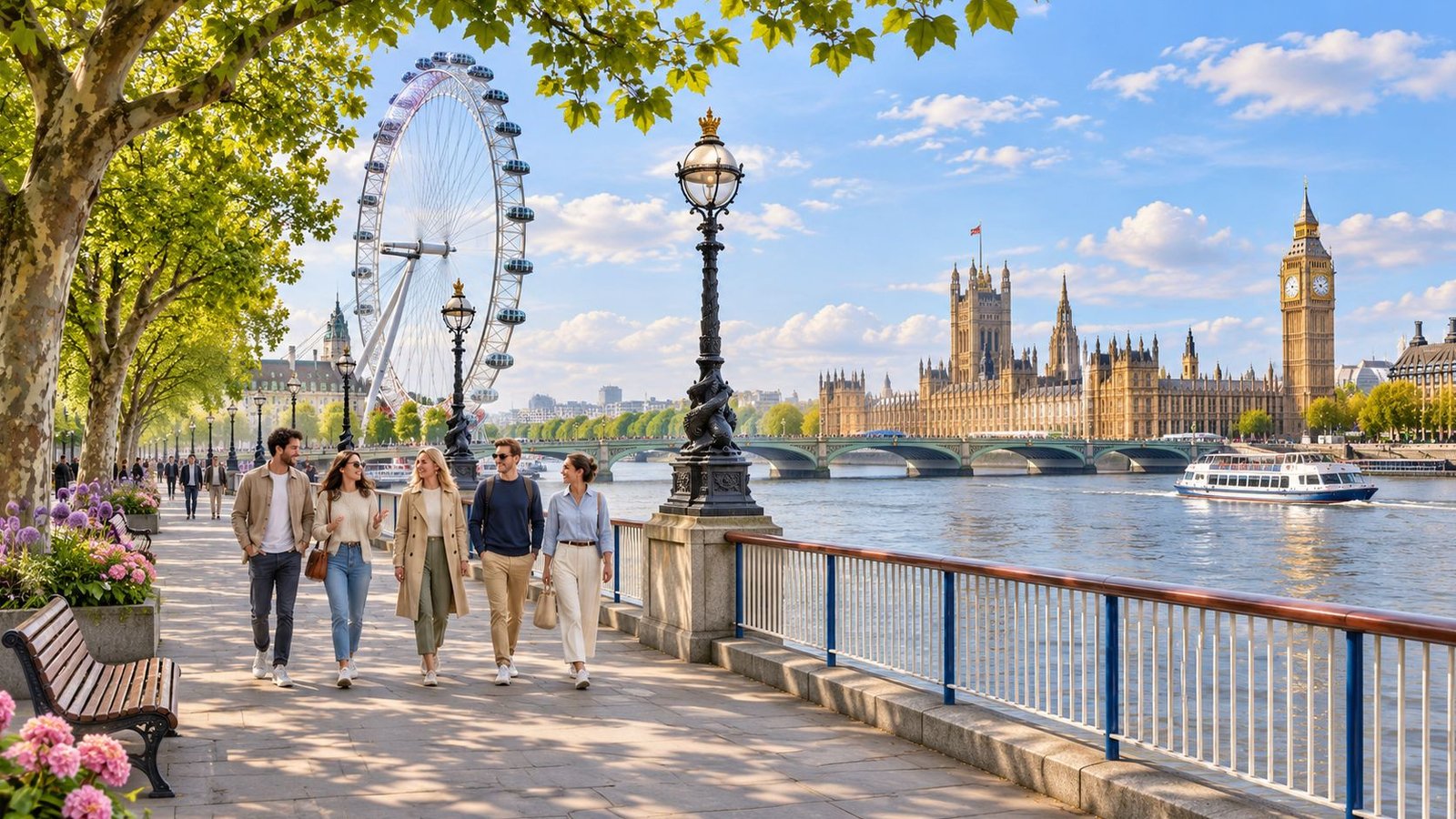
The river makes London easier to understand. South Bank and Waterloo suit visitors who want the first day to unfold along a visible route, with Westminster across the water and cultural stops stretching east towards Bankside and beyond.
Waterloo provides the main transport hub, while the Southbank Centre, Royal Festival Hall and riverside paths give the area more substance than a convenient station address. Travellers arriving from south-west England may find that staying nearby removes an unnecessary luggage transfer.
Follow the river, but respect the distance
A first-day walk can begin at Westminster Bridge, pass the Southbank Centre and continue to Tate Modern. Crossing Millennium Bridge brings St Paul's into the route; returning along the river gives a different view without another Tube journey.
South Bank is a broad accommodation label, however. A hotel near Waterloo and a hotel towards Tower Bridge create different walks, so the precise pin matters more than a promised riverside location.
For central journeys, Transport for London's capping guidance lists an adult daily pay-as-you-go cap of £8.90 for travel confined to Zone 1 or Zones 1–2, subject to the applicable services and correct payment use. That helps with budgeting, but a cap doesn't remove the inconvenience of repeated station changes.
Book London Eye admission through the official booking channel after checking the available ticket arrangements; advance booking doesn't mean every queue disappears. For Borough Market, an earlier visit is a sensible alternative to the lunchtime rush. Light sleepers should prioritise rooms away from major roads and ask about railway noise as well as street noise.
6. Kensington and South Kensington
A museum morning followed by an afternoon in Kensington Gardens is a convincing reason to stay west of the main landmark cluster. South Kensington works particularly well for visitors who want culture and green space nearby, rather than a packed theatre district outside the hotel.
The Natural History Museum, Science Museum and Victoria and Albert Museum cluster around Exhibition Road and Cromwell Road. BTOURS' guide to the best museums in London helps distinguish their appeal before allocating whole days to museum visits.
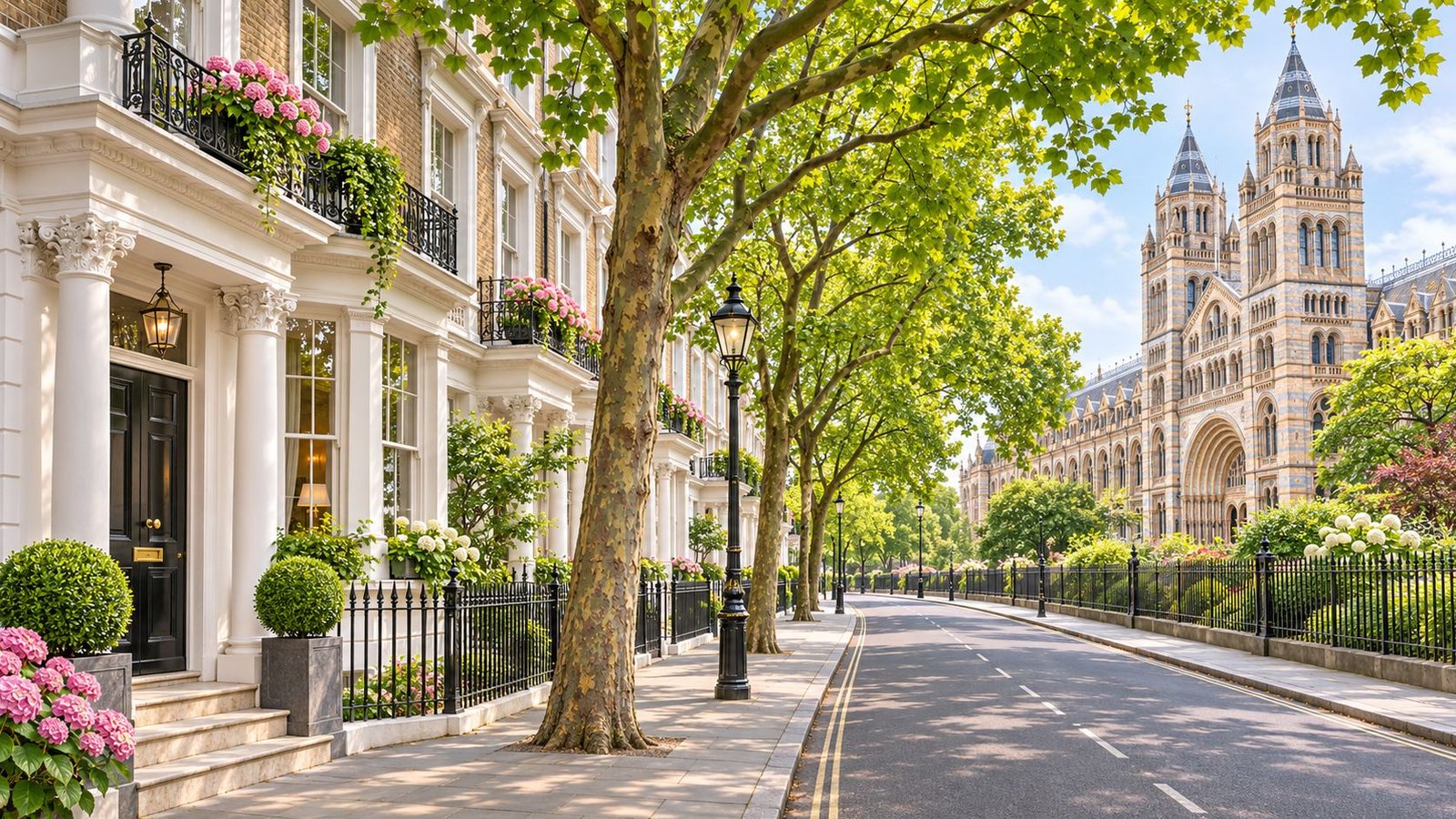
Museum convenience isn't the same as universal convenience
A realistic day pairs the Natural History Museum with selected V&A galleries, then finishes in Kensington Gardens if energy allows. Trying to cover every major museum before adding a long park walk usually turns a relaxed base into an exhausting itinerary.
South Kensington station serves the Piccadilly, District and Circle lines, giving useful routes towards Heathrow, Westminster and the West End. Visitors with luggage, pushchairs or mobility needs should nevertheless assess the station route rather than assume that museum proximity means effortless access.
Visit London's accessible transport guidance notes that every Elizabeth line station has step-free access between street and platform, while many Underground journeys still involve stairs, escalators or platform gaps. For some travellers, an accessible arrival route elsewhere will outweigh South Kensington's museum convenience.
A hotel near a museum only saves effort if the station, pavement and hotel entrance also work for the traveller.
Check each museum's current admission arrangements. For a park-led afternoon towards Notting Hill, follow a sensible route through Kensington Gardens rather than treating the whole outing as a short stroll. At night, residential side streets offer a gentler atmosphere, though Cromwell Road-facing bedrooms need particular scrutiny.
7. Marylebone
Marylebone suits visitors who want the hotel neighbourhood to feel like somewhere to spend time, not merely somewhere to sleep. Marylebone High Street and Chiltern Street offer shops, cafés and restaurants, with Regent's Park to the north and Oxford Street to the south.
A relaxed first day could begin with coffee on the High Street, continue into Regent's Park, and return for lunch near Baker Street. Sherlock Holmes associations add a familiar London reference, while a later walk towards the West End keeps the day flexible.
A calmer base with several different arrival routes
Baker Street is useful for addresses towards the north and west, while Bond Street serves the southern side and offers an Elizabeth line arrival option. The important detail is the final walk: a hotel marketed as Marylebone may be substantially closer to one than the other.
- Park-led mornings: An early Regent's Park walk suits visitors who prefer a gentle start before heading into the busier centre.
- Family outings: Check London Zoo's current ticket options and availability before committing the day.
- Bedroom choice: Ask whether the room faces a restaurant frontage, a main road or a quieter rear aspect.
Marylebone also invites a hotel-versus-apartment comparison. The Greater London Authority's snapshot of tourist accommodation documents changes across serviced accommodation and short-term rentals, but doesn't establish that either is automatically better value.
Compare the full stay cost, including cleaning charges, deposits and cancellation terms. A hotel's reception and luggage storage can simplify a first arrival; an apartment may suit travellers who value a kitchen and extra living space. Neither advantage compensates for an inconvenient address or unclear check-in arrangements.
8. Shoreditch and Spitalfields
Brick Lane murals, vintage shops and Old Spitalfields Market offer a different starting point from Parliament Square. Shoreditch and Spitalfields suit visitors who want food, design and nightlife to feature prominently, and don't expect every day to begin beside a royal landmark.
A creative first-day route can start around Christ Church Spitalfields, Nicholas Hawksmoor's distinctive church, continue through Old Spitalfields Market and follow Brick Lane towards Shoreditch. Coffee stops, galleries and browsing fit naturally into the route, followed by dinner or drinks nearby.
Stay for East London, not just the room rate
Liverpool Street is the key arrival reference for accommodation near Spitalfields, with the Elizabeth line providing a useful westward connection. Shoreditch addresses farther north need a separate route check; the neighbourhood name alone doesn't establish an easy luggage walk.
Timing also matters. Transport for London's Tube and rail fare guidance defines weekday peak periods, excluding public holidays, as 06:30–09:30 and 16:00–19:00, with fare treatment depending on the journey. A commuter-heavy arrival can feel quite different from the same route later in the day.
- Market atmosphere: A weekday visit to Old Spitalfields Market is a sensible choice for travellers seeking a calmer browse.
- Brick Lane character: Sunday suits visitors who actively want the fuller market atmosphere rather than quiet pavements.
- Night-time trade-off: Ask about nearby bars, late licences and bedroom orientation before booking.
At 10pm, parts of Shoreditch are still very much an evening destination. That's an advantage for friends planning nights out, but less appealing for travellers preparing for early sightseeing. A lower room quote isn't enough reason to stay here if the entire itinerary revolves around Westminster and west London.
How the eight areas compare for a first London trip
| Area | Main stations | Best for | Evening atmosphere |
|---|---|---|---|
| Westminster and St James's | Westminster, St James's | First-time sightseeing and classic landmarks | Quiet and formal |
| Covent Garden | Covent Garden, Leicester Square, Charing Cross | Theatre, dining and walkable sights | Lively, especially on theatre evenings |
| Soho | Piccadilly Circus, Leicester Square, Tottenham Court Road | Food, nightlife and central connections | Bustling, with bars and late dining |
| Bloomsbury | Russell Square, Tottenham Court Road, Holborn | Museums and a calmer central base | Quiet, with few late-night options |
| South Bank and Waterloo | Waterloo | Riverside walks, galleries and theatres | Lively around the riverside attractions |
| Kensington and South Kensington | South Kensington | Museums, parks and a relaxed stay | Calm, with limited late-night options |
| Marylebone | Baker Street, Marylebone, Bond Street | Independent shops, Regent's Park and a village feel | Quiet, with few late-night venues |
| Shoreditch and Spitalfields | Liverpool Street, Shoreditch High Street | Street art, markets and creative East London | Lively around bars, with some noisy areas |
Matching Your Base to the Way You Plan to Travel
A first-time base should be judged by the route you will walk on the first full day and the return journey at 10pm. Westminster and St James's shorten a landmark route around Buckingham Palace, though evenings are quiet. Covent Garden and Soho suit a theatre evening near Shaftesbury Avenue, late dining and several central connections. For a calmer return after a museum day, Bloomsbury, Kensington or Marylebone are easier bases.
South Bank works well when riverside walks lead the itinerary. Shoreditch earns its place when East London takes up more than an afternoon.
Make the arrival and departure part of the decision
Airport access deserves the same attention as sightseeing. A direct line followed by an awkward luggage walk may be less convenient than a carefully planned interchange, particularly when lifts, pushchairs or limited stamina affect the journey.
Travellers weighing road transport against public transport can compare London airport transfer options, then judge the journey by luggage handling, group size, the walk to the hotel entrance and the departure schedule rather than the advertised fare alone.
Late returns and early departures need their own route checks. Rail operating hours vary, and Sunday travel or planned engineering work can undermine a journey that looks straightforward on a daytime map. Departure convenience becomes especially important when the London stay sits within a longer rail journey.
Booking priority: Pay for a known location, not a neighbourhood label. On an arranged trip, a named hotel counts as confirmed once it appears in the booking confirmation.
The room comparison should include air conditioning, window arrangements, lift access and luggage storage alongside the booking conditions. For light sleepers, a rear-facing room in Covent Garden may be a better choice than a traffic-facing room in an ostensibly quieter neighbourhood.
Choose the compromise that earns its cost
A short, attraction-heavy stay often justifies paying more to reduce journeys. A longer visit leaves more room to trade a central address for extra space or a calmer setting, provided the daily route remains straightforward.
The right base is the one that fits the planned route, including the walk home after dinner. Prestige, a familiar postcode and an attractive lobby photograph are weaker reasons to book.
Before reserving, plot the first sightseeing route, arrival station and evening return on the same map, then shortlist hotels whose entrances fit. BTOURS London short breaks include a stay in central London, a selected day trip, attraction or experience, and time to discover the capital independently. Before paying the required deposit or balance, travellers review the itinerary, inclusions, price, BTOURS' role and applicable conditions.
To discuss an arranged stay, email info@btours.com with travel dates, arrival details and room requirements. The lead traveller must be at least 18.
Links disclosure: This article may contain external links, including affiliate links. If you book or buy through an affiliate link, BTOURS may earn a commission.