A week means London plus one region, best done by train. Ten days let you add a second base by rail or road. Two weeks earns you England and Scotland together, ideally with a hybrid of train for cities and a hire car for the Highlands and Lakes. Three weeks or more is when a full self-drive loop through England, Wales and Scotland makes sense, and it’s the point at which working with a specialist like BTOURS to build a bespoke route pays for itself in saved planning time.
What’s the best Great Britain itinerary for your trip length?
The right shape for your trip depends less on how much you want to see and more on how many times you’re willing to pack a bag. That’s the single biggest variable people get wrong when they sit down with a map of Great Britain and try to plot a route.
Here’s the logic behind each trip length, with the anchor towns that make the routing work.
Seven days: London-based with day trips. Base yourself in London the entire time and use it as a hub for one or two excursions. This is the itinerary for first-time visitors who want the icons: the Tower of London, the West End, the British Museum, plus a taste of somewhere smaller and older.
- Windsor for the castle and a half-day pace, easily done by train from London Paddington.
- Bath for Georgian architecture and the Roman Baths, reachable by a moderate rail journey each way.
- Oxford for university colleges and the Bodleian, a similarly short train trip from Paddington or Marylebone.
A week is genuinely enough time to feel like you’ve done London properly rather than skimmed it. Trying to squeeze in Scotland on a seven-day trip almost always means two rushed, jet-lagged days in Edinburgh that don’t do the city justice.
Ten days: London plus one extension. This is where you get to choose your flavour of trip. Two structures work well, and neither requires a car.
Structure one is London plus the north: add York for its medieval streets and the National Railway Museum, then push on to Liverpool or the Lake District if you want water and hills rather than more cities. This work cleanly by train since the East Coast and West Coast main lines connect these towns directly.
Structure two is London plus the south-west loop: Bath, the Cotswolds villages (Bourton-on-the-Water, Castle Combe), and Cornwall’s coastline around St Ives or Padstow. This loop is where a self-drive itinerary starts to earn its keep, because the Cotswolds and Cornwall’s smaller villages simply aren’t well served by rail. A hire car turns a series of connection headaches into a scenic, unhurried drive.
Fourteen days: England and Scotland together. Two weeks is the itinerary length where Great Britain starts to show its full range, and it’s genuinely the sweet spot for most independent travellers. The classic route runs London to York to the Lake District to Edinburgh to the Highlands, or the same sequence in reverse if you’re flying into Scotland.
- London: several nights to cover essentials, museums, and theatre.
- York: a short stop to explore city walls and the Shambles.
- Lake District: a couple of nights for sightseeing and walking.
- Edinburgh: a few days to see the Castle, Royal Mile, and nearby.
- Scottish Highlands: multiple nights to explore areas like Glencoe, Loch Ness, and potentially Skye.
Train works well for the London to York to Edinburgh spine. The Lake District and Highlands sections are where self-drive becomes the more practical option, since public transport thins out fast once you leave the main cities.
Twenty-one days or more: the full loop. Three weeks or longer is when Wales joins the itinerary properly, alongside a deeper run through northern England and an extended Highlands leg. A common structure adds Snowdonia and the Pembrokeshire coast between the south-west England loop and the push north into Scotland, or treats Wales as a standalone week bolted onto the England and Scotland core.
At this length, a self-drive route stops being optional and becomes the only sensible way to move. You’re covering three nations, dozens of small towns, and stretches of coastline that trains simply don’t reach. This is exactly the trip length where custom itinerary builders focus most of their effort, because the routing complexity (which loch road connects to which ferry timetable, which Welsh valley has a decent overnight stop) is where independent planning eats the most time.
A word on flexibility. None of these lengths are fixed formulas. A 10-day trip can absolutely include a short Highlands taste if you fly in and out of Edinburgh rather than London. The point of the trip-length breakdown is to stop you making the single most common itinerary mistake: trying to do a three-week route in ten days, and spending half your holiday on trains, motorways and hotel check-ins instead of actually being anywhere.
Sample day-by-day itineraries you can copy or adapt
Numbers below are for planning shape, not a rigid script. Swap towns, add a rest day, or cut one if your dates are tighter.
One week: London and Bath
- Day 1, arrival. Land, check in, gentle evening walk around your neighbourhood. Don’t schedule anything that requires you to be sharp.
- Day 2. Tower of London in the morning (book timed entry ahead), Tower Bridge, afternoon in Borough Market, evening in the West End.
- Day 3. British Museum, Covent Garden, an evening river cruise or a show.
- Day 4, day trip. Train to Bath from Paddington, Roman Baths and the Circus, back to London by evening.
- Day 5. Westminster Abbey, Houses of Parliament from outside, Hyde Park, afternoon at the Natural History Museum or the V&A.
- Day 6, day trip. Windsor Castle in the morning, or Oxford if you’d rather see college architecture than a working royal residence.
- Day 7, departure. Half a day free for last-minute shopping around Oxford Street or Camden, then airport.
Book the Tower of London and any Buckingham Palace tours well in advance. Peak-season slots for major London attractions sell out weeks ahead.
Ten days: London, the Cotswolds and Cornwall
- Day 1, arrival. Settle in, short walk, early night.
- Day 2. Tower of London, Tower Bridge, evening in Soho.
- Day 3. British Museum, Camden Market, evening theatre.
- Day 4, travel day. Pick up a hire car (automatic transmission if you’re not used to manual) and drive to the Cotswolds, roughly two hours. Settle into Bourton-on-the-Water or Chipping Campden.
- Day 5. Explore Cotswolds villages at a slow pace: Castle Combe, Bibury, a pub lunch somewhere with a thatched roof.
- Day 6, travel day. Drive to Cornwall, around four hours. Break the journey at Bath if you haven’t already seen it.
- Day 7. St Ives or Padstow: coastal walks, seafood, the Cornish light everyone talks about.
- Day 8. Tintagel Castle in the morning, a slower afternoon on the coast path.
- Day 9, travel day. Drive back towards London (around five hours) or drop the car at a regional airport and fly back.
- Day 10, departure.
This is a route where a self-drive package built around your dates removes the single hardest part: matching Cotswolds village accommodation to a sensible drive time each day, which is easy to get wrong on a first pass.
Two weeks: England and Scotland
- Day 1, arrival, London.
- Day 2 to 4. London highlights as above, spread over three fuller days rather than two rushed ones.
- Day 5, travel day. Train to York. Journey times on this route are comfortably short enough to allow sightseeing on arrival.
- Day 6. York Minster, the city walls, the Shambles.
- Day 7, travel day. Train or hire car to the Lake District, basing in Windermere or Keswick.
- Day 8. Boat trip on Windermere, a gentle fell walk if the weather cooperates, fallback of Beatrix Potter’s house if it doesn’t.
- Day 9, travel day. On to Edinburgh, roughly three hours by road from the Lakes.
- Day 10 to 11. Edinburgh Castle (book ahead), the Royal Mile, Arthur’s Seat, a day trip to Stirling if you have the appetite.
- Day 12, travel day. Drive into the Highlands via Glencoe, allowing extra time for single-track sections and photo stops.
- Day 13. Loch Ness, Urquhart Castle, or push further to Skye if your dates allow an extra night.
- Day 14, departure. Fly out of Inverness or Edinburgh, or drive back south depending on your return flight.
Book Edinburgh Castle and any Highland accommodation for the summer months well ahead. VisitScotland flags that single-track roads and summer campervan congestion push up journey times in the Highlands, so build extra buffer into any driving day north of Inverness.
Three weeks or more: the full Great Britain loop
- Days 1 to 7. London, then the south-west loop through Bath, the Cotswolds and Cornwall, as in the ten-day plan above.
- Days 8 to 10. Cross into Wales: Pembrokeshire coast, then Snowdonia for hiking and the narrow-gauge railways.
- Days 11 to 13. North into the Lake District, then across to York.
- Days 14 to 16. Edinburgh and the Scottish Borders.
- Days 17 to 21+. Highlands and Skye, with extra nights added wherever the weather or your energy demands it.
At this scale, the itinerary stops being a fixed script and becomes a framework you adjust daily. That flexibility is exactly what a tailored self-drive plan from BTOURS is designed to protect: routes built around your actual pace rather than a generic checklist.
Should you drive or take the train around Great Britain?
Cities favour the train, and remote landscapes favour the car. That’s the rule of thumb, and it holds for nearly every route above.
Rail makes sense for the London to York to Edinburgh spine because the journeys are fast, frequent and stress-free. You don’t need to worry about parking in central Edinburgh or navigating an unfamiliar roundabout after a long flight. For point-to-point city travel, a hire car is often slower once you account for city-centre parking and congestion charges.
Self-drive earns its place the moment your route leaves the main cities. The Lake District, the Cotswolds, Cornwall, Wales and the Scottish Highlands are where public transport thins to occasional buses, and where the actual joy of the landscape is in stopping wherever you like rather than following a timetable. VisitScotland’s own guidance on driving in Scotland is blunt about this: single-track roads with passing places are standard in the Highlands, and summer traffic from tourist campervans can slow journeys considerably, so plan for less distance per day than you would in England.
A few practical points matter more than people expect before their first UK driving day:
- Britain drives on the left, and speed limits are posted in miles per hour, not kilometres.
- Book an automatic transmission specifically if you’re not confident with a manual gearbox. Automatics cost slightly more to hire but remove one major source of stress on unfamiliar roads.
- Practical guidance for visiting drivers recommends keeping your first driving day short, ideally under two hours, to adjust to left-hand driving before tackling anything more demanding.
- Fuel stops in the Highlands and rural Wales can be sparse. Fill up whenever you see a station rather than waiting until the tank is low.
- If you’re mainly city-hopping, a rail pass can be worth pricing against individual tickets, and VisitBritain notes that options such as BritRail passes and National Rail Passenger Assistance are available for qualifying visitors, including support for travellers with mobility needs.
For a hybrid trip, the pattern that works best is: train between major cities, then pick up a hire car only for the rural leg (Lake District, Highlands, Wales) and drop it back before returning to a city for your departure flight. It avoids city parking altogether while still giving you full flexibility where flexibility actually matters.
Pro Tip: Don’t book a hire car for your entire trip if half of it is spent in London and Edinburgh. Rail between cities, then a car for just the rural stretch, is usually cheaper and considerably less stressful than driving and parking in city centres the whole way.
If scenic driving is the whole point of a leg of your trip, routes like the ones detailed in this guide to Highland scenic drives show how much slower, richer pacing looks in practice.
When is the best time to visit Great Britain?
There isn’t one single best month, because the answer changes by region and by what you actually want from the trip. Spring (April to May) suits garden and countryside visits, when England’s parks and Cornwall’s coastal gardens are at their best and crowds are still thin. Summer (June to August) is festival season and the only realistic window for far-north Highland routes, since daylight hours are long and most seasonal attractions are fully open, but it’s also peak price and peak crowd everywhere. Autumn (September to October) brings the best light for photography and noticeably fewer queues at major sights, alongside cooler but still manageable weather. Winter (November to March) is the quietest and cheapest option, particularly for London, though shorter days and reduced rural opening hours limit how much of the Highlands or Wales you can comfortably cover.
2026 adds a specific planning wrinkle: VisitBritain’s own briefing on the year points to major cultural openings and sporting events shaping travel demand in 2026, alongside the completion of the England Coast Path as a long-distance walking route. Any of these can tighten accommodation availability in the towns involved, sometimes months ahead of the event itself.
The practical takeaway is simple: whichever season you choose, book major city hotels and any headline 2026 event tickets as early as your dates allow, and expect Highland driving days to run slower in July and August than the same distance would take in April or October.
Your pre-trip planning checklist
Work through these roughly in order, starting as soon as your dates are fixed.
- Check entry requirements first. Confirm your passport has enough validity left and check whether you need an Electronic Travel Authorisation before travelling, since ETA rules apply before you can board.
- Book flights and any headline attractions early. Timed-entry slots at sights like the Tower of London, Edinburgh Castle or Stonehenge routinely sell out in peak season, so lock these in as soon as your itinerary is roughly set.
- Reserve accommodation in high-demand towns well ahead. Edinburgh during festival season and any town near a 2026 event sell out fastest.
- Sort travel insurance and, if driving, your car hire. Confirm automatic transmission if needed and check what your policy covers for UK roads.
- Arrange accessibility support if required. VisitBritain’s accessible travel guidance covers station assistance and mobility options worth booking in advance rather than on the day.
- Firm up your day-by-day plan and pacing. A structured planning tool helps catch overambitious days before you’re stuck with them on the road.
If any leg of your trip involves a private charter flight for onward connections, it’s worth reading up on private aviation booking practices early, since good slots get booked out fastest in peak months.
How BTOURS solves the planning problem for longer trips
Building a fourteen-day or three-week Great Britain route by hand means juggling train timetables, single-track road timings, and accommodation availability across three nations at once. BTOURS builds bespoke self-drive itineraries that handle that routing directly: matching daily driving distances to realistic pacing, picking accommodation that actually sits on your route rather than requiring a detour, and staying available for support if plans change mid-trip.
Some companies plan routes across all the trip lengths covered above, from a focused ten-day England loop to a full three-week circuit through England, Scotland and Wales, and some are members of travel associations that reflect a focus on well-run independent travel rather than fixed group tours.
What that means in practice is a route built around how you actually want to spend your days, not a template pulled from a generic checklist. The itineraries above are a solid starting framework. Turning that framework into a working, bookable trip with the accommodation gaps filled in is the part that usually eats the most planning time.
Where to stay: matching accommodation to your budget and route
Accommodation choice shapes a Great Britain trip as much as the route itself, and the right pick depends on both budget and location. In London, budget travellers do well in Zones 1 to 2 hostels or budget hotel chains around King’s Cross or Paddington, both well connected for day trips. Mid-range visitors get more character from boutique hotels in Bloomsbury or Notting Hill, while a splurge night is best spent somewhere near Covent Garden or Mayfair, close enough to walk to theatre and dinner.
Outside London, the calculation changes. Market towns like York or Bath have excellent bed and breakfasts that often beat chain hotels on both price and charm, and they put you within walking distance of the sights that matter. In the Lake District and the Scottish Highlands, book further ahead than you would elsewhere: rural inns and farmhouse stays are limited in number and fill fast in summer, which is exactly the pattern VisitScotland flags around Highland congestion.
Cornwall and Wales’s coastal towns lean toward self-catering cottages, a good option if you’re staying more than two nights and want a kitchen rather than eating out for every meal. Whatever the region, the general rule for booking windows holds: reserve popular holiday rentals as far ahead as your dates allow, since the best coastal properties in peak months go early.
What to eat: regional dishes worth building a stop around
Food is one of the more underrated reasons to plan a route by region rather than city alone, because Britain’s regional dishes are genuinely distinct from one another. A full English or Scottish breakfast is worth having at least once properly, ideally at a farmhouse B&B rather than a chain hotel buffet. Fish and chips tastes noticeably better at a proper coastal chippy in Whitby or St Ives than anywhere inland, wrapped and eaten by the harbour.

Cornwall’s pasty is a genuine regional specialty rather than a tourist gimmick, worth trying from a bakery rather than a supermarket. In the Cotswolds and rural England generally, a Sunday roast at a village pub is close to a national institution and a good anchor for a slower travel day. Scotland brings haggis, neeps and tatties, best tried at a proper Edinburgh restaurant rather than a tourist-trap version on the Royal Mile, alongside excellent seafood along the west coast near Skye and Oban.
Wales contributes Welsh rarebit and, in coastal towns, cockles and laverbread if you’re willing to be adventurous. Afternoon tea deserves a slot somewhere on a two-week or longer itinerary, and it works better as a relaxed, unhurried stop in Bath or York than crammed between two London museum visits. Building one or two meals per region into your day plan, rather than treating food as an afterthought, adds real texture to a trip that otherwise risks becoming sightseeing on a loop.
How to pack and plan for Britain’s unpredictable weather
Britain’s weather can shift from sun to drizzle within an hour, in any season, and packing for that variability matters more than packing for any single forecast. Layering is the practical answer: a base layer, a warm mid layer, and a genuinely waterproof outer shell cover the vast majority of days you’ll encounter, whether you’re in London in June or the Highlands in September.
A packable umbrella and proper waterproof shoes or boots earn their space in every UK suitcase, since pavement puddles and muddy trail sections are both common regardless of season. If your route includes Lake District fells or Highland walks, waterproof trousers are worth the extra weight; a sudden downpour on an exposed ridge is a different experience to one in a city street with shelter nearby.
Regional variation matters too. Scotland and Wales run consistently cooler and wetter than southern England, so a route that moves from Cornwall to the Highlands needs a packing list that covers both ends of that range. Check forecasts a few days out rather than weeks ahead, since British weather forecasting is genuinely more reliable at short range than long range, and build a flexible day into any itinerary segment that depends heavily on clear weather, such as a Highlands scenic drive or a Lake District hike.
Lesser-known routes that dodge the crowds
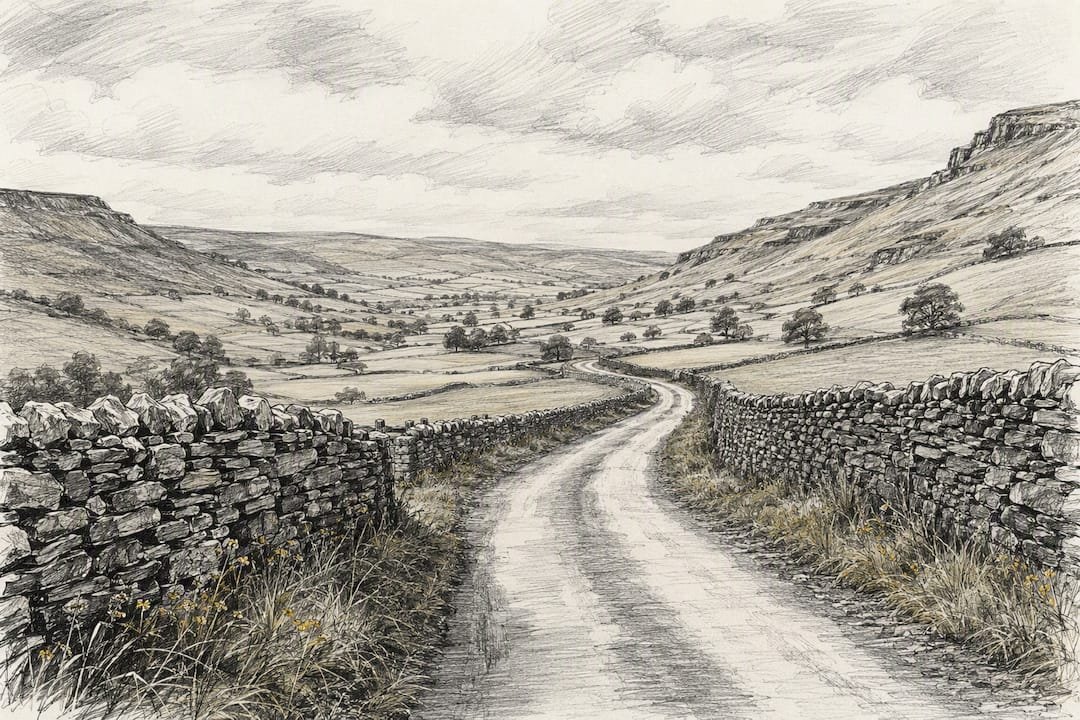
The headline sights are worth seeing, but Great Britain’s quieter corners often deliver more per hour than the famous ones. The Yorkshire Dales, just west of the more heavily visited York and North York Moors, offers dry-stone-walled valleys and market towns like Hawes with a fraction of the visitor numbers. Northumberland, tucked against the Scottish border, pairs Hadrian’s Wall with genuinely empty beaches and castles like Bamburgh that rarely see the queues London or Edinburgh attractions do.
In Wales, the Pembrokeshire coast path offers cliff walking to rival Cornwall’s without Cornwall’s summer traffic, and mid-Wales towns like Hay-on-Wye add a bookish, unhurried alternative to Snowdonia’s busier trails. Scotland’s Isle of Mull and the Applecross peninsula sit just off the main Skye route and reward the extra driving time with sea views and single-track roads that see a fraction of Skye’s summer traffic.
Closer to London, Kent’s coastline around Whitstable and the Cathedral City of Canterbury make an easy alternative day trip to the more crowded Windsor or Oxford routes, with oyster restaurants and a genuinely different pace. None of these require abandoning the classic itinerary; most slot in as a substitution for one leg, or an extra night added to a route that already passes nearby. A longer self-drive route through some of these regions shows how naturally they connect once you’re not restricted to rail lines.
Why fewer stops usually beats more stops
Travel blocks, staying three or four nights somewhere instead of one, consistently outperform a itinerary packed with one-night stands in different towns. Overambitious scheduling is the most common planning mistake, and it’s an easy one to make when you’re excited about a country with this much to see. Every additional move costs half a day to packing, checking out, travelling and checking in again, time that never shows up on the itinerary but always shows up in how tired you feel by day ten.
The trade-off is real: fewer stops means seeing less of the map. But a two-week trip with five bases and proper time in each beats the same two weeks split across nine towns, almost every time. You remember the walk you had time to finish, not the one you rushed to catch a train.
My advice, built into every itinerary above, is to treat “how many nights per stop” as the first decision you make, not the last. Pick your bases, then fill in the days. The order matters more than people expect.
— Theo
Ready to turn this plan into a booked trip?
Building any of the routes above by hand means matching accommodation to driving distances across three nations, and getting that wrong is what turns week two of a trip into a series of late check-ins and missed bookings. This kind of service handles that from the start: custom route planning built around your actual dates, handpicked accommodation that sits on the route rather than off it, and support you can reach while you’re on the road, not just before you leave.

Custom itinerary providers commonly plan everything from a focused ten-day England route to a full three-week loop through England, Scotland and Wales, adjusting pacing for whichever mix of cities and rural driving you want. If you already have a rough shape in mind from the sample itineraries above, the fastest next step is to plan your ideal self-drive tour and get a route built around your dates rather than a generic template. It’s worth checking what a well-run self-drive package should actually include before you compare quotes elsewhere.
Sources
- Accessible Great Britain — VisitBritain
- Driving in Scotland — VisitScotland
- Gov
- How to see Britain differently in 2026 — VisitBritain
FAQ
How many days are enough for a Great Britain trip?
Seven days works well for London and one nearby region; ten to fourteen days lets you add Scotland or the south-west properly; three weeks or more is needed for a full loop through England, Scotland and Wales.
What is the best itinerary for a first trip to the UK?
For most first-time visitors, a ten to fourteen-day route covering London, one northern English stop like York or the Lake District, and Edinburgh gives the best balance of icons and pace, with train linking the cities and a hire car covering rural legs.
What is the best month to visit Great Britain?
There’s no single best month: spring suits gardens and quieter sightseeing, summer suits Highland routes and festivals but brings peak crowds and prices, and autumn offers good light with noticeably fewer queues at major attractions.
What is the prettiest part of the UK?
That’s genuinely subjective, but the Scottish Highlands, the Lake District and the Pembrokeshire coast in Wales are the three regions most consistently named for scenery, each suited to a slower self-drive pace rather than a rushed day trip.
Should I book a Great Britain trip through a tour company or plan it myself?
DIY planning works for shorter, city-focused trips, but for longer or multi-region routes, a bespoke self-drive service like BTOURS saves significant planning time by handling route logistics, pacing and accommodation together.
Recommended
- Best Self‑Drive Tour Ideas for Spring 2026 across the UK & Ireland
- Expert Itineraries, Your Pace: The BTOURS Way to Unforgettable Self‑Drive
- Plan Your Ideal Self‑Drive Tour: Expert Guidance, Flexible Routes, and Unique Experiences across the UK, Ireland and Greece
- Best Spring Self‑Drive Routes Across England, Scotland and Wales for 2026