The best 7-day Scotland itinerary is a self-drive loop from Edinburgh through Loch Lomond, Glencoe, Glenfinnan, Skye, Eilean Donan, and Loch Ness, with 2 to 5 hours of driving most days. It suits first-timers who want to see the country’s biggest sights efficiently. Book Skye accommodation and any August ferries early: this route gets busy fast.
What does a 7 day Scotland itinerary look like at a glance?
This route runs as a loop, which matters more than it sounds. You land in Edinburgh, hire a car, and drive a circle that never doubles back on itself, ending exactly where you started. That means one airport, one car hire desk, and no wasted miles retracing a road you’ve already seen. Most travellers flying from the US land at Edinburgh Airport in the morning after an overnight flight, which gives you a full first day even before you pick up the car the next morning.
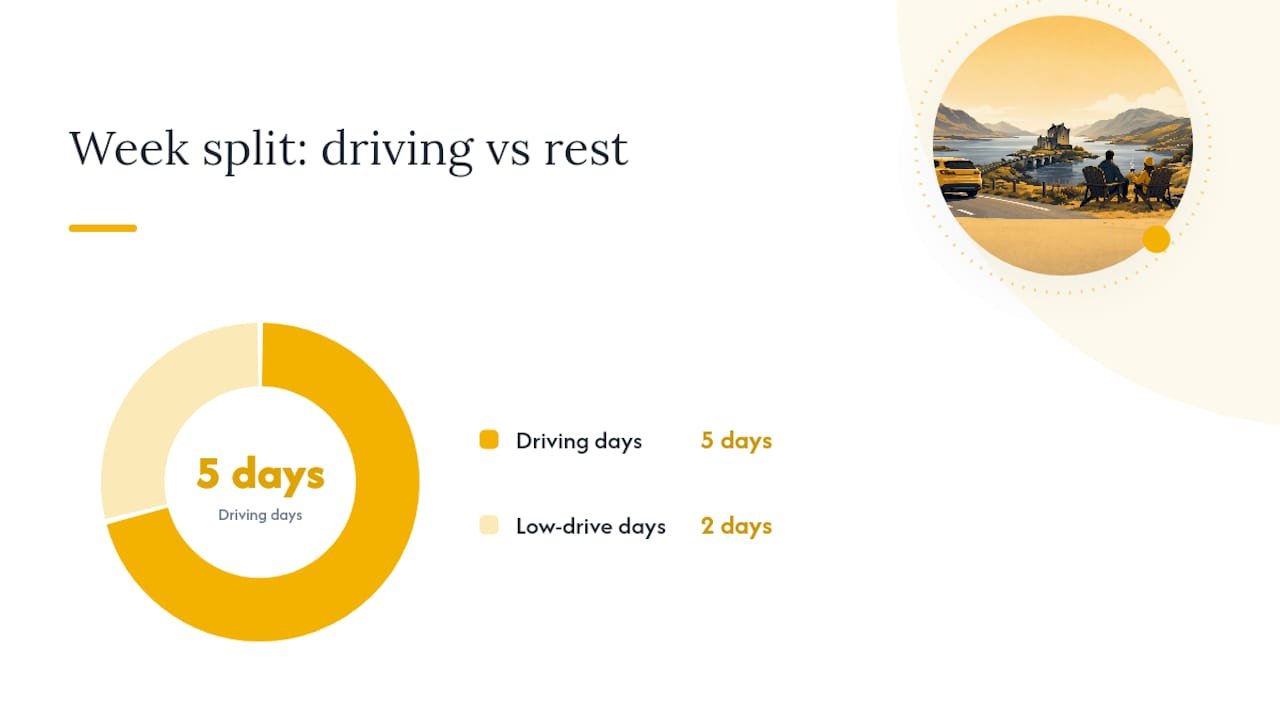
The daily driving stays modest by Highland standards. Nothing exceeds about four hours behind the wheel, and two of the seven days involve almost no driving at all, since you’re based on Skye for two nights. That’s deliberate. A 7-day route through Scotland that tries to cram in the North Coast 500 as well will leave you exhausted and resentful of every “brief” photo stop.
Here’s the day-by-day shape of the loop:
- Day 1: Edinburgh, on foot, no car needed yet
- Day 2: Edinburgh to Loch Lomond and The Trossachs
- Day 3: Loch Lomond to Glencoe to Fort William, via Glenfinnan
- Day 4: Fort William to Skye
- Day 5: Full day exploring Skye
- Day 6: Skye to Loch Ness via Eilean Donan Castle
- Day 7: Inverness back to Edinburgh, with a Stirling detour
The table below breaks down the approximate driving distance and time for each leg, so you can see where the long days sit and where you get a break.
Those driving times assume dry roads and no long queues at single-track passing places, which is optimistic in the Highlands. Build in an extra 20 to 30 minutes per leg once you’re west of Fort William, and you won’t feel like you’re racing the clock.
Your day-by-day 7-day Scotland itinerary
This is the version worth printing out or saving to your phone. Every day below assumes you’re driving yourself, staying in the town or village named, and leaving reasonable time for food and short walks rather than sprinting between car parks.
1. Day 1: Edinburgh, on foot
Skip the car hire on day one. Edinburgh rewards walking far more than driving, and you’ll want the rest between flights anyway. Start at Edinburgh Castle, which sits on volcanic rock above the city and takes roughly two hours to see properly, including the Crown Jewels and the one o’clock gun if you time it right. From there, walk down the Royal Mile toward Holyrood Palace, stopping into whichever close or courtyard catches your eye. The Mile is touristy in patches, but the side streets off it (Victoria Street, Cockburn Street) are where the better shops and cafés hide.
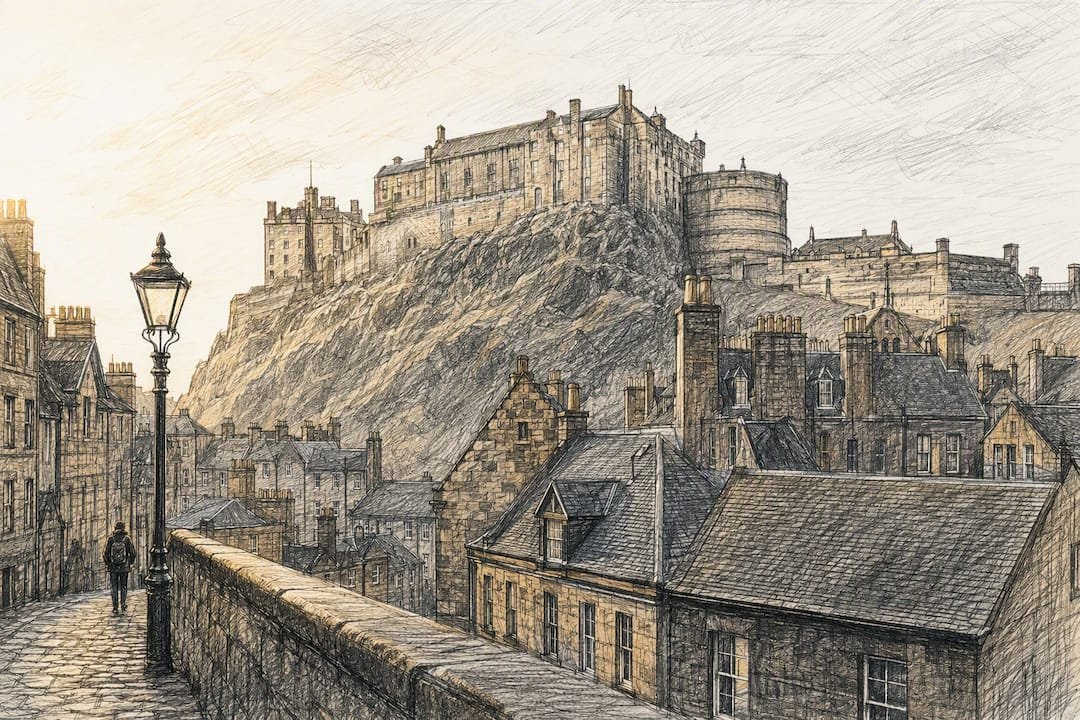
For an afternoon that isn’t just more cobblestones, climb Arthur’s Seat. It’s a genuine hill walk, not a stroll, taking around 45 minutes up if you’re reasonably fit, but the view over the city and the Firth of Forth is worth the calf burn. In the evening, book a table in the Old Town rather than wandering and hoping. Scottish menus lean on venison, haggis and fresh seafood, and a good number of restaurants around the Grassmarket do all three well.
2. Day 2: Edinburgh to Loch Lomond and The Trossachs
Collect your hire car in the morning and head west. The drive to Loch Lomond takes about 90 minutes on decent roads, so there’s no excuse to rush breakfast. Loch Lomond is Scotland’s largest loch by surface area, and the shoreline drive along the A82 gives you long views across the water with pull-ins for photos roughly every few miles.
Stop in Luss, a small village on the loch’s western shore that gets busy with coach tours by midday, so arriving before 11am helps. From there, push into The Trossachs, sometimes called the Highlands in miniature, where Loch Katrine offers a flat, easy walking or cycling path if you want to stretch your legs for under an hour. Overnight in Callander or a village around Loch Lomond itself; both put you well positioned for tomorrow’s push north.
3. Day 3: Loch Lomond to Glencoe to Fort William
This is the day the itinerary earns its reputation. Glencoe appears roughly two hours after leaving Loch Lomond, and it’s the kind of landscape that makes people pull over just to stare. The glen was shaped by ancient volcanic collapse and a 17th-century massacre that still colours its name, and the sheer walls of the Three Sisters ridge make it one of the most photographed stretches of road in Scotland. Give yourself at least 30 minutes at the main viewpoint car park; longer if you fancy a short walk up toward the Lost Valley.
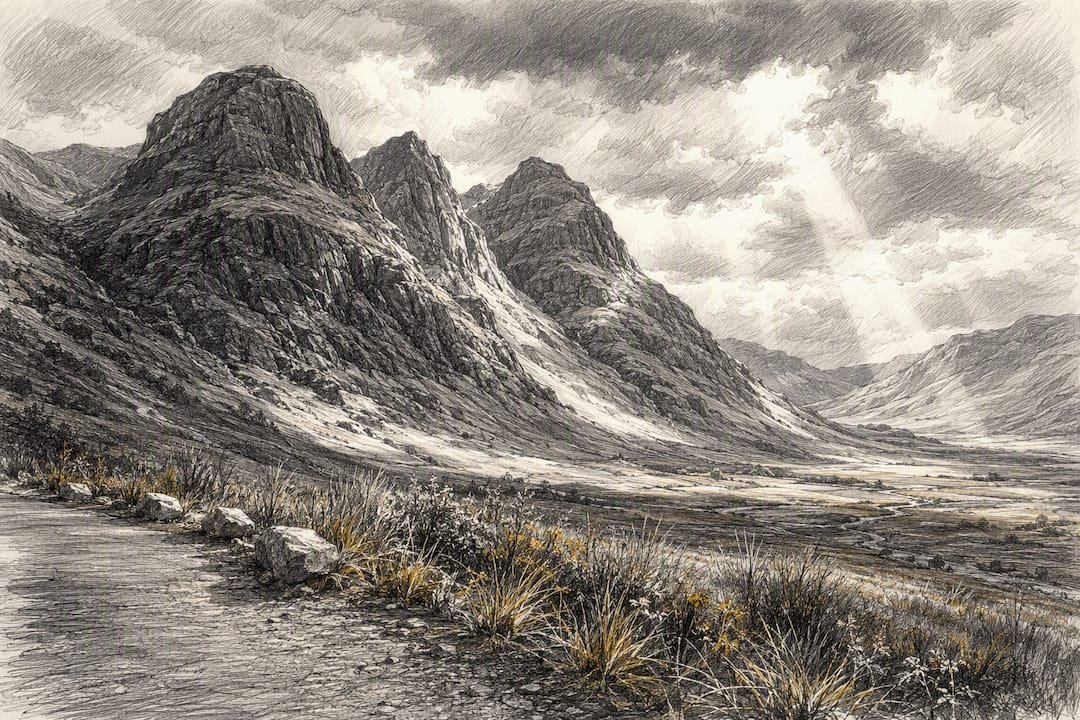
From Glencoe, continue toward Fort William, then detour slightly north to Glenfinnan. The viaduct here, built in 1901, became globally famous after appearing in the Harry Potter films, and the official viewing point above the visitor centre gives you the classic curved-bridge shot. Steam trains cross it on a limited timetable in summer, so check ahead if you want the train in your photo rather than just the bridge. Fort William itself is unremarkable as a town but functional as a base, with solid pub food and easy access to Ben Nevis if you’re tempted by an early start the next morning instead.
4. Day 4: Fort William to the Isle of Skye
Today is about getting to Skye with enough daylight left to explore. The drive covers around 70 miles and takes roughly two hours, passing through Glen Shiel, one of the most dramatic mountain passes on the route. You’ll cross onto Skye via the Skye Bridge at Kyleakin, which is free and open year-round, unlike the seasonal ferry option some travellers expect.
Break the drive at Eilean Donan Castle, just before the bridge crossing. Sitting on its own tidal island where three lochs meet, it’s arguably the most photographed castle in Scotland, and the walk across the footbridge to the entrance takes minutes. Allow an hour for the castle and grounds. Once on Skye, base yourself in Portree, the island’s main town, with harbourside restaurants serving langoustines and scallops landed that morning.
5. Day 5: Skye’s highlights, without rushing them
This is your one full day with no driving deadline, and it’s worth protecting. Head north from Portree to the Old Man of Storr, a distinctive rock pinnacle reached by a walk of around 90 minutes round trip on a clear path, though it climbs steadily. Continue to the Quiraing, a landscape of folded rock formations that looks almost unreal in good light, particularly at dawn or dusk.
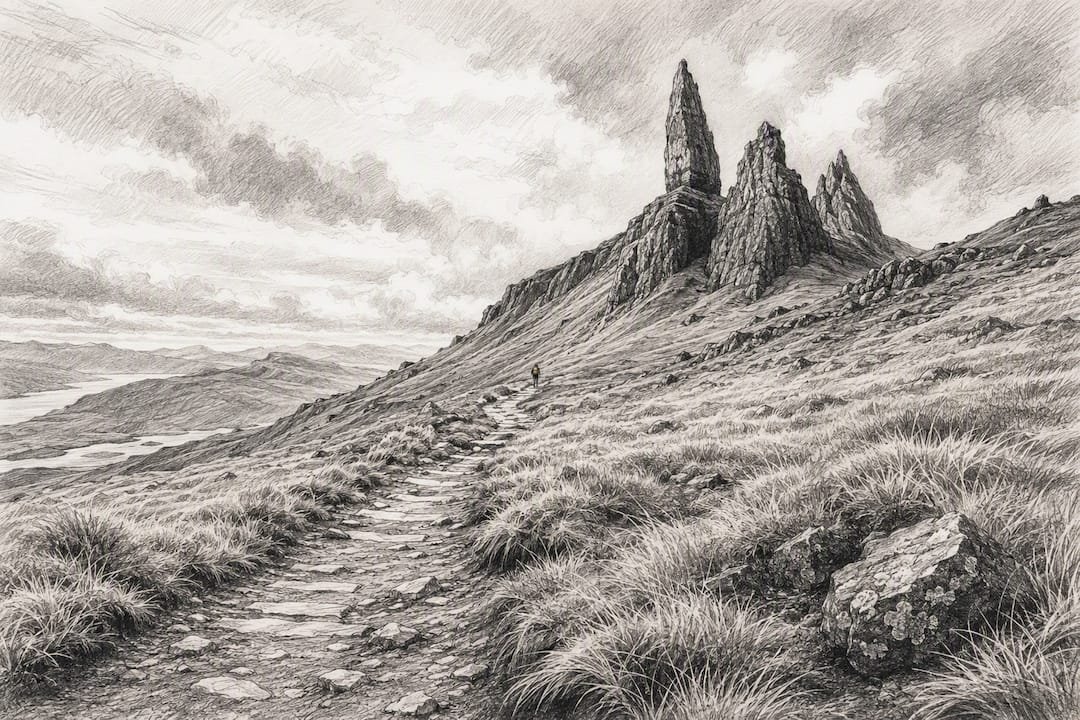
Both walks depend heavily on weather; Skye’s cloud cover can swallow a view in minutes, so build flexibility into the order you visit them rather than locking in a rigid schedule. If rain closes in, Dunvegan Castle offers an indoor alternative, or simply enjoy Portree’s harbour and a plate of fresh fish while you wait for the sky to clear.
6. Day 6: Skye to Loch Ness via Eilean Donan and Inverness
Leaving Skye, the drive to Loch Ness runs through Invermoriston and takes around three and a half hours with a reasonable stop. Urquhart Castle, on the loch’s western shore, gives you the best-known ruined-castle view in the Highlands and a genuine, if statistically slim, chance of spotting something in the water. A short loch cruise from Fort Augustus or Inverness adds an hour but gets you onto the water itself rather than just looking at it from the shore.
Inverness makes sense as tonight’s base: it’s the Highland capital in name if not in size, with a walkable centre, good seafood, and enough restaurants that you won’t be stuck with the hotel menu.
7. Day 7: Inverness back to Edinburgh
The final leg covers around 175 miles and takes three and a half hours without stops, which makes it the longest driving day of the trip. Break it up at Stirling Castle, roughly two hours south of Inverness, which held more strategic importance in Scottish history than Edinburgh Castle for long stretches of the medieval period. An hour there is enough for the highlights unless you’re a genuine history enthusiast.
If your flight isn’t until the following morning, consider adding a night in Edinburgh rather than treating this as a straight dash to the airport. Arriving with an evening free beats arriving with 40 minutes before check-in closes.
Pro Tip: Pre-book Skye accommodation and Edinburgh Castle tickets at least a month ahead for June through August travel. Everything else on this route, including Glencoe, Eilean Donan and the Glenfinnan viewpoint, needs no advance booking at all.
What do you need to know about driving and booking logistics?
Car hire in Scotland runs on the same rules as the rest of the UK: you drive on the left, and most rental fleets default to manual transmission, with automatics available for a premium and worth reserving early if you need one. Check whether your hire includes collision damage waiver, since Highland roads chip windscreens and clip wing mirrors more often than city driving does. A US driving licence works for short-term hire without an International Driving Permit in most cases, but confirm this with your specific rental company before you fly.
Single-track roads dominate stretches of this route, particularly around Glen Shiel and parts of Skye. Passing places exist so oncoming traffic can pass safely, and the etiquette is simple: pull into the next passing place on your left if someone’s coming toward you, or wait in one if a vehicle behind wants to overtake. Locals drive these roads fast and expect visitors to know the drill, so a friendly wave after using a passing place goes down well.
- Fill your tank whenever you see a station on Skye and the West Coast; they’re sparser than you’d expect.
- Photograph stops eat more time than you’d plan for. Build in buffer, not just for weather, but for the moment you round a corner and have to pull over.
- Parking at Glenfinnan and Eilean Donan fills by mid-morning in July and August, so arriving before 10am helps.
- Book Skye lodging as far ahead as you book flights. The island has a fixed, small supply of rooms and it sells out fastest of anywhere on this loop.
You won’t need a ferry for this particular route, since the Skye Bridge replaced the crossing decades ago. If you’re tempted to extend into the Outer Hebrides or Small Isles, though, vehicle ferry space sells out in peak season, and cancellations due to weather are common enough that a rigid same-day return plan is a genuine risk. Build a spare half-day into any island extension.
Pro Tip: Rural inns and B&Bs across the Highlands often have limited rooms, sometimes under ten. Once you’ve fixed your dates, book accommodation for Fort William, Skye and Inverness before anything else on your list.
When should you go, and what should you pack?
May, June and September consistently come out as the best months for a Scotland trip, and the reasoning holds up against the alternatives. June gives you close to 18 hours of daylight, which stretches your driving and sightseeing window considerably. May and September both dodge the worst of the summer crowds while keeping decent weather odds, and neither month brings the midge population that makes July and August evenings on Skye genuinely unpleasant for some visitors.
Speaking of which: midges peak in July and August across the west coast and Highlands, particularly at dawn and dusk near still water. If you’re travelling in that window, a DEET-based repellent and a compact head net for lochside photography sessions make a real difference. Long sleeves at dusk help too, even if it feels like overdressing in summer.
Weather across all shoulder months stays genuinely unpredictable, sometimes shifting from sunshine to horizontal rain within the same hour, so pack for range rather than a forecast. A practical list looks like this:
- A waterproof jacket that actually breathes, not just a rain shell
- Layers you can add or strip quickly: thermal base layer, fleece, lighter jacket
- Sturdy walking shoes with grip, even if you’re not planning serious hikes
- Insect repellent and a head net if travelling July or August
- A UK plug adaptor and a portable charger for long driving days between towns
Keep your itinerary flexible day to day. If Skye’s cloud cover ruins the Quiraing on the morning you planned, swap it for the afternoon and see something else first.
Is a slower Highlands-only week a better fit for you?
If a national highlights loop sounds exhausting rather than exciting, drop Edinburgh’s bookend days and spend the whole week between Fort William, Skye and Applecross instead. You’ll drive roughly half the total mileage, trade the long transit day back to Edinburgh for an extra day of hiking, and get more time on Skye’s back roads where the crowds thin out fast. A sample week might run: two nights near Fort William with Glencoe and Glenfinnan walks, three nights on Skye covering Storr, Quiraing and the Fairy Pools properly, and a final two nights around Applecross or Torridon before flying home from Inverness rather than Edinburgh.
Use this quick checklist to decide which version suits you:
- Photography priority: the slower Highlands week, for repeat visits to the same light-dependent spots
- Hiking priority: the Highlands week, hands down
- Whisky touring: either works, but add a day near Fort William for Ben Nevis Distillery or plan a Speyside detour
- Travelling with young children: the highlights loop, since shorter driving days per stop suit shorter attention spans
Who’s behind this itinerary, and where does BTOURS fit in?
This route comes from Theo, who covers self-drive travel for BTOURS with a focus on realistic pacing over ambitious mileage. BTOURS is a member of the Adventure Travel Trade Association, a standard that reflects how the company builds its self-drive itineraries across Scotland, England, Wales, Ireland and Greece.
The daily plan above draws on the same logic BTOURS applies to its custom self-drive packages: match driving time to genuine interest at each stop, rather than cramming in extra sights that sound good on paper but cost you an hour you’d rather spend on a hillside. If Skye’s viewpoints or Edinburgh’s Old Town have hooked your interest, the scenic drives through the Scottish Highlands guide expands on route options beyond this loop, while the Portree travel guide goes deeper on where to eat and what to do if bad weather strands you on the island for an extra day.
Readers considering stretching this into a longer trip should look at the North Coast 500 itinerary, which picks up where this loop’s northern stretch leaves off.
Why this itinerary works better on paper than it sometimes does in the car
Here’s what the guides rarely admit: the driving times on this route are honest, but the psychology of a seven-day trip isn’t. By day four, most travellers have seen three castles, two lochs and one viaduct, and the temptation to treat every remaining stop as a box to tick rather than a place to actually experience starts creeping in. That’s the real risk on this loop, not the mileage.
The fix isn’t a different itinerary. It’s deciding in advance which two or three stops you’ll properly linger at, and giving yourself permission to drive past the rest. On my own read of this route, Glencoe and Skye’s northern peninsula are where that extra hour pays off best; Stirling Castle on the final day is where you can happily cut it short if you’re running late for a flight.
Leave slack for weather, because the Highlands will test any schedule that doesn’t have some. And eat properly. A rushed sandwich in a car park is not what seven days in Scotland should taste like.
— Theo
Let BTOURS handle the planning while you handle the driving
This exact loop is often used in custom self-drive packages, and the difference from planning it yourself is what happens when something goes wrong. Miss a ferry, hit a closed road, or simply decide you want three nights on Skye instead of two: a BTOURS itinerary comes with route planning, pre-booked accommodation and on-trip support built in, so a change in plan doesn’t mean rebuilding your week from scratch on your phone in a car park.

It suits first-time visitors to Scotland especially well, along with photographers who want flexibility around light and weather without losing their booked rooms, and families or small groups who’d rather split the planning workload with someone who’s done this loop before. Curious travellers weighing up a booking strategy should also see this guide to getting the best deal on a weekend stay, which covers timing principles that apply just as well to a week-long Highland trip.
If this itinerary matches what you’re after, start by checking what to look for in a self-drive tour package before you book, so you know exactly what’s included and what to ask for.
Where to check the details before you travel
For anything involving entry requirements, Gov confirms whether US passport holders need an electronic travel authorisation before flying, and it’s worth checking close to your travel date since requirements have shifted in recent years. VisitScotland covers seasonal touring advice for the west coast route this itinerary partly follows. For a broader seasonal comparison, including winter trade-offs this itinerary doesn’t cover, Lonely Planet’s seasonal guide lays out daylight and closure patterns month by month.
- Visas and entry: GOV.UK ETA page
- Regional touring advice: VisitScotland
- Seasonal trade-offs beyond shoulder months: Lonely Planet
Sources
- Best Time to Visit Scotland: Month-by-Month Guide 2026
- How to drive on single-track roads in Scotland
- Getting around the Hebrides: how to use the ferries in Scotland
- Midge season in Scotland
- Gov