You've arrived in Inverness, the hire car is waiting, and the road ahead offers too many appealing choices. Should you take a fast highlights loop, slow down for the beaches and island crossings, or build the journey around food, family activities, photography or long Highland walks?
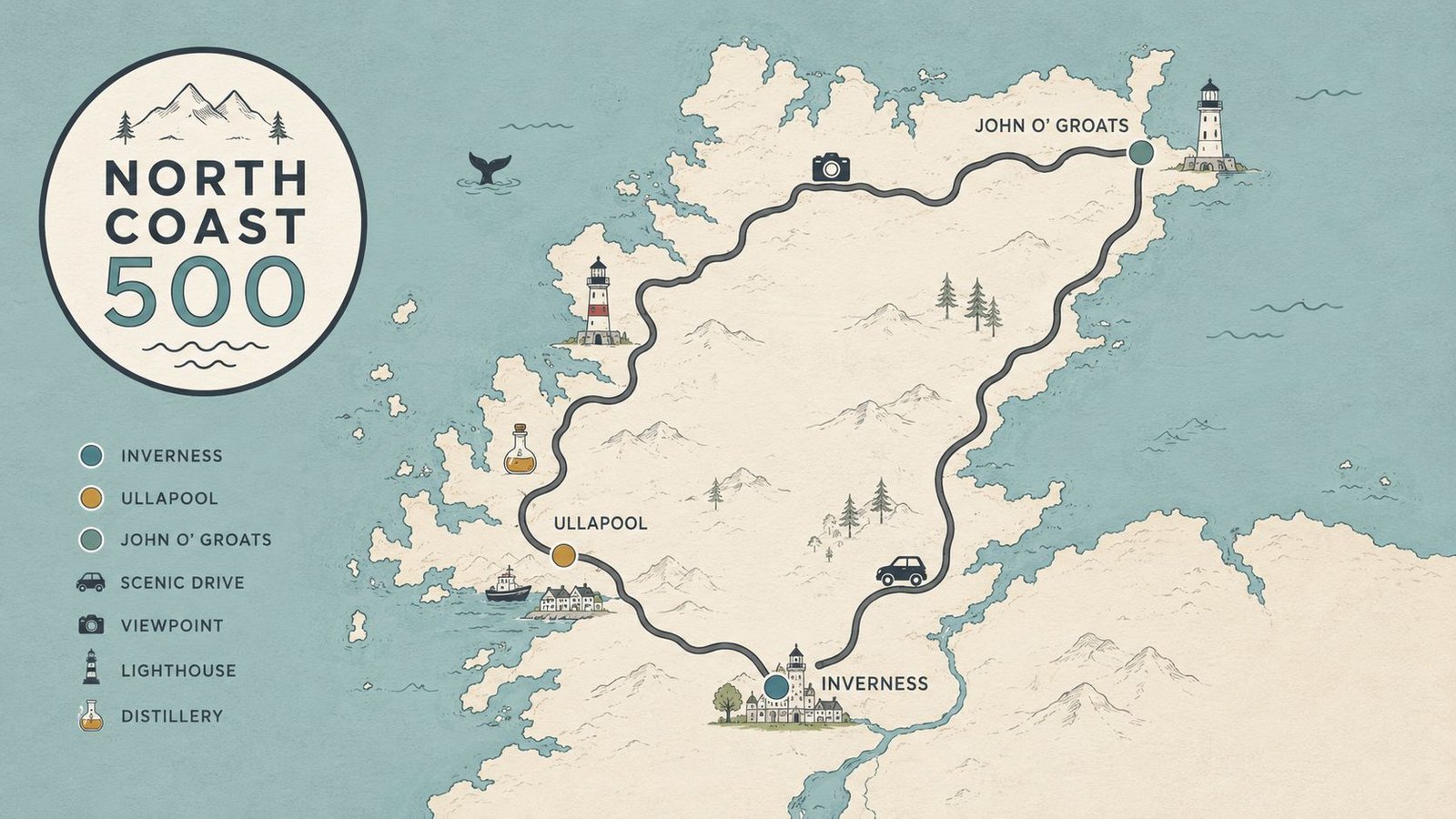
The strongest North Coast 500 itinerary is the one that matches your pace, not the one with the longest attraction list. The route is an officially described 516-mile, 830-kilometre circular journey starting and finishing at Inverness Castle, crossing Wester Ross, Sutherland, Caithness, Easter Ross, the Black Isle and Inverness-shire (official NC500 information). Detours can push your real mileage well beyond the official route, especially if you add places such as Cape Wrath, Dunnet Head or the Assynt coast (NC500 route planning guide).
Choose from the ten approaches below by comparing trip length, driving intensity, accommodation style, weather exposure and detour potential. If you want a self-drive journey with handpicked accommodation and planning support, BTOURS is also a relevant option, alongside independent planning resources such as these Oregon travel tips from HikeTee.
1. Classic 7-Day North Coast 500 Complete Loop
Arrive in Inverness, collect the car and begin the loop west through Wester Ross. Continue via Ullapool and Lochinver to Durness, Thurso and John o' Groats, then turn south through Wick, Dornoch, Easter Ross and Nairn. This is the strongest first-trip format for travellers who want the full circuit, clear route logic and enough time to stop without chasing every viewpoint.
The route covers 516 miles, or 805 kilometres, and became one of the UK's best-known self-drive journeys after launching in 2015 (BBC route and economic overview). Seven days works because each day has a defined regional focus. Use the west coast for longer scenic pauses, keep the far north for beaches and headlands, then make the eastern return more flexible. The loop can also anchor a wider Scottish holiday, including an Isle of Skye extension or time in Edinburgh and Glasgow. Travellers arranging corporate jet travel Inverness London can also connect the road trip with a broader UK schedule.
How to pace the loop
May and September suit this itinerary well. They offer useful daylight, generally calmer visitor conditions and plenty of opportunity for changing Highland weather. Assign the longest drives to days when you mainly want roadside scenery, then protect slower days for Cape Wrath, Smoo Cave or the Assynt coast. That balance gives the route variety instead of seven similar driving stages.
Refuel in larger centres such as Ullapool and Thurso, download offline maps before remote sections and leave room to change plans when coastal weather turns. A comfortable vehicle helps on narrow roads, but passing places still require patience and proper use. Review this practical guide to car rental insurance before collecting the car. A BTOURS Highlands road trip is another option if you want accommodation and route logistics arranged rather than planned independently.
2. Extended 10-Day North Coast 500 with Island Escapes
Choose ten days if the sea, wildlife and remote island atmosphere matter as much as the main road. Keep the NC500 loop as your backbone, then add time around the Summer Isles and Handa Island rather than squeezing island experiences into already demanding driving days. This approach suits couples and independent travellers who want the Highlands to feel spacious.
Spend a night or more near Achiltibuie for Summer Isles access, or arrange a Tanera Mor experience where available. Handa Island works particularly well as a dedicated day excursion from the north-west coast, with birdwatching and walking taking priority over mileage. An Isle of Skye extension can sit before or after the loop, but don't attach it casually to an already full schedule. The crossing, island weather and road transfers need their own breathing room.
Build around crossings, not road distance
Book ferry tickets and island accommodation 6–8 weeks ahead when your dates are settled. Island travel is weather-sensitive, so reserve 2–3 flexible days across the wider trip rather than assigning every night to an immovable connection. Mid-week island days usually create a calmer experience than trying to fit crossings around weekend demand.
Pack waterproof layers, warm mid-layers and footwear that can handle wet ground. Research wildlife timing if nesting birds are central to your plans, and use a local guide for richer interpretation of island communities. A vehicle suited to single-track roads remains important, but time is the true luxury here. Keep the island days active and leave the following evening deliberately light.
If your wider journey includes the capital, pair this itinerary with a carefully timed Edinburgh city break before heading north.
3. 5-Day Accelerated North Coast 500 Highlights
Five days suits travellers with a short, firm priority list. Choose three or four headline experiences, then build the route around them. Trying to include every beach, castle, cave, distillery and viewpoint will turn the trip into a timetable exercise.
Use Inverness as both start and finish. A workable clockwise sequence runs west to the coast, north-west towards Kylesku and Durness, east across the northern coast to Thurso and John o' Groats, then south through the eastern Highlands. Keep the west and north-west stops selective. Single-track roads, passing places and photo breaks can consume more time than the map suggests.
Set a five-day driving rhythm
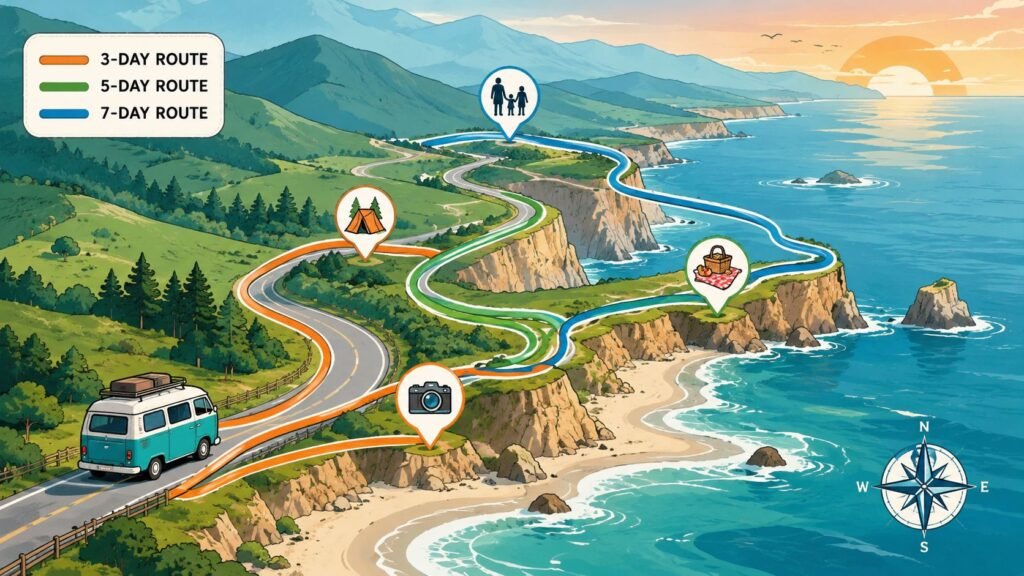
Allocate the days by driving load:
- Day one: Inverness to Ullapool, with one major west-coast stop.
- Day two: Ullapool through Achiltibuie or Applecross towards the Kylesku area. Pick one detour, not both.
- Day three: Kylesku to Durness, then continue east only if your chosen stop is brief.
- Day four: Durness or Thurso to John o' Groats, with one northern highlight.
- Day five: John o' Groats back to Inverness via the east coast. Leave room for delays rather than adding another attraction.
For the tightest schedule, drop Durness and use the A835 and northern coast as your main corridor. That sacrifices some of the north-west's beaches and cliffs, but gives you more time around Ullapool, Thurso or the eastern route. Skip Applecross if steep, narrow roads would make the trip stressful.
Start early for popular viewpoints, and rank every stop as first choice, useful extra or disposable. Fuel, meals and supplies are easier to manage in larger settlements, so avoid planning a remote overnight after a long detour. In poor weather, cut viewpoints before cutting safe daylight. This route works well as a Scotland sampler for international visitors or business travellers adding leisure days.
4. Winter North Coast 500 Adventure Route
Winter changes the NC500 from a sightseeing circuit into a serious weather-led journey. The reward is solitude, low winter light, dramatic skies and the possibility of northern lights viewing. The cost is reduced daylight, icy conditions, closures and a much smaller margin for error.
Plan every driving day between 9am and 3pm, then spend the late afternoon and evening close to your accommodation. Don't rely on a full loop if forecasts deteriorate. A short out-and-back section can be a better winter decision than forcing the next overnight stop.
Prepare for exposure
Fit winter tyres where appropriate and carry a breakdown kit, warm clothing, food, water and power banks. Pack heavy waterproofs, thermal layers and emergency provisions even if the forecast looks favourable. Check weather and road conditions each morning, and tell your accommodation hosts where you're heading so they know your plan.
Book properties with reliable heating, drying space, log fires and supplies available nearby. Northern lights alerts can help you decide when to stay outside, but they can't guarantee a sighting. Treat aurora viewing as an optional bonus rather than the reason to drive hazardous roads at night.
A winter driving course is sensible if single-track roads, ice or steep gradients make you nervous. Learner drivers and anyone without confidence in poor conditions should choose another season. Winter solstice travel and New Year celebrations in remote villages can be memorable, but only if your route remains flexible enough to respond to the weather.
5. Luxury North Coast 500 Retreat with Premium Stays
Luxury works best on the NC500 when it reduces travel friction rather than adding expensive rooms. Choose a small number of exceptional bases, stay multiple nights where possible, and let the route unfold through fine dining, whisky, private activities and unhurried coastal drives.
A west-coast stay at The Torridon can anchor a scenery-led opening, while Kinloch Lodge suits travellers adding an Isle of Skye extension. On the eastern side, combine refined accommodation with visits to Clynelish or Dalwhinnie and pre-arranged tastings. Inverness provides an easy beginning or ending point for a premium Scottish road trip, with restaurants and services that are harder to find in remote villages.
Spend on time and access
Book luxury accommodation 3–4 months ahead for peak periods. Give your travel concierge clear preferences for room style, dietary needs, whisky interests, driving tolerance and activity level. Ask for a flexible structure, because even a premium itinerary benefits from leaving an afternoon open for a beach, viewpoint or unexpected local recommendation.
Arrange a vehicle upgrade in advance, whether you prefer a Range Rover or a luxury saloon. Choose carefully, because the most expensive vehicle isn't automatically the most comfortable option on narrow roads. Ask hotels or guides to prepare packed lunches using local ingredients, especially on days when a long scenic section separates you from your next restaurant.
Premium accommodation costs should be protected with suitable travel insurance, particularly where a cancellation could affect several linked bookings. For help judging whether a curated operator or independent booking model suits you, compare the differences in tour operator and travel agent services.
6. Family-Friendly North Coast 500 with Activity Integration
Families need a route built around energy levels, not adult driving ambitions. Keep each day anchored by a clear activity, then make the surrounding drive scenic but manageable. Children remember the dolphin boat, castle grounds, lighthouse or wildlife encounter far more than the number of miles completed.
Begin or finish near Inverness with a Moray Firth dolphin-watching trip, then use the northern section for Dunnet Head lighthouse exploration and accessible coastal walks. Noss Head offers seabird interest and eagle-spotting opportunities, while Dunrobin Castle adds history without requiring a full day inside a museum. Handa Island can suit children aged six and above when the crossing and weather align, and Dunvegan works well as part of an Isle of Skye extension.
Make the car part of the plan
Schedule an activity stop every 60–90 minutes where practical, even if it's only a short walk, viewpoint or café break. Choose family suites, games rooms, flexible dinner times and indoor space for bad-weather evenings. Pre-book guided activities and ask providers about age suitability, group size and cancellation arrangements.
Pack a dedicated car kit:
- Entertainment: Bring games, books, tablets and headphones for longer stretches.
- Weather backups: Keep an indoor museum, castle, café or visitor centre ready for each exposed day.
- Food planning: Carry snacks, but reserve family-friendly restaurants where villages have limited evening choice.
- Sleep protection: Schedule activity-heavy days when the children are most alert, then make the next morning slower.
Don't overfill the itinerary. One excellent family experience followed by unstructured beach time often beats three rushed attractions. Give children small choices, such as selecting a café or deciding whether to explore a lighthouse path, and the drive becomes part of the adventure rather than a pause between activities.
7. North Coast 500 Photography and Creative Arts Itinerary
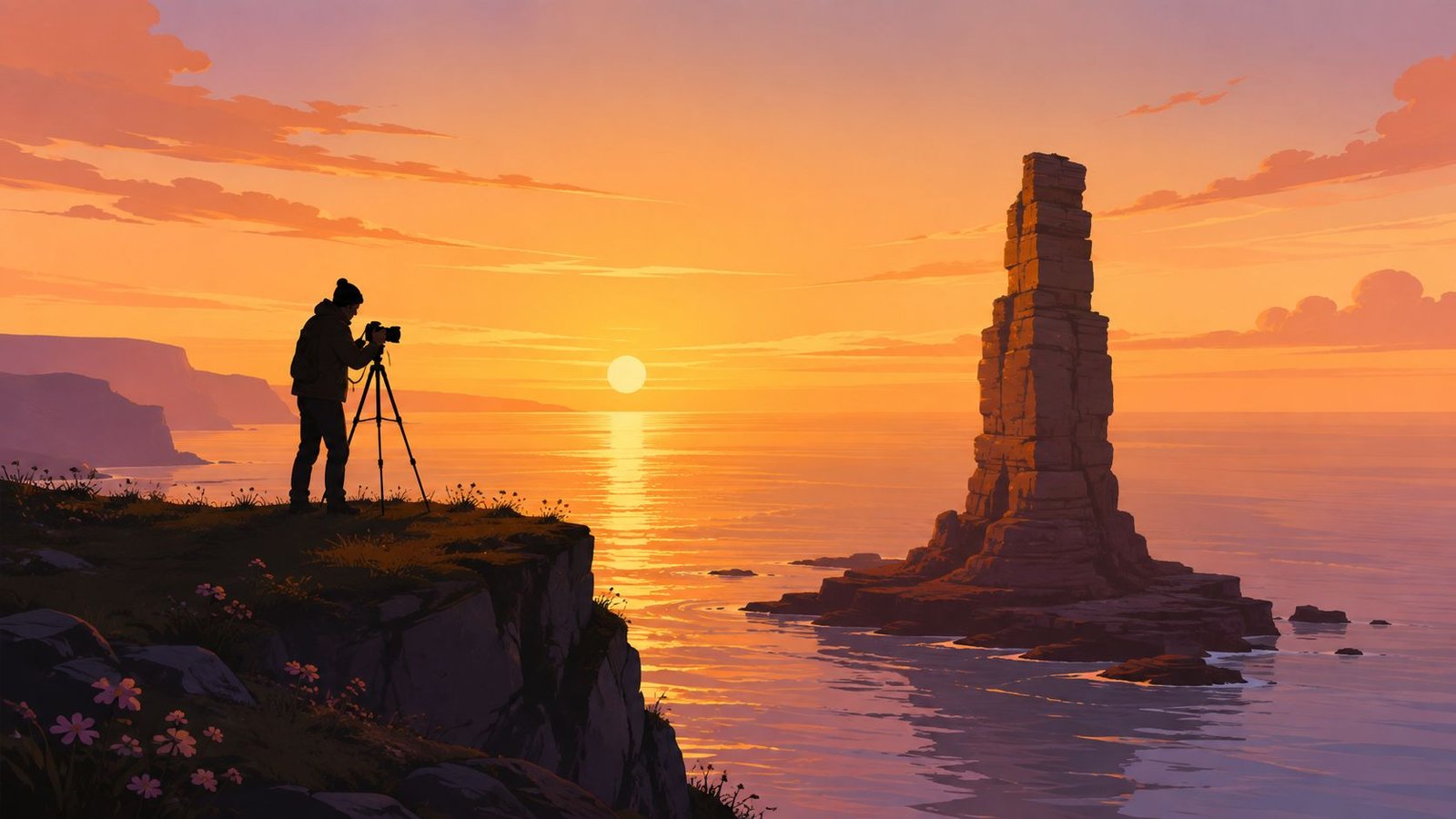
Photographers should reject the standard sightseeing rhythm. A location that takes five minutes for a casual visitor may deserve an entire tide, weather window or golden-hour session. Build the itinerary around light and return access, not around the number of places you can tick off.
Use the Old Man of Stoer for sea-stack compositions, Smoo Cave for atmospheric water and rock textures, and Dunnet Head or Cape Wrath for expansive coastal light. Peat moorland offers abstract patterns and texture studies when the coastline disappears into cloud. Storm conditions can create powerful images, but never approach cliff edges or exposed shores for a better frame.
Give every main location time
Travel in May, June or September for rewarding shoulder-season light and a more considered pace. Book a specialist photography guide 2–3 months ahead, particularly if you need location scouting, weather interpretation or help finding compositions away from the obvious viewpoints. Hire a vehicle with enough clearance for rough approaches, but don't treat remote access as permission to park irresponsibly.
Carry a weather-resistant camera system, sturdy tripod, spare batteries, lens cloths and waterproof storage. Pre-scout Old Man of Stoer, Dunnet Head, Cape Wrath and Smoo Cave environs, then plan at least 2–3 hours for priority locations rather than trying to photograph them between lunch and check-in.
Field rule: Leave a retreat day for image processing, backups and weather recovery. A productive creative trip needs time away from the camera as well as time behind it.
Drone use requires advance research into permissions, restrictions, wildlife sensitivity and local conditions. Join photography communities for current location intelligence, but keep safety and community respect ahead of the perfect composition.
For moving-image creators, the route also offers a strong visual narrative from Inverness to the exposed northern coast.
8. Outdoor Adventure and Hiking-Focused North Coast 500
Build an active itinerary around two or three substantial walking areas, then use shorter coastal paths to keep the journey varied. The NC500 gives hikers access to mountain, sea-cliff, beach and cave scenery, but the driving between trailheads still demands attention. Don't plan a hard ascent after an exhausting road day.
Ben Loyal offers a serious mountain objective with panoramic Highland views. Smoo Cave and its coastal surroundings work for a shorter adventure, while the Cape Wrath Trail can include a challenging four-mile section towards the cape (NC500 route and capacity evaluation). Handa Island combines birdwatching with dramatic sea-cliff views, and Dunnet Head's two-mile circuit or Ullapool waterfront trails provide easier alternatives when weather or energy turns against you.
Match the walk to the driver
Assess fitness before booking remote accommodation. Start with gentle walks, then build towards longer routes and mountain terrain. Carry water, energy snacks, offline maps, GPS routes and a charged phone, but don't treat digital navigation as a substitute for route knowledge.
Quality boots, waterproof layers and spare dry clothing are essential. Choose accommodation with drying facilities, especially if you'll hike on consecutive days. A local guide is the right choice for demanding routes such as Ben Loyal or Cape Wrath, particularly in poor visibility.
- For mixed groups: Pair one strenuous day with an easy coastal walk.
- For wet weather: Replace exposed summits with lower-level trails, caves or heritage stops.
- For descents: Use trekking poles if your knees struggle on steep ground.
- For drivers: Finish the hike with enough daylight and energy for the next road section.
Weather can change quickly, so check it every day and be willing to exchange a summit for a safer route. The best outdoor itinerary is the one that leaves you fit enough to enjoy the next view.
9. Cultural Immersion and Historical North Coast 500
A history-led NC500 itinerary turns the road into a sequence of stories. Spend less time chasing viewpoints and more time understanding Highland Clearances, Gaelic traditions, archaeology, estate history and the communities that still shape the route.
Dunrobin Castle provides a strong eastern anchor, while the Timespan Museum in Helmsdale and Dunbeath Heritage Centre add local perspective. Standing stones and broch sites create a deeper sense of time, and a nearby island extension can add weaving, Gaelic culture and different community traditions. The Broch of Mousa is not on the core loop, so treat it as a specialist island detour rather than a casual stop.
Slow down at the important sites
Allow 3–4 hours for a major heritage site if you want more than a quick photograph. Hire a local historian or cultural guide for a two- or three-day segment, particularly if you want connections between archaeology, the terrain and modern community life. Pre-book museums, workshops and performances because opening arrangements vary by season and smaller venues may have limited staffing.
Learn a few Gaelic phrases before travelling, and contact local heritage organisations before arrival. Independent museums often carry the most specific local knowledge, while traditional music in pubs and community venues can provide an informal connection to the area.
Build the route around regular daytime opening hours. Schedule workshops, museum visits and guided tours before dinner, then leave evenings open for music and conversation. Ask residents questions respectfully, listen more than you speak, and don't treat communities as scenery.
This style suits travellers who want a thoughtful journey through Scotland rather than a quick scenic circuit. It also rewards ten days, because the additional time lets you explore one area properly instead of collecting superficial stops across the whole route.
10. Culinary and Gastronomy North Coast 500 Experience
Food can give the NC500 its daily structure. Start with a strong breakfast, assign one principal tasting or meal to each day, and reserve enough time to enjoy local produce without driving immediately afterwards. The best culinary route balances distilleries, seafood, farm shops, country-house dining and simple local cafés.
Clynelish, Dalwhinnie and Dornoch provide distillery possibilities, while seafood restaurants and smoking houses bring the coast directly onto the plate. Country-house hotels can anchor farm-to-table meals, and artisan producers such as Isle of Mull Cheese or Tain Pottery Café combinations add character beyond formal dining. If you include Orkney or St Monans, treat them as extensions rather than pretending they sit on the core NC500 loop.
Book the table before the room
Reserve restaurants 2–3 months ahead, especially for Michelin-listed or destination dining. Pre-arrange distillery tours so you receive a proper introduction rather than relying on walk-in availability. Contact local tourism offices for emerging producers, farmers' markets and seasonal food events, then plan your route around market days.
A culinary itinerary needs responsible driving. Designate a non-drinking driver for tastings, use a taxi or local transfer where available, and never schedule a long drive after whisky sampling. Ask hotels to prepare packed lunches using regional ingredients, particularly for remote coastal sections where cafés may be limited.
- Seafood focus: Stay near the coast and reserve early evening meals.
- Whisky focus: Group tastings with a non-drinking driver and avoid overloading one day.
- Hands-on focus: Book a cooking class featuring fish, venison or whisky-based recipes.
- Gift shopping: Buy smoked fish, cheese and other products with secure, travel-friendly packaging.
Allow a food-focused budget above a standard road trip, because tastings, specialist meals and private guides add cost. The return is not just a full itinerary. It's a stronger connection between the Highland region, local producers and the people who feed the region.
North Coast 500: 10 Itinerary Comparison
| Itinerary | Implementation complexity | Resource requirements | Expected outcomes | Ideal use cases | Key advantages |
|---|---|---|---|---|---|
| Classic 7-Day North Coast 500 Complete Loop | Moderate, established route, straightforward logistics | Car rental, varied accommodations, fuel, basic planning | Full NC500 circuit covering main highlights in 7 days | Travelers wanting a comprehensive week-long loop | Comprehensive coverage, well-signed, flexible pacing |
| Extended 10-Day North Coast 500 with Island Escapes | High, ferry coordination and multi-leg planning | Car + ferry bookings, island stays, longer time, higher budget | Deeper coastal and island experiences, enhanced wildlife viewing | Travelers seeking island exploration and relaxed pace | Island access, superior wildlife, less driving pressure |
| 5-Day Accelerated North Coast 500 Highlights | Low–Moderate, tight schedule, efficient routing | Central accommodations, pre-booked stops, higher daily driving | Rapid exposure to key landmarks with limited depth | Time-limited visitors or business-leisure combos | Time-efficient, lower overall cost, good taster itinerary |
| Winter North Coast 500 Adventure Route | High, weather contingencies and safety planning | Winter tyres/4WD, emergency kit, flexible bookings, safety gear | Dramatic winter landscapes, possible northern lights, quieter roads | Adventurous travellers and aurora seekers in winter months | Fewer crowds, unique seasonal experiences, lower rates |
| Luxury North Coast 500 Retreat with Premium Stays | Moderate–High, concierge-led bookings and fixed reservations | High budget, luxury accommodations, private experiences, chauffeurs | Highly curated, comfortable journey with premium services | Special occasions, affluent travellers seeking comfort | Exceptional service, exclusive experiences, culinary and wellness focus |
| Family-Friendly North Coast 500 with Activity Integration | Moderate, activity scheduling and child-focused logistics | Family suites, activity bookings, child amenities, longer duration | Engaging, paced itinerary suitable for children and families | Families with children (5–16) wanting balanced activities | Kid-friendly activities, shorter driving days, educational stops |
| North Coast 500 Photography and Creative Arts Itinerary | High, timing for light, permits and guide coordination | Professional camera gear, guides, permits, extended time | Optimized photographic output and creative skill development | Photographers and creatives seeking prime light and compositions | Pro guidance, prioritized golden hour access, extended location time |
| Outdoor Adventure and Hiking-Focused North Coast 500 | High, route adaptations for multi-day hikes and safety | Outdoor equipment, guided hikes, higher fitness level, longer trip | Intense outdoor engagement, access to remote trails and peaks | Hikers, climbers, and active outdoor enthusiasts | Comprehensive hiking options, access to remote terrain, wellness benefits |
| Cultural Immersion and Historical North Coast 500 | Moderate–High, coordinating guides, museum and workshop bookings | Local historians/guides, museum entries, workshop fees, extra time | Deep cultural and historical understanding of the Highlands | History and culture enthusiasts seeking local context | Authentic local connections, expert-led insights, indoor options |
| Culinary and Gastronomy North Coast 500 Experience | Moderate, advanced dining/distillery reservations required | Higher dining budget, distillery and producer bookings, non-driving plans | Rich food and drink experiences highlighting regional produce | Foodies and gourmands focused on Scottish gastronomy | Curated tastings, farm-to-table experiences, culinary education |
Choose Your Route and Leave Room for Wonder
The right NC500 plan depends on what you want to remember when you return home. Choose five days for essential highlights and accept longer drives with fewer spontaneous stops. Choose seven days for the classic complete loop, with enough time to include the main west-coast scenery, northern coastline, John o' Groats and the eastern return without making every day feel rushed.
Choose ten days or more for island escapes, hiking, photography, cultural immersion or gastronomy. Specialist trips need extra time because their best experiences don't happen from the driver's seat. A photographer may wait for light, a family may need an indoor-weather day, a hiker may lose a summit to cloud, and a food traveller may need an entire evening for one carefully chosen meal.
The NC500's official route is 516 miles, or 805 kilometres, but real journeys commonly grow longer once you add scenic diversions and side trips (BBC route overview). That difference matters when you book accommodation. A map can make a section look short, but single-track roads, passing places, weather, parking and walking stops change the experience completely.
Plan for pressure, not perfection
The route's popularity has created real pressure on roads and communities. Vehicle numbers on north Highland roads have risen 83% since 2014, and more than half of surveyed residents said they had often witnessed reckless or unsafe driving (NC500 congestion and safety coverage). Drive patiently, use passing places correctly, never block lay-bys, and let faster traffic through when it's safe.
Book accommodation well ahead, especially in small villages and towns. Stop for fuel in larger settlements such as Ullapool and Thurso, keep offline maps available, and check weather conditions before committing to exposed roads or walks. If a route feels beyond your confidence, change the route. A calmer alternative is always better than forcing a famous road.
Visitor satisfaction remains a strong reason to make the journey thoughtfully. An evaluation based on 819 survey responses recorded 87% of visitor parties as very satisfied, 11% as somewhat satisfied, and 92% saying they would recommend the route (Highlands and Islands Enterprise evaluation). Those results support the case for going, but they don't justify careless driving or treating local places as disposable backdrops.
Select three must-see experiences before you book. Choose the itinerary that protects time for them, then add optional detours only where your driving confidence, weather window and accommodation plan allow. BTOURS can help structure a supported self-drive journey with carefully selected accommodation and flexible pacing, while you retain the freedom to explore at your own speed.
BTOURS offers self-drive road trips across Scotland with handpicked accommodation, flexible schedules and planning support for journeys such as the North Coast 500. Visit BTOURS to shape your route around the experiences, driving pace and Highland stays that suit you.