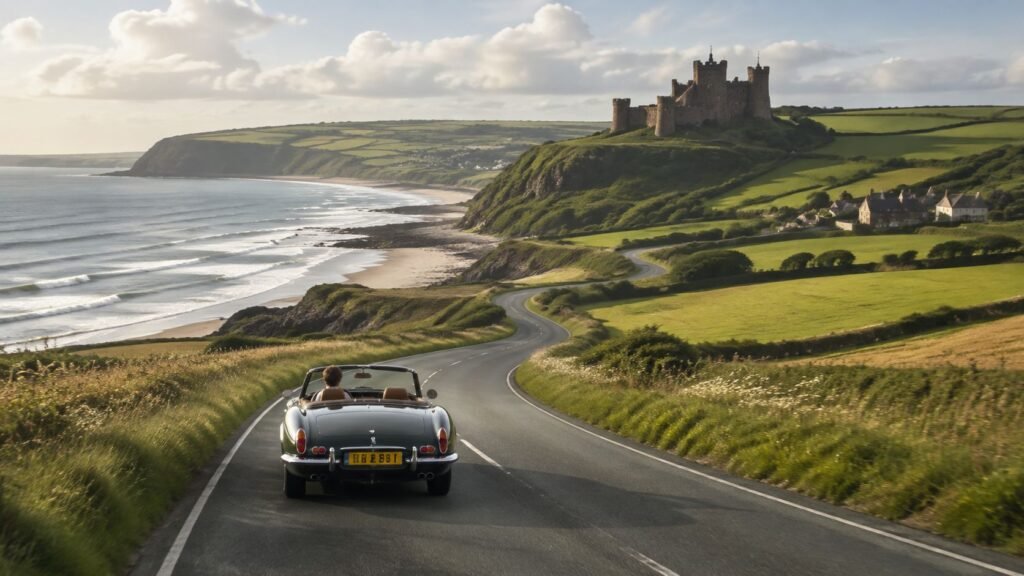
The best UK road trip isn't one universal route. It's the journey that matches your available time, appetite for driving, and preferred mix of scenery, history, food and outdoor activity. Britain's road network gives you extraordinary choice, with 247,200 miles of roads across Great Britain, including motorways, A-roads, rural lanes and scenic local routes, according to the Department for Transport's road network data. Ireland adds another layer of coastal drama, village life and narrow-road adventure.
This guide brings together ten of the best UK road trips, plus one essential Ireland route, organised by the experience you want. Choose epic coastal immersion on the Wild Atlantic Way, mountain-and-loch scenery in the Scottish Highlands, a compact geological escape on the Jurassic Coast, active countryside in the Peak District, or gentler family days around the Cotswold Water Park. Each recommendation includes a realistic duration, driveability profile, sample itinerary shape, seasonal advice and alternatives for different travel styles.
Use the duration guidance. A route can look close on a map yet feel much slower once you add single-track roads, walks, viewpoints, parking searches and spontaneous stops. Select a route, choose a base or loop, reserve accommodation in a sensible sequence, check parking and fuel, download maps for offline use, and leave room for weather changes. If you're travelling with a dog, review UK pet travel quarantine requirements before booking.
BTOURS can help if you want a carefully planned self-drive multi-day tour or a custom itinerary. Its route planning combines handpicked accommodation, flexible pacing and destination support, so you can spend less time stitching together overnight stops and more time enjoying the road.
1. The Wild Atlantic Way, Ireland's Coastal Masterpiece
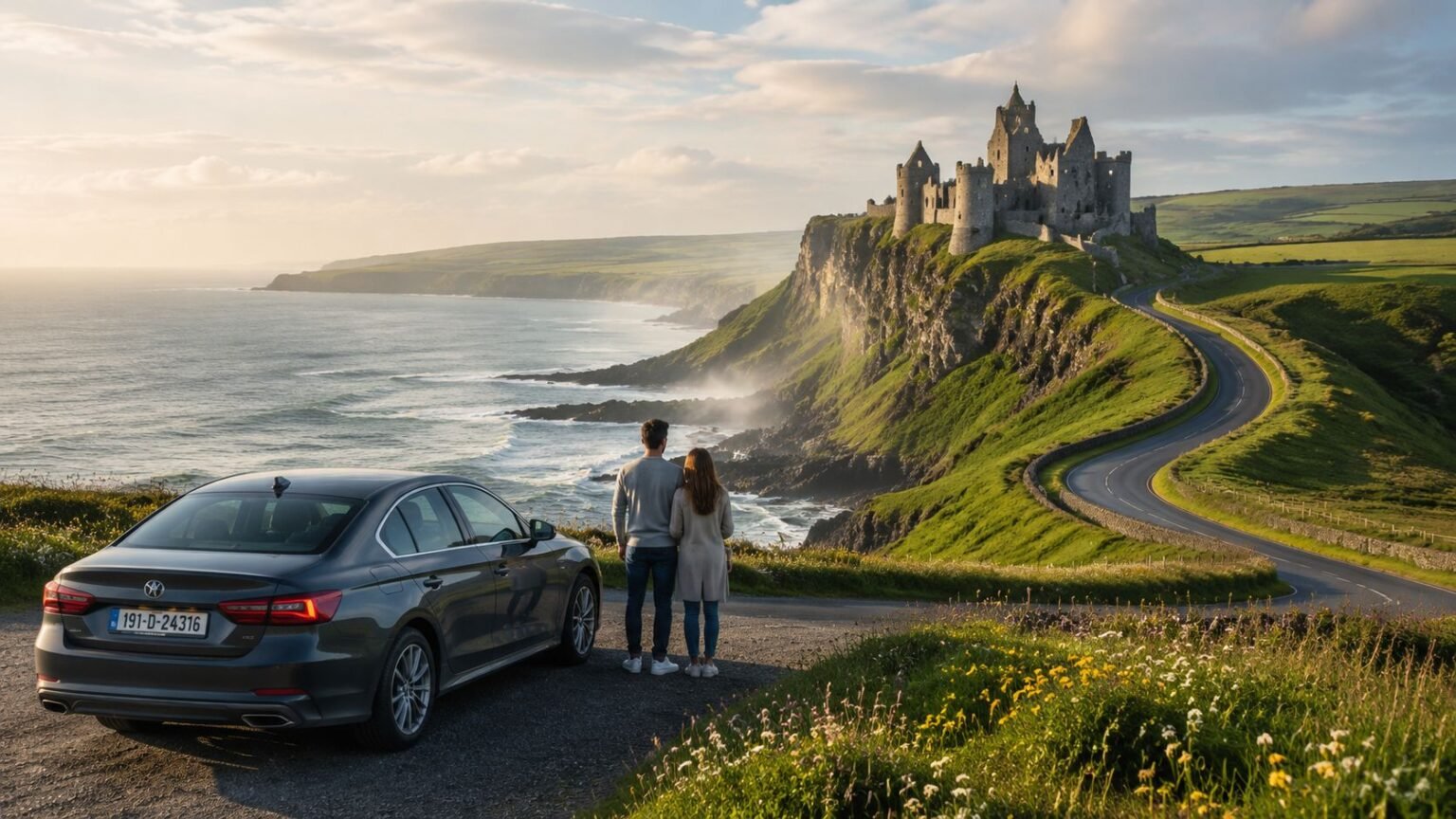
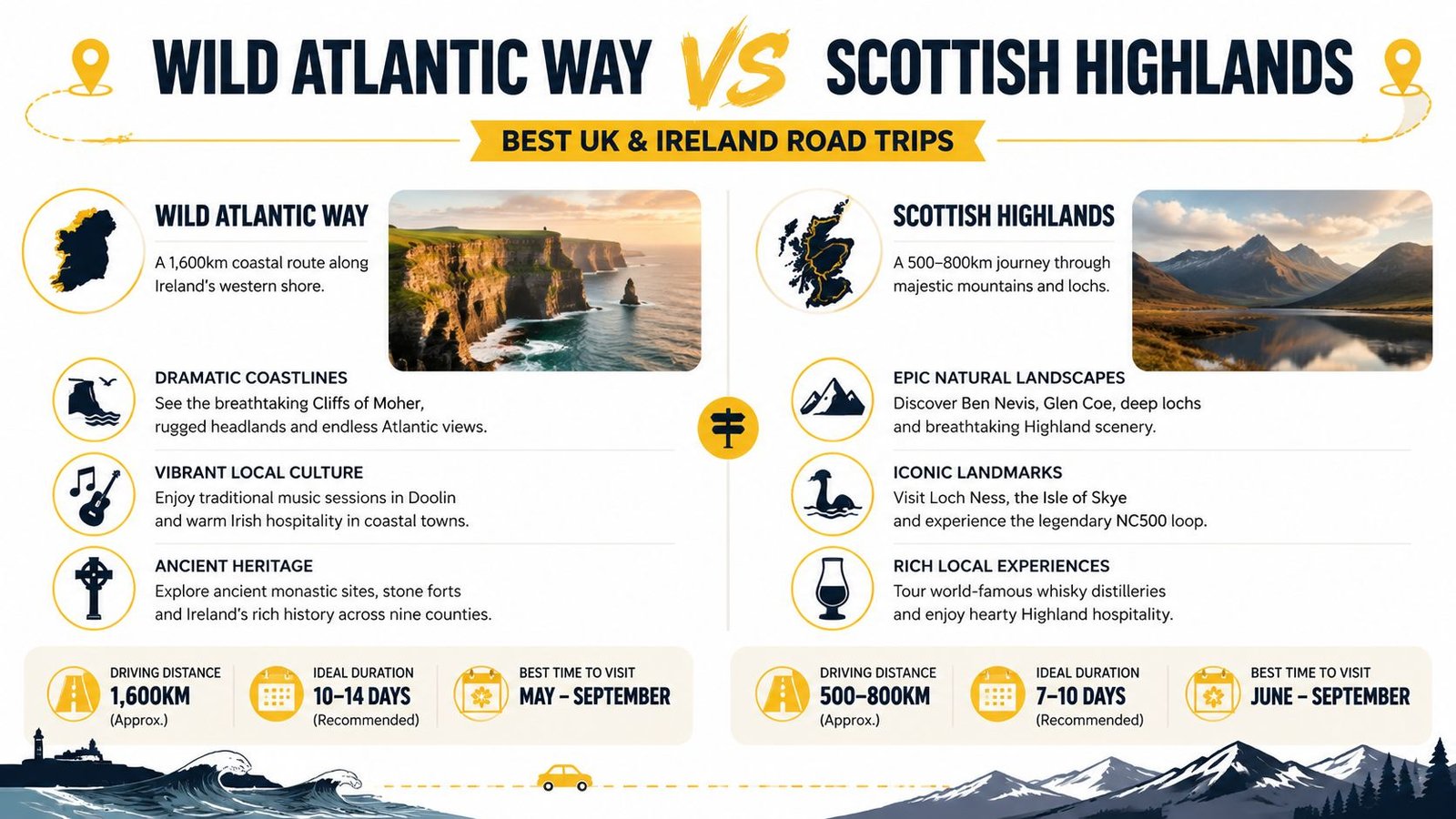
Choose the Wild Atlantic Way when the road itself is the holiday. Ireland's western and southwestern coasts combine cliffs, beaches, fishing villages, ancient sites and generous local hospitality. A complete journey from Cork to Donegal requires 10 to 14 days, making it the right choice for travellers seeking coastal immersion rather than a quick scenic loop.
Begin near Cork and Adare, continue to the Dingle Peninsula, then travel through Doolin and the Cliffs of Moher towards Connemara and Galway. Add Skellig Michael only if access, weather and physical ability align. Adare provides an atmospheric opening, Dingle pairs beaches with mountain views, Doolin suits an evening of traditional music, and Connemara National Park delivers open space and rugged coastal scenery.
Driveability and seasonal advice
This route demands patience. Coastal roads are often narrow, winding and slow, and passing places require courtesy rather than speed. Choose a vehicle with good suspension, start early, carry a physical map alongside GPS, and protect time for viewpoints and unexpected stops. Reserve accommodation well ahead for the busy summer season, especially when changing coastal bases.
Late spring through early autumn offers the best balance of daylight and access, while Atlantic weather can still change quickly. Families should shorten the route into beach-and-village sections with fewer long transfers. For comfortable family preparation on extended drives, review the best wagon for tournament parents. History enthusiasts can prioritise archaeological sites, medieval architecture and monastic remains, while nature-focused travellers should shape the route around wildlife and whale-watching opportunities.
Practical rule: Treat the Wild Atlantic Way as a sequence of regional adventures, not a route to rush from one end to the other.
BTOURS can arrange a self-drive multi-day tour or custom route, sequencing accommodation so each region has enough breathing room. That support suits travellers who want Ireland's headline scenery without turning every day into a long transfer.
2. The Scottish Highlands, Mountains, Lochs and Ancient History
For mountain-and-loch scenery, the Scottish Highlands are the strongest all-round choice. Mountains, deep lochs, glens, castles, distilleries and Jacobite history create a journey that feels larger than the time spent driving. Allow seven to ten days for a thorough route, anchored by Inverness, Loch Ness, Glen Coe and the Isle of Skye.
Begin in Inverness with Loch Ness and Urquhart Castle. With more time, take on the full North Coast 500. With less, select a northern segment and avoid turning remote roads into a race against the clock. Continue south through Glen Coe, then reserve a dedicated circuit for Skye. The Old Man of Storr and Quiraing deliver outstanding walks and viewpoints, but changing weather demands suitable footwear, waterproof layers and flexible timing.
Plan for roads, weather and distance
Single-track roads shape parts of the Highlands. Use passing places for passing, never parking, and let faster traffic through when safe. Refuel in larger towns before remote stretches, download offline maps for unreliable mobile coverage, and expect slower progress than the map suggests.
A practical itinerary might use Inverness for two nights, Glen Coe for two, and Skye for several more, with Loch Ness and Urquhart Castle between the first bases. Families should keep each driving day focused on one principal attraction and one easy viewpoint or walk. For comfortable family travel around remote lochs, the best wagon for tournament parents offers useful preparation ideas. History-led travellers can prioritise Jacobite associations, clan heritage and Highland settlements, while active visitors should protect time for hiking, wildlife watching and water activities.
Travel from late spring through early autumn for longer daylight, but reserve accommodation early for summer and expect rain in every season. Early starts improve parking options and leave room to change plans when weather closes a viewpoint.
The Highlands scenery with dramatic mountain roads beside calm lochs captures the route's defining contrast. BTOURS can arrange a Highlands self-drive journey with rural accommodation, realistic pacing and support for remote sections.
3. The Jurassic Coast, Dorset and East Devon's Geological Marvel
Choose the Jurassic Coast for a compact coastal escape with genuine variety. Dramatic cliffs, fossil-rich beaches, seaside towns and accessible walks fit into a three to four-day self-drive holiday, making this route a stronger choice than a longer western-coast expedition for first-time road trippers or a long weekend.
Build the itinerary around West Bay, Lyme Regis, Charmouth, Durdle Door and Portland Bill. Start at West Bay, where multi-coloured cliffs create an immediate coastal spectacle. In Lyme Regis and Charmouth, fossil hunting gives families a hands-on reason to explore, while a museum visit adds geological context. Durdle Door delivers the route's famous limestone arch. Portland Bill offers a more exposed headland, lighthouse views and a sense of open sea.
Keep each day focused on one main coastal area. Short drives followed by walks reveal more than racing between viewpoints, so check tide times, path access and parking before leaving. Major attractions become congested during school holidays, and cliff erosion can change routes or viewing points. Treat current signs and local access information as more reliable than an older photograph.
Spring and early autumn offer the best balance between comfortable walking weather and manageable visitor levels. If the headline stops are crowded, explore the quieter northern sections around Bridport. History-led travellers should add seaside architecture and local heritage. Nature enthusiasts should prioritise cliff-and-beach walks, where changing habitats provide more interest than a quick photo stop.
Families can settle into a slower pattern of beaches, fossil museums and short walks. Couples can add seafood, village pubs and sunset viewpoints. Travellers who want to combine the coast with Bath, Dorset villages or other South West attractions can ask BTOURS to shape a custom short self-drive itinerary around their preferred pace.
The Jurassic Coast succeeds because the route stays manageable while delivering geological drama, outdoor activity and seaside character. Book accommodation early for school-holiday travel, and allow extra time for busy roads and parking.
4. The Peak District Loop, England's Outdoor Adventure Heartland
Choose the Peak District for an active national-park escape with short drives and varied terrain. Moorland, gritstone edges, limestone dales, market towns and stone villages fit comfortably into a three to five-day loop, leaving time for walking, climbing or water-based activities rather than constant driving.
Base yourself in Buxton or Matlock. Matlock Bath combines riverside scenery with cable-car rides, Castleton pairs limestone caves with village character, and Buxton adds Victorian architecture and thermal-spa history. Edale provides access to moorland walks and sections of the Pennine Way. A practical itinerary runs from Matlock Bath to Castleton, across the Hope Valley to Edale, then through Buxton and quieter valleys including Dovedale and Wolfscote Dale.
Make the loop active, not rushed
Allow one main activity each day. Walk a section of the Pennine Way, choose a shorter valley route if weather worsens, or spend time climbing around the gritstone edges. Exposed moorland conditions can change quickly, so pack waterproof clothing and check paths before setting out. Weekday mornings are the best choice for popular locations, while weekends bring heavier traffic and fuller car parks.
Families should prioritise caves, visitor attractions, easy riverside routes and market-town food stops. History-focused travellers can add industrial heritage, stately homes and traditional villages. Strong walkers and climbers should base themselves near the routes that suit their ability, accepting rougher paths and more changeable weather for a more demanding trip.
One scenic drive and one properly chosen activity is a better Peak District day than trying to collect every viewpoint.
The loop suits arrivals from Manchester, Sheffield or the Midlands, but the roads and walks reward a measured pace. Spring through early autumn offers the most reliable walking conditions, while quieter winter visits require greater care on exposed roads and paths. BTOURS can arrange a compact self-drive itinerary with a central base, activity planning and quieter stops beyond the busiest valleys.
5. The Cotswolds Circuit, Honey-Coloured Villages and Rolling Hills
The Cotswolds rewards travellers who want to slow down. Allow four to six days for a circuit linking Bourton-on-the-Water, Bibury, Chipping Campden, Moreton-in-Marsh, Winchcombe and Painswick, with time for local food, manor houses, market towns, galleries and traditional inns.
Start in Bourton-on-the-Water for riverside walks and its busy high street, then visit Bibury's Arlington Row and the Swan Hotel. Give Chipping Campden's historic market hall more than a quick photograph. Moreton-in-Marsh suits a market-day stop, while Winchcombe and Painswick offer village character with fewer visitors than the headline destinations.
Park once, then walk
Leave the car at village-edge parking where possible. Walking between the streets, shops and cafés makes the route more enjoyable and avoids the frustration of narrow country lanes and crowded centres. Build each day around a small cluster of places rather than chasing every famous village. Weekend traffic is heavier, accommodation can cost more, and too many stops will turn a gentle holiday into rushed sightseeing.
Weekdays provide the clearest advantage, especially in the warmer months when lanes and village centres fill quickly. Spring and early autumn bring attractive countryside and generally comfortable walking conditions, while seasonal rain can make footpaths muddy. Book character accommodation and popular dining ahead, particularly for weekends.
Families should prioritise manor houses, gardens and easy village walks. History enthusiasts can focus on market halls, churches, inns and architectural details. Couples should choose a characterful base, reserve afternoon tea or dinner, and leave room for unplanned browsing.
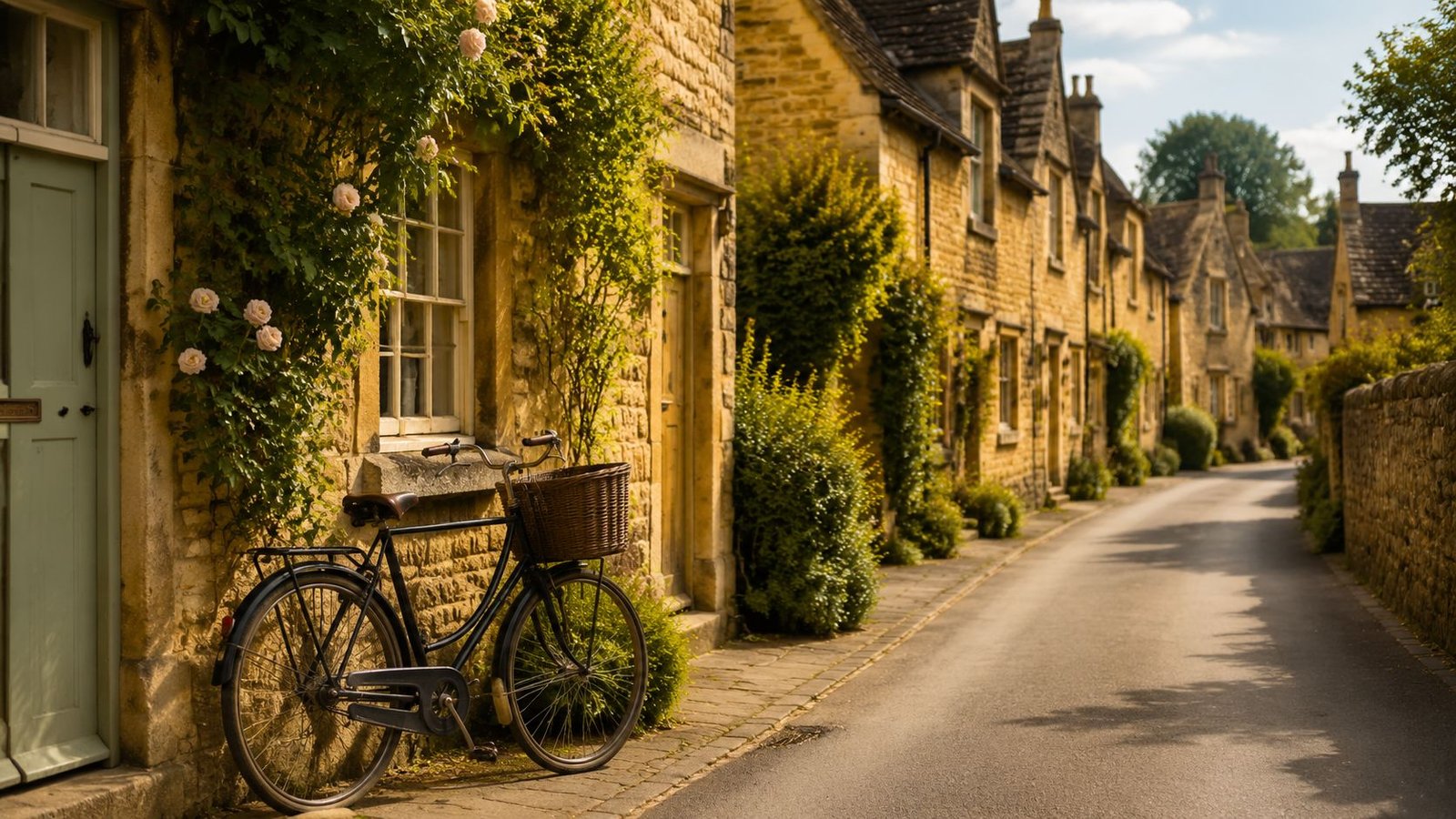
BTOURS can arrange a Cotswolds self-drive or custom itinerary with well-placed accommodation, sensible village sequencing and quieter stops. The right plan gives you time to enjoy the villages instead of collecting them.
6. The Lake District Loop, Mountain and Lake Scenery
The Lake District is the strongest choice for mixed-ability groups. One traveller can take a lake cruise or visit a literary site while another tackles a fell walk, then everyone can meet for dinner in the same village. Allow four to six days for a loop linking Windermere, Ambleside, Keswick and Ullswater.
Begin at Windermere with a cruise and visits to waterside villages. Continue to Ambleside for shops, literary connections and easy access to nearby valleys. Keswick provides mountain views and fell-walking opportunities, while Ullswater suits scenic driving and pony trekking. Grasmere or Hawkshead offers a quieter base when busy centres become tiring.
Match the roads to your confidence
The main roads are manageable, but narrow lanes, limited parking and steep passes demand care. Use park-and-ride services from larger towns where available, and reserve popular outdoor activities during busy periods. Confident drivers can add Hardknott and Wrynose passes. Treat them as demanding scenic drives, not convenient shortcuts.
May, June and September offer a strong balance of walking conditions, scenery and lighter crowds. Summer brings longer days but heavier traffic and fuller accommodation. Rain can change fell conditions quickly, so keep walking plans flexible and check the forecast before setting out.
Families should centre the itinerary on lake cruises, villages and gentle attractions. Literary-history travellers can follow Wordsworth and Beatrix Potter connections. Experienced walkers should choose Grasmere or Hawkshead as a compact base and reserve longer days for the fells. A steam railway journey adds a memorable break from driving.
Use this Lake District road-trip route overview to review the route before booking. BTOURS can match accommodation to your group's walking ambitions and create a flexible self-drive plan with fewer unnecessary transfers.
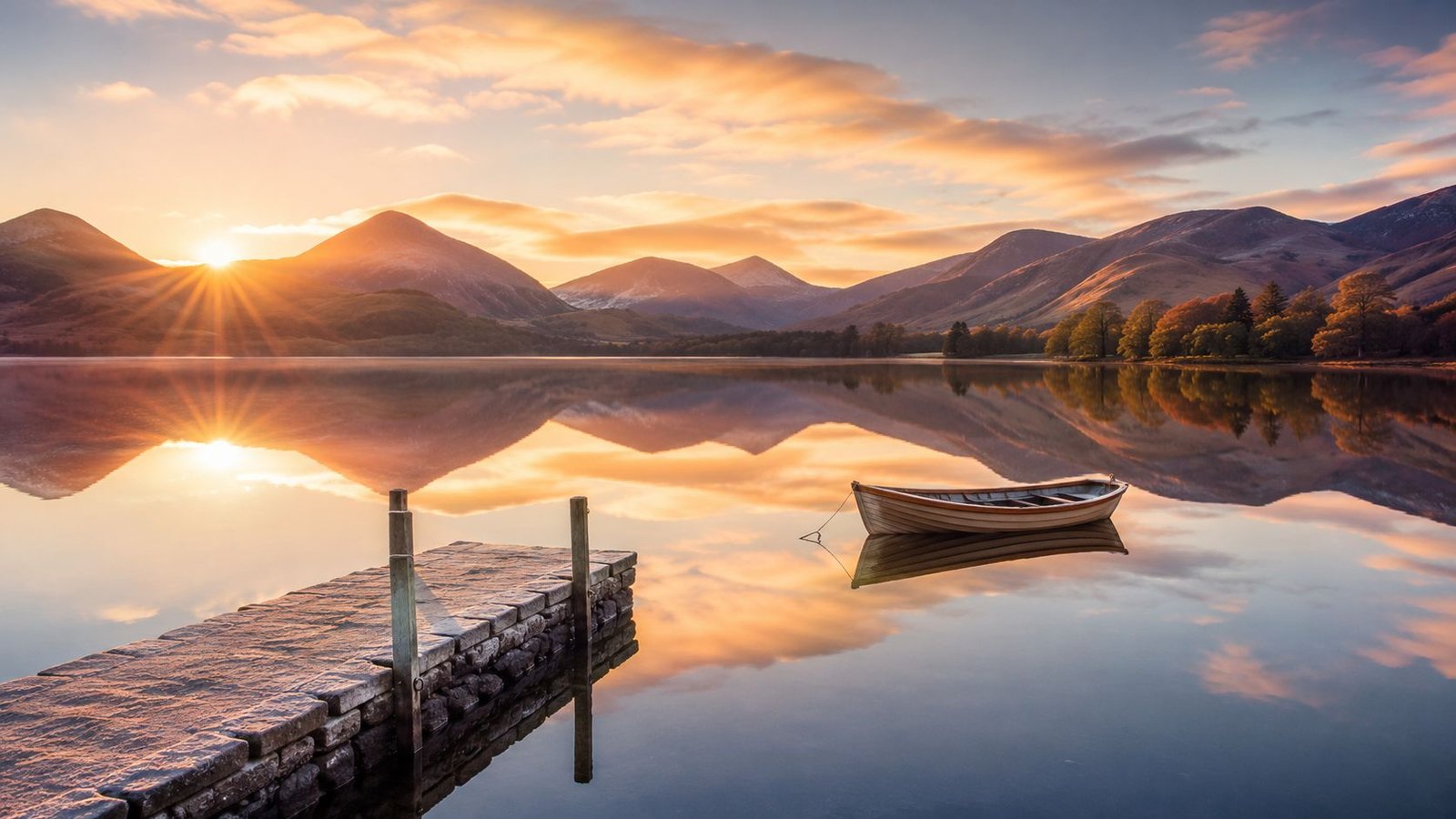
7. The Great Ocean Road of Wales, Pembrokeshire Coastal Drive
Pembrokeshire is Wales's strongest choice for an epic coastal immersion without committing to a full national coastline. Cliffs, sandy beaches, hidden coves, colourful harbours and Welsh heritage fit comfortably into four to five days, while shorter drives leave room for walks and weather changes.
Start in Tenby, combining Victorian seaside character with a colourful harbour. Move west to St Davids for cathedral heritage and coastal access, then base yourself near Solva for fishing-village atmosphere and water activities. Add Newgale Beach for a broad, windswept shoreline. A well-shaped day pairs one main coastal walk with surfing, kayaking, a castle or cathedral visit, and a seafood meal.
Choose slower roads over a rushed checklist
Single-track sections, village parking and limited fuel make early starts practical. Coastal weather changes quickly, so carry layers and leave exposed viewpoints flexible. Reserve surfing, kayaking, coasteering and other adventure activities during school holidays. The roads are manageable for confident drivers, but this is a scenic route, not a fast transfer between beaches.
Late spring and early autumn offer the best balance of walking conditions and lighter crowds. Summer brings longer days and warmer beach time, alongside busier roads, fuller accommodation and more pressure on parking. Book overnight stops early if travelling during school holidays.
Families should centre the trip on beach days, short coastal walks and accessible harbour towns. History-focused travellers can build the route around St Davids, fortifications, castles and local churches. Nature enthusiasts should prioritise cliff paths, coves, birdlife and wildlife experiences. Confident explorers can extend north toward Cardigan for a quieter coastal variant.
Use this Pembrokeshire coastal travel guide to select extra seaside stops before fixing your overnight sequence. BTOURS can turn those choices into a custom Welsh self-drive route with flexible pacing, local accommodation and practical support.
The trade-off is clear: Pembrokeshire rewards slower roads and open space in the itinerary. Trying to visit every beach weakens the experience.
8. The Cotswold Water Park Circuit, Villages, Waterways and Leisure
Choose the Cotswold Water Park for an easier, family-friendly alternative to the busiest central Cotswolds circuit. Honey-coloured villages sit beside man-made lakes, waterfowl reserves, fishing waters and leisure facilities. Allow three to four days for a relaxed route focused on picnics, short walks and waterside activities rather than mountain views.
Start near the visitor centre, then build a compact loop through South Cerney, Lechlade and Cirencester. Lake-perimeter paths and birdwatching provide low-effort mornings, while South Cerney adds village character, Lechlade brings riverside market-town atmosphere and Cirencester offers Roman heritage, shopping and practical dining choices. The roads are straightforward for confident drivers, with short transfers that suit families and travellers who prefer more time outdoors.
Give every day one main focus
Use the Water Park map to connect stops without packing too much into a single day. Reserve summer water sports in advance if you need a fixed session, then leave space for lakeside pauses and unplanned walks. Spring and autumn suit birdwatching and quieter paths. Summer gives longer days and more leisure options, but school-holiday crowds can make activities and accommodation harder to secure.
A family itinerary should combine easy lake walks, picnic stops and supervised activities. Nature-focused travellers can prioritise reserves, interpretation areas and quieter stretches of water. For a gentle heritage version, base the route around Cirencester's Roman sites and market-town character, then add village churches and local museums.
The trade-off is simple: this circuit offers easier logistics and a softer pace, not Pembrokeshire's cliffs or the Highlands' mountains. BTOURS can arrange family accommodation, pre-booked activities and manageable driving distances, creating a holiday itinerary instead of a series of transfers.
9. The North York Moors to Yorkshire Coast, Moorland and Seaside Escape
Choose this route for a journey that changes character completely, from heather-covered moorland to dramatic Yorkshire seaside. The North York Moors offer wooded valleys, open roads and broad horizons; the coast adds harbours, cliffs, promenades and traditional towns. Allow four to five days, with straightforward driving in the main towns but exposed rural roads that demand care in poor weather.
Start in Helmsley, where the market-town centre and historic ruin provide an easy opening. Continue to Pickering for its castle and preserved steam railway, a particularly strong stop for families. Head east to Whitby for harbour walks and Bram Stoker associations, then follow the coast to Robin Hood's Bay before finishing around Scarborough. Rievaulx Abbey offers a quieter inland detour when you want woodland, history and fewer visitors.
Use the railway as your pause
Book the steam railway ahead and make it the day's main event. The journey creates a useful break from driving while keeping the route's heritage focus. Moorland roads can feel exposed, weather shifts quickly, and remote stretches offer fewer fuel options, so refuel before leaving the larger towns.
May and June suit coastal walking and fresh spring scenery. Choose August and September for the moors at their richest heather colour, accepting that popular coastal stops may be busy. Families can pair the railway with seaside attractions and shorter walks. History enthusiasts should add castles, abbeys and literary sites, while nature-focused travellers can combine moorland drives with cliff paths and quieter inland valleys.
Choose a coastal version for harbour towns, seafood and sea air. Choose an inland variation for Rievaulx, Helmsley and longer moorland walks. BTOURS can arrange a Yorkshire self-drive or custom itinerary with suitable accommodation and practical driving stages.
Whitby rewards a full evening. Harbour lights, atmospheric streets and the seafood scene are best experienced without rushing to the next stop. The moors provide the route's character, while the coast supplies its memorable finale.
10. The Royal Mile Heritage Drive, Edinburgh to the Historic Borders
Leaving Edinburgh behind, the Borders reveal a quieter Scotland shaped by ruined abbeys, winding valleys and frontier history. Allow two to three days after your city stay for a compact heritage drive through Melrose, Jedburgh and Kelso, with enough time for market towns, literary connections and rural scenery.
Explore the Royal Mile without a car, then collect your vehicle when you are ready to leave the capital. Drive south to Melrose Abbey, continue to atmospheric Jedburgh Abbey, and finish around Kelso, where a Georgian market square meets the riverside. Scott's View makes a memorable scenic pause between the main heritage stops. Short diversions into the surrounding valleys add countryside without turning the route into a demanding drive.
Build the route around heritage
This is an easy, short-distance self-drive, but Edinburgh parking and city traffic can make the departure needlessly slow. Use the capital as a car-free opening base, reserve accommodation in the main Border towns, and keep offline maps available for rural roads where signage can be limited. Rural accommodation is more limited than in Edinburgh, so book the main stops ahead rather than relying on last-minute availability.
Families will enjoy abbeys, market squares and accessible countryside viewpoints. History-focused travellers should prioritise the Scottish-English frontier, ruined religious houses and local interpretation. A literary itinerary can centre on Walter Scott heritage and the valleys associated with his writing.
Spring and summer provide the best conditions for walking and scenic stops, while changeable weather makes indoor abbey visits useful throughout the year. Choose the direct heritage version for a compact city-break extension, or add longer valley walks and extra villages for a slower countryside escape.
BTOURS can arrange a Scotland city-break extension or create a custom self-drive plan with accommodation, heritage priorities and flexible rural pacing. The route suits travellers who want historical depth without the longer distances and more demanding roads found farther north.
Top 10 UK Road Trips Comparison
| Route | Implementation complexity | Resource requirements | Expected outcomes | Ideal use cases | Key advantages |
|---|---|---|---|---|---|
| The Wild Atlantic Way (Ireland) | High, very long route, ferry and narrow-road planning | 10–14 days, reliable car, ferry bookings, accommodation planning, physical maps | Deep coastal immersion, culture, wildlife and archaeology | Multi-week self-drive, culture/nature/ family variants | Vast coastal diversity, well-signed route, flexible pacing |
| The Scottish Highlands | Medium–High, single-track roads, fuel and weather planning | 7–10 days, fuel planning, offline maps, layered clothing | Dramatic mountains, lochs, distilleries, hiking opportunities | Photography, hiking, whisky/heritage tours | Spectacular scenery, remote wilderness, distillery access |
| The Jurassic Coast (Dorset & East Devon) | Low, compact route but tide/erosion awareness needed | 3–4 days, tide checks, parking planning, fossil guides | Geological learning, fossil hunting, short coastal walks | Short breaks, families, geology enthusiasts | UNESCO geology, compact and family-friendly |
| Peak District Loop | Low, compact loop, easy logistics | 3–5 days, walking gear, central base (Buxton/Matlock) | Moorland scenery, active outdoor days, market towns | Active travellers, families wanting short drives | Highly accessible, varied outdoor activities |
| Cotswolds Circuit | Low–Medium, parking & pacing strategy advised | 4–6 days, village-edge parking, relaxed driving | Quintessential English villages, food and markets | Slow-travel, romantic breaks, cultural visits | Photogenic villages, easy access from major cities |
| Lake District Loop | Medium, narrow roads, parking and activity bookings | 4–6 days, park-and-ride use, booked activities, good base | Mountain and lake scenery, mixed-ability outdoor options | Mixed-ability groups, hikers, literary tourists | Varied landscapes, excellent outdoor infrastructure |
| Pembrokeshire Coast (Great Ocean Road of Wales) | Medium, single-track coastal sections and limited services | 4–5 days, water-sport bookings, fuel planning, tide awareness | Coastal cliffs, beaches, water-based adventure | Coastal adventure, surfing/kayaking, seafood-focused trips | Dramatic coast, fewer crowds, strong local cuisine |
| Cotswold Water Park Circuit | Low, gentle driving, leisure focus | 3–4 days, water-sport/reserve bookings, walking gear | Wildlife observation, lakeside leisure, gentle village visits | Families, birdwatchers, relaxed countryside breaks | Quiet alternative to Cotswolds, excellent wildlife access |
| North York Moors → Yorkshire Coast | Medium, moorland road conditions and seasonal timing | 4–5 days, fuel planning, steam-rail bookings, layering | Contrast of heather moorland and Victorian seaside | Two-landscape trips, families, heritage seekers | Combines moorland and coast, heritage railway experiences |
| Royal Mile Heritage Drive (Edinburgh → Borders) | Low, short extension with city-to-rural logistics | 2–3 days, city parking planning, rural navigation | Concentrated medieval and literary heritage exploration | Edinburgh city-break extensions, history/literary fans | Efficient heritage loop, easy from Edinburgh |
Turn Your Favourite Route into a Smooth Escape
The right choice depends on the holiday you want to remember, not the route with the most famous name. For a short history extension from a major city, choose the Royal Mile Heritage Drive. It adds Melrose, Jedburgh, Kelso and Scott's View without demanding a long touring holiday.
For a compact coastal break, choose the Jurassic Coast. It gives first-time self-drive visitors cliffs, fossils, beaches, seaside architecture and coastal walks within a manageable three-to-four-day shape. Choose the Cotswold Water Park when family logistics, wildlife and gentle waterside activities matter more than dramatic scenery.
Active travellers should choose the Peak District or Pembrokeshire. The Peak District offers moorland, caves, climbing, market towns and walking with relatively short transfers. Pembrokeshire delivers beaches, cliffs, water sports, cathedral heritage and seafood along a compact Welsh coast. Both work well when you want each day to contain an activity rather than just another viewpoint.
For a slower mixed-ability holiday, choose the Cotswolds or Lake District. The Cotswolds suit village walks, afternoon tea, manor houses, galleries and local food, provided you're prepared for congestion around the most photographed villages. The Lake District is more flexible for groups because lake cruises, literary stops, villages and serious fell walking can all fit around one base.
The Scottish Highlands and Wild Atlantic Way are the larger adventures. The Highlands are the stronger choice for mountains, lochs, castles and remote roads within Britain. The Wild Atlantic Way is the commitment route for travellers who want Ireland's coast to dominate the holiday. Both reward early starts, careful fuel planning, offline navigation and sensible accommodation sequencing.
Before you book, work through the practical details:
- Confirm driving requirements: Check your licence, insurance, vehicle documents and any cross-border or ferry permissions before collecting a hire car.
- Know the road rules: In England, Scotland and Northern Ireland, the default built-up-area speed limit is 30 mph, while Wales uses 20 mph. For cars, national limits are 60 mph on single carriageways, 70 mph on dual carriageways and 70 mph on motorways, subject to signed lower limits, as set out in the Highway Code speed-limit guidance.
- Take drink-driving rules seriously: England and Wales use a higher legal alcohol limit than Scotland. Scotland's limit is 22 microgrammes of alcohol per 100 millilitres of breath or 50 milligrammes per 100 millilitres of blood, while England and Wales use 35 microgrammes per 100 millilitres of breath or 80 milligrammes per 100 millilitres of blood, according to the Highway Code rules for drivers. The safest choice is not to drink at all when driving.
- Download route maps: Carry offline navigation and a physical map for remote coastal and Highland roads. Signal can disappear exactly where you need directions.
- Fuel before remote sections: Fill up in larger towns before single-track roads, moorland routes or remote coastal stretches. Use this UK fuel cost estimator to plan the driving budget around your chosen route.
- Reserve parking and activities: Arrive early at pressured viewpoints, use park-and-ride services where available, and book ferries, steam railways, water sports and popular attractions ahead.
- Sequence accommodation carefully: Avoid backtracking. Choose bases that match your daily activities, then allow time for walks, meals and weather changes.
- Pack for the forecast and beyond: Waterproof layers, comfortable walking footwear, chargers, snacks and a physical map belong in every UK road-trip vehicle.
- Check access before departure: Local road closures, erosion, weather, ferry changes and temporary restrictions can alter your route. Review current road and attraction information before setting off.
- Keep daily distances realistic: Britain's roads connect an exceptional range of scenery, but scenic lanes, parking searches and walking stops make journey time longer than a map estimate suggests.
BTOURS offers self-drive multi-day tours across England, Scotland, Wales and Ireland, as well as custom itinerary support. Its planning service can coordinate handpicked accommodation, flexible pacing, regional stops and route details around your interests, whether you're travelling as a couple, family or independent explorer.
Explore BTOURS for self-drive multi-day tours across the UK and Ireland, or request a custom itinerary built around your preferred route, accommodation style and travel pace. Start with the scenery you want to experience, and let BTOURS help turn it into a smooth, bookable road-trip escape.