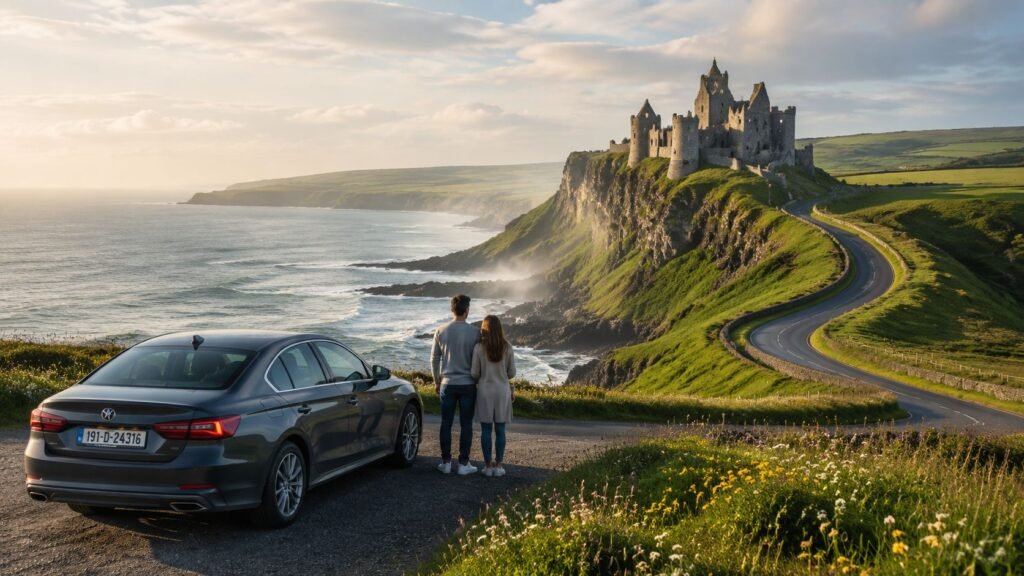
You've just pulled into a windswept car park beneath a fortress, with rain moving across the hills and the next destination still several hours away. The castle is impressive, but the day will feel far richer if it leads naturally to a market town, a coastal viewpoint, a historic garden or a welcoming place to stay.
That's the difference between collecting castle photographs and building a proper self-drive journey. This guide brings together ten route-ready castle experiences across Ireland, Northern Ireland, England, Scotland and Wales, with practical direction on route position, driving rhythm, terrain, accommodation and traveller type. You'll find ideas that work across three to ten days, whether you're travelling as a couple, bringing children, prioritising medieval history or chasing dramatic coast and mountain scenery.
The phrase Ireland castle tour usually signals an Ireland-centred search. That's the focus here, but the strongest comparison includes Britain too. Ireland offers dense heritage and compact castle-hopping routes, while Wales, England, Scotland and Northern Ireland add distinct architectural traditions and settings.
Before choosing, decide five things:
- Region: Ireland only, or a wider UK journey?
- Driving rhythm: Short transfers with time to explore, or longer scenic drives?
- Castle style: Ecclesiastical ruins, Norman fortresses, aristocratic homes or coastal strongholds?
- Scenery priority: River valleys, gardens, mountains, cliffs or historic towns?
- Traveller profile: Families, active walkers, history-focused couples or photographers?
1. Rock of Cashel Guided Walking Tour
The Rock of Cashel should anchor an Irish heritage route through Tipperary, not serve as a quick roadside photograph. Rising above the surrounding plain, this limestone outcrop brings together a round tower, Romanesque chapel and medieval cathedral in a setting that makes the journey feel larger than the attraction itself.
Its route position is particularly useful. From Dublin, it can begin a southbound journey towards Kilkenny, Waterford or Cork. From Cork or Limerick, it works as a decisive heritage stop before continuing through Ireland's interior. The site also gives travellers the right historical mood for a castle-focused holiday, because the experience combines architecture, religious history and broad countryside views.
The OPW recorded 357,273 visitors at the Rock of Cashel in 2023, placing it among Ireland's most heavily visited heritage landmarks. The wider OPW network welcomed 15.3 million visitors to historic castles, gardens and monuments in 2023, evidence that an Ireland castle tour can be built around a substantial, well-established heritage product. See the OPW heritage visitor figures before finalising your route.
Make the hilltop part of the plan
Allow two to three hours for the site, walking shoes and weather-resistant clothing. The approach is exposed, so check conditions before setting out, particularly if your party includes older travellers or anyone who finds uneven paths difficult. Early morning and late afternoon usually create a calmer atmosphere than the busiest arrival periods.
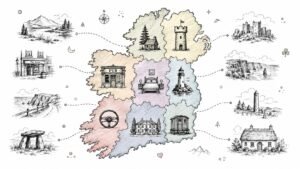
Use the Ireland travel planning map to think beyond the castle itself. Pair Cashel with Kilkenny's medieval streets, Waterford's riverside heritage or a slower overnight near the Tipperary countryside. A self-drive route feels far more rewarding when the castle determines where you sleep and what you explore next.
Practical rule: Treat Cashel as a half-day anchor, then choose a nearby town or landscape stop instead of adding another rushed fortress.
2. Dublin Castle Historical Immersion Tour
Dublin Castle is the only castle in this guide set inside a capital city, giving your self-drive journey a political starting point before the road begins. Medieval foundations, the State Apartments and the Chester Beatty Library place Ireland's governing and cultural history within easy reach of Dublin's museums, streets and food scene. From here, you can collect a car and continue towards Trim, Kilkenny, Cork or Galway.
Choose Dublin Castle when heritage depth matters more than a remote setting. It suits international visitors managing jet lag, families who need restaurants and nearby facilities, and couples who want a city break before longer driving days. Spend the morning at the castle, use the afternoon for Dublin, then begin the road journey after a proper meal and a rested departure.
Admission details are clear. Dublin Castle lists adult entry at €8, seniors and students at €6, children aged 12 to 17 at €4, and free entry for under-12s. A family ticket for two adults and three children costs €20, while the guided-tour family ticket costs €30. Check the official Dublin Castle ticket information before booking, since entry arrangements can determine when you leave the city.
Use Dublin as a launchpad
Allow three to four hours for the castle and its collections. Timed admission is the practical choice during busy travel periods. If you are staying overnight, add Temple Bar or the Guinness Storehouse, but avoid pairing a full city day with a long drive afterwards.
A morning visit gives a self-drive route the best rhythm. Have lunch, collect the vehicle and leave Dublin while you still have energy. Select accommodation with straightforward access to the city edge or your chosen exit route, even if that means staying outside the most central streets.
The strongest fit is a three-day Irish introduction linking Dublin Castle, Trim Castle and the Rock of Cashel. Keep the pace controlled, and reserve time for town walks rather than turning every stop into a rushed fortress visit.
3. Blarney Castle and Stone Experience
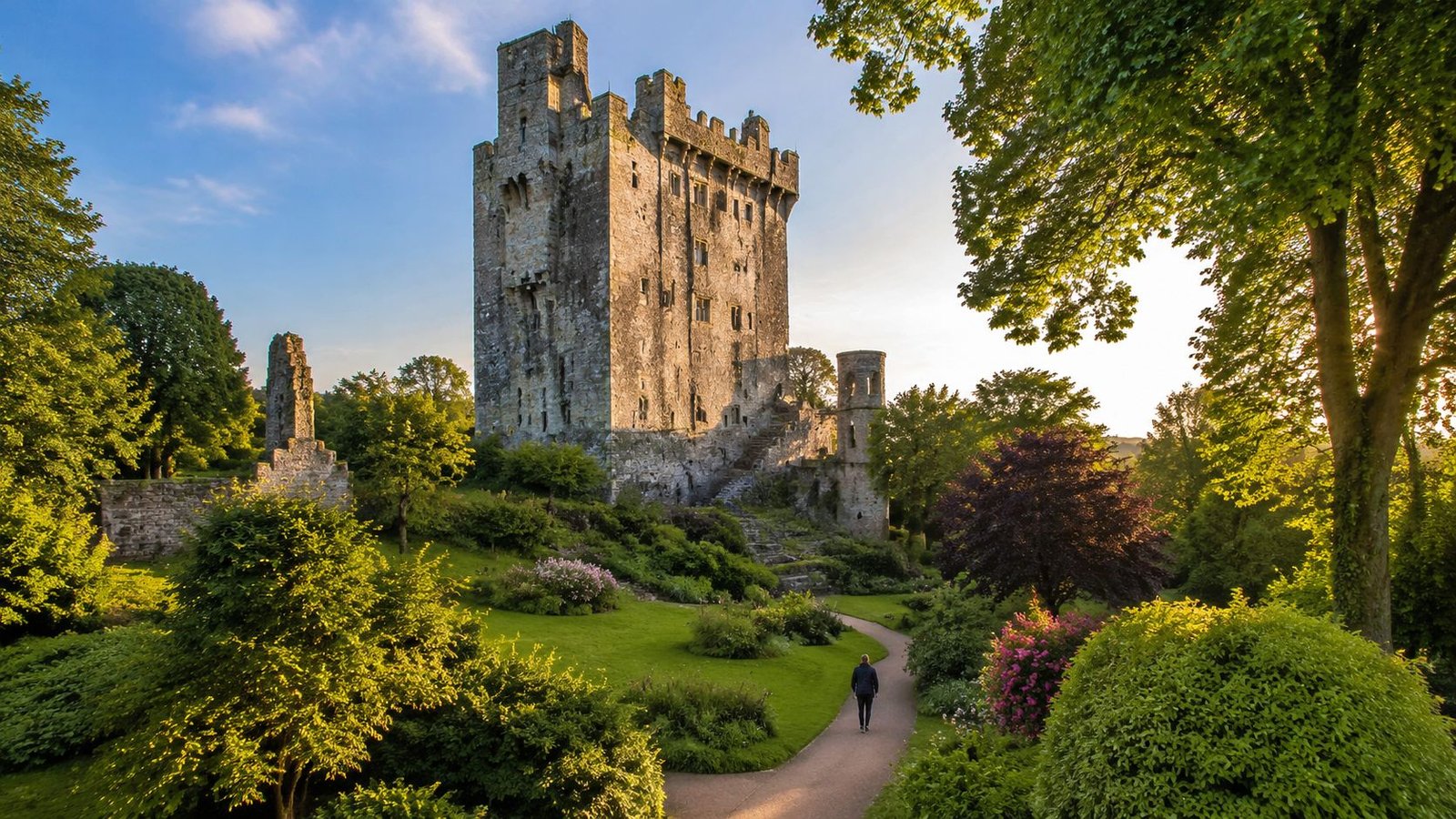
Blarney Castle gives an Ireland castle tour a playful centrepiece. The fifteenth-century stronghold is surrounded by gardens and walking trails, and the visit combines architectural exploration with the famous Blarney Stone. It's less formal than Dublin Castle and less stark than Cashel, making it an excellent choice for families, first-time visitors and travellers who want history with a memorable ritual.
Build Blarney into a Cork and southwest circuit. It works naturally after Cashel, before exploring Cork city, or as part of a longer route towards the coast. The surrounding village adds useful breathing space, with shops and places to pause before returning to the road.
The main challenge is physical rather than logistical. Reaching the stone requires climbing inside the castle, and garden paths can be uneven. Wear sturdy footwear, take your time and decide in advance whether everyone in your group wants to make the climb. The grounds deserve equal attention, so don't reduce the visit to the stone alone.
Choose the right arrival window
Arrive before 10am or after 3pm if you want a calmer experience. Allow two to three hours for the castle, stone and gardens, then add time for Blarney village rather than immediately returning to the car.
For accommodation, stay in Cork if you want restaurants and evening energy, or choose a smaller base nearby for a quieter morning departure. The Ireland accommodation map is useful when comparing a city base with a countryside stay.
Blarney works best when the climb is one part of the day, not the entire reason for driving across the southwest.
4. Dunvegan Castle Private Highland Tour
Dunvegan Castle turns a Scottish road trip into an exploration of its setting. Set on the Isle of Skye beside Dunvegan Loch, it offers a different experience from Ireland's medieval ruins. This is a living clan stronghold, with interiors, gardens and water views that reward travellers prepared to slow down.
Use it as the western anchor of a five- to ten-day Highland journey. The drive to Skye is part of the experience, with mountain roads, changing weather and viewpoints that demand patience. It isn't a practical add-on to a short Edinburgh break. It belongs in a route that gives Skye enough time to breathe.
The castle and gardens need three to four hours, especially if you're considering a boat trip when available. Weather on Skye can change quickly, so check the forecast before committing to exposed viewpoints. Combine Dunvegan with Neist Point for a full day of castle, coast and open scenery, but don't schedule the lighthouse so tightly that you lose the flexibility to stop.
Match the base to the island
Stay close enough to Dunvegan or choose a central Skye base only if you're comfortable with longer local drives. Travellers who value gardens and clan history should prioritise the castle. Photographers and hikers should allow more time for the surrounding coast and accept that weather may reshape the day.
The recommended shoulder-season windows are May to June or September, when the route can feel less pressured than peak summer. Book accommodation early around popular Highland itineraries, and choose parking and arrival arrangements that minimise unnecessary walking for anyone with limited mobility.
This is the strongest option for travellers who want an Ireland castle tour comparison with mountains, lochs and clan history rather than a compact Irish heritage circuit.
5. Conwy Castle Medieval Gateway Tour
Conwy Castle is the gateway castle for North Wales. Its walls, towers and ramparts sit beside the historic town, giving self-drive travellers an unusually complete medieval setting rather than a single monument surrounded by modern development.
The route decision is simple. Use Conwy as a base or major stop on a North Wales journey linking the coast with Snowdonia. The castle can introduce the region's military history in the morning, followed by mountain roads, coastal viewpoints or a slower town afternoon. Its compact route position makes it suitable for couples and families who don't want every day dominated by long driving.
Allow one and a half to two hours for the castle and ramparts, then walk the town walls before visiting Plas Mawr. Sturdy shoes matter because the experience involves exposed heights, steps and uneven surfaces. Weather-appropriate clothing is essential in Wales, where the castle's openness adds atmosphere but reduces shelter.
Build a layered medieval day
The best accommodation choice is in or near Conwy if you want an evening walk and easy access to restaurants. A rural Snowdonia base suits travellers prioritising mountains, but it may mean more driving after the castle. During busy summer periods, arrange parking before arrival rather than relying on luck.
Conwy is also a strong family option because the walls make history tangible. Children can see how towers connect, how defensive routes work and how the town grew around the fortress. Older travellers or anyone with mobility concerns should assess the ramparts before committing to every level.
Choose this route when you want castle architecture plus accessible town culture, not an isolated ruin. It pairs naturally with a broader Welsh journey towards Pembroke or with a shorter North Wales escape.
6. Kilkenny Castle Riverside Heritage Tour
Kilkenny Castle anchors the most coherent southeast Ireland castle route. Its medieval walls, Victorian interiors and riverside gardens offer more variety than a purely defensive ruin, while Kilkenny itself supplies the streets, restaurants and evening atmosphere that make an overnight stay worthwhile.
The OPW recorded 546,354 visitors at Kilkenny Castle in 2023, the highest figure among the Irish castle sites listed in the verified visitor data. That level of demand confirms its role as a major itinerary draw, not a secondary stop. Check the OPW heritage visitor release when assessing the wider appeal of the route.
Plan Kilkenny between Cashel and Waterford, or use it as the centre of a dedicated southeast break. The castle gives history-focused travellers formal rooms and fortification, while the river and gardens add space for a slower afternoon. It's also a strong choice for couples who want a cultural evening after a day behind the wheel.
Stay in the city, not beside the bypass
Allow two to three hours for the castle, grounds and town. Book a guided visit ahead if you want a preferred time, then explore medieval streets and town walls afterwards. Seasonal garden tours and exhibitions can change the shape of the day, so check the current programme before setting off.
Stay within walking distance of central Kilkenny if possible. That lets you leave the car behind in the evening and keeps the castle connected to the town rather than treating it as a drive-through attraction.
For a three- to five-day Irish heritage circuit, pair Kilkenny with Dublin Castle, Cashel and Trim. Keep the daily sequence realistic. Ireland rewards pauses beside the main road, and Kilkenny is too good a base to abandon immediately after the castle visit.
7. Warwick Castle Immersive Living History Experience
Warwick Castle is the clearest English contrast in this list. It presents medieval history through a large-scale visitor experience with performances, exhibitions and interpretation, rather than relying mainly on ruins or quiet contemplation.
That makes it particularly useful for families and travellers comparing British and Irish castle traditions. The castle itself is the anchor, but Stratford-upon-Avon provides the companion destination, turning the visit into a cultural day rather than a single-ticket attraction. The route also works well for visitors beginning in London and moving through central England.
English Heritage reported 5.75 million visitors across its sites in 2024/25, while its visitor survey recorded 85% rating their visit as excellent and 71% saying they were likely to visit again. Those figures come from English Heritage's visitor information, and they underline the strength of the wider British heritage market.
Give the programme room
Plan for a full day, roughly five to six hours, because performances and interactive elements shape the experience. Check the schedule before travelling, book ahead and arrive early for parking and queues. Families should treat the timetable as part of the attraction, while history purists may prefer to focus on the architecture and interpretation.
Choose accommodation in Warwick for evening atmosphere or near Stratford-upon-Avon if the next day is devoted to literature and town heritage. Don't place Warwick in a long transfer day. Its value comes from staying long enough to engage with the programme.
Warwick belongs in a broader UK castle journey, especially for travellers who want a lively, structured experience after quieter Irish ruins or Welsh fortresses.
8. Dunluce Castle Dramatic Coastal Tour
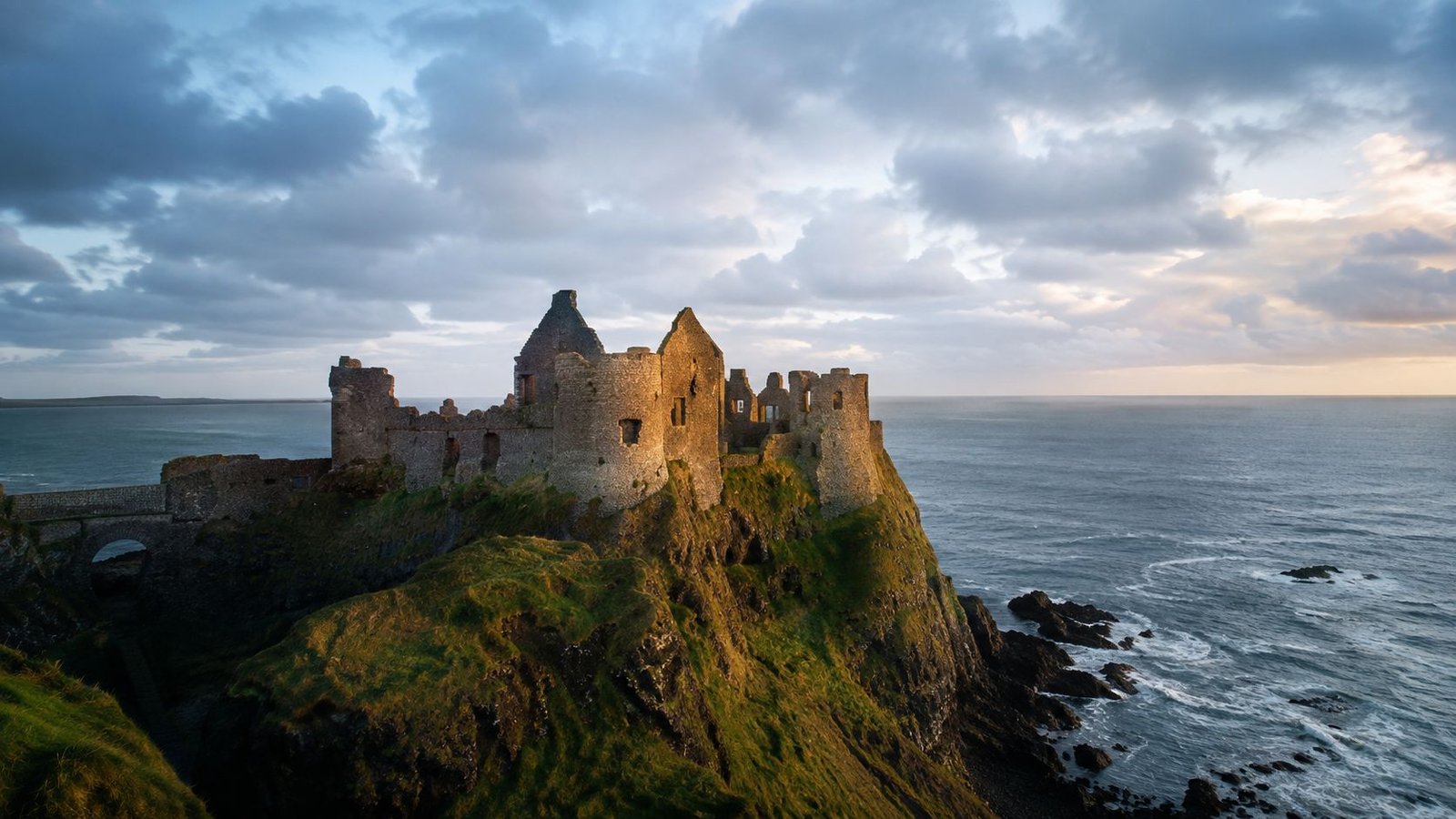
Dunluce Castle is the top choice. The ruins sit dramatically on a basalt cliff above the Irish Sea, and the approach along the Causeway Coast makes the castle feel inseparable from wind, rock and water.
Build it into a Northern Ireland coastal route with the Giant's Causeway, rather than driving inland solely for the castle. The combination gives families a geological companion, photographers a sequence of strong viewpoints and history-focused travellers a clear contrast between archaeological remains and natural formation.
Northern Ireland's heritage base is unusually deep. It includes over 18,000 archaeological sites and historic monuments, 9,000 listed historic buildings and 187 historic monuments in state care, according to Northern Ireland's historic buildings and monuments information. That context matters. Dunluce isn't an isolated curiosity, but part of a broad historic area.
Let the coast control the timetable
Allow one and a half to two hours for exploration and photography. Wear secure footwear and weather-resistant layers. High winds can make cliff-top conditions hazardous, so check the forecast and don't force the visit if conditions deteriorate.
Morning light usually suits photography, then continue towards the Giant's Causeway visitor centre for a fuller geology-and-heritage day. Stay along the Causeway Coast if you want an atmospheric evening, or base yourself in a larger town if restaurants and services matter more.
The castle's public appeal is well established. Carrickfergus Castle, another Northern Irish heritage landmark, recorded visitor totals in the tens of thousands across the official historic environment data for the period covered by its published figures. That supports the region's credibility as a structured castle-tour destination, not merely a scenic detour.
9. Trim Castle Comprehensive Medieval Fortress Tour
Trim Castle is the most useful stop for understanding Norman fortress architecture in Ireland. Its high keep and extensive curtain walls dominate the town, making the site easy to connect with a wider Midlands heritage route from Dublin towards Galway.
The OPW recorded 113,591 visitors at Trim Castle in 2023, a substantial level of demand that reflects its importance within Ireland's castle network. Dublin Castle recorded 534,014 visitors, and the official OPW visitor figures help explain why Dublin and Trim work so effectively as the opening pair of an Irish itinerary.
Trim suits travellers who want structure and interpretation. The keep, walls and town streets provide a clear narrative about military planning and settlement, while the surrounding area remains open enough for a relaxed walk. Families can turn the fortress into a practical history lesson, though the climb and uneven ground require an honest assessment of physical ability.
Climb first, then slow down
Allow two to three hours. If keep access matters, book ahead during busy periods and climb early in the visit, when you have the most energy and can judge whether everyone wants to continue. Comfortable shoes are essential.
Afterwards, explore Trim's medieval streetscape and Talbot Castle. Stay locally if you want a quiet evening, or use the town as a carefully timed stop between Dublin and Galway. Avoid pairing it with too many major attractions on the same day. Trim rewards close attention to walls, angles and town context.
Select Trim for a three-day Dublin-to-Midlands route, or include it in a longer Ireland castle tour that continues towards Cashel, Kilkenny and the west.
10. Pembroke Castle Waterside Fortification Tour
Pembroke Castle gives a Welsh road trip a powerful southern anchor. The circular keep overlooks the Pembroke River, and the site carries both military importance and a direct royal connection as the birthplace of Henry VII.
Its route value comes from the surrounding coast. Visit the castle, walk beside the river and then continue into Pembrokeshire Coast National Park or towards Tenby. That creates a complete day with fortification, town character and sea air, rather than a long drive for a single interior visit.
The keep demands a practical approach. Allow two to two and a half hours, begin with the climb so you can assess the physical requirement, and wear secure shoes. Travellers with limited mobility should ask about access before booking because historic towers and walls can involve steep or uneven routes.
Pair history with the water
A riverside walk after the castle extends the experience without adding another major driving leg. Tenby makes a strong companion, particularly for families and couples who want colourful streets and coastal atmosphere after the fortress.
Use this guide to coastal travel in New Quay, Wales when shaping a wider Welsh coastal route, but keep Pembroke's position in mind. It suits a journey linking South Wales with Pembrokeshire, not a rushed detour from North Wales.
Check opening times before arrival because seasonal schedules vary. Choose accommodation in Pembroke for convenience, or near the coast if the following day prioritises beaches, walking and scenery. This is the right final item for travellers who want their castle journey to end beside water.
Top 10 Ireland Castle Tours Comparison
| Site | Logistical complexity | Resource requirements | Expected outcomes | Ideal use cases | Key advantages |
|---|---|---|---|---|---|
| Rock of Cashel Guided Walking Tour | Low, roadside hilltop site | Moderate, 2–3 hrs, car access, uphill paths | Panoramic views, ecclesiastical history, strong photo opportunities | Self-drive castle & heritage road trips | Iconic Romanesque chapel, well‑maintained visitor centre |
| Dublin Castle Historical Immersion Tour | Low, city-centre access | Moderate, 3–4 hrs, timed entry, urban transit | Deep political and cultural context, manuscript access | Cultural immersion, start point for road trips | State Apartments, Chester Beatty Library, expert guides |
| Blarney Castle and Stone Experience | Medium, busy site with climbs | Moderate, 2–3 hrs, 100 steps to parapet, family facilities | Hands-on tradition (Blarney Stone), gardens and period rooms | Southwest Ireland self-drive, family visits | Unique Blarney Stone tradition, extensive gardens and amenities |
| Dunvegan Castle Private Highland Tour | High, remote/island access | High, 3–4 hrs, ferry/long drive, seasonal boat trips | Clan history, gardens, wildlife/sea views | Isle of Skye/Highlands road trips | Oldest inhabited castle, Fairy Flag, boat seal‑spotting |
| Conwy Castle Medieval Gateway Tour | Low–Medium, town access with ramparts | Moderate, 1.5–2 hrs, walking routes, parking planning | Intact medieval fortifications, coastal and mountain views | Snowdonia and North Wales coastal drives | Exceptionally preserved ramparts, UNESCO status |
| Kilkenny Castle Riverside Heritage Tour | Low, town-centre location | Moderate, 2–3 hrs, easy parking, garden access | Aristocratic interiors, riverside gardens, local history | Southeast Ireland castle trail, city breaks | Victorian interiors, formal gardens, strong interpretation |
| Warwick Castle Immersive Living History Experience | Medium, large, activity-heavy site | High, full day (5–6 hrs), premium admission, parking | Living-history performances, interactive learning, family entertainment | Family/group travel, comparative UK/Ireland castle study | Themed performances, weaponry demos, extensive visitor facilities |
| Dunluce Castle Dramatic Coastal Tour | Medium, cliff-top access, exposed site | Moderate, 1.5–2 hrs, remote driving, weather‑dependent | Dramatic coastal photography, archaeological context | Causeway Coast self-drive, landscape-focused itineraries | Spectacular cliff setting, strong geological context, free access |
| Trim Castle Comprehensive Medieval Fortress Tour | Medium, town site with steep keep | Moderate, 2–3 hrs, physical climb, good parking | In-depth Norman fortress education, riverside views | Midlands heritage routes, serious history enthusiasts | Largest medieval keep in Ireland, strong interpretive centre |
| Pembroke Castle Waterside Fortification Tour | Medium, riverside town access | Moderate, 2–2.5 hrs, seasonal hours, stair climbs | Tudor/royal history, river views, defensive architecture | Pembrokeshire coastal drives, historical coastal circuits | Iconic circular keep, birthplace of Henry VII, riverside setting |
Choose Your Castle Road-Trip Story
The best route depends on the story you want the journey to tell. If your priority is Irish heritage depth, stay in Ireland and build around Dublin Castle, Trim Castle, Kilkenny Castle and the Rock of Cashel. This sequence moves from capital history to Norman military architecture, aristocratic interiors and an exposed ecclesiastical landmark. Add Blarney if you want gardens and folklore, or continue towards the southwest for a longer cultural drive.
A focused Irish route also benefits from the island's strong heritage demand. The OPW recorded 13.8 million visitors across its heritage sites in 2024, followed by 13.4 million in 2025, as reported in its visitor data release. The figures don't mean every site will feel crowded, but they do support booking discipline at the best-known attractions and a realistic approach to daily pacing.
Choose the coastal story if scenery matters as much as stone. Dunluce Castle and the Causeway Coast deliver cliffs and sea, Pembroke adds river and national-park access, and Dunvegan extends the journey into Highland lochs and island weather. Coastal routes offer the strongest visual payoff, but they also require flexibility. Wind, rain and poor visibility can change a viewpoint day quickly, so keep the schedule spacious and avoid making every stop dependent on perfect conditions.
Families should favour Blarney, Warwick, Conwy and Pembroke. These sites offer tangible climbing, walls, gardens, performances or nearby town activities. Choose accommodation with easy parking, family rooms and a short evening transfer. Don't assume that a famous castle automatically suits every age group. Check stairs, ramparts, uneven ground and weather exposure before committing.
History-focused couples may prefer Dublin, Trim, Cashel and Kilkenny, with longer visits and fewer daily attractions. For a broader UK journey, connect Warwick with Conwy and Pembroke, then cross to Ireland if ferry logistics and available time support it. That route compares English living history, Welsh military architecture and Irish heritage settings without pretending they're interchangeable.
Pace the road, not just the attractions
A neutral route-planning guide recommends around 150 to 250 kilometres of driving per day and suggests that four to six major castles across a trip is generally the practical limit when travellers also want time for towns and grounds. The self-drive itinerary guidance also highlights the need to book managed attractions such as Blarney and Bunratty ahead during summer.
Use those principles as a firm planning framework:
- Three days: Choose Dublin, Trim and either Cashel or Kilkenny.
- Five days: Add Blarney, or build a southeast circuit through Kilkenny, Cashel and Waterford.
- Seven days: Include the Causeway Coast or a western extension, but don't stack major driving days back to back.
- Ten days: Combine Ireland with Northern Ireland, or create a wider UK comparison involving Wales or Scotland.
Season changes the character of the journey. Quieter winter and shoulder-season visits can deliver softer light and more room to explore, while summer demands earlier reservations and more careful arrival times. Tourism Ireland recorded 834,000 overseas tourists in January and February 2026, with spending of €538 million, while VisitBritain recorded 2.9 million visits from the Irish Republic to the UK in 2024. The Tourism Ireland and VisitBritain demand guidance shows why popular cross-border routes can experience pressure even outside the most obvious castle stops.
Before booking, check each site's opening hours, admission process, parking, walking surface and weather exposure. King John's Castle requires online booking for all guests, although walk-ins may enter when capacity allows, and it lists seasonal hours from 9:30am to 5:00pm in winter and 9:30am to 6:00pm in summer, according to its official visitor FAQ. Johnstown Castle recommends pre-booking tours, with seasonal departures ranging from 11:00am to 3:00pm, as shown in its official visit information.
Finally, choose accommodation by route function. A city base works for Dublin and Warwick, a historic town suits Kilkenny, Trim or Conwy, and a coastal or rural base makes more sense for Dunluce, Pembroke or Dunvegan. The right room isn't merely somewhere to sleep. It determines whether you can walk to dinner, start early, avoid backtracking and enjoy the grounds after the gates close.
Explore the matching self-drive options from BTOURS when you know which story fits your travellers. BTOURS offers Ireland self-drive journeys, including an itinerary that features Dublin Castle, with flexible pacing, selected accommodation and support from planning through the journey.
Build your Ireland castle tour around the route you want to drive, whether that's a compact heritage circuit, a coastal journey or a wider UK comparison. Visit BTOURS to explore self-drive itineraries with handpicked accommodation and practical support from the first planning decision to your return home.