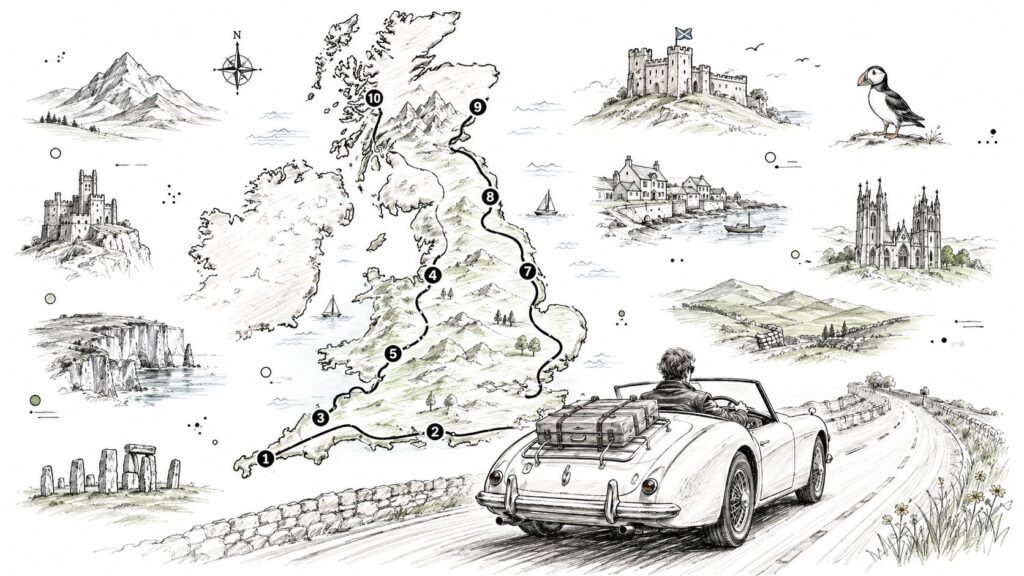
You're ready to leave the main road behind, but the choice of route already feels like the first major decision. A coastal drive asks for patience and weather flexibility. A mountain circuit rewards confident drivers who enjoy slower roads. A heritage loop suits travellers who want historic towns, excellent meals and manageable distances, while a compact countryside escape can deliver a memorable break without consuming a fortnight.
The best road trip UK route isn't the same for everyone. This guide brings together contrasting journeys across England, Scotland, Wales and Ireland, from short Peak District escapes to demanding mountain-pass adventures and the long Atlantic drama of the Wild Atlantic Way. Each route card gives you a usable day-by-day framework, driving difficulty, the best seasonal window, accommodation ideas and tactics for travelling independently.
Use the suggested days as a structure, not a timetable. Leave room for a walk, a viewpoint that looks better than expected or a village where lunch turns into an afternoon. If you prefer selected accommodation and practical support while keeping control of the wheel, London-based BTOURS offers curated self-drive journeys across the UK and Ireland.
Before setting off, remember the fundamentals. Drive on the left, approach narrow roads slowly and check passing places before committing to a single-track section. Plan fuel stops rather than assuming every rural area has a convenient station, check weather and road conditions each morning, and download navigation for weak-signal areas. Confirm parking arrangements at accommodation and attractions, particularly in historic centres.
The strongest itinerary is the one that leaves enough time to experience each place, rather than merely pass through it.
If you're comparing rental arrangements, read about one way car rental pitfalls before booking. A little preparation can prevent a costly change of plan.
1. The Wild Atlantic Way Ireland's Coastal Masterpiece
Ireland's Wild Atlantic Way is the choice for travellers who want the road itself to feel like the destination. Stretching from Donegal in the north to Cork in the south, the route follows exposed Atlantic coastline, rugged cliffs, beaches, fishing villages and archaeological sites. It's expansive, weather-shaped and best suited to people who enjoy changing plans when the sea mist rolls in.
Allow 10 to 14 days for a relaxed journey. Start in Cork and travel counter-clockwise so the coastline generally stays on your right, making many viewpoints easier to reach without crossing traffic. A vehicle with good ground clearance is useful on narrow coastal roads, but the priority is compact size and confident handling, not excessive power.
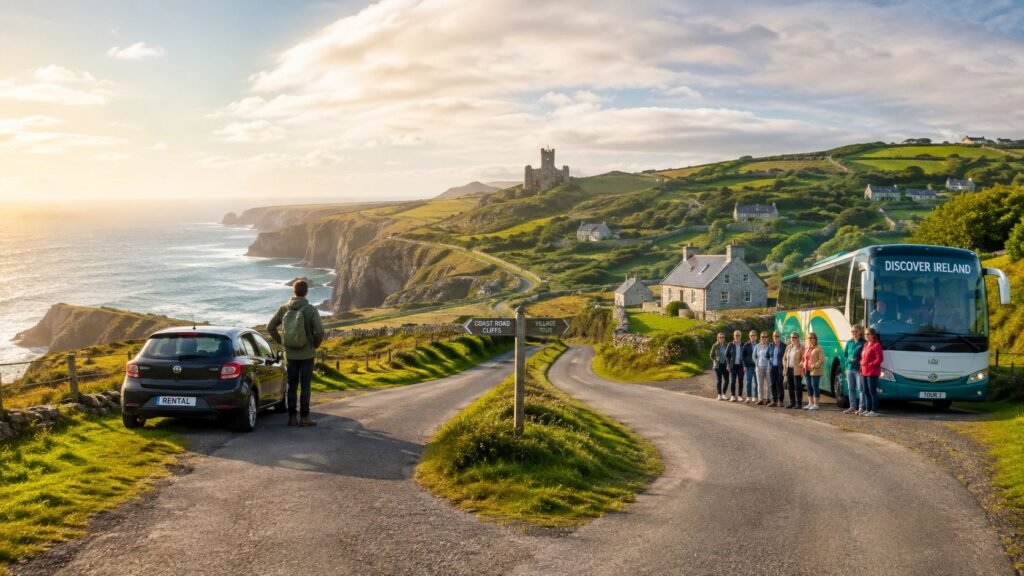
A flexible coastal framework
- Days 1 to 3: Begin around Cork, then move towards the Kerry coast. Give the Dingle Peninsula time for Irish-speaking communities, archaeological remains and cliffside views.
- Days 4 to 6: Continue through Clare, using Doolin as a base for traditional music, seafood and coastal walks. Visit the Cliffs of Moher, then consider Loop Head when you want a quieter alternative.
- Days 7 to 10: Head north through Galway and Mayo, keeping days open for beaches, villages and weather delays.
- Days 11 to 14: Finish through Donegal, or shorten the route by choosing one western region and returning at a gentler pace.
May and October are strong choices for fewer crowds and a more atmospheric coastline. Peak-season accommodation fills quickly, so reserve village stays in advance, especially where there are limited alternatives.
The driving is demanding rather than fast. Narrow lanes, sudden weather and spontaneous stops make strict arrival times unrealistic. Choose guesthouses, small inns and characterful coastal hotels, and keep at least one unscheduled block for a walk or viewpoint.
2. The Scottish Highlands Circle Mountains Lochs and Ancient History
Choose this loop for a trip shaped by mountains, lochs, castles and Highland history. Start in Edinburgh or Glasgow, then head through Glencoe, Loch Ness, Fort Augustus, the Isle of Skye and northern villages before returning south. It suits confident drivers who enjoy changing scenery more than covering distance.
Allow 10 to 12 days. Winding roads, exposed stretches and single-track sections demand patience and careful passing. Scotland's public road network measured 57,327 kilometres at 31 March 2023. About 7% of roads were trunk roads and 1% were motorways, according to Scottish transport statistics. Plan around scenic roads, not motorway-style progress.
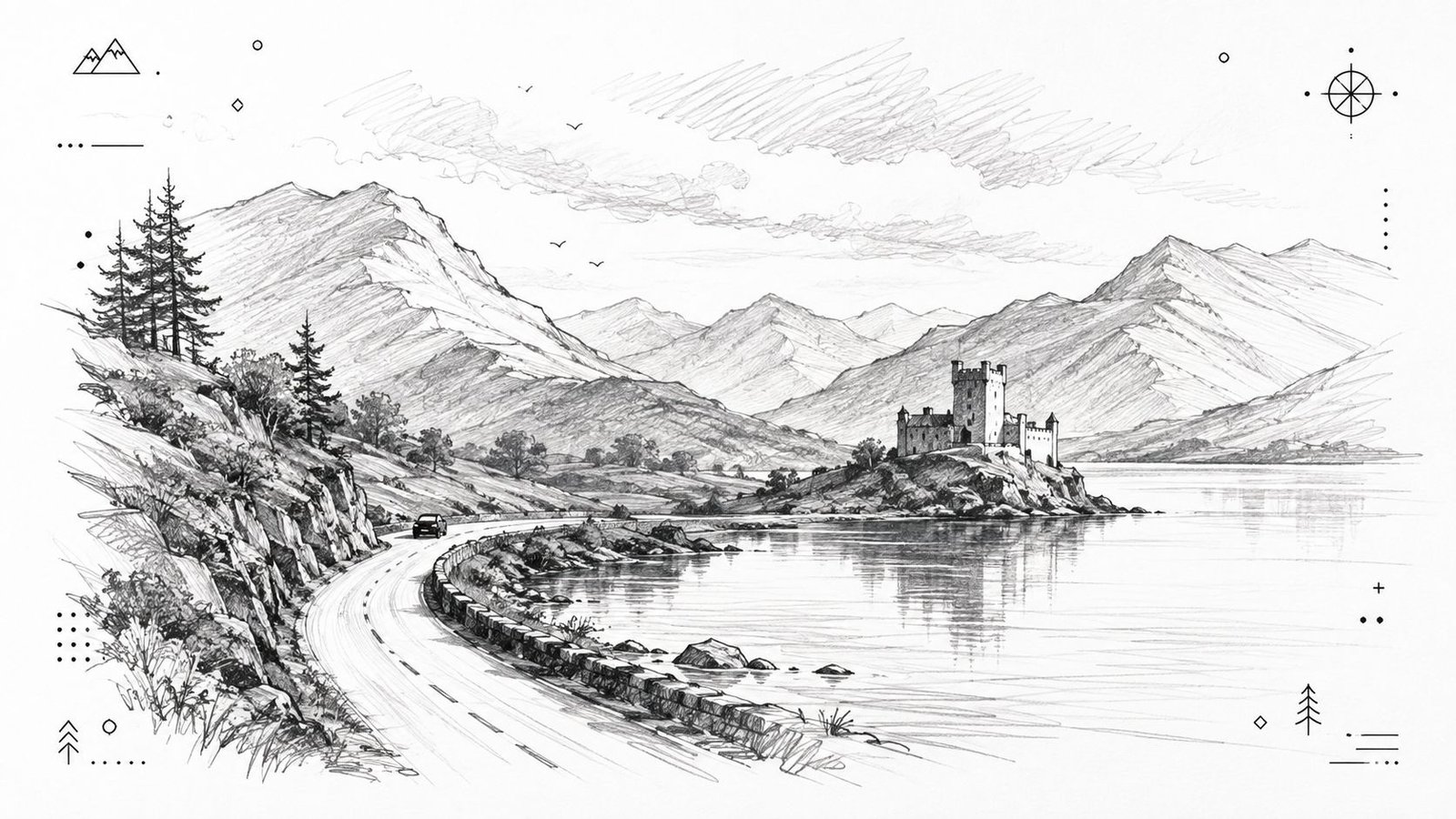
Use this rhythm to keep the route enjoyable:
- Days 1 and 2: Leave Edinburgh or Glasgow and break the journey around Glencoe. Walk a short trail through the pass instead of treating it as a roadside viewpoint.
- Days 3 and 4: Stay near Fort Augustus. Explore Loch Ness and nearby glens from one base, avoiding a fresh check-in each night.
- Days 5 to 7: Cross to Skye and stay at least one night. Visit Dunvegan Castle, then reserve time for coastal viewpoints and short walks.
- Days 8 to 10: Return through Inverness and historic Highland areas before continuing towards your starting city.
- Days 11 and 12: Keep these days for a slower return, another castle visit or a walk delayed by poor weather.
April, May, September and October offer a practical balance of daylight, weather and visitor pressure. July and August need early accommodation bookings, particularly on Skye. Country inns, Highland lodges and small hotels with parking suit this route. Check breakfast hours before booking if you plan early departures.
A compact hire car is easier to place on narrow roads than an oversized model. Prioritise clear visibility, responsive handling and enough luggage space. Pack layers and waterproof footwear. Highland conditions can change quickly, even after a clear start.
3. The Cornish Coastal Explorer England's Dramatic Southwest Peninsula
Cornwall suits independent travellers who want beaches, food, art and walking in one compact route. The coast delivers dramatic views in short stretches, yet narrow roads can turn nearby stops into slow journeys. Limit daily driving and stay several nights in each base.
Allow 7 to 9 days for a circular journey. Use Padstow, St Ives and Polperro as the main anchors, then add sections of the South West Coast Path. Padstow works for food-focused travellers, St Ives brings galleries and a lively seaside setting, while Polperro offers a quieter harbour base.
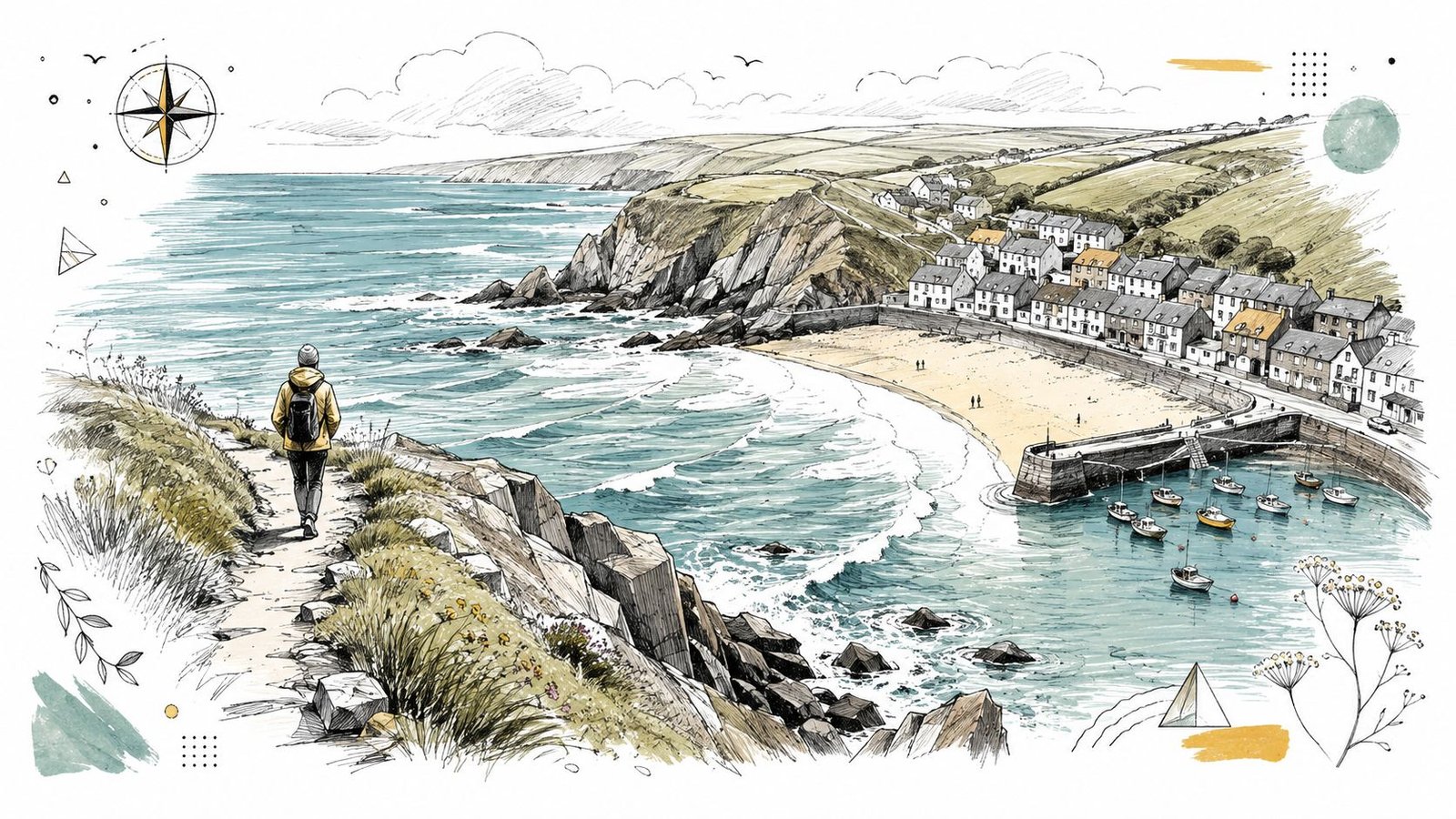
Build the circular route around key coastal stops
Begin with two nights near Padstow. Walk around the harbour and book dinner before you arrive, particularly during busy periods. Keep the following day for a beach, a coastal path or a relaxed food stop rather than adding unnecessary mileage.
Continue west to St Ives for Days 3 and 4. Leave the car outside the busiest centre and explore on foot. Galleries, independent shops and the waterfront are easier to enjoy without repeatedly searching for parking.
Use Days 5 and 6 for the southern coast and its smaller fishing settlements. Make Polperro your slower base, then walk between viewpoints and nearby villages where practical. The lanes reward patience, not rushed sightseeing.
Finish with Days 7 to 9 on the inland return through Cornwall. Choose beaches, gardens or another coastal section according to the weather and your energy. This flexible ending protects the route from becoming a checklist.
May and September offer pleasant conditions with less pressure than the school-holiday peak. Book Easter and summer accommodation early. Small hotels, guesthouses and self-catering cottages with dependable parking are the most practical choices, since historic villages often have tight access and limited spaces.
Driving difficulty is moderate. Narrow lanes, parked cars and busy coastal approaches demand patience, although advanced mountain-driving skills are unnecessary. Buy a Cornish pasty at a local bakery instead of creating a separate driving detour, and reserve popular restaurants ahead of time. Pack proper footwear and protect at least a few days from overloading.
4. The Lake District Discovery England's Scenic Mountain Sanctuary
The Lake District is the best choice when you want scenery and activity without committing to a huge national route. The journey combines lake roads, stone villages, literary associations and accessible walking, with Ambleside, Keswick and Kendal providing practical bases.
Plan 6 to 8 days. Driving confidence should be moderate, with extra care on narrow lanes and busy lakeside roads. The Lake District works particularly well for couples and families because a day can combine a scenic drive, a short walk, a good meal and a comfortable hotel without requiring a full-day expedition.
A slower base-and-loop plan
Start around Kendal or Windermere for the opening days. Drive around Windermere, England's largest lake, and seek views towards Coniston Old Man, but don't turn the circuit into a race for every viewpoint. Arrive early at popular car parks and keep a backup walk ready if a favourite stop is full.
Move to Ambleside for a couple of nights. Explore the town, follow Wordsworth connections and use local restaurants as an evening anchor. A bicycle can be a better choice than a car for quieter valleys and lakeside sections, particularly when parking is limited.
Finish in Keswick on Derwent Water. Use the town as a base for mountain walks, market browsing and a final scenic loop. Include two or three short walks across the trip, adjusting length to weather and energy rather than treating walking as an optional extra.
May, June, September and October are dependable choices for a rewarding balance of scenery access and visitor levels. Stay in Grasmere or another smaller village if you want a quieter evening atmosphere, or choose Ambleside and Keswick for broader dining and service options.
Country hotels, family-friendly guesthouses and self-catering cottages all work well. Book dinner ahead in Ambleside and Keswick, especially at weekends. This route's central trade-off is simple: the more time you spend outside the car, the more the Lake District delivers.
5. The Cotswolds Picture Perfect Circuit Honey Stoned Villages and Rolling Countryside
Choose the Cotswolds when the ideal road trip means beautiful villages, gentle roads, country pubs and long lunches. This is not a route for collecting landmarks at speed. Its pleasure comes from walking through golden limestone settlements, browsing independent shops and noticing how each village changes after the day-trippers leave.
A 250-kilometre circuit can comfortably fill 5 to 7 days, as recorded in the route framework above. Driving is accessible, though narrow lanes and village parking demand patience. Bourton-on-the-Water, Stow-on-the-Wold and Cirencester provide a clear backbone, while Nailsworth offers a quieter base with strong food appeal.
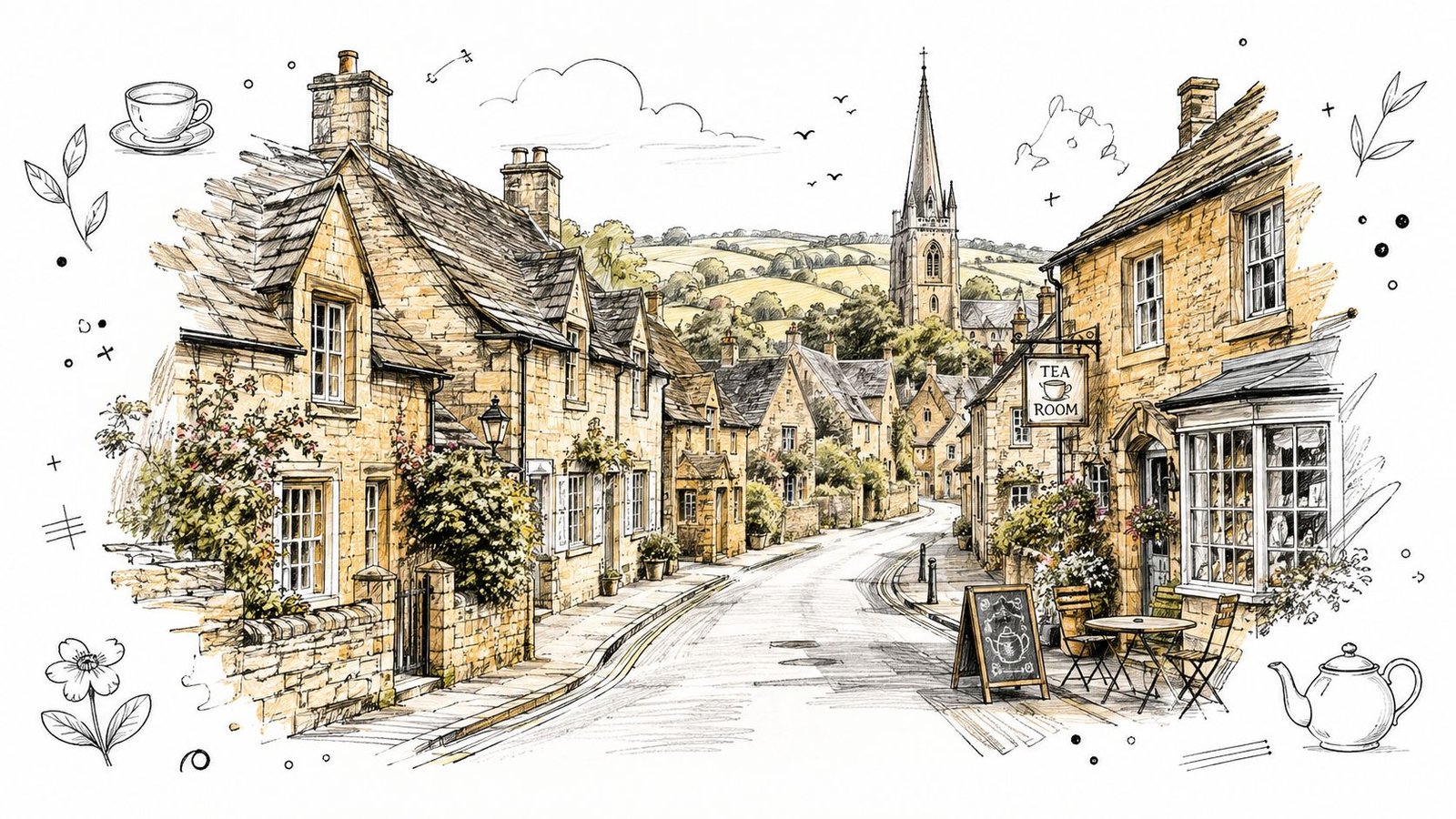
Make the villages your itinerary
Begin in Cirencester for Roman heritage, market-town character and useful dining options. Continue to Bourton-on-the-Water, where the shallow river and stone buildings create one of the region's most recognisable scenes. Stay nearby so you can walk through the village early or late, when the atmosphere is calmer.
Use the middle days for Stow-on-the-Wold, antique shops, vintage markets and surrounding lanes. Don't plan every stop around famous names. A small village pub, an unexpected footpath or an afternoon tea in a traditional hotel may become the day's highlight.
Finish with a slower southern loop around Nailsworth and nearby countryside. Choose accommodation with parking, then leave the car behind for village exploration whenever possible.
Mid-week travel is the decisive tactic. It reduces pressure from weekend visitors and makes parking, dining and walking more pleasant. Book dinner at popular gastropubs before travelling, and stay in smaller villages if you want authentic evening character rather than a purely daytime visit.
The Cotswolds suits cautious drivers and travellers with limited time. Its trade-off is popularity, not remoteness. You'll find excellent services and easy access, but the route feels much better when you travel outside the busiest periods and resist the urge to visit every village in one day.
6. The North Yorkshire Dales and Moors Explorer Historic Towns and Natural Beauty
York gives this route its strongest opening: medieval streets, city walls and enough history to reward more than a brief stop. From there, the journey shifts through Harrogate's refined hotels and gardens, the open Yorkshire Dales, the North York Moors and Whitby's rugged coast. Choose it for variety, especially if you want cultural days between rural drives.
Allow 7 to 9 days for the circular route. Driving is moderate. The main challenge comes from narrow lanes, livestock, sudden moorland weather and stretches with few services. Keep arrival times flexible, particularly when crossing the high ground.
Build the route around changing experiences
Start with two days in York. Walk the medieval centre, follow the walls and reserve time for museums or a slower evening meal. A rushed first stop weakens the whole itinerary.
Move to Harrogate for days 3 and 4, using it as a comfortable base for Fountains Abbey and nearby Dales scenery. Weekday mornings work best for major attractions. The town's hotels, restaurants and reliable evening options suit travellers who prefer easy logistics.
Spend days 5 and 6 travelling deeper into the Dales. Grassington makes a practical stop for village character, short walks and local food. Choose an inn in a village if you want countryside outside the door, or stay in a larger town for more dining choice.
Finish with days 7 to 9 across the North York Moors, continuing towards Goathland and Whitby. Set aside time for the steam railway near Goathland, then stay on the coast for an evening walk and seafood.
May and September offer a strong balance for town visits and countryside walking. Book accommodation and restaurants ahead for weekends. Add a brewery or distillery visit for regional flavour, then use the railway journey to change the pace. York and Harrogate deserve proper stays, not merely convenient overnight stops. Their history and character make this route more distinctive than a drive focused only on scenery.
7. The Peak District Escape Dramatic Landscapes and Industrial Heritage
The Peak District is the strongest recommendation for a short, high-quality break. It offers moorland drives, limestone formations, stone villages, cave adventures and traditional pubs within easy reach of Manchester, Birmingham and Leicester. You can arrive for an extended weekend and still feel you've left the city far behind.
Plan 4 to 6 days around a 250-kilometre route. Driving is accessible, with moderate care needed on narrow lanes and exposed roads. Base yourself in Bakewell or Matlock, where you'll have practical services, food choices and a central position for daily loops.
A compact escape with real variety
Spend the opening day settling into Bakewell, exploring the market-town streets and trying its namesake pudding. Use the next day for Winnats Pass and a walk around the dramatic limestone scenery. If weather closes in, switch from exposed paths to Peak Cavern or Speedwell Cavern, booking cave tours ahead during the busiest periods.
The middle of the trip should combine two or three moderate walks with scenic drives through villages and moorland. Keep one flexible day for weather changes. The Peak District's appeal is its adaptability, you can make the day active, cultural or food-focused without driving across the country.
Practical rule: For a short break, choose one reliable base and spend your time exploring outward. Changing hotels every night adds effort without adding much scenery.
Weekdays are preferable at popular attractions and viewpoints. Stay in a country inn, a comfortable guesthouse or a small hotel with parking, then spend evenings in traditional pubs serving real ales and locally sourced food.
This route is especially good for first-time UK self-drivers. It offers enough road variety to build confidence, but it doesn't demand the commitment of a remote Highland or Atlantic itinerary. Choose it when your priority is a refreshing countryside reset rather than a grand geographic expedition.
8. Royal Indulgence London Bath and the Cotswolds Combination
This is the route for travellers who want culture, architecture, excellent dining and countryside charm in one polished journey. It combines London's museums and historic landmarks with Bath's Roman heritage and the slower rhythm of the Cotswolds.
Allow 7 to 9 days, divided into two or three days in London, two days in Bath and three or four days in the Cotswolds. The most important driving decision is to avoid using a car in London. Park it, or don't collect it until you leave the capital, then use public transport for London's central sights.
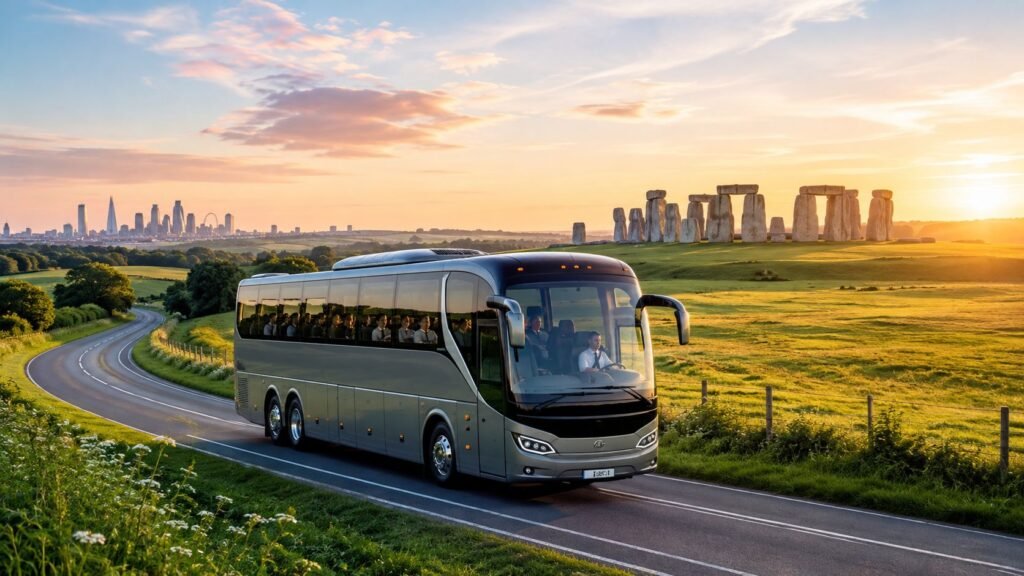
Keep the city portion car-free
Spend the London days around the West End, the Tower of London and neighbourhoods selected for your interests. A hire car adds parking pressure without improving the experience. Collect it when you're ready for Bath, and treat the changeover as the beginning of the road trip.
Use two nights in Bath for the Roman Baths, Georgian architecture, museums and unhurried meals. Visit major attractions in the morning, then keep the afternoon open for the city's streets and independent shops. From Bath, continue into the Cotswolds, using Bourton-on-the-Water and Stow-on-the-Wold as anchors while allowing flexible detours.
May and September suit this combination particularly well. Summer accommodation and dining should be booked early, especially in London and Bath. Choose a central London hotel near public transport, a characterful Bath property and a Cotswold inn or cottage with parking.
The route is easy to moderate for driving, but city logistics can be stressful if handled badly. Collecting the car outside the busiest central areas, planning parking before arrival and leaving room for Cotswold discoveries will make the journey feel elegant rather than hurried.
9. The Welsh Adventure Snowdonia Pembrokeshire Coast and Brecon Beacons
Choose Wales when you want mountains, coastline and open walking country in one road trip. Snowdonia delivers steep valleys and mountain roads, Pembrokeshire brings rugged cliffs and secluded beaches, and the Brecon Beacons finish the journey with rolling peaks. Castles, market towns and Welsh food add plenty beyond the scenery.
Allow 8 to 10 days for the 600-kilometre route. Driving ranges from moderate to demanding, since narrow mountain roads take longer than their distance suggests. Hire a compact vehicle with confident handling, and avoid an oversized model that complicates village parking.
Give each region its own pace
Start with Days 1 to 3 in Snowdonia. Base yourself in a mountain town, walk through the valleys, explore the peaks and include the Llanfairpwllgwyngyll scenic route for a memorable Welsh place-name stop.
Use Days 4 to 6 for Pembrokeshire. Follow coastal roads, choose beaches that suit the weather and walk short sections of the coast instead of chasing every viewpoint. This coastal travel scene from New Quay, Wales captures the character of this stretch.
Finish with Days 7 to 10 in the Brecon Beacons. Combine market-town visits, castle stops, rolling scenery and outdoor activities, keeping one flexible day for weather or a longer walk.
May, June, September and October offer strong walking conditions with less summer pressure. Reserve July and August accommodation early. Mountain guesthouses, coastal inns and rural hotels suit the route, but confirm parking and arrival access before booking.
Wales rewards travellers who leave the car behind. Pack reliable walking footwear, allow extra time on mountain roads and keep meals flexible. Try cawl and bara brith, then follow the quieter stop when it appeals more than the famous viewpoint.
10. The Scenic Drive Classics Four Iconic UK Mountain Passes and Valleys
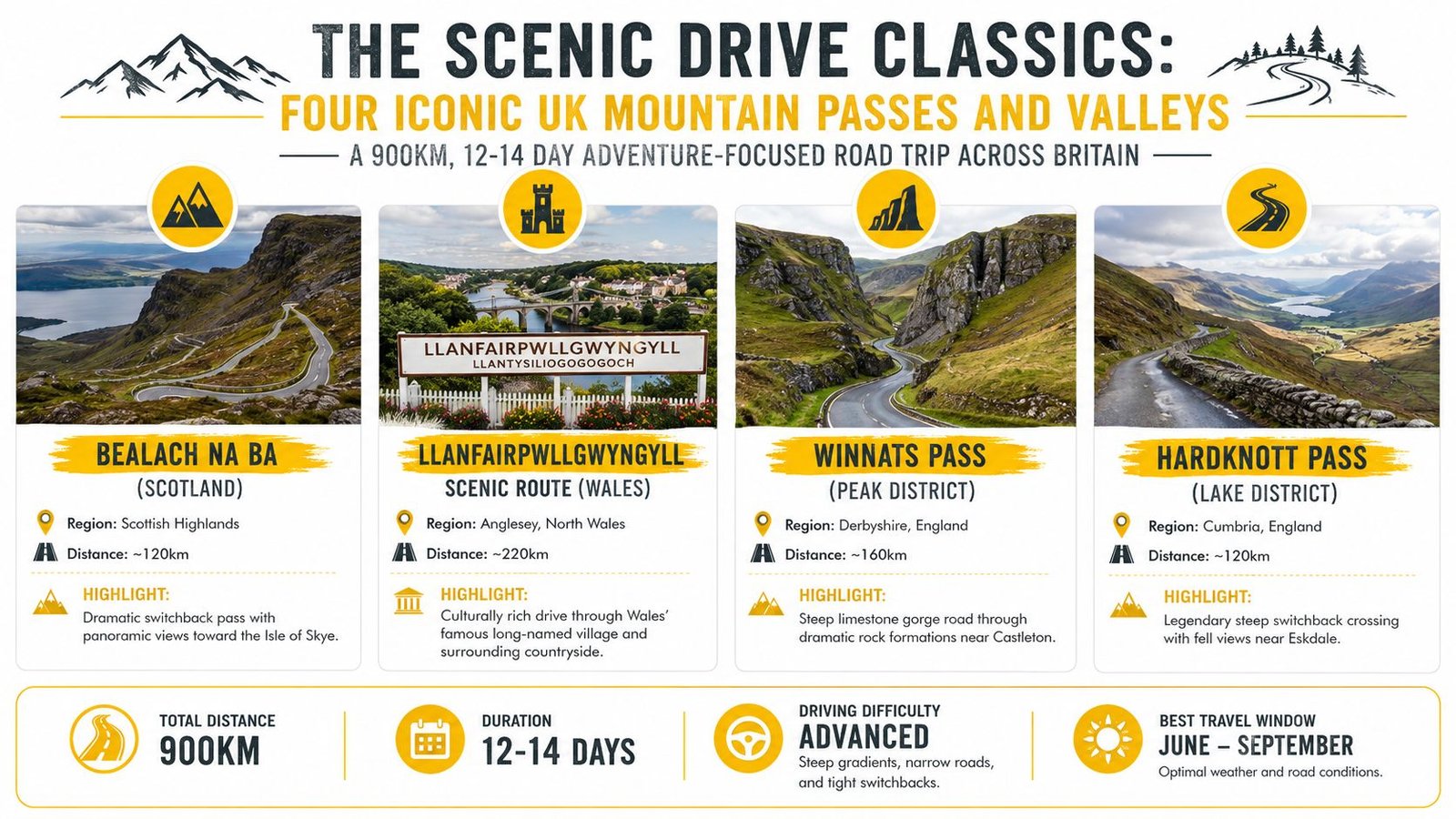
This is the advanced route, designed for confident drivers who actively want challenging roads. It links Bealach na Ba in Scotland, the Llanfairpwllgwyngyll scenic route in Wales, Winnats Pass in the Peak District and Hardknott Pass in the Lake District into a multi-week journey of mountain scenery, dramatic viewpoints and short hikes.
Allow 12 to 14 days for the approximately 900-kilometre adventure. The distance alone isn't the difficulty. Switchbacks, gradients, narrow sections and rapidly changing weather require careful driving, realistic timing and the willingness to turn back when conditions deteriorate.
Drive the demanding sections intelligently
Start in the Peak District to build into the route with Winnats Pass, then continue through the Lake District for Hardknott Pass. Allow time for photography and short walks, not just the pass itself. Continue into Wales for the Llanfairpwllgwyngyll route before heading north to Scotland and Bealach na Ba, where views towards the Isle of Skye reward a slow, deliberate crossing.
Attempt this journey only between June and September. Check weather forecasts and road conditions before every high pass, and use mapping applications that show mountain-road difficulty. Confirm that your hire vehicle is appropriate, with responsive handling, sufficient clearance and tyres suitable for changing conditions.
Stay in rural inns, mountain lodges and small hotels with secure parking. A guide or group can be sensible for the most challenging sections, particularly if you're unfamiliar with British mountain roads. Electric-car drivers should also plan charging stops carefully, using Rally's guide to EV charge cards when comparing charging options for European travel.
The reward is not speed. It's the concentration of climbing a pass, stopping safely above a valley and walking into a scene that would be impossible to appreciate from a motorway.
Top 10 UK Road Trips, Quick Comparison
| Route | Implementation complexity | Resource requirements | Expected outcomes | Ideal use cases | Key advantages |
|---|---|---|---|---|---|
| The Wild Atlantic Way: Ireland's Coastal Masterpiece | Moderate, long distance, variable coastal roads | 10–14 days, rental car (good clearance), pre-book in peak, flexible schedule | Dramatic Atlantic coastscapes, coastal villages, cultural experiences | Photographers, nature lovers, flexible self-drive travellers | Iconic coastal scenery, flexible routing, remote beaches & local culture |
| The Scottish Highlands Circle: Mountains, Lochs, and Ancient History | Moderate–High, single-track roads, mountain weather | 10–12 days, sturdy vehicle (4×4 useful), advance booking for Skye | Mountains, lochs, castles, hiking and heritage encounters | Hikers, history buffs, landscape photographers | Highly diverse landscapes, strong cultural authenticity, excellent hiking |
| The Cornish Coastal Explorer: England's Southwest Peninsula | Low–Moderate, coastal roads, seasonal crowds | 7–9 days, car essential, book restaurants/accommodation in season | Beaches, surfing/water sports, arts communities and seafood dining | Families, beach lovers, foodies and art enthusiasts | Outstanding beaches, seafood and creative culture, accessible trails |
| The Lake District Discovery: England's Scenic Mountain Sanctuary | Low–Moderate, mix of driving and walks, narrow lanes in places | 6–8 days, car, walking gear, early bookings in peak | Lakes, fells, literary heritage and accessible hikes | Walkers, photographers, families seeking scenic short hikes | Compact region, varied walks, strong accommodation options |
| The Cotswolds Picture-Perfect Circuit: Honey-Stoned Villages and Rolling Countryside | Low, gentle roads, short daily distances | 5–7 days, car (train access viable), boutique stays, higher cost | Quintessential English villages, food, antique shopping, relaxed walks | Couples, leisurely travellers, culture and food seekers | Classic English charm, boutique accommodations, easy pace |
| The North Yorkshire Dales and Moors Explorer: Historic Towns and Natural Beauty | Moderate, mixed terrain, longer drives between highlights | 7–9 days, car, walking gear, bookings for weekends | Moorlands, limestone dales, historic towns and coastal scenes | Hikers, history/literature enthusiasts, regional explorers | Diverse scenery, authentic local culture, strong walking opportunities |
| The Peak District Escape: Dramatic Landscapes and Industrial Heritage | Low, short, accessible routes ideal for weekends | 4–6 days, car, moderate budget, book popular cave tours | Moorland scenery, caves, market towns and short hikes | Weekend breakers, families, walkers seeking value | Easy access from major cities, excellent hiking, good value |
| Royal Indulgence: London, Bath, and the Cotswolds Combination | Moderate, city logistics plus countryside driving | 7–9 days, mix of public transport and car, luxury accommodation options, advance reservations | Urban cultural attractions, Georgian heritage, rural charm | First-time UK visitors, luxury or cultural travellers | Combines city culture with countryside tranquillity, highly customizable |
| The Welsh Adventure: Snowdonia, Pembrokeshire Coast, and Brecon Beacons | Moderate–High, mountain & coastal driving, variable roads | 8–10 days, capable car, hiking gear, book peak-season stays | Mountain peaks, dramatic coastlines, Welsh culture and castles | Outdoor adventurers, culture seekers, hikers | Exceptionally varied landscapes, strong outdoor infrastructure, good value |
| The Scenic Drive Classics: Four Iconic UK Mountain Passes and Valleys | High, challenging mountain passes, advanced driving skills required | 12–14 days, experienced driver, suitable vehicle, flexible schedule, careful planning | Epic driving experiences, remote viewpoints, intense photographic rewards | Experienced drivers, road-trip enthusiasts, adventure seekers | Unrivalled driving thrills, iconic mountain passes, unique remote vistas |
Turn the Route into Your Own Adventure
Choose decisively based on the experience you want, not the route that appears most impressive on a map. The Peak District is the smartest short escape, while the Cotswolds suits travellers who want villages, food and gentle driving. Choose the Lake District for a balanced English journey with walking and lakes, or Cornwall for a stronger coastal identity with beaches, art and seafood.
For mountains and culture, choose Wales when you want a concentrated journey across different terrains, or the Scottish Highlands when you're prepared for longer distances, more remote roads and changeable conditions. Choose Ireland's Wild Atlantic Way for an expansive Atlantic adventure where flexibility matters more than strict schedules.
The four-pass itinerary is different. It's not the default choice for a first UK drive, a nervous driver or anyone who needs guaranteed arrival times. Take it only if you're comfortable with narrow, steep and exposed roads, and prepared to change the plan after a poor weather check.
Britain is especially suited to self-drive travel because its network supports both efficient intercity movement and scenic local detours. In 2025, Great Britain's road network was estimated at 247,200 miles, including 32,000 miles of major road and 215,200 miles of minor road, with England accounting for 188,900 miles, or 76.4% of the total, according to the Department for Transport road traffic estimates. The same figures record 2,300 miles of motorway and 29,700 miles of A roads, which is why a well-designed itinerary can combine efficient travel with characterful backroads.
Complete your self-drive preparation
- Vehicle suitability: Choose a compact vehicle for village lanes, or a vehicle with appropriate handling and clearance for mountain routes. Request an automatic transmission early if you need one.
- Accommodation reservations: Book popular coastal, Highland and Cotswold stays ahead, and confirm parking, check-in times and late-arrival arrangements.
- Route flexibility: Keep a shortlist of alternative walks, towns and indoor attractions for poor weather or crowded car parks.
- Weather and road checks: Review conditions before exposed coastal drives and high passes. Never treat a scenic route as compulsory when conditions are unsafe.
- Walking footwear: Pack waterproof shoes with grip, even on routes that appear mostly driveable.
- Offline navigation: Download maps and retain a printable backup. UK planning is strongly hybrid, with an AA poll finding that 35% of drivers planned routes using both sat-nav and a printed map, while 17% relied solely on sat-nav, according to AA route-planning research.
- Daily driving limits: Set a realistic endpoint and stop before fatigue turns a beautiful route into a stressful one.
Shorter breaks deserve serious consideration. Domestic tourism spend reached £78 billion in 2025, with overnight trips and day visits both contributing to the market's scale, according to VisitBritain's domestic tourism results. That supports a practical conclusion: the best road trip UK choice may be a focused regional loop with excellent accommodation and cultural stops, rather than the longest possible drive.
Traffic planning matters just as much. The RAC reported 13.9 million getaway journeys planned for a midweek summer escape period in July 2025, the largest midweek total in its recorded figures, as described in its summer travel congestion report. Travel mid-week or in the shoulder season where possible, and stage breaks around reliable service areas. Transport Focus's motorway-services survey covers all 112 of England's motorway service areas and more than 30,000 visitors, giving operators and travellers a useful benchmark when selecting comfortable stops, as explained in the Transport Focus survey.
Build each trip around two or three anchor experiences. Don't book every hour around landmarks and restaurants. Leave space for the viewpoint, village meal or short walk that wasn't on the original plan. BTOURS can help you begin with a curated self-drive itinerary, handpicked stays and destination support while preserving the freedom to explore independently.
Measure the journey by the unplanned viewpoint, the village meal and the short walk that made you stop thinking about the schedule.
BTOURS offers curated self-drive itineraries across England, Scotland, Wales and Ireland, combining selected accommodation with flexible planning and support. Visit BTOURS to find a route that matches your available time, driving confidence and preferred travel style.