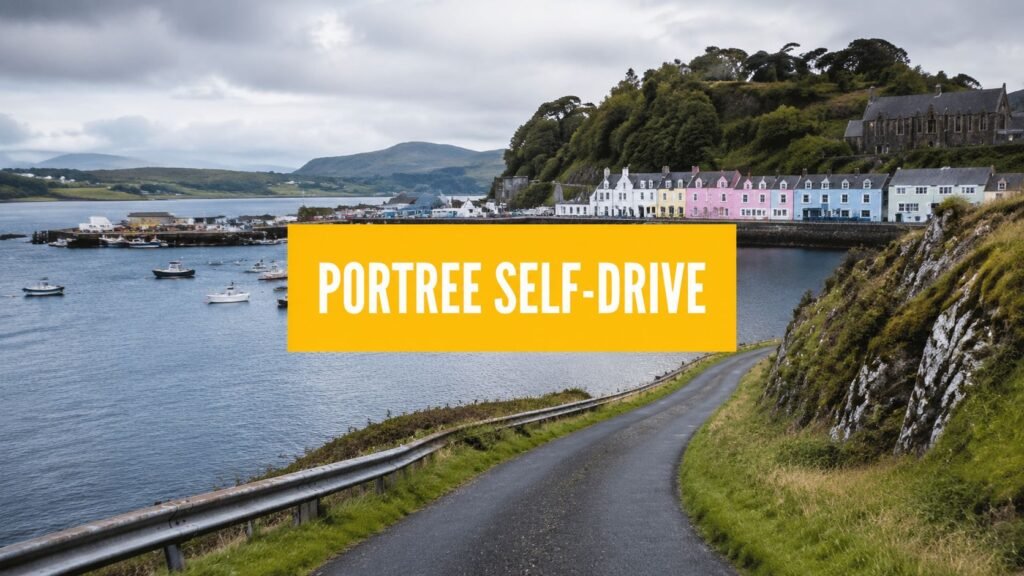
You're winding up a narrow island road, the satnav keeps warning about bends, and then Portree finally opens out in front of you, with the harbour, the pastel fronts, and a car park that looks full before you've even taken your sunglasses off. That's the moment most self-drive travellers realise the same thing: Portree on the Isle of Skye is not just where you stop, it's where the trip either becomes organised or turns into a daily scramble.
That's why this guide takes the practical route. Yes, Portree is the capital and largest town on Skye, and a regional profile recorded a population of 2,318 in the 2011 Census, up 11.2% from 2001 (Portree profile). But for drivers, the bigger issue is simple, Portree is the island's main hub, and everything from parking to route choice flows from that fact.
If you're planning independent travel, the key questions are not just what to see, but how to base yourself, how to avoid backtracking, and how to keep the whole itinerary realistic. This guide gives you the answer straight, with the time-distance trade-offs, road rules, and base-selection logic that most attraction lists ignore.
Table of Contents
- Introduction to Portree Isle of Skye
- Understanding Portree Isle of Skye
- Planning Arrival and Transport in Portree
- Exploring Top Attractions and Scenic Walks
- Designing Realistic Itineraries from Portree
- Accommodation Dining Seasonal and Safety Tips
- Integrating BTOURS Self-Drive Highland Isle of Skye Itineraries
- Conclusion and Next Steps
Introduction to Portree Isle of Skye
You've probably had the same experience already. You've spent half the morning threading through Skye's bends, passed one passing place after another, and now you're trying to decide whether to grab lunch in town, check in first, or head straight back out before the roads clog up. That tension is exactly why Portree matters more than a pretty harbour stop.
Portree is the island's main service centre, and recent population summaries put the Isle of Skye at 13,143 people with Portree at about 2,460 in 2016, which means the town accounted for roughly 18.7% of the island's population at that point (population summary). In plain terms, this is the place where infrastructure, visitors, and local life intersect. That's useful, but it also means the town feels busier than its size suggests.
For self-drive travellers, the challenge is not whether Portree is worth a stop. It's whether you use it as a smart base or a stressful one. Single-track roads, limited parking, and peak-season crowding can all distort your day if you plan like you're driving in a mainland town. You're not.
Practical rule: Treat Portree as a compact operations base, not a destination you can improvise around. If you build your day around drive time, parking, and one or two strong objectives, you'll enjoy Skye far more.
This guide keeps the focus on the logistics that matter. You'll get the local context, road guidance, attraction planning, route templates, and stay advice you need. If you want a stress-free self-drive trip, start here.
Understanding Portree Isle of Skye

A self-drive day on Skye often comes down to one question. Do you use Portree as a place to reset, restock, and regroup, or do you treat it like a quick photo stop and then keep chasing the next viewpoint? That choice affects how much time you waste on parking, how often you retrace your route, and whether the day feels controlled or rushed.
Portree grew into the island's capital because its harbour, road access, and central position made it the natural place to concentrate services. That history still shapes the town now. Travellers come here for fuel, food, groceries, and a practical base between longer drives, because the island keeps pulling movement back through one compact hub.
Why Portree Became the Hub
Portree's size explains a lot of its role. The town's population was 2,318 in 2011, and that was already a larger increase than the growth recorded across the wider Lochaber, Skye and Wester Ross area, the Highlands and Islands, and Scotland overall (Portree profile). By 2016, Portree accounted for about 18.7% of Skye's total population (population summary). That concentration is why the town works as the island's main service centre.
The practical result is simple. A town that holds so much of the resident base ends up carrying the island's visitor services, daily provisioning, and much of the road planning pressure. On Skye, that pressure shows up fast, because traffic funnels through one compact place instead of spreading across several comparable towns. Use Portree as your anchor and you are working with the island's geography, not against it.
Culture, Harbour, and Visitor Expectations
The harbour still defines how people read Portree. The colourful waterfront gets most of the attention, but the town's deeper value is found behind it, a local centre that is small enough to feel manageable and central enough to make a road trip work. That mix catches some visitors out. They arrive expecting a larger resort base and find a working island town with limited space and a much sharper rhythm.
Skye's main sights are spread across different peninsulas, so a simple checklist does not help much with planning. You need a base that helps you sequence drives properly, not just somewhere attractive to sleep. Portree does that job better than anywhere else on the island, provided you accept the trade-offs.
For travellers planning a broader Scotland road trip, BTOURS Scotland is a useful reference for route styles and self-drive trip formats. It helps if you want to fit Skye into a longer circuit instead of treating it as an isolated stop.
What That Means for Independent Drivers
Portree works best as a decision hub. Use it to reduce uncertainty, sort supplies, and organise the day's driving before you head back out. The harbour area and town centre are useful for that, but they come with limits. Parking is tight, the roads around town are not built for casual circling, and last-minute changes usually cost more time than travellers expect.
Transport and digital capacity are being improved, including a £1.6 million Scottish government loan for the Portree Link Road and fibre upgrades around Road of the Hay/Kiltragleann (BBC report). Those upgrades matter because they show how much pressure the town carries for such a small place.
If you understand that before you arrive, you plan better. If you ignore it, you burn time looking for parking, second-guessing routes, and reaching viewpoints after the best part of the day has already passed.
Planning Arrival and Transport in Portree

If you are using Portree as your base, the question is not how to reach it. The question is how much planning you want to do before the roads start slowing you down. Portree is easy to reach on paper and much less forgiving once you are dealing with fuel stops, parking, and the island's narrow road network.
Choose the Arrival Route That Fits Your Trip
For most self-drive travellers, the bridge route is the cleanest option. It keeps the trip simple, avoids timetable stress, and gives you more control over your arrival day. A ferry works better if you want the crossing to be part of the holiday itself, but it only pays off if you are happy to build your plans around a fixed schedule.
If you are collecting a hire car, handle that before you arrive and do not assume local availability will suit your dates. Skye rewards travellers who arrive with the vehicle, fuel, and route already sorted. That matters even more if you are bringing pets, because paperwork needs to be checked before the trip starts. If that applies to you, read understanding UK pet immigration rules before you finalise transport.
Local rule: Do not treat arrival day as flexible. Skye punishes casual planning. Arrive, refuel, check in, and then head out with one clear driving plan.
Master Single-Track Roads and Passing Places
Single-track driving is normal here, so treat it as part of the trip rather than an inconvenience. Keep left, use passing places properly, and yield without hesitation when another vehicle is closer to the next safe pull-in. If an oncoming car reaches a passing place on your side first, slow early and let them use it.
The common mistake is treating passing places as optional. They are part of the road system, and local driving depends on everyone using them in a predictable way. Stay patient, look ahead, and do not overtake just because the road opens for a few metres.
For travellers who want to map the trip properly before setting off, the self-drive tours overview is a practical way to think about overnight stops, road order, and day loops. Even if you are building your own route, that structure helps you avoid wasting energy on unnecessary backtracking.
Park Early and Plan for Pressure Points
Portree parking looks manageable until town traffic starts overlapping with day-trippers and return journeys. Get into the habit of parking before you feel rushed. If you are stopping for lunch or a short harbour walk, leave the car and finish the rest on foot instead of trying to hop in and out of town centre spaces.
The town is being improved, as shown by the transport and digital upgrades already under way, but those changes do not remove the limits of a small island centre. The practical lesson is simple. Portree is better prepared than it used to be, but it is still a place where space fills quickly.
The smartest arrival routine is plain and disciplined. Fuel up before you enter town, choose one parking target, and avoid unnecessary back-and-forth through the centre. That is how you save time and avoid the most common self-drive mistake on Skye, assuming the island's small scale makes movement easy. It does not. It concentrates pressure in a few key spots.
Exploring Top Attractions and Scenic Walks
Portree is the base, not the payoff. The reward is how quickly the scenery starts changing once you leave town. The trick is to stop treating every landmark like a full-day expedition, because some are quick wins and others eat a chunk of your day the moment you add parking, trail time, and photos.
Trotternish Staples Work Best as Early Starts
The Old Man of Storr is the obvious first stop from Portree, and it's obvious for a reason. It's close enough to fit into a half-day, but only if you start early and park with enough patience to avoid the late-morning crush. The walk itself is the point, not just the viewpoint, so don't treat it like a roadside photo stop.
The Quiraing sits further along the same northern logic, and that's why it works best as part of a Trotternish loop rather than a standalone outing. The scenery is bigger, the road feels more exposed, and the experience becomes less about ticking a box and more about pacing your day properly.
Best practice: If you're doing the Storr or the Quiraing, leave Portree early and commit to one major walk, not three rushed stops. Skye rewards concentration more than ambition.
West and South Skye Need More Respect for Distance
The Fairy Pools, Dunvegan Castle, and Neist Point are all familiar names, but they sit on different arms of the island. That matters. A drive from Portree to the Fairy Pools is not just a scenic transfer, it's a route that can swallow half a day once you factor in trail time and stopping. The pools work best when you're prepared for a simple, weather-sensitive visit rather than a spontaneous detour.
Dunvegan Castle changes the tone again. It's a better fit for travellers who want history, gardens, and a gentler rhythm after several driving-heavy days. Neist Point is the most uncompromising of the lot. The views are excellent, but the road and the final approach demand more of you than a casual after-lunch stop. If you want it without stress, build the whole day around it.
Use the Walks to Structure the Drive
The biggest mistake with Portree-based planning is assuming the attractions can be stacked loosely into a single day. They can't, unless you want to spend more time in the car than on the ground. A better method is to use one anchor walk and one nearby scenic stop, then return to base before fatigue starts to distort judgement.
That's why practical route discipline matters. A simple harbour evening after a demanding walk can be better than forcing a second remote viewpoint into the same day. If you need help translating that mindset into a trip structure, the practical guide for your trip is a useful planning read even if you're not backpacking. The point is the same, decide your daily load before you leave Portree.
The best Skye days feel calm, not crowded. Use Portree for reset time, not just sleep.
Designing Realistic Itineraries from Portree

A strong Skye itinerary is the one that leaves you able to enjoy the evening. From Portree, that means planning around road shape, parking pressure, and the amount of walking you want to do after a full day out. The island rewards loop-based planning because the routes, headline sights, and driving realities all push you in that direction.
Half-Day Escape
Use this when you want one solid outing and a calm evening in town. The best version is a single target such as the Old Man of Storr, then a late lunch and a slow drive back to Portree. Don't pair it with another major walk unless you're fine cutting your evening short.
A half-day works best when it stays tight and realistic:
- Morning departure: Leave Portree early, before the town and viewpoint parking begin to clog up.
- Main activity: Pick one attraction with a clear walk or viewpoint.
- Return buffer: Leave room for road delays, photos, and a proper meal back in town.
Full-Day Loop
This is the standard Skye day, and it is the one I recommend. Choose one peninsula and stick to it. A Trotternish day fits the classic north-island scenery, while a western loop works better if the Fairy Pools or Neist Point is your priority. Zigzagging between them wastes time and drains energy.
A full-day loop should include:
- One primary stop: The main attraction that justifies the drive.
- One secondary stop: A shorter viewpoint or village break on the same side of the island.
- One meal stop: Pick somewhere with parking that won't force a scramble.
Portree works best as a reset point between loops, not a midpoint you keep driving through.
Three-Day Peninsula-Hop
If you have more time, split the island into manageable chunks. One day for the north, one for the west, and one for the southwest or a history-focused route is far calmer than trying to cover everything from one base in one sweep. You'll spend less time recalculating and more time enjoying each area.
The deeper planning issue on Skye is backtracking. Headline sights sit on different peninsulas, so a single-base plan often sends you over the same roads again and again. A three-day structure works better for many travellers because it spreads the driving load, keeps fatigue down, and makes meal timing easier to predict.
Build Your Own Template Without Overloading It
Start with your must-see list, then cut it down. Leave room for weather, parking delays, and the occasional stop that turns out better than you expected. A plan that looks efficient on paper can feel cramped on the ground if you've packed too much into it.
For a visual route mindset, the embedded planning video below is a useful companion when you're deciding how much to fit into each day.
Planning insight: Build your day around one anchor, not five possibilities. That keeps Portree-based travel flexible without turning the day into guesswork.
A useful overlooked truth is that most guide content focuses on what to see, but not on how road congestion, parking, and crowding change the day itself (Portree overview). If you want that gap filled, think in loops, not lists. If you are comparing a broader trip structure before you book, the practical guide for your trip can help sharpen your timing logic even for a car-based holiday.
Accommodation Dining Seasonal and Safety Tips
Portree is the easiest place on Skye to make evenings work properly, but that doesn't mean every stay fits every traveller. If you want a practical base, choose somewhere in town or just outside it. If you want quieter mornings and don't mind more driving, a rural cottage can suit you better. The key is to match the base to your route style.

Where to Stay and Why It Matters
Town-centre stays give you the cleanest logistics. You can walk to dinner, avoid late-night driving, and leave early without having to rejoin the island roads before breakfast. That matters more than most travellers expect, especially after a long loop.
Rural cottages are a different proposition. They can be excellent if your priority is quiet, dark skies, and a more secluded feel, but they make sense only when your driving days are already simplified. If you choose one, make sure you're happy to start and end the day on rural roads.
Eat Well, Then Keep the Evening Simple
Portree's dining scene is one of the strongest reasons to use it as a base. The town has the restaurants, pubs, cafés, and nightcap spots that make self-drive travel easier, because you don't have to plan your evening around a long return drive. That's a real advantage after a full day on the road.
A good routine is straightforward. Book a dinner spot in town, eat early enough to avoid last-minute stress, and keep the rest of the evening simple. If you've driven hard all day, a short walk by the harbour beats squeezing in one more viewpoint every time.
Seasonality Changes the Whole Mood
Skye behaves differently across the year, and you should plan for that. In summer, midges can be a factor, though they're not a year-round issue. In winter, shorter daylight hours reduce how much you can comfortably fit into a day. Shoulder seasons often give the best balance between workable weather and a calmer pace.
The best approach is to pack for variability. Bring layers, waterproofs, sturdy footwear, and insect protection in warmer months. If you're walking coastal paths or exposed viewpoints, don't rely on a bright sky staying bright for long.
Safety and Access Need Real Attention
The island's roads and trails are beautiful, but they're not forgiving if you rush. Give yourself time on bends, drive defensively, and avoid assuming a short route will stay short once you factor in traffic, parking, and weather. Coastal drives can look simple on a map and still demand concentration in practice.
If anyone in your group has limited mobility, keep your plans selective. Stay close to level harbour areas, choose shorter walks, and avoid forcing uneven or exposed routes just because they're famous. That's common sense, but it gets ignored far too often.
Checklist to sort before you go:
- Book central accommodation early, if you want easy evening access and less road stress.
- Reserve meals where possible, especially if your day ends after a long loop.
- Pack for wind, rain, and midges, depending on season.
- Leave margin for walking, parking, and delays, because Skye days always run better with slack.
Integrating BTOURS Self-Drive Highland Isle of Skye Itineraries
The hardest part of a Portree-based trip is not the scenery. It's the planning load. Once you accept that, the value of a well-structured self-drive package becomes obvious, because somebody else has already done the route logic, accommodation selection, and pacing decisions that usually trip people up.
One strong example is a journey built around Skye's north and west sides, with Portree as the central base and the daily drives split by peninsula rather than by randomness. Another is a broader Highland-and-Skye route that starts with a Scottish mainland approach, then uses Portree as the island anchor before continuing onward. Those trip shapes work because they reduce backtracking and keep the day plans readable.

That's the appeal of a curated self-drive format. You still drive yourself, but you're not guessing where to stay, which direction to go first, or how to avoid splitting an island day into six awkward fragments. You get the freedom of self-drive travel with the discipline of a route that has already been tested.
If you're comparing the cost side of the equation, it's smart to review unlock major car rental savings before you lock in a vehicle. That can make a packaged road trip easier to justify, especially if you're already paying for a premium car or longer rental period.
A solid place to look at a broader Scottish road-trip option is Taste of Scotland 8 Days Self-Drive Tour. It's the kind of itinerary that shows how a well-paced trip can keep momentum without turning every driving day into a logistics exercise.
Conclusion and Next Steps
Portree works best when you treat it as a strategic base, not just a scenic stop. The town's size, population concentration, and road position make it the island's practical centre, but that only helps if you plan with care. The winners on Skye are the travellers who choose one strong daily loop, allow time for parking and road delays, and stay honest about how much driving they want to do.
Use the templates in this guide as your starting point. Keep your days tight, your accommodation sensible, and your expectations aligned with the island's road reality. If you do that, Portree becomes a calm, useful hub instead of a source of friction.
For travellers who want the planning handled properly, a curated self-drive approach takes a lot of pressure off. Start mapping your Portree-based route now, then decide how much of the Scottish Highlands you want to fold into the same trip.
A CTA for BTOURS.