Picture this: you’re behind the wheel, the road snaking ahead of you, and every new bend in the road reveals a landscape that quite literally takes your breath away. That’s not just a daydream; that’s the reality of a self-drive adventure along the west coast of Scotland. This isn't just a trip—it’s a full-on immersion into some of the wildest, most soul-stirring scenery on the planet, from the ethereal magic of the Isle of Skye to the quiet, mirror-like lochs of Argyll.
Your Compass to a Wild and Soul-Stirring Journey
A road trip along Scotland’s western edge is about so much more than just getting from A to B. It’s an exploration of pure, unadulterated freedom.
It’s the freedom to pull over on a whim to watch a herd of red deer graze peacefully by the roadside. It’s the freedom to chase a blazing sunset down a single-track coastal road or to spend an extra hour lost in the morning mist surrounding a forgotten castle ruin. This is a land where nature, history, and myth are completely intertwined.
Having your own car means you get to connect with this incredible place on your own terms. You set the rhythm. You decide when to linger and when to move on, discovering those hidden gems that lie just off the beaten path, the ones that make a trip truly yours. This guide is built for that spirit of discovery, packed with the inspiration and practical know-how to help you write your own unforgettable story.
What Makes This Journey So Special
A self-drive tour here gives you an experience that a standard coach tour just can't touch. It’s not about ticking off sights from a list; it’s about feeling the ancient, powerful pulse of the Highlands and Islands for yourself.
- Scenery That Will Spoil You for Life: Honestly, it’s that good. From the dramatic, brooding peaks of Glencoe to the Caribbean-esque turquoise waters and white sands of the Outer Hebrides, the views are constantly shifting and consistently spectacular.
- History That Breathes: You’ll stand beside ancient standing stones in Kilmartin Glen, feel small beneath the imposing walls of clan castles like Eilean Donan, and walk across battlefields that still echo with the tales of the Jacobite rebellions.
- A Living Gaelic Culture: The west coast is the true heartland of Gaelic culture. You’ll hear the language spoken, feel the rhythm of traditional music in a local pub, and connect with traditions that give this part of Scotland its unique soul.
This journey is an invitation to answer the call of the open road. It’s your chance to disconnect from the noise of daily life and plug into something more elemental, more ancient, and more profoundly beautiful.
Whether you've got a few days or a few weeks, think of this guide as your compass. We’ve pulled together our favourite itineraries and insider tips to help you navigate this stunning part of the world. To get a feel for how it all comes together, take a look at our self-drive tours of Scotland.
Right, let’s get started. An experience that will stay with you forever is waiting.
Crafting Your Perfect West Coast Driving Itinerary
The west coast of Scotland is a vast, wild tapestry of towering mountains, shimmering lochs, and story-filled islands. Trying to plan a trip through such an epic landscape can feel a bit daunting, I know. But here’s the secret: planning is the first part of the adventure. Think of it as your chance to sketch out a journey that’s completely, uniquely yours.
This is where we come in. I'm here to help you break down all those incredible possibilities into real, inspiring, and totally manageable routes. We’ve put together three of our favourite self-drive itineraries, each with a different timeline and a distinct personality. So whether you’ve got five days or a full ten, your perfect Scottish road trip is right here, waiting for you.
To get started, have a look at this simple decision tree. It's a great little tool for figuring out what kind of journey you're really craving.
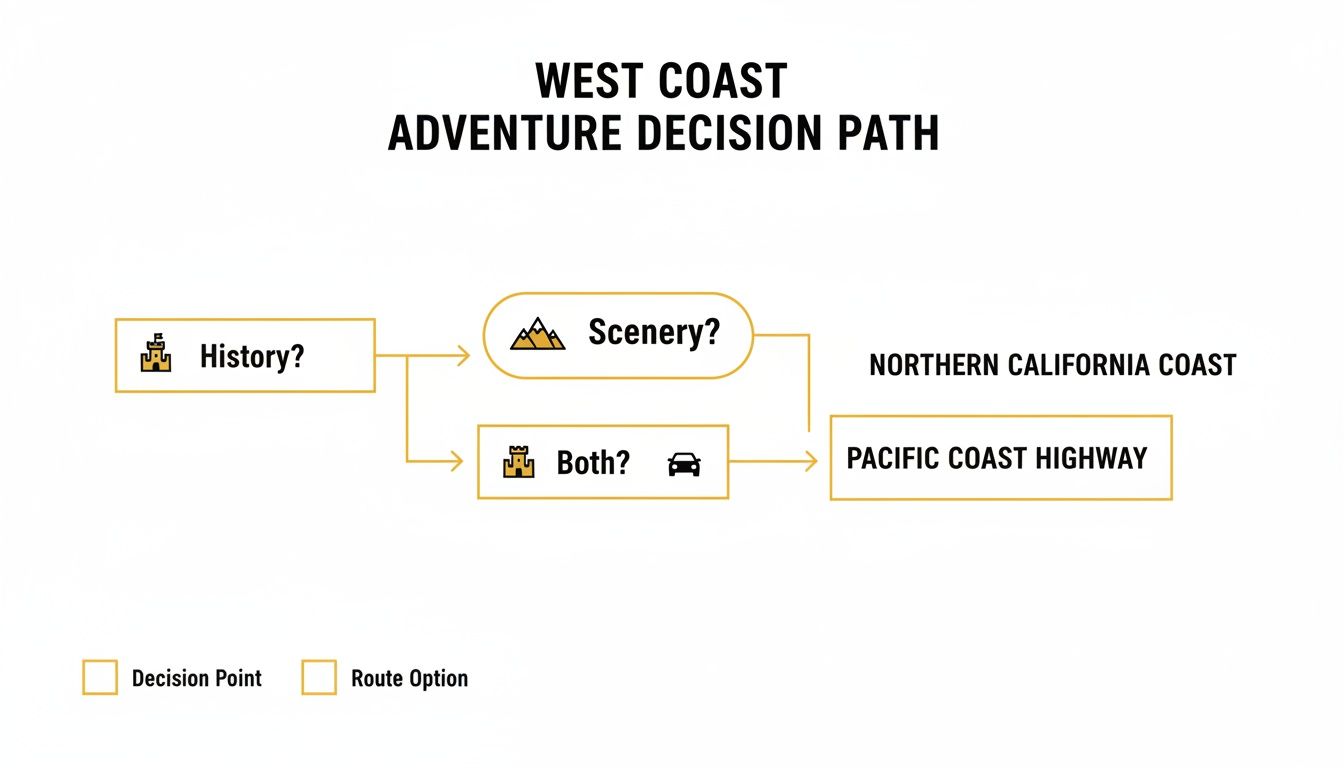
Are you here for the raw, jaw-dropping scenery? The deep echoes of history? Or that perfect blend of both? This should help point you down the right road.
The 5-Day Heart of the Highlands Journey
Short on time but hungry for those iconic Highland views? This is the one for you. It’s a powerful, concentrated dose of everything that makes Scotland's west coast legendary, zeroing in on the giants: Glencoe and the Isle of Skye.
- Days 1-2: Glencoe and Fort William: Your adventure kicks off as you drive into the immense, soul-stirring valley of Glencoe, a place carved by ancient glaciers and soaked in history. Spend your time hiking dramatic trails like the Lost Valley, or just stand in awe of peaks like Buachaille Etive Mòr. You'll base yourself near Fort William, the UK's outdoor capital, sitting proudly at the foot of Ben Nevis.
- Days 3-5: The Isle of Skye: From the mainland, you'll cross the bridge to Skye and enter a world that feels like something out of a myth. Dedicate these days to its otherworldly landscapes—the jagged ridges of the Quiraing, the magical, crystal-clear Fairy Pools, and the unforgettable Old Man of Storr. A drive around the Trotternish Peninsula is an absolute must.
The 7-Day Isles and Lochs Explorer
This itinerary lets you go a little deeper, pairing mainland marvels with a classic island escape. It’s perfect if you want to soak up the peaceful beauty of Argyll’s lochs before experiencing the unique character of the Inner Hebrides, especially the wonderful Isle of Mull.
You’ll start in the serene region of Argyll, often called Scotland's "Coast of Ancient Kingdoms." Here, you can wander through the prehistoric sites of Kilmartin Glen and explore the charming fishing town of Oban—the undisputed "Seafood Capital of Scotland."
From Oban, the "Gateway to the Isles," you'll catch a ferry over to the Isle of Mull. Mull has a completely different feel to Skye; it’s home to the colourful harbour town of Tobermory, rugged coastlines, and some of the best wildlife-watching in the country. From here, a day trip to the tiny, sacred Isle of Iona, the cradle of Scottish Christianity, is an experience that will stay with you forever.
The 10-Day Ultimate Hebridean Odyssey
If you have a bit more time to play with, this is the ultimate road trip. It's a journey for the soul, one that takes you far from the crowds to the remote, windswept beauty of the Outer Hebrides. This route truly combines the best of the Highlands with an epic, unforgettable island-hopping adventure.
This isn’t just a drive; it's a pilgrimage to the edge of the world, where ancient Gaelic culture, pristine nature, and profound tranquillity reign supreme.
Your trip begins with the classic Highland highlights, maybe taking the achingly scenic Road to the Isles from Fort William to Mallaig. From there, or from Uig on Skye, a ferry will carry you across the sea to the Outer Hebrides.
- Harris and Lewis: You'll land on Harris, famous for its lunar-like landscapes and beaches like Luskentyre that genuinely rival the Caribbean.
- Ancient Wonders: Journey north to Lewis and stand in the presence of the Calanais Standing Stones—a circle that predates Stonehenge—and discover the mystery of the ancient Carloway Broch.
- Island Life: This is your chance to sink into the rhythm of island life, where Gaelic is often the first language you'll hear and time itself seems to slow down.
To help you visualise these incredible journeys, here’s a quick comparison of what each trip offers.
Sample Itinerary Snapshot: West Coast of Scotland
| Itinerary Focus | Duration | Key Highlights | Best For |
|---|---|---|---|
| Heart of the Highlands | 5 Days | Glencoe, Ben Nevis, Fort William, Isle of Skye (Old Man of Storr, Quiraing) | Travellers short on time who want to see the most iconic Highland sights. |
| Isles and Lochs Explorer | 7 Days | Argyll, Oban, Isle of Mull, Tobermory, Iona, Kilmartin Glen | Those wanting a mix of mainland history, coastal beauty, and island life. |
| Ultimate Hebridean Odyssey | 10 Days | Outer Hebrides (Harris & Lewis), Calanais Stones, Luskentyre Beach, Road to the Isles | Adventurous souls seeking a deep cultural immersion and remote landscapes. |
Each of these itineraries is just a starting point, a framework you can build upon. Feel free to add your own detours and follow your curiosity wherever it leads.
For a closer look at how we can shape these trips to fit you perfectly, explore our collection of customisable self-drive tours. Your perfect Scottish adventure is just waiting to begin.
Where Wild Landscapes and Wildlife Collide
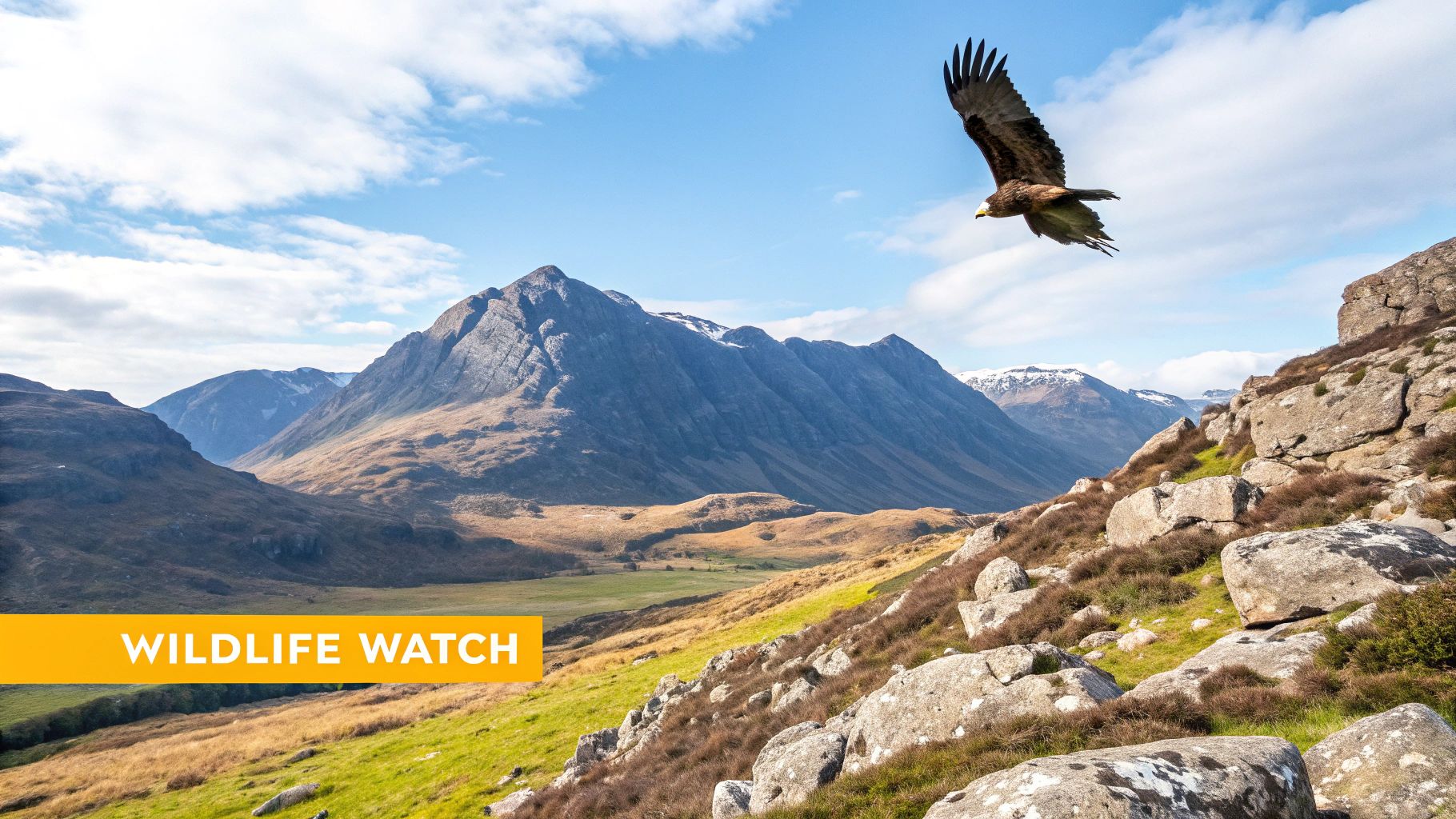
Get ready to come face-to-face with nature at its most raw and magnificent. The landscapes of Scotland's west coast aren't just pretty pictures; they're ancient storytellers. Every mountain, loch, and island whispers tales of volcanic fire, grinding ice, and the sheer passage of time. Your road trip is the key that unlocks these epic, soul-stirring scenes.
Driving into Glencoe, for instance, feels like entering a vast, open-air cathedral. The scale of its volcanic peaks, scoured and shaped by glaciers long ago, is truly humbling. This isn't a view you just look at; it's a place you feel, especially when the mists roll down the flanks of the Three Sisters, seeming to echo the glen's sorrowful history.
Then, you head north to the Isle of Skye, and it's like you've driven onto another planet entirely. Finding the Fairy Pools, with their crystal-clear, turquoise waters cascading over smooth rock, is like stumbling upon real-life magic. Here, the line between myth and reality feels beautifully blurred.
The Theatre of the Wild
This dramatic scenery of the west coast of Scotland creates the perfect stage for some of the UK’s most incredible wildlife. And with the freedom of your own car, you can stop whenever a moment of wonder appears. These are the spontaneous, unscripted encounters that transform a good trip into an unforgettable one.
Keep your eyes on the sky, particularly near the towering Cuillin mountains on Skye or in the remote glens of the mainland. You might just be rewarded with the sight of a golden eagle—a magnificent apex predator with a wingspan of over two metres—soaring effortlessly on the thermal currents.
The coastline and its islands offer a whole different cast of characters. The Isle of Mull is a proper wildlife haven, famous for its population of white-tailed sea eagles, often spotted snatching fish right from the lochs. For something truly charming, you absolutely must take a boat trip to the Isle of Staffa between April and early August to see thousands of puffins bustling on the cliffs.
A Guide to Watching Wildlife with Respect
Seeing these creatures in their own world is a profound privilege. To make sure these moments are positive for everyone—you and the animals—it’s all about having the right mindset.
- Keep a Safe Distance: Your binoculars and zoom lens are your best friends. They let you get a great view without causing any stress, which is vital around animals with young, like red deer stags in the autumn or nesting seabirds.
- Leave No Trace: Stick to the paths to protect fragile plant life and, of course, take all your rubbish with you. The pristine beauty of this place depends on all of us.
- Be Patient and Quiet: The best wildlife sightings often happen when you least expect them. Find a good spot, get comfortable, and just let the world unfold. Loud noises or sudden movements will send them scattering.
- Never Feed the Animals: It might seem like a kind gesture, but feeding wild animals disrupts their natural instincts, can seriously harm their health, and makes them unhealthily reliant on humans.
Think of your car as a brilliant mobile hide. Animals are often far less spooked by a vehicle than a person on foot. Just pull over safely, switch off the engine, and you can watch quietly from your window for a truly immersive experience.
The best viewing times are often during the "golden hours" of dawn and dusk, when so many creatures are at their most active. This is where a self-drive adventure really comes into its own; you have the complete freedom to be in the right place at the perfect time. Imagine pulling over beside a quiet loch as the sun dips below the hills, watching a family of otters playing on the shore—these are the moments that will define your journey up the west coast of Scotland.
A Journey Through Castles and Ancient History
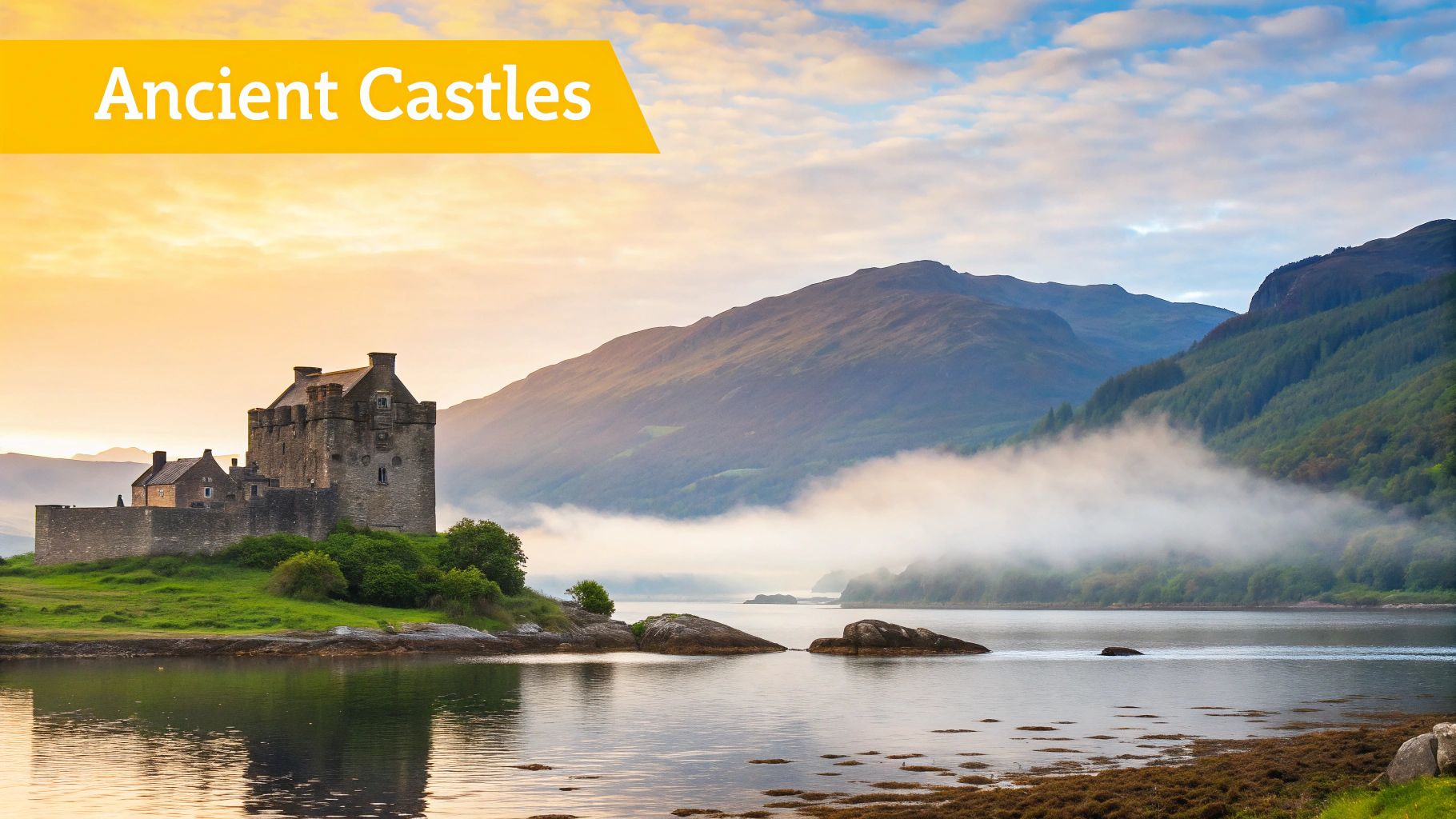
Driving Scotland’s west coast feels less like a road trip and more like travelling through time. These aren't just mountains and lochs; they are a living museum, whispering tales of ancient peoples, warring clans, and pivotal battles. Having your own car is like holding a key, unlocking the very soul of Scottish history whenever the mood strikes.
The deep connection between people and this dramatic coastline stretches back millennia. It’s always been a magnet for adventurers, a legacy that continues with every self-drive explorer today. You're part of a long tradition. In fact, over 50% of the 4.4 million international visitors to Scotland in a recent year made a point to see historic sites, many of which are scattered right here. By 1841, over 120,000 souls called this rugged coast home, their lives intertwined with its powerful beauty.
The Strongholds of Clans and Kings
The most dramatic echoes of the past are, of course, the magnificent castles that dominate the landscape. They stand as stone-and-mortar symbols of power, romance, and brutal conflict. A self-drive adventure gives you the freedom to see them on your own terms—perhaps arriving in the quiet morning mist, long before the tour buses roll in.
- Eilean Donan Castle: Is this Scotland’s most photographed castle? Probably. Sitting at the meeting point of three great sea lochs, Eilean Donan is the quintessential image of the Highlands. Its history stretches back to the 13th century and is steeped in the rebellious drama of Jacobite lore.
- Kilchurn Castle: The haunting, skeletal ruins of Kilchurn on the shores of Loch Awe are pure atmosphere. Once a mighty stronghold of the Campbells of Glenorchy, its stark silhouette against the backdrop of Ben Cruachan makes for a truly unforgettable stop.
- Duart Castle: Perched on a cliff on the Isle of Mull, Duart Castle has been the seat of Clan Maclean for over 700 years. A visit here feels like stepping straight into a clan saga, complete with dungeons, grand state rooms, and staggering views across the Sound of Mull.
Whispers from a Deeper Past
But the story of Scotland’s west coast began long before the first castle stone was ever laid. With a car, you can seek out the places where history feels raw and almost touchable, connecting you to a far more ancient world.
The real magic is found in discovering the prehistoric sites dotted across the region, from lonely standing stones to crumbling island forts. These aren’t grand, polished attractions; they are powerful, elemental places that demand quiet reflection. While cities like Edinburgh have their own incredible story, which you can read about in our guide to the Athens of the North, the west coast offers something wilder and more primal.
Kilmartin Glen in Argyll is nothing short of an archaeological treasure chest. It holds one of the most important concentrations of Neolithic and Bronze Age remains in all of mainland Britain. Here, you can walk among over 800 ancient monuments within a six-mile radius.
Imagine standing alone beside the Nether Largie Standing Stones, placed here by people over 5,000 years ago. You can't help but wonder about the lives they led and the world they saw. Or picture yourself exploring the mysterious Iron Age brochs—ancient circular stone towers—scattered across the islands, their purpose still debated by historians.
This is what a self-drive journey truly gives you: the freedom to pull over, step out of the car, and stand where ancient peoples once stood. It’s your chance to feel the immense weight and wonder of Scottish history, not just as a spectator, but as an active participant in its timeless story.
Practical Planning for Your Scottish Road Trip
The dream of a West Coast road trip is all about freedom and wild landscapes. But let's be honest, the secret to a truly magical adventure lies in getting the practical stuff sorted before you go. Think of this as your insider's guide, filled with the kind of on-the-ground advice that turns a good trip into an unforgettable one.
We'll cover everything from the quirks of Highland driving to the best months to visit, making sure you feel completely confident and ready to soak it all in. Let’s get you prepped for the road ahead.
Navigating Scotland’s Unique Roads
Driving here is part of the experience itself. You’ll quickly discover the famous single-track roads, especially as you venture further into the Highlands or onto the islands. Don’t be intimidated! They are a charming part of the landscape and easy to handle once you know the etiquette of the passing places.
These are little pull-ins you’ll see dotted along the road. The rule is simple: whichever car is closer to a passing place on their side should pull in and let the other one through. A quick, friendly wave is always appreciated—it's a small tradition that makes driving here feel like you’re part of a community.
Getting between the mainland and the islands means hopping on a ferry, and CalMac (Caledonian MacBrayne) is your go-to operator. A little forward planning here is absolutely essential.
- Booking is a Must: For popular routes like Mallaig to Skye or getting to Mull from Oban, you must book your car's spot far in advance, particularly if you're travelling in the summer.
- Check the Timetable: The sea has a mind of its own! Weather and tides can affect sailing times, so always double-check the CalMac website for the latest updates before you set off.
- Arrive in Good Time: Plan to be at the ferry terminal at least 30-45 minutes before departure. It makes the whole process of queuing and boarding so much more relaxed.
Choosing the Best Time to Visit
Ah, Scottish weather. It’s a character in its own right, and yes, you really can see four seasons in one day. Embracing the unpredictability is part of the fun, but picking the right time of year can definitely shape your trip.
For my money, May, June, and September are the golden months. You get glorious long days of light for exploring, the summer crowds haven't quite hit their peak, and those infamous midges (tiny biting flies) are much less of a nuisance. July and August bring the warmest weather, but also the biggest crowds and highest prices.
Scotland's weather can change in the blink of an eye. To stay comfortable no matter what the clouds are doing, you need an ultimate layering system for hiking. Being ready for anything is the key to truly enjoying the spectacular outdoors.
Booking and Fuel Considerations
The West Coast's wild beauty is no secret. Tourism is a huge part of the local economy—in one recent year, it added £257 billion to the UK's GDP, and a full 12% of Scottish staycationers made a beeline for the Highlands. You can read more about tourism's impact on Scotland's growth on natwestgroup.com.
What does that mean for you? It means booking your accommodation and hire car as early as you possibly can is a must, especially for a summer trip. If you'd rather leave the logistics to the experts, a pre-planned trip like our Taste of Scotland 8-Days Self-Drive Tour takes care of all the bookings for you.
One final piece of road-tested wisdom: keep a close eye on your fuel tank. You'll find petrol stations in bigger towns like Fort William or Oban, but they become few and far between once you're out in the glens or on the islands. Get into the habit of filling up whenever you see a petrol station once your tank is below half. It’s a simple trick that will save you a world of worry, leaving you free to explore every last beautiful, hidden corner.
Your West Coast Scotland Questions Answered
So, you’re dreaming of a road trip along Scotland’s magnificent west coast. It’s an incredible thought, but I know that turning that dream into a reality often comes with a few practical questions. Getting these details sorted is the final step before the adventure truly begins.
To make sure you head off with total confidence, I’ve pulled together the most common queries we get from fellow travellers. Here are the real-world answers you need to plan a smooth, unforgettable journey through one of the world's most epic landscapes.
How Many Days Do You Really Need?
This is the big one, isn't it? The honest answer is that it all comes down to the kind of story you want your trip to tell. That said, to really sink your teeth into the region and avoid that feeling of just rushing through, I’d suggest a minimum of five to seven days.
That amount of time is a great starting point. It allows you to properly explore a core area, like the Isle of Skye and the jaw-dropping scenery around Glencoe, without constantly watching the clock. You'll have enough time for the big scenic drives, a few proper hikes, and just to sit and soak up the atmosphere in those tiny, charming villages.
Now, if your heart is set on hopping between islands like Mull or venturing out to the wild, remote beauty of the Outer Hebrides, you’ll want to stretch that to ten to fourteen days. This gives you the breathing room for ferry journeys and, most importantly, the freedom for those spontaneous detours that nearly always become the best memories.
The true magic of a self-drive tour is the freedom it gives you. More time isn't just about seeing more places; it's about making space for the unexpected and allowing yourself to truly connect with where you are.
What’s the Best Month to Visit?
While Scotland is stunning all year round, some months offer that perfect blend of conditions for a road trip. For most people, the sweet spot for exploring the west coast is May, June, or September.
Why then? Well, these months usually bring a few key advantages:
- Milder Weather: You’ve got a much better chance of hitting pleasant temperatures and getting some decent spells of sunshine.
- Longer Days: The light lingers long into the evening, especially in late spring, giving you more time to explore.
- Fewer Midges: These tiny biting insects are far less of a nuisance than they are during their peak in July and August.
- Slightly Smaller Crowds: They're still popular months, but you'll find it's generally less hectic than during the main summer school holidays.
July and August will give you the warmest weather, but that’s also when the roads are busiest and prices are at their highest. Visiting in the spring or autumn can be breathtakingly beautiful, but you'll definitely want to pack for more unpredictable, four-seasons-in-one-day weather.
Do I Need a 4×4 to Drive Here?
It's a common myth that you need some kind of rugged, off-road beast to handle the Highlands. The truth is, a 4×4 is not necessary at all for exploring the west coast.
The vast majority of roads, even the famous single-track routes with their passing places, are paved and properly maintained. They are perfectly suited to a standard rental car. Your focus should be on driving with care and getting comfortable with the local etiquette on narrower roads, not on the type of vehicle you're in.
A regular car will get you confidently to all the key spots, from the dramatic valleys of Glencoe to the ferry ports for Skye and beyond.
How Bad Are the Midges, Really?
Ah, the infamous Scottish midge. Let's be honest: they are a genuine part of the outdoor experience here, but they are absolutely manageable and should not put you off visiting for a second.
Midges are most active from late May to early September, and they love to come out at dawn and dusk, especially on still, damp days. The good news is they hate two things: bright sunshine and wind. Luckily, the breezy coastline of western Scotland is often your best defence against them.
To keep them from bothering you, a little preparation goes a long way:
- Use a good insect repellent. Brands like Smidge are made for Scottish conditions, or anything with DEET will do the trick.
- Wear long-sleeved tops and trousers in the evenings.
- Keep the windows and doors of your accommodation shut around dawn and dusk.
Just think of them as a minor, seasonal quirk of this wild and wonderful landscape. With a little planning, they'll be nothing more than a tiny footnote in your incredible Scottish adventure.
Ready to stop planning and start exploring? The open road is calling. At BTOURS, we specialise in creating seamless self-drive itineraries that let you discover the magic of Scotland at your own pace. Let us handle the details so you can focus on the journey. Explore our curated tours and begin your adventure today at https://www.btours.com.