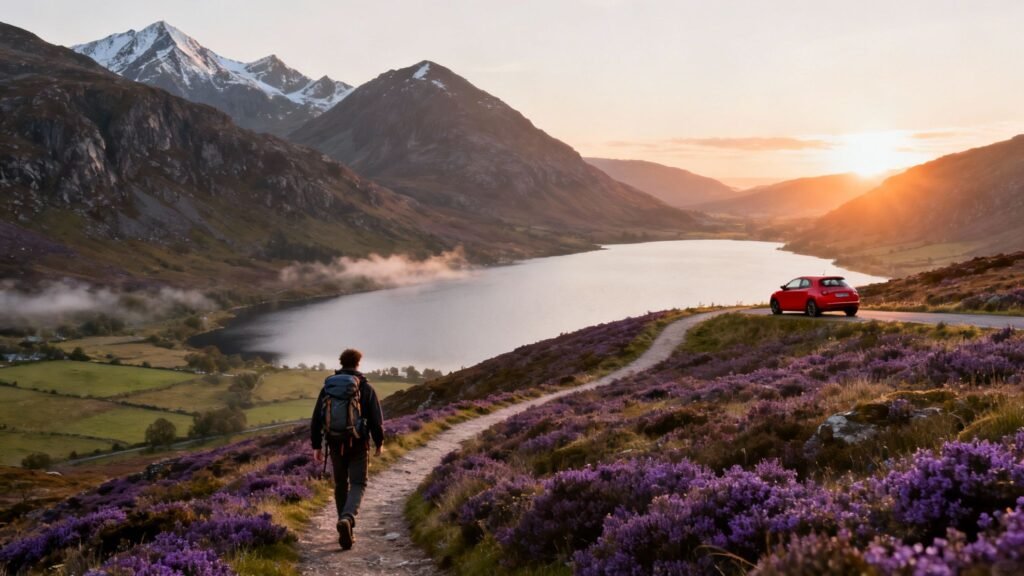
There's simply no better way to get under the skin of Scotland than on foot. A walking holiday here means stepping into some of Europe's most jaw-dropping landscapes, from the iconic Highlands to the quiet beauty of a still loch or a wild, windswept coastline. You can find a trail for every mood and fitness level, letting you craft a journey that’s as challenging or as gentle as you like.
Discovering Scotland One Step at a Time
Picture this: you’re standing in the middle of a vast glen, surrounded by mountains that feel as old as time itself. That’s the real magic of a Scottish walking holiday. It’s a chance to connect with the raw, untamed spirit of the land in a way you just can't get from a car or a bus. This isn't just about walking; it's about finding a country where every path tells a story and every single view could be a painting.
What makes Scotland a world-class destination for walkers is its sheer variety. One day you could be pushing yourself to the limit, bagging a Munro in the Highlands with that satisfying ache in your legs. The next, you might be taking it easy on a coastal path, breathing in the salty air as gannets dive for fish in the waves below. This incredible diversity means there’s a perfect trail waiting for absolutely everyone.
Why a Walking Holiday Is So Special
A walking holiday forces you to slow down and truly see Scotland. Instead of the landscape blurring past a window, you become part of it. You feel the ground beneath your boots, the weather on your face, and the immense scale of your surroundings.
It's an approach to travel that's hugely popular, and for good reason. The numbers speak for themselves: 40% of all visitors to Scotland get out for a hill walk, a bit of mountaineering, or a hike. For European visitors, that figure jumps to an impressive 51%. You can dig into more of this data over on VisitScotland's research pages.
To walk in Scotland is to feel the landscape come alive. You're not just observing it; you're tracing its contours, feeling its weather, and becoming a temporary part of its ancient story. It’s an active dialogue between you and the wilderness.
The Freedom of Self-Drive Walking Tours
For the ultimate in flexibility, why not mix your walking with a self-drive tour? This approach gives you the freedom to get to those out-of-the-way trailheads, linger a bit longer at a viewpoint that’s taken your breath away, or make a spontaneous detour to that ruined castle you spotted from the road.
It’s all about creating a trip that is genuinely yours. At BTOURS, we specialise in putting together these kinds of personalised adventures, weaving together incredible scenic drives with unforgettable walking. Take a look at our self-drive tours across Scotland to get a feel for how we can build your perfect journey. This blend ensures your holiday isn’t just a walk, but a complete, personal exploration of this magnificent country.
Finding Your Perfect Scottish Walking Route
Choosing a trail in Scotland is a bit like being a kid in a sweet shop. The sheer variety can be dazzling, with every path offering its own unique flavour of adventure. From world-famous long-distance treks to hidden gems on remote islands, your perfect walk is out there waiting for you.
The trick is to match the trail’s personality with your own. Are you after a social journey with fellow hikers, stopping at cosy pubs along the way? Or do you crave the solitude of a vast, empty glen? Figuring out what you really want from your walk is the first step to finding your ideal path through this incredible landscape.
Let's dive into some of Scotland's most celebrated walking destinations to help you find your footing.
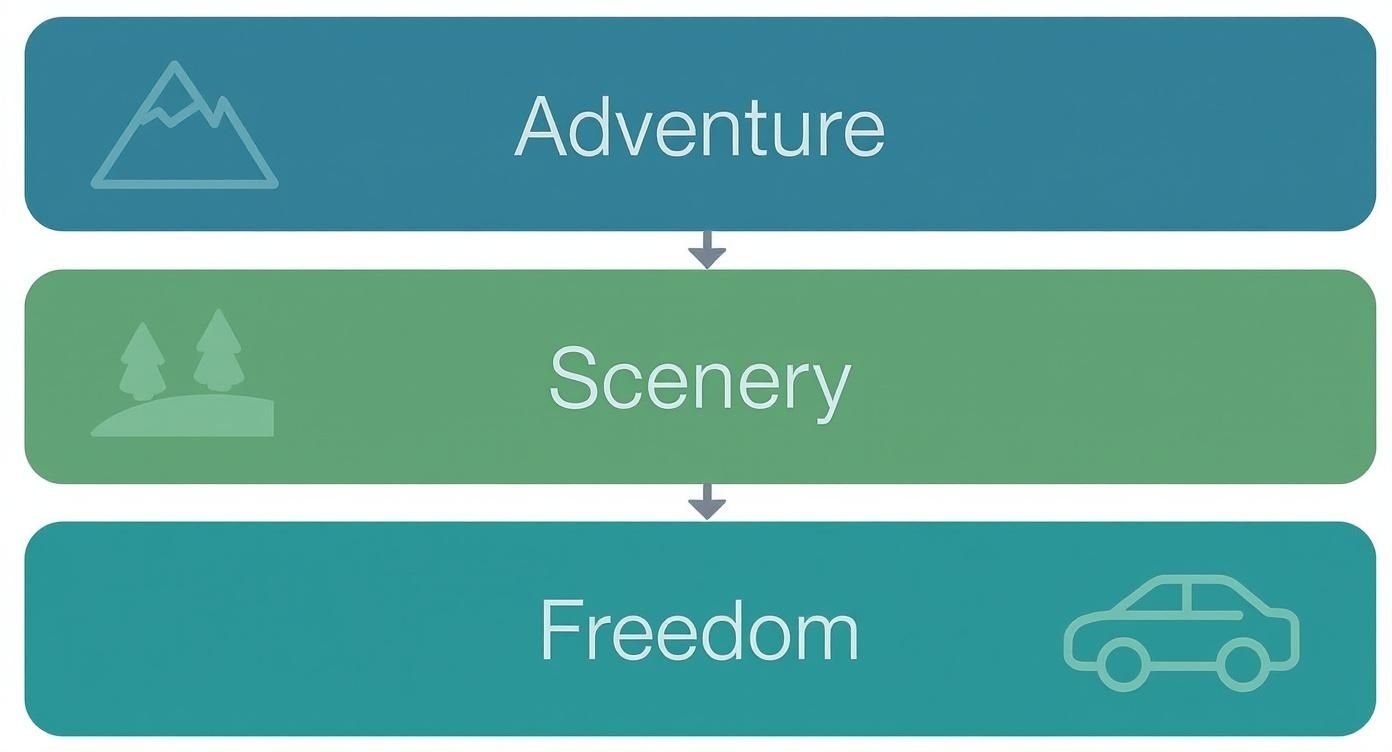
This journey really captures the essence of a walking holiday here. It starts with that spark of adventure, which is fuelled by the breathtaking scenery you walk through, and culminates in a powerful sense of freedom and accomplishment.
Scotland's Top Walking Routes at a Glance
To help you get a quick overview, we've put together this table comparing some of Scotland's premier long-distance trails. It's a great starting point for seeing which route might be the right fit for your holiday.
| Route Name | Distance | Typical Duration | Difficulty | Best For |
|---|---|---|---|---|
| West Highland Way | 96 miles (154 km) | 7-8 days | Moderate | Iconic scenery, great infrastructure, social atmosphere |
| Southern Upland Way | 214 miles (344 km) | 12-16 days | Challenging | Solitude, coast-to-coast challenge, serious walkers |
| Great Glen Way | 79 miles (127 km) | 5-6 days | Easy-Moderate | Gentle walking, loch-side views, can be cycled |
| Speyside Way | 65 miles (105 km) | 4-6 days | Easy | Whisky distilleries, gentle terrain, river walks |
| St Cuthbert's Way | 62 miles (100 km) | 4-6 days | Easy-Moderate | History, pilgrimage, crossing the Scottish-English border |
Each of these trails offers a completely different experience, from the rugged Highlands to the rolling Borders. Choosing one really depends on the kind of adventure you're after.
The Legendary West Highland Way
You can't really talk about walking in Scotland without starting here. The West Highland Way is the country's most famous long-distance trail, a 96-mile (154 km) rite of passage for walkers from all over the world. And honestly, it earns its reputation.
It kicks off in the gentle lowlands just outside Glasgow and marches steadily north into the raw, dramatic heart of the Highlands, finishing under the watchful eye of Ben Nevis in Fort William.
The route is a masterclass in Scottish scenery. You’ll trace the bonnie banks of Loch Lomond, cross the beautifully desolate expanse of Rannoch Moor, and tackle the infamous Devil's Staircase for a view over Glencoe that will stay with you forever. It's a proper challenge, but one that rewards you with iconic landscapes at every turn.
Thanks to its popularity, the trail is well-supported with B&Bs, bunkhouses, and baggage transfer services, making the logistics relatively straightforward.
The Otherworldly Isle of Skye
If your imagination is fired by jagged peaks, bizarre rock formations, and sea cliffs that plummet into the Atlantic, then pack your bags for the Isle of Skye. Walking here feels less like a hike and more like stepping into a fantasy epic.
The island is home to two legendary mountain ranges: the spiky, intimidating Black Cuillin and the truly otherworldly pinnacles of the Trotternish Ridge.
While the Cuillin is serious mountaineering territory, the Trotternish offers some of the most spectacular day hikes in the entire country. You absolutely have to check out:
- The Quiraing: A mind-bending landscape of hidden plateaus, cliffs, and rock spires. The main circuit is tough but delivers a huge payoff.
- The Old Man of Storr: A classic hike up to the base of this iconic rock needle, with breathtaking views across the Sound of Raasay.
- The Fairy Pools: A magical chain of crystal-clear pools and waterfalls tumbling down from the Cuillin, perfect for a brave (and very chilly) dip.
Skye is perfect for a self-drive adventure, letting you hop between these incredible day hikes and explore the island's many other wonders at your own pace.
The Vast Cairngorms National Park
Welcome to the UK's largest National Park. The Cairngorms is a colossal expanse of arctic-like plateaus, ancient pine forests, and serene lochs. It offers a totally different walking experience – one defined by immense scale, raw wilderness, and a genuine sense of being away from it all. This is a place where you can walk for hours and see more wildlife than people.
The Cairngorms National Park is a vital sanctuary, home to 25% of the UK's rare and endangered species. Keep an eye out for capercaillie, red squirrels, and if you're incredibly lucky, a golden eagle soaring overhead.
The walks here range from gentle forest trails around the beautiful Loch an Eilein to the serious mountaineering challenge of traversing the Cairngorm Plateau, which holds four of the five highest peaks in the UK.
This high-level environment demands respect and solid navigation skills, but the rewards are immeasurable. For those seeking true solitude on their walking holiday, the Cairngorms deliver in spades. While you're over on the east side, why not pop into the capital? Our guide to Edinburgh, the Athens of the North, has plenty of ideas.
When to Go: A Seasonal Guide to Walking in Scotland
Ask any Scot what the best time for a walking holiday is, and you’ll likely get a wry smile. The truth is, there’s no single "best" time. It’s all about what you’re looking for. Are you after long, sun-drenched days on the trail, or the dramatic, moody colours of autumn?
Scotland’s weather is a character in its own right—famously fickle and full of surprises. But don't let that put you off. Understanding the rhythm of the seasons is the key to planning a truly incredible trip, turning that unpredictability into part of the adventure.
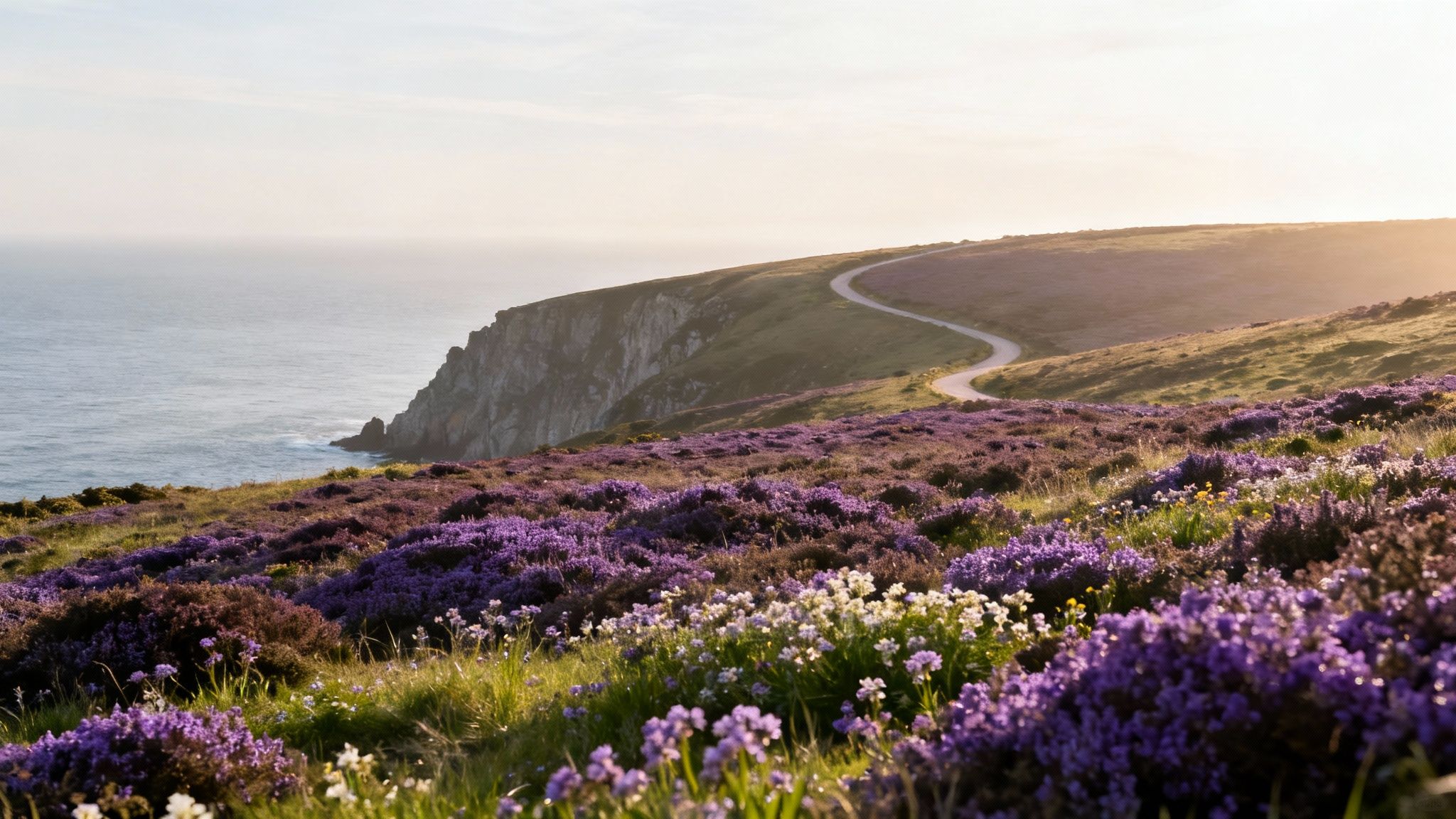
Spring Awakening: March to May
Spring in Scotland is a breath of fresh, crisp air. The country shakes off its winter slumber, and the landscape comes alive with colour—impossibly green hillsides, forests carpeted in bluebells, and distant peaks still dusted with snow.
This is a fantastic time to get your boots on, for a few very good reasons:
- Quieter Trails: You'll often have the paths to yourself, as the main tourist rush is still a few months away.
- Wildlife is Waking Up: It's a prime time for spotting wildlife, from puffins returning to coastal cliffs to new-born lambs bleating in the fields.
- No Midges! Perhaps the biggest perk of all. The notorious Scottish midge hasn't hatched yet, so you can enjoy the long evenings in peace.
The weather can be a real mix—glorious sunshine one minute, a sharp shower the next. Just pack plenty of layers, and you'll be rewarded with the sight of Scotland at its freshest.
Summer's Long Days: June to August
Summer is when Scotland truly opens up. The days are wonderfully long, especially the further north you go, with daylight lingering well past 10 pm. This is the classic season for tackling the big multi-day treks like the West Highland Way or bagging a few Munros.
The scenery is lush and green, and from late July, the moors begin to blaze with the iconic purple heather. It’s a magical time, but it comes with a couple of things to keep in mind.
A Quick Word on the Scottish Midge…
These tiny insects are a real part of the summer experience, particularly on the still, damp days of the west coast. They’re most active at dawn and dusk. Don't leave home without a good midge repellent (anything with Smidge or Avon Skin So Soft is a local favourite) and a head net. Trust us on this one.
This is also peak season, so trails will be busier and accommodation gets booked up fast. A little advance planning goes a long way to making a summer trip smooth and enjoyable.
Autumn's Golden Hues: September to November
For many seasoned walkers (myself included), this is the undisputed king of Scottish seasons. The air turns crisp, the low-angled sun casts a golden glow over everything, and the landscape erupts in a breathtaking display of reds, golds, and fiery oranges.
The midges have vanished, the summer crowds have gone home, and a wonderful sense of peace returns to the glens. It’s an photographer's dream, and a fantastic time to hear the powerful roar of a red deer stag during the rut.
As you head into October and November, the weather gets a bit more "Scottish"—expect more wind and rain, with the first snows appearing on the highest summits. But for walkers who come prepared, autumn offers some of the most profoundly beautiful and rewarding hiking of the entire year.
Packing and Preparing for Your Scottish Trek
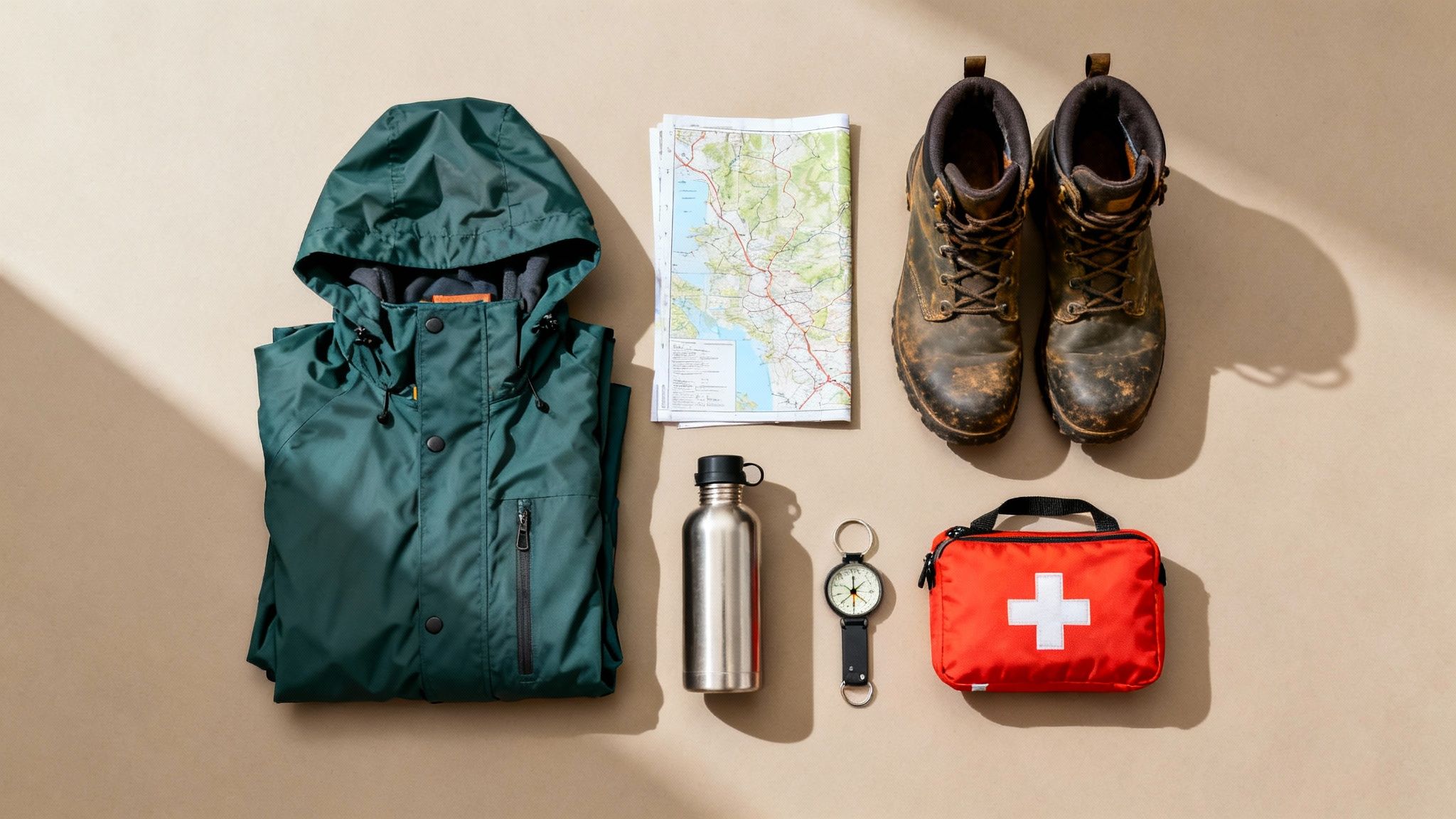
A fantastic walking holiday in Scotland really comes down to smart preparation. You’ll often hear the old saying, "there's no such thing as bad weather, only unsuitable clothing," and honestly, it’s practically a mantra for Scottish walkers. Getting your kit right isn't just about being comfortable; it's about staying safe and making sure you can soak up every moment, no matter what the sky decides to throw at you.
Think of your packing as a three-part system. First, you have the absolute non-negotiables: waterproofs, layers, and boots. Then come the tools that will keep you on track. And finally, you’ve got your daily essentials that turn a simple walk into a proper holiday.
Your Essential Clothing and Gear Checklist
Your clothing needs to act like a flexible team that works together. The secret is a layering system that lets you adapt to Scotland's infamous four-seasons-in-a-day climate. You can easily add or strip off layers as you warm up on a steep climb or as a sudden shower rolls in and disappears just as quickly.
Here are the absolute must-haves for your rucksack:
- Waterproof Outer Layer: A top-quality, breathable waterproof jacket and trousers are your shield against the elements. Trust me, don't skimp on these—they are worth their weight in gold when the heavens open.
- Insulating Mid-Layer: This is your cosy layer. A good fleece or a lightweight insulated jacket provides that essential warmth. You’ll probably live in it on cool, dry days and pop it under your waterproofs when it’s cold and wet.
- Wicking Base Layer: Ditch the cotton! You need a top made from merino wool or a good synthetic fabric that pulls sweat away from your skin. This is key to staying dry and comfortable from the inside out.
- Sturdy Walking Boots: Your boots are your most crucial piece of kit. They need to be waterproof with good ankle support and—most importantly—be properly broken-in before you arrive. Nothing ruins a walk faster than blisters. Investing in the right comfortable walking shoes for travel will pay you back every step of the way.
Navigation and Staying Safe
While a GPS app on your phone is a brilliant tool, it should never be your only one. Out in the remote glens and high plateaus, phone signal can be non-existent and batteries can die. This is where traditional skills are still king.
A physical map and a compass are your most reliable friends on the trail. Knowing how to use them is a fundamental hillwalking skill that gives you a vital backup. It’s also a great idea to carry a power bank to keep your phone charged for taking photos or, in the worst-case scenario, for emergencies.
Before you head out each day, always check a detailed mountain weather forecast and be sure to tell someone your route and when you expect to be back.
Accommodation and Booking Tips
Where you rest your head at night is a huge part of the whole experience. Scotland is brilliant for this, with a whole range of walker-friendly accommodation, from cosy B&Bs serving up a full Scottish breakfast to remote bunkhouses and friendly hostels where you can swap stories with fellow hikers.
For popular long-distance routes like the West Highland Way, it's absolutely essential to book your accommodation well in advance, especially if you're travelling between May and September. Rooms in key spots can be fully booked almost a year ahead.
This is exactly the kind of logistical headache we take care of at BTOURS, leaving you to focus on the walking. You can get a feel for how we create these seamless adventures by exploring our different travel styles.
The Scottish Government’s National Walking Strategy supports the incredible network of trails you'll be exploring. There are around 20,000km of core paths, and that number is always growing. This amazing infrastructure is what makes these epic journeys possible, connecting you to the wild heart of the country.
Crafting Your Ideal Itinerary
Right, this is the fun part. It’s time to take those daydreams of misty glens and epic ridges and turn them into a real, day-by-day plan. Looking at what you can realistically fit into different timeframes is the best way to get started.
The absolute magic of mixing a walking holiday with a self-drive tour is the freedom it gives you. You're in charge.
You can linger over a coffee by the loch, make a last-minute detour to a crumbling castle you spotted on the map, or just spend an extra hour on a summit because the view is too good to leave. It’s this blend of planned hikes and spontaneous drives that makes for the most unforgettable walking holidays in Scotland.
Let's look at a few examples to get the ideas flowing.
The 3-Day Weekend Escape: The Trossachs
Perfect for hitting the reset button, Loch Lomond & The Trossachs National Park is just a short hop from Glasgow and Edinburgh, offering a concentrated dose of Highland beauty without the long drive. It’s your ideal short-break destination.
- Day 1: Arrival and Loch Katrine (Walk 5-8 miles / 8-13 km): Drive straight into the heart of the Trossachs. A gentle walk or cycle along the shore of Loch Katrine, the landscape that inspired Sir Walter Scott, is the perfect way to stretch your legs. Find a cosy B&B in a village like Callander or Aberfoyle for the night.
- Day 2: Ben A'an and The Three Lochs Forest Drive (Walk 2-3 miles / 4 km): Time for a classic. Tackle the short but steep climb up Ben A'an – it's a small peak that delivers one of Scotland's biggest and most iconic views. In the afternoon, cruise along the scenic Three Lochs Forest Drive for more incredible scenery without the effort.
- Day 3: Loch Lomond's Eastern Shore (Walk 4-6 miles / 6-10 km): Head west to the village of Balmaha. Walk a section of the West Highland Way along the "bonnie banks" of Loch Lomond, maybe nipping up Conic Hill for one last spectacular panorama before heading for home.
The 7-Day Classic Highland Tour
A full week gives you the time to really get under the skin of the Highlands' most dramatic landscapes. This itinerary is a perfect blend of iconic walks and famous sights.
This is what self-drive touring is all about – connecting legendary places like Glencoe and Fort William at your own pace. You only truly appreciate the sheer scale of the Highlands when you have the freedom to pull over wherever the view demands it. If this sounds like your kind of trip, our Taste of Scotland 8-Days Self-Drive Tour is a fantastic starting point for a similar adventure.
- Day 1-2: Gateway to the Highlands & Glencoe: Point the car north, perhaps stopping at Loch Lomond on your way. Settle into Glencoe, the spiritual home of Scottish mountaineering. Spend the next day exploring its epic trails, whether it's the walk into the Lost Valley or a dramatic section of the West Highland Way like the Devil's Staircase.
- Day 3-4: Fort William & Ben Nevis: Base yourself in Fort William, the "Outdoor Capital of the UK." This is your chance to either tackle the mighty Ben Nevis (a full, tough day for experienced walkers) or enjoy the gorgeous lower-level walks in Glen Nevis, like the path to Steall Falls.
- Day 5-6: The Road to Skye: The drive to Mallaig is an event in itself, especially with a stop at the Glenfinnan Viaduct. Hop on the ferry to the Isle of Skye and spend the next day hiking to the magical Fairy Pools or exploring the otherworldly landscape of the Trotternish Ridge.
- Day 7: Return Journey: Enjoy one last full Scottish breakfast before starting the scenic drive south, your head full of epic landscapes.
The 14-Day Grand Tour: Skye and The Cairngorms
With two weeks, you can experience the incredible variety of Scotland's scenery, from the jagged, dramatic peaks of the west coast to the vast, wild plateaus of the east. This is the ultimate self-drive walking holiday.
This longer trip lets you truly settle into Scotland's rhythm. It’s less about ticking off sights and more about having the time to discover hidden glens, wait for the perfect light on a mountain, and build a real connection to the places you're visiting.
This plan involves more time behind the wheel, but the reward is a complete picture of the Highlands.
- Week 1: West Coast & Isle of Skye (Days 1-7): Follow a similar route to the 7-day tour, but slow everything right down. Give yourself three full days to explore every corner of Skye—from the surreal Quiraing to the blustery cliffs at Neist Point lighthouse. Be sure to add in a day to wander around the colourful harbour town of Portree.
- Week 2: Cairngorms & Royal Deeside (Days 8-14): Drive east across the country into the vast wilderness of the Cairngorms National Park. Base yourself near Aviemore or Braemar. You'll spend your days walking through ancient Caledonian pine forests, exploring the beautiful trails around Loch an Eilein, and discovering the grand castles of Royal Deeside before your journey home.
Your Questions Answered: Walking in Scotland
It's completely normal to have a few questions swirling around when you're planning a trip like this. In fact, it’s a good sign! It means you're thinking through the details, which is the first step to a brilliant adventure.
We get asked a lot about the practical side of walking in Scotland, so we've put together some straight-talking answers to the most common queries. Getting these sorted will let you focus on the good stuff – like which pub to visit after a long day on the trail.
How Fit Do I Really Need to Be?
Honestly, there’s a walk in Scotland for everyone. You absolutely don't need to be a super-fit mountaineer to soak up the incredible views.
If you fancy a gentle wander along a lochside or a short stretch of coastline, a decent basic level of fitness is all you need. But if you’ve got your heart set on a multi-day trek like the West Highland Way or bagging a few Munros (those are the mountains over 3,000 feet), you’ll want to have a good level of stamina. The best advice is to be honest with yourself about your current fitness and pick a route that you'll enjoy, not just endure. Starting with shorter, well-marked trails is a great way to build up your hill-walking legs and your confidence.
Is It Safe to Walk Alone in the Highlands?
Walking solo can be a fantastic and deeply rewarding experience, but it does mean being a little more prepared. The main things to think about aren't other people, but rather the notoriously changeable weather and the sometimes tricky terrain.
If you're heading out alone, knowing how to read a map and use a compass is non-negotiable, even if you have a GPS. Technology can and does fail.
- Always take a fully charged phone and a power bank for backup.
- Check a proper mountain weather forecast right before you leave – not just the standard one.
- Leave your route plan with someone you trust, and tell them when you plan to be back.
For a great, safe solo adventure, sticking to the more popular and well-trodden paths is a brilliant way to go. You get all the solitude you want with a bit of a safety net.
The Scottish Outdoor Access Code is what gives us the amazing freedom to roam. It’s all based on three simple ideas: respect other people, look after the environment, and be responsible for yourself.
Can I Wild Camp While I'm Walking?
Yes, you can! This is one of the best things about walking in Scotland. Thanks to the Outdoor Access Code, you're allowed to wild camp on most unenclosed land, as long as you do it responsibly.
The golden rule is to "leave no trace." This means camping in small numbers for just a night or two, well away from buildings and roads. You should pack out everything you pack in, leaving the spot exactly as you found it. Just be aware there are a few exceptions, like the seasonal camping management zones around Loch Lomond, where you might need a permit during the busy summer months.
Ready to lace up your boots? At BTOURS, we love putting together self-drive walking holidays that let you discover Scotland's incredible landscapes on your own terms. Find the trip that’s calling your name at https://www.btours.com.