TRAVEL STORIES & GUIDES
Things to Do in Oslo: 9 Essential Stops for Your Trip
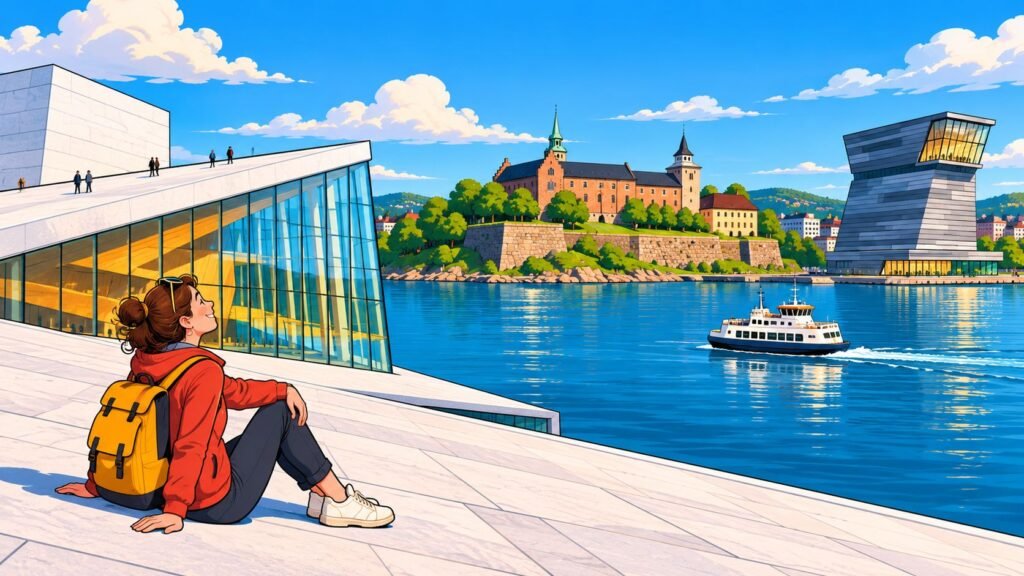
You're on the sloping roof of the Oslo Opera House, the harbour on one side and the new waterfront on the other, and the afternoon is already shorter than the list on your phone. The next choice decides the day. Cross the city for one famous museum, or stay put and walk to the next stop in the same district.
Things to do in Oslo work better as four small maps than as one long queue of names. The centre is compact enough to walk. Bygdøy is a museum peninsula a short ride west, with forest, beaches and fjord paths around the buildings. Holmenkollen sits on a wooded hillside above the rooftops. The Oslofjord islands are a seasonal ferry from the city piers. Free lawns and ramparts sit next to ticketed halls, so rain or a short winter day does not have to cancel the plan.
What follows is nine stops worth the time, paired into half-days rather than scattered across the map. The point is to see the place you came for, not to spend the hour between two sights on a transfer you did not need.
Table of Contents
- 1. Vigeland Sculpture Park (Vigelandsparken)
- 2. Viking Ship Museum (Vikingskipshuset) on Bygdøy
- 3. Fram Museum (Frammuseet) on Bygdøy
- 4. Oslo Opera House and its Rooftop Walk
- 5. Akershus Fortress and Akershus Castle
- 6. Munch Museum (Munch-museet) in Bjørvika
- 7. Nobel Peace Center
- 8. Holmenkollen Ski Jump and Ski Museum
- 9. Ferry Trips to the Oslofjord Islands
- Oslo's nine essential stops at a glance
- Putting It All Together: A Sensible Oslo Plan
1. Vigeland Sculpture Park (Vigelandsparken)
Frogner, in the west of the city, is the easiest first morning if you want art without a ticket queue. Vigeland Sculpture Park sits inside the larger Frogner Park, and the official Oslo guide from Visit Norway puts more than 200 sculptures among the capital's core outdoor stops, in a city it also calls one of the world's most walkable.
Gustav Vigeland's bronze and granite figures run along a central axis of lawns, bridges and paths. The centrepiece is the Monolith, a granite column of intertwined bodies. Admission to the park is free, and the gates stay open through the year, which makes it a calm first morning or a late walk when indoor plans slip.
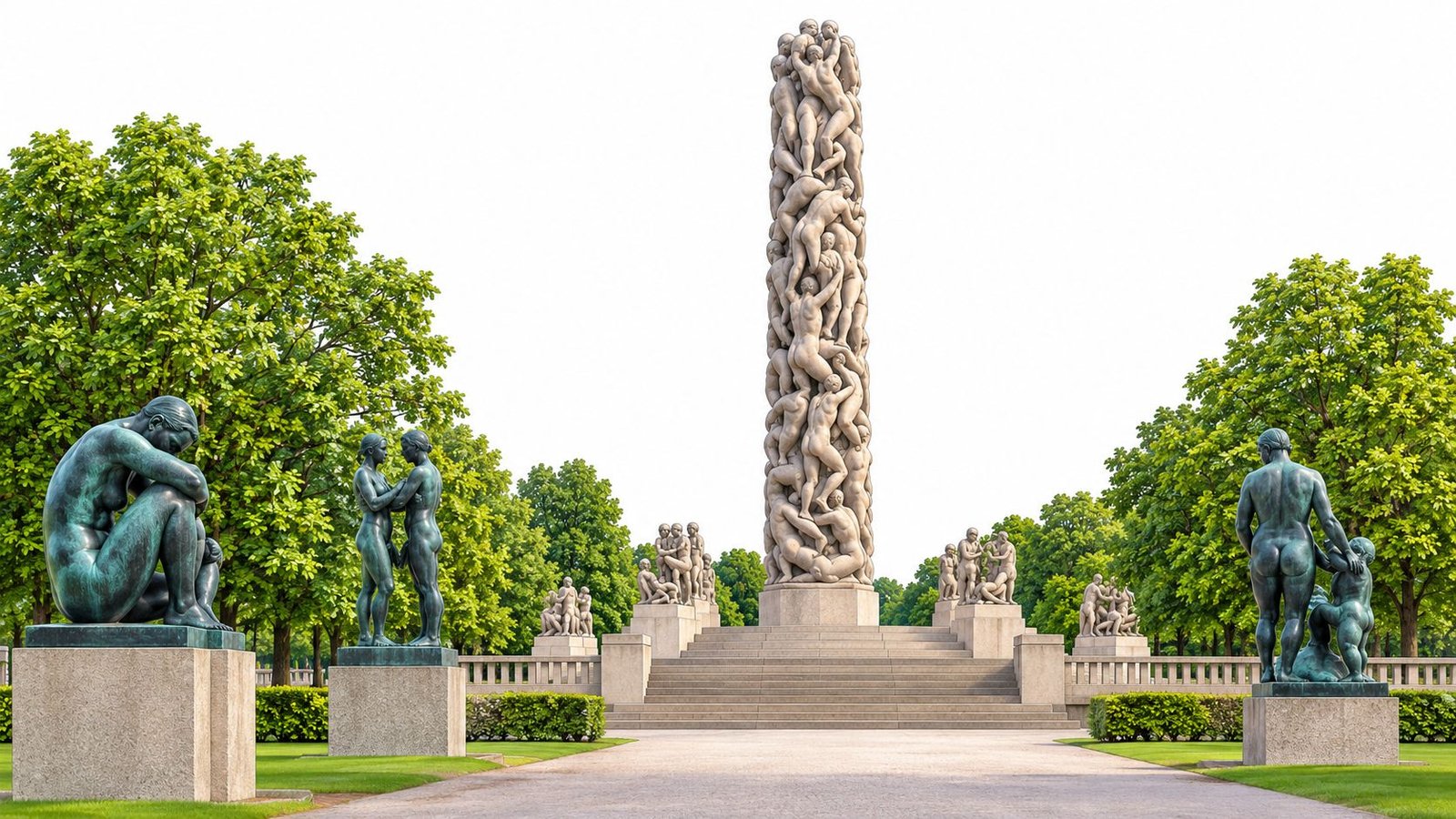
Say you have a clear morning and a museum booked after lunch. Start at the main gate, walk the axis to the Monolith, then loop back on the side paths. Many people add the Vigeland Museum beside the park, where studio works and drawings show how the figures were developed.
A simple route through the park
- Begin at the main gate: Follow the central axis so you meet the bridge figures before the column.
- Go early for photographs: Morning light and fewer visitors make the faces easier to see.
- Keep the museum optional: Two hours covers the park plus the museum. The park alone is shorter.
Practical rule: Treat Frogner as its own half-day. Pairing it with Bygdøy on the same morning usually means rushing both.
2. Viking Ship Museum (Vikingskipshuset) on Bygdøy
The honest version of this stop is the one many older lists still skip. The Viking Ship Museum on Bygdøy, long famous for the Oseberg, Gokstad and Tune ships, is closed for a major rebuild and will return as the new Museum of the Viking Age. Building a day around a headline that is shut is how a good peninsula turns into a wasted crossing.
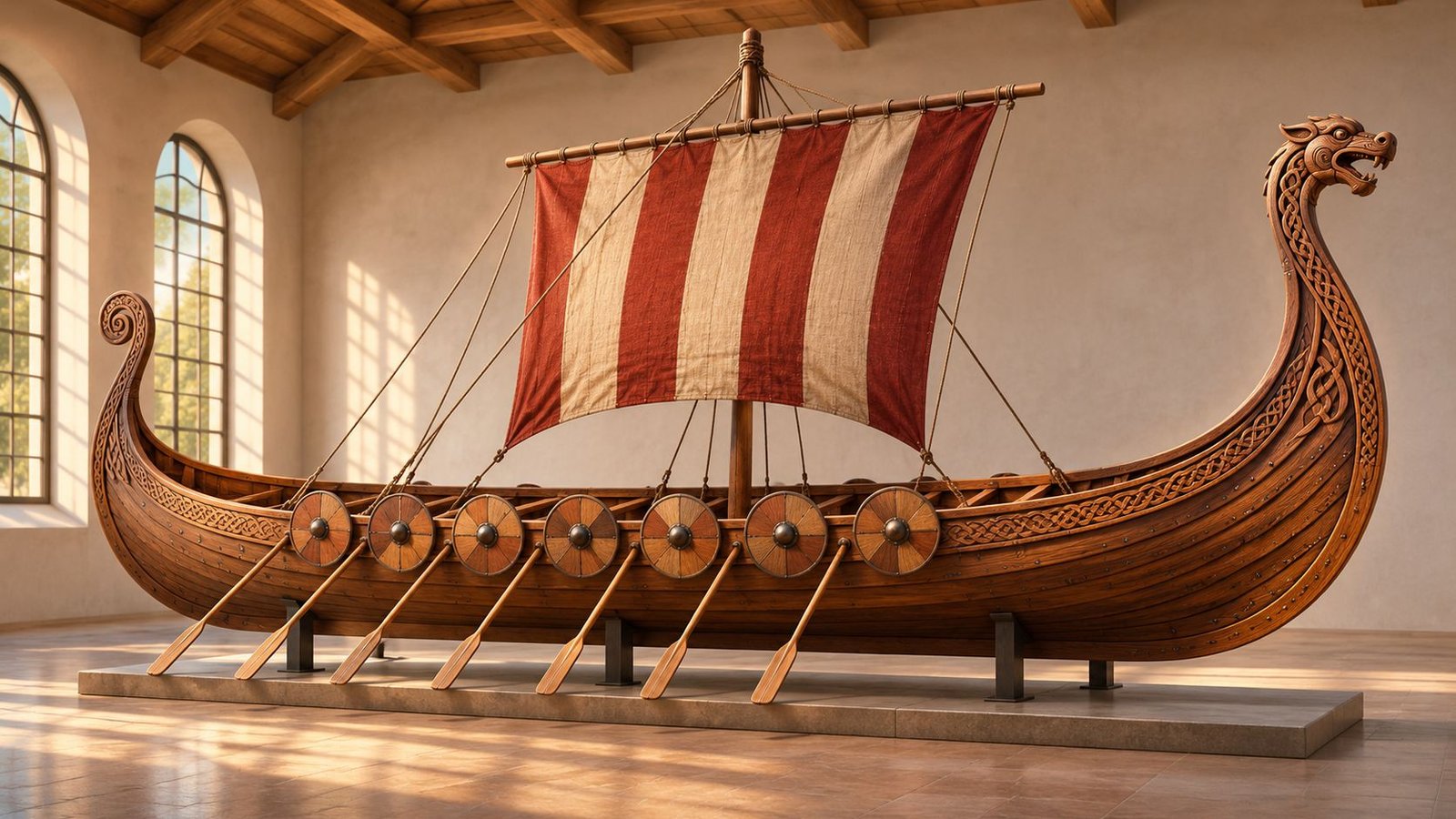
Bygdøy still earns the ferry over. The ships, when they return, remain one of the clearest records of Viking-age burial, woodwork and daily objects, and the richly carved Oseberg find alone would justify the trip once the doors open again. Until then, the useful move is a substitute morning on the same peninsula, planned around what is open now rather than a second visit later in the week.
Check the museum's own pages before you lock transport or a pass. Enthusiasm does not refund a day allocated to a closed hall.
Confirm the reopening date first, then build the morning from what is actually open beside it.
3. Fram Museum (Frammuseet) on Bygdøy
If the Viking ships are dark, the Fram Museum is the visit that still earns the ride. You do not look at a model behind glass. You board the original polar ship Fram, the vessel built for Fridtjof Nansen and later used by Otto Sverdrup and Roald Amundsen. The hull was shaped to rise under ice pressure rather than be crushed by it, and the exhibitions follow equipment, daily life and the science those expeditions carried home.
The same peninsula holds more than one strong substitute. Visit Norway's summer guide to Oslo points to the Kon-Tiki Museum, which keeps Thor Heyerdahl's original raft, and to the Norwegian Museum of Cultural History, with more than 150 historic buildings, including the medieval Gol Stave Church from the 1200s. That is a full morning without leaving Bygdøy.
How to shape the peninsula
- Allow about 90 minutes at Fram: The ship plus the exhibition halls need that, not a flying visit.
- Add one neighbour, not three: Kon-Tiki suits exploration history. The open-air museum suits a slower, outdoor hour.
- Walk the shore if the weather holds: A short fjord path beats an immediate ride back to the centre.
Say the forecast is mixed. Do Fram first, while you are fresh, and leave the outdoor buildings for the brighter hour. Do not shuttle back to the centre between them.
4. Oslo Opera House and its Rooftop Walk
Oslo Opera House, home of the Norwegian National Opera and Ballet and designed by Snøhetta, is the rare landmark you are invited to climb. White stone slopes rise from the fjord, and the roof is open without a ticket. From the top you see the harbour, the far shore and the outline of Akershus. The foyer, café and shop are part of the public building even when you are not seeing a performance.
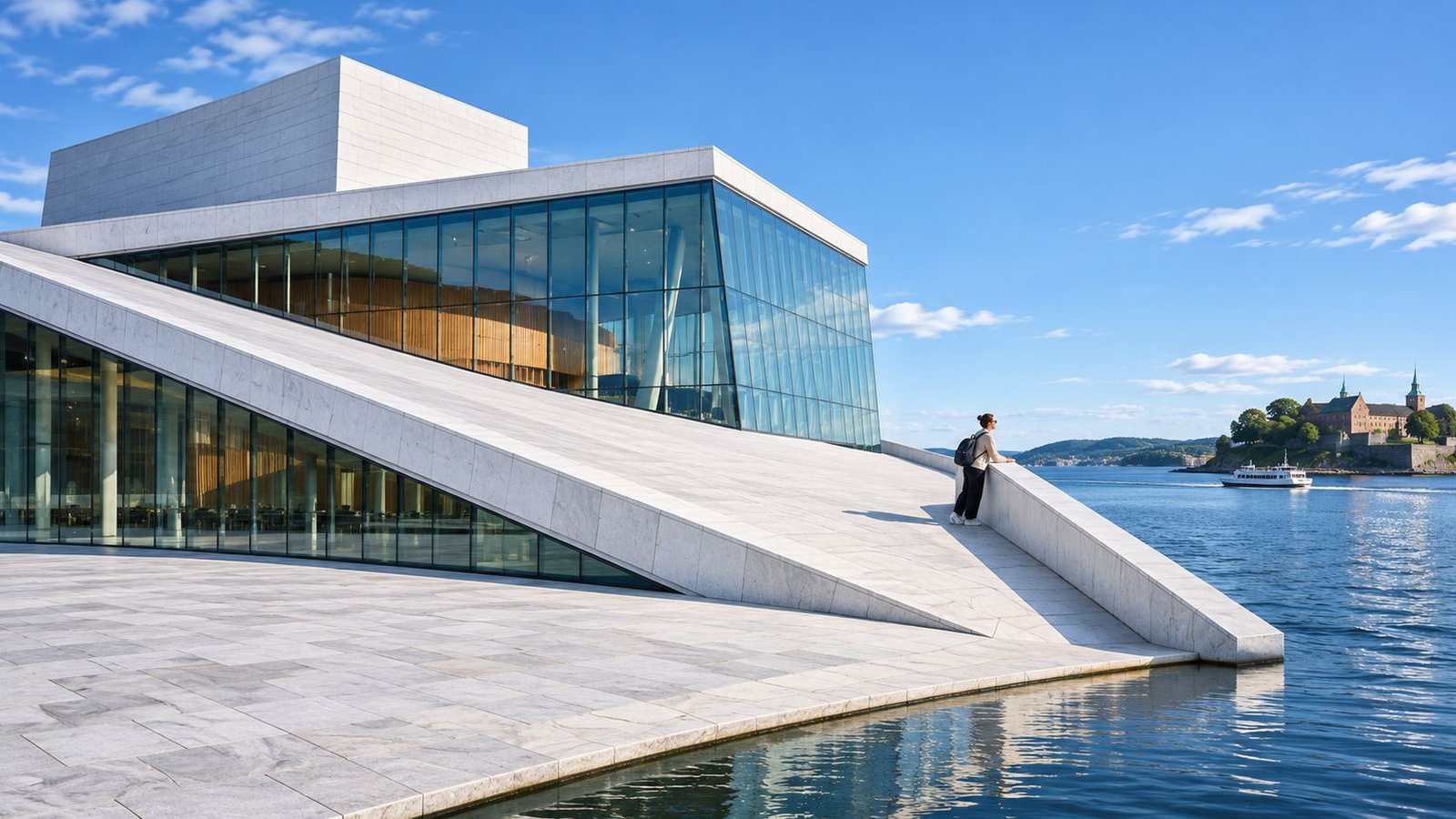
This is the anchor of a Bjørvika half-day. A typical afternoon starts on the roof, drops to the waterfront, and continues to MUNCH a short walk away. Guided tours inside run at set times, and a performance is the cultural version of the same stop if you want a seat rather than a viewpoint.
- Wear shoes with grip: The marble is handsome and slippery once it is wet or icy, which is much of the year outside high summer.
- Check tour and performance times: They are fixed, and a roof walk does not include a backstage slot.
- Come back at dusk: The lit slopes against the harbour are the photograph many visitors want.
The roof is free. The performance is not. Decide which one you came for before you promise yourself both on a tight evening.
5. Akershus Fortress and Akershus Castle
Akershus Fortress occupies a promontory over the harbour and dates from the late 13th century, when it was raised to defend the town. Later centuries turned it into a royal residence and a military stronghold. The ramparts are the part to walk even if you skip the paid rooms. Grounds are free, the fjord sits below the walls, and the city reads more clearly from up here than from the quayside.
Castle interiors and the museum spaces usually need a ticket. They carry the longer story, from medieval defence through to 20th-century resistance. If time is short, the grounds still justify the stop. One to two hours covers walls, views and a look inside if the rooms are open.
Late afternoon is the kind hour. The light sits on the water, and you can drop straight onto the harbour promenade toward Oslo City Hall. That compact historical walk is enough for a first afternoon without a museum marathon.
Travellers who want the capital as the start of a longer Norwegian route, rather than a standalone weekend, can look at the published Norway self-drive from Oslo to Bergen via Geiranger and the fjords. Check what is arranged in the itinerary. A fortress visit is your own afternoon, not an automatic inclusion.
6. Munch Museum (Munch-museet) in Bjørvika
The Munch Museum in Bjørvika holds the largest collection of work by Edvard Munch, the painter most visitors know from The Scream. The building, opened in 2021, shows paintings, prints, drawings and photographs, so you can follow how the style shifted rather than tick off a single famous canvas. Themes of love, anxiety and the mind run through the hang. Rotating exhibitions mean the exact walls change, which is a reason to read the current list before you assume a particular version of The Scream is up.
It sits in the same waterfront district as the Opera House, which is why the pairing works. A relaxed visit needs about two hours. After that, the walk back along the harbour is the decompression, not another gallery.
Before you book the slot
- Read the day's exhibitions: A temporary show can be the reason to go, or a reason to wait for a later date.
- Watch for timed entry: Most pass-included museums do not demand a slot, but a special hang can.
- Stop while you still want to: Two hours is enough. A third hour rarely adds a new idea, only sore feet.
Say the morning was Frogner and the weather has turned. Bjørvika is the indoor answer that still feels like the city, because the fjord is outside the glass when you leave.
7. Nobel Peace Center
The Nobel Peace Center, in the former Vestbanen railway station, is the thoughtful museum in this list. Exhibitions, film and temporary shows follow the Nobel Peace Prize, the laureates, and arguments about peace, rights and conflict. The prize is awarded in Oslo, so the building sits at the centre of the story rather than beside it. It suits travellers who like a museum that asks them to read, not only to look.
About 90 minutes covers the main exhibition if you do not rush every screen. Check opening hours and the current temporary show before you commit an afternoon. A strong temporary exhibition can be better than the permanent rooms on a given week, and a closed Monday is an easy way to lose the slot.
Pair the Nobel Peace Center with a harbour walk. The short stroll to the fortress grounds described above is the visit; a ride across town is not.
If you only have one central afternoon and you dislike large art museums, this is the better use of it. If you love painting, do Munch instead and leave this for a second day. Trying to do both after a late lunch is how both feel thin.
8. Holmenkollen Ski Jump and Ski Museum
Holmenkollen is the hillside escape that still counts as the city. The ski jump is one of the best-known in the world, and the view from the top takes in roofs, forest and fjord in one sweep. The Holmenkollen Ski Museum next to it follows skiing in Norway from early equipment to modern racing kit. Visit Norway's list of top attractions includes the Ski Museum and Tower among recommended stops, alongside other outdoor sites such as Ekebergparken.
Winter is the obvious season, when the forest is under snow. Summer and autumn still work. The walk in the trees is the point, and hill restaurants make an easy end. The air on the ridge is cooler than on the quay, so layers earn their place in the bag.
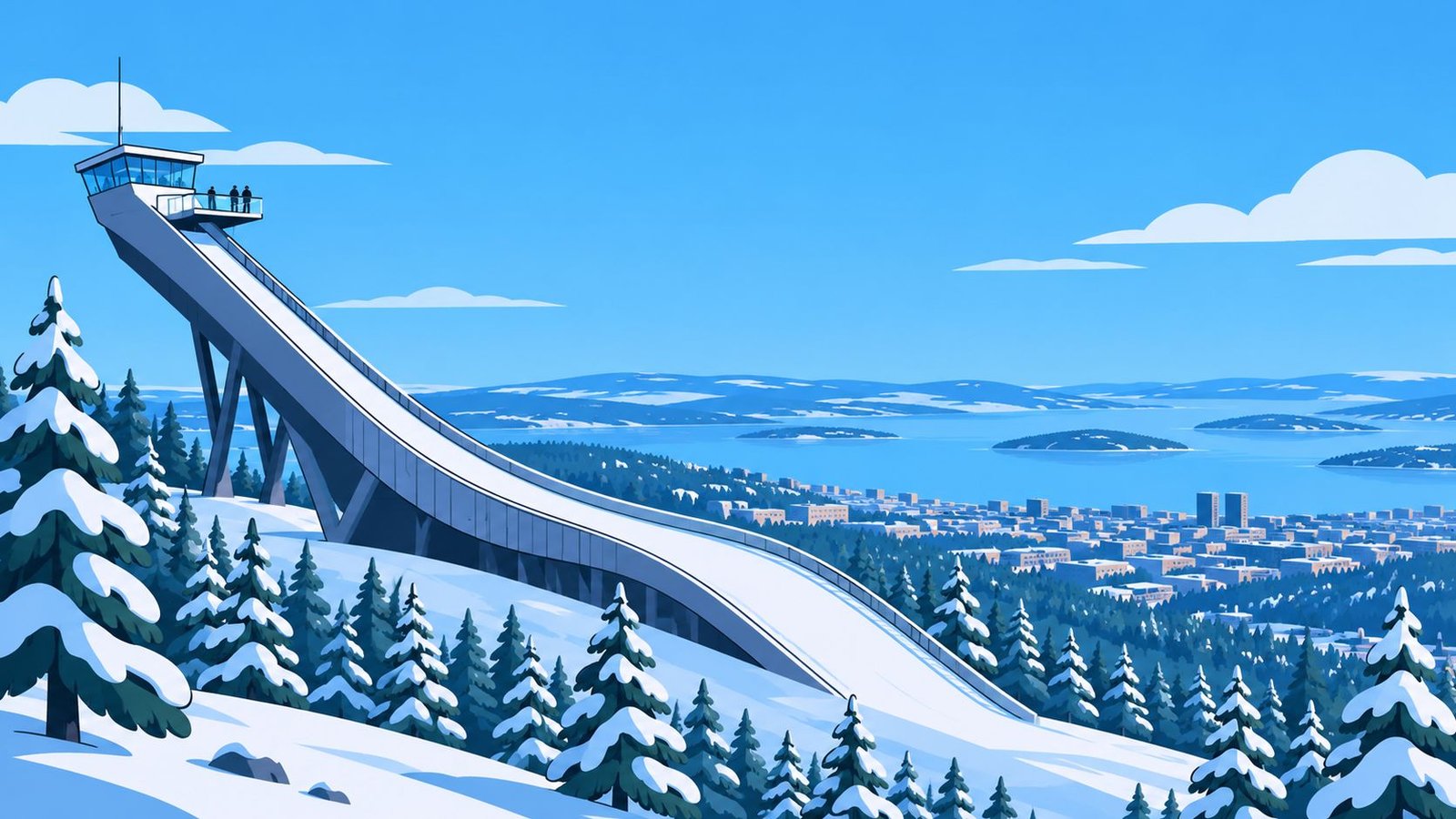
The metro from the centre is the straightforward way up, and it suits a half-day rather than a rushed add-on after a museum. Tickets are not an afterthought on that ride. Visit Oslo's guide to Ruter is clear that metro passengers must buy before boarding, or validate a transit card on board. A last-minute purchase that works, with a surcharge, on some buses and boats is not treated the same way on the metro.
- Check lift times and closures: Schedules shift with the season, and a closed tower spoils the view you came for.
- Leave the centre with a valid ticket: Inspection on the metro is not the moment to discover the rule.
- Add a forest loop only if the light allows: The museum and the tower are the half-day. The longer trails are a separate outing.
9. Ferry Trips to the Oslofjord Islands
The islands are the slow chapter, and they only belong on the plan when the season and the timetable agree. Public ferries from the city piers reach several of them in the warmer months. Hovedøya is the easy first landing, with a ruined 12th-century monastery, paths and sheltered beaches. Gressholmen is quieter, with bird life and short walks. A warm afternoon, a picnic and a booked return is the pattern that works. "We'll see how we feel" is how people miss the last useful boat.
Fares are simpler than they look, with one local exception. Visit Oslo's transport pages explain that the city, including the outer metro stops, sits in zone 1, while the airport needs a four-zone ticket. From 25 January 2026, a zone 1 adult single is 46 NOK, a 24-hour ticket 137 NOK and a seven-day ticket 379 NOK. The Bygdøy museum ferries are the notable exception to ordinary public-transport coverage, though they are included with the Oslo Pass. Island boats in season are a different product from that Bygdøy shuttle, so read the pier and the zone before you assume one ticket does every boat.
On the boat
- Read the seasonal timetable first: A summer frequency and a shoulder-month frequency are not the same service.
- Carry water, food and a light waterproof: Shelter on the smaller islands is limited.
- Choose the return before you leave: A long wait at a small pier is a poor end to a good walk.
For the wider country beyond this harbour, the Norway road-trip routes and planning guide is the useful next read if Oslo is only the first base.
Oslo's nine essential stops at a glance
Use the table as a clustering tool, not a checklist. The right column shows which stop shares the same walk, ride or peninsula, so the day spends its hours in halls and on viewpoints rather than backtracking on trams.
| Stop | District | Time block | Entry | Pair with |
|---|---|---|---|---|
| Vigeland Sculpture Park (Vigelandsparken) | Frogner, west Oslo | One outdoor block; longer with the museum | Free park; museum extra | A west-Oslo morning, then straight to Bygdøy |
| Viking Ship Museum (Vikingskipshuset) on Bygdøy | Bygdøy peninsula | Do not build the day around it now | Closed for rebuilding | Fram and the other Bygdøy halls |
| Fram Museum (Frammuseet) on Bygdøy | Bygdøy peninsula | The peninsula's core stop | Paid museum entry | Viking Ship Museum status check and nearby museums |
| Oslo Opera House and its Rooftop Walk | Bjørvika waterfront | Short rooftop stop or evening performance | Free rooftop; tours and performances extra | MUNCH next door |
| Akershus Fortress and Akershus Castle | Central Oslo harbour | Flexible grounds stop | Free grounds; interiors may cost extra | Nobel Peace Center and City Hall |
| Munch Museum (Munch-museet) in Bjørvika | Bjørvika waterfront | One focused museum block | Paid museum entry | Opera House rooftop |
| Nobel Peace Center | Central Oslo waterfront | One short museum block | Paid museum entry | Akershus or the harbour promenade |
| Holmenkollen Ski Jump and Ski Museum | Holmenkollen, above central Oslo | Its own half-day | Paid museum and lift access | Keep separate from island plans |
| Ferry Trips to the Oslofjord Islands | Oslofjord islands, from central piers | A weather-led half-day | Public-transport fare; check ticket rules | The warm-forecast alternative to Holmenkollen |
Read it by district. Frogner and Bygdøy sit west; Opera, MUNCH, the Nobel Peace Center and Akershus hold the harbour; Holmenkollen is the climb; the islands are the fair-weather escape. Where a row says paid entry, decide before the day whether that museum is a headline or a filler, because three charged interiors in a row is where budgets and attention both thin out.
Putting It All Together: A Sensible Oslo Plan
Four shapes cover the nine stops without criss-crossing the city.
Day one, west then peninsula. Morning in Frogner for Vigeland, then a single ride to Bygdøy. With the Viking ships closed, make Fram the core and add either Kon-Tiki or the open-air museum. Do not return downtown between them.
Day two, the harbour. Opera roof, MUNCH, and either the Nobel Peace Center or Akershus rather than all three at a sprint. The fortress grounds are the free piece if museum fatigue sets in, and City Hall plus the promenade stitch the walk together.
Day three, height or water. Holmenkollen when you want a view and a dose of ski history. The islands when the forecast is warm and the ferry board looks generous. They work as alternatives more often than they fit the same day, unless you start very early and accept a shorter stop at each.
For a museum-heavy version of this, a pass can beat separate tickets. The Oslo Pass details from Visit Oslo list free entry to more than 30 museums and attractions, each visitable once per 24-hour period, at adult prices of 580 NOK for 24 hours, 845 NOK for 48 hours and 995 NOK for 72 hours. Match the pass to the halls you plan to enter, since some attractions may be closed.
If you would rather have the routes and the joins arranged, BTOURS, a London-based operator established in 2018, publishes Nordics city breaks and longer journeys. One option is the Scandinavia 8-day city break by ferry and rail, taking in Copenhagen, Oslo and Stockholm; Norway also features across its self-drive and rail range. Inclusions differ by tour, so dates, transport and what is covered need checking on btours.com before you book. Travellers preparing for a first journey abroad may also want a clear look at preparing for your first trip abroad.
Whichever order you choose, confirm current opening days before booking anything: the Viking ships' closure shows how quickly Oslo's museum line-up can change.
Links disclosure: This article may contain external links, including affiliate links. If you book or buy through an affiliate link, BTOURS may earn a commission.