TRAVEL STORIES & GUIDES
9 Things to Do in Connemara: A Route-Ready Guide
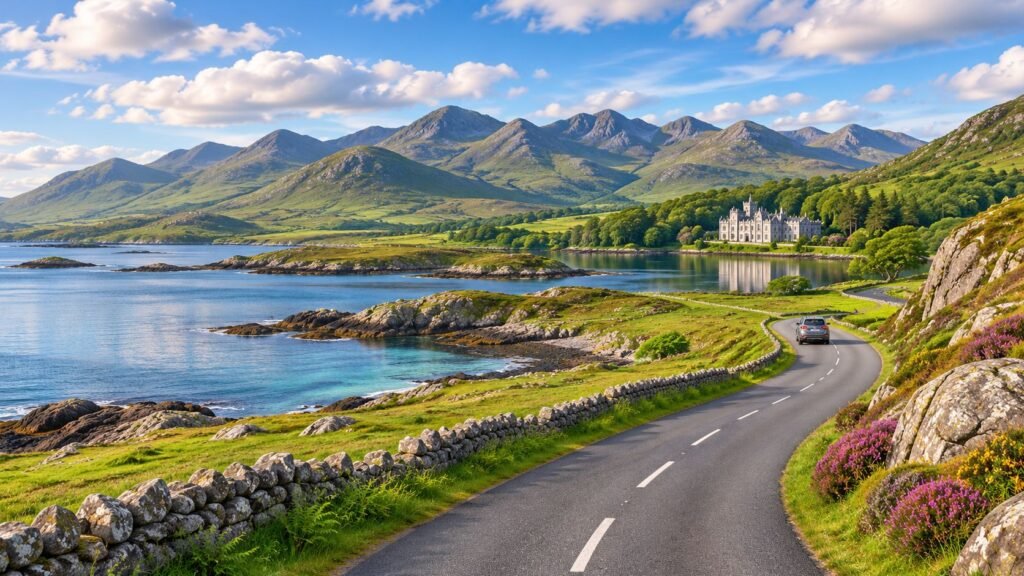
Open a map of west Galway and Connemara looks compact enough to cover between breakfast and dinner. Once the car leaves the N59 for the mountain bends of the R344, the single-track lanes past Letterfrack, or the coastal headlands west of Clifden, that optimism fades quickly. Narrow carriageways, slow tractors, frequent photo stops, and shifting Atlantic squalls all eat into driving time. Out on the coast near Claddaghduff, the tides at Omey Island dictate the schedule, never the other way round.
Rather than ranking the best things to do in Connemara from one to nine, this guide groups them into three practical clusters so you can build one unhurried day instead of five rushed stops. The northern arc sits around Letterfrack, anchoring Diamond Hill, Kylemore Abbey, and Killary Harbour. Clifden anchors the central headland, the Sky Road, and the Omey causeway, while Roundstone anchors the southern beaches, harbour craft workshops, and Gaeltacht parishes.
A hire car makes linking these clusters straightforward, though targeted public transport works for a single park day. Pack waterproof footwear with reliable grip before worrying about a packed schedule, because boggy verges and sudden mountain rain can rewrite an afternoon without warning. Keep the clusters tight, watch the daylight, and let local weather decide the order of stops.
1. Connemara National Park and the Diamond Hill Walk
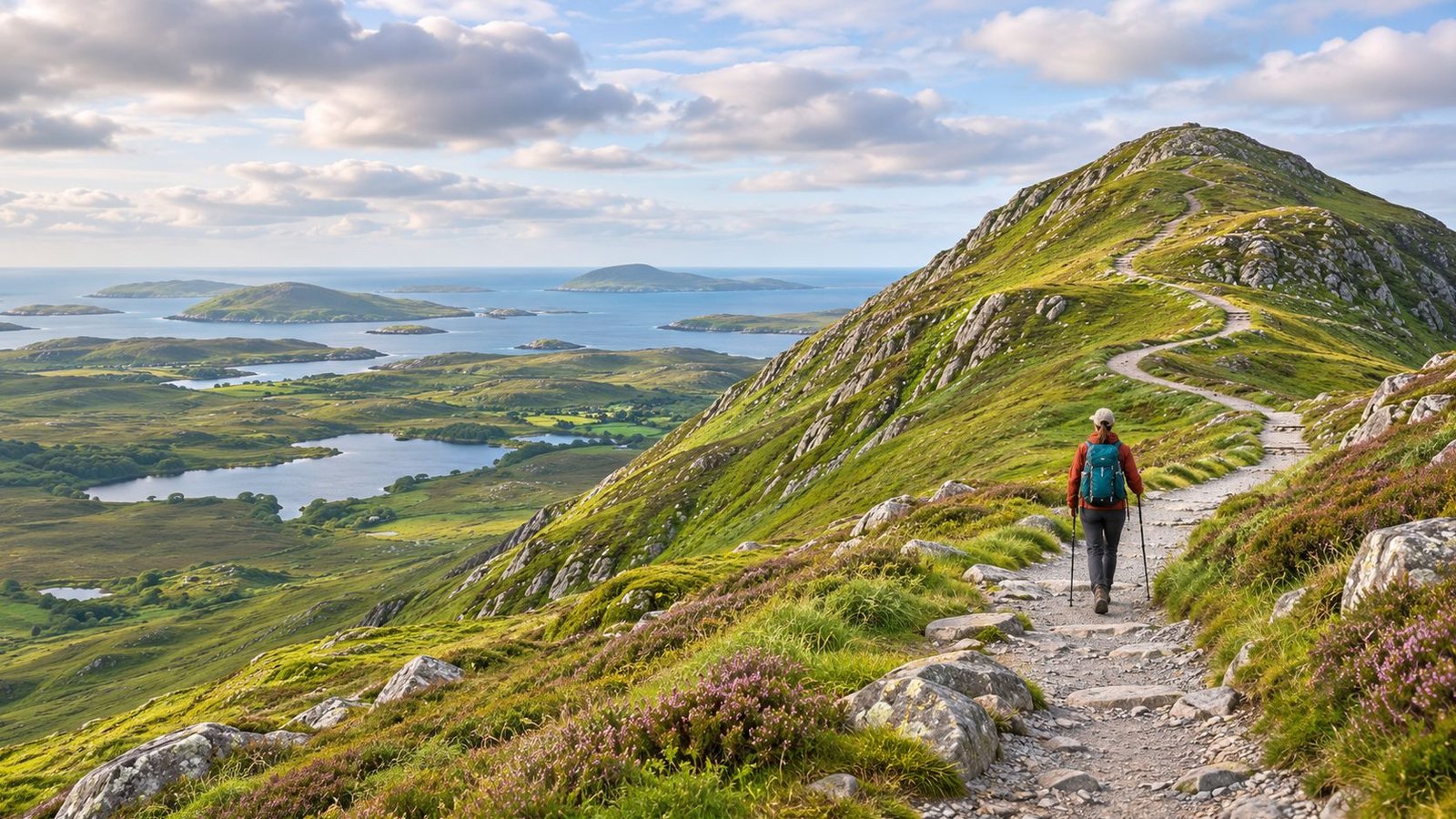
Based right beside the village of Letterfrack, Connemara National Park brings blanket bog, wet heath, lakeshore, and quartzite peaks into one compact estate. For most walkers, the main draw is the Diamond Hill climb, a well-marked mountain trail rising above Ballynakill Harbour with open views across the Twelve Bens and out towards the Atlantic islands. Starting inside the visitor centre pays off before lacing up, as the exhibits unpack the park's geology, peatland ecology, and rural history, and rangers periodically lead guided walks from the main entrance.
The trailhead sits minutes from Letterfrack's cafes and B&Bs, making it an easy morning anchor before driving down to Kylemore Abbey.
Demand here is far higher than a rural village setting suggests. According to the Fáilte Ireland 2022 Visitor Attractions Survey, Connemara National Park recorded 232,443 visits in 2022, making it one of the region's busiest free natural attractions. That volume concentrates around the car park and lower paths by late morning, so arriving early protects both parking space and mountain quiet.
Planning the Ascent and Car-Free Access
The park's footprint is also growing to spread footfall beyond peak summer. In March 2025, an Irish Government press release from the Department of Housing, Local Government and Heritage announced that Connemara National Park would expand from 2,055 to 2,304 hectares (an increase of more than 12%), backed by a multi-million-euro investment in walking trails designed to encourage shoulder- and off-season travel. If you aren't hiring a car, the National Parks and Wildlife Service Connemara contact page confirms that Citylink route 923 and Bus Éireann route 419 connect Galway and Clifden directly with Letterfrack, putting the trailhead within easy reach on foot.
- Check conditions before setting out: Confirm current trail status and visitor centre opening arrangements directly with the park service, as wind and low cloud can quickly strip visibility from the upper slopes.
- Pack full hill layers: Bring waterproof outerwear, a spare warm layer, drinking water, and snacks even when the car park sits in bright sunshine.
- Time the season for better footing: Late spring and early autumn generally bring drier paths and fewer biting insects; anyone heading into damp Atlantic heather in warmer months can compare midge repellents for Scotland travel since the same highland midges thrive across western Irish bogs.
- Budget daylight conservatively: Treat the summit loop as a half-day commitment so you aren't descending wet stone steps in fading light, then pair it with lunch in Letterfrack.
2. Sky Road Scenic Loop from Clifden
A late-afternoon departure from Clifden makes the Sky Road one of the highest-reward coastal circuits in County Galway for the shortest driving commitment. Climbing straight onto the headland above Clifden Bay, the narrow loop opens onto wide views across the town's church spires, the offshore islands, and the open Atlantic. Just outside town, a short walk from the roadside gate leads down to the ivy-covered ruins of Clifden Castle, the former home of town founder John D'Arcy, perched above the water.
Coastal light shifts rapidly across this peninsula, which makes the loop ideal for the final stretch before dinner.
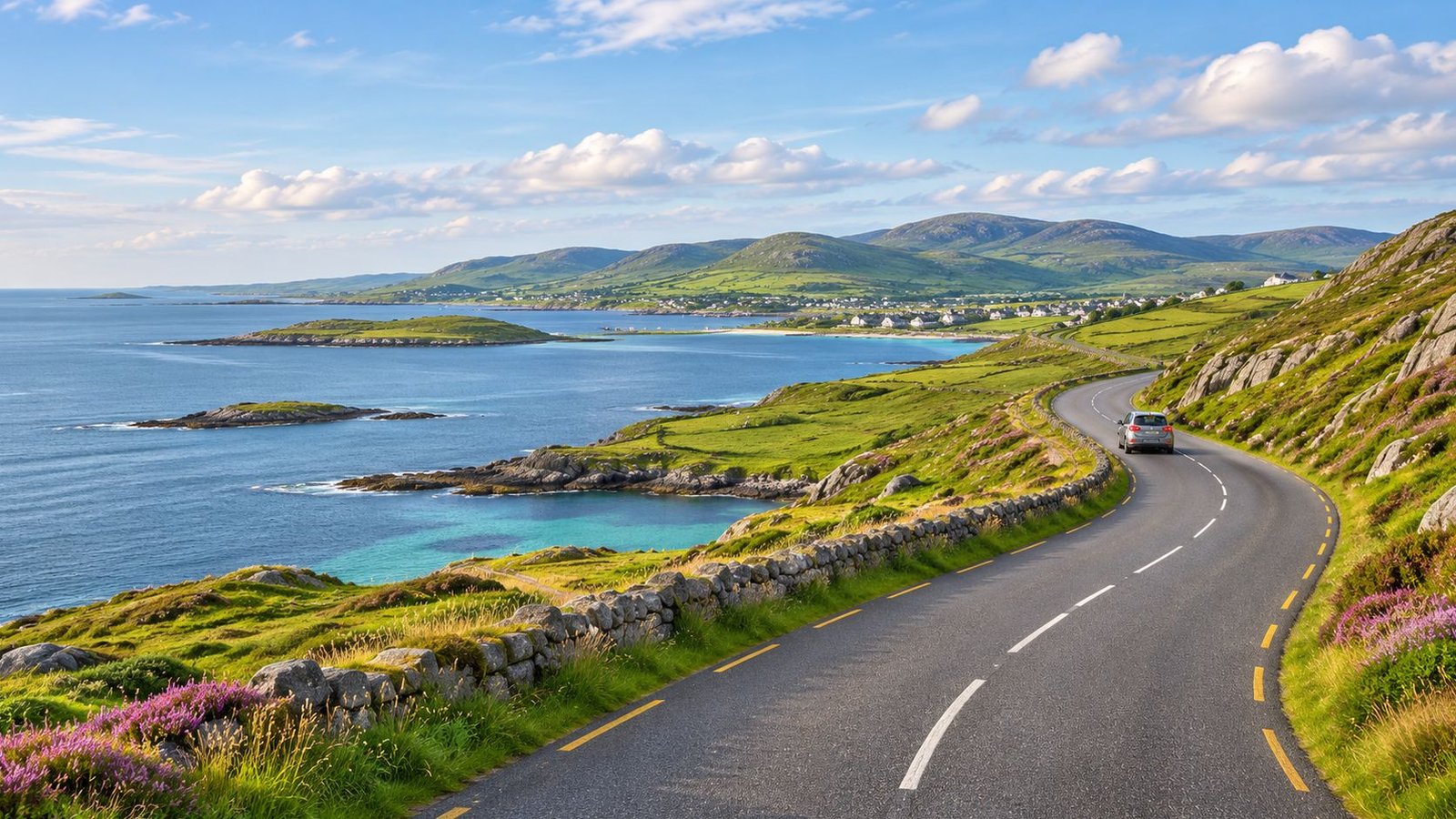
Never force the pace on the Upper Sky Road. The carriageway narrows to a single lane with blind stone walls, and you'll share every crest with walkers, local residents, and touring cyclists.
Driving Versus Cycling the Headland
Drivers should take the upper road slowly, use passing places generously, and check the weather across Clifden Bay before climbing, because coastal sea fog can blank out the viewpoints in minutes. For travellers assembling a broader driving loop, this Connemara road trip self-drive plan shows how neatly the Clifden headland slots alongside inland valley drives without pointless backtracking.
Cyclists regularly rent electric bikes from Clifden to tackle the steep rises without burning out, often extending the loop to quiet Eyrephort Beach before pedalling back into town. Whether on four wheels or two, finishing the circuit directly in Clifden sets up an effortless transition to seafood dinner and an evening traditional music session.
3. Kylemore Abbey and the Victorian Walled Garden
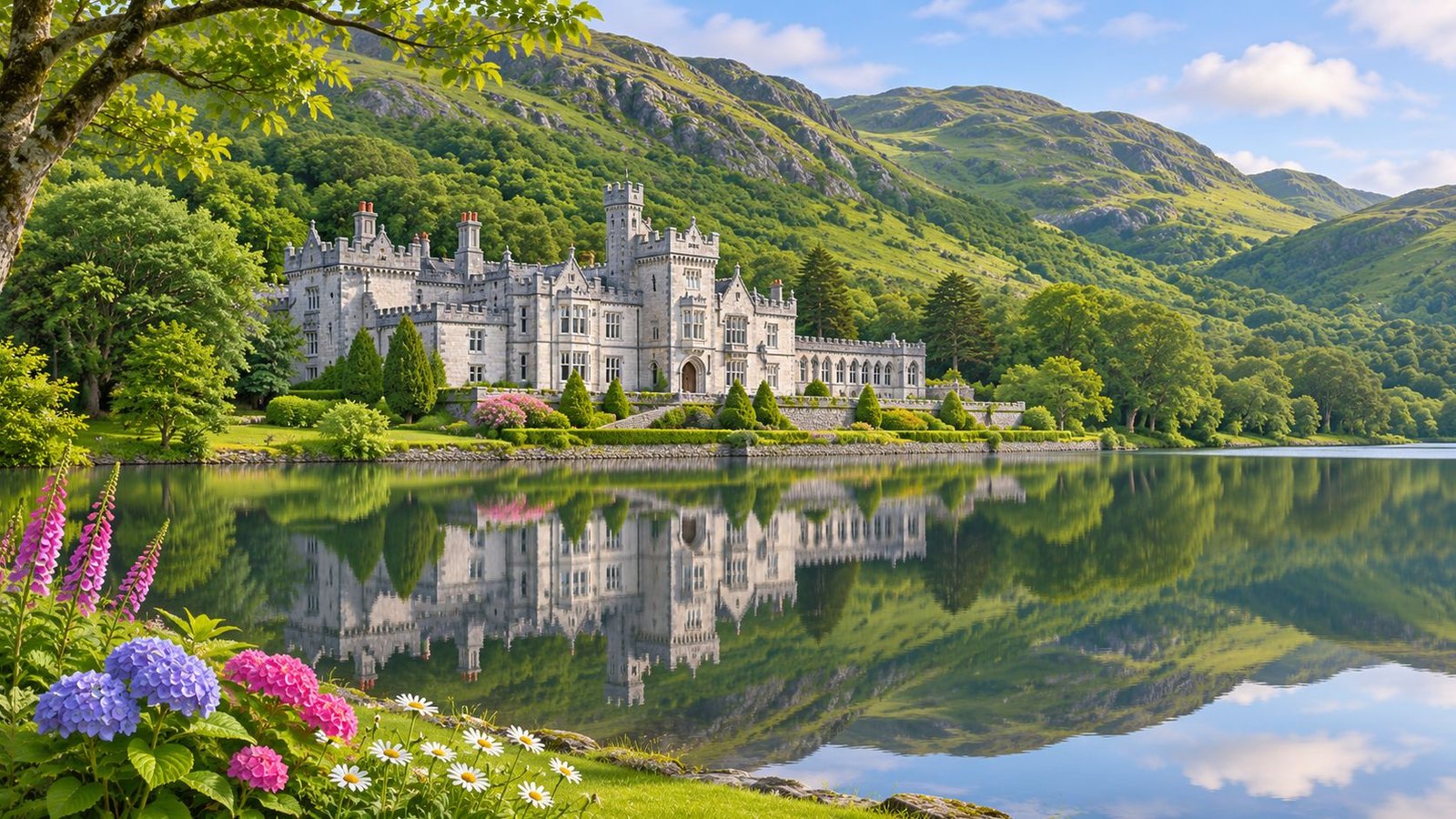
Set directly beside Pollacapall Lough beneath steep wooded slopes, Kylemore Abbey is Connemara's most recognisable architectural landmark. Originally built as a castle-style Gothic Revival residence by Mitchell Henry, the lakeside estate later became home to a community of Benedictine nuns, whose history is woven throughout the restored ground-floor rooms and exhibitions. Beyond the main house, a lakeside footpath leads past the neo-Gothic church and mausoleum towards one of Ireland's largest restored Victorian walled gardens, split between formal flower beds, glasshouses, and heritage kitchen plots.
The estate sits just a short drive north of Letterfrack, so it pairs naturally with a morning walk in Connemara National Park. Travellers relying on buses should note the practical catch here: while buses serve Letterfrack village, continuing onward to Kylemore requires either a car, a pre-arranged local taxi, or an organised tour from Galway.
Timing Around Tour Coaches
Because Kylemore draws steady day-trip traffic from Galway City, midday brings crowded pathways and full car parks. Planning your arrival around coach patterns transforms the experience completely.
- Verify tickets and cutoffs ahead: Check current opening hours, ticket options, and last-entry rules on the official Kylemore Abbey website before travelling, as entry gates close well ahead of final site closing.
- Target the quieter windows: Arrive right at opening or visit in the latter half of the afternoon once morning tour buses depart towards Killary or Clifden.
- Allow a full half-day window: Giving yourself unhurried hours lets you walk the lakeside path to the church and explore the walled garden rather than sprinting through the house alone.
- Use it as a wet-weather anchor: If heavy cloud sits low over Diamond Hill in the morning, swap your sequence and tackle the abbey's indoor rooms first before the sky lifts.
Calm water before midday or late in the afternoon delivers the crispest reflections of the grey stone facade against the hills.
4. Killary Harbour and the Leenaun Fjord Cruise
Carving deep inland along the border between County Galway and County Mayo, Killary Harbour is widely described as Ireland's only glacial fjord. Steep mountain flanks drop straight into dark, sheltered water dotted with floating mussel farms, giving the northern edge of Connemara a scale that feels markedly different from the open beaches further south. Boat cruises depart from the village of Leenaun at the head of the inlet, sliding past the aquaculture lines and beneath the slopes of Mweelrea while commentary covers local maritime history and wildlife.
Understanding regional traffic helps you time this northern corridor realistically. According to the Fáilte Ireland 2023 Wild Atlantic Way Tourism Facts report, the full Wild Atlantic Way attracted an estimated 2.2 million overseas visitors, 5.8 million domestic visitors, and 430,000 visitors from Northern Ireland in 2023. Those route-wide totals cover the entire western seaboard rather than Connemara alone, yet they explain why popular viewpoints along the N59 clog easily in summer and why treating this drive as a relaxed full day works far better than rushing.
Pairing the Fjord With Northern Roads
Leenaun sits at an ideal junction for linking northern Connemara with wider west-coast touring. Anyone mapping a longer coastal itinerary can see how Killary connects with other highlights in this guide to the best stops on the Wild Atlantic Way.
Deck warmth rule: Wind funnelling straight down Killary Harbour cuts sharply even on bright summer afternoons. Bring a windproof jacket and warm fleece onto the boat, regardless of how mild the car park feels.
For a balanced half-day loop, book your sailing directly with the boat operator in advance so you aren't caught by seasonal schedule gaps, then pair the cruise with a short stop at nearby Aasleagh Falls just east of Leenaun. From there, drivers can either loop inland through Joyce Country and Maam Cross or turn directly south into the Lough Inagh valley. Always hold a flexible backup plan, as low cloud and squalls rolling off the Mayo border can alter boat schedules at short notice.
5. The Twelve Bens and the Lough Inagh Valley
Historians call traditional Connemara Iarchonnacht, a rugged territory whose physical barriers shaped centuries of settlement. As documented in Heritage Ireland's Ezine Issue 4, historical Iarchonnacht covered approximately a quarter of a million acres of mountains, sharply indented Atlantic coastline, and Lough Corrib, ruled for almost four centuries by the O'Flaherty dynasty from their arrival in the thirteenth century until sixteenth-century English Crown expansion and land confiscations following the 1641 Rebellion. Their stronghold at Aughnanure Castle near Lough Corrib still stands as a reminder of how waterways carried trade and power across land that was extraordinarily difficult to cross on foot.
Drive the R344 through the Lough Inagh valley today and you immediately understand why. Rising abruptly along the western side of the road, the Twelve Bens (Na Beanna Beola) form a wall of pale quartzite peaks reflected across the long, still waters of Lough Inagh and Derryclare Lough. It's the single best inland corridor in Connemara for experiencing high mountain terrain without committing to an exhausting ascent.
Valley Drive Versus Mountain Ridge
Visitors tend to underestimate how sharply conditions diverge between the roadside tarmac and the upper ridges. Match your plan to experience, gear, and forecast:
- Scenic transit along the R344: Use the valley road to connect Killary Harbour with Recess, Roundstone, or Clifden, pulling cleanly into marked lakeside lay-bys for photographs rather than stopping on narrow verges.
- Foothill walks and cycling: Quiet tracks along the lower slopes and lakeside lanes offer rewarding mountain views with manageable footing and rapid retreat if rain blows in.
- Full Twelve Bens hillwalks: Tackling the high quartzite summits is a serious full-day mountain undertaking requiring Ordnance Survey mapping, compass skills, an early start, and a reliable mountain forecast.
- Hiring a local mountain guide: If you want to climb into the Bens without navigating peat hags and sudden ridge mist alone, booking a qualified local guide adds safety and geological context.
A strong worked circuit links a morning stop at Killary Harbour with a slow southbound run down the R344, pausing beside Lough Inagh for a stretch of legs before dropping out towards Roundstone's coast.
6. Dog's Bay and the Roundstone Beaches
Most Atlantic beaches get their sand from ground-down quartz and granite, which is why Dog's Bay near Roundstone stops visitors in their tracks. Its sweeping horseshoe shore consists primarily of crushed sea shells, producing a bright, bone-white crescent backed by low grassy dunes and framed by the hills of the Roundstone peninsula. Across the narrow grassy spit directly behind it lies Gurteen Beach, giving walkers two contrasting aspects within a few minutes of each other.
Because the two bays face slightly different directions, wind direction often decides which shoreline feels calmer on any given afternoon. When Atlantic gusts whip across Gurteen, Dog's Bay frequently offers a slightly more sheltered edge for brisk walking or a cold-water dip.
Access, Tides and Shore Conditions
Getting down to the sand requires patience, especially during sunny summer weekends when locals and road-trippers converge on the same narrow approach lane. Planning around tide height and parking limits keeps the stop relaxing rather than stressful.
- Time your walk for low tide: Receding water exposes the widest, firmest band of shell sand for walking across both beaches without scrambling along soft dune banks.
- Respect the narrow access road: Parking beside the dunes is strictly limited; never block passing spaces or farm gateways if the main lot looks full, and consider arriving earlier in the morning or later in the afternoon.
- Dress for coastal wind: Bright sunshine over the bay rarely cancels the Atlantic breeze, so pack a windproof layer even in July and August.
- Leave no trace behind: Facilities along this rural peninsula are minimal, meaning you should carry drinking water, snacks, and a bag to pack every piece of rubbish back out.
A straightforward southern half-day pairs an unhurried beach walk at Dog's Bay with lunch back in Roundstone harbour, followed by a slow return towards Clifden across the peatlands of the Bog Road (L1105).
7. Omey Island and the Tidal Causeway
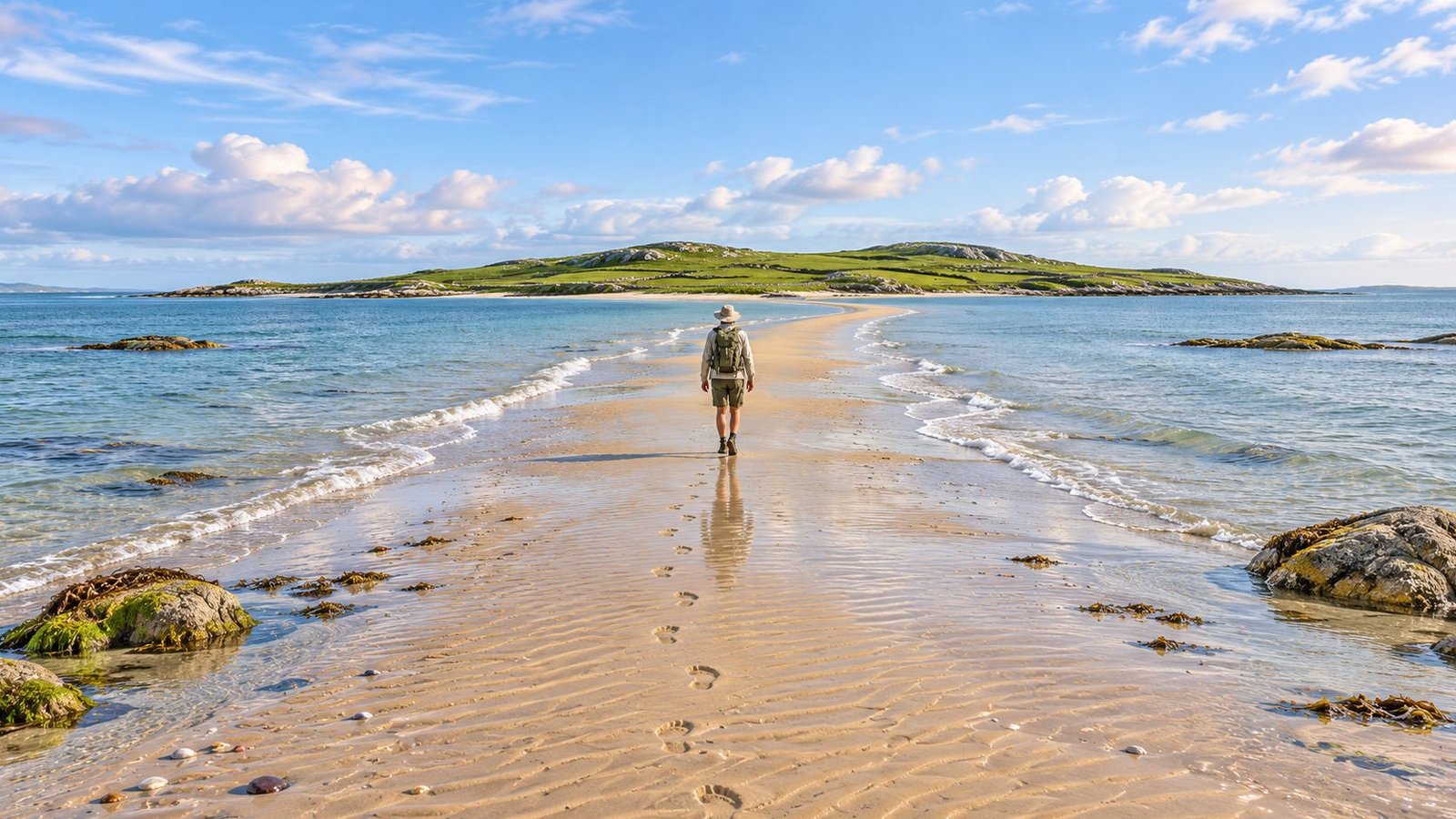
Lying just off the coast near Claddaghduff, Omey Island offers a sense of genuine Atlantic remoteness without stepping aboard a ferry. At low water, the sea retreats to reveal a broad, flat sandy strand linking the mainland shore directly to the island's grassy tracks. Once across, walkers find an ancient ruined church site linked to St Feichin, quiet sandy coves, a small freshwater lake, and wide skies far removed from the busier tour-bus stops along the N59.
Timing the crossing is essential, because the incoming tide covers the strand swiftly and cuts off the route back to Claddaghduff.
Reading the Crossing Safely
Tide discipline: Check official Irish tide tables the evening before you travel, aim to cross on a falling tide well ahead of low water, and never step or drive onto the causeway once tidal channels start flooding back over the sand.
While local drivers occasionally take vehicles across the firmest tracks, taking a standard rental car onto tidal sand invites stuck tyres and recovery costs rarely covered by hire agreements. Leaving the car neatly parked on the Claddaghduff mainland side and crossing on foot is simpler, safer, and fits the unhurried feel of the island.
- Ask locally before walking: Speak with staff at your Clifden accommodation or in Claddaghduff about current sand conditions and the safest return margin for that day's tide.
- Wear sturdy waterproof boots: Even at low water, shallow runnels and wet sand linger across parts of the crossing.
- Consider a guided walk: Local guides periodically lead low-tide crossings that combine safe route selection with stories of Omey's coastal archaeology and past island communities.
- Carry wind protection: The island sits completely exposed to Atlantic air, with little shelter once you leave the dunes.
Pair Omey with an easy Clifden morning or afternoon rather than squeezing it between distant stops, so tidal timing stays in charge of the clock.
8. Roundstone Harbour and Local Craftwork
Tucked onto the southern edge of Connemara with the Twelve Bens rising directly behind the water, Roundstone trades Clifden's market-town bustle for a compact fishing harbour and a slower coastal rhythm. Brightly painted cottages line the narrow street above the quay, where small boats moor along the stone wall and pubs serve fresh local shellfish within yards of the sea. It's the most rewarding stop in the southern cluster to abandon the car completely and explore on foot.
Roundstone has built a long-standing reputation as a working centre for traditional Irish craftwork and visual arts. Local workshops in the village are particularly renowned for crafting bodhráns (traditional goatskin frame drums) alongside other folk instruments, and visitors can often watch makers shaping frames, curing skins, and testing tones before browsing small neighbouring art galleries.
Making the Most of the Village Pace
Treating Roundstone as a brief photo pull-in misses the entire point of coming south. Park once near the harbour edge rather than circling the narrow village street, walk out along the pier to take in the mountain skyline across Bertraghboy Bay, and give yourself time to talk with craftspeople in the studios.
Because independent workshops and galleries adjust their hours across spring, autumn, and winter, confirm opening times ahead if you're travelling outside peak summer. A strong late-afternoon sequence moves directly from walking Dog's Bay into Roundstone for coffee or seafood chowder, browsing the instrument workshops before closing, and staying on into the evening when informal traditional music sessions strike up in the harbourfront pubs.
9. Irish Language, Traditional Music and Gaeltacht Culture
Connemara isn't just a wilderness backdrop for scenic driving; it's one of Ireland's strongest living Gaeltacht regions, where the Irish language (Gaeilge) remains part of daily village conversation, local radio, and road signage. To see how that linguistic heritage intersects with modern national history, head south into the parish of Ros Muc. As noted in the Heritage Ireland Galway itinerary, Ros Muc sits in the heart of the Connemara Gaeltacht and is home to Patrick Pearse's summer cottage, built in 1909 by the writer, educator, and leader of the 1916 Rising.
Visiting the cottage and its visitor centre anchors the surrounding boglands, loughs, and Irish place names in real human history. Drive through the neighbouring Gaeltacht villages afterwards and you'll notice road signs written solely in Irish, making offline maps and basic familiarity with dual town names useful.
Session Etiquette and Living Language
By evening, that same cultural continuity moves indoors to the corner tables of pubs across Clifden, Roundstone, and smaller rural parishes. Travellers planning their evenings specifically around fiddles, accordions, and pipes can draw further inspiration from this Irish traditional music road trip collection.
- Ask locally for session nights: Informal music nights shift by season and day of the week, so check chalkboard listings in Clifden's main square or ask your guesthouse host where players are gathering.
- Respect the informal circle: Traditional sessions are musical conversations rather than staged theatre; listen during slower airs and always ask musicians' permission before taking photographs or video.
- Use a few Irish phrases: Opening with Dia duit (hello) or thanking someone with Go raibh maith agat is warmly appreciated across Gaeltacht parishes.
- Pair culture with quieter afternoons: Driving down to Ros Muc works well on a grey afternoon when high peaks are hidden in cloud, leading straight back to Clifden or Roundstone for dinner and music.
A quiet hour at Pearse's Cottage followed by an unhurried evening pub session does more to explain Connemara than rushing past six viewpoints from behind a windscreen.
Comparing Connemaras standout stops at a glance
| Item | Best For | Time to Allow | Location | Booking Needed |
|---|---|---|---|---|
| Connemara National Park and the Diamond Hill Walk | Hiking and mountain views | A few hours for the summit route | Letterfrack | No; check trail conditions |
| Sky Road Scenic Loop from Clifden | Coastal views with a gentle outing | Half a day | Clifden | No |
| Kylemore Abbey and the Victorian Walled Garden | History, gardens and photography | 2–3 hours | Near Letterfrack | Check tickets and opening times |
| Killary Harbour and the Leenaun Fjord Cruise | Relaxed scenic boat trips | Allow time for a cruise and shoreline stops | Leenaun | Book the cruise with the operator |
| The Twelve Bens and the Lough Inagh Valley | Mountain scenery, walking and scenic drives | Flexible; a full day for mountain hikes | Lough Inagh Valley | No; consider a guide for demanding routes |
| Dog's Bay and the Roundstone Beaches | Beach walks and relaxing by the coast | A relaxed beach visit | Near Roundstone | No |
| Omey Island and the Tidal Causeway | A tide-dependent island walk | Allow time for a low-tide crossing and island walk | Near Claddaghduff | No; guided walks are optional |
| Roundstone Harbour and Local Craftwork | Local crafts, seafood and village life | A leisurely afternoon | Roundstone | No; check workshop opening hours |
| Irish Language, Traditional Music and Gaeltacht Culture | Traditional music and local culture | An evening or a flexible visit | Clifden, Roundstone and nearby Gaeltacht villages | No; check local listings for events |
Building Two Good Connemara Days From This List
Turning these nine stops into realistic days comes down to clustering them geographically instead of zig-zagging across county lanes. Base yourself in Clifden for the broadest choice of pubs, supermarkets, and central road access, or pick Letterfrack if hiking the national park comes first.
Day one (Letterfrack and Clifden): Start early at Connemara National Park to climb Diamond Hill before parking tightens, then refuel with lunch in Letterfrack. Drive north to Kylemore Abbey in the afternoon once peak midday tour coaches begin clearing out, allowing unhurried hours for the house, lakeside church, and walled garden. Head back south to Clifden in time to drive the Sky Road in clean late-afternoon light, finishing with dinner and traditional music in town.
Day two (Inagh Valley, Killary and the Roundstone Coast): Leave Clifden or Letterfrack for the R344 through the Lough Inagh valley beneath the Twelve Bens, continuing north to Killary Harbour at Leenaun for a booked fjord cruise and a short stop at Aasleagh Falls. Loop south towards Roundstone Harbour for seafood lunch and a look inside the bodhrán workshops, then walk the crushed-shell sands of Dog's Bay and Gurteen Beach. Slot Omey Island strictly into whichever half-day aligns with a falling tide, rather than trying to force the crossing between distant stops.
Practical Checks Before Setting Out
Four small habits save far more time in west Galway than driving faster:
- Stock fuel and food early: Fill the tank and grab picnic supplies in Galway City or Clifden before turning onto rural loops around Roundstone, Ros Muc, or the Inagh valley.
- Check mountain weather each morning: Swap summit hikes cleanly with Kylemore Abbey, Pearse's Cottage, or Roundstone workshops if Atlantic mist drops over the peaks.
- Verify official tide tables: Check low-water windows the evening before heading to Claddaghduff for Omey Island, and keep a wide safety margin.
- Protect one flexible afternoon: On a longer west-coast trip, leaving half a day unscheduled prevents a single washed-out morning from derailing the whole route.
Independent drivers can assemble a two-day Connemara circuit like this effortlessly using their own accommodation bookings and hire car. Travellers who prefer multi-day routing and stays organised ahead of time can also consider arranged itineraries from BTOURS, which operates curated multi-day tours across Ireland, the UK, Greece, and the Nordics, including the Ireland 14-Day Active Self-Drive Adventure lasting 14 days and 13 nights. Note that independently booked flights, hotels, and car hire arranged through third-party services remain separate from published tour packages unless a selected itinerary explicitly includes them.
Ready to map your west-of-Ireland route? Browse current Irish itineraries on the BTOURS multi-day tours page, or compare third-party car hire, hotels, and travel essentials for an independent Connemara road trip through the BTOURS Travel Hub.
Links disclosure: This article may contain external links, including affiliate links. If you book or buy through an affiliate link, BTOURS may earn a commission.