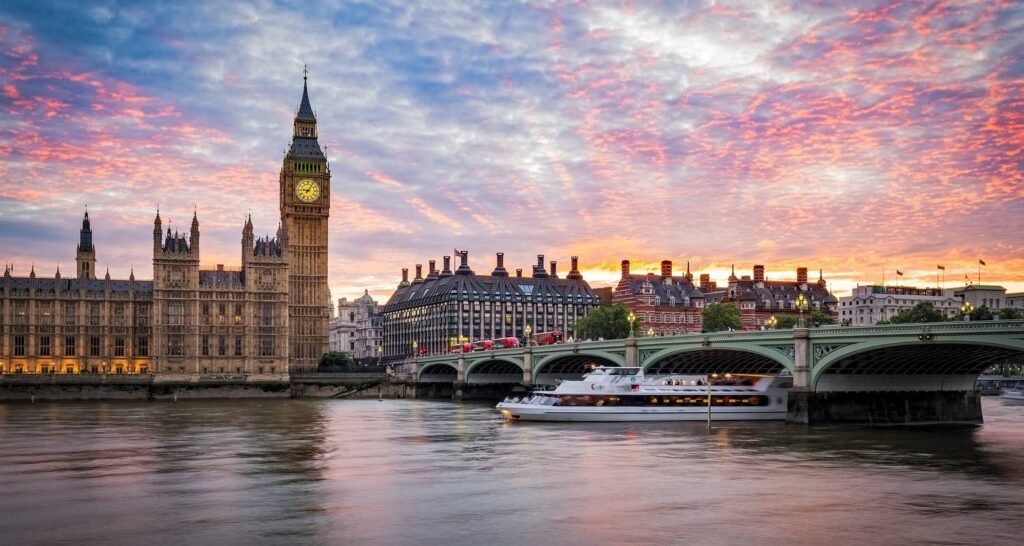

England’s allure lies not just in its bustling cities but in its rich tapestry of charming towns, each telling a unique story of history, culture, and breathtaking landscapes. From the honey-hued villages of the Cotswolds to the dramatic coastal scenery of Yorkshire, the true soul of the nation is discovered along its winding country lanes and within its ancient market squares. This guide is your key to unlocking those hidden gems and iconic destinations, crafted specifically for the independent explorer and the self-drive adventurer eager to uncover the authentic character of England at their own pace.
Forget generic itineraries; this is a comprehensive roundup designed to inspire your next great road trip. We’ve curated a list of ten exceptional towns to visit in England, each offering a distinct and memorable experience. Whether you’re a history aficionado drawn to Roman baths and medieval castles, a culinary connoisseur in search of the perfect gastropub, or an outdoor enthusiast ready to tackle scenic trails, you’ll find your ideal destination here.
Each entry is packed with practical, actionable insights, detailing not just why you should visit, but also providing specific recommendations for what to see, where to stay, and the best seasons to travel. We’ll even provide self-drive tips and suggested routes that seamlessly connect these incredible locations, helping you craft a personalised journey. Prepare to travel through time, from the Roman foundations of Bath to the literary heartlands of Rye. These are the places where lasting memories are made, representing the very best of England for an unforgettable 2025 adventure.
1. The Cotswolds: Medieval Villages and Rolling Countryside
Picture England at its most idyllic, and you’ll likely conjure an image of the Cotswolds. This cherished region, stretching across several counties including Gloucestershire and Oxfordshire, is a masterpiece of pastoral beauty. It’s a landscape defined by its famous honey-coloured stone, used to build everything from grand manor houses to the charming, crooked cottages that line its village streets. The Cotswolds stands out as one of the best areas to visit in England for those seeking a tranquil escape into a world seemingly untouched by time.
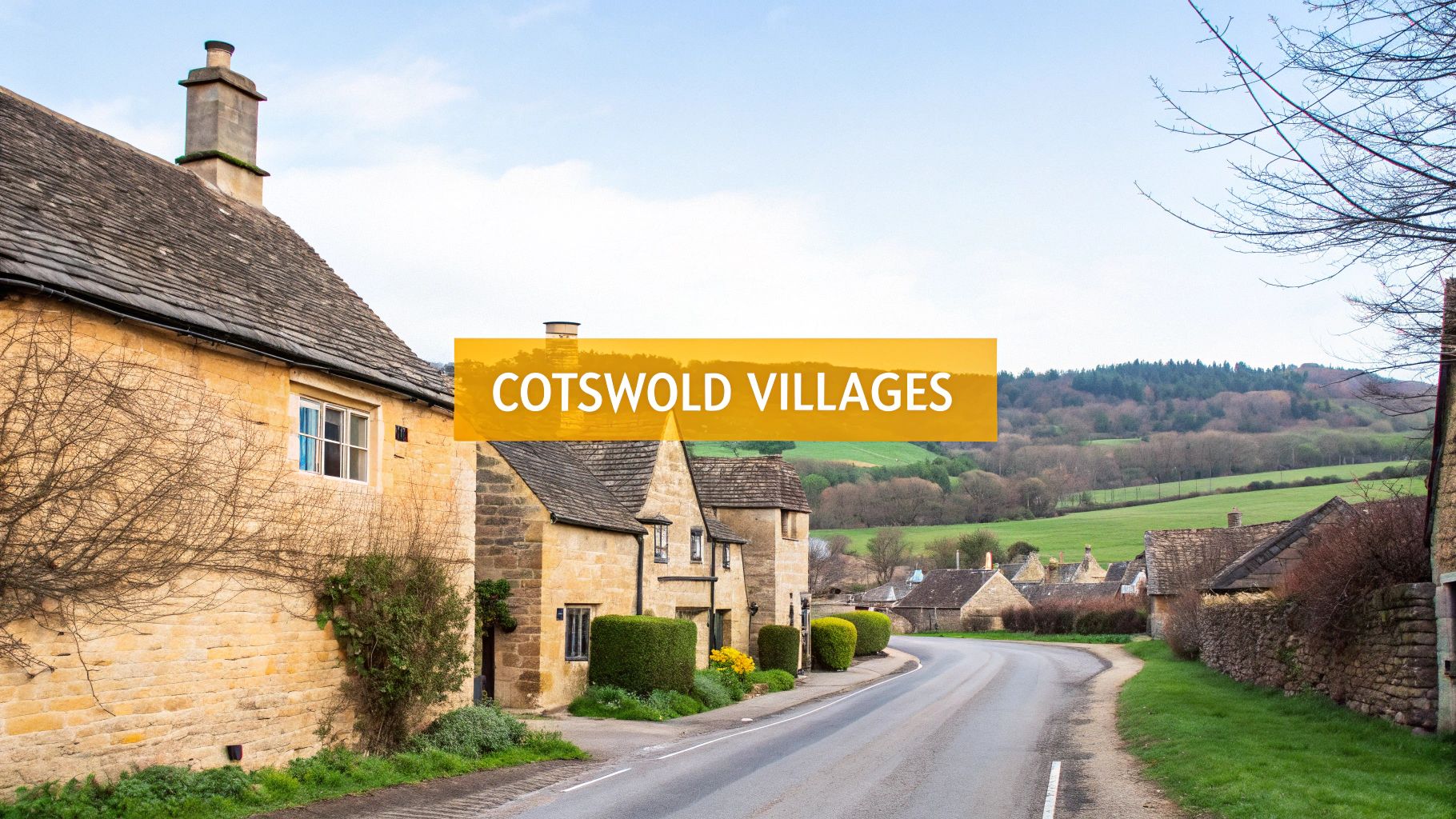
This Area of Outstanding Natural Beauty offers a perfect self-drive adventure, allowing you to meander through a network of ancient market towns and sleepy hamlets at your own pace. The region’s wealth was built on the medieval wool trade, leaving a legacy of magnificent “wool churches” and handsome market squares that remain the heart of community life.
Key Highlights & Practical Tips
The joy of the Cotswolds is in the discovery. While iconic villages are a must-see, the real magic lies in the journey between them.
- Must-Visit Villages: Don’t miss the riverside charm of Bourton-on-the-Water, often called the “Venice of the Cotswolds.” Marvel at the impossibly picturesque Arlington Row in Bibury, and wander the elegant high street of the historic wool town, Chipping Campden.
- Best Time to Visit: To experience the region at its best, plan your visit for spring (April-May) when gardens are in full bloom, or autumn (September-October) for crisp air and rich foliage, both with fewer crowds.
- Driving Advice: Base yourself centrally for 4-5 days to minimise travel time. Explore the winding backroads between villages; these less-travelled routes often reveal the most authentic and unspoilt scenery.
Insider Tip: Local farm shops are Cotswold treasures. Stop for freshly baked goods, local cheeses, and artisanal preserves. It’s the perfect way to source a picnic for a scenic stop along your drive.
For those planning an immersive journey, a well-organised itinerary can transform your experience. Our customisable self-drive tours are designed to help you uncover the hidden gems of the region. Discover more about our Cotswolds self-drive itineraries and start planning your quintessentially English adventure.
2. Rye: Medieval Hilltop Town and Literary Heritage
Perched dramatically on a hill in East Sussex, Rye is one of England’s most enchanting and beautifully preserved medieval towns. Its maze of cobbled lanes, crooked timber-framed houses, and secret passages makes you feel as though you have stepped directly into the pages of a history book. Rye stands out as one of the best towns to visit in England for those who cherish atmospheric charm, literary connections, and a compelling maritime past.
Once a bustling seaport and member of the powerful Cinque Ports confederation, Rye is now landlocked, its harbour having silted up centuries ago. This isolation helped preserve its unique character, creating a perfect destination for a self-drive stop. The town offers a captivating blend of history, from smuggling legends at ancient inns to the quiet elegance of Georgian townhouses that once hosted famous writers.
Key Highlights & Practical Tips
The best way to experience Rye is to simply get lost in its enchanting streets, discovering hidden courtyards, quirky shops, and historic pubs along the way.
- Must-Visit Landmarks: Climb the tower of the Church of St. Mary for breathtaking panoramic views over the terracotta rooftops and surrounding marshland. Step back in time at the legendary Mermaid Inn, a 15th-century inn famed for its smuggling connections. Literary fans will adore Lamb House, a handsome Georgian property once home to authors Henry James and E. F. Benson.
- Best Time to Visit: Visit during late spring (May-June) or early autumn (September-October) for pleasant weather and fewer visitors. September also hosts the annual Rye Arts Festival, which fills the town with music, literary events, and art.
- Driving Advice: Park your car at one of the long-stay car parks at the base of the hill. The town’s historic centre is compact and best explored on foot, as many of the cobbled streets are steep and narrow.
Insider Tip: Take a short drive to the nearby Dungeness National Nature Reserve. Its stark, otherworldly shingle landscape, dotted with unique fishermen’s huts and the iconic lighthouse, provides a dramatic contrast to Rye’s medieval charm.
A visit to Rye can be seamlessly integrated into a wider exploration of the South Coast. Our tailored itineraries allow you to combine this historic gem with the region’s stunning coastline. Discover more about our South of England self-drive itineraries and let us craft your journey through history.
3. Bath: Roman Heritage and Georgian Elegance
Step into a city where two millennia of history are etched into the streets. Bath is a rare jewel, a UNESCO World Heritage site celebrated for its harmonious blend of ancient Roman ingenuity and magnificent Georgian architecture. Built from the distinctive, honey-hued Bath stone, the city presents an unbroken tableau of neoclassical grandeur, making it one of the most essential towns to visit in England for lovers of history, culture, and sophisticated city breaks.

This compact and eminently walkable city was founded upon natural hot springs, which the Romans transformed into a grand bathing complex. Centuries later, 18th-century society rediscovered its appeal, reshaping Bath into the elegant spa resort seen today. The result is a unique destination where you can tread ancient Roman pavements in the morning and admire sweeping Georgian crescents in the afternoon. To delve deeper into this historic city’s Roman heritage and Georgian elegance, you can always explore Bath’s unique charm.
Key Highlights & Practical Tips
Bath’s treasures are concentrated and best explored on foot, with each corner revealing a new architectural marvel or historical secret.
- Must-Visit Sites: Immerse yourself in the ancient world at the remarkably preserved Roman Baths. Stand in awe of the Gothic splendour of Bath Abbey, and then marvel at the architectural genius of John Wood the Elder and Younger at The Circus and the iconic Royal Crescent.
- Best Time to Visit: Visit during the shoulder seasons of spring (April-May) or autumn (September-October) for pleasant weather and fewer crowds. The famous Bath Christmas Market also makes early winter a magical, albeit busy, time to visit.
- Exploring Further: Use Bath as your elegant base for a 2-3 night stay. This allows ample time to explore the city’s heritage sites without rushing and provides a perfect launchpad for day trips to nearby wonders like the medieval city of Wells or the scenic southern Cotswolds.
Insider Tip: While the main attractions are unmissable, take time to wander the quieter side streets. Here you’ll find smaller, perfectly preserved Georgian townhouses, independent boutiques, and charming cafés away from the main tourist paths.
Planning to integrate this remarkable city into a wider tour? Our custom itineraries allow you to seamlessly connect Bath with the Cotswolds and other stunning English regions. Explore our England self-drive tours to see how Bath can become a highlight of your journey.
4. Ludlow: Medieval Castle Town and Foodie Destination
Nestled in the rolling Shropshire countryside, Ludlow is a perfectly preserved medieval market town crowned by a magnificent Norman castle. This architectural gem, with its maze of timber-framed buildings and elegant Georgian townhouses, offers a journey back in time. Perched high above the River Teme, Ludlow stands out as one of the best towns to visit in England for those who cherish both profound history and an exceptional culinary scene, earning its reputation as a premier foodie destination.
The town’s compact centre makes it a delight to explore on foot, with historic streets like King Street and Mill Street revealing independent shops, traditional pubs, and acclaimed restaurants. The imposing presence of Ludlow Castle and the grandeur of St Laurence’s Church anchor the town in its rich past, while its vibrant market and food festivals signal a forward-thinking passion for quality local produce.
Key Highlights & Practical Tips
Ludlow’s appeal lies in its seamless blend of heritage and modern gastronomy. A two-night stay allows ample time to soak in the atmosphere, explore the castle, and indulge in the local food culture.
- Must-Visit Landmarks: Explore the formidable ruins of Ludlow Castle, a fortress central to English history for centuries. Climb the tower of St Laurence’s Church, one of England’s largest parish churches, for breathtaking panoramic views. A short drive away, the perfectly preserved fortified manor of Stokesay Castle is unmissable.
- Best Time to Visit: For food lovers, September is unbeatable due to the renowned Ludlow Food Festival. Otherwise, late spring and early autumn offer pleasant weather for exploring the town and the surrounding Shropshire Hills Area of Outstanding Natural Beauty.
- Driving Advice: Ludlow is an excellent base for exploring the Welsh Marches. Use your car to visit the Ludlow Farmshop for artisan produce and take scenic drives through the picturesque countryside. Remember to book restaurant reservations well in advance, especially on weekends.
Insider Tip: Walk down to the River Teme at the foot of the castle for a classic photo opportunity. The view looking up at Dinham Bridge and the castle ramparts is one of the most iconic in the region.
The town’s culinary excellence makes it a highlight of any food-focused journey through the country. Our guided tours are designed to connect you with authentic local flavours. Explore our Taste of England self-drive itinerary and discover the best of the nation’s gastronomy.
5. Whitby: Coastal Heritage and Literary Connections
Perched dramatically on the rugged North Yorkshire coast, Whitby is a town of captivating contrasts. It’s a place where ancient maritime history, Gothic folklore, and the simple charm of a working fishing harbour merge. The town is split by the River Esk, with its iconic swing bridge connecting the bustling west side to the historic east, all watched over by the haunting ruins of Whitby Abbey on the clifftop above. Whitby is undeniably one of the most atmospheric and unique coastal towns to visit in England.
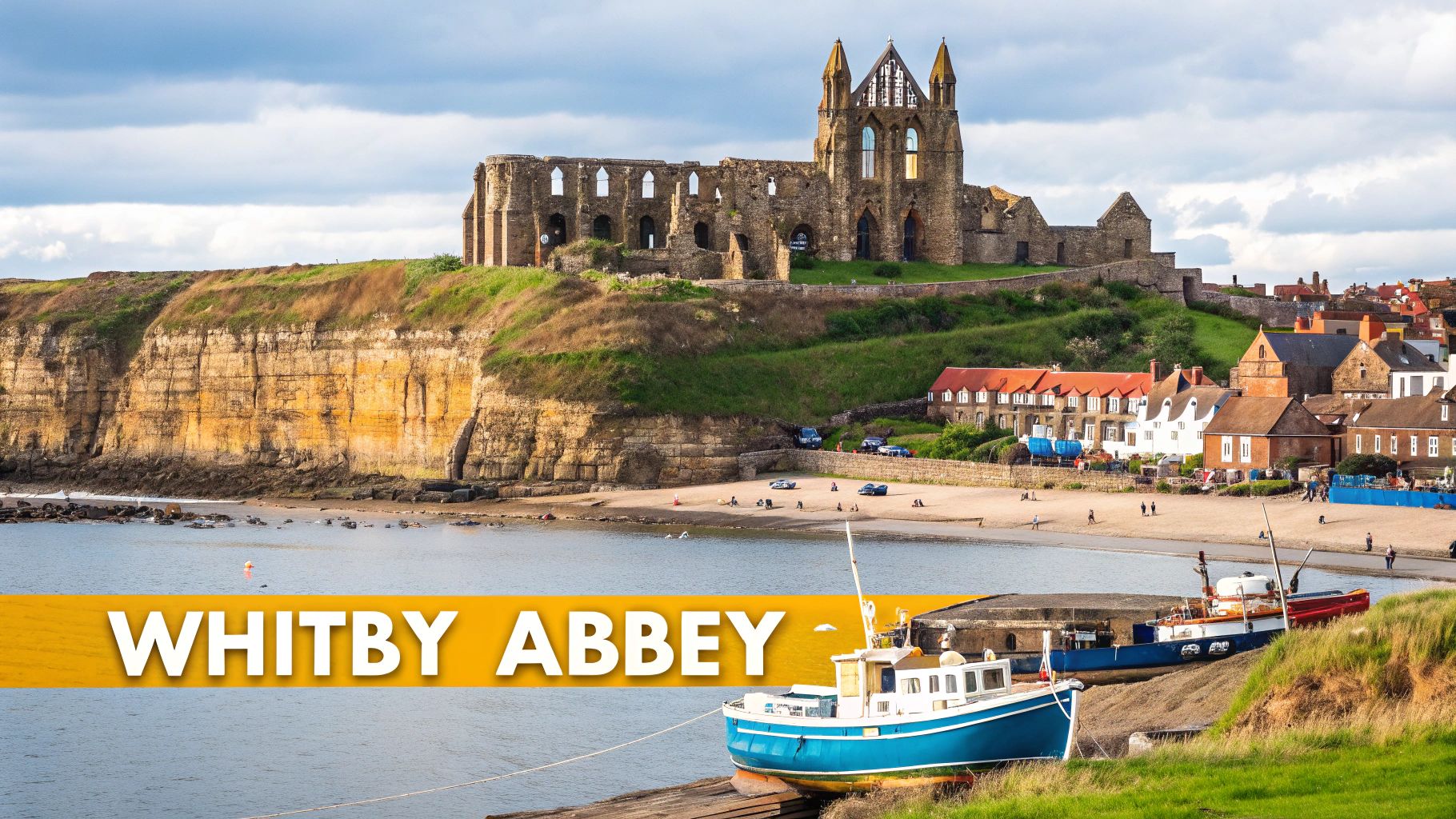
This historic port town offers a rich tapestry of stories, from its days as a whaling centre and the home of the famed explorer Captain Cook to its connection with Bram Stoker’s Dracula. A self-drive tour here allows you to explore the town’s winding cobbled streets at your leisure before venturing into the breathtaking landscapes of the surrounding North York Moors National Park.
Key Highlights & Practical Tips
Whitby’s allure lies in its blend of dramatic scenery, deep history, and lively harbour life. It’s a destination that rewards curiosity and exploration.
- Iconic Landmarks: Climb the 199 steps to St. Mary’s Church and the magnificent ruins of Whitby Abbey, the very inspiration for Dracula’s castle. Delve into maritime history at the Captain Cook Memorial Museum, housed in the building where the young explorer once lodged.
- Best Time to Visit: Visit during late spring (May-June) or early autumn (September) for pleasant weather and fewer crowds than the summer peak. The town also has a unique atmosphere during its bi-annual Goth Weekends.
- Driving Advice: Plan a stay of 2-3 nights to fully absorb the town’s atmosphere and explore the nearby coast. Use Whitby as a base to discover picturesque coastal villages like Robin Hood’s Bay and Staithes, both just a short, scenic drive away.
Insider Tip: For an authentic taste of Whitby, head to one of the harbour-side fish and chip restaurants. Time your visit to see the local fishing fleet returning in the morning or afternoon for the freshest catch.
Exploring this dramatic coastline is a highlight of any English road trip. Our customisable itineraries ensure you experience the best of Yorkshire’s heritage and natural beauty. Discover more about our Yorkshire self-drive itineraries and start planning your coastal adventure.
6. Chepstow: Border Castle and River Gateway
Perched dramatically on a limestone cliff overlooking the River Wye, Chepstow serves as a historic gateway between England and Wales. This border town in Monmouthshire is dominated by its magnificent Norman castle, one of the oldest surviving stone fortifications in Britain. It’s a place where centuries of Anglo-Welsh history feel tangible, etched into the town walls and ancient streets. Chepstow is one of the most compelling towns to visit in England (and Wales!) for those who love medieval history and stunning river landscapes.
The town’s strategic position makes it an ideal base for a self-drive tour exploring two distinct countries. Within minutes, you can be winding through the breathtaking Wye Valley Area of Outstanding Natural Beauty or venturing into the ancient woodlands of the Forest of Dean. Chepstow’s authentic, lived-in atmosphere provides a welcome contrast to more crowded tourist spots, offering a genuine taste of border life.
Key Highlights & Practical Tips
Chepstow’s appeal lies in its combination of impressive heritage sites and easy access to world-class natural scenery. A short stay here opens up a wealth of exploration opportunities.
- Must-See Sights: Explore the formidable Chepstow Castle, which documents the evolution of castle-building over centuries. Just a short drive away are the hauntingly beautiful Gothic ruins of Tintern Abbey and the spectacular viewpoint of Symonds Yat, offering panoramic views of the Wye Valley.
- Best Time to Visit: Visit in late spring (May-June) for lush green landscapes or early autumn (September-October) when the forests of the Wye Valley and Dean are ablaze with colour. These periods also offer pleasant weather for walking.
- Driving Advice: Base yourself here for 2-3 nights. The town is a perfect launchpad for scenic drives along the Wye Valley and into the Forest of Dean. The A466 road north from Chepstow is a particularly memorable route.
Insider Tip: Walk a section of the Wye Valley Walk directly from the town for incredible views of the castle and river. Afterwards, head to one of the traditional riverside pubs for a pint of local ale and classic pub fare.
This unique border location allows you to craft an itinerary that blends the best of both nations. Explore our South England and Wales itinerary to see how Chepstow can be a cornerstone of your journey.
7. Keswick: Lake District Gateway and Mountain Adventure
Nestled on the shores of the magnificent Derwentwater, Keswick is the beating heart of the northern Lake District. This vibrant market town is the perfect base for adventurers and scenery-seekers, offering an unparalleled blend of charming town life and dramatic mountain landscapes. It provides direct access to some of England’s most celebrated fells and valleys, making it one of the essential towns to visit in England for outdoor enthusiasts.

With its sturdy slate buildings, bustling market square, and excellent infrastructure for walkers and explorers, Keswick expertly combines cultural immersion with rugged adventure. Whether you’re planning to scale a famous peak, enjoy a gentle lakeside stroll, or delve into local history, the town provides an ideal and welcoming hub for your Lake District journey.
Key Highlights & Practical Tips
From panoramic fell walks to unique cultural attractions, Keswick and its surroundings are packed with memorable experiences. A well-planned self-drive tour allows you to capture the full majesty of the region.
- Must-Do Activities: Take a scenic launch across Derwentwater to appreciate the surrounding fells from a different perspective. For an accessible yet rewarding hike, the walk up Catbells offers breathtaking panoramic views. Don’t miss the unique Pencil Museum for a fascinating look at the town’s industrial heritage.
- Best Time to Visit: The shoulder seasons of May-June or September-October offer the best balance of pleasant weather and fewer crowds, allowing for a more peaceful exploration of the popular trails and attractions.
- Driving Advice: Base yourself in or near Keswick for 3-4 nights to fully explore. The scenic drive south through the Borrowdale valley is a must-do, revealing some of the Lake District’s most dramatic and inspiring landscapes right from your car.
Insider Tip: For a truly memorable evening, book a performance at the acclaimed Theatre by the Lake. Its stunning location on the edge of Derwentwater makes for an unforgettable cultural experience, but tickets often sell out in advance.
Exploring the fells and valleys requires careful planning. Our custom self-drive itineraries ensure you experience the best of the region’s scenery and culture safely and efficiently. Explore our Lake District self-drive itineraries and begin planning your mountain adventure.
8. Rye and the Cinque Ports: Medieval Fortified Towns
Step back into a world of maritime power and coastal defence by exploring the historic Cinque Ports. This confederation of medieval towns along the coast of Kent and Sussex was once England’s first line of defence, granted royal privileges in exchange for providing ships and men for the crown. Visiting these towns today offers a compelling journey through centuries of English naval history, where ancient fortifications meet windswept beaches and smugglers’ tales echo down cobbled lanes.
This region is perfect for a self-drive tour, allowing you to easily hop between characterful towns that each offer a unique slice of coastal heritage. From the formidable fortress at Dover to the perfectly preserved medieval streetscapes of Sandwich, the Cinque Ports are among the most fascinating towns to visit in England for history lovers and anyone drawn to the sea. The layered past is visible everywhere, in ancient town walls, imposing castles, and working harbours.
Key Highlights & Practical Tips
The allure of the Cinque Ports lies in their distinct personalities and shared history. A multi-day trip is the best way to absorb the unique atmosphere of each location.
- Must-Visit Towns: Explore the impossibly charming hilltop town of Rye, with its cobbled streets and smugglers’ inns. Discover Sandwich, one of the most complete medieval towns in England, and marvel at the magnificent castles in Deal and the iconic white cliffs of Dover.
- Best Time to Visit: Visit during late spring (May-June) or early autumn (September-October) for pleasant weather ideal for coastal walks and exploring historic sites, all while avoiding the peak summer crowds.
- Driving Advice: Base yourself in a central town like Rye or Sandwich for 3-4 days to create a fantastic hub for day trips. The short driving distances between the ports make it easy to visit several in one trip. Plan ahead and check opening times for castles, as they can vary seasonally.
Insider Tip: Many of the Cinque Ports are linked by the England Coast Path. For a different perspective, park your car and walk a section of the trail, such as the scenic route between Deal and Walmer, to fully appreciate the coastal scenery and formidable castle views.
A self-drive itinerary is the ideal way to connect these historic dots along the coast. Our customisable tours can help you craft the perfect journey through England’s maritime past. Discover more about our Cinque Ports self-drive itineraries and prepare for an unforgettable coastal adventure.
9. Canterbury: Cathedral City and Pilgrimage Heritage
Step into a city where centuries of history echo from ancient stones and towering spires. Canterbury, the heart of English Christianity, is a destination defined by its magnificent Gothic cathedral and its deep-rooted medieval pilgrimage tradition. For travellers seeking to connect with England’s profound spiritual and historical legacy, this Kentish city offers a journey back in time, blending its sacred past with a vibrant, contemporary cultural life.
As the setting for Geoffrey Chaucer’s famous Canterbury Tales, the city has long been a focal point for pilgrims and visitors. Its compact, walkable centre is a delightful maze of timber-framed houses, historic pubs, and independent shops, all nestled along the gentle River Stour. Canterbury stands as one of the essential towns to visit in England for those who appreciate how history, faith, and culture intertwine to create a truly unique atmosphere.
Key Highlights & Practical Tips
Beyond the awe-inspiring cathedral, Canterbury’s charm lies in its layers of history, from Roman foundations to Tudor architecture. A stay of 2-3 nights is ideal to fully absorb its atmosphere.
- Must-Visit Sites: The breathtaking Canterbury Cathedral is the ultimate highlight; take a guided tour to truly appreciate its stained glass and dramatic history. Explore the atmospheric ruins of St. Augustine’s Abbey, a key part of the city’s UNESCO World Heritage Site, and learn about Chaucer’s pilgrims at The Canterbury Tales visitor attraction.
- Best Time to Visit: For a more contemplative experience with fewer crowds, plan your visit for spring (March-April) or autumn (September-October). The weather is pleasant, and the city’s historic character shines through.
- Exploring the City: Walk a section of the old city walls for wonderful panoramic views of the cathedral and rooftops. Be sure to wander the side streets off the main tourist routes, like The King’s Mile, to discover unique boutiques and cosy cafés.
Insider Tip: For a moment of pure tranquillity, find the Greyfriars Chapel, the oldest Franciscan building in Britain. Tucked away over the river, it’s a peaceful and picturesque spot often missed by larger tour groups.
Canterbury serves as an excellent base for exploring the wider Kent countryside, known as the “Garden of England.” Our self-drive tours can help you connect this historic city with the charming coastal towns and castles of the region. Discover more about our Kent self-drive itineraries and start planning your pilgrimage into England’s past.
10. Oxford: University City and Scholarly Heritage
Step into a world where centuries of academic tradition and breathtaking architecture converge in Oxford, England’s most celebrated university city. For over 900 years, this has been a centre of learning and intellectual pursuit, leaving an indelible mark on its landscape. The city’s famous “dreaming spires” rise above magnificent college quads, historic libraries, and cobbled lanes, creating a unique atmosphere of scholarly heritage and living history.
Oxford is more than just a university; it’s a vibrant city offering a deep cultural dive for the curious traveller. Exploring its compact centre on foot is a journey through time, with each corner revealing a new architectural marvel or a hidden garden. Its blend of intellectual energy and timeless beauty makes it one of the most compelling towns to visit in England for those who appreciate history, art, and culture.
Key Highlights & Practical Tips
A visit to Oxford is an immersive experience. To truly appreciate its depth, plan your explorations and allow time for spontaneous discoveries.
- Must-See Landmarks: Explore the grand halls of Christ Church College and the medieval perfection of Merton College. Marvel at the iconic Radcliffe Camera and delve into the vast collections of the Bodleian Library and the Ashmolean Museum, Britain’s oldest public museum.
- Best Time to Visit: Plan your trip outside of university term time (summer or during Christmas and Easter breaks) for a more tranquil experience with fewer crowds. A stay of 2-3 nights allows ample time to explore the main sights.
- Exploring the City: Book college tours in advance to guarantee access. For a stunning panoramic view, climb the tower of the University Church of St Mary the Virgin. For a classic Oxford pastime, try punting on the River Cherwell.
Insider Tip: Many of Oxford’s colleges have beautiful and secluded gardens that are open to the public. They offer a perfect, peaceful retreat from the bustling city streets, ideal for a quiet moment of reflection.
While Oxford is a fantastic walking city, it also serves as an excellent gateway for further exploration. Its central location makes it an ideal starting point for day drives into the nearby Cotswolds, and it’s a key stop on many national itineraries. For those who prefer rail travel, our organised tours offer seamless connections. Explore our Britain by train itineraries and see how Oxford can be a highlight of your journey.
Top 10 English Towns: Quick Comparison
| Destination | Accessibility & Logistics | Time & Cost (Resource requirements) | Expected Experience (Outcomes) | Ideal Use Cases | Key Advantages |
|---|---|---|---|---|---|
| The Cotswolds: Medieval Villages and Rolling Countryside | Best by self-drive; limited inter-village public transport; scenic backroads | 4–5 days recommended; variable costs (range from budget B&Bs to luxury); book in peak season | Leisurely village exploration, pastoral landscapes, photography, artisan food experiences | Heritage lovers, landscape photographers, flexible family trips | High concentration of heritage sites, varied accommodation, strong local food and craft culture |
| Rye: Medieval Hilltop Town and Literary Heritage | Compact and walkable but hilly; limited parking; reachable by car/train | 1–2 days; modest but limited accommodation that fills quickly | Intimate medieval streets, literary and artistic atmosphere, manageable exploration | Cultural and literary short stays, artists and creatives | Authentic medieval character, vibrant arts/bookshop scene, compact exploration |
| Bath: Roman Heritage and Georgian Elegance | Excellent transport links; city centre walkable but parking limited; heavy tourist flows | 2–3 nights; higher costs for accommodation and dining; attraction entry fees (Roman Baths) | Deep Roman and Georgian architectural immersion, museums, festivals, refined dining | Architecture and history enthusiasts, educational family trips | UNESCO World Heritage architecture, outstanding museums and visitor infrastructure |
| Ludlow: Medieval Castle Town and Foodie Destination | Best accessed by car; compact town centre; scenic regional drives | 2 nights typical; moderate costs with quality independent accommodation; restaurants may require booking | Castle and medieval town exploration combined with a strong contemporary food scene | Food enthusiasts, heritage seekers, travellers combining history with gastronomy | Renowned local food culture, authentic market town atmosphere, impressive castle |
| Whitby: Coastal Heritage and Literary Connections | Coastal drive recommended; steep streets and limited parking; weather-dependent | 2–3 nights; moderate costs with peak-season pressure on rooms | Dramatic coastal scenery, maritime and literary heritage, seafood and cliff walks | Coastal/nature lovers, literary tourists, families | Whitby Abbey and maritime museums, excellent seafood, access to North York Moors |
| Chepstow: Border Castle and River Gateway | Good road links; gateway location for England–Wales tours; riverside walks | 2–3 nights; generally good value for accommodation and dining | Castle and riverside views, Wye Valley drives, cross-border exploration | Border explorers, landscape enthusiasts, multi-region self-drive tours | Strategic base for England–Wales excursions, dramatic river scenery, less crowded |
| Keswick: Lake District Gateway and Mountain Adventure | Best by car via scenic routes (A591); parking/traffic issues in peak season | 3–4 nights recommended for varied activities; can be expensive in high season; outdoor gear advised | Lake and fell walks, outdoor activities, market town culture, family-friendly adventures | Outdoor adventurers, families, nature and landscape enthusiasts | Outstanding natural landscape, strong outdoor infrastructure, diverse activities |
| Rye and the Cinque Ports: Medieval Fortified Towns | Multiple nearby towns; short driving hops; variable parking and coastal roads | 4–5 day self-drive itinerary to visit multiple towns; modest to moderate costs | Layered maritime and military history, working harbors, coastal walks and castle sites | History and coastal exploration, multi-stop heritage itineraries | Clustered heritage towns within short drives, varied coastal landscapes and fortifications |
| Canterbury: Cathedral City and Pilgrimage Heritage | Excellent links but very crowded; walkable centre with tourist flows; parking constrained | 2–3 nights; moderate to high costs in peak season; cathedral entry fees | Major pilgrimage and Gothic cathedral experience, interpretive museums, historic streets | Religious and medieval history enthusiasts, cultural education trips | Iconic cathedral (UNESCO), strong interpretive resources and festivals |
| Oxford: University City and Scholarly Heritage | Good road/rail access; central parking limited; many colleges restrict entry | 2–3 nights; relatively high costs; guided tours advised for colleges | Academic and architectural immersion, world-class museums, punting and gardens | Architecture lovers, academic and literary tourists, families seeking educational visits | Concentration of historic colleges, top museums, centuries of scholarly tradition |
Crafting Your Perfect English Road Trip
Our journey through England’s most captivating towns, from the honey-coloured lanes of the Cotswolds to the dramatic coastal setting of Whitby, reveals a country brimming with stories, beauty, and unforgettable experiences. We have wandered through the ancient Roman Baths, climbed the medieval battlements of Ludlow Castle, and followed in the footsteps of scholars through Oxford’s hallowed halls. Each destination offers a unique window into the nation’s soul, showcasing the incredible diversity packed into this historic land.
The true magic, however, lies not just in visiting these individual places, but in weaving them together into a personal tapestry of adventure. The freedom of a self-drive tour is the thread that connects these disparate jewels, allowing you to create a narrative that is uniquely yours. It’s about more than just getting from A to B; it’s about the spontaneous detours, the hidden country pubs discovered down a winding lane, and the ability to linger in a place that captures your heart.
Weaving Your Personal Itinerary
The beauty of exploring the best towns to visit in England by car is the sheer flexibility it offers. Your journey can be tailored to your passions, whether you’re a history enthusiast, a nature lover, or a culinary explorer.
- The Historian’s Route: Imagine starting in Canterbury, the heart of English Christianity, before travelling west to the ancient Roman city of Bath. From there, you could journey north through the medieval market towns of the Cotswolds, ending your trip at the formidable border fortress of Chepstow.
- The Coastal Explorer’s Path: Begin in the north at Whitby, soaking in its Gothic atmosphere and maritime heritage. Then, trace the coastline south, perhaps stopping at charming fishing villages along the way, before exploring the historic Cinque Ports and the windswept beauty of Rye.
- The Foodie’s Trail: Start your culinary adventure in Ludlow, a town celebrated for its incredible local produce and Michelin-starred restaurants. Meander through the Cotswolds, sampling artisanal cheeses and local ales, before heading to Bath for an elegant afternoon tea and sophisticated dining.
This level of customisation empowers you to craft an experience that resonates deeply. The key is to blend the well-known highlights with the freedom to explore off the beaten path.
Practical Steps to Plan Your Adventure
Turning this inspiration into a seamless reality requires thoughtful planning. The first step is to anchor your trip around a few key destinations that truly excite you. Once you have your ‘must-see’ towns, you can begin to map a logical route and identify fascinating stops in between.
Consider the time of year carefully. While summer offers long, bright days, the spring and autumn months provide their own unique charm with fewer crowds and spectacular seasonal colours. When crafting your perfect English road trip, it’s essential to explore accommodation options well in advance, as the most characterful inns and boutique hotels in these popular towns can book up quickly.
Top Tip: Don’t overschedule your days. The most memorable moments of a road trip often happen when you allow for spontaneity. Leave room in your itinerary to follow a curious signpost, spend an extra hour at a viewpoint, or simply enjoy a relaxing coffee in a bustling town square.
Ultimately, this guide is a starting point. The towns we’ve featured represent just a fraction of the incredible places waiting to be discovered. England’s story is written in its landscapes, its architecture, and the warm welcome you’ll find in its historic market squares and cosy pubs. The open road invites you to write your own chapter.
Ready to turn your dream English road trip into reality? Let BTOURS craft a bespoke self-drive itinerary tailored to your interests, handling all the details so you can focus on the adventure. Explore our curated English journeys at BTOURS and start planning an unforgettable exploration of the best towns to visit in England.