Ready to plan an unforgettable trip to Greece but feeling a little overwhelmed with where to start? Think of this guide as your personal roadmap for putting together incredible tours of Greece and the Greek Islands. Forget the cookie-cutter package holidays; we're here to help you build an adventure that’s genuinely you.
Why Plan Your Own Greek Adventure
Planning a trip to Greece can feel like trying to solve a beautiful puzzle. You've got thousands of islands and a mainland steeped in ancient history, so just deciding where to go is half the fun. This guide is designed to walk you through it step-by-step, starting with the big picture—like picking your destinations—before getting into the nitty-gritty of ferries, driving, and finding those amazing local spots.
Whether you're dreaming of wandering through ancient ruins on the mainland or hopping between sun-drenched islands, you'll find clear, practical advice to make it all happen smoothly. The best part of a self-guided tour is the sheer freedom. You get to decide when to stay a little longer at that incredible viewpoint and when to chase the next adventure.
Embrace the Freedom of Independent Travel
When you create your own itinerary, you get to experience Greece on your own terms. Instead of being tied to a strict schedule, you can shape each day around what you're interested in, how you're feeling, and what your budget looks like. This isn't just about ticking off sights; it's about soaking up the true spirit of "philoxenia"—that famous Greek hospitality. For a bit of inspiration, have a look at different travel styles to see what clicks with your idea of a perfect holiday.
The real magic of Greece is found in the moments you don't plan: stumbling upon a hidden beach, sharing a laugh with a taverna owner, or watching the sunset from a clifftop you discovered all by yourself.
This kind of flexibility is a game-changer, especially as Greece's popularity continues to skyrocket. The country recently welcomed a record-breaking 40 million visitors, generating €21.6 billion and cementing its place as a top travel hotspot. You can read more about Greece's tourism boom on hotelagio.com. Planning your own trip helps you sidestep the crowds and carve out your own quiet corner of paradise.
Choosing Your Ideal Greek Itinerary
Alright, let's get to the fun part: figuring out where you're actually going to go. Planning your trip to Greece is less about picking one spot and more about weaving together a journey through incredibly diverse regions, each with its own vibe, history, and flavour. The secret to crafting the perfect tour of Greece and the Greek Islands is simply matching what you want from a holiday with the unique personality of each place.
Are you dreaming of those classic, sugar-cube villages clinging to cliffs above a brilliant blue sea? Then you’re picturing the Cyclades islands—think Santorini, Mykonos, and Paros. Or maybe you'd prefer somewhere lush and green, with cypress trees and Venetian forts? That’s the Ionian Sea, home to islands like Corfu and Kefalonia. And let's not forget the mainland; it’s a living museum, from the staggering Acropolis in Athens to the otherworldly monasteries of Meteora, balanced on giant rock pillars.
Getting a handle on these regional differences is the first step to building a trip that makes sense, one that feels relaxed and logical rather than a mad dash from one place to the next.
This infographic paints a quick picture of just how much travellers love Greece, showing off recent visitor numbers and tourism growth.
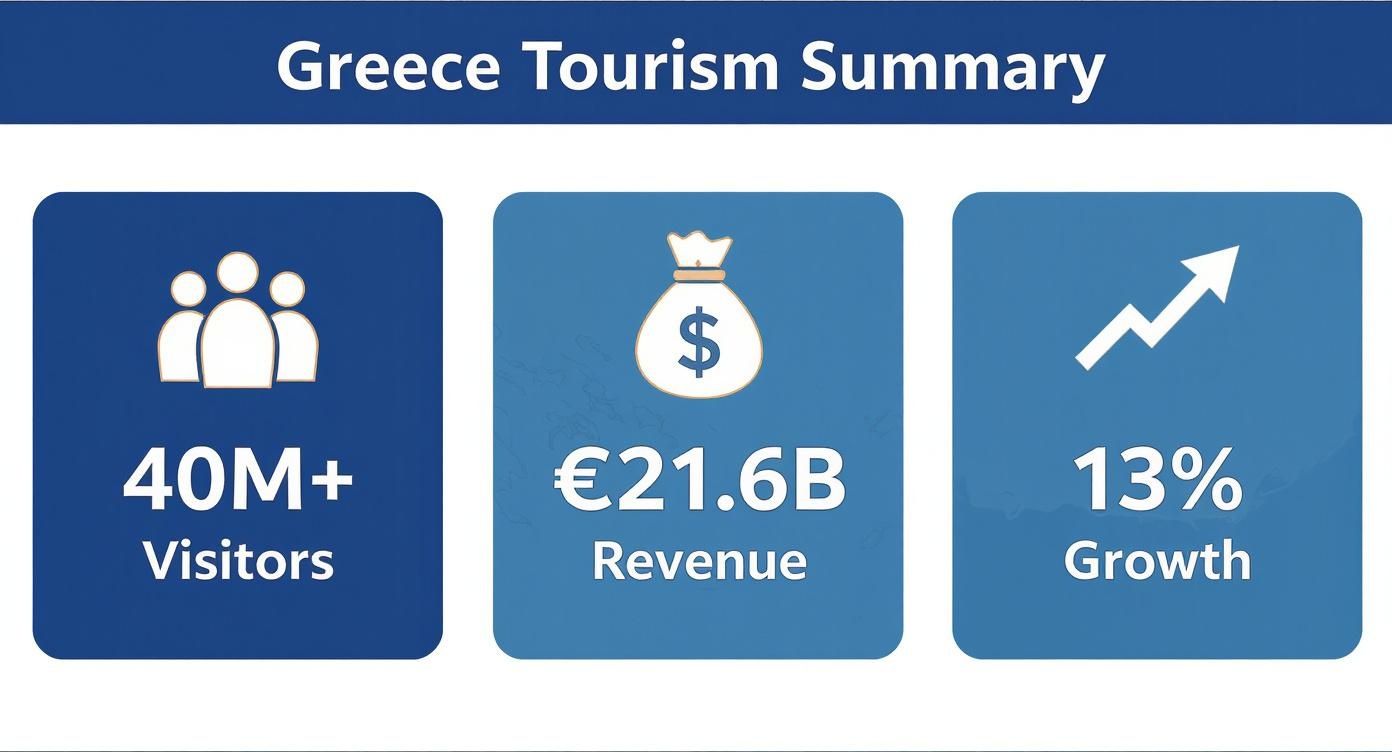
The numbers don't lie—the country is a huge draw. It’s exactly why a bit of smart planning for your tour can make all the difference, helping you sidestep the biggest crowds and uncover some real hidden gems.
Sample Itineraries For Every Timeline
To give you a clearer idea of what your trip could look like, I’ve broken down a few classic itineraries based on how much time you have. Each option offers a different blend of ancient wonders, island hopping, and pure relaxation.
Sample Greek Tour Itineraries at a Glance
Deciding how long to spend in Greece can be tough. This table breaks down three of the most popular trip durations to help you see which itinerary might be the best fit for your travel style and wish list.
| Itinerary Length | Focus | Mainland Highlights | Island Destinations |
|---|---|---|---|
| 7 Days | Fast-Paced Taster | Athens (Acropolis), Delphi | One accessible Cycladic island (e.g., Paros, Naxos) |
| 10 Days | Balanced Discovery | Athens, Peloponnese taster (e.g., Nafplio) | Two complementary islands (e.g., Santorini & Naxos) |
| 14+ Days | Immersive Exploration | Full Peloponnese loop, Meteora | Multiple island groups (e.g., Cyclades & Ionian) |
Ultimately, the right choice depends on your priorities—whether you want a quick highlights reel or a deep, immersive dive into Greek culture.
The 7-Day Whirlwind Tour
Got a week? You’ll need to be focused, but you can absolutely get a fantastic taste of Greece. This itinerary is perfect for first-timers who want to see the essential historical sites and squeeze in a bit of island magic.
- Days 1–2 Athens: Dive straight into history. Spend a couple of days exploring the Acropolis, wandering the charming streets of the Plaka district, and soaking up the city's ancient energy.
- Days 3–4 Mainland Dash: Grab a rental car and make a quick trip to Delphi. Standing in the place where the ancient oracle once spoke is an unforgettable experience.
- Days 5–7 A Cycladic Gem: To finish, hop on a fast ferry or a short flight to just one key island. A place like Paros or Naxos gives you that classic island feel without stretching your time too thin.
The 10-Day Balanced Adventure
With 10 days, you can breathe a little. This timeline allows for a much more comfortable pace, giving you enough time to properly mix mainland sightseeing with some genuine island relaxation. It's probably the most popular option for a reason.
A 10-day itinerary hits the sweet spot. It provides enough time to absorb the grandeur of mainland history before truly unwinding on island time, preventing the feeling of simply rushing from one ferry to the next.
This is the perfect amount of time to combine a couple of Cycladic islands. You could, for instance, pair the dramatic volcanic beauty of Santorini with the laid-back villages and golden beaches of Naxos. If that sounds like your kind of trip, our 9-day Cyclades island-hopping tour is packed with ideas for visiting Santorini, Naxos, and Paros.
The 14-Day+ Immersive Journey
Give yourself two weeks or more, and the possibilities really open up. This is your chance to get off the beaten path, explore different island groups, and spend some serious time discovering the treasures of the Peloponnese peninsula.
- Week 1: Mainland Deep Dive: Start in Athens, but then hit the road for a proper self-drive loop through the Peloponnese. You can visit the birthplace of the Olympics at ancient Olympia, stay in the gorgeous seaside town of Nafplio, and see the incredible ancient theatre at Epidaurus.
- Week 2: Island Hopping Further Afield: After your mainland adventure, fly from Athens to your first island. You could explore the lush, green Ionian islands like Kefalonia and Ithaca, or head east to the Dodecanese to see the magnificent medieval Old Town of Rhodes.
A longer trip gives you the freedom to be spontaneous—to stay an extra day on an island you’ve fallen in love with or follow a sign down a small road to a village that just looks interesting. It turns your holiday from a checklist into a real journey, which is what independent travel is all about.
Getting to Grips with Your Greek Travel Plans
This is where the real adventure begins. Planning your own tours of Greece and the Greek islands is one of the most rewarding ways to travel, and sorting out how you’ll get around is what turns you from a tourist into a proper independent explorer. We’re going to break down the two main ways you’ll be travelling: by car on the mainland and by ferry across the stunning Aegean and Ionian seas.
Think of the Greek ferry system as a sprawling, scenic water-based railway. It connects hundreds of islands, and just like trains, you have fast expresses and slower, more relaxed local services. Knowing how to read the 'schedule' and book the right 'ticket' is the secret to a seamless island-hopping trip.
For mainland journeys, hiring a car is your key to freedom. It allows you to discover those hidden-away archaeological sites and tiny mountain villages that most organised tours simply drive past. Let's get you feeling confident behind the wheel and ready to plan some incredible road trips.
Navigating the Greek Seas by Ferry
The ferry is the absolute lifeblood of the Greek islands. Getting the hang of it is a rite of passage for any visitor, and it's simpler than you think. Your main choice comes down to the classic slow ferries or the zippy high-speed catamarans.
- Conventional Ferries: These are the big, traditional boats. They take longer but are much more stable in choppy seas, they're cheaper, and – best of all – they often have open decks. Nothing beats soaking up the sunshine with the sea breeze in your hair. If you’re not in a mad rush, this is the classic, relaxing way to go.
- High-Speed Ferries (Catamarans/Hydrofoils): These smaller, faster boats can literally cut your journey time in half. The trade-off? They cost more, are more likely to be cancelled if it gets windy, and are usually fully enclosed, so you miss out on those glorious open-deck views.
Booking tickets is pretty straightforward. If you're travelling in the peak months of July and August, you absolutely must book popular routes (like Athens to Mykonos or Santorini) weeks, or even a couple of months, ahead. They do sell out! During the quieter shoulder seasons, a week or two in advance is usually plenty of time.
Booking ferries isn't just a transaction; it's the moment your island-hopping puzzle starts to click into place. Each ticket confirms a new chapter of your adventure, linking one idyllic island to the next.
Part of handling the logistics is managing your money. Getting a basic grip on understanding currency exchange rates before you go can make budgeting so much easier.
Conquering the Mainland on a Self-Drive Tour
While ferries rule the waves, the car is king on the mainland. Driving in Greece gives you the ultimate freedom to see ancient wonders like Delphi and Olympia on your own schedule. If you love the idea of a road trip but don't fancy planning every single stop, have a look at our https://btours.com/self-drive-tours/ for some brilliant ideas.
Renting a car is easy, with all the big international companies and plenty of local ones at airports and in cities. The main roads between towns are modern and well-kept, though you should expect rural and mountain roads to be a bit narrower and much more winding.
This sense of freedom is a huge draw for travellers, especially those from the UK. In fact, Greece is a top holiday spot for Brits. Out of nearly 39.4 million total visits to the country, UK residents make up a huge chunk, with most heading to popular regions like the Southern Aegean and the Ionian Islands.
Practical Tips for Driving in Greece
To make sure your road trip is all fun and no stress, just keep a few things in mind. Driving on the right is the biggest one for UK drivers, but there are a few other local quirks to know.
- Get Ready for Tolls: The main motorways have tolls. They’re reasonably priced and you can usually pay with cash or card, but it’s always smart to have a few euros handy just in case.
- Parking Can Be a Challenge: In ancient sites and popular villages, parking spots are like gold dust. Your best bet is to arrive early in the day to nab one.
- A Good GPS is Your Best Friend: While road signs are usually in both Greek and English, using a GPS app on your phone is a lifesaver for navigating smaller roads and confusing city streets.
- Stay Sharp: Let's be honest, Greek driving can feel a bit more… assertive than what you might be used to at home. Just drive defensively and be aware of what’s going on around you, especially on those winding mountain passes.
By embracing both the ferry network and the freedom of the open road, you unlock the ability to craft a truly personal and unforgettable Greek adventure, moving seamlessly from the heart of ancient history to the most beautiful island shores.
Finding the Best Time to Visit Greece
https://www.youtube.com/embed/oyYOIHuYClU
Picking the right time for your tours of Greece and the Greek Islands is every bit as crucial as planning your itinerary. The season you choose completely changes the feel of your trip – from the crowds and the costs to the overall vibe.
Greece's claim to fame is, of course, its glorious summer peak season, which runs from July to August. This is when the country truly comes alive. You’ll find endless sunshine, sizzling hot days perfect for diving into the Aegean, and a buzzing energy on the islands. Restaurants are packed, ferries run like clockwork, and island hopping is at its most straightforward.
But this classic summer holiday comes with a catch. It's by far the busiest and most expensive time to be there. Hotel prices can skyrocket, and you’ll be sharing popular spots like the beaches of Mykonos and the viewpoints of Santorini with thousands of other travellers. If you love a high-energy atmosphere and don’t mind the hustle, then peak season is absolutely for you.
The Magic of the Shoulder Seasons
For anyone who’s been to Greece a few times, the real secret is the shoulder seasons. These are the sweet spots just before and after the summer madness: late April to June (spring) and September to early October (autumn). Honestly, these months offer the best of both worlds.
The weather is just about perfect – beautifully warm and sunny, but you’re spared the intense, draining heat of mid-summer. In spring, the landscape is green and bursting with wildflowers. Come autumn, the sea has soaked up all that summer sun and is still incredibly warm for swimming.
"The shoulder seasons are Greece's best-kept secret. You get the beautiful weather and open attractions of summer but with a fraction of the crowds, allowing for a more relaxed and authentic experience."
This is the perfect time for adventures that can be a real struggle in the summer heat, like tackling the Samaria Gorge in Crete or wandering through the sprawling ruins of Ancient Olympia. You’ll also find:
- Better prices: Flights and accommodation are noticeably cheaper than they are in July and August.
- Fewer crowds: You can actually find a spot for your towel on the best beaches and enjoy the famous sights without shuffling along in a queue.
- More flexibility: It's much easier to book the hotels you want and nab ferry tickets without having to plan everything months in advance.
Embracing the Quiet of the Off-Season
Visiting between late October and March gives you a completely different view of Greece – one that’s far more peaceful and local. During this off-season, many of the tourist-focused spots on the smaller islands do close down for a well-earned rest. But it's a fantastic time to explore the mainland or stick to larger islands like Crete and Rhodes.
Imagine having the ancient sanctuary of Delphi almost to yourself, or strolling through the charming streets of Nafplio on a crisp, bright winter afternoon. Life slows right down, giving you a chance to see a more authentic side of Greek culture. You won't be getting a tan, but the mild weather is ideal for sightseeing and enjoying long, cosy meals in traditional tavernas.
In the end, there’s no single "best" time to visit. The perfect season for your Greek adventure really comes down to what you’re looking for in terms of weather, budget, and atmosphere.
Discovering Must-See Sights and Local Gems
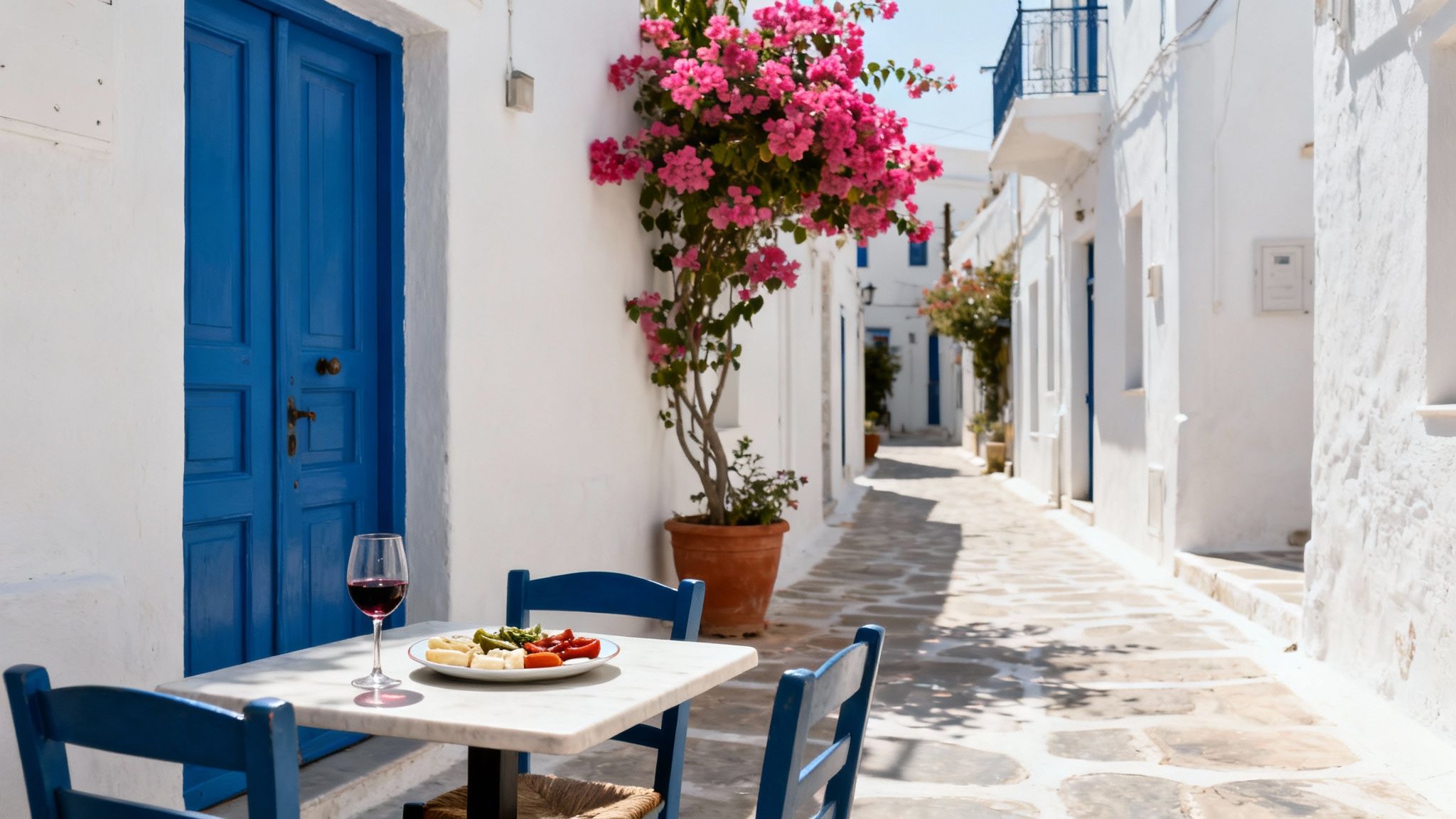
A truly brilliant trip to Greece is all about balance. It’s about being awestruck by the Acropolis one day, and the next, stumbling upon a tiny, family-run taverna tucked away on a quiet side street. The best tours of Greece and the Greek Islands know how to weave these two things together—the world-famous landmarks and those small, authentic moments that stick with you.
This is how you go from just looking at Greece to truly experiencing it. Imagine wandering through the ancient Agora in Athens, feeling the sheer weight of history, and then spending the afternoon sipping a coffee with locals in a neighbourhood cafe. It’s this mix of big and small that makes for the best travel stories.
Balancing Iconic Landmarks with Local Life
Of course, every first-timer should see Greece's headline acts. These are the places that have captured imaginations for millennia, and they absolutely live up to the hype. But the real magic happens when you pair these epic experiences with smaller, more personal discoveries.
Think of it like putting together a great playlist. The iconic sites are your hit singles—the songs everyone knows and loves. The local gems? They're the deep cuts that turn you from a casual listener into a proper fan.
Here are the essential "hit singles" you won’t want to miss:
- The Acropolis in Athens: It’s more than just a ruin; it’s the cradle of Western civilisation. My tip? Go early in the morning to dodge the biggest crowds and the blistering midday heat.
- The Monasteries of Meteora: These monasteries look like something out of a fantasy film, perched impossibly on towering rock pillars. The views are just breathtaking.
- Ancient Olympia: You can literally stand on the original starting line of the Olympic Games. It's a powerful moment that connects you to over 2,700 years of history.
- Santorini’s Caldera Views: Watching the sunset over the whitewashed villages of Oia is a bucket-list moment for a very good reason.
A great Greek tour isn't a checklist of famous places. It's a collection of moments—big and small—that together tell the story of your personal journey through this incredible country.
Once you’ve got the big sights pencilled in, the fun part begins: actively looking for ways to connect with the real, everyday Greece that’s always just around the corner.
How to Find Authentic Local Experiences
Stepping off the beaten path doesn’t take a huge effort; it just requires a little curiosity. The aim is to find those unscripted moments that make a trip truly unforgettable.
Try weaving a few of these simple things into your plans:
- Visit a ‘Laiki Agora’: These are the local farmers' markets, and they are an explosion of life, colour, and sound. It’s the perfect place to buy fresh figs, local honey, or just people-watch as daily life unfolds.
- Eat Where the Locals Eat: Ask your hotel owner or a shopkeeper for their favourite neighbourhood taverna—not the one with the glossy tourist menu, but the one they go to with their own family.
- Explore a Village on Foot: Just park the car and wander. Get a little lost in the narrow, winding streets of a mountain village or a quiet island port. You never know what you’ll find.
This love for travel is a two-way street. It’s interesting to see that Greek travellers are also keen to explore other cultures. Recent figures show Greek tourists spent around £143 million in the UK, highlighting a strong travel connection between our two nations.
Tailoring Your Tour to Your Interests
The real beauty of independent travel is that you can build your journey around what you love. For anyone with a passion for the outdoors and history, Greece offers endless possibilities. If you're an independent traveller looking to dive deep into history and nature, have a look at this solo adventure guide for hiking Greek islands and ancient sites.
Whether you’re tracing ancient myths across the Peloponnese or hunting for the best beaches in the Ionian Sea, let your interests be your guide. For inspiration, our own guide to Ionian island hopping through Corfu, Ithaca, and Kefalonia is packed with ideas for a trip focused on stunning coastlines and Venetian history. By mixing the must-see attractions with your personal passions, you'll create a journey that feels like it was made just for you.
Got Questions About Touring Greece?
Planning your own adventure through Greece is half the fun, but it’s totally normal for a few questions to crop up. To make sure you feel ready and confident before you go, we’ve tackled some of the most common queries we hear about organising self-drive tours of Greece and the Greek Islands. Think of this as your go-to guide for smoothing out those final details.
Getting these things sorted now means you can focus on the good stuff later – soaking up the incredible views and ancient history, not stressing about the small print.
Do I Need an International Driving Permit for Greece?
Good news for most travellers! If you're from the UK, EU, or the US, your standard driving licence is all you need to hire a car in Greece.
That said, getting an International Driving Permit (IDP) is a cheap and easy piece of insurance. Some of the smaller, local rental places might ask for one, and it’s essentially a universally understood translation of your licence. If you get pulled over or, heaven forbid, have a little prang, it just makes everything simpler. It’s one of those things that’s far better to have and not need, than the other way around.
How Far in Advance Should I Book Everything?
This is a big one, and the answer really comes down to when you’re planning to travel. Your booking strategy will change dramatically with the seasons.
- Peak Season (July – August): If you’re heading over in the height of summer, booking ahead is non-negotiable. We strongly advise locking in your ferries and accommodation on popular islands at least 3-4 months in advance. Key routes sell out fast, and last-minute prices can be eye-watering.
- Shoulder Seasons (May-June, September-October): During these glorious months, you’ve got a bit more wiggle room. Sorting out your main transport and places to stay 1-2 months ahead is a comfortable timeframe.
- Off-Season (November – April): This is when you have the most freedom. Still, it’s wise to book your main flights and your first couple of nights' accommodation before you leave home, just so your arrival is hassle-free.
A little forward planning, especially for peak season, isn't just about getting a spot—it's about protecting your wallet and your sanity. Trust us, a bit of organisation now pays off big time in pure relaxation later.
Is an Independent Greek Tour Expensive?
It’s a common myth that a trip to Greece has to cost a fortune. Sure, islands like Santorini and Mykonos have a reputation for being pricey, but so much of the country is incredibly affordable. The beauty of an independent tour is that you’re in the driver's seat of your budget.
You can easily keep costs down with a few savvy choices. For instance, staying in charming, family-run guesthouses (look for domatia) instead of big hotels can make a huge difference. The same goes for food – eating at local tavernas tucked away from the main tourist hubs is not only cheaper but a far more authentic and delicious experience.
Here’s a rough idea of daily budgets per person (not including major transport):
- Budget Traveller: €50 – €70
- Mid-Range Traveller: €80 – €150
- Comfort/Luxury Traveller: €160+
By mixing in a few supermarket lunches and choosing islands that are just as beautiful but less famous, you can have an absolutely fantastic trip without breaking the bank.
What Is the Best Way to Combine the Mainland and Islands?
Figuring out a smart route that flows naturally from ancient mainland sites to idyllic islands is the secret to a great trip. A good plan saves you time, money, and the headache of backtracking.
A classic, highly effective approach is to fly into Athens and kick things off on the mainland. Hire a car and spend a few days exploring world-class sites like Delphi and Olympia, or soaking up the charm of a coastal town like Nafplio.
Once you’ve had your fill of history, you can simply drive to Piraeus, the main port of Athens. Drop your rental car there and walk straight onto a ferry to begin the island-hopping chapter of your adventure. It’s a seamless transition.
Another brilliant option is to finish your mainland tour, head back to Athens, and catch a short domestic flight to your first island. This is a game-changer if you’re heading to a far-flung island group like the Dodecanese or the Ionians, potentially saving you a full day of travel compared to a long ferry journey. This way, you spend less time in transit and more time with your feet in the sand.
Ready to start planning your own unforgettable road trip? At BTOURS, we specialise in creating personalised self-drive journeys that let you explore at your own pace. Discover our curated itineraries and begin your adventure today at https://www.btours.com.