
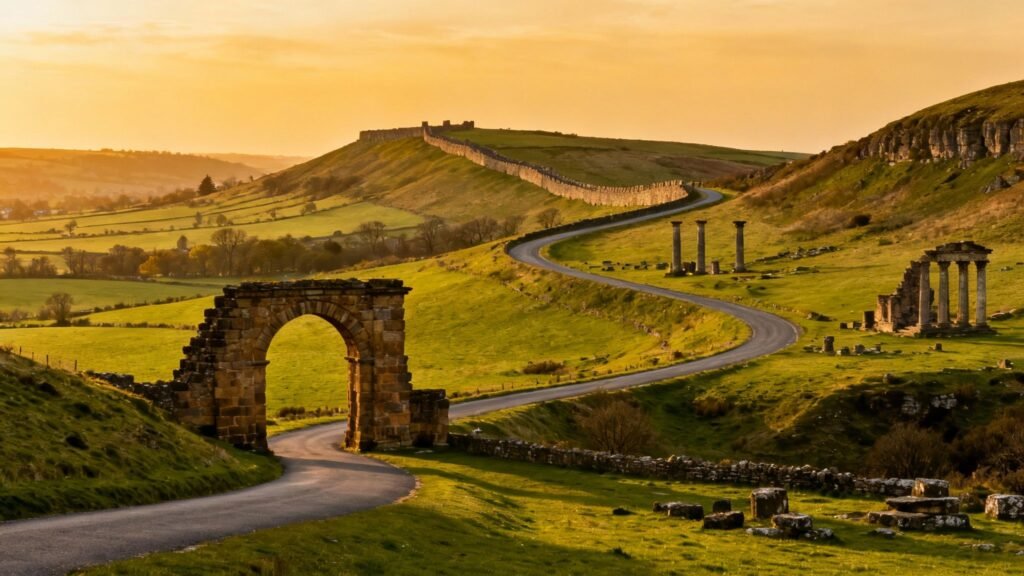
England's rolling green hills and bustling cities are layered with nearly four centuries of Roman history, leaving behind a legacy etched into the very landscape. From the monumental frontier of Hadrian's Wall in the north to luxurious coastal palaces in the south, these remnants offer a direct connection to a pivotal era. This isn't just about admiring crumbling stones; it's about walking through ancient amphitheatres, imagining the chatter in a bustling forum, and marvelling at engineering that has stood the test of time.
This guide is your roadmap to discovering the most significant roman ruins in england. We'll journey through ten of the most impressive and well-preserved sites, from mighty fortresses to opulent villas. For those who get truly inspired by the artefacts unearthed at these locations, learning how to identify Roman coin treasures can add another fascinating layer to your exploration.
Whether you're a dedicated history enthusiast or simply planning an extraordinary road trip with the family, this list provides the practical tips and insights you need. Get ready to step back two thousand years and plan an unforgettable adventure into Roman Britain.
1. Hadrian's Wall
Stretching an epic 73 miles from coast to coast, Hadrian's Wall is arguably the most magnificent of all Roman ruins in England. Commissioned by Emperor Hadrian around AD 122, this colossal structure marked the northernmost frontier of the Roman Empire for nearly 300 years. It’s more than just a wall; it’s a sprawling complex of forts, milecastles, and turrets that tells a vivid story of military life on the edge of Roman Britain.
Why It's a Must-See
Hadrian’s Wall offers an unparalleled glimpse into the Roman military machine. Its sheer scale and the rugged beauty of the surrounding landscape make it a truly unforgettable experience. Exploring its length reveals the incredible organisation and engineering prowess of the Roman army.
- Houseteads Roman Fort: Perched high on a dramatic escarpment, this is the most complete Roman fort in Britain. You can wander through the remains of barracks, the hospital, and even see some of the oldest toilets you’ll ever encounter.
- Vindolanda: Famous for the Vindolanda tablets, thin wooden postcards that provide intimate details of daily life. The on-site museum displays an astonishing collection of organic artefacts, including leather shoes and textiles, preserved for centuries in the soil.
- Chesters Roman Fort: Discover the best-preserved Roman cavalry fort in Britain, complete with an incredibly well-preserved bathhouse complex right on the bank of the River North Tyne.
Top Tip: Allocate at least three days to do the wall justice. While a car is useful, walking a section of the Hadrian’s Wall Path offers the most immersive experience, connecting you directly with the history and the stunning scenery. You'll find that seeing these sites on foot, much like the Romans did, provides a unique perspective you just can't get from a vehicle.
2. Stonehenge
While Stonehenge famously predates the Romans by thousands of years, its inclusion here highlights a fascinating aspect of Roman Britain: how the conquerors interacted with existing sacred landscapes. Located on the vast Salisbury Plain, this iconic Neolithic stone circle was already an ancient wonder when Roman legions arrived. The Romans recognised its significance, incorporating it into their own understanding of the province and leaving behind clues that reveal their curiosity and respect for the monument.
Why It's a Must-See
Stonehenge offers a unique window into the Roman perception of indigenous British culture. Unlike other roman ruins in england, this site wasn’t built by them, but it was certainly visited and acknowledged. The discovery of Roman coins, pottery, and even deliberately placed metalwork near the stones suggests it was a site of continued pilgrimage or ritual activity during the Roman occupation, bridging two vastly different worlds.
- Roman Artefacts: The nearby visitor centre displays Roman-era finds from the site, providing tangible evidence of their presence and interest in this prehistoric monument.
- Ancient Landscape: The Romans would have seen Stonehenge not in isolation, but as the centrepiece of a wider ritual landscape, including the Cursus and numerous burial mounds.
- Ptolemy's Geography: The site may even be referenced in the work of the Roman-era geographer Ptolemy, indicating its fame had spread across the empire.
Top Tip: To truly appreciate the atmosphere, book the earliest possible time slot online to beat the crowds. The audio guide is excellent for interpretation, but don't forget to walk the surrounding landscape to see the barrows and Cursus monument, putting the stones in the context the Romans would have understood.
3. Aquae Sulis (Bath Roman Spa)
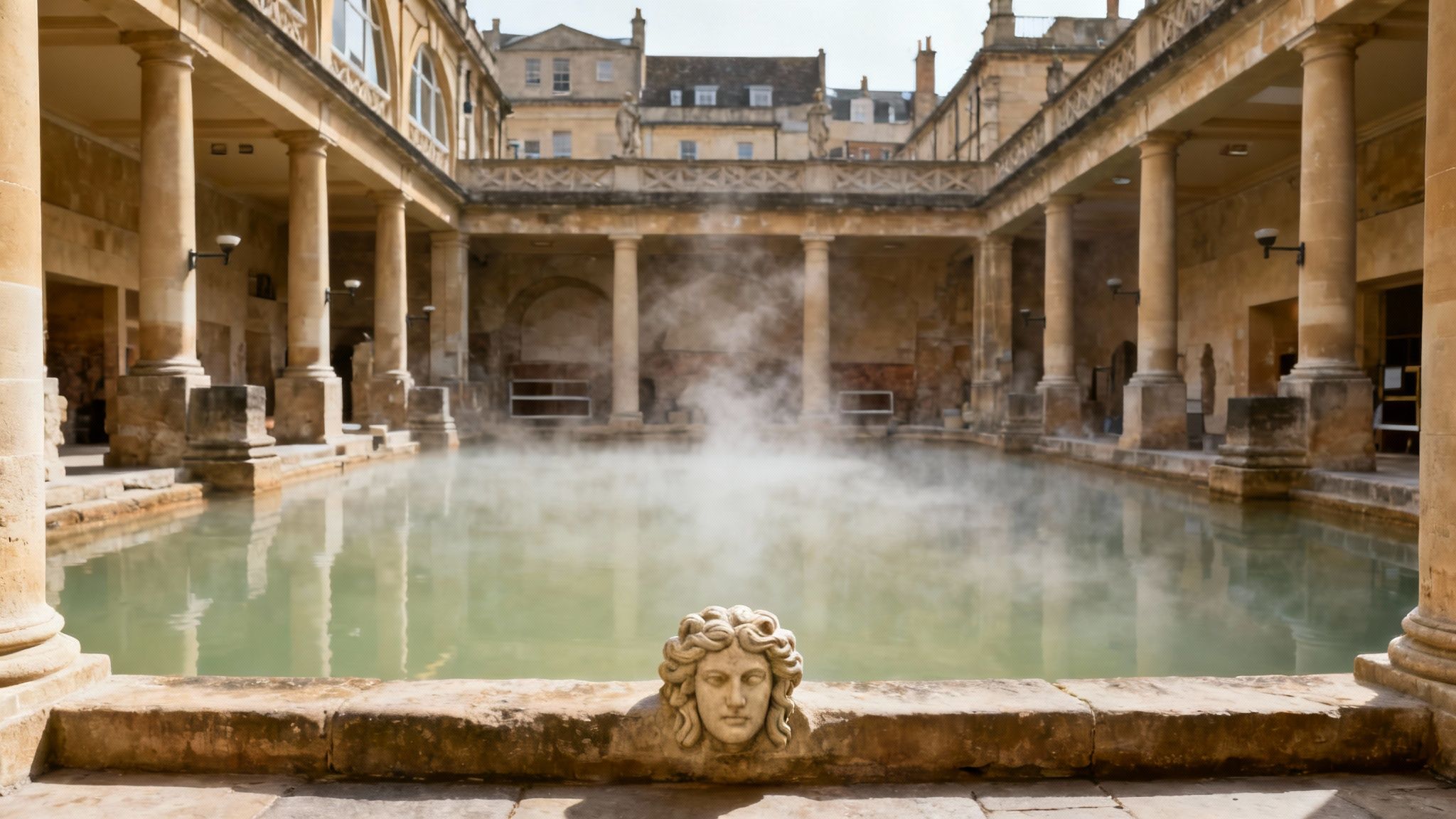
Nestled in the heart of Bath, Aquae Sulis is one of the most complete and spectacular Roman ruins in England. Built around Britain's only naturally hot springs, this was a sophisticated complex dedicated to leisure, health, and worship. The Romans established it as a major sanctuary, constructing an elaborate temple dedicated to the goddess Sulis Minerva and a grand bathing complex that attracted visitors from across the empire.
Why It's a Must-See
Unlike many other Roman sites which are just foundations, the Roman Baths at Aquae Sulis offer an incredibly immersive experience. You can walk on the original Roman pavements, see the steaming thermal waters still flowing into the Great Bath, and marvel at the engineering that has stood for nearly two millennia. It provides a unique insight into the social and spiritual life of Roman Britain.
- The Great Bath: The magnificent centrepiece, this large, lead-lined pool is filled with geothermally heated water. Standing beside it, you can easily imagine Romans socialising and relaxing here.
- The Temple Pediment: Admire the powerful and mysterious Gorgon's Head sculpture, a unique blend of classical and local Celtic art that once adorned the temple of Sulis Minerva.
- Museum Collection: The museum houses fascinating artefacts found on-site, including a beautiful gilded bronze head of the goddess and numerous curses inscribed on lead tablets, thrown into the spring as offerings.
Top Tip: Book your tickets online in advance to secure a time slot and often a better price. Allow a good two to three hours to explore thoroughly, as the audio guide provides rich details that bring the entire complex to life. Visiting early in the day helps to avoid the biggest crowds and allows for a more atmospheric experience.
4. Caerleon Roman Fortress
While technically in Wales, Caerleon’s importance as one of the three permanent legionary fortresses in Roman Britain makes it an essential stop for anyone exploring the empire's legacy. Known as Isca Augustana, it was the headquarters of the elite Legio II Augusta for over 200 years from around AD 75. Today, it offers some of the most extensive and best-preserved legionary remains in Europe, providing a fascinating look into the lives of Rome's professional soldiers.
Why It's a Must-See
Caerleon gives you a unique chance to walk through the permanent home of a Roman legion, far from the frontier. The scale of the barracks, the impressive amphitheatre, and the sheer organisation on display highlight the power and permanence of the Roman presence. It’s a key site for understanding the military infrastructure that underpinned Roman rule in Britain.
- Roman Amphitheatre: Step inside one of the most complete Roman amphitheatres in Britain. You can easily imagine the roar of 6,000 spectators watching gladiatorial combat and military drills in this imposing structure, nicknamed "King Arthur's Round Table" in local legend.
- Fortress Barracks: Explore the only visible Roman legionary barracks in Europe. The foundations clearly outline the soldiers' cramped living quarters, offering a tangible sense of the regimented daily life of a legionary.
- National Roman Legion Museum: This fantastic museum houses a superb collection of artefacts found at Caerleon, including intricate gemstones, weapons, and personal items that bring the fortress's inhabitants to life.
Top Tip: Start your visit at the National Roman Legion Museum to get a solid grounding in the site's history before you explore the ruins. A well-marked trail connects all the key areas, making for an easy 3-4 hour walking tour. For those interested in exploring further, the fortress at Caerleon is just one part of the rich Roman history you can discover on a tour through Wales.
5. Wroxeter Roman City
Once the fourth largest city in Roman Britain, Wroxeter (or Viroconium Cornoviorum) offers a fascinating look at civilian life away from the military frontiers. Unlike many Roman towns that lie beneath modern cities, Wroxeter was largely abandoned, leaving its extensive foundations remarkably preserved. Today, you can walk the ancient streets and imagine the hustle and bustle of a thriving urban centre that was home to over 5,000 people.
Why It's a Must-See
Wroxeter provides an unparalleled insight into the layout and daily functions of a major Romano-British city. The sheer scale of the public buildings is breathtaking, demonstrating the wealth and ambition of its citizens. It’s one of the most significant Roman ruins in England for understanding urban development during the period.
- The Old Work: Stand in awe of the ‘Old Work,’ a towering 7-metre high section of the basilica wall, which is the largest free-standing piece of Roman wall in the country. It gives a true sense of the monumental scale of the public baths.
- Reconstructed Town House: Step inside a reconstructed Roman town house, built using authentic Roman techniques, to get a real feel for domestic life, from the decorated rooms to the small courtyard garden.
- On-Site Museum: Explore the collection of artefacts unearthed during excavations, including intricate jewellery, pottery, and personal items that bring the city’s former inhabitants to life.
Top Tip: After exploring the main site, take a short walk to the nearby Wroxeter church. You'll find it was built using stones taken directly from the Roman ruins, and its font is made from the base of a Roman column, a tangible link between the two eras. This adds a unique layer to the story of the site's evolution.
6. Cirencester Roman Amphitheatre
Once the bustling heart of Corinium Dobunnorum, the second-largest city in Roman Britain, Cirencester’s Roman Amphitheatre is a magnificent earthwork that whispers tales of grand public spectacles. This impressive structure, managed by English Heritage, was built in the early 2nd century and could hold around 8,000 spectators who gathered to watch everything from gladiatorial combat to wild beast hunts. Today, its vast, grassy banks form a peaceful haven just outside the modern town centre.
Why It's a Must-See
Unlike the stone-built amphitheatres of mainland Europe, Cirencester offers a fantastic example of a Roman earthwork structure, showcasing provincial ingenuity. Its sheer scale is breathtaking, and imagining it filled with the roar of the crowd provides a powerful connection to the civic life of Roman Britain. It's one of the most accessible and impressive Roman ruins in England located in the south.
- Feel the Scale: The enormous earthen banks are remarkably well-preserved. Walking the perimeter gives you a tangible sense of the arena’s original size and the engineering effort required to build it.
- The Corinium Museum: Before visiting the amphitheatre, head to the nearby award-winning Corinium Museum. It houses one of the finest collections of Roman artefacts in the UK, including stunning mosaics and finds from the amphitheatre itself, providing essential context.
- A Glimpse of the Games: Archaeological finds here include evidence of animal bones from bulls and bears, hinting at the brutal spectacles that once took place. This history contrasts sharply with the tranquil atmosphere of the site today.
Top Tip: For the best perspective, climb to the top of the banks. From here, you can appreciate the full oval shape of the arena and imagine the action unfolding below. Combine your visit with a walk into Cirencester to see the Roman Wall and view mosaics still in their original locations. It's a fantastic stop on any journey through the Cotswolds; consider including it on a self-drive tour of England.
7. Richborough Roman Fort
As the principal landing site for the Roman invasion of Britain in AD 43, Richborough Roman Fort holds a unique place in history. Known to the Romans as Rutupiae, this was the gateway to the new province, serving as a crucial supply port and defensive base for decades. Today, the site’s vast earthworks and imposing stone walls stand as a silent testament to the very beginning of Roman Britain.
Why It's a Must-See
Richborough offers a powerful connection to the moment of conquest. Standing within its walls, you are on the ground where the Roman occupation began, a site that evolved from a beachhead fort into a major civilian town and finally a mighty coastal fortress. Few other roman ruins in England capture such a sweep of history in one location.
- The Triumphal Arch: Gaze upon the foundations of a monumental arch, once clad in Italian marble, erected to celebrate the final conquest of Britain. Its sheer scale highlights the importance of Richborough as a symbol of Roman power.
- Saxon Shore Fort Walls: The colossal defensive walls, some of the most impressive Roman masonry in the country, were added later to defend against coastal raids. You can walk their perimeter and marvel at their preservation.
- The First Defences: Look for the faint outlines of the original invasion-era ditches that predate the stone fort, offering a tangible link to the Claudian invasion force that landed here nearly 2,000 years ago.
Top Tip: Start your visit at the on-site museum to see the incredible artefacts unearthed here, including coins and military equipment. This context will enrich your experience as you explore the ruins, helping you visualise the site's transformation from a military beachhead to a bustling port town. Allow at least two hours to take it all in.
8. Vindolanda Roman Fort
Just south of Hadrian’s Wall lies Vindolanda, an auxiliary fort that offers one of the most personal and revealing windows into Roman Britain. While many sites showcase impressive stone structures, Vindolanda’s magic lies in its unique, oxygen-free soil, which has miraculously preserved organic artefacts that would have long since vanished elsewhere. This gives us an unparalleled, intimate look at the daily lives of the soldiers, women, and children who lived on the empire’s northern edge.
Why It's a Must-See
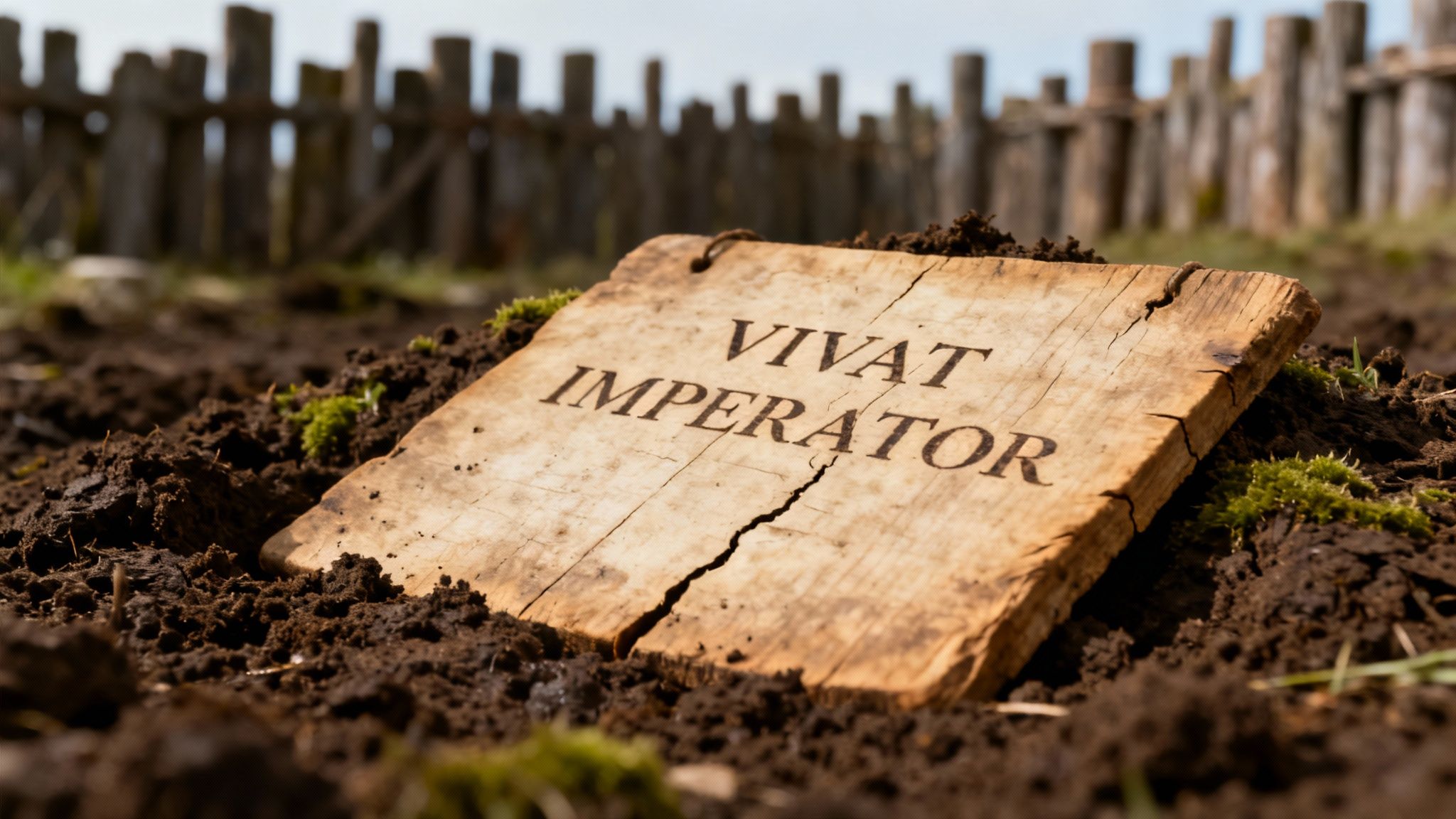
Vindolanda brings the Roman world to life through thousands of everyday objects. The on-site museum is a treasure trove, displaying everything from leather shoes and boxing gloves to wooden combs and textiles. It’s here you can see the world-famous Vindolanda Tablets, thin wooden postcards containing personal letters, military reports, and even a birthday party invitation, making it one of the most touching Roman ruins in England.
- The Vindolanda Tablets: These are the oldest surviving handwritten documents in Britain. Reading a soldier’s complaint about the quality of his beer or a wife’s letter to her husband connects you directly to the people of the past.
- Extraordinary Organic Finds: Marvel at the incredible collection of perfectly preserved leather shoes (in all sizes), textiles, and wooden objects that paint a vivid picture of life nearly 2,000 years ago.
- Live Archaeology: Vindolanda is a live excavation site, meaning you can often watch archaeologists unearthing new discoveries during your visit, adding a dynamic layer to the experience.
Top Tip: Start your visit in the museum to understand the significance of the artefacts before you explore the fort ruins. This context will transform your walk around the site, helping you visualise the community that once thrived here. Read a few translations of the tablets first; it makes the experience far more personal.
9. Silchester Roman Town
Unlike many Roman towns that evolved into modern cities, Silchester (Calleva Atrebatum) was abandoned after the Roman period and never redeveloped. This unique circumstance has allowed archaeologists to excavate the entire town plan, offering an unparalleled look at the layout of a Romano-British urban centre. Today, you can wander through the grassy fields and trace the complete outline of its streets, temples, and homes, a ghostly blueprint of a lost community.
Why It's a Must-See
Silchester provides one of the clearest pictures of urban life in Roman Britain. Because the entire town plan is visible, you get a sense of scale and organisation that is impossible at sites buried under modern buildings. It’s a place where your imagination can truly run wild, reconstructing the bustling market and quiet residential lanes.
- Complete Town Walls: Walk the impressive circuit of the late Roman defensive walls, which are among the best-preserved in Britain. The sheer scale of the earthworks and masonry gives you a profound sense of the town's importance.
- Amphitheatre: Just outside the town walls lies the remains of the amphitheatre, a quiet, eerie hollow that once echoed with the roar of crowds watching gladiatorial contests and other spectacles.
- Reading Museum: While the site itself is about foundations, the astonishing collection of artefacts unearthed here, from intricate mosaics to everyday tools, is housed at the nearby Reading Museum.
Top Tip: Before you explore, download a site map or study the interpretation boards carefully. The outlines on the ground make perfect sense once you know what you’re looking at – the forum, basilica, shops, and houses. It transforms the experience from a simple walk into an archaeological investigation.
10. Fishbourne Roman Palace
Step into the lap of luxury at Fishbourne Roman Palace, the largest Roman domestic residence discovered in Britain. This immense and opulent palace, likely built around AD 75, showcases the sophisticated Mediterranean lifestyle adopted by the wealthy Romano-British elite. Its sheer scale and the quality of its craftsmanship offer an astonishing insight into the lives of those at the very top of provincial society.
Why It's a Must-See
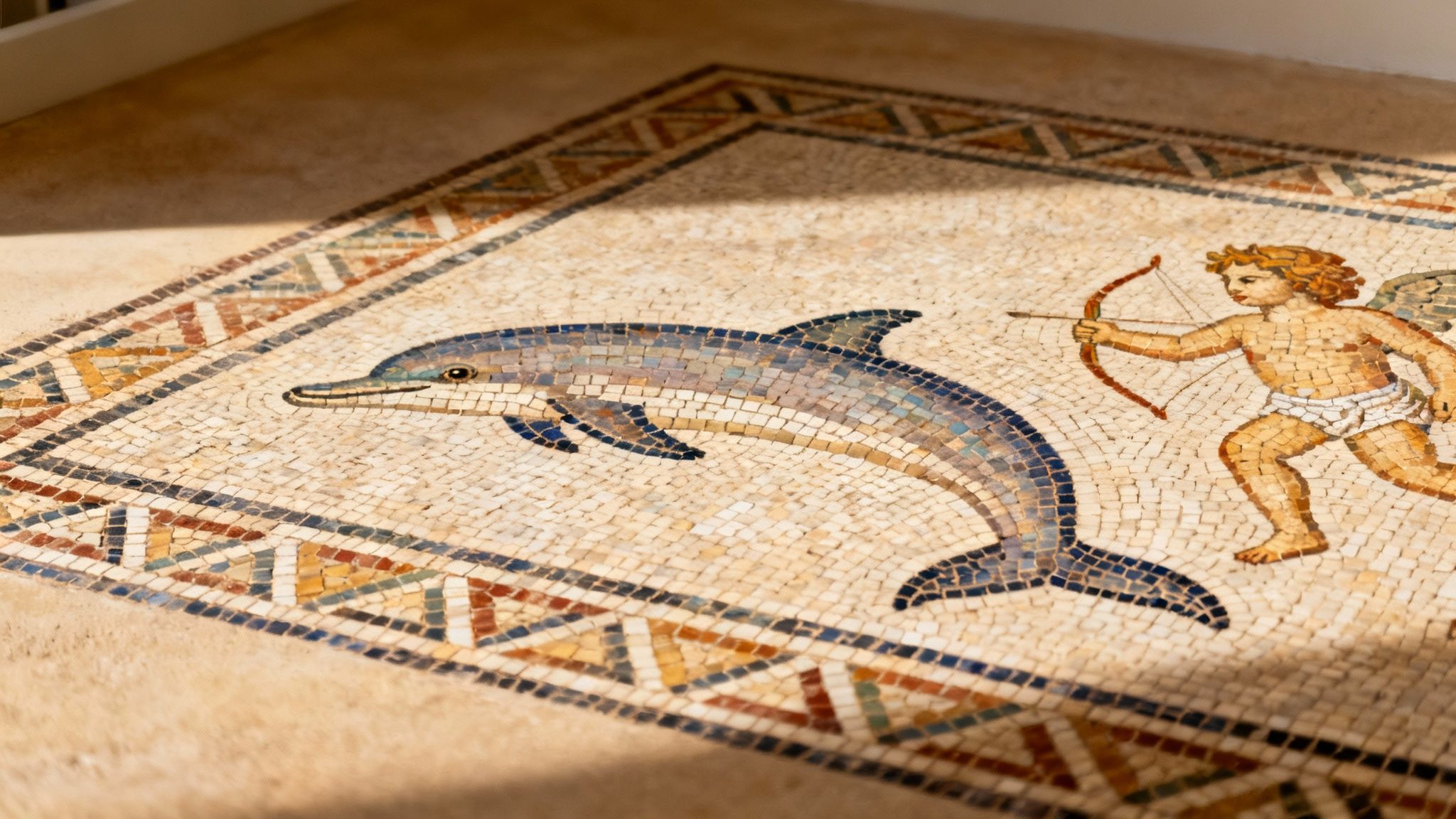
Fishbourne isn't a military outpost; it's a statement of wealth, power, and Romanisation. The palace is renowned for its stunning collection of in-situ mosaic floors, the earliest and most elaborate in the country. Seeing this level of domestic comfort helps to paint a fuller picture of Roman Britain beyond the forts and frontiers, highlighting a world of art and high society.
- The Mosaics: The collection is simply breathtaking. Don't miss the famous "Cupid on a Dolphin" mosaic, a masterpiece of Roman art, alongside vast geometric patterns that floored entire wings of the palace.
- Recreated Gardens: Wander through the meticulously recreated formal gardens, planted with species known to have been used by the Romans. It's one of the few places you can experience an authentic Roman garden landscape.
- The Hypocaust System: The palace boasts the oldest known example of this Roman underfloor heating system in Britain, a clear sign of the owner's status and desire for ultimate comfort.
Top Tip: Before exploring the mosaics, watch the introductory film in the on-site cinema. It provides crucial context about the palace's discovery and its likely owner, which will dramatically enhance your appreciation of the intricate details you are about to see. Walking the garden paths afterwards helps you grasp the building's enormous footprint.
Comparison of 10 Roman Ruins in England
| Site | Preservation & complexity | Resource requirements | Expected outcomes | Ideal use cases | Key advantages |
|---|---|---|---|---|---|
| Hadrian's Wall | Large linear stone/turf frontier with forts, turrets; variable preservation along 73 miles | Multi-day (3–5 days) hiking or segmented visits; weather-dependent; some private access | Broad insight into frontier defense, military logistics, and landscape archaeology | Long-distance walking, military frontier studies, landscape archaeology | UNESCO status, extensive preserved sections, rich museum collections |
| Stonehenge | Well-preserved megalithic stone circle with astronomical alignments; limited structural complexity | Timed-entry tickets; early visit advisable; high tourist volumes; restricted close access | Understanding of Neolithic ritual, astronomy and cultural significance | Ritual/astronomy studies, high-profile heritage tourism, educational visits | World-renowned UNESCO site, modern visitor centre, extensive research |
| Aquae Sulis (Bath) | Exceptionally preserved Roman baths and temple integrated with Georgian town; complex plumbing remains | Urban access; museum visit recommended; 2–3 hours; some areas unexcavated | Clear demonstration of Roman engineering, bathing culture and religious practice | Engineering/urban archaeology, heritage tourism, ritual studies | Functional thermal springs, excellent museum, intact architectural layout |
| Caerleon Roman Fortress | Most complete legionary fortress in Britain with amphitheatre, barracks, hospital remains | Accessible site; National Roman Legion Museum; 3–4 hours; some remains under modern town | Strong picture of legionary organization, training and military life | Military archaeology, legionary studies, educational field trips | Intact amphitheatre, comprehensive museum, well-interpreted site |
| Wroxeter Roman City | Extensively excavated civitas with large forum basilica and baths; many foundations only | Open-air exploration; interpretive effort needed; 2–3 hours | Insights into urban planning, public architecture and civic life | Urban archaeology, Roman civic studies, comparative city planning | Large forum basilica, extensive horizontal excavation, free exploration |
| Cirencester Amphitheatre | Well-preserved earthwork amphitheatre (grassed); limited standing masonry | Short visit; best viewed from higher ground; combine with Corinium Museum | Understanding of public entertainment scale and amphitheatre layout | Studies of Roman entertainment, family-friendly educational visits | Large size, scenic parkland setting, excellent museum context |
| Richborough Roman Fort | Early invasion fortress with monumental arch (partly reconstructed) and multistage forts; coastal erosion | Museum-first visit recommended; 1–2 hours; accessible coastal site | Direct evidence of AD 43 invasion logistics and early military occupation | Invasion studies, coastal fortification research, early Roman military history | Direct invasion link, dramatic monument remains, clear stratigraphy |
| Vindolanda Roman Fort | Waterlogged site with exceptional organic preservation (wood, textiles, tablets); complex excavation | Museum and active excavation access; 3–4 hours; seasonal conditions | Intimate daily-life data including written correspondence and organic artifacts | Social history, material culture, epigraphy and conservation research | Vindolanda Tablets, exceptional organic finds, ongoing discoveries |
| Silchester Roman Town | Complete horizontal plan preserved without modern build-over; mainly foundations and street grid | Open-air site; detailed site maps and museum visits; ~3 hours | Comprehensive view of Romano‑British urban planning and infrastructure | Urban planning research, stratigraphic studies, classroom teaching | No modern overlay, outstanding stratigraphic control, clear town layout |
| Fishbourne Roman Palace | Luxurious palace with high-quality mosaics, hypocausts and garden archaeology under protective structure | Museum, introductory film and site visit; 2–3 hours; paid entry | Insight into elite Romanized lifestyle, art and horticultural influence | Elite domestic studies, mosaic and garden archaeology, experimental archaeology | Exceptional mosaics, reconstructed hypocaust, preserved garden evidence |
Planning Your Own Roman Road Trip
From the windswept grandeur of Hadrian's Wall to the intricate mosaics of Fishbourne Roman Palace, the story of Roman Britain is etched into the very landscape of England. As we've journeyed through this list, we've seen how these ancient sites offer far more than just crumbling stones; they are portals to a world of military strategy, sophisticated engineering, and vibrant daily life. You've discovered the strategic importance of Richborough, the lavish lifestyle of Bath's spa-goers, and the bustling urban centre of Wroxeter. Each location, from the mighty fortress at Caerleon to the quiet amphitheatre at Cirencester, adds a unique and fascinating piece to the puzzle.
Exploring these remarkable roman ruins in england isn’t just about ticking places off a list. It's about connecting the dots and understanding how this ancient network shaped the country we know today. Imagine standing on the edge of the empire at Vindolanda, then driving south to see the palatial home of a wealthy client king. This is where the real magic happens, and a self-drive tour is undoubtedly the best way to create that narrative for yourself.
Charting Your Course Through Roman Britain
A road trip gives you the ultimate freedom to immerse yourself in history. You can link the northern frontier forts with the villas of the south, or create a themed itinerary focusing purely on military sites or civilian towns.
- Northern Loop: Start at Hadrian's Wall, dedicating several days to exploring sites like Vindolanda and Housesteads. Then, drive south to York (Eboracum) before looping back via the Roman city of Wroxeter.
- Southern Comforts: Centre your trip around the south, combining the luxurious Roman Baths with Cirencester's amphitheatre and the vast palace at Fishbourne. Don't forget to include the well-preserved town walls of Silchester.
- The Grand Tour: For the truly dedicated historian, a comprehensive trip linking the arrival point at Richborough Fort all the way north to Hadrian’s Wall offers an unparalleled journey through four centuries of Roman occupation.
Before you embark on your historical journey, make sure you're fully prepared by consulting this essential guide for traveling to the UK from the USA, which covers everything from visa requirements to navigating transport. Planning ahead ensures your focus can remain squarely on the incredible history awaiting you. These ruins are not just relics; they are an invitation to walk in the footsteps of legionaries, senators, and citizens, and to piece together the epic story of Roman Britain for yourself.
Ready to turn your historical curiosity into an unforgettable adventure? Let BTOURS handle the logistics with our expertly crafted self-drive itineraries, allowing you to focus on exploring England's incredible Roman heritage. Discover our tailored historical tours at BTOURS and start planning your journey back in time today.