
England is a country painted with an artist's brush, a tapestry of rolling green hills, dramatic coastlines, and villages so charming they seem plucked from a storybook. But with so much beauty packed into one nation, where do you begin? Forget generic travel guides; this is your curated map to the most breathtaking corners of the country. We're journeying from the honey-coloured stone of the Cotswolds to the wild, windswept moors of the Peak District, revealing not just where to go, but how to experience these places in a way that creates lasting memories. Prepare to be inspired as we unveil some of the prettiest places in England, each offering a unique slice of its timeless allure.
This is more than just a list. It’s a practical guide for the discerning traveller, designed for those who seek to immerse themselves in England's heart and soul. We've organised our selections by iconic regions, from the serene lakes of Cumbria to the rugged cliffs of the Cornish coast. For each destination, you will find actionable insights: the best viewpoints for that perfect photograph, the ideal time of year to visit to avoid the crowds, and practical advice on accessibility. We'll even suggest itinerary segments and accommodation styles to help you craft your perfect English escape.
Our journey will cover the celebrated hills and valleys, but true exploration often means looking beyond the most famous postcard scenes. The diversity of England's beauty is astounding, extending from the historic Roman frontiers in Northumberland to the unique waterways of the Broads. To truly capture the breadth of England's charm, you might also explore additional must-see places in Norfolk, a region with its own distinct character. This guide is your starting point for discovering the landscapes that make England truly unforgettable.
1. The Cotswolds: Quintessential English Charm
Spanning five counties, the Cotswolds is the England of postcards and daydreams, a region that easily earns its reputation as one of the prettiest places in England. It's a landscape defined by its gentle, rolling hills ('wolds') and picturesque villages built from a distinctive honey-coloured limestone. This is where you'll find winding country lanes, ancient market towns, and a serene, pastoral beauty that feels a world away from the hustle of modern life.
Each village offers a unique character, from the riverside charm of Bourton-on-the-Water, often called the 'Venice of the Cotswolds', to the historic market square of Stow-on-the-Wold. This Area of Outstanding Natural Beauty is a perfect region for leisurely exploration, allowing you to discover your own hidden gems among its timeless scenery.

Why It’s So Picturesque
The enduring beauty of the Cotswolds lies in its architectural and scenic harmony. The warm, golden stone used for everything from grand manor houses to humble dry-stone walls creates a visual consistency that glows in the sunlight. This, combined with the lush green of the surrounding hills and valleys, produces a landscape painter's perfect canvas.
Must-See Viewpoints & Itinerary Ideas
For an unforgettable Cotswolds experience, consider a short driving tour. Start your day exploring the antique shops of Stow-on-the-Wold before heading to the incredibly scenic villages of Upper and Lower Slaughter. A gentle one-mile stroll along the River Eye connects these two hamlets, offering perfect photo opportunities.
Continue to Bourton-on-the-Water to admire its low stone bridges, then drive south to Bibury. William Morris once called Bibury's Arlington Row "the most beautiful street in England," a sentiment you'll understand when you see its line of ancient weavers' cottages.
Planning Your Visit
- Best Time to Visit: May or September offers pleasant weather and fewer crowds than the summer peak. Weekday mornings are ideal for photography in popular villages.
- Getting Around: Exploring by car is the most practical way to see the region's scattered villages. Base yourself in a central town like Cirencester or Chipping Campden.
- Accommodation Style: Embrace the local charm by staying in a traditional stone cottage, a historic country inn, or a luxury manor house hotel.
2. The Lake District: A Canvas of Dramatic Beauty
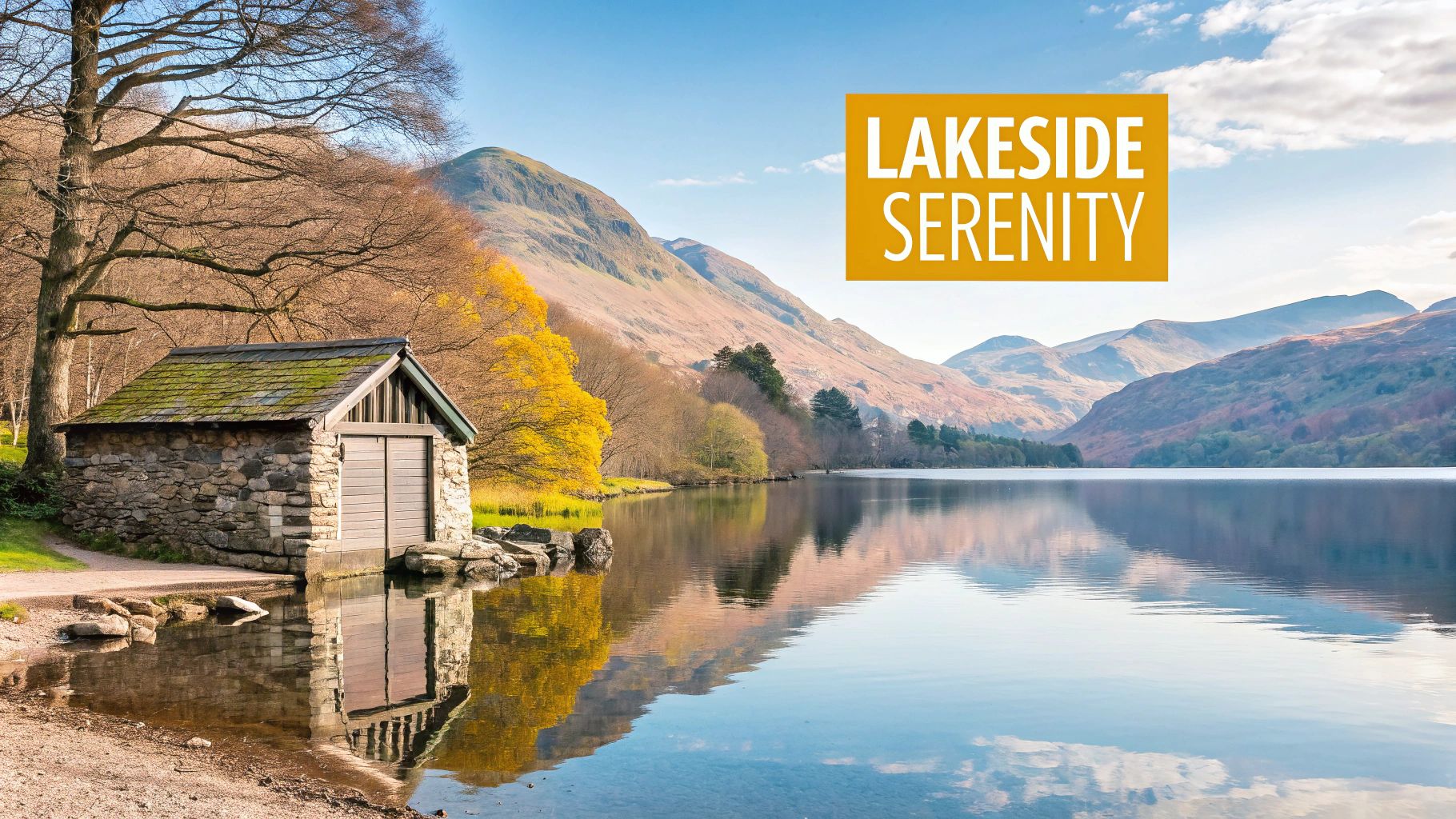
A UNESCO World Heritage Site, the Lake District National Park is a landscape of breathtaking scale and raw, untamed beauty. Located in Cumbria, this is England’s largest national park, a region of soaring fells, deep glacial lakes, and wild moorland that has captivated poets, writers, and artists for centuries. Its dramatic scenery, shaped by ice and stone, offers a powerful contrast to the gentle charm of other English regions.
From the tranquil shores of Windermere to the rugged peaks of Scafell Pike, the Lake District provides an awe-inspiring backdrop for adventure and reflection. The works of William Wordsworth and Beatrix Potter are woven into the very fabric of this land, making it not just one of the prettiest places in England, but also one of its most culturally significant.
Why It’s So Picturesque
The Lake District’s unique beauty comes from its epic contrasts. The interplay of light on water, the dark, imposing mountains reflected in mirror-still lakes, and the sudden shifts in weather create a constantly changing, dynamic landscape. This is a place where serene valleys give way to formidable peaks, offering both peaceful contemplation and thrilling exploration. The traditional slate-roofed stone buildings nestled in the valleys add a touch of human warmth to the immense natural grandeur.
Must-See Viewpoints & Itinerary Ideas
For a classic Lake District journey, start in the popular town of Ambleside on the northern tip of Lake Windermere. From here, take the scenic drive known as 'The Struggle' up to the Kirkstone Pass for spectacular panoramic views.
Continue towards the village of Grasmere, famous for its Wordsworth connections and delicious gingerbread. A short drive away lies Buttermere, often cited as one of the most beautiful lakes, offering a relatively easy and incredibly scenic 4.5-mile lakeside walk. For a truly unforgettable view, drive over the Honister Pass, a dramatic mountain road connecting Buttermere valley with Borrowdale.
Planning Your Visit
- Best Time to Visit: October and November showcase stunning autumn colours with fewer visitors. Spring brings blooming wildflowers and crisp, clear days.
- Getting Around: While a car offers flexibility, the integrated bus and boat services ('steamers') provide a wonderfully scenic way to travel between key towns and attractions. You can learn more about reaching the Lake District and other iconic British destinations by rail on our Best of Britain by Train tour.
- Accommodation Style: Choose from cosy B&Bs in villages like Keswick, lakeside hotels with stunning views, or rustic farm-stay cottages for an authentic Cumbrian experience.
3. The Cornish Coast: Dramatic Cliffs and Golden Sands
Stretching along England’s southwestern tip, the Cornish Coast is a wild and breathtaking spectacle of raw, natural beauty. This is where the Atlantic Ocean meets granite cliffs, carving out a dramatic shoreline of hidden coves, sweeping golden beaches, and impossibly charming fishing villages. It’s a place that perfectly captures the romantic spirit of the British seaside, making it one of the most ruggedly prettiest places in England.
From the legendary Tintagel Castle, steeped in Arthurian myth, to the artistic haven of St Ives with its unique quality of light, the coastline offers a diverse tapestry of experiences. Whether you're seeking surfing paradises like Newquay or the tranquil beauty of the Roseland Peninsula, the Cornish Coast delivers unforgettable scenery at every turn of its winding coastal roads.
Why It’s So Picturesque
The visual appeal of the Cornish Coast lies in its dramatic contrasts. The rugged, heather-topped cliffs provide a stark frame for the turquoise and deep blue waters of the Atlantic. This raw nature is softened by idyllic fishing harbours, where colourful boats bob gently, and clusters of white-washed cottages cling to the hillsides. The interplay of wild landscapes and quaint human settlement creates a unique and captivating charm.
Must-See Viewpoints & Itinerary Ideas
For a classic Cornish road trip, start at the iconic landmark of St Michael's Mount near Penzance. From there, drive west to the Minack Theatre, an open-air amphitheatre carved into a granite cliff with unbelievable sea views. Continue to Land's End for its symbolic significance before heading north along the coast.
Don't miss the pristine sands of Porthcurno Beach and the stunning rock formations at Kynance Cove on the Lizard Peninsula. A drive to the fishing village of St Ives is essential for its light, art galleries, and beautiful beaches, followed by a walk along the dramatic cliffs near Godrevy Point to see the lighthouse.
Planning Your Visit
- Best Time to Visit: May, June, or September provide the best balance of good weather and fewer crowds. The "shoulder seasons" are perfect for walking the coastal paths.
- Getting Around: A car is essential for reaching the remote coves and viewpoints. Be prepared for narrow, winding country lanes, especially when heading to smaller beaches.
- Accommodation Style: Choose from charming fishermen's cottages available for holiday let, boutique hotels in towns like St Ives or Padstow, or welcoming B&Bs with sea views.
4. Rye, East Sussex: A Medieval Hilltop Gem
Perched on a hill overlooking the Romney Marshes, Rye is a beautifully preserved medieval town that feels like a step back in time. Its maze of cobbled lanes, crooked half-timbered houses, and secret passages makes it one of the most enchanting and prettiest places in England. Once a vital port, the sea has long since receded, leaving this former Cinque Port town landlocked and full of atmospheric charm.
Rye's unique history is written in its architecture, from the formidable Ypres Tower to the charming Mermaid Street. The town's timeless quality has long inspired artists and writers, including Henry James, who made his home here. Exploring Rye is an exercise in discovery, where every winding alley reveals another perfectly framed view or hidden historic detail.
Why It’s So Picturesque
Rye's beauty stems from its incredible state of preservation and its dramatic setting. The jumble of red-tiled roofs, timber frames, and Georgian brick facades creates a rich architectural tapestry. The town's hilltop position provides panoramic views over the surrounding flatlands, while its cobbled streets, particularly the famously steep Mermaid Street, offer endlessly photogenic scenes that evoke centuries of English history.
Must-See Viewpoints & Itinerary Ideas
For the best experience, start with a walk along the iconic Mermaid Street, wearing comfortable shoes for its cobblestones. Climb the tower of St Mary's Church for breathtaking 360-degree views over the town and the marshes stretching out to the sea. From there, wander towards the Ypres Tower, part of Rye Castle, to soak in the medieval atmosphere.
Later, explore the hidden passages like Traders' Passage and discover the town's independent shops and art galleries. A short drive will take you to Camber Sands, a vast sandy beach, or to the strange, beautiful landscape of Dungeness, offering a dramatic contrast to Rye's quaintness.
Planning Your Visit
- Best Time to Visit: Arrive on a weekday in spring or autumn to avoid the weekend crowds. The early morning light is particularly beautiful on the cobbled streets.
- Getting Around: Rye is best explored on foot. Park your car in one of the town's designated car parks and prepare for some gentle hill-walking.
- Accommodation Style: Stay in a historic inn with smuggling tales, a charming bed and breakfast in a Georgian townhouse, or a cosy fisherman's cottage.
5. The Jurassic Coast, Dorset and East Devon
Stretching for 95 miles along the English Channel, the Jurassic Coast is England’s only natural UNESCO World Heritage Site, a place where dramatic landscapes tell a story 185 million years in the making. This stunning coastline, spanning from East Devon to Dorset, offers a breathtaking journey through time. Its cliffs and beaches reveal layers of geological history, showcasing everything from Triassic red cliffs to fossil-rich Jurassic limestone.
From the iconic rock arch of Durdle Door to the golden sands of Lyme Regis, the scenery is constantly changing yet consistently spectacular. It's a raw, powerful beauty that makes it one of the most remarkable and prettiest places in England, inviting exploration and sparking a sense of wonder at the forces that have shaped our planet.
Why It’s So Picturesque
The visual appeal of the Jurassic Coast lies in its epic scale and vibrant contrasts. The striking white chalk of Old Harry Rocks, the deep red of the Triassic cliffs near Sidmouth, and the golden glow of West Bay’s sandstone create a stunning natural palette. This geological diversity, combined with secluded coves, sweeping bays, and charming seaside towns, ensures that every viewpoint is a postcard waiting to be captured.
Must-See Viewpoints & Itinerary Ideas
To truly appreciate the coast, dedicate a day to its highlights. Start at Durdle Door and the adjacent Lulworth Cove for some of England’s most famous coastal views. A short, bracing walk along the South West Coast Path between these two landmarks offers unforgettable panoramas of the turquoise water against the white cliffs.
Afterwards, head west to Lyme Regis, the heart of fossil country. Spend the afternoon searching for ammonites on the beach before exploring the town’s historic harbour, The Cobb. For an alternative view, visit Golden Cap, the highest point on the south coast, for sweeping vistas of the coastline stretching for miles in either direction.
Planning Your Visit
- Best Time to Visit: Late spring (May-June) or early autumn (September) provides pleasant weather for walking and fewer crowds than the summer holidays. Always check tide times for beach access and fossil hunting.
- Getting Around: A car is essential for reaching the various viewpoints and towns dotted along the coast. Many locations are connected by the scenic B3157 road.
- Accommodation Style: Choose from charming seaside hotels in towns like Lyme Regis, cosy country pubs with rooms inland, or unique glamping sites with stunning sea views.
Discovering this region is a highlight on any trip to the south of England, and you can learn more about its place in a wider itinerary through our Taste of South England and Wales tour.
6. Windermere and Ambleside, Lake District
At the heart of England's largest national park lies its largest natural lake, Windermere, a breathtaking expanse of water surrounded by fells and forests. This area, centred around the bustling town of Ambleside, represents the quintessential Lake District experience, blending dramatic natural beauty with charming villages and a wealth of activities. It’s a landscape that has inspired poets and artists for centuries and remains one of the most undeniably prettiest places in England.
From the vibrant jetties of Bowness-on-Windermere to the traditional stone buildings of Ambleside, the region offers a perfect balance of serene lakeside views and cultural touchstones. Whether you're gliding across the water on a steamer or hiking to a panoramic viewpoint, the majesty of the fells reflected in the lake's surface is a sight that stays with you forever.
Why It’s So Picturesque
The beauty of Windermere and Ambleside is one of grand scale and intimate detail. The vast, shimmering lake acts as a magnificent mirror for the ever-changing sky and the rugged silhouettes of the surrounding mountains, including the famous Langdale Pikes. The charming Victorian architecture of the lakeside towns, combined with slate-roofed cottages and ancient woodlands, creates a scene of perfect harmony between human settlement and nature.
Must-See Viewpoints & Itinerary Ideas
Use Ambleside as your base for exploration. Begin with a morning cruise from Waterhead Pier to appreciate the lake's scale. In the afternoon, take on the short but rewarding hike up Loughrigg Fell. The summit offers a spectacular 360-degree panorama of Windermere, Grasmere, and the distant peaks, providing context to the entire region.
For a gentler experience, drive north to Rydal Mount & Gardens, the former home of poet William Wordsworth, offering beautiful gardens and views. Finish your day with a stroll through Ambleside, discovering its quirky Bridge House, independent shops, and cosy pubs.
Planning Your Visit
- Best Time to Visit: The shoulder seasons of April-May and September-October offer stunning scenery with fewer crowds and often pleasant weather.
- Getting Around: While a car is useful for reaching outlying areas, you can easily explore the core Windermere and Ambleside area using the excellent network of lake steamers and local buses.
- Accommodation Style: Choose from charming lakeside guesthouses in Ambleside, grand historic hotels with lake views, or secluded self-catering cottages nestled in the nearby fells.
7. Snowdonia National Park, North Wales Border
While technically in Wales, Snowdonia's dramatic grandeur lies just across England's western border, making it an unmissable destination for anyone seeking the UK's most sublime landscapes. This is a land of myth and legend, where rugged mountain peaks pierce the clouds and glacial valleys cradle pristine lakes. Its raw, untamed beauty offers a powerful contrast to England's gentler countryside, securing its place among the most awe-inspiring regions to visit.
From the majestic summit of Snowdon (Yr Wyddfa) itself to the deep, forested valleys surrounding villages like Betws-y-Coed, the park is a sanctuary of breathtaking scenery. It's a place where adventure and tranquillity coexist, offering everything from challenging mountain hikes to serene lakeside walks, making it one of the most dynamic and pretty places to explore near England.
Why It’s So Picturesque
Snowdonia's beauty is elemental and theatrical. It's a landscape carved by ice and time, resulting in sharp ridges, sweeping U-shaped valleys, and dramatic cirques. The interplay of formidable grey rock, deep green forests, and the ever-changing light creates a moody and magnificent atmosphere that is profoundly captivating. The region's slate heritage has also left its mark, with historic quarries adding a unique, man-made texture to the natural splendour.
Must-See Viewpoints & Itinerary Ideas
For an accessible route to stunning panoramas, take the historic Snowdon Mountain Railway to the summit. The views on a clear day are simply unforgettable. For a scenic drive, the Llanberis Pass (A4086) is spectacular, winding its way through the heart of the mountains with towering cliffs on either side.
Start a day in the charming village of Betws-y-Coed, the gateway to Snowdonia, before driving to the Ogwen Valley. Here, you can enjoy a relatively flat walk around Llyn Ogwen, a glacial lake steeped in Arthurian legend, with the imposing faces of Tryfan and the Glyderau mountains as your backdrop. This makes for a perfect, condensed taste of the park's wild beauty.
Planning Your Visit
- Best Time to Visit: Late spring (May-June) and early autumn (September-October) provide the best chance of clear skies and comfortable temperatures, with fewer crowds than in summer.
- Getting Around: A car is essential for exploring the park’s vast and varied landscapes. Be prepared for narrow, winding roads and allow extra time for your journeys. You can learn more about planning your trip to Wales on btours.com.
- Accommodation Style: Choose from cosy B&Bs in Betws-y-Coed, rustic farm stays, or traditional pubs with rooms to fully immerse yourself in the local atmosphere.
8. The Cotswolds Town of Bourton-on-the-Water
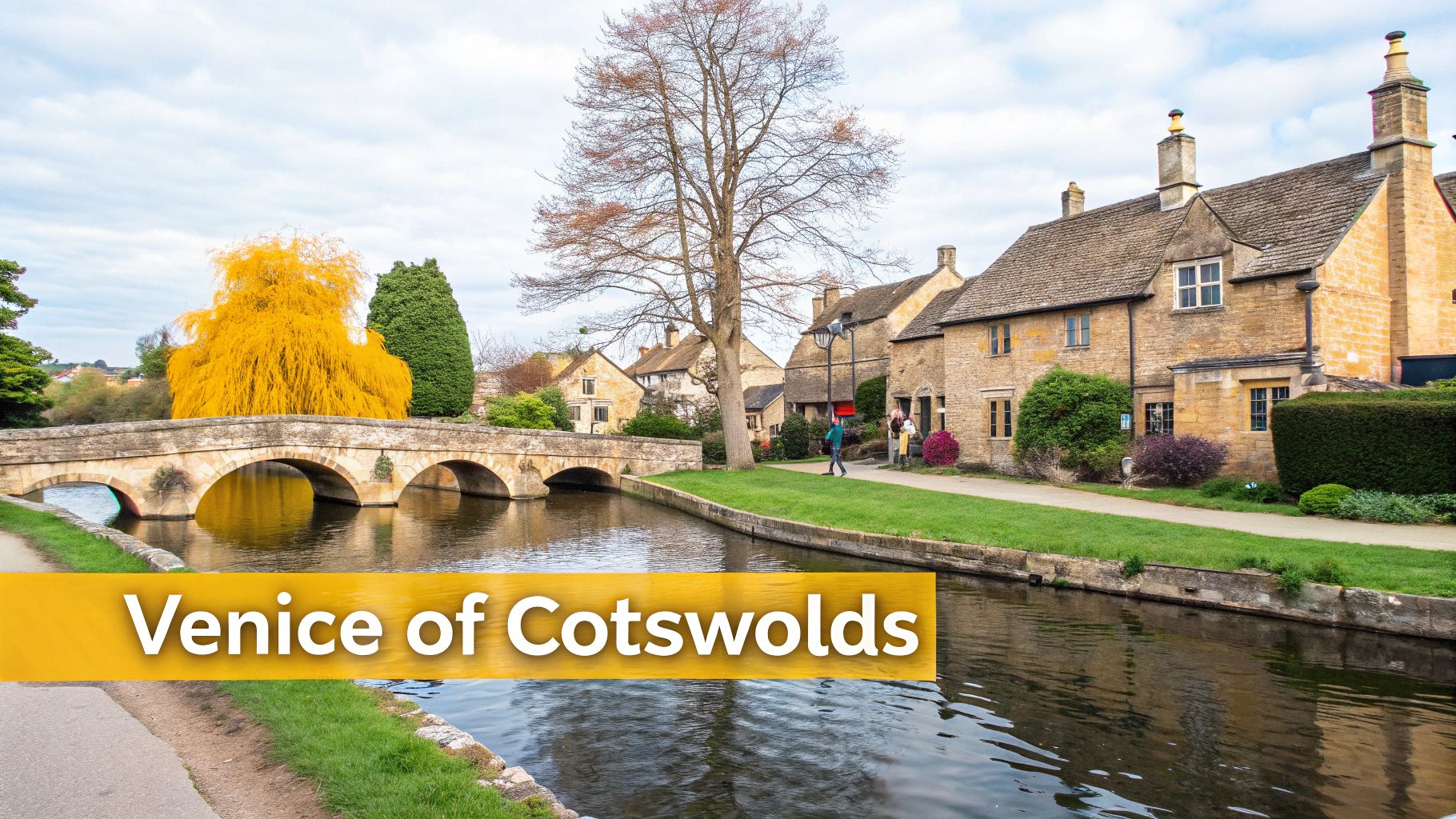
Affectionately known as the 'Venice of the Cotswolds,' Bourton-on-the-Water offers an idyllic and quintessentially English scene that captivates every visitor. This famous village is defined by the crystal-clear River Windrush, which flows gently through its heart, crisscrossed by a series of low, elegant stone bridges dating back to the 17th and 18th centuries. The river is flanked by manicured greens and weeping willows, creating a perfect setting for the honey-coloured stone cottages that line its banks.
Its unique riverside setting and timeless architecture make it one of the most photographed, and indeed prettiest, places in England. The village radiates a gentle, welcoming charm, inviting visitors to slow down, wander along the water's edge, and simply soak in the serene atmosphere that feels perfectly preserved in time.
Why It’s So Picturesque
The undeniable beauty of Bourton-on-the-Water lies in its perfect fusion of natural and man-made elements. The gentle, shallow river acts as a central artery, with the five arched stone bridges providing elegant focal points. This harmonious design, combined with the warm glow of the traditional Cotswold stone buildings and lush village greens, creates a scene of almost storybook perfection.
Must-See Viewpoints & Itinerary Ideas
To truly appreciate its charm, arrive early and take a stroll along the River Windrush before the crowds appear. Cross the Mill Bridge and High Bridge for classic photo opportunities. For a different perspective, wander away from the bustling centre into the quieter side streets, where you'll discover hidden courtyards and enchanting private gardens.
Combine your visit with a trip to the nearby Model Village, a one-ninth scale replica of Bourton-on-the-Water itself. It provides a fascinating bird’s-eye view of the very village you are exploring. Afterwards, consider driving to the quieter, equally beautiful villages of Upper and Lower Slaughter, just a few minutes away.
Planning Your Visit
- Best Time to Visit: Arrive before 9 am on a weekday, or visit during the off-season (November to March) to experience the village's peaceful character without the summer crowds.
- Getting Around: Park in one of the designated car parks on the village outskirts and explore on foot. The compact centre is easily walkable. You can incorporate a visit into a broader journey with this Taste of England 8-Days Self-Drive Tour.
- Accommodation Style: Stay in a classic riverside guesthouse, a cosy bed and breakfast tucked away on a side street, or a traditional pub with rooms to fully immerse yourself in village life.
9. Hadrian's Wall and Northumberland Coast: Roman History Meets Wild Beauty
Combining the raw drama of ancient history with some of England's most breathtaking coastal scenery, the Hadrian's Wall corridor and Northumberland coast offer a unique and powerful sense of place. This region in England's far north presents a landscape of vast, open skies, windswept beaches, and the enduring legacy of the Roman Empire, easily making it one of the prettiest places in England for those who love wild, untamed beauty.
The 73-mile-long wall, a UNESCO World Heritage Site, snakes across rugged hills and dramatic escarpments, a testament to Roman engineering. Just a short drive away, the coastline offers a different kind of beauty, with golden sands, imposing castles, and charming fishing villages that feel steeped in history and legend.
Why It’s So Picturesque
The beauty here lies in the contrast and scale. The sight of the ancient stone wall cutting a lonely path across the undulating, windswept fells of Northumberland National Park is profoundly moving. This historic grandeur is perfectly complemented by the coastal scenery, where the magnificent Bamburgh Castle stands guard over a vast, clean beach, creating a truly epic and photogenic landscape.
Must-See Viewpoints & Itinerary Ideas
For a day of unforgettable sights, start at Housesteads Roman Fort to walk one of the most scenic sections of Hadrian's Wall, taking in the famous view at Sycamore Gap. From there, drive east towards the coast.
Your first coastal stop should be the majestic Bamburgh Castle, perched dramatically on a volcanic outcrop. After exploring the castle and its beach, head to the nearby village of Seahouses. From here, you can take a boat trip to the Farne Islands to see puffins (in season) and seals against the backdrop of the rugged coastline.
Planning Your Visit
- Best Time to Visit: June to August for the best weather and long daylight hours. For puffin viewing on the Farne Islands, plan your trip between April and late July.
- Getting Around: A car is essential to connect the inland sights of Hadrian's Wall with the coastal destinations. The distances are manageable for day trips.
- Accommodation Style: Choose from cosy pubs with rooms in market towns like Hexham, seaside cottages in Bamburgh, or unique farm stays in the national park.
10. The Peak District: A Landscape of Wild Beauty
As England's first national park, the Peak District offers a more rugged and dramatic beauty than the gentle southern landscapes. Located in the heart of the country, it’s a realm of stark contrasts, from the heather-clad moorlands and imposing gritstone edges of the Dark Peak to the deep limestone dales and charming stone villages of the White Peak. This is a landscape that feels both ancient and wild, offering some of the most accessible yet breathtaking mountain scenery in the country.
The region’s beauty is raw and invigorating, a place where you can feel the expanse of the sky above and the history of the land beneath your feet. From the commanding heights of Mam Tor to the serene riverside paths of Dovedale, the Peak District is undoubtedly one of the prettiest places in England for those who love the great outdoors.
Why It’s So Picturesque
The allure of the Peak District lies in its magnificent, untamed landscapes. The dramatic geology has created a stunning variety of scenery in a relatively small area. The deep green valleys carved by ancient rivers, the purple wash of heather in late summer, and the sturdy, grey-stone villages nestled in the hillsides create a powerful and memorable visual tapestry.
Must-See Viewpoints & Itinerary Ideas
For an incredible introduction to the region, base yourself in the village of Castleton. From here, you can tackle the rewarding hike up Mam Tor, the "Shivering Mountain," for panoramic views that stretch for miles. The scenic walk along the Great Ridge to Lose Hill is one of the best in England.
Explore the underground wonders of the area by taking a guided tour of Peak Cavern or Speedwell Cavern. Afterwards, drive the winding Winnats Pass, a spectacular limestone gorge, before heading to the elegant spa town of Buxton to admire its Georgian and Victorian architecture.
Planning Your Visit
- Best Time to Visit: Late spring for lush green dales or late August to September to see the moorlands bloom with purple heather. Visit on weekdays to avoid the weekend crowds.
- Getting Around: A car is essential for exploring the park’s diverse landscapes and reaching more remote walking trails. Roads can be narrow and steep.
- Accommodation Style: Choose from historic coaching inns in market towns, charming B&Bs in quiet villages, or self-catering farm cottages for an authentic rural experience.
Top 10 Prettiest Places in England — Comparison
| Destination | Ease of planning | Resource requirements | Expected experience | Ideal for | Key advantages |
|---|---|---|---|---|---|
| Cotswolds | Moderate (best by car, some villages remote) | Medium (mid-range to high in peak season) | Idyllic rolling hills, stone villages, gentle walks | Scenic drives, photography, relaxed village stays | Developed tourism, variety within driving distance, rich heritage |
| Lake District | Moderate–Challenging (popular, book ahead) | High (expensive accommodation; equipment for outdoors) | Dramatic mountains, lakes, world-class hiking | Hiking, climbing, water sports, landscape photography | Exceptional outdoor recreation, lakes, cultural-literary links |
| Cornish Coast | Moderate (good coastal access; summer parking issues) | Medium–High (peak-season demand) | Rugged cliffs, sandy beaches, coastal walks and surf | Surfing, beach holidays, coastal walking, seafood dining | Stunning coastal scenery, excellent surf and beach facilities |
| Rye, East Sussex | Easy–Moderate (compact town, limited parking) | Medium (prices high for small town) | Well-preserved medieval streets, galleries, panoramic views | History, architecture, short cultural breaks | Intact medieval architecture, compact and walkable |
| Jurassic Coast | Moderate (coastal paths; some safety/parking limits) | Medium (limited village accommodation) | Fossil-rich beaches, colorful cliffs, coastal walks | Geology study, fossil hunting, scenic coastal hikes | Unique geological heritage, excellent fossil sites |
| Windermere & Ambleside | Moderate (transport hub but very busy) | High (touristy and pricier) | Lakeside promenades, boat cruises, easy hiking access | Family lake breaks, cruises, central base for Lakeland | Full amenities, transport links, wide water-activity options |
| Snowdonia NP | Challenging (remote areas, variable weather) | Medium (limited options in remote spots) | Rugged mountain scenery, remote valleys, strong hiking focus | Mountain hiking, climbing, wilderness experience | Dramatic peaks, fewer crowds, mountain railway option |
| Bourton-on-the-Water | Moderate (central Cotswolds; very crowded) | Medium (expensive at peak times) | Picturesque river village, family-friendly attractions | Photography, family day trips, quintessential village visit | Exceptionally photogenic, good restaurants and activities |
| Hadrian's Wall & Northumberland Coast | Challenging (remote; driving recommended) | Medium (limited infrastructure) | Roman ruins, wild coastline, bird and wildlife viewing | History enthusiasts, coastal walking, birdwatching | Unique Roman heritage, rugged landscapes, low crowds |
| The Peak District | Easy–Moderate (well connected to cities) | Low–Medium (more affordable than some parks) | Accessible dales, limestone edges, traditional villages | Day trips, hiking, caving, village exploration | Close to major centers, good hiking infrastructure, varied scenery |
Planning Your Own English Odyssey
From the honey-coloured stone villages of the Cotswolds to the dramatic, windswept fells of the Lake District, our journey through the prettiest places in England has revealed a country of incredible diversity and profound beauty. We’ve wandered ancient Roman walls in Northumberland, traced the fossil-rich cliffs of the Jurassic Coast, and meandered beside the gentle rivers of Bourton-on-the-Water. Each destination, whether it’s a rugged national park or a perfectly preserved coastal town like Rye, offers a distinct chapter in England's story.
But this list is more than just a collection of beautiful photographs; it is a blueprint for your own adventure. The true magic lies not just in seeing these places, but in experiencing the journey between them. It’s in the spontaneous detours down narrow country lanes, the discovery of a hidden pub for a hearty lunch, and the freedom to linger a little longer at a viewpoint that takes your breath away. This is the essence of a self-drive tour: turning a checklist of destinations into a personal, unforgettable narrative.
Weaving Your Tapestry of English Beauty
The key takeaway from our exploration is that England's beauty is best discovered by connecting the dots. Think of the regions not as isolated highlights but as interconnected parts of a grander landscape.
- For the History Enthusiast: Imagine a route that starts with the ancient Roman legacy of Hadrian's Wall, winds south through the storied landscapes of Yorkshire, and culminates in the medieval charm of Rye.
- For the Nature Lover: A classic northern odyssey could link the majestic peaks of the Lake District with the wild, heather-clad moorlands of the Peak District, offering a feast of hiking and spectacular vistas.
- For the Coastal Explorer: Create a stunning seaside journey by starting in Dorset to witness the grandeur of the Jurassic Coast before sweeping west to embrace the idyllic fishing villages and surf-kissed beaches of Cornwall.
This approach transforms your travel from a simple visit into a rich, thematic exploration. You're not just seeing the prettiest places in England; you are actively crafting an itinerary that reflects your own passions and curiosities.
Practical Steps to Your Perfect English Road Trip
Embarking on such a journey requires a bit of planning, but the rewards are immense. To make your adventure as smooth and enjoyable as possible, consider these final practical tips:
- Pace Yourself: The temptation is to see everything, but England’s charm is in its unhurried pace. Allow for at least two to three nights in key regions like the Cotswolds or the Lake District to truly absorb their atmosphere.
- Book Accommodation Wisely: Opt for accommodations that enhance your experience. A charming B&B in a Cotswold village or a cosy inn near a hiking trail in the Peak District can become a highlight of your trip.
- Stay Connected: Navigating country lanes and booking attractions on the go requires reliable connectivity. For international travellers, managing mobile data is crucial. To avoid expensive roaming charges and stay connected seamlessly, it’s worth checking out modern solutions. This an ultimate guide to eSIM for Europe travel provides an excellent overview of how to stay online effortlessly across the UK and beyond.
Ultimately, exploring England's most beautiful corners is an invitation to slow down, to look closer, and to create memories that will last a lifetime. The open road is calling.
Ready to turn inspiration into reality? Let BTOURS craft your perfect self-drive journey through the prettiest places in England. We design personalised itineraries with hand-picked accommodations and detailed route planning, so you can focus on the adventure. Explore our customisable tours and start planning your dream English escape today at BTOURS.