

Welcome to Cornwall, a land where dramatic cliffs meet turquoise waters, ancient legends echo through windswept moors, and picturesque fishing villages cling to historic harbours. This isn't just a holiday destination; it's a journey into the heart of Britain's most captivating county.
Forget generic travel guides. This roundup is crafted for the discerning self-drive explorer, offering a curated selection of 12 unmissable places in Cornwall that promise authenticity, beauty, and adventure. We delve into everything from the mythical ramparts of Tintagel Castle to the artistic soul of St Ives, with each location chosen for its unique character and potential for unforgettable memories.
This guide is your roadmap. We’ll provide practical tips for navigation, reveal the best times to visit, and share unique insights to make your road trip seamless and magical. For those planning a multi-day exploration, ensuring your vehicle is properly equipped can make all the difference. Having a checklist of must-have car camping essentials can transform your journey, allowing for greater flexibility and comfort as you uncover the region's hidden gems.
Our mission is to empower you to explore Cornwall at your own pace. Whether you are drawn by the call of ancient history, the beauty of windswept coastlines, or the charm of creative communities, you'll find everything you need to chart your course. Prepare to discover a landscape rich with history, art, and natural splendour, perfectly suited for an independent, self-paced discovery. Let’s begin your definitive Cornish adventure.
1. St Michael's Mount
Step back in time and witness a fairytale brought to life at St Michael's Mount, one of the most iconic and unmissable places in Cornwall. This breathtaking tidal island, crowned with a medieval castle and a 15th-century chapel, rises majestically from the waters of Mount's Bay. It’s a place where ancient legends of giants and archangels feel tangibly close, and the history of a millennium is etched into its very stones.
The true magic begins with the journey. At low tide, you can walk the ancient, cobbled causeway from the town of Marazion, following in the footsteps of pilgrims and soldiers from centuries past. As the tide turns, the path disappears beneath the waves, and the island is reachable only by boat, adding to its enchanting, isolated allure.
Why It’s a Must-Visit
St Michael's Mount offers a unique blend of natural beauty, rich history, and spiritual wonder. The steep, winding path up to the castle reveals terraced sub-tropical gardens clinging impossibly to the granite cliffs, a testament to horticultural ingenuity. Once at the summit, the panoramic views across the bay towards Land's End and the Lizard Peninsula are simply unparalleled. Inside the castle, you’ll discover centuries of the St Aubyn family’s history, from armour and weaponry to intricate plasterwork.
Practical Tips for Your Visit
To make the most of your adventure, planning is key. The island's accessibility is dictated entirely by the sea, so it's essential to check the causeway opening times before you travel.
- Tide Times are Crucial: Always check the official website for causeway crossing times on your planned day of visit.
- Book in Advance: Tickets for both the castle and gardens must be booked online ahead of time, especially during peak season.
- Wear Sturdy Footwear: The causeway is uneven and can be slippery, and the paths on the island are steep.
- Arrive Early: Beat the crowds by aiming for the first available time slot of the day.
2. Tintagel Castle
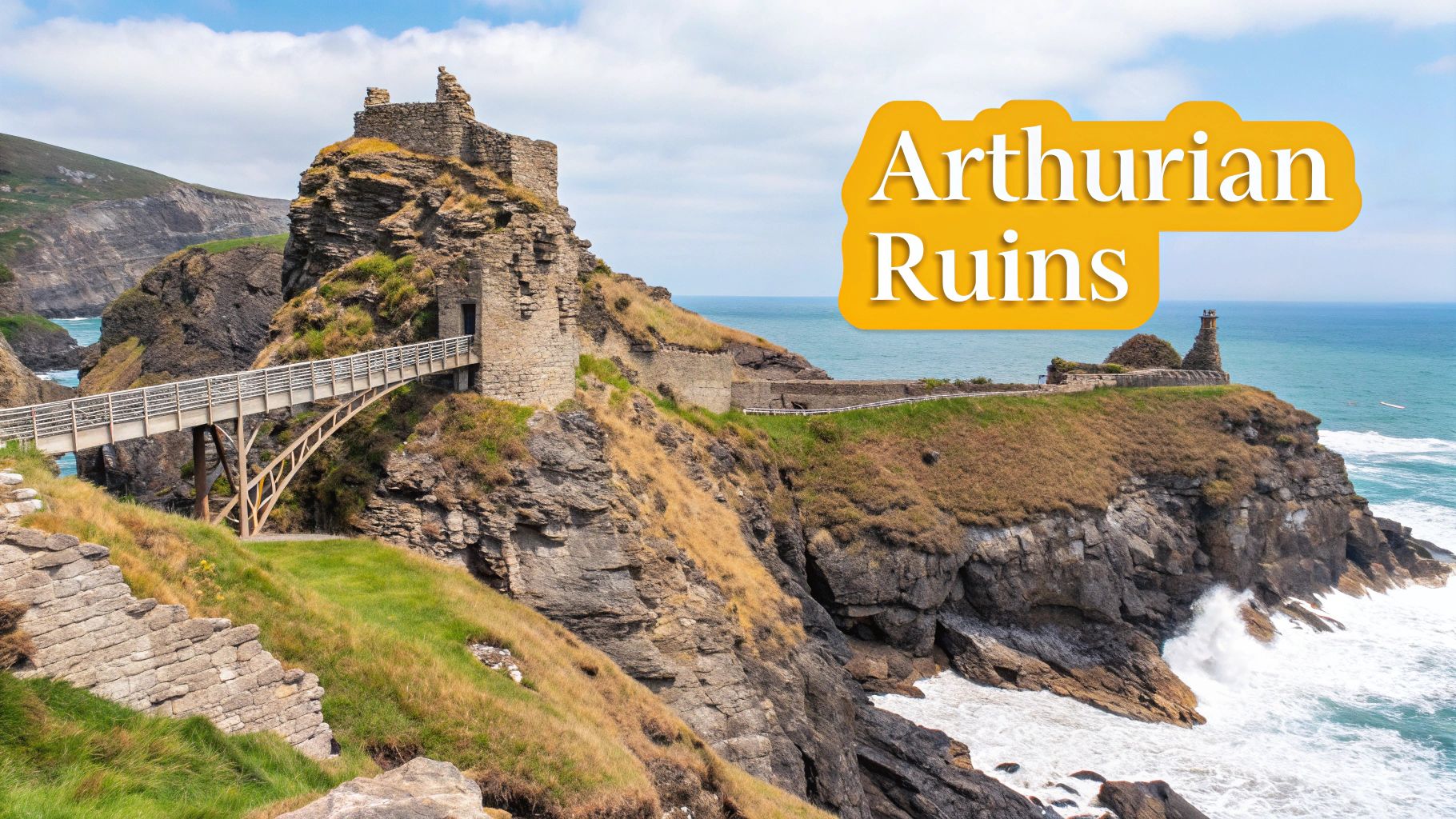
Step into the realm of myth and legend at Tintagel Castle, a place where history and folklore are dramatically intertwined on the rugged North Cornwall coast. These breathtaking clifftop ruins, famously linked to the legend of King Arthur's birth, are perched on a dramatic headland, offering some of the most spectacular coastal views in the UK. It’s a site that ignites the imagination, blending raw natural beauty with the powerful echo of ancient tales.
The experience is defined by its dramatic setting. Crossing the spectacular modern footbridge that spans the chasm between the mainland and the island feels like a journey into another world. Here, you can wander through the remnants of a once-thriving medieval settlement, all while the Atlantic waves crash on the rocks far below, creating an unforgettable atmosphere.
Why It’s a Must-Visit
Tintagel Castle offers an unrivalled combination of Arthurian mythology, significant archaeological history, and awe-inspiring landscapes. This is one of the most evocative historic places in Cornwall, where you can explore the ruins of the Great Hall and imagine the lives of those who inhabited this fortress centuries ago. Don't miss the larger-than-life bronze statue, Gallos, inspired by the legends and royal history of the site. Down on the beach, at low tide, you can venture into the mystical Merlin's Cave, a sea cave that runs completely through the headland.
Practical Tips for Your Visit
To get the most out of your visit to this popular English Heritage site, a little forward planning will ensure a seamless experience. The site is exposed and involves many steep steps.
- Book Online: It is essential to book your timed ticket online in advance to guarantee entry, particularly during school holidays.
- Wear Sensible Shoes: The terrain is rugged, with lots of stairs and uneven paths. Sturdy, comfortable footwear is a must.
- Check the Tides: If you want to explore Merlin's Cave on the beach below, check the tide times beforehand to ensure it's safe and accessible.
- Be Prepared for the Weather: The coastal weather can change in an instant. Wear layers and bring a waterproof jacket, even on a sunny day.
3. Padstow
Immerse yourself in the bustling atmosphere of Padstow, a quintessential Cornish harbour town where a rich fishing heritage meets a world-class culinary scene. Nestled on the Camel Estuary, this charming port is a feast for the senses, with the cries of gulls, the scent of fresh sea air, and the clinking of boat masts creating an unforgettable maritime soundtrack. It’s one of the most vibrant places in Cornwall, a destination where historic fishermen’s cottages line narrow, winding streets that all lead to the picturesque and lively harbour.
The town’s heart is undoubtedly its foodie reputation, largely shaped by the influence of celebrity chef Rick Stein. From sophisticated seafood restaurants to traditional fish and chip shops, Padstow offers a taste of Cornwall at every level. Yet, beyond the gastronomy, it remains a working port, a place where you can watch fishermen land their daily catch and feel connected to the timeless traditions of the sea.
Why It’s a Must-Visit
Padstow delivers a perfect blend of sophisticated charm and authentic coastal life. Food lovers can indulge their passion, while those seeking adventure can cycle the scenic Camel Trail or take a ferry across the estuary to the sandy shores of Rock. The town itself is a joy to explore; get lost in its labyrinth of backstreets to discover independent boutiques, art galleries, and cosy pubs. The combination of its working harbour, culinary excellence, and stunning natural surroundings makes it an essential stop on any Cornish itinerary.
Practical Tips for Your Visit
A little planning goes a long way to enjoying Padstow, especially during the busy summer months. The town is compact and best explored on foot.
- Parking Strategy: Use the large car parks on the edge of town and enjoy the short, scenic walk to the harbour to avoid congestion.
- Book Restaurants: If you have your heart set on a specific restaurant, book well in advance as they fill up quickly.
- Explore the Camel Trail: Hire a bike and cycle the mostly flat trail towards Wadebridge for beautiful estuary views.
- Quieter Stays: Consider staying in nearby Wadebridge or the surrounding villages for a more peaceful base while still being close to the action.
4. Polperro
Discover one of the most enchanting and unspoilt places in Cornwall in the quintessential fishing village of Polperro. Tucked away in a steep-sided valley on the south coast, this historic village is a labyrinth of impossibly narrow, winding streets and higgledy-piggledy fishermen's cottages that all lead to a picture-perfect harbour. It’s a place where time seems to have stood still, preserving an authentic maritime atmosphere that captures the heart of every visitor.
The journey into Polperro is part of its unique charm. As the village is largely traffic-free, you leave your car at the top and meander down through the lanes, feeling the modern world melt away. The sound of seagulls, the sight of colourful fishing boats bobbing in the harbour, and the scent of salty air create a truly immersive and peaceful experience that feels worlds away from the everyday.
Why It’s a Must-Visit
Polperro offers an authentic glimpse into Cornwall's smuggling and fishing past. Its preserved heritage is evident everywhere, from the Heritage Museum of Smuggling and Fishing to the traditional pubs that once hosted pirates and fishermen. The dramatic coastal scenery provides stunning walks, with the path to nearby Talland Bay offering breathtaking views. At low tide, the harbour floor reveals fascinating rock pools, perfect for families to explore, making it a perfect blend of history, nature, and timeless charm.
Practical Tips for Your Visit
To fully appreciate Polperro's tranquil beauty, a little forward planning will enhance your visit. Its unique layout means you should be prepared for a bit of walking.
- Parking and Access: Park at the large car park at the top of the village and enjoy the walk down. A small tram service is available for those with mobility issues.
- Arrive Early: Visit in the morning to experience the village at its most peaceful before the day-trippers arrive.
- Wear Comfortable Shoes: The streets are steep and can be uneven, so sturdy footwear is a must for exploring comfortably.
- Explore the Coast: Take the beautiful but challenging coastal path walk to neighbouring Talland Bay for incredible views and a lovely beach cafe.
5. Falmouth & Pendennis Castle
Discover a vibrant fusion of maritime heritage and contemporary culture in Falmouth, one of Cornwall's most dynamic harbour towns. Overlooking the strategic entrance to the Fal Estuary stands Pendennis Castle, a mighty Tudor fortress built by Henry VIII. This formidable coastal stronghold has guarded Cornwall’s shores for nearly 500 years, offering a compelling window into centuries of military history and commanding one of the most strategic places in Cornwall.
The town itself bustles with an energetic, creative spirit, its winding streets filled with independent shops, art galleries, and acclaimed eateries. From its historic harbour, one of the deepest in the world, you can watch everything from traditional fishing boats to towering cruise ships. The combination of a historic fortress and a lively waterfront town creates a destination that offers something for every visitor, blending the past and present seamlessly.
Why It’s a Must-Visit
Falmouth and Pendennis Castle deliver a perfect mix of historical exploration and coastal leisure. At the castle, you can explore the Tudor keep, walk the battlements, and witness the thrilling daily firing of a historic gun. Back in town, the National Maritime Museum Cornwall offers fascinating insights into the region's seafaring legacy. For beach lovers, the golden sands of Gyllyngvase Beach provide an ideal spot for family fun and swimming. The town also serves as a fantastic base for exploring the tranquil beauty of the Fal River by boat, visiting charming waterside villages like Trelissick and Malpas.
Practical Tips for Your Visit
To get the most from Falmouth’s diverse attractions, a little forward planning is recommended. Its popularity, especially in summer, means booking ahead can save you time and ensure you don’t miss out.
- Combine Attractions: Purchase a joint ticket for Pendennis Castle and the National Maritime Museum for a full day of discovery.
- Explore by Water: Take a ferry or water taxi from the Prince of Wales Pier to explore other parts of the estuary.
- Book in Advance: Water sports and boat trips are extremely popular in summer, so book these activities ahead of time.
- Family-Friendly Beach: Head to Gyllyngvase Beach for its Blue Flag status, cafe, and calm swimming conditions.
6. Penzance & Land's End
Journey to the very edge of the country where the land meets the sea in a dramatic finale. Penzance, an elegant Victorian seaside town, serves as the perfect gateway to Land’s End, Britain’s most south-westerly point. This corner of Cornwall combines Penzance’s sophisticated Georgian and Regency architecture with the raw, untamed beauty of granite cliffs and the symbolic significance of the nation's end.
Penzance offers a vibrant hub of art galleries, independent shops, and subtropical gardens warmed by the Gulf Stream. From here, the short drive to Land's End reveals a landscape steeped in myth and maritime history. It’s a place where you can feel the immense power of the Atlantic Ocean and appreciate the rugged coastline that has defined this region for centuries, making it one of the most essential places in Cornwall to experience.
Why It’s a Must-Visit
This area offers a unique dual experience: the cultural charm of Penzance and the awe-inspiring natural drama of Land's End. You can explore the historic Chapel Street in Penzance, visit the nearby fishing village of Mousehole, or take a boat trip to the Isles of Scilly. At Land’s End, the real magic lies beyond the main visitor centre. The coastal path offers breathtaking views, connecting you to secluded coves like Sennen and the legendary Minack Theatre carved into the cliffs.
Practical Tips for Your Visit
To get the most from this iconic destination, a little planning goes a long way. Focus on the natural beauty and historic towns rather than just the commercial attractions.
- Arrive Early at Land's End: Beat the crowds and enjoy the stunning views in the soft morning light.
- Walk the Coast Path: For the best experience, park at Sennen Cove and walk the scenic coastal path to Land's End.
- Explore Beyond the Signpost: The true beauty is found on the public footpaths along the cliffs, which are free to access.
- Book Shows in Advance: If you plan to visit the nearby Minack Theatre, secure your tickets well ahead of time as performances sell out quickly.
7. Bodmin Moor & Minions (Cheesewring)
Venture into the wild, brooding heart of Cornwall on Bodmin Moor, a vast upland landscape of granite tors, ancient history, and atmospheric beauty. This is a place steeped in myth and legend, from the tales of King Arthur at Dozmary Pool to the mysterious Bronze Age stone circles that dot the windswept terrain. It offers a dramatic contrast to the coastal scenes, presenting a raw, untamed vision of Cornwall’s interior.
The moor is a walker’s paradise, dominated by Cornwall's two highest peaks, Brown Willy and Rough Tor. Near the historic mining village of Minions, you'll find some of its most remarkable landmarks. The Hurlers are three neolithic stone circles, while nearby, the Cheesewring is a breathtaking natural geological formation of granite slabs balanced precariously atop one another. These sites transport you to a primeval world, making it one of the most intriguing places in Cornwall for adventurers and history buffs alike.
Why It’s a Must-Visit
Bodmin Moor offers a profound sense of solitude and connection to an ancient past. It’s a designated Area of Outstanding Natural Beauty, and its stark, heather-clad landscape is home to unique wildlife, including ponies and rare birds. The combination of dramatic natural features like the Cheesewring and significant prehistoric sites like The Hurlers provides a powerful experience. Exploring the remnants of the once-booming tin and copper mining industry adds another layer of historical depth to your visit.
Practical Tips for Your Visit
To explore this rugged landscape safely and comfortably, preparation is essential. The weather can change in an instant, and the terrain is challenging.
- Check the Forecast: Always check a detailed weather forecast before setting out and be prepared for sudden changes.
- Wear Appropriate Gear: Sturdy, waterproof walking boots are a must. A good pair of water-resistant walking trousers will also keep you comfortable.
- Navigate Carefully: Carry a map, compass, or a reliable GPS device, as mobile phone signal can be unreliable.
- Combine Your Trip: Plan to visit Minions, The Hurlers, and the Cheesewring in one trip, as they are all within walking distance of each other.
8. Truro Cathedral & Historic City Centre
Discover the elegant heart of Cornwall in Truro, the county's only city, where stunning Gothic Revival architecture meets a vibrant, modern community. Dominating the skyline are the three magnificent spires of Truro Cathedral, a masterpiece of 19th-century design that feels as though it has stood for centuries. This is one of those places in Cornwall that offers a perfect blend of urban culture, deep history, and architectural grandeur.
Truro’s compact centre is a delight to explore on foot, with its handsome Georgian and Victorian townhouses lining cobbled streets. The city is nestled at the confluence of two rivers, the Kenwyn and Allen, which flow into the Truro River, adding a charming waterside dimension to your visit. It’s a place where you can immerse yourself in history one moment and enjoy a coffee at a bustling independent café the next.
Why It’s a Must-Visit
Truro offers a sophisticated alternative to the coastal villages, providing a rich cultural experience. The cathedral itself is awe-inspiring, with its breathtaking stained-glass windows and soaring vaulted ceilings. Beyond the cathedral, the city is home to the Royal Cornwall Museum, which houses an extensive collection detailing the county's unique heritage. Exploring the independent boutiques, art galleries, and riverside walks provides a wonderfully complete day out.
Practical Tips for Your Visit
To fully appreciate Truro, a little planning will enhance your experience, allowing you to seamlessly move between its key attractions.
- Attend Evensong: For a truly memorable experience, attend an Evensong service at the cathedral to hear the choir's incredible acoustics.
- Explore Side Streets: Wander away from the main thoroughfares to discover hidden gems, including independent shops and artisan eateries.
- Museum & History: Pair your cathedral visit with the Royal Cornwall Museum for a comprehensive understanding of the region's history.
- Riverside Stroll: Take a peaceful walk along the riverside path towards Boscawen Park for a relaxing break from the city centre.
9. Mevagissey & Lost Gardens of Heligan
Discover a perfect pairing of horticultural wonder and authentic Cornish coastal life with a visit to Mevagissey and the Lost Gardens of Heligan. This journey takes you from the winding, narrow streets of a still-working 14th-century fishing village to the sprawling, rediscovered beauty of a Victorian estate. It’s a day of contrasts, where the bustling harbour gives way to tranquil woodland walks and secret gardens.
At The Lost Gardens of Heligan, you step into a botanical romance. Once forgotten under a tangle of brambles after the First World War, this 200-acre estate has been meticulously restored to its former glory. Explore the productive gardens bursting with heritage vegetables, wander through lush sub-tropical jungles, and seek out the iconic Giant's Head and Mud Maid sculptures emerging from the earth. Just a short drive away, Mevagissey’s twin harbours offer a vibrant scene of fishing boats, charming pubs, and local craft shops, completing the experience.
Why It’s a Must-Visit
This combination offers one of the most diverse and rewarding days out among places in Cornwall. Heligan isn't just a garden; it's a living museum of Victorian ingenuity and a testament to the power of restoration, offering endless paths and hidden corners to explore. Mevagissey provides the perfect, lively counterpart with its genuine, unspoilt harbour atmosphere. You can watch the fishermen land their catch, get lost in the maze-like streets, and enjoy some of the freshest seafood imaginable right on the waterfront.
Practical Tips for Your Visit
To fully appreciate both locations, a little bit of planning will go a long way. The sheer scale of Heligan means you'll want to dedicate a good portion of your day there before relaxing in Mevagissey.
- Go Early to the Gardens: Arrive at Heligan for opening time to experience the magical, peaceful atmosphere before the crowds build.
- Wear Comfortable Shoes: The gardens are vast with varied terrain, so sturdy footwear is essential for exploring the extensive network of paths.
- Best Seasons for Displays: While stunning year-round, the gardens are particularly vibrant in spring (April-May) for rhododendrons and in autumn (September-October) for the rich colours.
- Parking in Mevagissey: The village has several large car parks on its outskirts; it's a short, pleasant walk down to the harbour.
10. St Ives
Discover a town where golden light, world-class art, and classic seaside charm converge in perfect harmony. St Ives is more than just a pretty harbour; it’s a vibrant cultural hub on Cornwall's north coast, long celebrated for its exceptional natural light that has attracted artists for generations. This unique quality transformed a traditional fishing village into a bohemian sanctuary, now home to the prestigious Tate St Ives and the Barbara Hepworth Museum.
The town's magic lies in its stunning dual aspect, with the bustling harbour on one side and the glorious surf beach of Porthmeor on the other. Wander through the 'Downalong', a maze of narrow cobbled streets lined with whitewashed fishermen's cottages, independent shops, and hidden artist studios. It’s one of those essential places in Cornwall where every corner reveals a picture-perfect view, from turquoise waters to traditional fishing boats bobbing in the bay.
Why It’s a Must-Visit
St Ives offers an unparalleled blend of beach life and high culture. You can spend the morning surfing the waves at Porthmeor Beach and the afternoon admiring modern masterpieces at Tate St Ives, whose iconic building overlooks the very same sands. The Barbara Hepworth Museum and Sculpture Garden provides a tranquil, intimate insight into the life and work of one of Britain's most important 20th-century artists. The town isn’t just a gallery; it’s a living, breathing canvas.
Practical Tips for Your Visit
St Ives is incredibly popular, so a little forward planning will greatly enhance your experience. Its narrow streets were not designed for modern traffic, making smart travel choices essential.
- Park and Ride: The best way to arrive is via the scenic branch line train from St Erth or Lelant Saltings. Driving into the centre is challenging.
- Book Galleries in Advance: Secure your tickets online for Tate St Ives and the Barbara Hepworth Museum, especially during school holidays and summer.
- Explore the Studios: Keep an eye out for small, independent galleries and studios; many artists open their doors to visitors.
- Walk the Coast Path: For breathtaking views, take the coastal path to Carbis Bay or continue further towards Godrevy Lighthouse.
11. Kynance Cove & The Lizard Peninsula
Venture to Britain's most southerly point and discover a landscape of raw, untamed beauty. The Lizard Peninsula is a world apart, defined by its unique serpentine rock formations, rare wildflowers, and a coastline carved into dramatic cliffs and secret coves. Its crown jewel is Kynance Cove, a place of such breathtaking beauty it seems plucked from a fantasy novel, making it one of the most unforgettable places in Cornwall.
Here, towering sea stacks rise from turquoise waters, and at low tide, a golden sandy beach connects a series of enchanting caves and rock pools. The contrast of the dark red and green serpentine rock against the brilliant water and pale sand creates a geological masterpiece that has inspired artists and explorers for centuries. The coastal path leading down to the cove offers some of the most spectacular views in the entire county.

Why It’s a Must-Visit
The Lizard Peninsula offers an authentic slice of wild Cornwall. Beyond the superstar appeal of Kynance Cove, you can explore the charming fishing village of Cadgwith, visit the historic Lizard Lighthouse, and stand at the very edge of the British mainland. The area's unique geology supports rare flora and fauna found nowhere else, making the clifftop walks a botanist's dream. It’s a destination for those who seek dramatic scenery, exhilarating walks, and a profound connection with nature.
Practical Tips for Your Visit
Exploring this rugged peninsula requires a bit of planning, especially when visiting its most popular spot. Timing and preparation are everything to ensure a safe and memorable experience.
- Arrive Early for Kynance: The car park at Kynance Cove fills up extremely quickly, particularly in summer. Aim to arrive before 10 am.
- Check the Tides: Kynance's famous beach and caves are only accessible at low tide. Check tide times before you go to avoid disappointment.
- Wear Appropriate Gear: Coastal paths can be exposed. Sturdy footwear is essential, and waterproof, windproof clothing is highly recommended, even on sunny days.
- Explore Beyond the Cove: Allow a good 4-5 hours to explore the wider peninsula, including Lizard Point and the picturesque village of Cadgwith.
12. Port Isaac & The Cornish Coast Literary Trail
Discover the quintessential Cornish fishing village of Port Isaac, a charming huddle of whitewashed cottages and narrow, winding alleyways that cascade down to a picturesque harbour. Famous as the fictional Portwenn from the TV series 'Doc Martin', this vibrant village offers an authentic slice of coastal life, where the rhythm of the tides and the daily return of the fishing boats still dictate the pace of the day. It’s a place where stories feel alive, both on screen and in literary heritage.
The village’s charm lies in its preserved character. Wander through its tiny lanes, including the famously narrow "Squeezy Belly Alley," and you’ll feel transported to a simpler time. The harbour remains a working hub, bustling with fishermen landing their daily catch of crab and lobster, providing a truly immersive experience and some of the freshest seafood you’ll ever taste.
Why It’s a Must-Visit
Port Isaac is more than just a beautiful filming location; it’s a living, breathing community with a strong connection to the sea and a thriving creative scene. The dramatic cliffs framing the village provide access to some of the most spectacular sections of the South West Coast Path, making it a perfect base for walkers and nature lovers. For literary fans, the village and its surroundings have inspired countless authors, offering a tangible link to Cornwall’s rich narrative past. Its inclusion as one of the best places in Cornwall is earned through its perfect blend of cultural significance and raw, natural beauty.
Practical Tips for Your Visit
To fully enjoy Port Isaac's unique atmosphere, a little planning goes a long way, especially given its compact size. The village itself is best explored on foot.
- Parking: Use the large car parks at the top of the village and walk down the steep hill, as driving in the narrow centre is extremely difficult for visitors.
- Best Time to Visit: Arrive early in the morning to see the fishermen at the harbour or visit during the shoulder seasons (spring and autumn) for a more peaceful experience.
- Coastal Walk: Take the stunning 30-minute coastal path walk west to the hauntingly beautiful, deserted village of Portquin.
- Combine Your Trip: Port Isaac is just a short drive from other North Cornwall highlights like Padstow (15 mins) and Tintagel, making it an ideal part of a day trip.
Comparison of 12 Cornish Places
| Destination | Access complexity | Visitor resources & requirements | Expected experience / outcomes | Ideal use cases | Key advantages |
|---|---|---|---|---|---|
| St Michael's Mount | Tidal access window; causeway at low tide or boat at high tide | Check tide times; parking in Marazion; allow 3–4 hours; steep climb | Guided castle tour, panoramic bay views, gardens | History enthusiasts, photographers, coastal day trips | Unique tidal island setting; well-maintained facilities; layered history |
| Tintagel Castle | Clifftop approach with modern footbridge; exposed terrain | Entry fee; visitor centre; parking; allow 2–3 hours; steep paths | Dramatic ruins, archaeology blended with Arthurian legend | Myth/history lovers, photographers, coastal walkers | Strong Arthurian associations; dramatic coastal scenery; good interpretation |
| Padstow | Easy drive but busy harbor parking in peak season | Book restaurants in advance; 1–2 days recommended; parking may be distant | Culinary experiences, working harbour atmosphere, beaches | Foodies, families, coastal exploration base | Renowned dining scene (Rick Stein); varied beaches; vibrant arts/craft scene |
| Polperro | Drive to village entrance; pedestrianised steep lanes | Limited parking at perimeter; allow 3–4 hours; steep walking, car-free centre | Authentic fishing village charm, narrow streets, coastal photography | Photographers, quiet-village seekers, walkers | Unspoiled character; pedestrianised centre; active fishing heritage |
| Falmouth & Pendennis Castle | Easy drive; good parking; town and fortress access | Museums, boat trips; 1–2 days for activities; family-friendly facilities | Fortress history + maritime experiences; water sports and museums | Families, maritime history enthusiasts, sailors | Pendennis Castle and National Maritime Museum; diverse waterfront activities |
| Penzance & Land's End | Easy drive; comprehensive parking; Land's End has commercial area | Possible attraction fees; variable weather; 2–3 days for region | Victorian town ambience plus dramatic Atlantic cliffs and viewpoints | Coastal walkers, landmark seekers, gateway to Isles of Scilly | Iconic Land's End terminus; access to Isles of Scilly; dramatic coastal vistas |
| Bodmin Moor & Minions (Cheesewring) | Remote moorland driving to trailheads; variable navigation | Waterproofs, navigation tools, limited facilities; allow 3–4+ hours | Upland walks, Bronze Age archaeology, expansive moorland views | Hikers, archaeology/geology enthusiasts, solitude seekers | Rich prehistoric sites; distinctive granite tors (Cheesewring); fewer crowds |
| Truro Cathedral & City Centre | Urban access with city car parks; compact walkable layout | Short visit 3–4 hours; museums and shops; good for rainy days | Gothic Revival architecture, museums, riverfront walks | Culture seekers, shoppers, indoor sightseeing on wet weather days | Major Victorian cathedral, strong museum offerings, compact centre |
| Mevagissey & Lost Gardens of Heligan | Garden parking available; short drive to village | Garden entry fee; full-day recommended; comfortable walking shoes | Restored Victorian gardens plus working harbour village experience | Garden/plant enthusiasts, families, combined day trips | Extensive Victorian garden restoration; strong interpretation and facilities |
| St Ives | Drive with peripheral parking; busy in summer | Book gallery tickets in peak season; 2+ days for arts & beaches | Contemporary art scene, galleries, sandy beaches and coastal walks | Art lovers, beachgoers, cultural tourists | Tate St Ives and Barbara Hepworth museum; strong artistic community |
| Kynance Cove & The Lizard Peninsula | Narrow roads; limited parking at coves; coastal walking required | Waterproof/windproof clothing; allow 4–5 hours; limited services on peninsula | Serpentine geology, secluded coves, dramatic cliff walks | Photographers, geology enthusiasts, coastal walkers | Unique serpentine rock formations; striking, less commercialised coastline |
| Port Isaac & Cornish Coast Literary Trail | Drive to village entrance; very narrow streets, limited parking | Park at entrance; allow 3–4 hours; pedestrian-only centre | Authentic harbour village, TV/literary associations, fresh seafood | TV/literary fans, photographers, seafood lovers | Doc Martin filming location; strong maritime and literary character |
Crafting Your Perfect Cornish Journey
Your journey through the pages of this guide is merely the prelude to an even greater adventure. We've journeyed together from the tidal island of St Michael's Mount to the legendary clifftops of Tintagel Castle, wandered through the artistic alleys of St Ives, and uncovered the raw, untamed beauty of Bodmin Moor. Each of these extraordinary places in Cornwall represents a single thread in a rich and colourful tapestry that stretches across the peninsula.
The true magic, however, lies not just in visiting these iconic spots, but in the moments you'll discover in between. It's the unplanned detour down a narrow country lane that reveals a hidden cove, the spontaneous conversation with a local artist in Port Isaac, or the quiet moment spent watching the sunset from the windswept headland at Land's End. This guide is your map, but your curiosity is the compass.
Weaving Your Own Cornish Story
The essence of a memorable Cornish holiday is personalisation. The self-drive itineraries and practical tips provided are designed to be a framework, not a rigid set of rules. Think of them as building blocks for crafting an experience that resonates deeply with you.
- For the History Enthusiast: Perhaps you’ll link the ancient stones of the Cheesewring with the formidable walls of Pendennis Castle, creating a timeline of Cornwall's strategic importance through the ages.
- For the Nature Aficionado: You might focus your journey on the dramatic coastline, connecting the serene sands of Kynance Cove with the rugged paths around the Lizard Peninsula, dedicating your time to Cornwall's wild heart.
- For the Family Explorer: A perfect trip could involve blending the myths of King Arthur at Tintagel with the hands-on history of a working fishing village like Mevagissey, followed by an afternoon of discovery at the Lost Gardens of Heligan.
The key takeaway is this: Cornwall is not a checklist to be completed, but a world to be experienced. Allow yourself the freedom to linger where you feel a connection, to change your plans on a whim, and to let the rhythm of the tides and the character of the landscape guide your days. By embracing this spirit of discovery, you move beyond being a tourist and become a true explorer of this captivating corner of Britain.
These places in Cornwall are more than just destinations; they are invitations. They invite you to walk in the footsteps of kings and smugglers, to taste the freshness of the sea, and to witness artistry both human and natural. Your perfect Cornish journey is waiting for you to create it, one winding road, one breathtaking vista, and one unforgettable memory at a time. The adventure begins now.
Ready to turn inspiration into an impeccably planned reality? Let BTOURS craft your bespoke self-drive tour of Cornwall, handling all the logistics from boutique accommodations to optimised routes, so you can focus on making memories. Discover your perfect Cornish journey with BTOURS today.