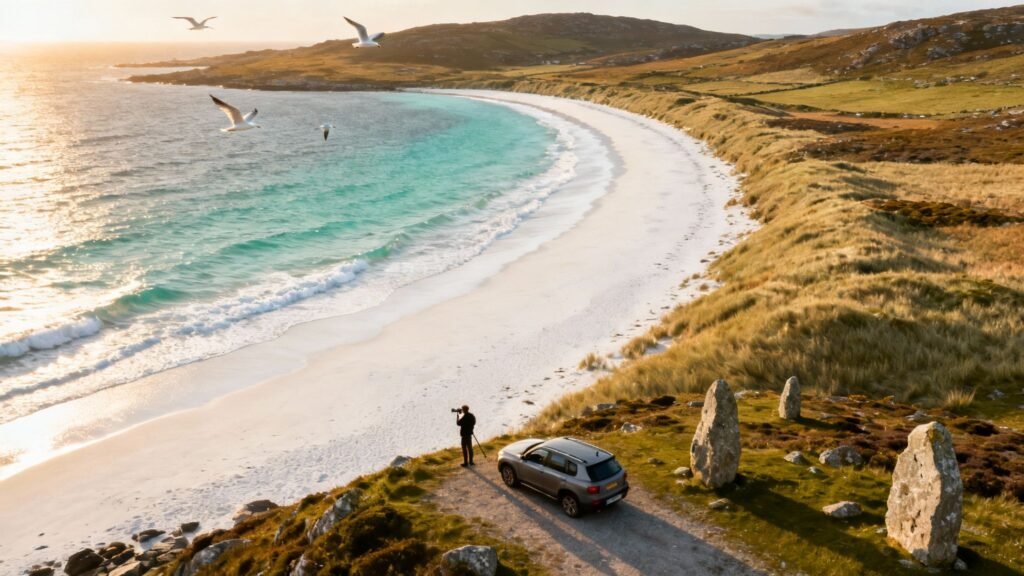
Where Scotland meets the Atlantic the Outer Hebrides opens onto white sands that glow under a vast Hebridean sky. These outer hebrides beaches stretch across more than 130 miles off Scotland’s north-western coast bringing Caribbean-blue waters and wild machair grasslands within reach. From towering dunes to hidden coves this coastline feels worlds away from mainland Scotland.
Beyond the picture-perfect shores each beach tells a story. You’ll discover ancient standing stones guarding windswept dunes, flower-rich machair supporting rare wildlife and dramatic rock formations sculpted by Atlantic storms. Birdwatchers can spot breeding fulmars and eider ducks while seals bask on rock outcrops.
This guide is your passport to these remarkable shores. You’ll get:
- Practical access and parking details for each beach
- Best times for photography and wildlife spotting
- Tide and safety notes to plan your visit
- Self-drive itinerary stops and nearby accommodation suggestions
Whether you’re planning a solitary walk or a scenic drive with friends you’ll find actionable insights on transport options, hidden viewpoints and local recommendations. History enthusiasts, nature lovers and families will all benefit from the clear, step-by-step format. Local operators like BTOURS offer guided self-drive routes and photography workshops.
We’ve handpicked eight unmissable beaches – from the vast expanse of Luskentyre to the sheltered curve of Borgh. This list includes Luskentyre, Traigh Mhòr, Scarista, Balemore, Northton, Callanish, Tolsta and Borgh. Each entry offers precise location data and real-world tips so you can make the most of every Hebridean shore.
Let’s dive into the eight best outer hebrides beaches and start planning your coastal adventure.
1. Luskentyre Beach – Harris
Often gracing the covers of travel magazines and frequently topping "world's best beaches" lists, Luskentyre (Losgaintir in Gaelic) is the undisputed superstar of Outer Hebrides beaches. Located on the west coast of South Harris, this vast expanse of blindingly white sand meets water of an almost unbelievable turquoise hue, creating a scene so sublime it feels more Caribbean than Scottish.
Luskentyre’s fame is well-deserved. On a clear day, the colours are simply breathtaking, with the imposing mountains of North Harris providing a dramatic, brooding backdrop to the serene coastal beauty. The beach is huge, meaning even on a "busy" day, you can walk for minutes without seeing another soul, ensuring a sense of peaceful isolation. It's the kind of place that quiets the mind and fills your camera's memory card in equal measure.
Plan Your Luskentyre Visit
- Location & Access: Situated on the A859, follow the signs for Luskentyre. A single-track road leads down to a dedicated car park with toilet facilities. Be mindful of passing places and livestock on the road.
- Best Time to Visit: To see the colours at their most vibrant, aim for a sunny day at low tide. This exposes the most extensive sand flats and creates mesmerising patterns in the sand. Morning and late evening light offer the most spectacular conditions for photography.
- Wildlife & Photography: Keep an eye out for oystercatchers and ringed plovers along the shore. The real photographic magic, however, lies in capturing the grand scale of the landscape, the shifting light on the mountains, and the swirling patterns left by the receding tide.
Insider Tips for a Perfect Trip
To truly make the most of your visit, timing is everything. Arriving early in the morning not only helps you secure a parking spot during the peak season (July-August) but also offers a chance to experience the beach in serene solitude before others arrive.
Pro Tip: Don't just stay near the car park. Take a walk north along the sand towards the sands of Seilebost for ever-changing perspectives of the island of Taransay. Remember that Scottish weather is famously fickle, so pack waterproofs even if the sky is blue when you set out.
Luskentyre isn't just a beach; it’s an experience that defines the wild, elemental beauty of the islands. Its inclusion in any tour of the Hebrides is non-negotiable for anyone wanting to witness one of the UK’s greatest natural treasures. Planning your journey is key, and you can explore more details on crafting the perfect island itinerary while you discover more about Scotland with btours.com.
2. Traigh Mhòr (Valtos Beach) – Lewis
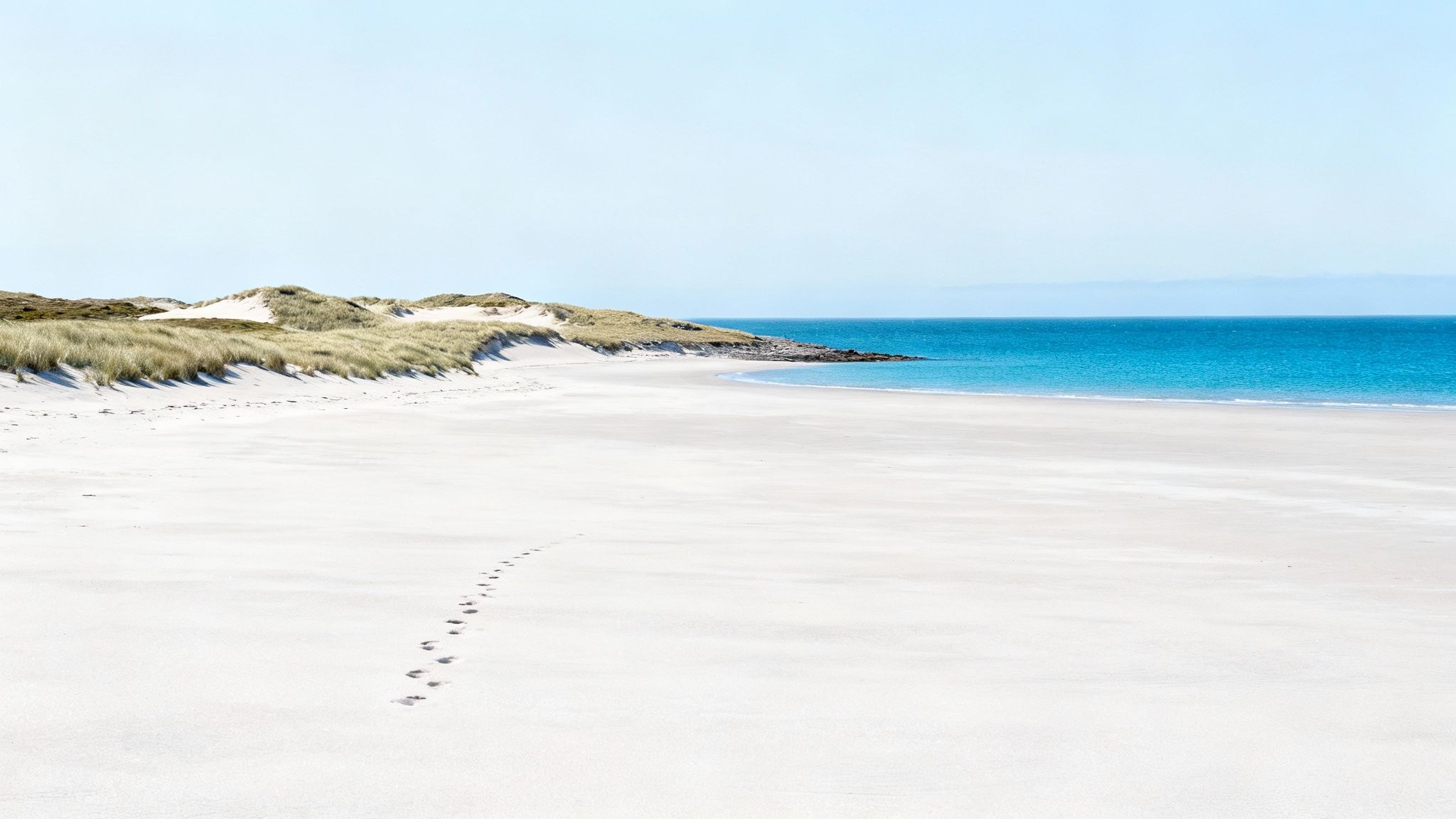
While Harris often steals the spotlight, the Isle of Lewis boasts its own share of coastal masterpieces, and Traigh Mhòr is a prime example. Situated on the rugged Valtos peninsula on the west coast, this stunning, crescent-shaped beach lives up to its Gaelic name, which translates to "big beach". Its pristine golden sands and crystal-clear waters have rightfully earned it a prestigious Blue Flag Award, recognising its exceptional quality and environmental management.
Traigh Mhòr is more than just a beautiful beach; it's a vital ecosystem. It is backed by a rare and precious machair habitat, a unique coastal grassland found only in Scotland and Ireland. This fertile, flower-rich plain is a haven for wildlife and has been featured in BBC nature documentaries, highlighting its ecological importance. The beach offers a more sheltered experience than some of its exposed neighbours, making it a fantastic spot for families and those looking for a serene day by the sea.
Plan Your Traigh Mhòr Visit
- Location & Access: Located near the townships of Valtos and Uig. Access is via a single-track road leading to a small car park right by the beach. The drive itself, through the dramatic Uig landscape, is part of the adventure.
- Best Time to Visit: Low tide reveals the beach's full, magnificent scale, providing a vast area for walking and exploring. A sunny summer day from May to August is ideal for seeing the machair in full, vibrant bloom.
- Wildlife & Photography: The machair is a paradise for birdwatchers, with chances to spot corncrakes, lapwings, and ringed plovers, especially during nesting season. Bring binoculars. Photographically, the sweeping curve of the bay, combined with the colourful machair and distant hills, provides a classic Hebridean composition.
Insider Tips for a Perfect Trip
To fully appreciate the area's natural heritage, consider visiting the local community centre, which often has information on the machair and local conservation efforts. Be sure to respect any cordoned-off areas, as these are crucial for protecting the fragile ecosystem and nesting birds.
Pro Tip: Stock up on any necessary supplies in a nearby village like Carloway before you head out to the peninsula. The isolation is part of its charm, but it also means amenities are limited. Combine your trip with a visit to the nearby historical sites of the Callanish Stones or the Dun Carloway Broch for a full day of exploration.
Traigh Mhòr offers a perfect blend of natural beauty, ecological significance, and tranquillity. Its inclusion in a Hebridean itinerary provides a fantastic counterpoint to the more famous beaches of Harris. Integrating this stop into a broader journey, such as a self-drive tour, allows you to fully appreciate the diverse landscapes the islands have to offer.
3. Scarista Beach – Harris
While Luskentyre is famed for its Caribbean-like serenity, Scarista Beach offers a more dramatic, elemental, and quintessentially Scottish coastal experience. Located just south of its more famous neighbour on the west coast of Harris, Scarista is a vast, three-mile stretch of golden-white sand that faces the full, untamed force of the Atlantic. This is one of the most atmospheric Outer Hebrides beaches, where rolling dunes give way to a huge expanse of sand pounded by powerful surf.
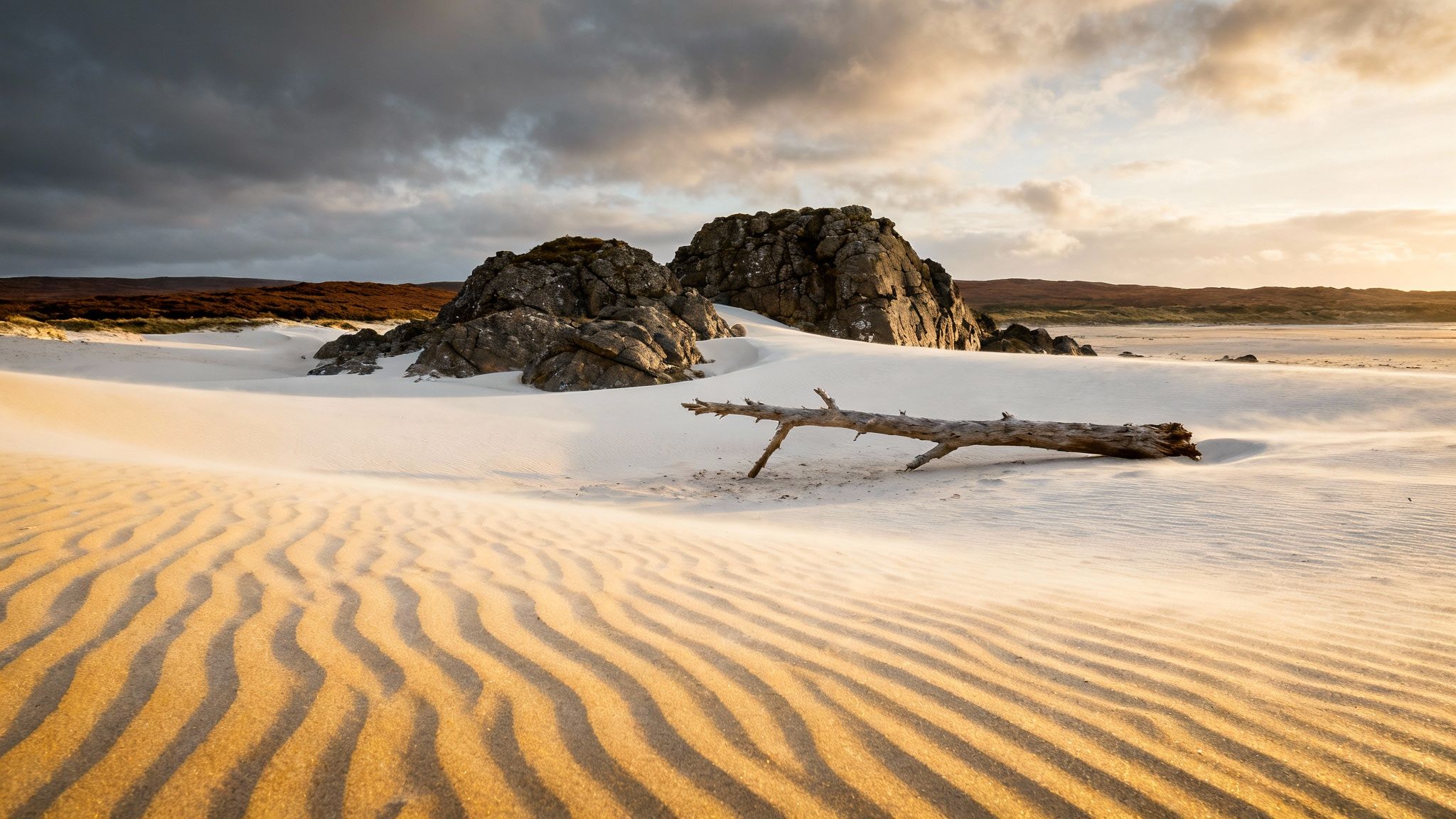
Scarista's character is wilder and more rugged than many other beaches on Harris. Its sheer scale is awe-inspiring, and the backdrop of the Harris hills, often shrouded in mist, adds to its moody and photogenic appeal. It's a place that feels ancient and powerful, attracting landscape photographers and outdoor adventurers who appreciate its raw, untamed beauty. The beach is also well-known for the Scarista Machair, a fertile, grassy plain behind the dunes that bursts into a riot of colourful wildflowers during the summer months.
Plan Your Scarista Visit
- Location & Access: Scarista Beach is easily accessible directly off the A859. There are several large lay-bys and informal parking spots along the road, offering fantastic panoramic views and direct access down onto the sand. There are no dedicated facilities here, so come prepared.
- Best Time to Visit: Each season offers a different experience. Visit during the summer to see the machair in full bloom. For photographers seeking dramatic light and powerful waves, the "shoulder seasons" of spring and autumn can be spectacular. Low tide reveals the most sand, creating an immense, walkable landscape.
- Wildlife & Photography: Look out for seabirds swooping over the waves and listen for the distinctive call of the corncrake in the machair during spring and summer. Photographically, Scarista is a dream for capturing moody seascapes, wide-angle landscape shots, and the intricate textures of the sand and dunes.
Insider Tips for a Perfect Trip
To truly appreciate Scarista, you need to embrace the weather, whatever it may be. The beach is magnificent in a storm, with crashing waves and windswept sands creating a visceral, unforgettable experience. A walk along its entire length is a fantastic way to feel the immense scale of the Hebridean coast.
Pro Tip: The southern end of the beach is often quieter and offers different perspectives of the coastline towards the islet of Toe Head. Due to its exposure to the Atlantic, the wind can be incredibly strong, so wear multiple windproof and waterproof layers, even on a day that starts out calm.
Scarista provides a powerful contrast to the sheltered bays elsewhere, making it an essential stop for anyone wanting to experience the wild heart of the islands. It’s a place that reminds you of nature’s power and beauty. Making time for this wild stretch of sand is a key part of any Hebridean adventure, and you can see how it fits into a broader island tour by checking out travel resources like those at btours.com.
4. Balemore Beach – South Uist
While Harris and Lewis often steal the spotlight, South Uist hides some of the most spectacular and untouched coastal gems in the archipelago. Balemore Beach (Baile Mòr) is a perfect example, a sprawling arc of pristine white sand backed by a dramatic and ecologically vital machair and dune system. It offers a more rugged and wild experience than its more famous northern counterparts.
This is a beach for the true explorer. Less frequented by the main tourist trail, Balemore provides an authentic sense of Hebridean solitude. The vastness of the sand, especially at low tide, is staggering, and the ever-present Atlantic wind shapes the dunes into a constantly evolving landscape. The machair behind the beach erupts into a carpet of colourful wildflowers in late spring and summer, making it a haven for botanists and nature lovers.
Plan Your Balemore Visit
- Location & Access: Located on the west coast of South Uist, Balemore is accessible via a minor road off the main A865. A small, designated parking area is available, managed by local conservation groups. From there, well-defined paths lead through the dunes to the shore.
- Best Time to Visit: To witness the incredible wildflower displays on the machair, plan your visit between May and July. A low tide on a sunny day will reveal the full extent of the sands, while photographers will appreciate the soft light of the early morning or late evening.
- Wildlife & Photography: The machair is a highlight, home to rare orchids and a chorus of wading birds like lapwings and redshanks. Photographically, focus on the textures of the sand, the intricate patterns of the dunes, and the vibrant colours of the machair against the turquoise sea.
Insider Tips for a Perfect Trip
To fully appreciate Balemore, come prepared. Facilities are minimal, so pack everything you need, including food and water, which can be purchased in nearby villages. It’s an ideal spot for a secluded picnic and a long, uninterrupted walk.
Pro Tip: Respect the fragile dune ecosystem by sticking to the marked paths. This area is crucial for nesting birds and rare plants. Bring a field guide to help you identify the unique flora and allow extra time to explore the nearby archaeological ruins scattered across the landscape.
Balemore Beach is a powerful reminder that the best outer hebrides beaches aren't always the most famous. It offers a deep connection to the natural and historical fabric of the islands, an experience that complements the culinary journey you can embark upon with a self-drive tour of Scotland.
5. Northton Beach – Harris
While Luskentyre may be the superstar, Northton (Taobh Tuath in Gaelic) is the charming gateway to the spectacular beaches of South Harris. This collection of smaller, interconnected sandy coves and machair offers a completely different, yet equally enchanting, experience. It’s a place where stunning coastal scenery meets deep cultural and historical significance, making it a multifaceted gem among the Outer Hebrides beaches.
Northton’s appeal lies in its diversity. You can wander from one pristine white cove to the next, explore the rich machair grasslands vibrant with wildflowers in spring, or climb the nearby hill of An Ceapabhal for a breathtaking panoramic view of the entire sound. This blend of accessible beauty and historical context, including its proximity to ancient sites, gives Northton a unique character that rewards exploration and curiosity.
Plan Your Northton Visit
- Location & Access: Located at the southern tip of Harris, easily accessible from the A859. Follow the signs for Northton. There's a dedicated car park at the end of the road near the Temple Cafe and a short walk across the machair leads you to the various beaches.
- Best Time to Visit: A visit during low tide reveals an intricate network of rock pools and sandy causeways connecting the different coves. The machair is at its most spectacular from May to July when it explodes with colour from the wildflowers.
- Wildlife & Photography: The area is a haven for birdlife, including corncrakes, lapwings, and various waders. Photographically, focus on the details: the patterns in the sand, the texture of the machair, and the intimate scale of the coves framed by dark Lewisian gneiss rock.
Insider Tips for a Perfect Trip
To fully appreciate Northton, think of it as a hub for a day of discovery rather than just a single beach stop. Its location makes it the perfect starting point for exploring the wider historical landscape of the area.
Pro Tip: Combine your beach walk with a visit to the nearby St. Clement's Church in Rodel, a magnificent 16th-century church with incredible stone carvings. After exploring, refuel at the excellent Temple Cafe right by the car park for some local food with an unbeatable view.
Northton offers a rich, layered experience that goes beyond just sand and sea. It’s a perfect illustration of how history and nature are interwoven in the Hebrides, and it serves as a wonderful stop on any island adventure. Integrating it into a self-drive tour allows you the flexibility to explore its many facets at your own pace; discover more about crafting your journey by exploring our Scottish self-drive tours.
6. Callanish Beach – Lewis
While the monolithic stones nearby command global attention, Callanish Beach (Calanais in Gaelic) offers a quieter, more contemplative experience that beautifully complements its famous neighbour. Located a short walk from the main Callanish Standing Stones site on the west coast of Lewis, this beach combines serene coastal scenery with a profound sense of deep time, making it one of the most unique outer hebrides beaches.
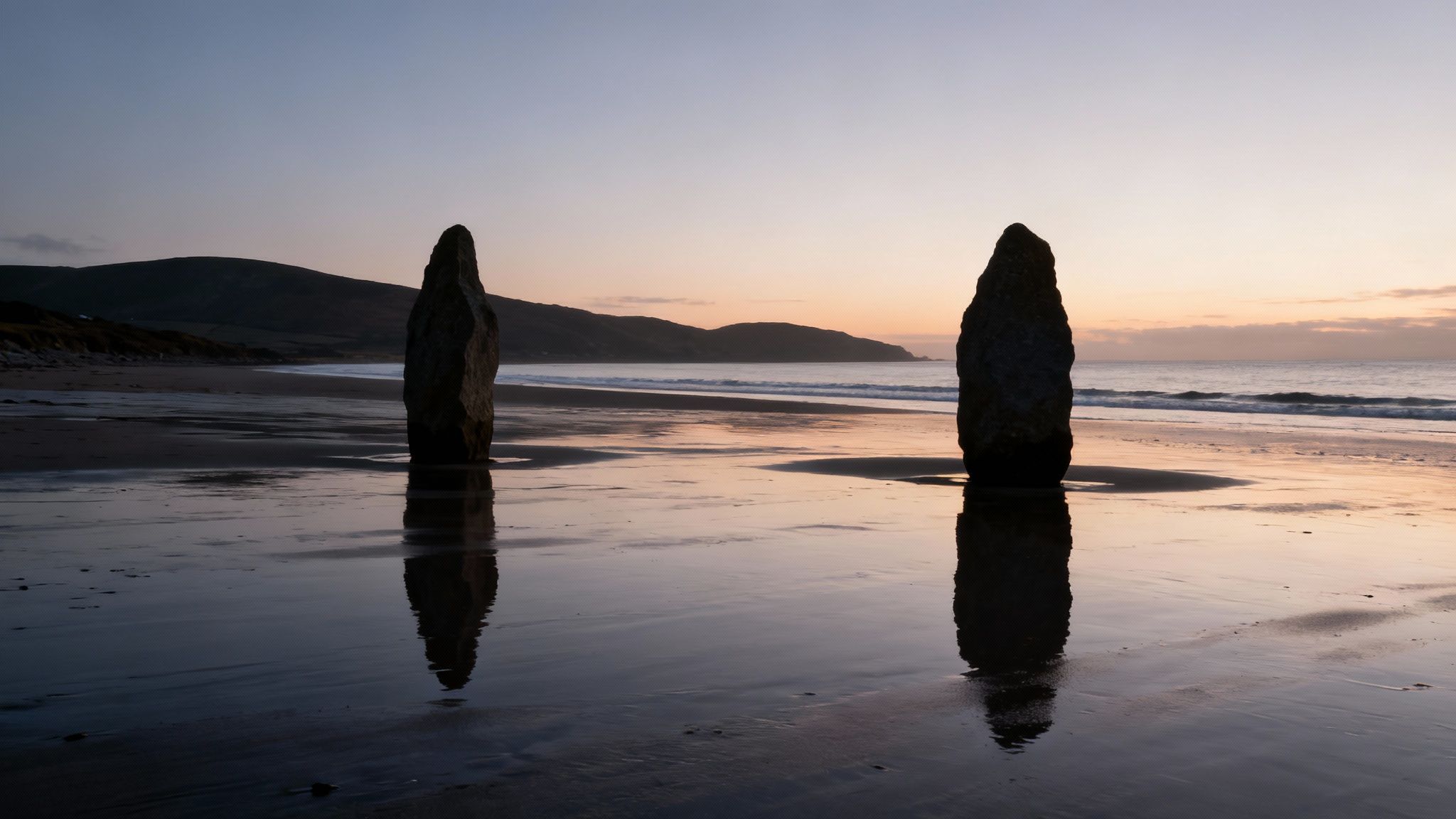
This isn't a vast, sweeping bay like Luskentyre, but rather a more intimate and sheltered cove. Its charm lies in the breathtaking views across Loch Roag and the tantalising glimpses it offers of the 5,000-year-old stone circle perched on the ridge above. It’s a place where history and nature converge, allowing you to walk on shores that have been visited by people for millennia, all while the silent, ancient sentinels watch over you from the skyline.
Plan Your Callanish Visit
- Location & Access: Situated just below the main Callanish I Standing Stones site. Park at the Calanais Visitor Centre and take the well-marked footpath past the stones and down towards the shore. The walk itself is part of the experience.
- Best Time to Visit: Visit early in the morning to experience the stones with fewer crowds before heading to the beach. The soft morning light is ideal for photography, creating long shadows from the stones and illuminating the tidal flats of the loch.
- Wildlife & Photography: The sheltered loch is a good spot for observing wading birds and seals basking on the skerries offshore. Photographically, the ultimate shot is capturing the stones on the skyline from the beach, framing ancient history within the natural landscape.
Insider Tips for a Perfect Trip
Combining your visit to the stones with a walk down to the beach enhances the entire experience, offering a different perspective on this sacred landscape. It allows a moment of quiet reflection away from the main visitor hub.
Pro Tip: Read up on the history at the visitor centre before you walk down to the beach. Understanding the astronomical alignments and Neolithic significance of the stones makes the view from the shore even more powerful. Bring a flask of tea and simply sit on the machair, soaking in the incredible atmosphere.
Callanish Beach provides a perfect pause in any history-focused tour of Lewis. It’s a reminder that these ancient monuments were not built in isolation but were part of a living, breathing landscape shaped by the sea. For those planning a journey through ancient landscapes, you can find more itinerary ideas while you discover more about Scotland with btours.com.
7. Tolsta Strand – Lewis
Tolsta Strand encompasses a series of connected beaches on Lewis’s northeast coast, where snow-white sands meet dramatic sea cliffs. Known for its varied shoreline—from soft dunes to pebbly bays—Tolsta draws UK surfers chasing Atlantic swells and conservationists studying local stewardship in action. As one of the standout outer hebrides beaches, it perfectly captures the raw, elemental beauty and community-led care that define the islands.
Plan Your Tolsta Strand Visit
-
Location & Access:
Find Tolsta Strand off the A866 between Stornoway and Tolsta. A well-signposted single-track road leads down to a small car park at Tolsta Gaelic School. Parking is free but limited, so arrive early in peak season. -
Best Time to Visit:
Spring tides bring the most dramatic surf, making April to June ideal for wave watching and photography. Early morning light highlights the red-sand cliffs, while late afternoon sun warms the dunes. Avoid the busiest weekends if you prefer solitude. -
Water Sports & Safety:
This stretch is popular with surfers and stand-up paddleboarders—check local wave forecasts (Magicseaweed and Surfline both cover Tolsta) and tide times before setting out. Always wear a wetsuit, even in summer, and respect red flag warnings about strong currents. Use the cliff-top paths rather than scrambling down steep slopes to stay safe.
Insider Tips for a Perfect Trip
Arrive at least an hour before high tide if you plan to surf—the car park fills fast when conditions peak. If you’re not hitting the water, explore the well-maintained coastal footpaths north towards Mangersta for panoramic views back over Tolsta Strand. Local volunteers host occasional beach clean events—check Tolsta Community Trust’s website for dates if you want to give back.
Pro Tip: Pack a picnic and linger on the dune grass above the shore as the sun sets. Keep an eye out for seals bobbing offshore and guillemots nesting on the cliff faces. And don’t forget waterproof layers—the weather can change on a dime.
Tolsta Strand isn’t just another spot on the map—it’s a living example of how a small community can safeguard a spectacular Hebridean coastline. Whether you’re catching waves, snapping dramatic cliffscapes, or simply soaking in the sea air, it deserves its place among the finest outer hebrides beaches.
8. Borgh Beach – North Uist
Borgh Beach, nestled on the north-western coast of North Uist, is a shining example of how community and conservation can create something truly special. While perhaps not as famous as its southern counterparts, Borgh (Bòragh in Gaelic) offers a pristine sweep of fine white sand and clear Atlantic waters, backed by a rich machair ecosystem that is carefully managed and protected.
This beach represents the future of sustainable tourism in the Outer Hebrides. It’s a place where the stunning natural beauty is matched by a deep commitment to preserving it for future generations. The beach itself is wide and inviting, perfect for long, reflective walks where you can admire the gentle curve of the coastline and the ever-present sound of the waves, feeling a true connection to this wild and unspoiled landscape.
Plan Your Borgh Beach Visit
- Location & Access: Found near the Balranald RSPB Nature Reserve, Borgh Beach is accessed via a minor road off the A865. A small, community-maintained car park is available, but be prepared for a short walk across the machair to reach the sand.
- Best Time to Visit: Spring and early summer are magical, as the machair behind the dunes bursts into a vibrant carpet of wildflowers. A visit at low tide reveals the beach's full expanse, offering plenty of space and stunning views out to the Monach Isles on a clear day.
- Wildlife & Photography: This is a haven for wildlife enthusiasts. Bring binoculars to spot wading birds like dunlins and sanderlings along the shoreline, and listen for the distinctive call of the corncrake from the machair. Photographers will love capturing the contrast between the colourful machair and the turquoise sea.
Insider Tips for a Perfect Trip
To fully appreciate Borgh, engage with its conservation story. Look for information boards explaining the local crofting practices and conservation efforts that maintain the unique biodiversity of the area. This isn't just one of the most beautiful outer hebrides beaches; it's a living lesson in environmental stewardship.
Pro Tip: Combine your visit with a trip to the nearby Balranald RSPB Nature Reserve to make it a full day of wildlife watching. Always respect any signed or cordoned-off areas, as these are crucial for protecting ground-nesting birds. Supporting local businesses in the area helps sustain the community that cares for this incredible environment.
Borgh Beach offers more than just a beautiful view; it provides an inspiring look at how tourism and conservation can work in harmony. It’s an essential stop for the eco-conscious traveller wanting to experience the heart and soul of the Uist community.
Outer Hebrides: 8-Beach Comparison
| Beach | Access & Logistics | Facilities & Amenities | Expected Experience | Ideal For | Key Advantages |
|---|---|---|---|---|---|
| Luskentyre Beach – Harris | Remote; A859 ~45 min from Stornoway, long travel times | Minimal facilities, limited accommodation, no lifeguards | Expansive white sand, shallow turquoise waters, highly scenic, variable weather | Landscape photographers, solitude seekers, summer swimmers | Iconic tropical-like scenery, low crowds, dramatic seasonal light |
| Traigh Mhòr (Valtos) – Lewis | Well‑signposted from A858 near Carloway, easy access | Blue Flag, visitor centre, parking, maintained facilities | Long sandy shore backed by machair, rich biodiversity, family‑friendly | Families, wildlife watchers, educational visits | Blue Flag quality, machair habitat, predictable conditions |
| Scarista Beach – Harris | Minor roads from A859, exposed to winds | Very limited facilities, no formal infrastructure | Rugged, windswept coastline with rocky geology and moody light | Adventure photographers, solitude seekers, artists | Wild, dramatic geology, very low visitor numbers |
| Balemore Beach – South Uist | Access from A865 via single‑track roads, local directions helpful | Conservation‑managed facilities variable, limited parking | Pristine dunes, clear shallow waters, seasonal wildflowers | Families seeking quiet, botanists, eco‑tourists | Well‑preserved dune ecosystem, strong botanical interest, archaeological nearby |
| Northton Beach – Harris | Main road (A859); most accessible beach in south Harris | Accessible parking and amenities, nearby shops | Sheltered bay with white sand, cultural and heritage context | Families with young children, heritage visitors | Easy access, Harris tweed cultural links, sheltered conditions |
| Callanish Beach – Lewis | Accessible via A858; well‑signposted, near village | Good nearby facilities, visitor information for stones | Intimate sheltered beach with views of standing stones, mixed sand/rock | Cultural tourists, photographers, combined beach + archaeology visits | Proximity to 5,000‑year‑old stones, strong heritage narrative |
| Tolsta Strand – Lewis | Access via B895; limited formal parking, cliff‑top paths | Limited on‑site facilities, marked coastal paths | Dramatic cliffs, varied sand types, strong wave conditions | Surfers, experienced swimmers, coastal walkers | Excellent for water sports, dramatic cliff scenery, multiple beach sections |
| Borgh Beach – North Uist | Minor roads from A865; remote, requires planning | Few commercial facilities, community‑managed amenities | Shell‑sand beach with machair, rich birdlife, conservation projects | Eco‑tourists, birdwatchers, conservation volunteers | Active dune restoration, community stewardship, pristine conditions |
Your Hebridean Beach Adventure Awaits
As our journey across the isles comes to a close, it's clear that the term "beach" barely scratches the surface of what the Outer Hebrides offer. From the sweeping, cinematic grandeur of Luskentyre and Scarista on Harris to the quiet, community-cherished sands of Borgh on North Uist, these are not just stretches of coastline. They are living landscapes, woven into the fabric of Gaelic culture, history, and the untamed spirit of the Atlantic. We have explored eight distinct shores, yet each one represents a doorway into a world of endless discovery.
The common thread connecting these incredible Outer Hebrides beaches is their profound sense of place. On Lewis, you can stand on the sands of Callanish, looking up at the ancient stones, feeling an unbroken connection to millennia of human history. At Tolsta Strand, the roar of the North Atlantic tells a story of raw, natural power. Down in the Uists, the vast, shell-rich machair of Balemore Beach is a testament to a unique ecological partnership between land and sea, a vibrant ecosystem buzzing with life.
Weaving Your Own Hebridean Story
The true magic of exploring these shores lies in the personal moments you will collect. It's the thrill of spotting an otter playing in the surf at Northton, the peace that settles as you watch the sunset paint the sands of Traigh Mhòr in hues of gold and lilac, or the simple joy of finding a perfectly preserved whelk shell. These experiences cannot be fully captured in photographs or articles; they must be lived.
To make the most of your adventure, thoughtful preparation is your most valuable asset. The insights provided for each beach are not just suggestions, they are the tools to build a seamless and unforgettable trip.
- Tide Timetables are Non-Negotiable: Access to certain coves and the full expanse of beaches like Scarista is entirely dependent on the tides. Always check local tide times before setting out.
- Embrace the 'Four Seasons in One Day' Mentality: The Hebridean weather is famously changeable. A waterproof jacket, sturdy footwear, and warm layers are essential, even on a day that starts with brilliant sunshine.
- Leave No Trace: The beauty of these beaches lies in their pristine condition. Adhering to the Scottish Outdoor Access Code is paramount. Pack out everything you bring in, respect wildlife from a distance, and leave these delicate environments exactly as you found them.
From Inspiration to Itinerary
This guide has laid out the possibilities, presenting a palette of whites, turquoises, and greens from which you can paint your own Hebridean masterpiece. Whether you choose to base yourself on Harris to explore its world-renowned southern shores or venture north to the more rugged and historic coastlines of Lewis, the freedom to explore is the greatest luxury. A self-drive tour offers the unparalleled flexibility to chase the light, linger where your heart desires, and discover your own hidden gems just around the next bend in the single-track road.
The call of the islands is a powerful one. It's a call to disconnect from the noise of modern life and reconnect with the rhythm of the tides, the whisper of the wind through the machair, and the sheer, breathtaking beauty of the natural world. The Outer Hebrides beaches are waiting, not just to be seen, but to be experienced. They offer a rare opportunity for genuine adventure and quiet contemplation, a journey to the very edge of Scotland that will stay with you long after the sand has been shaken from your boots.
Feeling inspired to chart your own course across these incredible islands? Let BTOURS handle the logistics with a bespoke self-drive itinerary, ensuring you have the perfect accommodation and local insights to make your Hebridean beach adventure truly unforgettable. Start planning your journey to the edge of the Atlantic today with BTOURS.