

England's landscape is a tapestry woven with millennia of history, from the enigmatic stone circles of ancient peoples to the formidable castles of Norman conquerors and the grand palaces of monarchs. For the independent traveller, exploring these locations by car offers an unparalleled freedom to connect with the nation's soul at your own pace. This guide has been curated specifically for the self-drive tourist, offering a detailed roundup of England’s most significant historical sites.
This is not just another list. We move beyond simple descriptions to provide the essential logistical details that make a road trip successful. You will find practical, actionable advice tailored for those behind the wheel, including tips on parking, optimal times to visit to avoid crowds, and suggestions for nearby stops that can enrich your journey. We delve into what makes each location a cornerstone of English heritage, ensuring you understand its context and importance before you even arrive.
Consider this your roadmap to England's most captivating landmarks. Whether you are following a pre-planned itinerary or creating your own adventure, this comprehensive guide provides the necessary tools for a seamless and memorable exploration of the very best historical sites in England. We will cover everything from the royal grandeur of Windsor Castle and the ancient mystery of Stonehenge to the Roman ingenuity at Bath and the northern frontier of Hadrian's Wall. Each entry is designed to be a self-contained mini-guide, equipping you with the knowledge to make your visit both efficient and deeply rewarding. Prepare to journey through the annals of time, discovering the stories etched into the stone, soil, and spirit of this historic land.
1. Tower of London
No exploration of historical sites in England would be complete without a visit to the formidable Tower of London. Founded by William the Conqueror in 1066, this fortress on the River Thames is a cornerstone of British history. Its ancient stones tell tales of royal power, political intrigue, and infamous imprisonment.
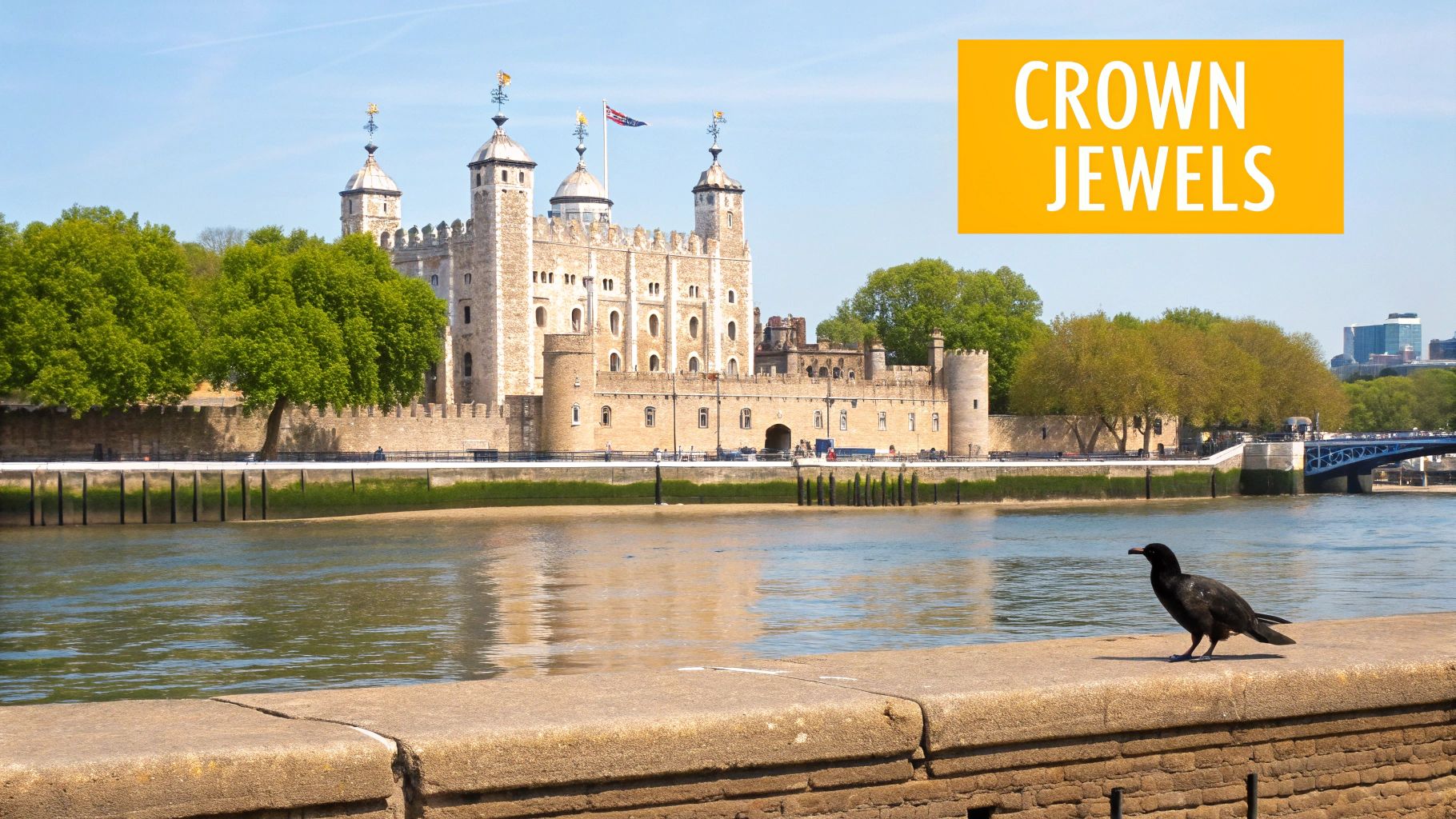
For nearly a millennium, the Tower has served as a royal palace, a secure fortress, an armoury, and most notoriously, a state prison. It’s where Anne Boleyn and Catherine Howard met their grim fates and where the "Princes in the Tower" mysteriously vanished. Today, as a UNESCO World Heritage Site, it stands as a living museum and the secure home of the magnificent Crown Jewels.
Visitor Tips for Self-Drive Tourists
Navigating a visit to this iconic landmark requires some planning, especially for those arriving by car. Parking in central London is challenging; consider using a Park & Ride service on the outskirts and taking public transport to Tower Hill station, located right beside the fortress.
- Book in Advance: Purchase your tickets online before your visit. This not only secures your spot but often provides a discounted rate compared to buying on the day.
- Arrive Early: The Tower is one of London's most popular attractions. Arrive just before opening time to be among the first inside. Head straight to the Crown Jewels display in the Waterloo Barracks to see them before the queues become overwhelming.
- Take a Yeoman Warder Tour: These complimentary tours, led by the iconic "Beefeaters," are an absolute must. They offer a captivating and often humorous insight into the Tower's 1,000-year history that you simply can't get from a guidebook. The tours start every 30 minutes near the main entrance.
To fully appreciate the site's scale and history, allocate at least three to four hours for your visit. If you're planning a multi-day trip to the capital, you can easily integrate this stop into a broader itinerary. Learn more about planning a trip that includes the Tower of London and other key city sights.
2. Stonehenge
No journey through the historical sites in England is truly complete without experiencing the awe-inspiring mystery of Stonehenge. This prehistoric monument in Wiltshire, a ring of colossal standing stones, was erected around 5,000 years ago. Its purpose remains one of archaeology's greatest enigmas, with theories suggesting it was an astronomical observatory, a sacred burial ground, or a centre for healing.
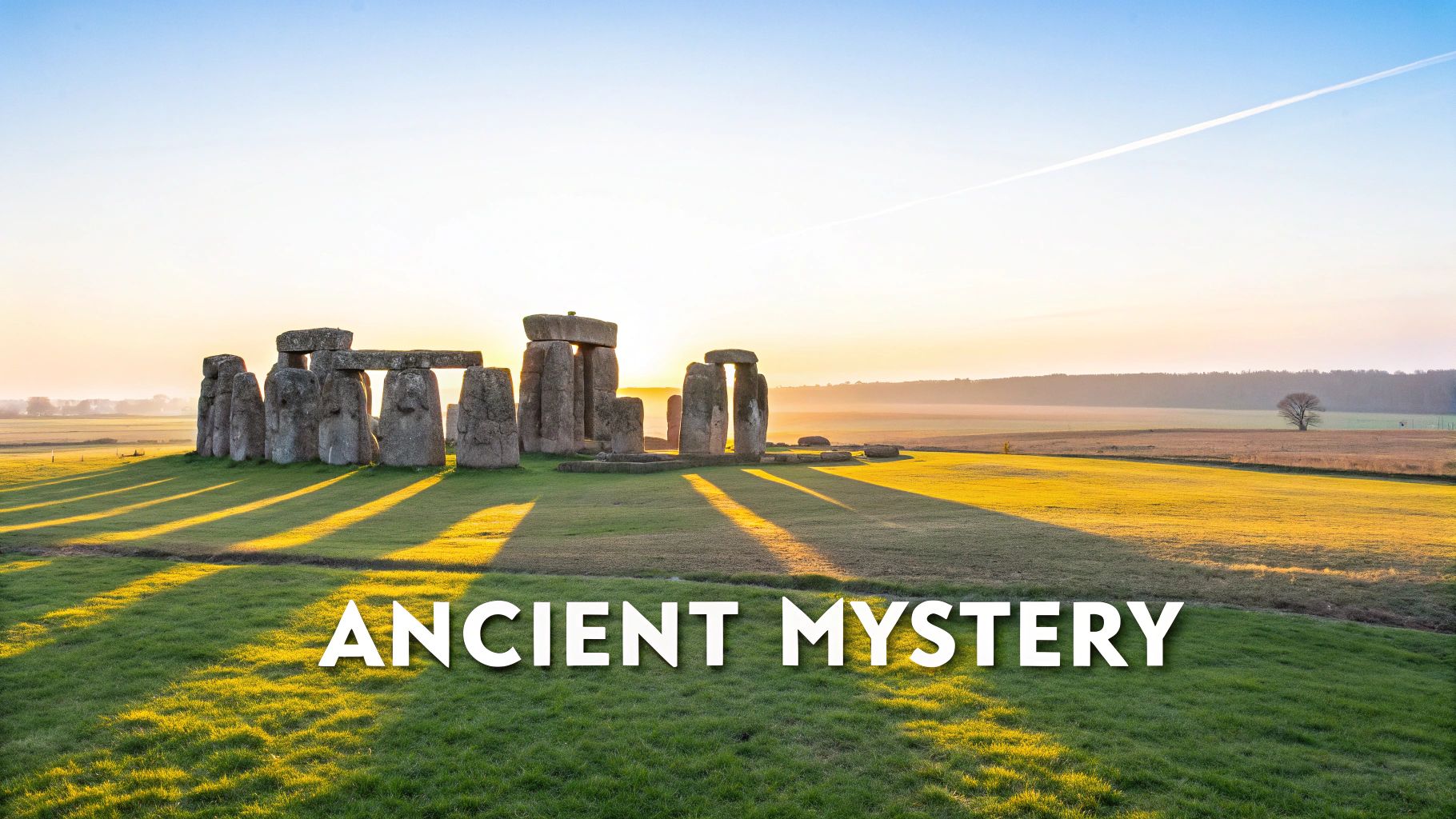
The sheer scale of its construction, accomplished with only primitive tools, is staggering. Each sarsen stone weighs an average of 25 tonnes, transported from miles away. As a UNESCO World Heritage Site, Stonehenge offers a profound connection to a Neolithic world, inviting contemplation of its ancient creators' beliefs and ingenuity. Its enduring power has captivated everyone from archaeologists like Mike Parker Pearson to poets and artists for centuries.
Visitor Tips for Self-Drive Tourists
Stonehenge is well-signposted and easily accessible by car from the A303, but a well-planned visit enhances the experience. The site has a large, dedicated car park, but pre-booking your timed ticket is essential, as this also reserves your parking space.
- Book in Advance: Timed tickets are mandatory. Secure your slot online well before your travel date, especially during peak seasons or for special events like the summer solstice, to avoid disappointment.
- Visit the Exhibition First: Before heading to the stones, spend time in the world-class visitor centre. The exhibition and recreated Neolithic houses provide crucial context that will enrich your understanding of what you are about to see.
- Prepare for the Weather: The stone circle is located in a very exposed, open landscape. It can be extremely windy and wet, even on a day that starts sunny. Bring layers, waterproofs, and sturdy footwear. An early morning visit often provides the best light for photography.
Allow at least two to three hours for a comprehensive visit, including the shuttle bus to the stones and time in the visitor centre. For those exploring the region further, a visit here combines well with other ancient sites. Discover how to include Stonehenge in a broader tour of the south of England.
3. Westminster Abbey
Just a short walk from the Houses of Parliament, Westminster Abbey is a masterpiece of Gothic architecture and a living chronicle of British history. Officially a "Royal Peculiar," under the direct jurisdiction of the monarch, this stunning church has hosted every coronation since William the Conqueror in 1066. It is one of the most revered and significant historical sites in England.
More than just a beautiful building, the Abbey serves as the final resting place for over 3,300 of the nation's most celebrated figures, from kings and queens to poets and scientists like Isaac Newton and Charles Darwin. It has witnessed royal weddings, including that of Prince William and Catherine Middleton, and state funerals, making its walls silent witnesses to centuries of national triumphs and sorrows.
Visitor Tips for Self-Drive Tourists
As with other central London attractions, driving directly to Westminster Abbey is not advisable due to congestion and a lack of parking. Utilise a Park & Ride facility or park further out and travel in via the Tube. The nearest stations are Westminster and St. James's Park, both a very short walk away.
- Book a Timed Entry: To guarantee your visit and avoid long queues, book your timed entry ticket online in advance. This is particularly important during peak tourist seasons.
- Attend a Service: For an authentic experience without the standard entrance fee, consider attending one of the daily services, such as Evensong. While you won't be able to roam freely, you will experience the Abbey's magnificent acoustics and spiritual atmosphere. Be mindful that photography is not permitted during services.
- Take a Verger-Led Tour: For unparalleled insight, book a verger-led tour. These expert guides provide access to areas not open to the general public, including the Shrine of St Edward the Confessor, sharing detailed historical commentary along the way.
Plan to spend around 90 minutes to two hours to see the main highlights. Including Westminster Abbey is essential for any comprehensive London itinerary, and you can learn more about crafting a multi-day city break that features this iconic landmark.
4. Hadrian's Wall
Stretching 73 miles coast-to-coast across the rugged landscape of northern England, Hadrian's Wall is a breathtaking testament to the power and ambition of the Roman Empire. Built under the orders of Emperor Hadrian starting in 122 AD, this defensive fortification marked the northwestern frontier of Roman Britain. It stands today as a UNESCO World Heritage Site and one of the most remarkable Roman monuments in the world.
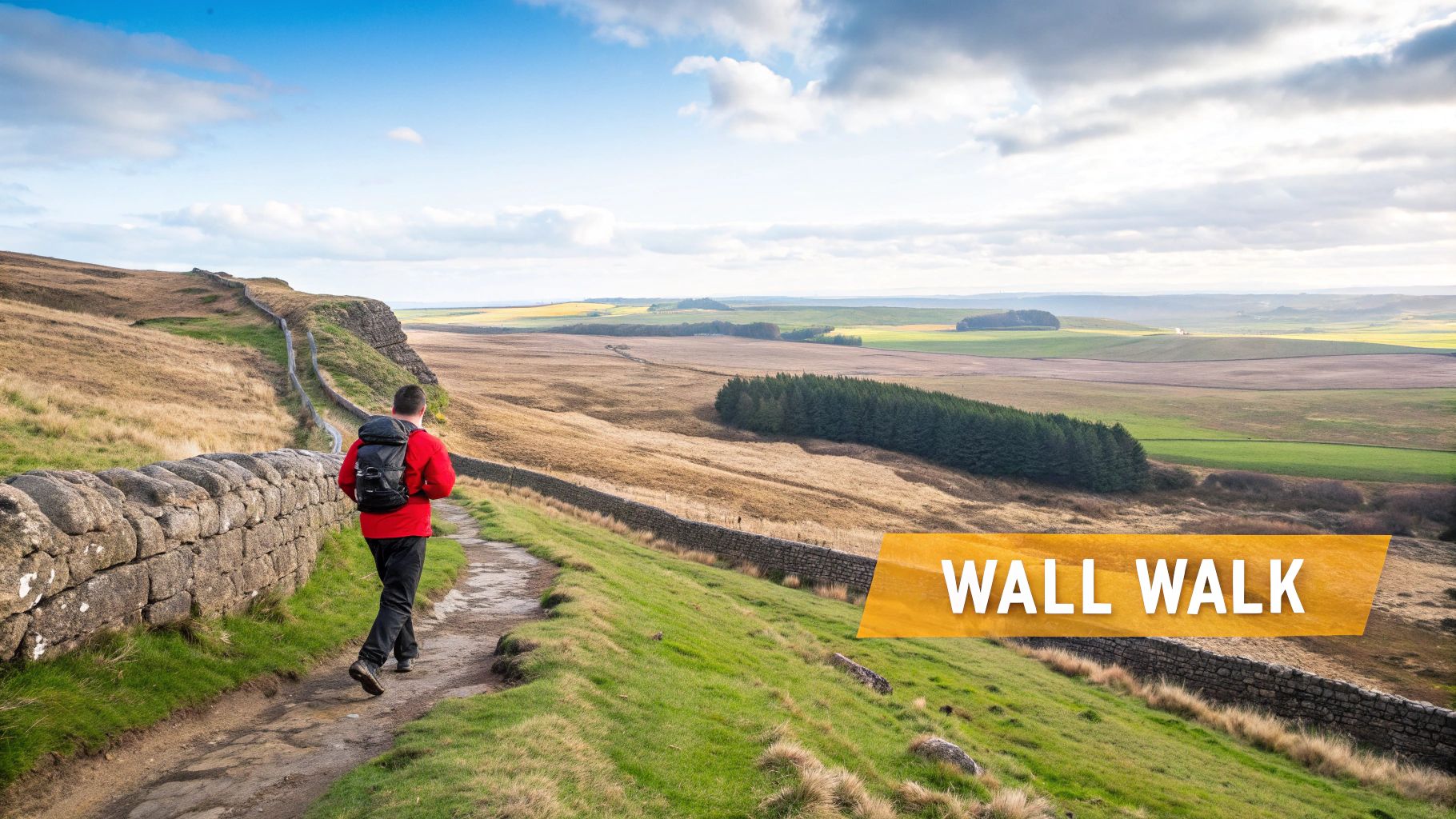
More than just a wall, this complex structure included milecastles, turrets, and heavily garrisoned forts that housed thousands of soldiers. Walking along its remains, you are treading the same ground as Roman legionaries nearly two millennia ago, offering a profound connection to one of the most significant historical sites in England. The dramatic scenery of the Northumberland National Park only enhances its awe-inspiring presence.
Visitor Tips for Self-Drive Tourists
Exploring Hadrian's Wall by car offers fantastic flexibility to visit its most impressive and remote sections. The B6318 road, known as the Military Road, runs parallel to a long stretch of the wall, providing easy access to key sites. Parking is available at all major forts and museums, though it can be limited during peak season.
- Choose Your Base: Instead of tackling the entire 84-mile Hadrian's Wall Path, focus on key areas. The central section offers the most dramatic landscapes and best-preserved forts like Housesteads and Vindolanda.
- Start with Context: Begin your journey at the Roman Army Museum near Greenhead to gain a comprehensive understanding of life on the Roman frontier before you explore the ruins themselves.
- Plan for the Weather: The weather in northern England can be unpredictable. Visit between May and September for the best conditions, but always bring sturdy walking shoes and waterproof clothing.
A visit to the wall can be a highlight of a wider exploration of the north. You can find out more about crafting an itinerary that includes Hadrian's Wall and other scenic drives on an 8-day self-drive tour of England.
5. Windsor Castle
As the oldest and largest occupied castle in the world, Windsor Castle is a quintessential stop on any tour of historical sites in England. Its origins trace back to William the Conqueror shortly after the Norman conquest in 1066. For over 900 years, it has been a family home for British kings and queens, making it a powerful symbol of the monarchy.
The castle’s magnificent architecture spans centuries, from the medieval Round Tower to the grandeur of the State Apartments. It has witnessed royal weddings, state banquets, and significant historical events. Visitors can explore the lavish interiors, admire masterpieces from the Royal Collection, and visit St George's Chapel, a stunning example of Gothic architecture and the final resting place of 11 monarchs, including Queen Elizabeth II.
Visitor Tips for Self-Drive Tourists
Windsor is easily accessible by car, but parking in the town centre can be expensive and limited. Look for long-stay car parks like the Romney Lock & King Edward VII Avenue Car Park, which are a short walk from the castle entrance. Arriving early will give you the best chance of securing a convenient space.
- Check Opening Times: As a working royal palace, the castle is subject to closures for state occasions or royal events, sometimes at short notice. Always check the official website right before you travel.
- Plan for a Full Day: Combine your castle visit with an exploration of the charming town of Windsor and a stroll along the River Thames. To see the State Apartments, Queen Mary's Dolls' House, and St George's Chapel thoroughly, allocate at least three to four hours for the castle itself.
- Note Photography Rules: While photography is permitted in the castle precincts, it is not allowed inside the State Apartments or St George's Chapel. Be mindful of these restrictions to ensure a respectful visit for everyone.
Booking tickets online in advance is highly recommended to avoid long queues, particularly during peak tourist season. Consider visiting on a weekday if possible, as weekends tend to be significantly more crowded.
6. Roman Baths at Bath
Journey back nearly two millennia at the Roman Baths, one of the best-preserved Roman remains in the world. Nestled in the heart of the beautiful Georgian city of Bath, this magnificent complex was built around Britain's only natural hot springs. The site offers an incredible window into the lives of Romans in Britain, showcasing their advanced engineering and sophisticated social customs.
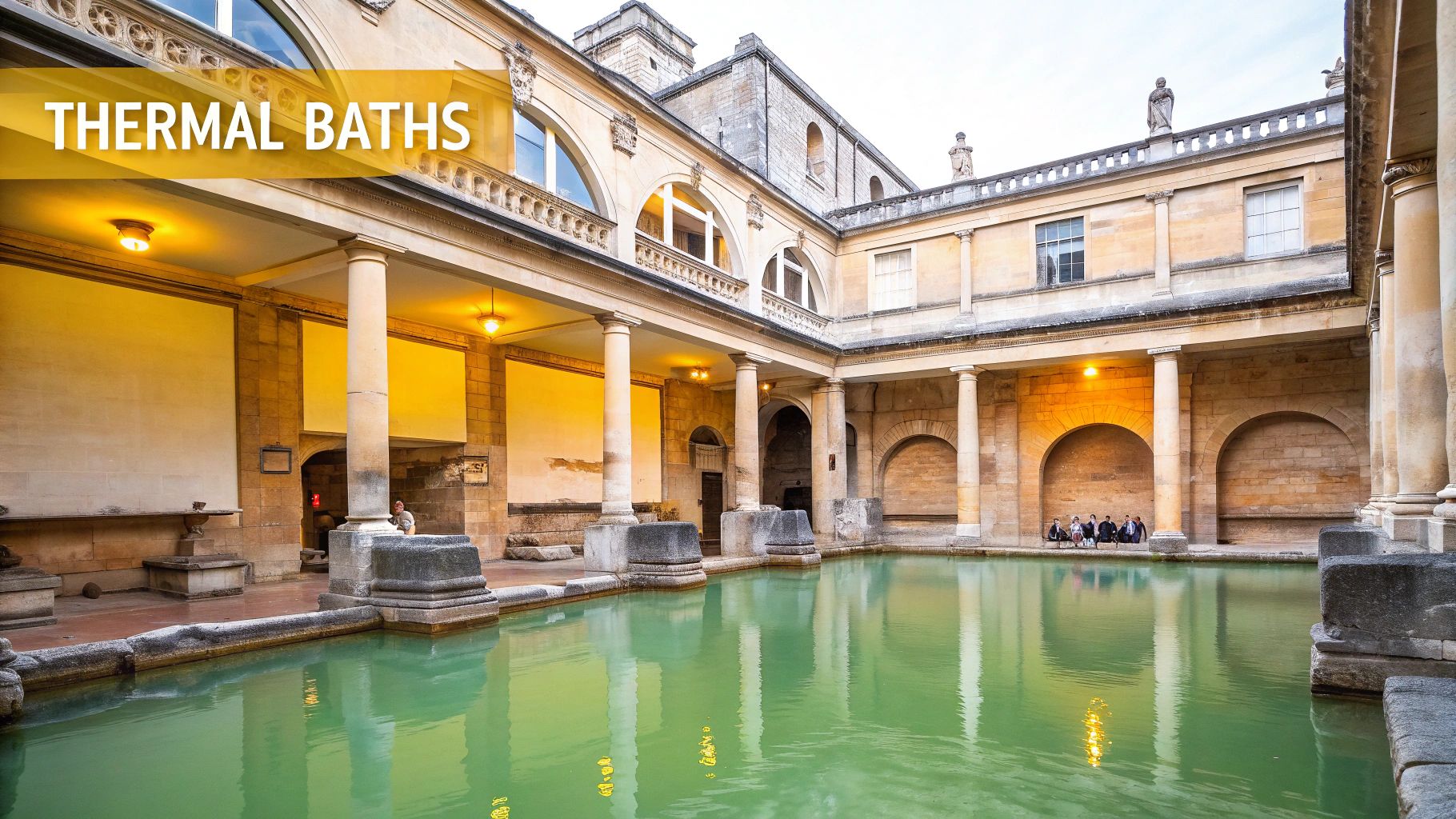
Constructed from around 70 AD, the baths were part of the small town of Aquae Sulis and served as a place for public bathing and socialising for centuries. Today, as a key part of a UNESCO World Heritage city, visitors can walk on original Roman pavements and see the ruins of the Temple of Sulis Minerva. The highlight is the Great Bath, a massive lead-lined pool filled with steaming, geothermally heated water.
Visitor Tips for Self-Drive Tourists
The city of Bath is famously compact, and its historic centre is largely pedestrianised, making driving directly to the site impractical. Use one of the city's several Park & Ride locations, which offer convenient and regular bus services into the centre, a short walk from the baths. For those seeking to expand their historical exploration, you might be interested in some of the best day trips from London, including historic Bath.
- Go Early or Late: The Roman Baths are a major draw. Plan your visit for the first hour after opening or the last couple of hours before closing to avoid the largest tour groups and enjoy a more tranquil experience.
- Use the Audio Guide: The complimentary audio guide, included with your ticket, is exceptionally well-produced. It offers detailed commentary, including a fascinating "Bill Bryson" option, that brings the ancient ruins to life far better than signs alone.
- Explore the Surroundings: Allocate at least 90 minutes to two hours for the baths themselves. Afterwards, explore the layered history of the city, from the adjacent Bath Abbey to the stunning Georgian architecture of the Royal Crescent.
7. Warwick Castle
A journey through England's finest historical sites must include a stop at Warwick Castle, an outstanding example of medieval military architecture. Originally a wooden motte-and-bailey fort built by William the Conqueror in 1068, it was rebuilt in stone during the 12th century. The castle’s imposing towers and ramparts evoke a powerful sense of its history as a formidable stronghold.
Throughout its life, Warwick Castle has been a home, a fortress, and the centre of significant historical events, including the Wars of the Roses. Later, it was transformed into a grand country house by the Greville family, who owned it for over 350 years. Today, it offers a unique blend of authentic medieval fortifications and lavish stately interiors, bringing centuries of English history to life through interactive exhibits and live-action shows.
Visitor Tips for Self-Drive Tourists
Warwick Castle is easily accessible by car, located near the M40 motorway, with ample on-site pay-and-display parking available. Driving provides the flexibility to explore the charming town of Warwick and nearby Stratford-upon-Avon, making it an ideal base for discovering the region's rich heritage.
- Book Online for Discounts: Purchasing your tickets in advance on the official Warwick Castle website is highly recommended. It’s almost always cheaper than buying at the gate and guarantees your entry on popular days.
- Time Your Visit Wisely: For a quieter experience, try to visit on a weekday during school term time. If you enjoy a livelier atmosphere, check the castle’s events calendar for jousting tournaments, falconry displays, and seasonal reenactments that offer a truly immersive experience.
- Explore the Grounds: Don't just focus on the castle interiors. Allow time to wander through the stunning 64 acres of grounds designed by Lancelot "Capability" Brown, including the beautiful Peacock Garden and a walk along the River Avon for picture-perfect views of the fortress.
To do the site justice, plan to spend at least four to five hours here. This allows enough time to climb the towers, explore the State Rooms and Great Hall, and witness one of the spectacular live shows.
8. Tower Bridge, London
While often mistaken for the more mundane London Bridge, Tower Bridge is arguably the most famous and visually stunning bridge in the world. Completed in 1894, this marvel of Victorian engineering is a combined bascule and suspension bridge that has become an iconic symbol of London. Its Gothic Revival style was designed to harmonise with the nearby Tower of London, making it one of the most unique historical sites in England.
More than just a river crossing, Tower Bridge is a working piece of history. Visitors can explore the high-level walkways, which offer spectacular panoramic views of the city, and see the original Victorian engine rooms that once powered the mighty bascule lifts. The glass floors on the walkways provide a thrilling bird's-eye view of the road and river traffic below, offering a modern twist on a historic structure.
Visitor Tips for Self-Drive Tourists
Visiting Tower Bridge is often combined with a trip to the Tower of London, and parking advice remains similar: use outer London Park & Ride schemes. For those planning a visit to other historical London locations, finding convenient parking near the intriguing London Museum Docklands can enhance your experience of the city's rich maritime history.
- Book Tickets for the Exhibition: If you wish to enter the towers and walkways, book your tickets online in advance. For a quieter experience, aim for early morning or after 4 pm.
- Check the Lift Times: A real highlight is watching the bridge's bascules lift for passing ships. Check the official Tower Bridge website for the schedule and time your visit to witness this impressive spectacle from the riverbank.
- Best Photo Opportunities: For the classic postcard shot, position yourself on the south bank, just east of the bridge near City Hall. This vantage point perfectly captures the bridge with the Tower of London in the background.
A full visit to the Tower Bridge Exhibition takes around 90 minutes, but you can spend much longer admiring it from various angles along the Thames. It’s an unmissable part of any historical tour of the capital.
9. Caernarfon Castle
While technically situated just across the border in Wales, Caernarfon Castle is an unmissable part of the story of England and its relationship with its neighbours. This colossal fortress, a masterpiece of medieval military architecture, was commissioned by Edward I in 1283 as a definitive symbol of English authority following his conquest of Wales. Its imposing walls and polygonal towers were designed to intimidate, serving as both a royal residence and a powerful administrative centre.
The castle’s design was deliberately influenced by the walls of Constantinople, reflecting Edward I's imperial ambitions. It was here in 1301 that his son, the future Edward II, was invested as the first English Prince of Wales, a tradition that continues to this day with Prince Charles's investiture in 1969. Now a UNESCO World Heritage Site, Caernarfon remains one of Britain's most magnificent and historically significant castles, making it a crucial stop for anyone exploring the intertwined histories of these two nations.
Visitor Tips for Self-Drive Tourists
Driving to Caernarfon from northwest England provides a stunning transition into the Welsh landscape. Parking is available in several large pay-and-display car parks near the castle, such as the Slate Quay car park, which offers excellent views. The town itself is compact and best explored on foot.
- Plan a Full Day: Don't rush your visit. Allow plenty of time to explore the castle’s extensive walls, towers, and exhibitions, then wander through the charming streets of the historic town.
- Combine with Snowdonia: Caernarfon is the perfect gateway to Snowdonia National Park. Combine your historical exploration with a scenic drive through the park’s dramatic mountains and valleys for a truly memorable trip.
- Download the Cadw App: Enhance your visit with the official Cadw app. It provides self-guided tours, augmented reality features, and detailed interpretations that bring the castle’s rich history to life on your smartphone.
- Check for Events: The castle often hosts historical re-enactments and special events, particularly during summer. Visiting during one of these can offer a dynamic and immersive glimpse into medieval life.
10. Rievaulx Abbey
Nestled in a tranquil valley in the North York Moors National Park, the ruins of Rievaulx Abbey offer one of the most atmospheric and impressive monastic sights in England. Founded in 1132 by Cistercian monks, it grew to become one of the wealthiest and most powerful abbeys in the country, a hub of spiritual and intellectual life. Its dramatic, soaring arches are a testament to the grandeur of medieval faith.
The abbey flourished for over 400 years before it was suppressed during Henry VIII's Dissolution of the Monasteries in 1538. What remains today are the extensive and beautiful ruins that have inspired artists and poets for centuries, including J.M.W. Turner. Managed by English Heritage, the site provides a profound connection to England's spiritual past and its dramatic, often turbulent, history.
Visitor Tips for Self-Drive Tourists
Rievaulx Abbey is easily accessible by car, located just a short drive from the market town of Helmsley. There is a dedicated car park on site. The remote valley setting makes driving the most practical way to experience this gem among historical sites in England.
- Visit in Late Afternoon: The golden light of the late afternoon creates a truly magical atmosphere, casting long shadows through the ruined arches and highlighting the intricate stonework. This is the best time for photography.
- Explore Rievaulx Terrace: For a breathtaking panoramic view, drive up to the nearby Rievaulx Terrace. This 18th-century landscaped garden offers the classic, picture-perfect vista down onto the abbey ruins in the valley below.
- Plan a Regional Tour: Rievaulx is perfectly situated for a combined trip with other key North Yorkshire sites. Consider visiting nearby Helmsley Castle and the equally stunning ruins of Byland Abbey on the same day to create a comprehensive monastic heritage tour.
Allow at least two to three hours to explore the ruins and the on-site museum at a relaxed pace. Begin at the visitor centre to understand the abbey's layout and history before wandering through the extensive grounds to fully appreciate its scale and serene beauty.
Comparison of 10 Historic English Sites
| Site | Preservation complexity | Visitor effort & resources | Expected outcomes (Experience) | Ideal for | Key advantages |
|---|---|---|---|---|---|
| Tower of London | High — intensive conservation, artifact security | Moderate — central London, ticketed, 3–4 hrs, often crowded | Immersive royal & medieval history, indoor exhibitions, guided tours | Royal history, museum visits, guided tours | Exceptional medieval fabric, Crown Jewels, professional interpretation |
| Stonehenge | High — archaeological protection and landscape management | Moderate — rural travel, timed entry, 1–2 hrs, weather exposed | Viewing of prehistoric monument, landscape context, solstice events | Archaeology, photography, seasonal ceremonies | Iconic prehistoric site, dramatic plain setting, UNESCO status |
| Westminster Abbey | High — active religious use plus monument conservation | Low–moderate — central London, ticketed, 1.5–2 hrs, quiet required | Architectural awe, royal ceremonies, tombs and memorials | Religious history, coronation/royal interest, architecture study | Gothic masterpiece, coronation site, unparalleled funerary monuments |
| Hadrian's Wall | Medium–high — long linear conservation across varied terrain | High — travel across north England, multi‑day or day walks, variable facilities | Long-distance walks, Roman frontier context, open landscapes | Hiking, archaeology field visits, outdoor exploration | Extensive surviving remains, varied scenery, generally fewer crowds |
| Windsor Castle | High — active royal residence with strict conservation & security | Moderate — short trip from London, ticketed, 3–4 hrs, possible closures | State apartments, royal art collections, ceremonial displays | Royal history, art collections, day trips | Oldest occupied castle, St George's Chapel, rich collections |
| Roman Baths at Bath | High — conservation of thermal structures and artifacts | Moderate — central Bath, ticketed, 1.5–2 hrs, good facilities | Clear interpretation of Roman engineering, museum displays (no bathing) | Roman engineering, cultural city tours, museum visitors | Exceptional preservation, integrated museum, Georgian city context |
| Warwick Castle | Medium — historic fabric plus commercial attractions to maintain | Moderate — regional travel, ticketed, 4–5 hrs, family crowds | Interactive displays, reenactments, dramatic castle interiors | Families, living history, event visitors | Engaging programming, well-preserved keep, panoramic site views |
| Tower Bridge, London | Medium — maintenance of operational Victorian machinery | Low — central London, optional exhibition ticket, 1–2 hrs | Engineering exhibits, glass walkways, panoramic Thames views | Engineering/history enthusiasts, photography, short visits | Iconic Victorian engineering, working bascule, strong visual appeal |
| Caernarfon Castle | High — coastal exposure, large medieval fortification upkeep | High — travel to North Wales, half‑day to full day, variable facilities | Authentic medieval atmosphere, commanding views, quieter crowds | Medieval architecture study, scenic historic visits | Exceptional military architecture, Snowdonia backdrop, less crowded |
| Rievaulx Abbey | Medium — ruin conservation and landscape management | High — remote North Yorkshire, 2–3 hrs, limited facilities | Atmospheric monastic ruins, tranquil pastoral setting | Contemplative visits, ruins photography, medieval history | Romantic ruins, peaceful setting, strong interpretive materials |
Your Historical Adventure Awaits
Our journey through England's past, from the Neolithic mysteries of Stonehenge to the medieval might of Caernarfon Castle and the regal splendour of Windsor, reveals a landscape steeped in narrative. Each site we have explored is more than just a collection of old stones or grand rooms; they are the physical records of ambition, conflict, faith, and innovation that have shaped the nation. Visiting these historical sites in England is not merely sightseeing; it is an active engagement with the stories that echo through centuries.
The beauty of a self-drive tour lies in the freedom it affords. You have the power to curate your own epic tale, connecting the dots between Roman legionaries at Hadrian's Wall, Benedictine monks at Rievaulx Abbey, and Tudor monarchs at the Tower of London. Your itinerary is a fluid script, allowing for spontaneous detours to a charming Cotswold village or an extra hour spent contemplating the intricate fan vaulting of Westminster Abbey. This flexibility transforms a simple holiday into a personal pilgrimage through time.
Weaving Your Own Historical Tapestry
To truly make the most of this adventure, remember the key takeaways from our guide. Planning is not about rigidity; it is about empowerment.
- Strategic Booking: Pre-booking tickets online for high-demand sites like the Tower of London or the Roman Baths is non-negotiable. It saves you hours of queuing, which translates directly into more time for exploration or a relaxed lunch at a historic pub.
- Route Optimisation: Group sites geographically. A journey north could logically link Warwick Castle with Hadrian's Wall, while a southern loop might connect Windsor Castle, Stonehenge, and Bath. This minimises driving fatigue and maximises your discovery time.
- Beyond the Highlights: While the main attractions are essential, the moments between them are equally magical. Use your driving route to discover lesser-known Roman ruins, ancient parish churches, or scenic viewpoints that offer a quiet, profound connection to the English countryside.
- Embrace the Narrative: Before you arrive, spend a little time understanding the context. Knowing the story of Anne Boleyn's imprisonment makes her graffiti in the Tower of London deeply poignant. Understanding the strategic importance of Hadrian's Wall transforms a simple walk along its length into a patrol on the edge of an empire.
The Enduring Value of Stepping into the Past
Engaging with these historical sites in England offers a unique perspective on the present. You walk the same halls as kings and queens, stand on battlements that withstood sieges, and marvel at engineering that has endured for millennia. This tangible connection to history fosters a deeper appreciation for the resilience, creativity, and complexity of human civilisation. It reminds us that we are part of a much larger story, one that is continuously unfolding.
The echoes of the past are not confined to museum cases; they are etched into the very fabric of the landscape. From the sacred waters of Bath to the imposing towers of London, your road trip is an opportunity to read this landscape like a history book, with each chapter offering new insights and unforgettable experiences. The open road is calling, and a thousand years of history are waiting to be rediscovered.
Ready to begin your journey without the stress of planning every detail? The experts at BTOURS specialise in crafting bespoke self-drive itineraries that weave together England's most iconic historical sites with charming accommodations and perfectly optimised routes. Visit BTOURS to explore curated tours and let us handle the logistics, so you can focus on making history your own.