

Welcome to London, a city where millennia of history are etched into stone, steel, and glass. From the whispers of ancient Roman fortifications to the grandeur of royal palaces, the capital's skyline is a breathtaking storybook of architectural marvels. This guide is your key to unlocking the secrets behind the most iconic historic buildings in London, serving as both an inspiration and a practical toolkit for your exploration.
We move beyond a simple list, offering a curated experience that delves into the rich past of each landmark. You'll discover the stories that shaped these structures, from the formidable fortress of William the Conqueror to the magnificent dome that miraculously defied the Blitz. We provide essential visitor tips, suggest how much time to dedicate to each site, and offer insights on crafting the perfect itinerary, whether you're walking between nearby treasures or planning a wider tour.
Prepare to walk in the footsteps of monarchs, politicians, architects, and visionaries. This journey is designed to connect you with the enduring legacy of London's greatest structures, transforming your visit from a sightseeing trip into an unforgettable adventure through time. Let's explore the architectural soul of this incredible city.
1. Big Ben and the Palace of Westminster
Instantly recognisable, the Palace of Westminster and its magnificent clock tower, Elizabeth Tower (home to the Great Bell, Big Ben), stand as a powerful symbol of London and the United Kingdom. This masterpiece of Gothic Revival architecture, completed in 1859 after the previous palace was destroyed by fire, is not merely an iconic landmark but the functioning heart of the nation’s democracy, housing the UK Parliament. Its soaring spires and intricate stonework dominate the Thames skyline, making it one of the most photographed and beloved historic buildings in London.

From Claude Monet's impressionist paintings to its starring role in countless films, this UNESCO World Heritage site inspires awe. To stand before it is to feel the weight of centuries of British history, debate, and progress. It's an essential starting point for any exploration of London's heritage.
Visitor's Guide
- Best Views: For that classic, postcard-perfect shot, position yourself on Westminster Bridge at sunrise or dusk. The South Bank also offers a stunning panoramic perspective.
- Booking Tours: Access inside is limited. UK residents can arrange tours via their MP, while overseas visitors can book guided tours on Saturdays and during parliamentary recess. Book well in advance, as tickets sell out quickly.
- Combine Your Visit: The Palace is a cornerstone of any central London itinerary. You can easily see it as part of a walking tour that includes Westminster Abbey, Downing Street, and the Churchill War Rooms. Explore how to perfectly fit this landmark into a packed schedule with our London in 3 Days itinerary.
2. Tower of London
A fortress, palace, and infamous prison, the Tower of London is a living monument to nearly a thousand years of British history. Founded by William the Conqueror after his victory in 1066, this formidable stone sentinel on the River Thames has witnessed some of the most dramatic and dark events in the nation's past. Its ancient walls have held kings and queens, traitors and martyrs, and today it safeguards the priceless Crown Jewels, making it one of the most essential historic buildings in London.
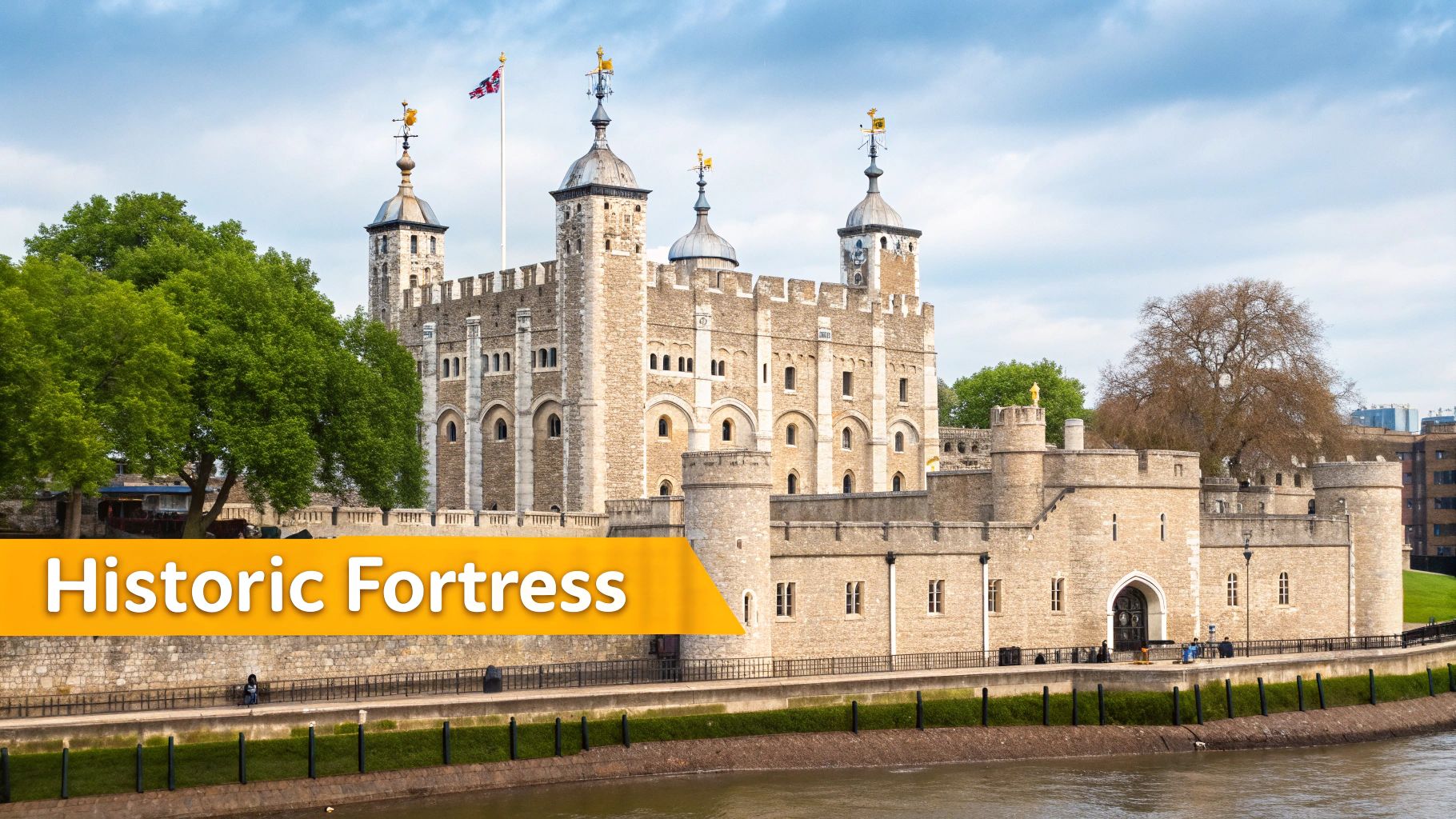
From the tragic tale of Anne Boleyn's final days to the mystery of the Princes in the Tower, the stories contained within are both thrilling and chilling. To walk its battlements is to walk in the footsteps of history itself, where tales of royal power, intrigue, and ceremony come vividly to life. It is an unforgettable experience that connects you directly to the heart of London’s epic story.
Visitor's Guide
- Beefeater Tours: Don't miss the Yeoman Warder tours. These iconic guards share captivating and often gruesome tales you won't find in guidebooks. The tour is included with your admission ticket.
- Beat the Crowds: Arrive right at opening time to see the Crown Jewels before the queues build up. Alternatively, visit later in the afternoon when the crowds begin to thin out. Booking tickets online in advance is highly recommended.
- Plan Your Time: Give yourself at least three to four hours to explore properly. The site is vast, encompassing the White Tower, the Bloody Tower, and the Royal Armouries collection. See how this iconic site fits into a wider tour with our 4-day London city break itinerary.
3. Tower Bridge
Often mistaken for London Bridge, Tower Bridge is arguably the most famous and visually stunning bridge in the world. Completed in 1894, this marvel of Victorian engineering is a combined bascule and suspension bridge, an iconic symbol of London that still raises its mighty arms to allow tall vessels to pass along the Thames. Its twin Gothic-style towers and high-level walkways offer a silhouette that is simply unforgettable, a testament to an era of grand ambition and innovation.
From starring roles in blockbuster films to being the backdrop for national celebrations, Tower Bridge is a living piece of history. To walk across its glass floor walkway, watching London life unfold below, is to connect with the city's dynamic spirit. It is one of the most essential historic buildings in London, blending architectural beauty with impressive functionality.
Visitor's Guide
- Best Views: For a classic, unobstructed shot, head to the waterfront near St. Katharine Docks or the riverside path next to City Hall on the South Bank.
- Check Lift Times: A highlight of any visit is seeing the bridge's bascules rise. Check the lift times on the official Tower Bridge website in advance to plan your visit around this spectacular event.
- Combine Your Visit: Tower Bridge is perfectly paired with its historic neighbour, the Tower of London. You can easily explore both magnificent landmarks in a single morning or afternoon, immersing yourself in centuries of London's royal and architectural history. Book tickets online to save time.
4. Westminster Abbey
Just steps from the Palace of Westminster lies a building of even greater antiquity and spiritual significance: Westminster Abbey. This breathtaking Gothic church, founded over a thousand years ago, is more than just a place of worship; it is the nation's shrine. For centuries, it has been the setting for every royal coronation since 1066 and has witnessed countless royal weddings, including that of Prince William and Catherine Middleton. Its hallowed halls serve as the final resting place for some of history’s greatest figures, from monarchs to scientists like Isaac Newton and Charles Darwin.
To walk through the Abbey is to walk through British history itself. From the solemn Poet's Corner honouring literary giants to the Coronation Chair, this UNESCO World Heritage site offers a profound connection to the past, making it one of the most essential historic buildings in London.
Visitor's Guide
- Best Time to Visit: Arrive early on a weekday morning to avoid the largest crowds and allow for a more peaceful exploration of the chapels and tombs.
- Unique Experience: For a truly atmospheric visit without an entrance fee, attend a choral Evensong service. You won't be able to tour the Abbey, but you will experience its magnificent acoustics and spiritual ambience.
- Planning Your Time: A comprehensive visit requires at least two hours to appreciate the sheer scale of history contained within. Pre-booking your tickets online is highly recommended to guarantee entry and save time queuing.
- Nearby Sights: Westminster Abbey is perfectly positioned next to the Palace of Westminster and is a short walk from St James's Park and Buckingham Palace, making it a key stop on any royal London tour.
5. Tower Hill Historic Site (Ancient Roman Fortress)
Stepping away from grand palaces, we journey back nearly two millennia to the very origins of the city at Tower Hill. Here, you can stand before the imposing remnants of the Roman Wall, the fortress that defended ancient Londinium. Built around 200 AD, these weathered stones are some of the oldest visible structures in the capital, representing London's birth as a major Roman settlement. It’s a powerful and humbling experience to touch the very foundations of this sprawling metropolis.
This free-to-access site offers a dramatic contrast between ancient and modern London. Seeing these rugged Roman fortifications against the backdrop of the Tower of London and the city's glass skyscrapers provides a tangible link to 2,000 years of history. It's a crucial stop for understanding the sheer depth of London's past and one of the most authentic historic buildings in London, in its rawest form.
Visitor's Guide
- Best Views: The section of wall just outside Tower Hill tube station, with the statue of Emperor Trajan, offers a fantastic photographic opportunity that captures the scale of the original defences.
- Getting Context: The interpretive panels on site are excellent, but for a deeper dive, visit the nearby Museum of London to see artefacts like pottery and coins unearthed from this very area.
- Combine Your Visit: This site is literally on the doorstep of the Tower of London. It’s the perfect historical appetiser before you explore the medieval fortress. You can easily see both as part of a historical walk around this fascinating part of the city.
6. St. Paul's Cathedral
A symbol of hope and resilience, St. Paul's Cathedral rises magnificently from the heart of the City of London. Designed by the masterful Sir Christopher Wren after the Great Fire of 1666, its iconic dome has been an integral part of the city's skyline for over 300 years. This English Baroque masterpiece is not just an architectural marvel; it is a living church and a testament to London's enduring spirit, having famously survived the Blitz during World War II.

From hosting royal weddings, like that of Prince Charles and Princess Diana, to solemn state funerals, St. Paul's holds a unique place in the nation's heart. To step inside is to be surrounded by breathtaking art, intricate mosaics, and the echoes of pivotal moments in British history, making it one of London's most profound historic buildings.
Visitor's Guide
- Climb the Dome: For an unparalleled 360-degree view of London, climb the 528 steps to the Golden Gallery. It's a rewarding effort that offers a unique perspective on the city's layout.
- Booking Tickets: Queues can be long, so book your tickets online in advance to save time. This also often includes access to special exhibitions.
- Experience the Acoustics: Don't miss the Whispering Gallery, famous for its unique acoustic properties. Attend a choral Evensong service to hear the world-class choir and experience the cathedral's spiritual atmosphere. Discover more about planning your trip to iconic sites like St. Paul's Cathedral with BTOURS.
7. Buckingham Palace
More than just a building, Buckingham Palace is the living heart of the British monarchy and one of the most famous historic buildings in London. As the official residence of the Sovereign, its instantly recognisable facade has been the backdrop for moments of national celebration and sorrow. Originally built as a grand townhouse in 1703, it was transformed into the opulent palace we see today by architects like John Nash, becoming the monarch's principal residence with Queen Victoria's accession in 1837.
To witness the Changing of the Guard or see the Royal Standard flying high, signifying the monarch is home, is to connect with centuries of unbroken tradition. The palace is a symbol of continuity, statecraft, and the enduring allure of royalty, holding a unique place in the nation’s history and imagination.
Visitor's Guide
- Best Views: The Victoria Memorial, situated directly in front of the palace, offers an elevated, symmetrical view perfect for photography. For the Changing of the Guard, secure a spot along The Mall or by the gates early.
- Booking Tours: The magnificent State Rooms are open to the public for a limited period each summer. Booking is essential and should be done several months in advance as tickets sell out extremely fast.
- Combine Your Visit: Make it a truly royal day out by also visiting the nearby Royal Mews and The Queen's Gallery. You can explore the grandeur of this area as part of a dedicated journey into the capital's regal heritage, as featured in our Royal Indulgence in London tour.
8. Kensington Palace
Nestled within the tranquil Kensington Gardens, Kensington Palace offers a more intimate glimpse into royal life than its grander counterparts. This elegant Baroque residence, first transformed by Sir Christopher Wren in the 17th century, has been a sanctuary and stage for centuries of royal history. It was the childhood home of Queen Victoria and the beloved residence of Diana, Princess of Wales, making it one of the most poignant historic buildings in London. Its graceful architecture and human-scale rooms tell stories of joy, duty, and heartache.
Exploring the opulent King's and Queen's State Apartments or wandering through exhibitions on royal fashion provides a personal connection to the monarchs who lived here. To walk its corridors is to step into the private world of Britain's royal family, a quiet retreat from the bustling city that surrounds it.
Visitor's Guide
- Don't Miss: Check the Historic Royal Palaces website for special temporary exhibitions, which are often world-class and showcase everything from royal fashion to photography. These are included with your palace ticket.
- Booking Tours: Tickets can be booked online, which is recommended during peak seasons to guarantee entry. Allow at least two hours to explore the palace and its current exhibitions thoroughly.
- Combine Your Visit: The palace is the centrepiece of Kensington Gardens. Plan to spend an afternoon exploring the grounds, visiting the Serpentine Gallery, and enjoying a traditional afternoon tea at The Orangery for a quintessentially British experience.
9. The Tower Bridge Glass Walkway and Victorian Machinery
While Tower Bridge itself is an icon, a deeper dive into its structure reveals a marvel of Victorian engineering brilliantly paired with a modern visitor experience. This is not just one of London's historic buildings; it's a living museum. The high-level walkways, originally designed for pedestrians when the bridge was raised, now feature a thrilling glass floor, offering a unique bird's-eye view of the bascules opening for ships on the Thames below. This modern addition beautifully showcases the bridge's original function without compromising its historic integrity.
Descending into the Victorian Engine Rooms completes the experience, where you can see the enormous, original steam-powered hydraulic machinery that once powered the bridge lifts. This powerful contrast between the breathtaking aerial views from the walkway and the raw industrial might below makes Tower Bridge a masterclass in how to preserve and present engineering heritage for a new generation.
Visitor's Guide
- Look Down: Don't miss the chance to walk across the glass floor, 42 metres above the river. Check the bridge lift times on the official website before you visit to see the magic happen right beneath your feet.
- Explore the Engine Rooms: The ticket includes access to the original Victorian Engine Rooms. Take your time here to appreciate the scale and ingenuity of 19th-century engineering that still impresses today.
- Best Photo Spots: The glass walkway itself offers incredible photo opportunities. For classic exterior shots, head to the riverside near the Tower of London or the public space at Potters Fields Park on the south bank.
10. Royal Hospital Chelsea
A true living monument, the Royal Hospital Chelsea is a breathtaking blend of architectural grandeur and enduring purpose. Founded by King Charles II in 1681 and designed by the legendary Sir Christopher Wren, it has served for over 300 years as a home for retired soldiers of the British Army. This remarkable institution is not a museum frozen in time, but a vibrant community where the famous Chelsea Pensioners, in their iconic scarlet coats, embody centuries of national heritage and service.
To walk through its elegant courtyards and manicured gardens is to step into a story of care and tradition. The hospital stands as a powerful symbol of the nation’s commitment to its veterans, making it one of the most poignant and inspiring historic buildings in London. Its grounds also famously host the annual RHS Chelsea Flower Show, a spectacular fusion of horticultural excellence and historic splendour.
Visitor's Guide
- Best Time to Visit: The gardens are particularly beautiful in late spring when the flowers are in full bloom. For a unique cultural experience, attend the Founder's Day parade in early June.
- Booking Tours: Guided tours led by the Chelsea Pensioners themselves offer unparalleled insight into the hospital's history and daily life. Booking in advance is highly recommended via the official website to secure a place.
- Explore with Respect: While visiting the chapel, Great Hall, and museum, remember that this is a home. Be mindful and respectful of the residents' privacy, particularly in the residential wings. Plan for 1-2 hours for a comprehensive visit.
10 Historic London Buildings Comparison
| Site | Preservation complexity | Resource requirements | Expected outcomes | Ideal use cases | Key advantages |
|---|---|---|---|---|---|
| Big Ben and the Palace of Westminster | Very high — extensive restoration, ornate stonework, active legislature | Very high — specialist conservation, security, staff for tours and parliamentary functions | Civic history, architectural appreciation, authoritative photography | Guided parliamentary tours, civic education, iconic photography | Iconic Gothic Revival architecture; living seat of UK Parliament; UNESCO status |
| Tower of London | Very high — medieval fabric, multiple structures, artifact protection | Very high — security for Crown Jewels, conservation, visitor operations | Deep historical immersion, artifact viewing, living-history interpretation | Museum-style visits, family history tours, Beefeater-led tours | Crown Jewels, exceptional medieval preservation, strong interpretive programs |
| Tower Bridge | Medium — mechanical systems plus ornate masonry; regular mechanical maintenance | Medium-high — engineering upkeep, visitor facilities for walkways and museum | Engineering appreciation, panoramic views, operational-drawbridge spectacle | Engineering/history visits, photography, timed drawbridge viewing | Functional Victorian engineering, iconic bridge silhouette, bridge museum |
| Westminster Abbey | Very high — ancient Gothic fabric with ceremonial functions | Very high — conservation, liturgical staffing, exhibition management | Religious and royal history, funerary and coronation interpretation | Ceremonial visits, historical pilgrimage, guided tours | Principal coronation site, eminent burials, outstanding Gothic architecture |
| Tower Hill Historic Site (Roman Fortress) | Low–medium — fragmentary archaeological remains, exposed to urban context | Low — basic archaeological maintenance, interpretive panels, occasional digs | Archaeological insight into Roman Londinium, contextual learning | Archaeology-focused visits, combined museum itineraries | Earliest surviving London defenses; free public access; strong archaeological significance |
| St. Paul's Cathedral | Very high — complex dome, Baroque fabric, active worship | High — structural conservation, service operations, visitor management | Architectural study, panoramic city views, liturgical experience | Dome climb, choral services, architectural tours | Iconic Wren-designed dome, rich interior decoration, historical resilience |
| Buckingham Palace | Very high — working royal residence with ceremonial spaces | Very high — intensive security, staffing, event logistics, seasonal openings | Royal ceremonial viewing, state-room access during limited openings | Changing of the Guard, summer State Rooms tours, formal events | Active monarchy residence, grand State Rooms, formal gardens |
| Kensington Palace | Medium — historic palace with museum functions | Medium — exhibition curation, garden maintenance, museum staff | Intimate royal history, curated exhibitions, garden walks | Family-friendly museum visits, exhibition viewing, park combination | Smaller scale royal residence, strong exhibitions, pleasant garden setting |
| Tower Bridge Glass Walkway & Victorian Machinery | Medium — modern interventions integrated with historic systems | Medium — glass maintenance, interactive exhibits, interpretive staffing | Engineering education, high-visibility views, interactive learning | Engineering demonstrations, family visits, photography | Unique glass-floor perspective of working machinery; strong interpretive value |
| Royal Hospital Chelsea | Medium — preserved Wren architecture integrated with active facility | Medium — veteran care staffing plus public museum/garden upkeep | Military heritage insight, formal garden experience, living-history | Garden visits, military-history tours, ceremonial events | Active veteran community (Chelsea Pensioners), accessible grounds, Wren architecture |
Planning Your Own London History Adventure
From the solemn majesty of Westminster Abbey to the formidable might of the Tower of London, we’ve journeyed through centuries of architectural genius and historical drama. These iconic landmarks are not merely static monuments; they are London’s living storybook, with each stone, spire, and secret passage narrating a different chapter of the city's epic tale. Visiting the historic buildings in London is an opportunity to walk in the footsteps of monarchs, prisoners, visionaries, and revolutionaries who shaped the world.
The true magic of exploring these sites lies in connecting the dots between them. You can feel the powerful thread of royal history linking Buckingham Palace, Kensington Palace, and the Tower. Similarly, a walk along the Thames reveals the intertwined narratives of the Palace of Westminster, Tower Bridge, and St. Paul's Cathedral, which have silently witnessed London's evolution from a Roman outpost to a global metropolis. Each building, whether a royal residence or a feat of Victorian engineering, offers a unique lens through which to view the city's soul.
Crafting Your Unforgettable Itinerary
To truly immerse yourself in this rich tapestry, consider how you can transform this list into a personal adventure. A well-planned itinerary allows you to experience these wonders without feeling rushed, giving you the freedom to linger where you feel most captivated.
- Group by Proximity: Cluster your visits geographically. For instance, spend a day exploring the Westminster area, covering the Palace of Westminster, Big Ben, and Westminster Abbey. On another day, focus on the Tower of London, Tower Bridge, and the nearby Roman wall remnants at Tower Hill.
- Theme Your Days: Organise your exploration around a theme. Dedicate one day to “Royal London,” visiting the palaces. Another could be “Ceremonial and Spiritual London,” focusing on St. Paul’s Cathedral and Westminster Abbey.
- Embrace Flexibility: While planning is essential, allow for spontaneous discoveries. The beauty of London is the history you find tucked away in its quiet courtyards and ancient alleyways between the major landmarks.
For many travellers, a London adventure is a family affair, and that can sometimes include four-legged members. If you're considering relocating or planning an extended stay with your pet, understanding the logistics is crucial. Comprehensive resources on planning pet travel to the United Kingdom can simplify the process, ensuring your companion can join you safely and smoothly.
Ultimately, your journey through London's historic heart is more than a sightseeing tour; it is an active engagement with the past. It’s about standing where history was made and feeling the echoes of centuries resonate around you. We encourage you to use this guide not just as a checklist, but as a launchpad for your own curiosity. Let these stories inspire you to look deeper, explore further, and create your own unforgettable London narrative.
Ready to step into the story? BTOURS specialises in crafting seamless self-drive and private tours that bring London's history to life. Let us handle the planning so you can focus on the adventure. Explore our curated London itineraries at BTOURS and start building your dream historical journey today.