

Welcome to Bath. As you step onto its streets, you're not just entering a city; you're walking into a storybook of 18th-century elegance. Imagine a place where every corner turned reveals another scene of grandeur, with honey-coloured stone buildings rising in perfect, graceful harmony. This is the very heart of Georgian architecture in Bath, a style so profound it earned the entire city its coveted UNESCO World Heritage status.
Discovering a City Carved from Golden Stone
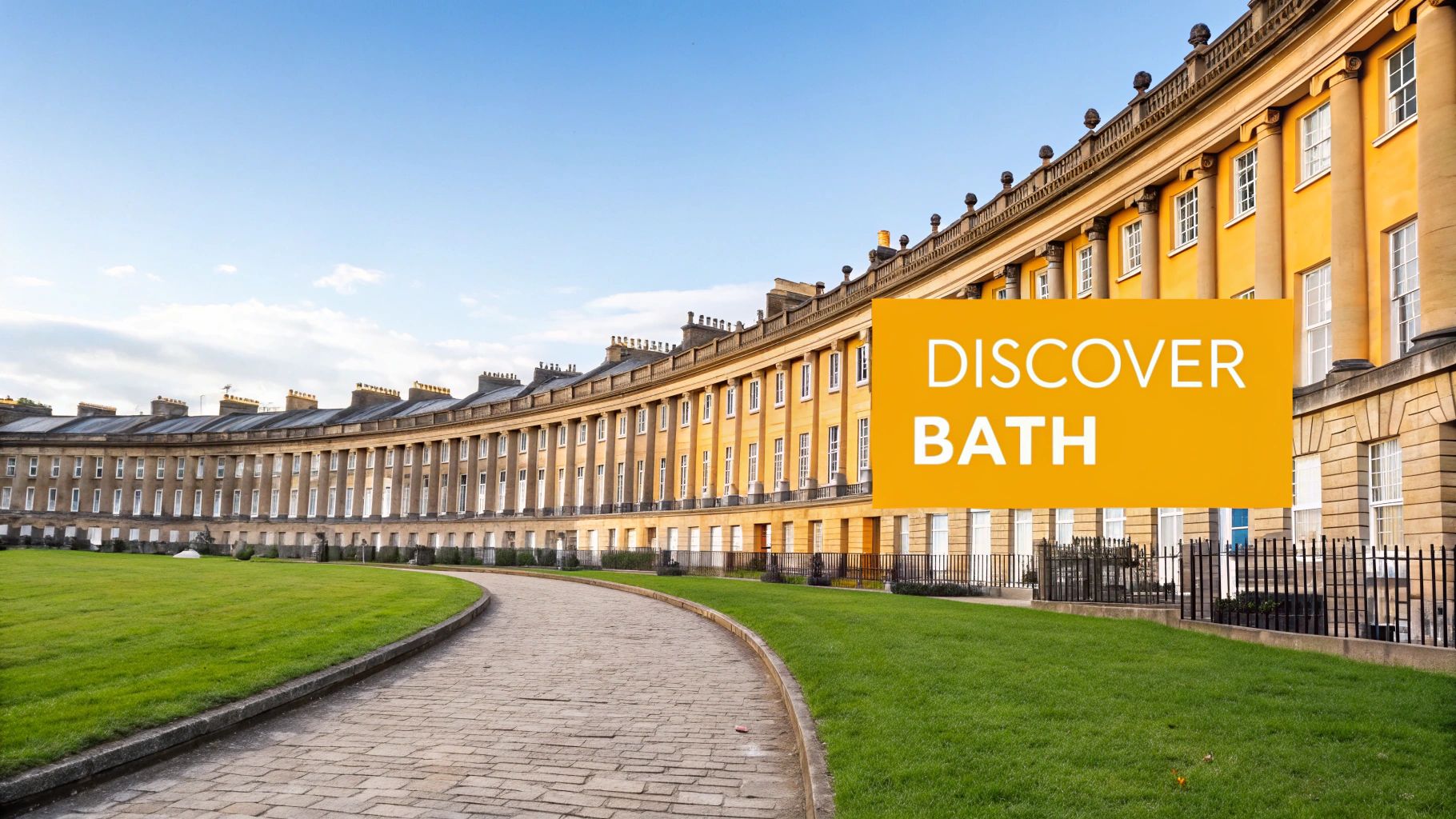
To wander through Bath is to experience a masterpiece of urban planning. It's a vision brought to life by the brilliant architects and forward-thinkers of the 18th century. They transformed a quiet town into a fashionable spa resort, driven by a passion for the balance, sophistication, and classical ideals of ancient Greece and Rome. This movement, the Palladian revival, set the stage for Bath's unmistakable Georgian character.
What makes it all so breathtakingly cohesive? One material. Almost every building you see is crafted from the local Bath Stone, a beautiful oolitic limestone with a distinctive golden hue. This single choice gives the city its signature warmth and creates a visual harmony that feels both incredibly grand and surprisingly welcoming.
A Legacy Set in Stone
The sheer scale of this architectural heritage is hard to comprehend. Designated a UNESCO World Heritage Site in 1987, Bath is home to an incredible 5,000 listed buildings. This represents the most impressive concentration of Georgian architecture you’ll find anywhere in the United Kingdom, a status that protects the city's unique spirit for generations to come.
This dedication to preservation means you can experience the city almost exactly as its 18th-century inhabitants did. As you stroll from elegant squares to magnificent, sweeping crescents, you're doing more than just looking at old buildings—you're stepping into a living story of ambition, high society, and timeless design.
To truly connect with Bath’s spirit, a self-paced tour is ideal. It allows you the freedom to linger, to notice the small details, and to feel the history that permeates these golden streets.
For anyone who loves culture and history, consider this your invitation to travel back in time. To see how another city's character is shaped by its unique buildings, you might also find it fascinating to explore the architecture of Charleston SC.
Understanding the Genius of Georgian Design
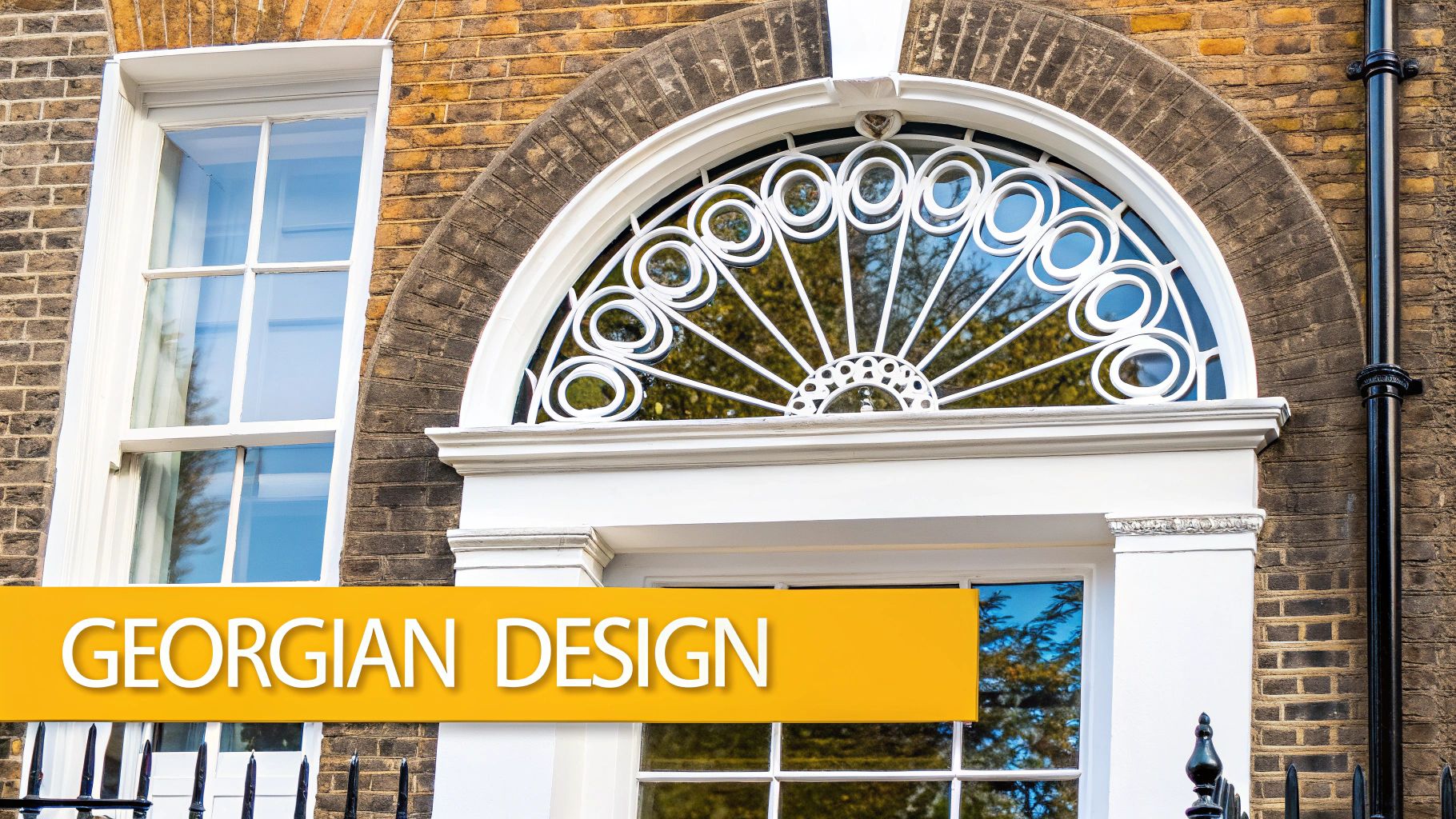
So, what is it that makes Georgian architecture in Bath feel so utterly breathtaking? It all comes down to a design philosophy called Palladianism, a movement that took its inspiration from the 16th-century Italian master architect, Andrea Palladio.
At its core, Palladianism is all about balance, symmetry, and classical elegance. It’s a love letter to the grand temples of ancient Greece and Rome, reimagined for the sophisticated society of 18th-century England. This is why walking through Bath feels so wonderfully harmonious; the architects weren't just building houses, they were composing a city, where every line and curve worked together to create an ordered, graceful masterpiece.
Signature Features to Spot
As you wander through Bath's golden streets, you'll start to notice a certain architectural language repeating itself. These are the tell-tale signs of Georgian design, the little details that whisper stories of the past. Once you know what to look for, you'll see them everywhere.
To help you get your eye in, here's a quick-reference guide to the key features you'll encounter on your travels.
Key Features of Georgian Architecture in Bath
| Architectural Feature | Description & What to Look For |
|---|---|
| Sash Windows | Look for the elegant, vertically sliding windows, often with a classic ‘six-over-six’ pane grid. They were an ingenious solution for flooding rooms with light while keeping the building’s facade perfectly symmetrical. |
| Ornate Fanlights | Glance up above the grand front doors and you’ll find these beautiful semi-circular windows. Filled with delicate, fan-like tracery, they were a status symbol and a clever way to bring light into the entrance hall. |
| Classical Columns | You can’t miss the columns and flat pilasters framing doorways or holding up grand porticos. These are a direct nod to the classical orders of ancient Greece and Rome, adding a touch of temple-like grandeur. |
| Decorative Ironwork | Keep an eye out for the intricate black railings, delicate balconies, and beautifully crafted lamp holders. This fine metalwork adds a layer of artistry that contrasts beautifully with the solid Bath stone. |
Spotting these elements is like learning to read the city's story in its stones and iron. You might even be curious how these features were arranged inside; you can explore this with our guide on scale furniture symbols for floor plans.
A Tale of Two Houses
Here’s one of Bath’s most brilliant and best-kept secrets: a clever bit of urban planning that balanced public grandeur with private freedom. While the grand, street-facing facades of the terraces and crescents were designed to be perfectly uniform, the houses behind them could be wildly different.
This ingenious system allowed a developer to sell plots of land by the foot, with each buyer agreeing to build a section of a unified, grand facade. Behind this public face, however, they could design a home entirely to their own taste and budget.
What this created was a fascinating architectural illusion. From the front, you see an impeccable, unified classical vision. But if you could peek around the back, you’d often find a delightful jumble of varying roof heights, extensions, and window styles—the true story of the individual homes and families within.
This quirky feature of Bath’s development became famously known as ‘Queen Anne fronts and Mary-Anne backs’. It's a perfect metaphor for the city itself: a place of public elegance with a hidden world of individual character just behind the scenes.
Exploring Bath's Iconic Georgian Masterpieces
Now that we have a feel for the Georgian design philosophy, let's step into the city itself and walk among the giants. This is where the story of Bath's soaring ambition and refined elegance truly comes to life, told through the stone and glass of its most celebrated landmarks. Each building is more than a beautiful relic; it’s a living monument to a vision that shaped a city and continues to capture the imagination.
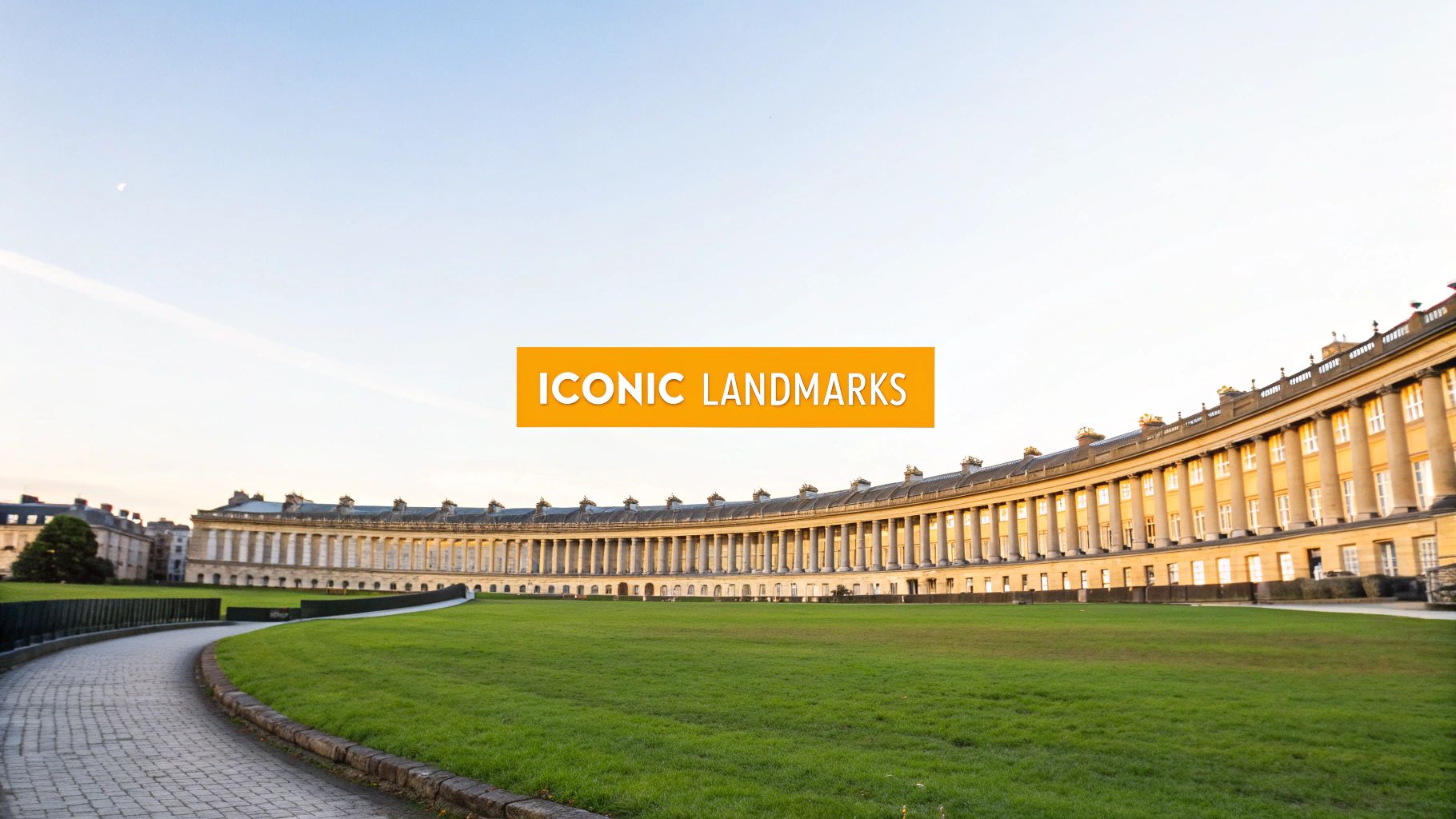
Our journey begins with the one building that truly defines the Bath skyline: the magnificent Royal Crescent. You have to see it to believe it. It’s far more than just a row of houses; it was the ultimate expression of 18th-century social aspiration. Picture this sweeping arc not just as architecture, but as a grand stage where fashionable society paraded, a perfect fusion of sophisticated city living with the open, airy feel of a country estate.
The Royal Crescent: A Vision in Stone
The Royal Crescent stands as one of the world's most breathtaking examples of Georgian architecture. Designed by John Wood the Younger, this incredible landmark is a sweeping curve of 30 Grade I listed terraced houses. Work started in 1767, with its incredible facade finished between 1774 and 1775.
What's truly awe-inspiring is the sheer scale of it all. The facade is unified by 114 towering Ionic columns, each soaring 47 feet high, creating an unstoppable sense of rhythm and grandeur. To learn more about its construction and history, you can uncover some fascinating facts about the Royal Crescent.
The Circus: An Ancient Mystery Reimagined
Just a short, pleasant walk from the Crescent, you’ll discover The Circus, a masterpiece from the mind of John Wood the Elder. He found his inspiration in the ancient, mystical majesty of Stonehenge, and designed this perfect circle of townhouses with a remarkably similar diameter. It’s a stroke of genius, forging a link between modern Bath and a deep, mythical past.
Composed of three curved segments, The Circus forms a complete circle that gently pulls your gaze inwards to the cluster of ancient plane trees at its heart. It’s a beautiful, intimate space that feels both grand and communal.
Take a closer look at the facade. Each level features a different classical order of columns—Doric, Ionic, and Corinthian—rising in sophistication from the ground up, just as the ancient Romans would have done. This single detail reveals the profound classical knowledge that fuelled the entire Georgian era.
Pulteney Bridge and the Assembly Rooms
From the grandeur of residential squares, we move to the buzzing hubs of Georgian social life. Pulteney Bridge, finished in 1774, is an absolute treasure, its design famously inspired by Florence's Ponte Vecchio. It remains one of only four bridges in the entire world to have shops built across its full span on both sides. Standing here, you feel wonderfully suspended between the lively commerce within and the flowing River Avon below.
Finally, we arrive at the Assembly Rooms. Just for a moment, try to imagine the swish of silk gowns, the soaring notes of a string quartet, and the constant hum of high-society chatter. This was the vibrant epicentre of Georgian nightlife. Residents and visitors flocked here for dazzling balls, concerts, and card games. The interconnected Ball Room, Tea Room, and Card Room were ingeniously designed for a seamless evening of entertainment. Standing within these elegant walls today, you get a powerful, almost tangible, sense of 18th-century Bath at its most alive.
Your Self-Guided Architectural Walking Tour
There’s simply no better way to get to the heart of Georgian architecture in Bath than by lacing up your shoes and walking its historic streets. I’ve designed this self-guided tour to feel like a journey, a story unfolding as you wander from one masterpiece to the next. All you need is a comfortable pair of shoes and a bit of curiosity. For navigating those old cobbled lanes, a good pair of women's waterproof hiking boots can make all the difference.
Let's begin our walk at the stately Queen Square. This was an early masterpiece by architect John Wood the Elder and one of the very first residential squares of its kind. Finished in the 1730s, it completely redefined sophisticated city living.
Take a moment to stand in the central garden and look at the northern terrace. Wood designed it to look like a single, magnificent country palace—a truly groundbreaking idea that brought aristocratic grandeur right into the city. This square became the blueprint for so much of what followed.
From a Stately Square to a Perfect Circle
From Queen Square, a short and pleasant stroll north up Gay Street leads you to Wood’s next, and perhaps most inspired, creation: The Circus. As you get closer, you start to feel the genius of the design. The street suddenly opens into a perfect circle of townhouses, their curved fronts creating an immersive, almost theatrical space that pulls you in.
The Circus was actually finished by his son, John Wood the Younger, and its design was famously inspired by the ancient mystique of Stonehenge. Pay attention to how the three roads enter the circle; no matter which one you arrive by, your first view is of another elegant, curving terrace directly opposite. It’s a clever architectural embrace that feels both monumental and wonderfully intimate.
Photography Tip: For a truly unique shot of The Circus, stand beneath the huge plane trees in the middle of the garden. Point your camera upwards and capture the intricate pattern of branches against the sweeping stonework. It’s a dynamic composition that really captures the soul of this incredible place.
The Majestic Royal Crescent
As you leave The Circus via Brock Street—a deliberate, straight link designed by the younger Wood—you're being prepared for Bath's most spectacular reveal. You emerge, and the world just opens up before you into the magnificent sweep of the Royal Crescent. This is it. The undisputed high point of Georgian residential architecture.
This incredible arc of 30 terraced houses gazes out over the lush Royal Victoria Park, perfectly capturing that Georgian ideal of blending city life with a love for the countryside. Take a slow walk along the wide pavement and just absorb the sheer scale of it all, unified by a stunning colonnade of 114 massive Ionic columns.
For the most magical experience, try to visit during the golden hour of the late afternoon. The setting sun bathes the honey-coloured Bath Stone in a warm, unforgettable glow. If you prefer quiet contemplation, an early morning visit offers a beautiful serenity with far fewer people around.
To finish our tour, loop back towards the city centre along Bennett Street, and you'll find the Assembly Rooms. This elegant building was the pulsing heart of Georgian high society, the place for lavish balls, concerts, and socialising. Standing outside, you can almost hear the faint echoes of music and laughter carried on the breeze—a perfect final note to your walk through an age of unparalleled elegance and ambition.
Stepping Inside the Georgian World
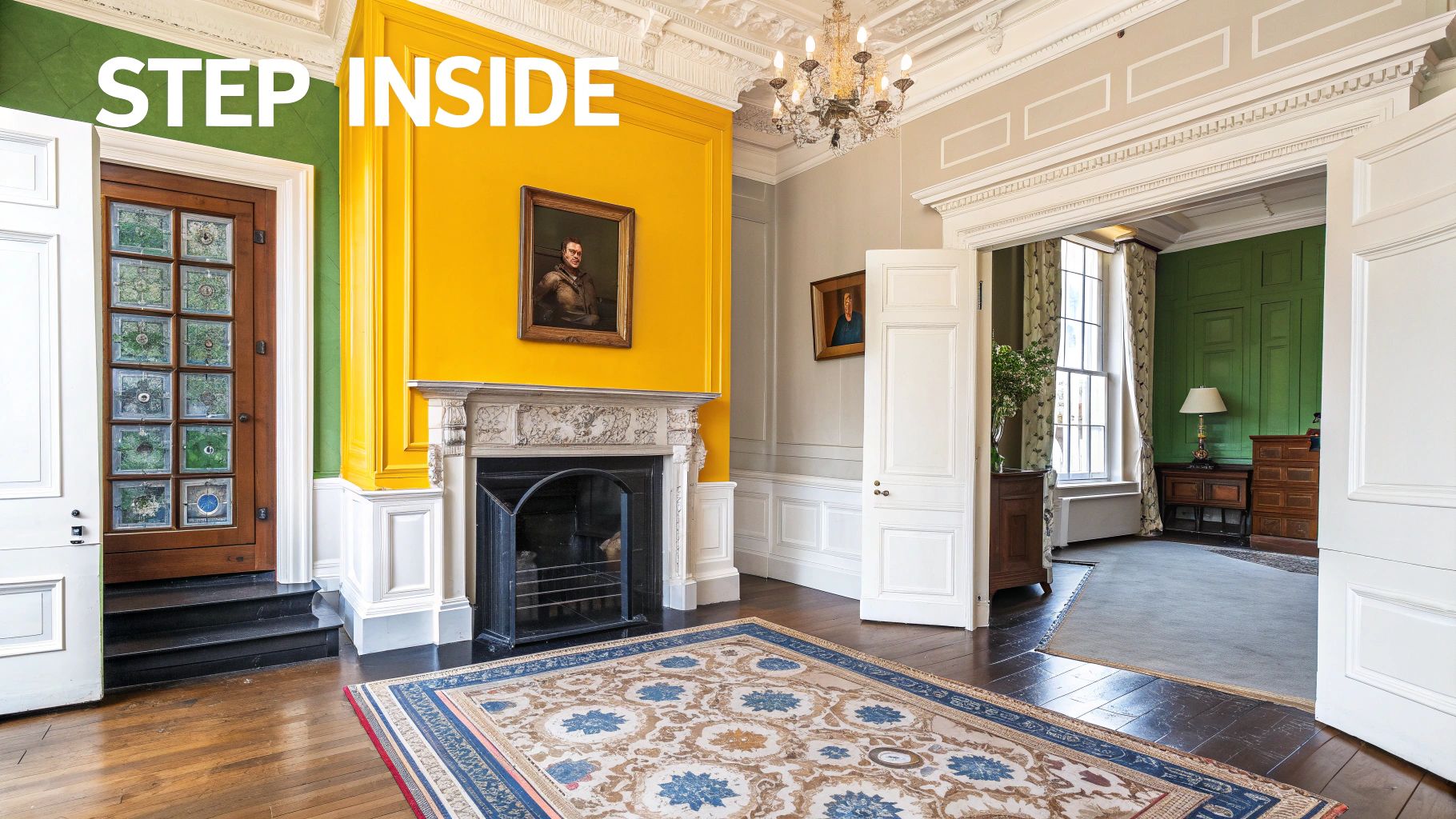
To truly feel the soul of Georgian architecture in Bath, you have to step across the threshold. The magnificent facades tell a story of public grandeur and civic pride, but the interiors reveal a much more intimate world of social ambition, private life, and breathtaking craftsmanship. Stepping inside transforms these buildings from stone monuments into living, breathing history.
Picture yourself in a grand entrance hall, where a delicate fanlight scatters intricate shadows across the floor and an ornate plasterwork ceiling soars above. These were spaces built to impress, to set the stage for a glamorous evening or a formal visit. Every room had its purpose, from the public-facing drawing rooms to the family's private quarters, all meticulously arranged for the complex social dance of Georgian high society.
No. 1 Royal Crescent: A Window to the Past
There's no better place to travel back in time than No. 1 Royal Crescent. This isn't just a museum filled with antiques; it's a house that has been painstakingly restored to its former glory, offering an immersive journey into the 18th century.
- Below Stairs: You can explore the servants' domain in the kitchens, scullery, and Housekeeper's Room. It’s a powerful reminder of the immense effort that went on behind the scenes to maintain such an elegant lifestyle.
- Above Stairs: Wander through the lavishly decorated Gentleman's Retreat, the elegant Drawing Room, and the private family bedrooms. Each space whispers stories about the people who lived here between 1776 and 1796.
This experience adds a crucial dimension to any architectural tour, forging a real connection between the grand exteriors and the human dramas that unfolded within. You can get up close and admire the exquisite details, from the joinery to the decorative mouldings. Even seemingly small features, like the craftsmanship of a hardwood base for a newel cap, reveal a deep commitment to quality and beauty.
Experiencing the Social Fabric
For a different flavour of the era, the Jane Austen Centre shifts the focus to the city's vibrant social scene. Here, you'll explore the fashions, etiquette, and daily routines that animated life in Georgian Bath. It’s all about understanding how people actually moved through and used these architectural spaces, from attending formal balls to taking afternoon tea.
Visiting these museums is like being handed the key to a secret door. It lets you see beyond the stone and symmetry, and connect with the vibrant, complex, and deeply human world of Georgian Bath.
This inside perspective truly completes the picture. It shows how form and function were so perfectly intertwined, and how the architecture wasn't just for show—it was the elegant container for a fascinating and dynamic society.
Planning Your Architectural Adventure
So, with all this incredible architecture buzzing in your head, how do you actually plan a trip to see it all? The magic of Bath’s Georgian streetscapes can be enjoyed year-round, but if you want to get it just right, timing is everything.
Spring and autumn are arguably the best seasons. You’ll find the weather is perfect for wandering, and the crowds are noticeably thinner than during the summer holidays. The golden light of a September afternoon, in particular, makes the Bath Stone radiate a warmth that’s simply unforgettable.
A quick word of advice: driving into the heart of Bath is an experience best avoided. The city’s historic core is a maze of narrow, often one-way streets. To keep your arrival completely stress-free, make use of the brilliant Park & Ride services. You can leave your car on the outskirts and hop on a bus that drops you right in the centre, saving you the inevitable headache of hunting for a parking spot.
Weaving Bath into a Wider Journey
Why let the adventure end at the city limits? Bath is perfectly placed to be the star attraction in a bigger self-drive tour of southern England. Think of it as your gateway to some of the UK’s most iconic landscapes.
Here are a couple of ideas to get you started:
- The Cotswolds Connection: From Bath, you’re just a stone’s throw from the storybook villages of the Cotswolds. It's an easy and beautiful drive north, where you can swap urban elegance for the honey-coloured cottages of places like Castle Combe and Bourton-on-the-Water.
- The Great West Way: This fantastic touring route traces ancient paths between London and Bristol, and Bath is one of its absolute highlights. You can effortlessly weave your visit into this much larger journey through history.
Viewing Bath as a jewel within a larger setting elevates your trip from a simple city break. It becomes the magnificent centrepiece of a classic British road trip, beautifully connecting sophisticated city life with timeless countryside charm.
This approach not only makes planning a breeze but makes the entire journey feel so much richer. For those longer excursions, having the right gear is key. A good waterproof laptop rucksack is a lifesaver for keeping your essentials safe and dry, whatever the British weather throws at you.
Your Questions Answered
Got a few questions before you set off to explore Bath's Georgian wonders? You're not alone. Here are some quick answers to the things most people ask, designed to help you get the most out of your visit.
What Is the One Building I Absolutely Must See?
If you only have time for one thing, make it the Royal Crescent. It's more than just a building; it's a statement. Imagine a magnificent, sweeping curve of 30 townhouses, all tied together by a grand facade of 114 Ionic columns. It’s the very soul of Georgian ambition and elegance, and standing before it is a truly unforgettable experience.
How Much Time Should I Set Aside for a Visit?
You can certainly hit the highlights—the Royal Crescent, The Circus, and Pulteney Bridge—in a single, busy day. A full day gives you enough breathing room for a good walk and a visit to a museum like No. 1 Royal Crescent without feeling like you're just ticking boxes.
But if you really want to get under the skin of the city, give yourself two days. That extra time lets you wander off the main track, discover hidden laneways, and truly appreciate the atmosphere that makes Bath so magical.
Is Bath a Good City for Walking?
It’s not just good; it’s perfect for it. Bath is wonderfully compact, and nearly all the architectural gems are clustered together in the historic centre. Walking is genuinely the best way to see everything, letting you notice the little details and soak up the grand views. Just be sure to wear comfortable shoes—those historic cobbled streets are part of the charm, but they can be tough on the feet!
Ready to step into a living history book and explore England's timeless elegance your own way? At BTOURS, we specialise in creating self-drive tours that let you discover historic cities like Bath and the breathtaking countryside at your own pace. Start planning your perfect UK adventure today.