When you picture Ireland, your mind likely wanders to rolling green hills, ancient castles, and cosy pubs. But beyond the verdant inland landscapes lies a coastline of staggering and unexpected beauty, home to some of Europe’s most spectacular and unspoilt stretches of sand. From the wild, dramatic shores of the Atlantic Way to the serene, family-friendly coves of the east coast, the beaches in Ireland offer a diverse tapestry of golden strands, towering cliffs, and surprisingly turquoise waters waiting to be explored. This is a side of the Emerald Isle that rivals any classic coastal destination, offering raw nature and profound tranquility.
This guide is specifically crafted for the adventurous spirit, the self-drive traveller ready to uncover the coastal treasures often missed on a standard tour. We’ve curated a comprehensive list of 10 unmissable beaches, each selected for its unique character and breathtaking scenery. Forget generic recommendations; we provide all the practical, actionable details you need to plan your ultimate Irish road trip. Inside, you’ll find precise locations, parking advice, the best times to visit to avoid the crowds, and nearby attractions to create a seamless itinerary. Prepare to be inspired as we navigate from iconic cinematic landscapes seen in "Saving Private Ryan" to secluded local gems known only to a few. This is your definitive roadmap to discovering why Ireland's magnificent coast is a world-class destination in its own right.
1. Inchydoney Beach, County Cork
Nestled near the vibrant town of Clonakilty, Inchydoney Beach isn't just one beach but two magnificent sandy crescents, separated by a narrow headland known as the Virgin Mary's Bank. This stunning Blue Flag location unfurls in a dramatic sweep of golden sand, lapped by the crystal-clear waters of the Atlantic. It’s a place that effortlessly captures the wild beauty of Ireland's coastline, making it a deserving first stop on any tour of the best beaches in Ireland.
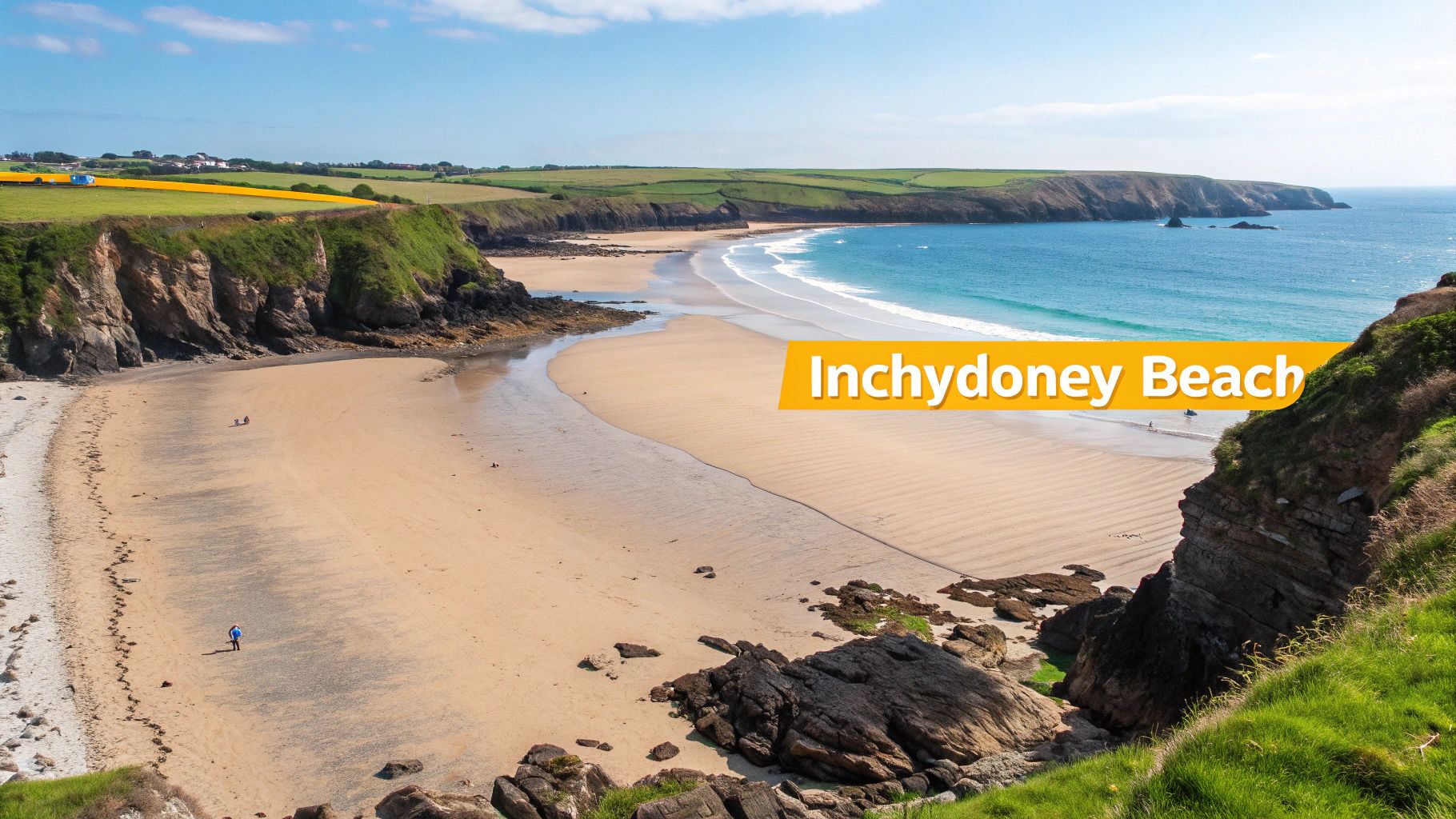
The beach is a haven for everyone from families building sandcastles to surfers catching gentle waves. The expansive sands are perfect for long, contemplative walks, while the surrounding dunes and cliffs offer a breathtaking backdrop that shifts in colour with the changing light. The sheer photogenic quality of Inchydoney makes it a favourite for photographers and anyone looking to capture a quintessential Irish seaside moment.
Your Inchydoney Beach Guide
- Getting There & Parking: Inchydoney is easily accessible by car, just a 10-minute drive from Clonakilty. A large car park is available, but it fills up quickly during peak season (July-August). Arrive before 10 am to secure a spot.
- Best Time to Visit: For a more tranquil experience, visit during the shoulder seasons of May, June, or September. The weather is often pleasant, and the crowds are significantly smaller. For photography, the "golden hours" of early morning and late evening offer truly magical light.
- Activities & Safety: The beach is a popular spot for swimming and surfing, with a local surf school offering lessons. Always bring a wetsuit, as the Atlantic water remains chilly year-round (10-15°C). Check tide times if you plan on exploring the rock pools, a fantastic activity for curious children and adults alike.
- Nearby Attractions: Combine your beach day with a trip to the colourful town of Clonakilty, renowned for its lively music scene, artisan food shops, and the Michael Collins House museum. It’s the perfect place to enjoy a hearty meal after a day in the sea air. Explore the full range of activities with our complete guide to self-drive tours in Ireland.
2. Achill Head Beach, County Mayo
On the far western edge of Achill Island lies a beach that embodies the raw, untamed spirit of the Atlantic coast. Achill Head is not your typical sandy retreat; it’s a dramatic landscape of dark sands and shingle, relentlessly pounded by ocean waves and watched over by some of Europe's highest sea cliffs. This is one of the most remote and awe-inspiring beaches in Ireland, offering a profound connection to nature for adventurers and those seeking solitude.
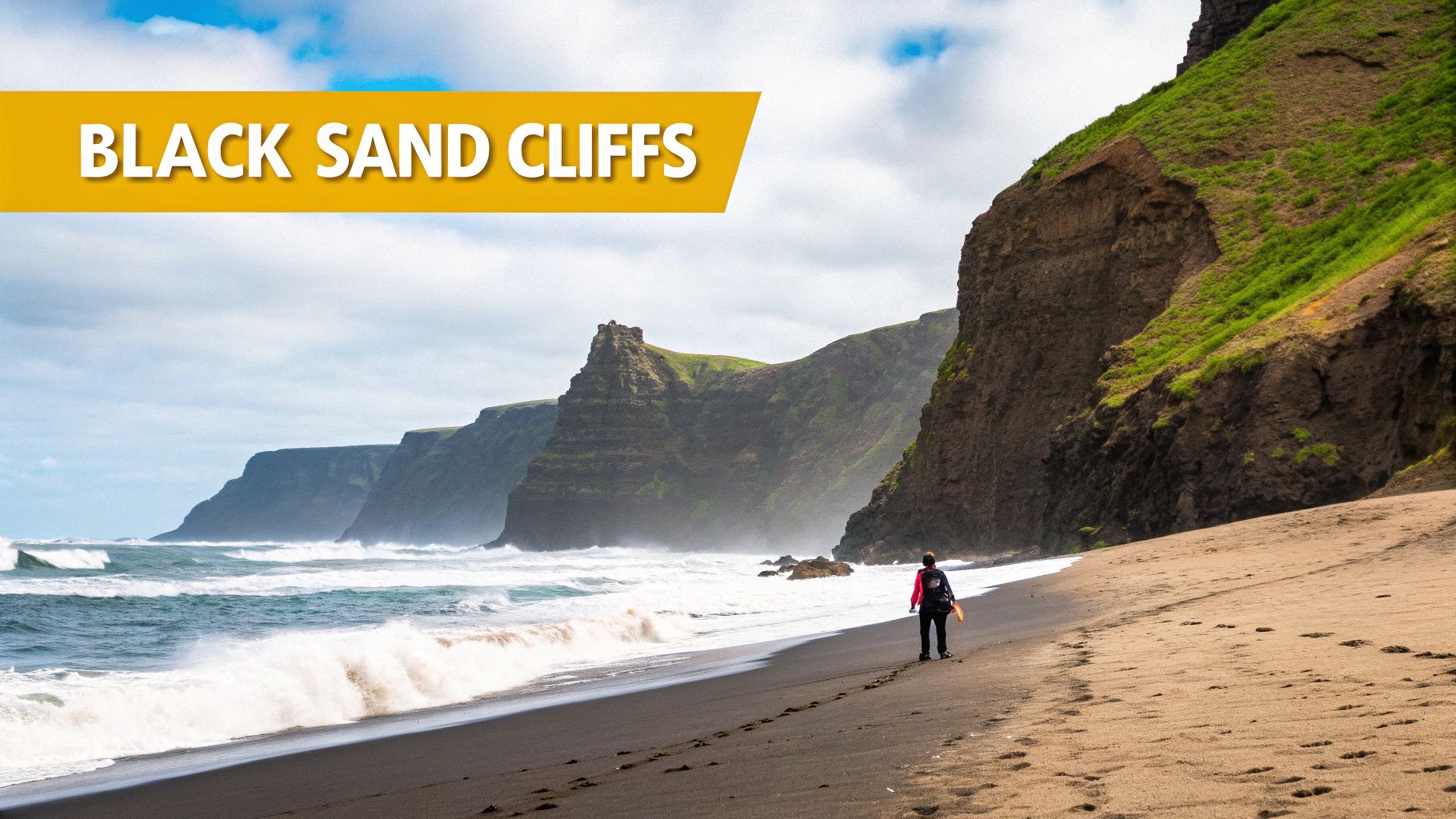
The beach itself is a breathtaking spectacle, backed by the imposing Croaghaun cliffs which rise over 600 metres from the sea. The experience here is less about sunbathing and more about witnessing the powerful beauty of the Irish wilderness. It's a place for exhilarating cliff-top hikes, birdwatching, and feeling truly humbled by the scale and majesty of the natural world. This rugged authenticity makes Achill Head an unmissable stop.
Your Achill Head Beach Guide
- Getting There & Parking: Reaching Achill Head requires a drive to Keem Bay at the end of the R319, followed by a challenging but rewarding hike. Park at the Keem Bay car park and follow the trail towards the headland. Proper hiking boots are essential for the often boggy and uneven terrain.
- Best Time to Visit: The summer months (May-September) offer the safest and most accessible conditions for the hike. For birdwatching enthusiasts, a visit during the spring migration (April-May) can be particularly special. Always check the weather forecast before setting off.
- Activities & Safety: The main activity is hiking the magnificent cliff path. Swimming is extremely dangerous due to powerful currents and should be avoided. Stay well clear of cliff edges, especially in windy conditions, and allow at least two to three hours for a thorough exploration of the area.
- Nearby Attractions: The journey to Achill Head is an attraction in itself, forming a key part of the Wild Atlantic Way. After your hike, explore the rest of Achill Island, including Keem Bay and the Deserted Village at Slievemore. For more itinerary ideas, discover the highlights of the Wild Atlantic Way in Ireland.
3. Dollymount Beach (Bull Island), Dublin
A remarkable feat of human engineering and natural adaptation, Dollymount Beach on Bull Island offers a unique seaside escape just minutes from Dublin's bustling city centre. This sprawling 5-kilometre sandy spit was formed in the 19th century and has since blossomed into a UNESCO-designated biosphere reserve. It presents a stunning contrast: the wild, windswept dunes and salt marshes of the island set against the familiar skyline of the Poolbeg chimneys and the distant hum of the capital.
The beach itself is a vast expanse, offering ample space for everything from kite surfing on windy days to quiet walks along the shoreline. Its dual nature is part of its charm; one side faces the raw energy of the Irish Sea, while the other looks onto the tranquil mudflats teeming with birdlife. This blend of accessibility and wildness makes it a treasured local spot and a must-visit for travellers seeking a convenient dose of nature, solidifying its place among the best beaches in Ireland.
Your Dollymount Beach Guide
- Getting There & Parking: While driving is possible via the wooden bridge or the causeway, parking is limited and fills up extremely fast, especially on weekends. To avoid stress, take the Dublin Bus (route 130) or the DART train to a nearby station like Raheny or Clontarf Road and enjoy a scenic walk.
- Best Time to Visit: For a peaceful experience, a weekday morning is ideal. Birdwatchers will find autumn and winter particularly rewarding for observing migratory species. For beach activities, the summer months (June-August) are warmest, though you'll share the sand with many Dubliners.
- Activities & Safety: Bring binoculars for the exceptional birdwatching; the island is a sanctuary for hundreds of species. The beach is also a world-renowned spot for kitesurfing and windsurfing. Swimmers should be mindful of tides and stick to designated areas, as currents can be strong.
- Nearby Attractions: After your beach walk, explore the charming coastal village of Clontarf or head back into the city. Dollymount's proximity to the capital means you can easily combine a morning in nature with an afternoon of urban exploration, as highlighted in our guide to a 5-day Dublin itinerary.
4. Inch Beach, County Kerry
Stretching an impressive four kilometres into the wild expanse of Dingle Bay, Inch Beach is a majestic peninsula of golden sand and towering dunes. This is one of the most dramatic beaches in Ireland, famed not only for its sheer scale but also for its cinematic history, most notably as a key location in the classic film Ryan's Daughter. The backdrop of the Slieve Mish Mountains completes a truly breathtaking panorama, making it a must-visit on any trip along the Wild Atlantic Way.
The vast, firm sands make Inch Beach a haven for walkers, surfers, and families alike. Its exposed position guarantees a steady supply of Atlantic waves, attracting water sports enthusiasts from all over. Yet, its size means you can always find a quiet spot to simply sit and absorb the raw, untamed beauty of the Dingle Peninsula, watching the light dance across the bay.
Your Inch Beach Guide
- Getting There & Parking: Located on the main R561 road between Castlemaine and Dingle, Inch is very accessible. Uniquely, you can drive and park directly on a designated area of the beach, a novelty in Ireland. However, for a more traditional approach, park near Inch village and enjoy the walk.
- Best Time to Visit: May to September offers the most stable weather for enjoying the sand and sea. For the most expansive experience, visit during low tide to walk the full width of this incredible sand spit. Sunsets over Dingle Bay are legendary here.
- Activities & Safety: The beach is a hotspot for surfing, kitesurfing, and windsurfing, with several schools offering lessons (book in advance during summer). The exposed southern side is best for experienced swimmers only due to strong currents. Even on a sunny day, a windproof jacket is essential as the breeze is consistent.
- Nearby Attractions: Inch serves as the gateway to the Dingle Peninsula. A short drive will take you to the vibrant town of Dingle, known for its traditional pubs and dolphin-watching tours. The Slea Head Drive, a spectacular coastal route, starts just beyond the town and offers unparalleled views and ancient historical sites.
5. Ventry Beach, County Kerry
Tucked away on the world-renowned Dingle Peninsula, Ventry Beach, or Fionn Trá (White Strand) in Irish, is a breathtaking crescent of golden sand caressed by astonishingly clear turquoise waters. Sheltered within a natural harbour and framed by the dramatic rise of Mount Eagle, this Blue Flag beach offers a more serene alternative to some of the peninsula's busier spots. It’s a place where history, language, and stunning natural beauty converge, making it one of the most culturally rich beaches in Ireland.
This expansive beach is a sanctuary for families, swimmers, and those seeking quiet reflection. The gentle slope of the sand into the sea creates safe, shallow waters perfect for paddling, while its sheer size means you can always find a peaceful spot for a picnic or a walk. As part of a Gaeltacht (Irish-speaking) area, a visit to Ventry offers a unique opportunity to immerse yourself in Ireland's living heritage, where the ancient language echoes in the sea breeze.
Your Ventry Beach Guide
- Getting There & Parking: Ventry is located just 7 km west of Dingle Town along the famous Slea Head Drive. There is a car park right by the beach, but it can fill up quickly in July and August. Arrive before 9 am in summer for a guaranteed space, or try a late afternoon visit when the morning crowds have dispersed.
- Best Time to Visit: For pleasant weather and fewer people, plan your visit for June or September. This is when the peninsula's beauty truly shines without the peak season rush. The water temperature is most inviting in late summer, peaking around 14-16°C in August.
- Activities & Safety: The calm, clear waters are ideal for swimming and even snorkelling on a good day. It's a fantastic spot for a walk, spanning over 4 km at low tide. While the water is generally calm, a wetsuit is recommended for comfort outside the warmest summer days. Remember to bring all your own supplies as facilities are limited.
- Nearby Attractions: Ventry Beach is the perfect starting point for the spectacular Slea Head Drive. After your beach visit, explore the charming Ventry village for an authentic pub lunch, or continue along the coast to discover ancient sites like the Dunbeg Fort and the Gallarus Oratory. Dingle Town, with its colourful shops and dolphin-watching tours, is just a short drive away.
6. Bungeg Beach (Bunglas), County Donegal
Tucked away at the base of the spectacular Slieve League cliffs, Bungeg Beach is less a traditional seaside destination and more an epic adventure for the truly intrepid. This is one of the most remote and dramatic beaches in Ireland, a pristine crescent of white sand and shingle met by turquoise Atlantic waters. Accessing this hidden gem is a serious challenge, making the reward of its unspoiled, wild beauty all the more profound for those who make the journey.
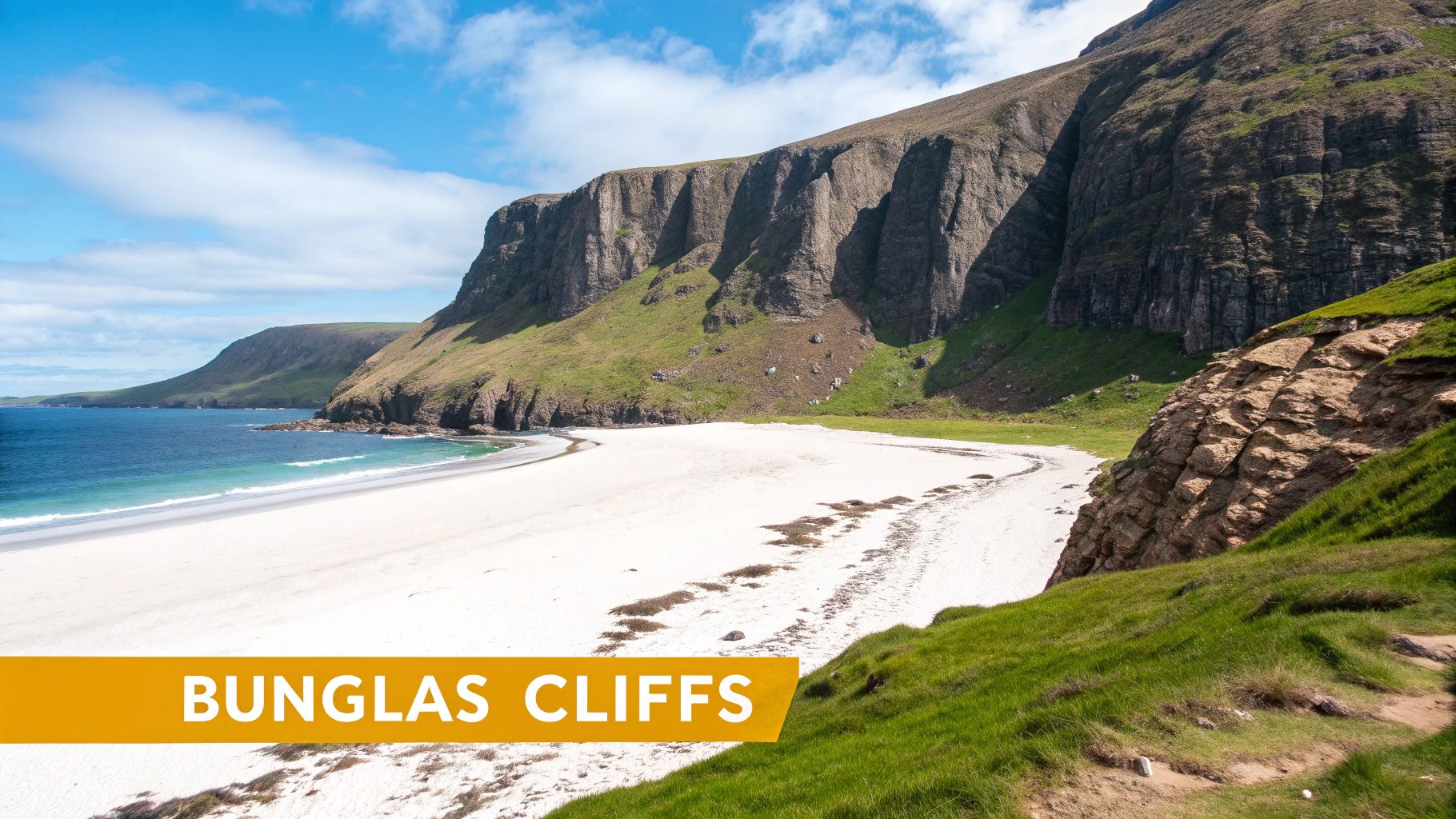
This is not a place for casual visitors; it's a destination for experienced hikers and climbers seeking an authentic wilderness experience. The beach is a breathtaking amphitheatre of nature, dominated by the sheer sea cliffs that tower above. Reaching its shores offers a sense of profound isolation and a connection to the raw power of the Irish coastline, a truly unforgettable experience far from any crowds.
Your Bungeg Beach Guide
- Getting There & Safety: Access is extremely difficult and dangerous, requiring a steep descent with rock scrambling. This is not a casual walk and should only be attempted by experienced climbers with proper safety equipment. Tell someone your exact plans, check the weather and tides meticulously, and start very early.
- Best Time to Visit: Attempt this journey only during the summer months (June-August) when the weather is most stable and daylight hours are long. A calm, dry day is essential for a safe descent and ascent.
- Activities & Safety: The primary activity is the challenging trek itself. Once there, you can marvel at the geology and sheer scale of the cliffs from a unique perspective. Swimming is not advised due to strong currents and the remote location. Consider hiring a local, qualified guide who knows the safest routes.
- Nearby Attractions: The main attraction is the Slieve League Cliffs themselves. Drive to the upper car park for breathtaking, accessible views. Afterwards, explore the charming village of Carrick or head to the Glencolmcille Folk Village to learn about the region’s rich history.
7. Curracloe Beach, County Wexford
Stretching for a seemingly endless 10 kilometres along Wexford’s sunny southeast coast, Curracloe Beach is a breathtaking expanse of soft, golden sand backed by a rich network of marram-grass-covered dunes. This famous Blue Flag beach, known for its appearance in the D-Day landing scenes of the film Saving Private Ryan, offers a much more peaceful experience in reality. Its gentle slope and sheltered waters create a safe and welcoming environment, making it a beloved destination for families and one of the finest beaches in Ireland.
The beach is part of the Raven Nature Reserve, a haven for wildlife enthusiasts where you can spot birds, butterflies, and even the occasional seal. The sheer length of the beach means that even on the busiest summer days, you can find a quiet spot for yourself by simply walking a little further. Whether you're here for a refreshing dip, a scenic horse ride along the shore, or a tranquil walk through the dunes, Curracloe’s natural charm is utterly captivating.
Your Curracloe Beach Guide
- Getting There & Parking: Curracloe is easily reached by car, located about 15 minutes from Wexford town. There are several car parks, including the main one at the beach entrance and a quieter one to the north at Raven Wood. Arrive before 10 am in summer to guarantee a space.
- Best Time to Visit: For smaller crowds and pleasant weather, the shoulder seasons of May, June, and September are ideal. If visiting during peak season, try a mid-week visit for a more relaxed atmosphere. Low tide reveals a vast, firm sand expanse perfect for walking.
- Activities & Safety: The beach offers safe swimming, and its length is perfect for watersports like kitesurfing and paddleboarding. The adjacent Raven Nature Reserve has well-marked trails for walking and wildlife viewing. Always bring sun protection, as the open beach offers very little shade.
- Nearby Attractions: After your beach visit, explore the rich history of Wexford town or visit the nearby Irish National Heritage Park. Curracloe's location makes it a perfect stop while discovering the historic treasures of this region. Explore more destinations in our guide to Ireland's Ancient East.
8. Derrynane Beach, County Kerry
Tucked away on the spectacular Ring of Kerry, Derrynane Beach is a place where history and natural splendour meet. Located within the Derrynane National Historic Park, this sheltered, south-facing beach boasts a crescent of fine golden sand, calm turquoise waters, and a backdrop of lush, subtropical gardens. It’s a truly unique spot that offers more than just a day by the sea; it’s an invitation to step into Ireland’s rich past while surrounded by breathtaking coastal scenery.
The beach is a stunning, family-friendly destination, with its sheltered position making it ideal for swimming and paddling even on moderately windy days. Low tide reveals a vast expanse of sand and fascinating rock pools, perfect for exploration. The integration of the beach with the historic park creates a seamless experience, allowing visitors to wander from ancient woodlands and historic trails directly onto the soft sands, making it a standout among the many beautiful beaches in Ireland.
Your Derrynane Beach Guide
- Getting There & Parking: Derrynane is located just off the N70 (Ring of Kerry road) near the village of Caherdaniel. A large car park is available within the national park, but it can get very busy in summer. Arrive before 10 am to secure a good spot.
- Best Time to Visit: For pleasant weather with fewer crowds, plan your visit for June or September. This allows you to fully appreciate the tranquillity of both the beach and the surrounding park. Exploring at low tide opens up more of the beach and connects it to a nearby island.
- Activities & Safety: The calm waters are excellent for swimming and kayaking. The surrounding park offers fantastic walking trails with stunning coastal views, so bring proper footwear. Pack a picnic, as there are many scenic spots throughout the gardens to enjoy a meal.
- Nearby Attractions: The main attraction is Derrynane House, the ancestral home of Daniel O'Connell, one of Ireland’s most important historical figures. Visiting the house and museum provides fascinating context to the landscape. Allow at least two to three hours to fully experience the house, gardens, and beach. The charming village of Sneem is also a short, scenic drive away.
9. White Strand Beach, County Waterford
Tucked away within Ireland's stunning Copper Coast UNESCO Global Geopark, White Strand Beach is a true gem of the Sunny South East. This secluded, golden-sand cove is framed by dramatic, mineral-streaked cliffs and fascinating rock formations, offering a sense of discovery and raw natural beauty. It’s a haven for those seeking a tranquil escape, combining pristine bathing waters with a geologically rich landscape, making it a unique and memorable stop among the best beaches in Ireland.
The beach’s sheltered position makes it an excellent spot for a family swim, while the surrounding cliffs provide a breathtaking backdrop for coastal walks. The interplay of light on the ancient rock faces, especially during sunset, creates a photographer's paradise. Exploring the rock pools revealed at low tide or simply relaxing on the soft sand makes a visit to White Strand an immersive coastal experience that feels a world away from the everyday.
Your White Strand Beach Guide
- Getting There & Parking: Located along the spectacular Copper Coast Drive (R675), White Strand is about a 20-minute drive from Tramore. A small car park is situated right by the beach, but it has limited capacity. Visit mid-week or in the early morning to ensure you find a space, particularly during summer.
- Best Time to Visit: For the warmest water temperatures, plan your visit between June and August. For a quieter experience with still-pleasant water, September is ideal. The cliffs offer spectacular sunset photography opportunities, so a late afternoon visit is highly recommended.
- Activities & Safety: The beach is perfect for swimming and paddling in its calm, clear waters. Bring walking shoes to explore the cliff-top paths for panoramic views of the coastline. Always check tide times to safely access the more extensive rock pools and coves that appear at low tide.
- Nearby Attractions: A trip to White Strand is best combined with the full Copper Coast scenic drive, one of Ireland's most beautiful road trips. The nearby towns of Annestown and Bunmahon are charming, and the local pubs offer excellent, hearty meals after a day of exploration. For those interested in the area's history, guided geological tours revealing its mineral-rich past are often available.
10. Benone Beach, County Londonderry
Stretching for over seven miles along Northern Ireland's Causeway Coastal Route, Benone Beach is a breathtaking expanse of golden sand backed by majestic dunes and the dramatic cliffs of Binevenagh mountain. This Blue Flag awarded strand offers one of the most scenic beach experiences in Ireland, where the sheer scale of the landscape inspires a sense of freedom and wonder. It's a place where the wild Atlantic meets a pristine, expansive shoreline.
Benone is exceptionally family-friendly, with designated areas for safe swimming and a wide range of activities. The firm, flat sand makes it perfect for everything from leisurely strolls and sandcastle building to kite-flying and even driving on certain sections, a unique feature among beaches in Ireland. Its excellent facilities and easy accessibility make it a hassle-free destination for a full day of coastal enjoyment.
Your Benone Beach Guide
- Getting There & Parking: Located on the A2 coastal road between Limavady and Coleraine, Benone is well-signposted and easily accessible. Ample parking is available, including designated on-beach parking zones. To secure a prime spot on peak summer weekends, it's wise to arrive before 10 am.
- Best Time to Visit: The shoulder seasons of May, June, and September offer the best balance of pleasant weather and fewer visitors. For a quieter day during summer, plan a mid-week visit. The beach is accessible year-round and offers dramatic scenery even on a blustery winter's day.
- Activities & Safety: Benone is a hub for water sports, with local providers offering surfing and paddleboarding lessons, which should be booked in advance during summer. The beach is patrolled by RNLI lifeguards during peak season. Always bring sun protection as there is limited natural shade.
- Nearby Attractions: The beach is part of the Binevenagh Area of Outstanding Natural Beauty. A short drive will take you to the Mussenden Temple, perched dramatically on a cliff edge, offering incredible photo opportunities. The historic city of Derry/Londonderry, with its famous walls and vibrant cultural scene, is less than an hour's drive away for evening entertainment.
Comparison of 10 Irish Beaches
| Beach | Accessibility & effort | Facilities & resources | Expected experience | Ideal use cases | Key advantages |
|---|---|---|---|---|---|
| Inchydoney Beach, County Cork | Easily accessible from Clonakilty, year‑round access but limited parking at peak | Lifeguards, cafes, parking (limited), basic amenities | Photogenic horseshoe cove, safe swimming, moderate crowds in summer | Family outings, photography, relaxed water sports | Blue Flag, clear water, sheltered cove with cliffs |
| Achill Head Beach, County Mayo | Remote island location, exposed terrain and cliff access required | Minimal facilities, little development | Rugged, dramatic, powerful waves; hazardous for casual swimmers | Experienced hikers, surfers, wildlife photographers | Towering cliffs, black sand, solitude and dramatic scenery |
| Dollymount Beach (Bull Island), Dublin | Very accessible from Dublin (30 min), easy public transport access | Strong amenities, lifeguards, cycle paths, interpretive centre | Long sandy stretch, diverse ecosystems, can be busy on weekends | Urban nature escape, cycling, family days, education | UNESCO biosphere, long beach, excellent cycling infrastructure |
| Inch Beach, County Kerry | Moderate access via narrow road; park in Inch village and walk | Nearby village facilities, watersports rentals/lessons | Vast peninsula views, windier conditions, film‑location feel | Windsurfing/kitesurfing, photography, family beach days | Long 4 km peninsula, mountain views, cinematic heritage |
| Ventry Beach, County Kerry | Moderately accessible via single narrow road; limited parking | Limited on‑beach facilities, village services nearby | Quieter, clear turquoise water ideal for snorkeling | Snorkeling, swimming, cultural village visits, photography | Clear water, quieter atmosphere, Gaeltacht cultural setting |
| Bungeg (Bunglas) Beach, County Donegal | Very difficult; steep cliff descent and remote access | No facilities; remote wilderness conditions | True wilderness, highly secluded, potentially dangerous | Experienced climbers/abseilers, serious photographers, adventurers | Dramatic Bunglas cliffs (601m), pristine undeveloped coastline |
| Curracloe Beach, County Wexford | Easily accessible (≈2 hr from Dublin), good parking but busy at peak | Extensive amenities, lifeguards, shops, nature reserve | Long sandy stretches, family‑friendly, busy in school holidays | Families, water sports, long walks, horse riding | 10 km beach, Blue Flag, dunes and nature reserve |
| Derrynane Beach, County Kerry | Moderate access inside national park, limited parking | Park facilities, trails, nearby historic house museum (fee) | Sheltered waters, calm swimming, combined nature + history | Families, walking + museum visits, sheltered swimming | Located in national historic park, historic house and well‑maintained trails |
| White Strand Beach, County Waterford | Moderate access (≈90 min from Waterford), limited parking expansion | Nearby facilities, scenic drive amenities, seasonal services | Golden sand with cliff walks and geological interest | Coastal walks, family swims, geology/photography outings | Copper Coast Geopark designation, clear water and cliffs |
| Benone Beach, County Londonderry | Easily accessible, good parking and proximity to Derry | Excellent facilities, lifeguards, water‑sports rentals | Family‑friendly, reliable swimming, busy during holidays | Families, accessible water sports, day trips from Derry | Well‑maintained amenities, safety services, diverse activities |
Your Irish Coastal Adventure Awaits
As your journey through this guide comes to a close, it's clear that the sheer variety of beaches in Ireland is nothing short of breathtaking. From the golden, sun-kissed expanses of County Wexford's Curracloe Strand to the wild, windswept majesty of Achill Head in County Mayo, each shoreline tells a different story. We have travelled from the urban oasis of Dollymount Strand in Dublin, a haven for city dwellers and wildlife alike, to the cinematic grandeur of Inch Beach on the Dingle Peninsula, a place where Hollywood epics have come to life against a backdrop of dramatic cliffs and rolling Atlantic waves.
This list is not merely a collection of beautiful places; it is a tapestry woven from the threads of Ireland's geology, history, and vibrant culture. You have discovered that a visit to a beach here is rarely just about the sand. It is about standing beneath the Slieve League cliffs at Bungeg Beach, feeling the immense power of nature. It is about tracing ancient history in the sands of Derrynane, where Daniel O'Connell once walked. It is about the simple joy of finding a sheltered cove like White Strand on the Copper Coast, a perfect spot for a family picnic and a moment of quiet reflection.
Weaving Your Own Coastal Story
The true magic of exploring these locations lies in the journey between them. A self-drive tour of Ireland’s coastline is an experience that transcends a simple holiday; it becomes a personal pilgrimage. The routes connecting these gems, from the legendary Wild Atlantic Way to the scenic Causeway Coastal Route, are as much a part of the adventure as the destinations themselves.
Think of the freedom of pulling over spontaneously to capture a photograph of a crumbling stone wall against a stormy sky, or the delight of discovering a tiny, traditional pub in a seaside village not mentioned in any guidebook. These unscripted moments are the heart of an Irish road trip. To make the most of this freedom, planning is your best friend. Consider these key takeaways as you plot your course:
- Embrace the Elements: Irish weather is famously unpredictable. Pack layers, waterproofs, and sturdy footwear alongside your swimming costume and sun cream. A dramatic, cloudy sky can make a beach like Benone Strand even more atmospheric and beautiful.
- Respect the Tides: Always check the local tide times before you set out, especially for beaches with vast tidal flats like Inchydoney or Dollymount. This is crucial for safety and for planning activities like walking or rock pooling.
- Go Beyond the Sand: Remember to explore the surrounding areas. The attractions we've highlighted, from ancient ring forts near Ventry to the vibrant towns near Inch, enrich the coastal experience and offer a deeper connection to the local heritage.
Planning for a Seamless Journey
While the spirit of adventure is about embracing the unknown, a little preparation ensures your focus remains on the beauty around you, not on logistical headaches. Booking accommodation in advance, especially during peak season, is highly recommended for popular areas like the Dingle Peninsula. Furthermore, ensuring you are covered for any eventuality allows for true peace of mind. Before you depart, it is wise to arrange comprehensive Ireland Travel Health Insurance, so you can explore rugged cliffs and remote coves with the confidence that you are well-protected.
The beaches of Ireland are more than just geographical points on a map. They are gateways to adventure, sanctuaries for reflection, and playgrounds for the soul. They are places where the land meets the sea in a spectacular, ever-changing display of natural artistry. The coast is calling, with its promise of salty air, epic vistas, and unforgettable memories. The only question left is: which of these incredible shores will you set foot on first?
Ready to turn this inspiration into your ultimate Irish road trip? Let BTOURS craft a personalised self-drive itinerary that connects you with Ireland's most spectacular beaches and hidden gems. We handle all the details, from charming accommodations to optimised routes, leaving you free to simply drive, discover, and create your own unforgettable coastal story. Start planning your adventure with BTOURS today!