TRAVEL STORIES & GUIDES
Traditional Welsh Food: 9 Dishes Worth Trying in Wales
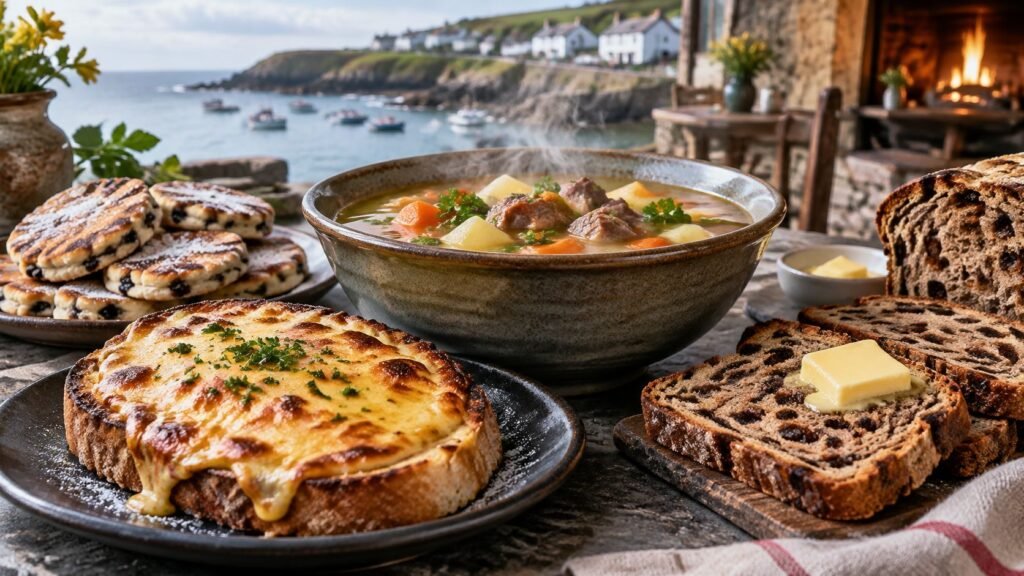
A pub menu lists cawl beside the Sunday roast, a tea room counter holds a dark fruit loaf, and a café on the Gower coast serves something called laverbread with breakfast. For visitors encountering traditional Welsh food, the unfamiliar names can make ordering harder than it needs to be. The pleasure starts with knowing which dishes suit a warming lunch, a seaside breakfast or a pause over tea.
Welsh cooking makes practical use of the ingredients around it: meat and root vegetables in a simmering pot, cheese and leeks in a meat-free supper, seaweed and shellfish beside the coast. Some foods are everyday staples found well beyond their home region. Others make more sense when tasted close to the communities associated with them.
Place and occasion matter more than completing a food checklist. Laverbread deserves a coastal breakfast stop; Welsh cakes fit into a bakery visit; lamb can anchor a leisurely pub lunch. A regional name doesn't guarantee local ingredients, either, so a friendly question about the producer is often more useful than choosing the most elaborate description.
These dishes offer different ways into Welsh food culture, with enough variety for travellers who prefer a modest café meal to a formal restaurant booking.
1. Cawl
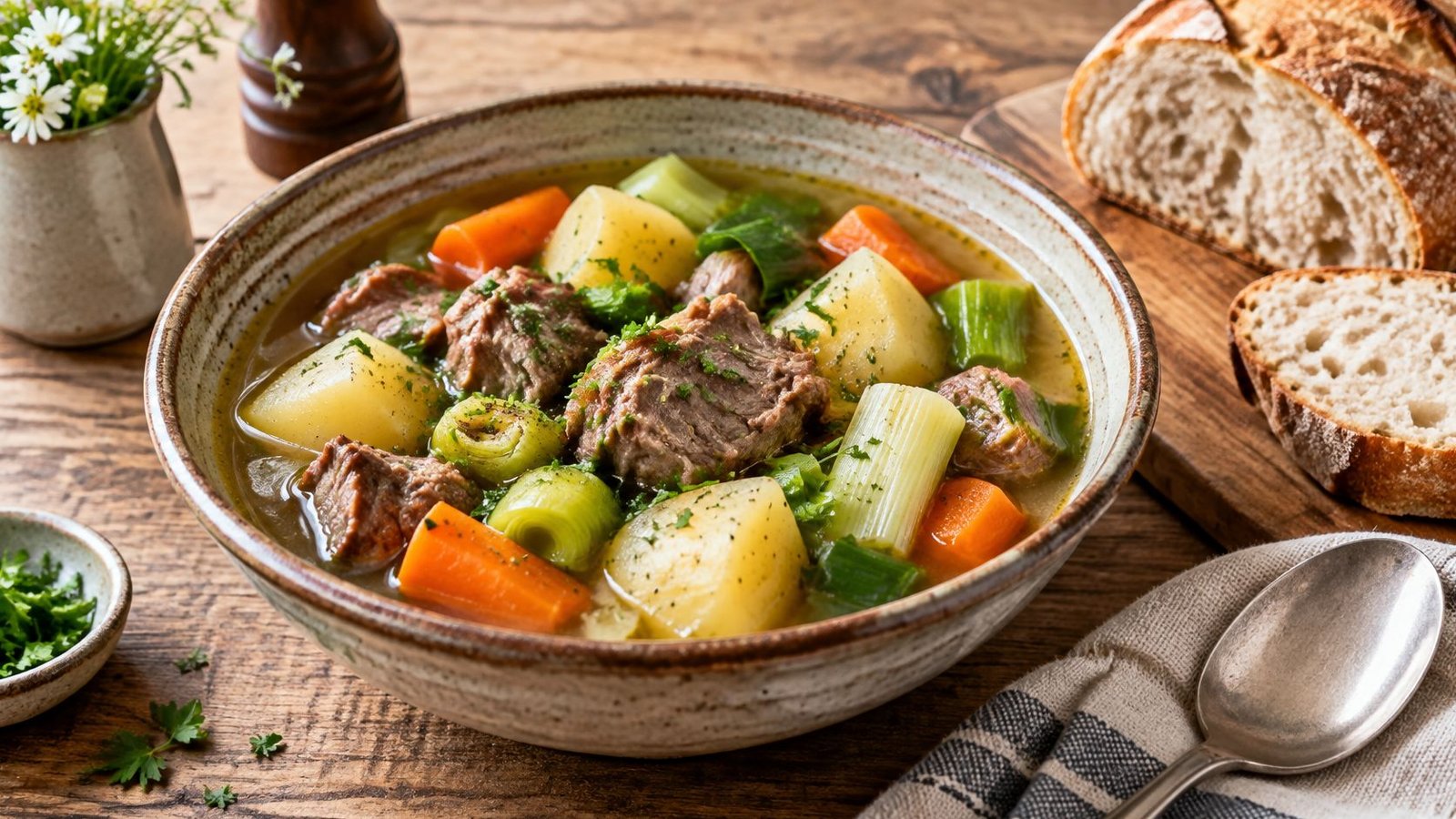
A deep bowl of cawl suits the moment when a damp walk ends at a warm pub. This slow-cooked combination of meat, potatoes, carrots, swede and leeks is often described as Wales's national dish, although there's no single recipe that every household follows.
Lamb is familiar in modern versions, but beef and salted bacon belong to its history too. The Welsh Government's food and drink toolkit describes those variations, the related northern dish lobsgows, and the traditional accompaniment of bread and cheese, or bara a chaws. It also recommends making cawl ahead so the flavours combine and excess fat can be skimmed away.
What to expect in the bowl
Cawl can be brothy rather than thick, with recognisable pieces of vegetable and tender meat. A thinner broth isn't evidence of an inferior version; the balance depends on the cook and the ingredients.
- For a winter lunch: A pub or café special is a sensible place to look, especially when bread and Welsh cheese accompany the bowl.
- For a meat preference: Establish whether the pot contains lamb, beef or bacon before ordering.
- For a vegetarian meal: Vegetable-led cawl needs vegetable stock as well as the absence of visible meat.
At a village event, cawl makes practical communal food. At a pub table, its appeal is much the same: a sustaining meal without elaborate presentation.
2. Welsh Rarebit
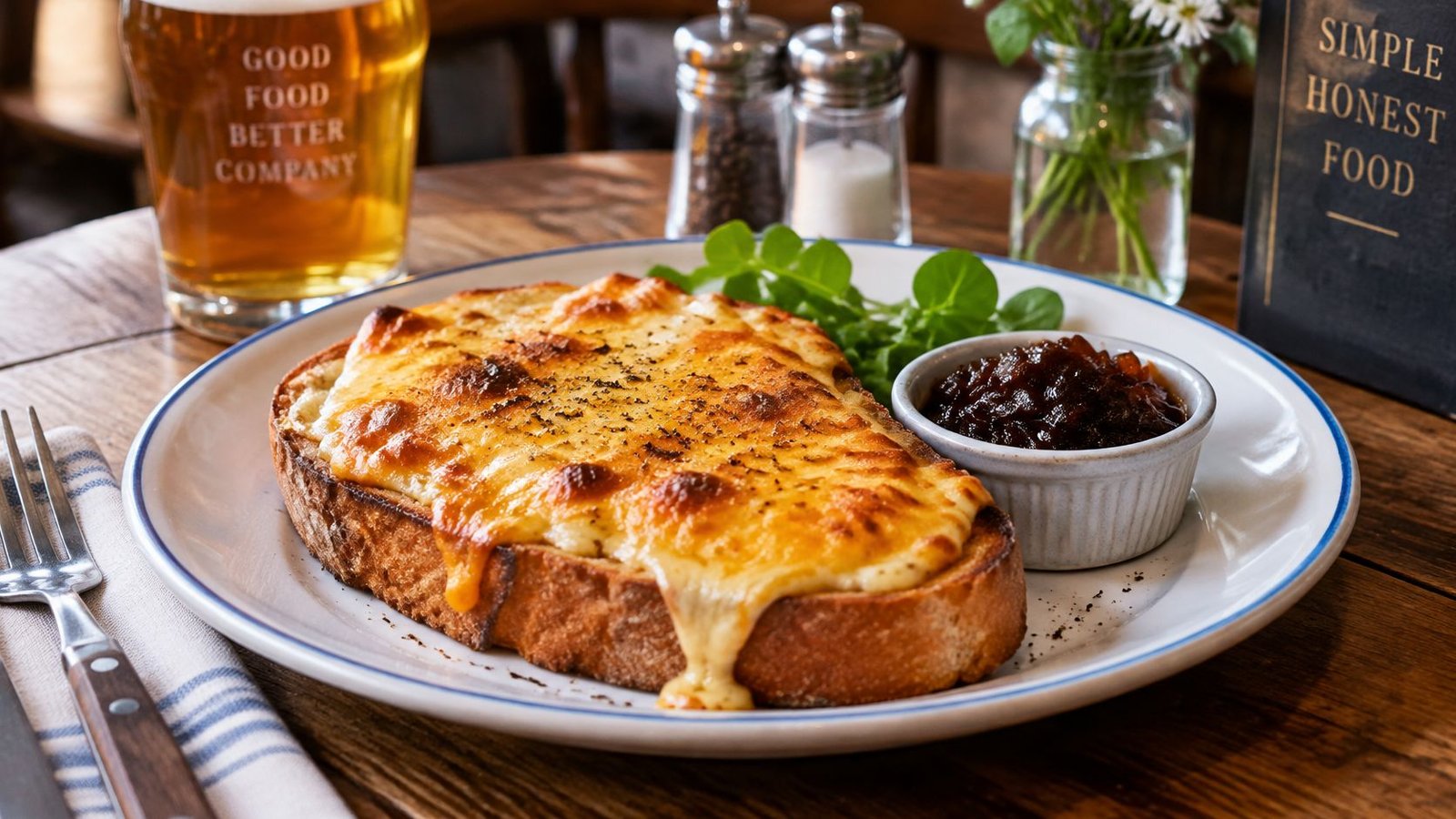
Welsh rarebit isn't just a slice of cheese melted over bread. A well-made version has a prepared cheese topping, commonly sharpened with mustard and enriched with ale, then grilled until bubbling. Worcestershire sauce may add savoury depth, although recipes differ.
It's a useful first order for visitors who want familiar ingredients with a distinctly Welsh association. Welsh rarebit was the strongest-performing traditional Welsh dish in the UK consumer survey discussed by Bidfood's Closer to Home foodservice guide, which also identifies cheese, lamb and leeks as strong associations with Welsh cooking.
A café lunch rather than a grand occasion
Rarebit works particularly well between sightseeing stops, when a full roast would be too much but a cold sandwich feels uninviting. A sharp cheese gives the topping character; sturdy toast provides a better base than bread that collapses beneath the sauce.
A little pickle or chutney balances the richness. A salad can make it feel more like lunch, although the topping should remain the main attraction.
Ordering detail: Vegetarian diners should ask about both the cheese and the sauce. Worcestershire sauce can contain anchovies, so a cheese-based dish isn't automatically suitable.
The disputed origin of the name adds less to the meal than the preparation does. A clear description of the cheese, ale and seasoning is more helpful than a menu's claim to offer the definitive original.
3. Laverbread
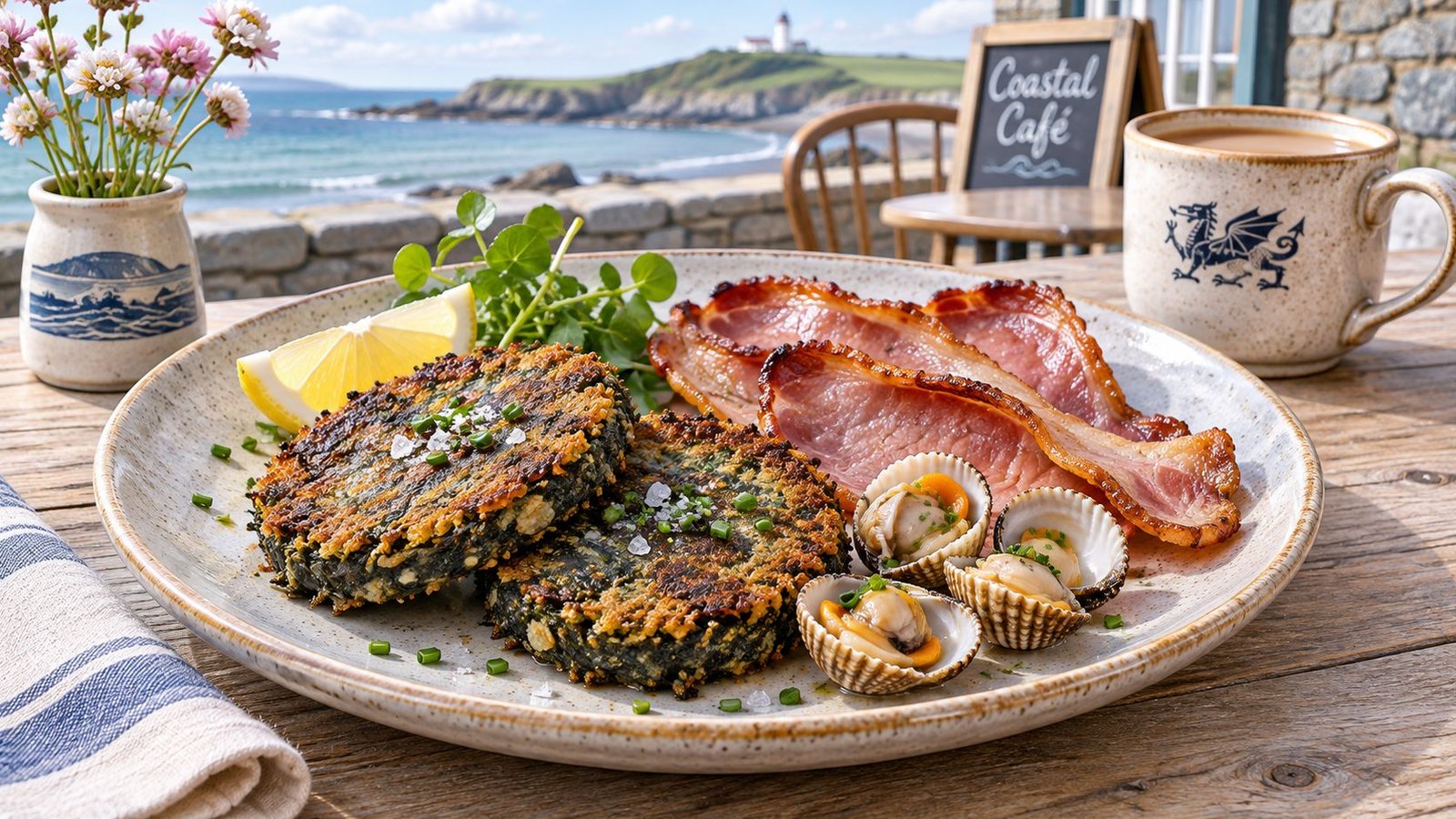
Despite its name, laverbread contains no bread. It's laver seaweed cooked down into a dark, soft paste, with a savoury, mineral flavour that can surprise visitors expecting something baked.
Its story connects coast and industry. The Welsh Government's account of Welsh laverbread describes laver gathering in Pembrokeshire, transport to Swansea markets and its importance as a breakfast food in South Wales mining communities; Welsh Laverbread received Protected Designation of Origin status in 2017. The cooking transforms the seaweed, so the finished food bears little resemblance to fresh strands gathered from the shore.
Make it a coastal breakfast
A café around Swansea or the Gower peninsula is a fitting setting for a first taste. Laverbread may arrive as a soft accompaniment or mixed with oatmeal and fried, often alongside bacon and cockles.
- For a gentler introduction: Fried oatmeal cakes offer crisp edges against the soft seaweed.
- For dietary needs: Establish whether bacon fat is used and whether shellfish share the plate or cooking surface.
- For a planned stop: Check the café's current opening hours and breakfast service before making a detour.
A coastal setting supplies context, not an automatic guarantee of quality. Travellers continuing along the coast can use the guide to things to do in New Quay, Wales to plan another seaside stop, rather than assuming every coastal town shares the same food specialities.
4. Welsh Cakes
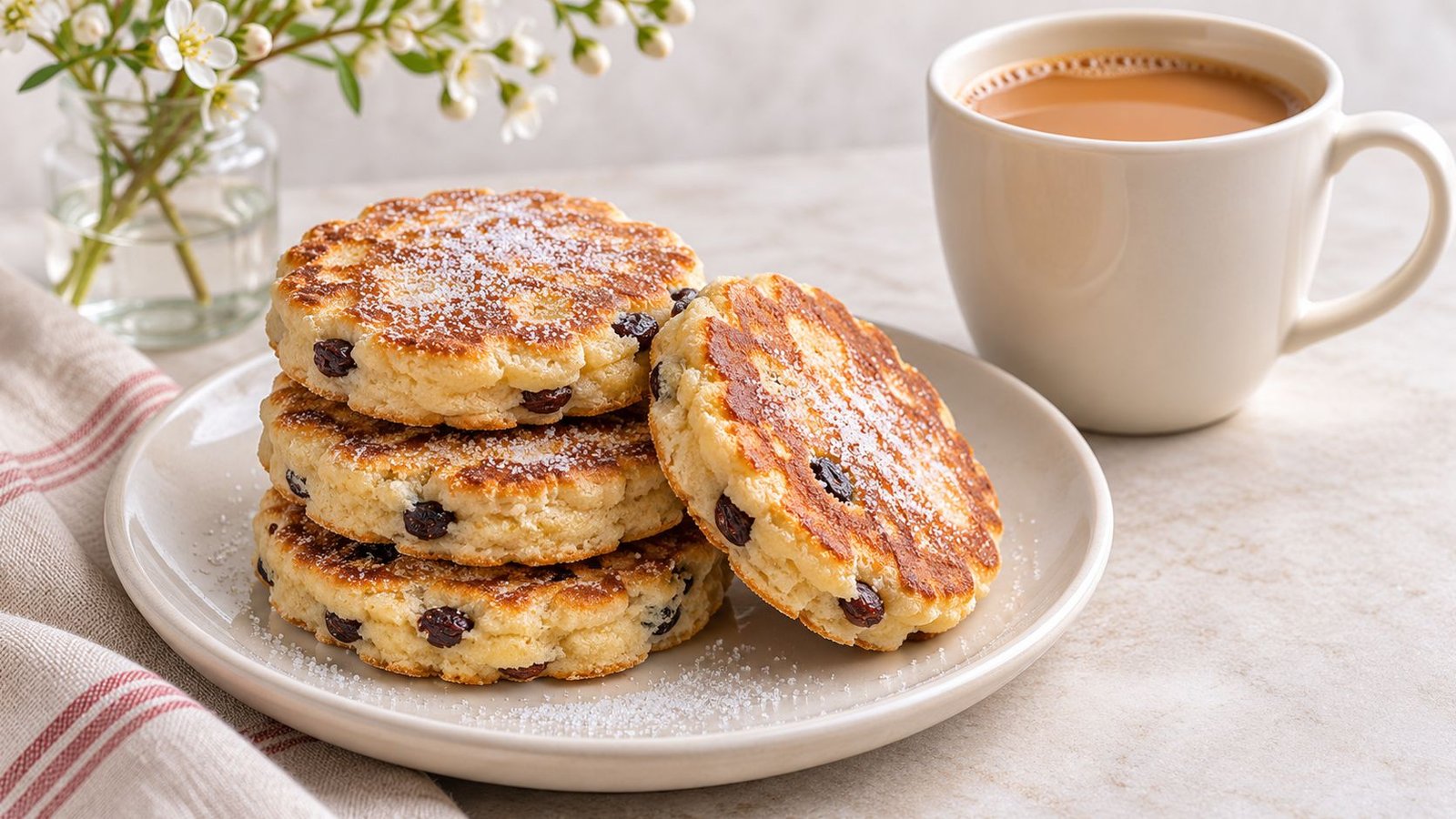
The best moment for a Welsh cake is often the simplest: a bakery stop when the cakes are still warm. Small, round and lightly spiced, they sit somewhere between a biscuit and a fruit scone, without being quite either.
Known as picau ar y maen, they're cooked on a bakestone or heavy griddle rather than baked like an ordinary cake. Food and Drink Wales describes Welsh cakes as synonymous with Wales and lists familiar ingredients including flour, butter, currants, eggs, milk, cinnamon and nutmeg.
Texture matters more than decoration
A good Welsh cake has a lightly browned surface and a tender centre. Sugar on the outside adds sweetness, but thick icing or elaborate toppings aren't needed to make it feel like a treat.
For travellers spending the afternoon around a market town, a freshly cooked cake and tea make an easy pause without committing to a full afternoon tea. Packaged cakes are convenient for the journey home, but freshness makes a noticeable difference to the texture.
A warm Welsh cake is worth eating as it comes. Butter, jam and cream can overwhelm the gentle spice and dried fruit.
Traditional fruit-and-spice versions provide a useful starting point before chocolate or other variations. Anyone avoiding gluten, eggs or dairy should check the actual recipe rather than judging by the cake's small size or plain appearance.
5. Bara Brith
At a tea room counter, the dark loaf studded with dried fruit is likely to be bara brith, or speckled bread. It's usually sliced and served with butter, making it a different prospect from a light sponge cake or an iced bakery treat.
Tea-soaked fruit gives a familiar version its moist texture and rounded flavour. Recipes vary, however, and the name shouldn't create an expectation that every bakery will produce the same crumb, sweetness or level of spice.
Choose it for a slower tea stop
Bara brith suits an afternoon when there's time to sit down. After a morning exploring a market town, a slice with tea provides something substantial without requiring the sandwiches, scones and cakes of a full afternoon tea.
The butter matters: a thin spreading supplies richness against the fruit and tea. More isn't necessarily better, particularly when the slice is already moist.
- For the table: Ask whether butter comes alongside, especially when sharing with someone who prefers it plain.
- For a walking day: A wrapped slice travels more neatly than a cream-filled cake.
- For taking home: Check the bakery's storage advice rather than assuming every loaf keeps equally well.
Bara brith can also follow a light lunch, but it's a poor choice for anyone expecting a small, airy dessert. Its appeal is the close-textured loaf, fruit and gentle spice, not dramatic presentation.
A village bakery is useful for comparing styles, while a tea room offers the easier introduction: a prepared slice, butter and a proper pause.
6. Caerphilly Cheese
Not every traditional food needs to arrive as a cooked dish. Caerphilly cheese, named after the town in South Wales, can turn bread and an apple into a satisfying picnic or provide a distinctly Welsh element on a pub cheeseboard.
The familiar style is pale, crumbly and fresh-tasting, with a mild, lemony tang. Individual cheeses differ, so a deli tasting or a conversation with the cheesemonger is more useful than choosing solely by the name.
Welsh provenance matters to shoppers: Welsh Government consumer research found that 85% of Welsh shoppers rated food and drink from Wales as high quality. For visitors, that makes producer information worth reading, but it doesn't mean every cheese offered on a Welsh menu was made locally.
Build a simple market lunch
A farm shop or deli is a practical stop before an afternoon outdoors. Caerphilly pairs well with crusty bread, an apple and a restrained amount of chutney; a strong preserve can mask the cheese's fresher qualities.
- Check the producer: Look for the maker and production location, not just Welsh imagery on the packaging.
- Choose the right amount: Buy for the meal planned rather than carrying excess cheese through a warm sightseeing day.
- Keep it cool: An insulated bag is useful when lunch won't follow immediately.
In a restaurant, ask which Caerphilly is being served. A named cheese gives diners something specific to seek out later, rather than leaving the experience at a generic Welsh cheeseboard.
7. Glamorgan Sausage
A Glamorgan sausage offers the comfort of a crisp, savoury supper without a meat filling. Cheese, leeks and breadcrumbs form the mixture, commonly seasoned with mustard and herbs, then shaped, coated and cooked until the outside is golden.
Its name points towards Glamorgan in South Wales, but travellers needn't limit the search to a single town. A pub serving regional dishes is a sensible place to look, particularly for a lunch that feels rooted in Welsh ingredients without being another meat stew.
What makes it a good order
Texture is important. The coating should contrast with a soft interior, while the leeks and cheese should remain recognisable rather than disappearing into a heavy mass of breadcrumbs.
For a couple sharing lunch, Glamorgan sausage and a bowl of cawl offer contrasting tastes of Welsh cooking. For a vegetarian diner, the sausage can be the main event, provided the kitchen confirms the ingredients and preparation.
Vegetarian isn't vegan: Cheese, egg used for binding or coating, and the cooking fat all need checking. Strict vegetarian requirements also extend to the cheese's rennet and shared cooking equipment.
Chutney, salad or plainly cooked vegetables help balance the richness. A heavy cheese sauce on top can make the meal repetitive rather than more satisfying.
The guide to things to do in South Wales offers ideas for building a regional day around more than lunch. The most useful food stop is one that fits the route and serves the dish well, not necessarily the one making the loudest claim to authenticity.
8. Penclawdd Cockles
Penclawdd cockles belong to the coastal side of Welsh food culture. The village, on the northern side of the Gower peninsula, is closely associated with cockle gathering, and the small shellfish make a natural companion to laverbread and bacon.
Cockles have a distinct briny flavour and a firmer bite than their size might suggest. They may be served with vinegar and pepper or incorporated into a cooked breakfast, where bacon and laverbread provide contrasting textures.
A small portion makes a useful introduction
For a visitor unsure about shellfish, a modest serving alongside breakfast is more approachable than making cockles the entire meal. Vinegar adds sharpness, but too much can obscure the flavour rather than improve it.
A café or food shop around Penclawdd provides a relevant place to ask about supply and preparation. The village name alone shouldn't be treated as proof that every portion on every menu has the same origin.
- Ask about availability: Confirm that cockles are being served before travelling specifically for them.
- Ask about preparation: Chilled cockles with vinegar and a warm breakfast accompaniment offer different experiences.
- Flag shellfish allergies: A plate shared with laverbread or bacon is unsuitable if cross-contact creates a risk.
Buying from an established food business is the straightforward option for visitors. Recreational gathering requires separate attention to permissions, local restrictions and food safety, so a walk across the sands shouldn't turn into an improvised collecting trip.
The appeal lies in tasting a coastal ingredient in context, not in treating it as a novelty challenge.
9. Welsh Lamb
A Sunday pub lunch offers perhaps the easiest introduction to Welsh lamb. Roast lamb, vegetables and gravy are familiar enough to order confidently, while a menu naming the farm or region adds a useful connection to the surrounding area.
Farming is fundamental to that connection. Welsh Government evidence on agriculture in Wales records agriculture's contribution to the Welsh economy and the importance of meat and dairy production, helping explain why lamb, beef and sustaining vegetable dishes sit so firmly within the country's food traditions.
Choose the preparation to suit the day
Roast lamb suits a leisurely lunch, whereas slow-cooked shoulder or cawl makes sense after a colder day outdoors. A chop can be a lighter option, although the cut, portion and accompaniments matter more than the label alone.
A restaurant's simplest lamb dish may reveal more about the meat than an elaborate preparation. Strong sauces aren't wrong, but they can make it harder to appreciate the flavour being promoted.
- Look for provenance: A named farm, producer or region provides more information than a vague claim of local sourcing.
- Check service arrangements: Sunday roasts may have a different menu or booking pattern from ordinary lunch service.
- Ask about the cut: Shoulder, leg and chops need different cooking methods and won't eat alike.
For journeys through upland Wales, the guide to Wales's national parks can help place a rural lunch within a wider day. Walking plans should leave enough time for the meal, rather than turning the pub booking into a deadline to race towards.
How the traditional Welsh dishes compare at a glance
| Dish | Main ingredients | Typical setting | Best time to try | Sweet or savoury |
|---|---|---|---|---|
| Cawl | Lamb or beef, potatoes, carrots, swede and leeks | Welsh pubs, cafés and family homes | Autumn and winter | Savoury |
| Welsh Rarebit | Melted cheese, toast, ale, mustard and seasonings | Pubs and cafés | Lunch or supper | Savoury |
| Laverbread | Laver seaweed, oatmeal; often served with bacon and cockles | Coastal cafés around the Gower and Swansea | Breakfast | Savoury |
| Welsh Cakes | Flour, butter, sugar, currants and spice | Bakeries, cafés and tea rooms | Warm with tea | Sweet |
| Bara Brith | Dried fruit, tea and bread ingredients | Bakeries and tea rooms | Afternoon tea | Sweet |
| Caerphilly Cheese | Mild, crumbly white cheese | Farm shops, delis and cheeseboards | Anytime | Savoury |
| Glamorgan Sausage | Cheese, leeks, breadcrumbs, mustard and herbs | Pubs and cafés, especially in south Wales | Lunch or light supper | Savoury |
| Penclawdd Cockles | Cockles, often served with vinegar and pepper | Coastal cafés, stalls and seafood shops | When locally available | Savoury |
| Welsh Lamb | Lamb, often served with seasonal vegetables | Welsh pubs and local-produce restaurants | Sunday roast or in a warming stew | Savoury |
Eating Your Way Through Wales, One Table at a Time
A rewarding Welsh food journey doesn't require a different speciality at every meal. Choose a few dishes that fit the places already on the route: laverbread with breakfast on the Gower, Glamorgan sausage during a South Wales pub stop, or bara brith in a market-town tea room. Ordinary meals often provide more insight than an ambitious tasting checklist.
Regional variation is part of the pleasure. Cawl may be brothy in one kitchen and more substantial in another; a baker's bara brith may taste less sweet or more strongly spiced than the previous slice. Neither difference automatically makes a version less authentic.
Make the food stops fit the journey
Smaller cafés and bakeries need a little planning. Check current opening hours, establish whether hot food stops before closing, and avoid relying on an unconfirmed breakfast speciality after a long detour.
Markets, farm shops and delis also deserve space in the itinerary. They allow travellers to assemble a simple lunch, read producer labels and spend directly with food businesses rather than limiting Welsh food to restaurant menus.
- For value: A bowl of cawl, bakery purchase or cheese-and-bread picnic can be more useful than a formal meal.
- For dietary requirements: Ask about stock, sauces, cooking fat and shared equipment, not just the main ingredient.
- For provenance: Prefer a named maker or farm over an unsupported local label.
Accommodation and meal stops should work together, particularly in rural areas where an evening meal may require planning. Travellers considering a northern base can browse Snowdonia lodging picks on Lodging Nearby, then check the property's location, current details and nearby dining options independently.
For any trip that includes BTOURS meals, a special meal or other dietary arrangement is confirmed only when accepted in writing. A preference mentioned during planning shouldn't be treated as an accepted arrangement.
The best food memories may be modest: warm Welsh cakes in a paper bag, sharp cheese with bread, or a bowl of cawl after rain. Each makes more sense when there's time to enjoy the setting as well as the plate.
Choose the first food stop alongside the next day's route, check its current service times, and leave room for an unhurried meal. For more destination ideas, explore BTOURS Travel Inspiration and build the journey around places worth lingering in.
Links disclosure: This article may contain external links, including affiliate links. If you book or buy through an affiliate link, BTOURS may earn a commission.