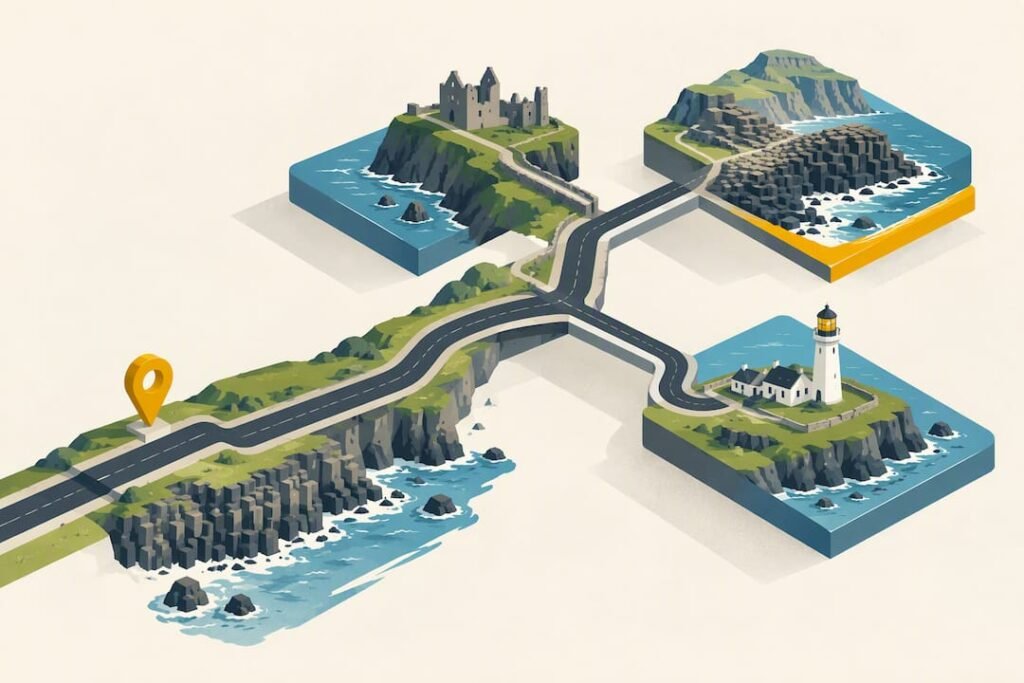
Plan for a minimum of 48 hours and an ideal of three to five days along the Causeway Coastal Route, which runs between Belfast and Derry~Londonderry via the Antrim coast. Expect cliff walks, castle ruins and the Giant’s Causeway itself as the anchor stop. Book the Giant’s Causeway Visitor Experience and, where possible, arrange Park & Ride before you set off, since parking fills fast in peak season.
Distance, direction and pacing: what to decide before you drive
The Causeway Coastal Route measures roughly 120 to 130 miles, or around 185 kilometres once you factor in detours to Torr Head or Glenariff. Driving it without stopping takes only a few hours, but that misses the point entirely: the road is designed for lingering, not for covering ground quickly.
Most travellers drive from Belfast to Derry~Londonderry, taking in the coast clockwise. This direction puts the sea on your left for most of the journey, which matters less for driving safety than for photography, since morning light tends to favour the eastern stretch near Carrickfergus and Whitehead. Travelling anticlockwise from Derry~Londonderry works just as well and can ease parking pressure at Giant’s Causeway if you arrive earlier in the day, before coach tours from Belfast reach the site.
A few points shape how you should pace the trip:
- July and August are the busiest months, so expect fuller car parks and longer queues at Carrick-a-Rede and Giant’s Causeway.
- Weather changes quickly on this coast, so pack layers regardless of season and check forecasts each morning rather than relying on a single check before departure.
- Stopping frequently, even for ten minutes at a viewpoint, tends to improve the overall experience compared with racing between the marquee sights.
- Shoulder season visitors should confirm opening times directly with attractions, since some reduce hours or close certain days outside summer.
At least two days is the recommended minimum to properly experience the route’s main attractions, a figure worth holding onto when you are tempted to squeeze the whole coast into a single long day from Belfast.
The stops in order, from Carrickfergus to Derry
Here is the coast road broken into its practical stages, each with the detail you need to decide how long to linger.
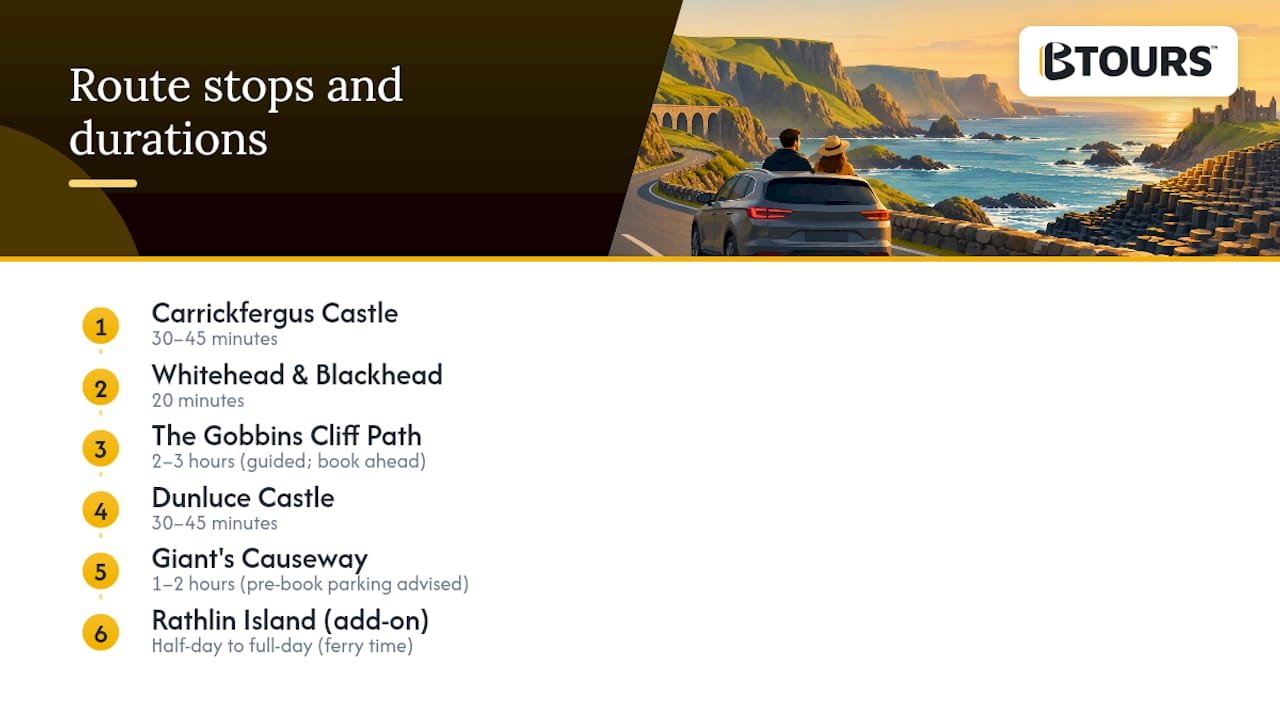
Carrickfergus Castle sits right at the start of the route east of Belfast and rewards a short 30 to 45 minute stop, mostly for its Norman-era walls and harbour views.
Whitehead and Blackhead offer a quieter coastal path and lighthouse views. Twenty minutes is enough unless you fancy a proper walk along the headland.
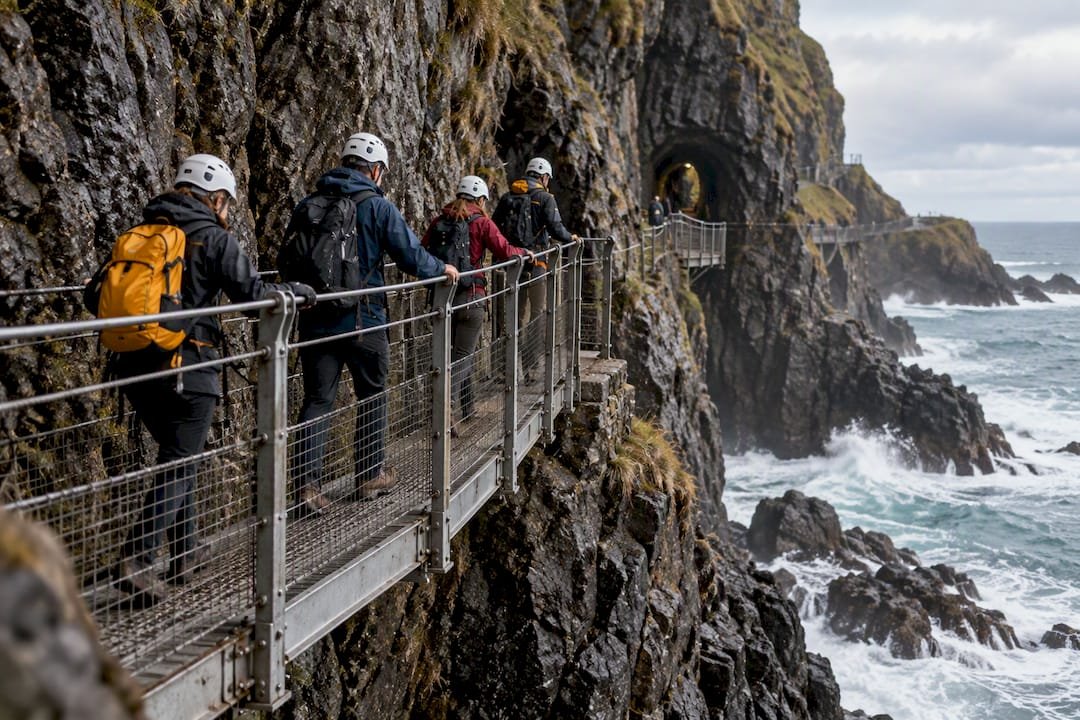
The Gobbins Cliff Path is a guided walking tour along a dramatic cliff-edge path with tunnels and bridges, and it needs advance booking. Allow two to three hours including the guided walk itself, and check tide and weather conditions before you commit, since the path can close in rough seas.
Dunluce Castle, perched on a headland near Portrush, is a ruin you can explore in 30 to 45 minutes. It photographs best in late afternoon light.
Portrush works well as a lunch stop or an overnight base, with beaches, an arcade-lined seafront and a handful of well-regarded restaurants.
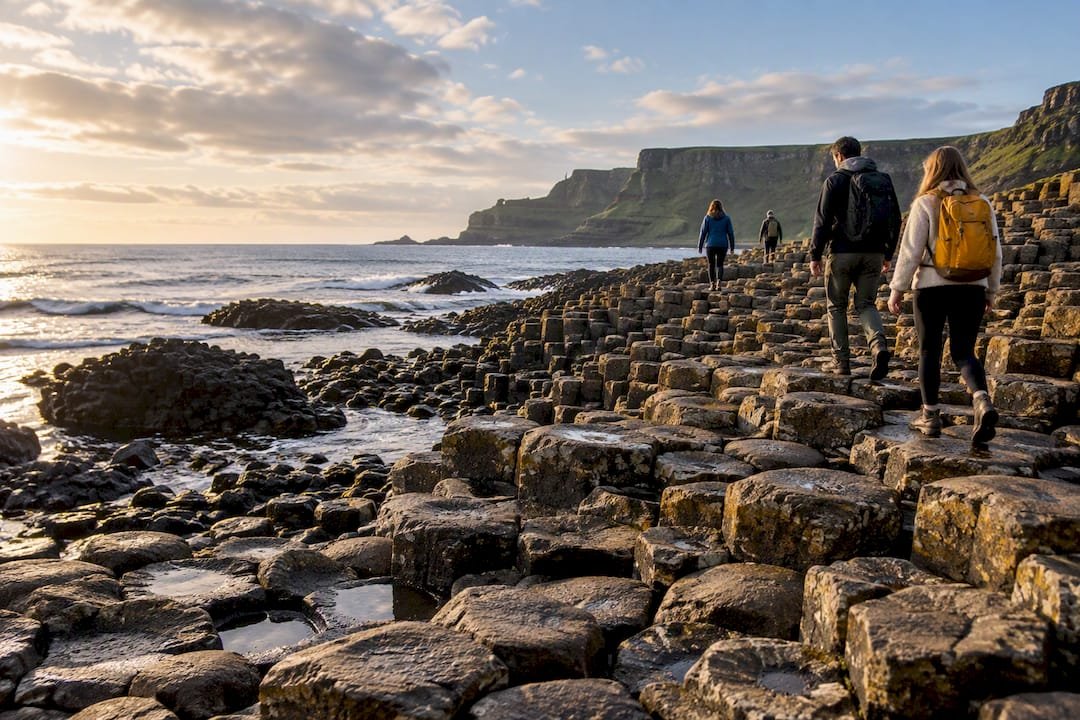
Giant’s Causeway is the anchor of the whole route and the one-stop where planning ahead genuinely changes your day. The National Trust strongly advises pre-booking the Visitor Experience, which includes parking, rather than turning up and hoping for a space. If the main car park is full, the Causeway Coast Way car park at Innisfree Farm is a first-come, first-served alternative that charges £12 through the JustPark app, aimed mainly at walkers rather than Visitor Centre ticket holders. Even members should book ahead to guarantee parking during busy periods, since the site also runs a Park & Ride and an accessible shuttle during Visitor Centre hours. Give yourself one to two hours to walk down to the stones and back, longer if you plan to continue along the clifftop path towards the Amphitheatre.
Bushmills and Old Bushmills Distillery sit a few minutes inland and suit a 45 minute to one hour stop for a tour and tasting.
Carrick-a-Rede Rope Bridge needs its own hour, mostly because of the walk down from the car park and the queue for the bridge itself in summer. Booking a timed slot online avoids the worst of the wait.
Ballintoy is a small harbour village worth a quick 15 minute detour, particularly if you want a quieter photo stop away from the coach crowds.
Ballycastle is the gateway to Rathlin Island and a sensible overnight base if you plan to take the ferry the next morning.
Glenariff Forest Park, a short detour inland, offers waterfall trails through the Glens of Antrim. The main circuit takes one and a half to two hours depending on how far you walk.
Rathlin Island, reached by ferry from Ballycastle, is best treated as a half-day or full-day add-on rather than a quick stop, since the crossing itself takes time each way.
Mussenden Temple, near Downhill, is a small clifftop folly that takes 20 to 30 minutes to see properly, including the walk from the car park.
Derry~Londonderry marks the western end of the route and deserves at least half a day for its city walls and historic centre, more if you want to explore the Peace Bridge and museums.
Sample itineraries: 48 hours, three days or five
These day-by-day plans assume you are driving yourself and adjusting timings to season and weather.
The 48-hour plan works if you only have a weekend and want the essentials.
- Day one: Leave Belfast early, stop briefly at Carrickfergus Castle, then drive to Dunluce Castle (around 90 minutes’ driving with the stop). Continue to Giant’s Causeway for your pre-booked slot, allowing two hours, then have lunch in Bushmills. Finish the day at Carrick-a-Rede for the late afternoon, before overnighting in Portrush or Bushmills.
- Day two: Explore Portrush in the morning, then drive back towards Belfast via the coast road, stopping at Whitehead if time allows. Total driving time across the two days is roughly four to five hours excluding stops.
The three-day plan adds breathing room and a proper base for two nights.
- Day one: Belfast to Portrush via Carrickfergus and Dunluce Castle, arriving in the early afternoon. Settle into your base in Portrush or Bushmills.
- Day two: Giant’s Causeway in the morning, Bushmills Distillery around midday, then Carrick-a-Rede and Ballintoy in the afternoon. Overnight again in the same base.
- Day three: Drive west via Ballycastle, detour into Glenariff Forest Park for a waterfall walk, then continue to Mussenden Temple before finishing in Derry~Londonderry.
Pro Tip: Book your Giant’s Causeway slot for the first available morning window: car parks fill by late morning in summer, and an early visit leaves the rest of the day free.
The four to five day plan suits travellers who want to add Rathlin Island, Torr Head and slower food stops without feeling rushed.
- Day one to two: As the three-day plan above, but split the Portrush to Ballycastle stretch across two days, adding Torr Head’s narrow coastal drive as a detour before Ballycastle.
- Day three: Take the ferry from Ballycastle to Rathlin Island for a half or full day, focusing on the seabird colonies before returning to Ballycastle for the night.
- Day four: Glenariff Forest Park for a longer walk, then on to Mussenden Temple and Downhill, overnighting near Coleraine or Limavady.
- Day five: Finish in Derry~Londonderry with a relaxed morning exploring the city walls before heading home or onward.
Getting there and getting around without a headache
Three airports serve the route: Belfast International, Belfast City and City of Derry Airport, the latter useful if you are approaching from the western end. Car hire is the most flexible way to cover the coast, but a few local quirks catch out first-time visitors.
- Driving is on the left, and many coastal stretches narrow to single-track lanes with passing places, so slow down on blind bends.
- Fuel stations thin out west of Ballycastle, so top up in larger towns rather than assuming you will find one on the coast road.
- Card payment is widely accepted at fuel stations, attractions and car parks, though carrying some cash helps at smaller rural stops.
- Automatic cars cost more to hire and need booking further ahead than manuals, which remain the default across Northern Ireland.
Non-drivers still have options. Translink runs train and coach services connecting Belfast with Coleraine and Portrush, and the seasonal Ulsterbus Causeway Rambler 402 links the main attractions along the coast between spring and autumn. Combining a Goldliner 221 coach to Coleraine with the Causeway Rambler can be less stressful than driving on the busiest summer days, particularly for the Giant’s Causeway to Carrick-a-Rede stretch. For Giant’s Causeway itself, ticket holders get reserved parking as part of the Visitor Experience booking, and the site’s Park & Ride and accessible shuttle run during Visitor Centre hours for those who prefer not to walk from the main car park.
Where to stay and what to eat along the way
Your choice of base town shapes the whole trip. Portrush suits travellers who want a beach resort feel with restaurants and nightlife within walking distance. Bushmills puts you closest to Giant’s Causeway and the distillery, ideal if you want to walk to your first stop. Ballycastle is quieter and the natural base if Rathlin Island is on your list. Coleraine offers the best rail and coach connections for anyone relying on public transport. Derry~Londonderry works well as a final-night base before heading home.
Booking accommodation early matters in summer, when Portrush and Bushmills fill up fast. Families or longer-stay travellers might prefer self-catering options, and this guide to self-catering stays covers what to look for when choosing one.
Food along the route leans heavily on seafood: expect fresh mussels, crab and chowder in coastal villages like Ballintoy and Ballycastle. Pub meals are the reliable fallback in every base town, and a stop at Old Bushmills Distillery for a tasting tour is worth building into your Giant’s Causeway day rather than treating as a separate outing.
Worthwhile detours: the Glens, Torr Head and Rathlin Island
A handful of add-ons turn a good itinerary into a memorable one, provided you have the extra day to spare.
- Glenariff Forest Park rewards a one and a half to two hour waterfall walk and suits any itinerary of three days or longer.
- Torr Head is a narrow, single-track detour off the main coast road that adds around 45 minutes of driving but delivers some of the route’s quietest views, best suited to four-day-plus itineraries.
- Rathlin Island, reached by ferry from Ballycastle, needs a half day at minimum and is worth building around puffin season in early summer if wildlife is the draw.
- The Gobbins Cliff Path requires advance booking for its guided walk and is worth prioritising on a five-day plan where a spare afternoon exists, since weather-related closures do happen.
Check ferry timetables and weather conditions a day or two ahead rather than assuming Rathlin’s schedule will match your itinerary exactly, and treat guided walks at The Gobbins as fixed appointments you build the rest of the day around, not something to slot in on a whim.
Why a personalised self-drive plan takes the guesswork out of this coast
Building a Causeway Coastal Route itinerary from scratch means juggling ferry timetables, cliff path bookings and parking rules across a dozen stops, and getting the pacing wrong is easy on a first attempt. Some companies specialise in personalised self-drive itineraries across the UK, Ireland and Greece, tailoring the pace of a trip to what each traveller actually wants to see rather than fitting everyone into the same schedule. Some companies are members of the Adventure Travel Trade Association, a marker of a focus on responsible, well-run adventure travel.
For a route like this one, that means working out which nights to spend in Portrush versus Ballycastle, arranging accommodation in advance so you are not scrambling in July, and building in flexibility for a delayed ferry to Rathlin or a fully booked Giant’s Causeway slot. On-trip support means a plan that adjusts when weather or timing changes, rather than a static list of addresses. Anyone who would rather hand over the logistics and focus on the driving can look at a tailored self-drive package built around this coast.
What the guides get wrong about this route
Most Causeway advice treats Giant’s Causeway as the trip and everything else as filler between Belfast and the car park. That gets the emphasis backwards. The stones are genuinely worth seeing, but the stretch between Ballintoy and Torr Head, largely ignored in shorter itineraries, is where the coast feels least like a tourist circuit.
The other overrated habit is treating this as a single long day trip from Belfast. Technically possible, rarely satisfying: you end up choosing between Giant’s Causeway and Carrick-a-Rede rather than doing both properly, and the Glens get dropped entirely.
If you take one thing from this guide, prioritise booking the Giant’s Causeway slot and your accommodation before anything else. Everything downstream, including how far west you get and whether Rathlin fits, follows from those two decisions rather than the reverse.
— Theo
Let BTOURS plan your Causeway coast drive for you
If working out ferry times, cliff path bookings and where to sleep each night sounds like more admin than holiday, Certain operators build personalised self-drive itineraries across Ireland and beyond, often arranging accommodation in advance and offering support while travellers are on the road.
Routes such as Ireland Ancient East and the Wild Atlantic Way demonstrate how multi-day self-drive trips can be structured with curated stays and flexible pacing, an approach that suits a Causeway coast itinerary. Plan your ideal self-drive tour with expert guidance and a route built around what you actually want to see.
Where to check timetables and book ahead
For bookings and up-to-date visitor rules, go straight to the National Trust’s Giant’s Causeway pages, which cover the Visitor Experience, parking and the Innisfree Farm alternative. Visit Causeway Coast & Glens lists the full set of attractions along the route, while Discover Northern Ireland covers seasonal opening times and sample itineraries. For public transport, check Translink’s timetables directly for train, coach and the seasonal Causeway Rambler service before building a non-driving itinerary around them.
Sources
- Planning your visit to the Giant’s Causeway | National Trust
- Causeway coastal route, Northern Ireland (Finding the Universe)
- Discover Northern Ireland — Causeway Coastal Route guidance
FAQ
How long does the Causeway Coastal Route take?
Allow a minimum of 48 hours to see the main highlights, though three to five days is recommended for a relaxed pace that includes detours such as Glenariff or Rathlin Island. The route itself covers roughly 120 to 130 miles between Belfast and Derry~Londonderry.
How long does it take to drive the Causeway coast without stopping?
Driving the coast road non-stop takes only a few hours, but that misses the point of a route designed for frequent stops rather than continuous driving. Most visitors spread the drive across at least two days to properly see the attractions.
How long do you need to see Giant’s Causeway?
One to two hours is enough to walk down to the stones and back and explore the immediate area. The National Trust advises booking the Visitor Experience in advance, which includes parking and helps you avoid a wasted trip if the car park is full.
What is a good itinerary for a coastal road trip along this route?
A balanced plan runs Belfast to Portrush or Bushmills on day one, Giant’s Causeway and Carrick-a-Rede on day two, and Glenariff Forest Park through to Derry~Londonderry on day three. Travellers with four or five days can add Rathlin Island and Torr Head without feeling rushed, and a tailored self-drive itinerary can build this around your own pace and interests.