You're probably comparing a fast train, a short flight, and a sat-nav estimate that makes the drive from London to Edinburgh look easier than it feels. The route is straightforward on a map, but a full day behind the wheel changes quickly when traffic, missed breaks, weather, and tiredness enter the calculation.
The right question isn't just how far Edinburgh is from London. It's whether you want the efficient eastern corridor, a more forgiving western motorway route, or a slower journey built around castles, coast, and scenery. This guide gives you the practical answer, including where to stop, when to leave, and when one driver should stop pretending the trip is still enjoyable.
Why the London to Edinburgh Drive Is a Classic UK Road Trip
You collect the hire car outside London, load the luggage, and point north. At first, the journey feels like a logistics exercise. Then the city thins out, the motorway opens, and the trip becomes something more memorable than a transfer between two capitals.
The London to Edinburgh corridor is one of Britain's defining long-distance road journeys. Modern route guidance usually follows the M1 and A1/A1(M), or takes a western line through the M6 and A702, reflecting a much older northbound transport axis through places such as York, Durham, Newcastle, and Berwick-upon-Tweed. The modern motorway network changed the experience significantly. The M1 opened in 1959 as Britain's first full-length motorway, helping turn travel north from London into a practical intercity drive. Camplify's route history and stop guide provides useful context on how that corridor developed.
My planning rule: treat this as a road trip with a destination, not a transfer with scenery outside the window.
The fastest direct road route is commonly estimated at 405 to 408 miles, or 652 to 657 kilometres, with nonstop driving estimates ranging from roughly 6 hours 43 minutes to 7 hours 30 minutes, depending on traffic and route choice. Wanderlog's London to Edinburgh route planner shows why those figures vary. They describe the moving car, not the typical day.
The reward for driving is control. You can stop in York for the Minster, take a coastal turn towards Bamburgh, pause beside the Northumberland cliffs, or spend a night in the Lake District. A flight may be quicker in the air, and a train may be less demanding, but neither gives you that same freedom to change the shape of the journey.
The central choice is simple. The M1 and A1(M) favour efficiency. The M6 and western alternatives favour a calmer, more scenic experience. Neither is universally right. Your best route depends on whether you arrive in Edinburgh refreshed, entertained, or as quickly as possible.
Choosing Your Route Between Motorway Speed and Scenic Detours
Your route choice is really a fatigue decision. The eastern corridor is the practical same-day option, while the western route gives you steadier motorway driving and better access to scenery. Choose before you leave London, because changing course late usually costs time and adds stress.
The eastern corridor
The M1 and A1(M) take you through the Midlands and Yorkshire, then past Durham, Newcastle, and Northumberland. The route has frequent services and worthwhile towns, with York and Newcastle offering reliable choices for food, culture, and a proper break.
The trade-off is an uneven driving rhythm. The M1 can be demanding around London and the Midlands, while the A1 north of Scotch Corner shifts between fast dual carriageway and more technical sections. Traffic near Leeds, York, and Newcastle can break up an otherwise efficient run. Solo drivers should plan regular stops rather than waiting for fatigue to arrive.
Choose this corridor when:
- Speed matters most: You want the most direct practical line and plan to reach Edinburgh the same day.
- History is your priority: York, Durham, Alnwick, and Berwick-upon-Tweed sit naturally along the route.
- You want a coastal option: A Northumberland detour can improve the final part of the drive without committing to a full western crossing.
The western corridor
The M6, A74(M), and M74 pass west of the Pennines through the Midlands, Lancashire, Cumbria, and the Scottish borderlands. The route is longer, but much of it remains motorway-standard. It also puts the Lake District within reach for a substantial stop rather than a rushed photograph.
Birmingham and Manchester can still delay you, so do not treat the western route as congestion-proof. Its main advantage is consistency. Drivers who find the changing character of the A1 tiring may prefer the longer motorway run, with Carlisle and Gretna Green providing sensible pauses before Edinburgh.
| Route | Distance | Typical driving time | Scenic value | Best for |
|---|---|---|---|---|
| M1 and A1(M) eastern corridor | About 405 to 408 miles, Wanderlog | Roughly 6 hours 43 minutes to 7 hours 30 minutes nonstop | Moderate, stronger around Northumberland | Same-day travel and history |
| M6, A74(M), and M74 western corridor | About 430 miles via M6/A74(M) | Roughly 7 hours 30 minutes to 8 hours 30 minutes nonstop | High around the Lake District and border country | Scenic travellers and steadier motorway driving |
| Eastern route with Northumberland detour | About 430 miles, depending on the coastal section | Adds roughly 45 to 90 minutes, depending on the stop | High along the coast | Couples, photographers, and castle enthusiasts |
| Western route with Lake District stop | About 450 miles, depending on the local roads used | Adds roughly 1 to 2 hours for a meaningful stop | Very high | Families and scenery-focused travellers |
Use a firm rest-stop cadence on either corridor. A short break every couple of hours is more effective than one long stop after several tiring hours. Leave extra patience for London, Birmingham, Manchester, Leeds, Newcastle, and the approaches to Edinburgh, where congestion can erase the time advantage shown by a route planner.
Do not combine every attraction with a same-day arrival. The Yorkshire Dales, Northumberland coast, and a Cairngorms loop are separate experiences, not quick additions. For a balanced trip, drive north via the east and return through the west, or stay overnight so the detour becomes the purpose of the day rather than an interruption.
Driving Times, Distances, and Realistic Daily Planning
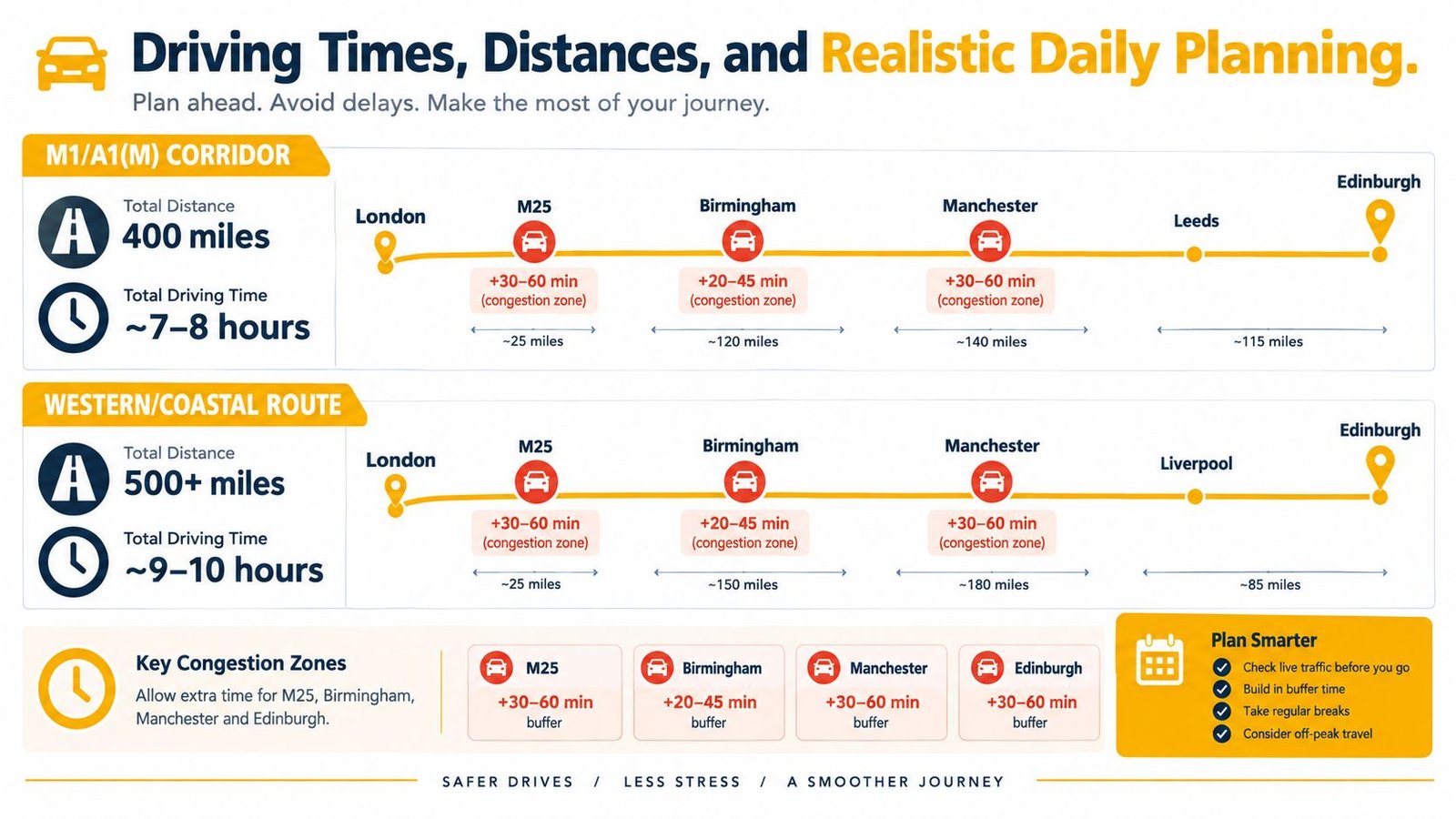
The pure driving estimate is useful only as a baseline. Independent travel guidance generally places the journey at about 400 miles and 7 to 8 hours without stops, with a practical allowance of 8 to 9 hours once food and rest breaks are included. Independent Travel Cats' London to Edinburgh guidance supports that more realistic view.
Congestion makes the ends of the journey particularly unpredictable. London traffic can delay your departure around the M25 and the M1, while Edinburgh traffic can turn the final approach into a slow arrival after an otherwise productive day. TomTom's congestion figures record 136 hours lost in rush-hour traffic in London and 123 hours in Edinburgh, so the two city ends deserve their own buffer. The Department for Transport's road traffic data also records Great Britain traffic at 1.9% above the previous year and 1.2% above 2019 levels in 2025, making old journey estimates less dependable.
Build the day around fatigue
Don't wait until you feel exhausted before stopping. Use a regular rhythm, with a proper break approximately every two hours, then add a longer meal pause when your concentration starts to fall. A service station is not wasted time if it keeps the final approach safe and calm.
A practical plan looks like this:
- Leave before 7am or after 10am: These windows can reduce exposure to the busiest commuter periods, though they won't remove every delay.
- Plan an early fuel or charging decision: Don't begin the northern section with an almost empty tank or a low battery.
- Use the 150-mile mark as a first checkpoint: Stop for food, fuel, or a proper walk rather than treating the point as a target to pass.
- Make a second energy stop around 300 miles: This gives you a chance to reassess traffic, weather, and your own alertness.
- Protect the final leg: Don't schedule an attraction in Edinburgh if arriving late would leave you driving through the city while tired.
Friday afternoon departures, Bank Holiday weekends, and Edinburgh rush hour are especially poor combinations. If your schedule is fixed, leave earlier and accept that the route may take most of the day.
The road trip works best when you plan for door-to-door time, not sat-nav time. A seven-hour moving estimate can become a much longer day once the car leaves London, and fatigue is the cost most rushed itineraries fail to price in.
The film below can help you visualise the character of the route before choosing your corridor.
Best Stopovers and Attractions Along the Way
The best stops aren't the ones that merely break up the map. They change the mood of the journey. Choose one substantial visit, then keep the remaining pauses short enough that you don't turn a travel day into a sequence of hurried admissions and car-park searches.
Eastern route stops
Stamford is a strong early option for architecture, lunch, and a leg stretch. It suits couples and food-focused travellers who want a handsome town rather than a motorway café. Parking is easier than in York, but you should still allow time to leave the main road and return to it.
York deserves a half-day rather than a rushed photo stop. The Minster, city walls, compact centre, and independent restaurants reward walkers, but parking near the historic core can be inconvenient. Families and first-time visitors should choose York when they're prepared to make it a proper stop.
Durham Cathedral works better as a focused historical visit. The city's compact centre gives history buffs a rewarding pause, though the approach and parking need more attention than a service station stop.
For heritage enthusiasts with extra time, Beamish Museum is a much larger commitment. It suits families and anyone who prefers living history, but it isn't an efficient break during a same-day London to Edinburgh run.
Western and border stops
The Lake District is the western route's main prize. Windermere and Grasmere offer contrasting experiences, with Windermere easier for a short orientation and Grasmere better for a slower village-and-scenery pause. Neither should be squeezed into a rushed lunch break. Weather can change quickly, and rural parking fills more readily during busy periods.
Carlisle Castle is a practical historical stop before the border. It works for a focused visit and gives children something concrete to explore. Gretna Green is easier as a brief pause than a major attraction, making it useful when the day is already running long.
Northumberland and the coast
The Northumberland coast is the right detour when scenery matters more than speed. Alnwick Castle suits families and history buffs, but its castle and gardens require proper time. Bamburgh is the stronger choice for dramatic coastal views and photography. Berwick-upon-Tweed offers a manageable border-town pause before Edinburgh.
The Cairngorms loop belongs on a longer Scottish itinerary, not a detour added casually to this drive. It's a separate experience that deserves its own pacing.

Check attraction calendars before setting out. Castles, museums, gardens, and boat trips can alter opening arrangements outside the main season, while coastal and tidal sites need weather and access checks. The best stop is the one you can enjoy without watching the clock every ten minutes.
Sample One to Five Day Itineraries at Your Own Pace
Your itinerary should manage fatigue as carefully as it manages distance. A one-day run can get you to Edinburgh quickly, but congestion around London, Leeds, Newcastle, and Edinburgh can turn a planned arrival into a tiring late finish. Build in a proper stop roughly every two hours, then choose your overnight based on whether you want recovery, sightseeing, or both.
Five pacing choices
One day, the express push. Leave London early, use the M1 and A1(M), and allow about 7 to 8 hours of moving time. Add breaks, traffic delays, fuel, and food, so this is a full travel day rather than a casual drive. It suits experienced long-distance drivers and travellers who need to reach Edinburgh, not those expecting a relaxed road trip.
Two days, the sensible compromise. Aim for about 4 hours of driving per day. Follow the eastern route and overnight in York, Newcastle, or Carlisle, or take the western line towards the Lake District. York gives the journey a worthwhile cultural stop, while Carlisle keeps the second day shorter.
Three days, the comfortable road trip. Plan about 3 hours of driving per day, with time for Manchester, the Lakes, or Newcastle. This is my preferred minimum for families and first-time visitors. You can stop without turning every attraction into a rushed appointment.
Four days, the historical and coastal version. Keep daily driving to roughly 2 to 3 hours and use the extra time for Northumberland, Alnwick, Bamburgh, or Hadrian's Wall. Overnight near Newcastle, the coast, and the Scottish Borders. This option makes northern England part of the trip rather than scenery viewed through a windscreen.
Five days, the full experience. Drive for about 2 hours on travel days and give the Lake District a full day. Add a historic town or distillery visit, then reach Edinburgh with enough energy for the final afternoon. Choose this pace for scenery, photography, and unhurried stops.
| Itinerary length | Total driving time | Approximate distance | Key stops | Suggested overnights | Best for |
|---|---|---|---|---|---|
| One day | About 7 to 8 hours moving time | About 405 miles total | One short rest stop | Edinburgh | Determined drivers |
| Two days | About 4 hours per day | About 405 miles total | York or Lake District | York, Newcastle, or Carlisle | Families and balanced travellers |
| Three days | About 3 hours per day | About 405 miles total | Manchester, Lakes, or Newcastle | Manchester, Lakes, or Newcastle | First-time visitors |
| Four days | About 2 to 3 hours per day | About 430 miles with detours | Northumberland, Alnwick, or Hadrian's Wall | Newcastle, coast, or Borders | History and castle lovers |
| Five days | About 2 hours on travel days | About 460 miles with the Lake District detour | Lakes, historic town, coast, and Edinburgh | Two en-route bases | Scenery seekers and couples |
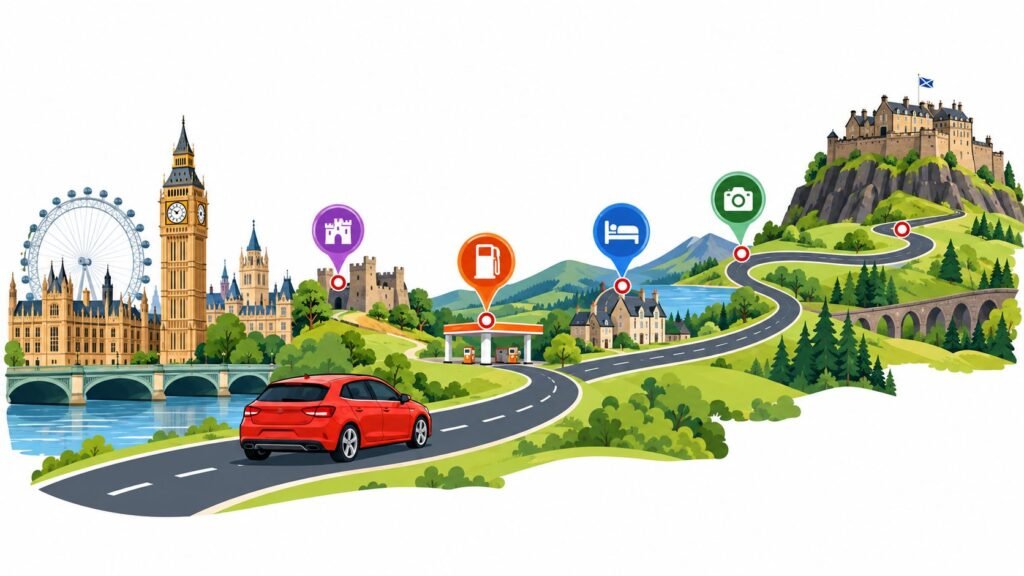
For a broader multi-day structure, use this Scotland and Ireland itinerary visual for inspiration, then remove any stop that turns your route into a checklist.
The right number of days depends on recovery time. A stopover should give you time to see something worthwhile, not merely provide a bed before another exhausting drive.
Rental Cars, Parking, Fuel, and Tolls Made Simple
Pick up the car where it helps the journey, not where the airport map looks most convenient. Heathrow and Gatwick offer broad rental choice but can cost more, while a central London depot may suit travellers already staying in the city. Airport collection can still make sense because it gets you away from central congestion and avoids beginning the trip with urban driving.
For the car itself, an economy hatchback is perfectly adequate for the motorways. Choose a compact SUV if you expect rural parking, heavier luggage, or changeable Scottish weather. Don't rent a vehicle larger than you can confidently place on narrow roads and crowded car parks.
Edinburgh arrival choices
Central Edinburgh is not a friendly place to improvise parking. The Old Town has restricted access and limited convenient spaces, so use a park-and-ride strategy or book accommodation with a confirmed parking arrangement. The sites commonly considered by visitors include Sherrifmuir, Ingliston, and Newcraighall, with public transport connections into the centre. Verify the current operating arrangements before travelling.
Edinburgh's Low Emission Zone has been fully enforced since 1 June 2024, and it covers much of the city centre. Non-compliant vehicles don't receive a daily charge as the main consequence. They can receive a penalty notice, so check the vehicle before entering central Edinburgh. Route Calculator's Edinburgh driving guidance summarises the compliance issue.
Fuel planning is straightforward. One motorway-services fill-up is convenient, while supermarket fuel away from the main route may be cheaper but costs time and requires a deliberate detour. The main corridors don't have ordinary toll roads. The exception is the Dartford Crossing south of the M25, which may affect your London departure depending on the route.
| Logistics item | Key details | Cost range / notes | Tips |
|---|---|---|---|
| Rental collection | Airport or London depot | Airport options may cost more | Choose the depot that avoids central driving |
| Vehicle type | Economy hatchback or compact SUV | Depends on rental company and dates | Prioritise comfort and luggage space |
| Edinburgh parking | Central restrictions and park-and-ride options | Varies by site and booking | Reserve accommodation parking or use public transport |
| Low Emission Zone | Covers much of central Edinburgh | Non-compliant vehicles can receive a penalty notice | Check compliance before entering |
| Fuel | Motorway stations or supermarkets | Prices vary by location | Avoid reaching the north on a nearly empty tank |
| Tolls | No ordinary tolls on the main corridors | Dartford Crossing is the key exception | Check your route around the M25 |
This UK fuel compatibility guide is useful if you're unfamiliar with petrol and diesel labelling in British hire cars.
Driving Rules, EV Charging, Safety, and Packing Essentials
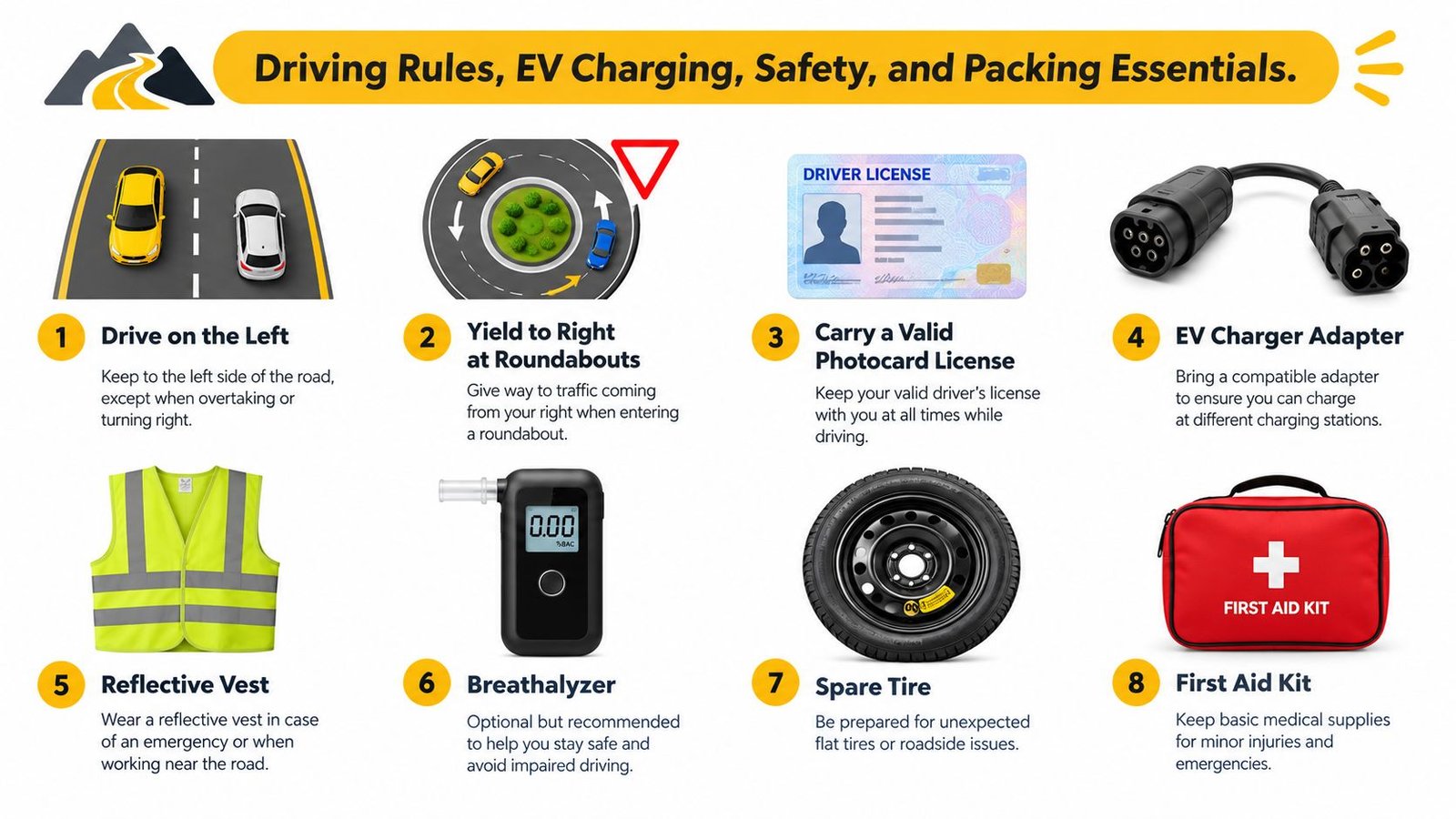
A London departure can feel easy until motorway works, roundabouts, and tiredness arrive together. Drive on the left, give way to traffic from the right at roundabouts, and carry a valid photocard licence. Follow temporary signs instead of relying blindly on the sat-nav, especially through roadworks.
Average-speed cameras operate on sections of the A1(M) and M6. Using a mobile phone while driving is illegal. A motorway Red X closes that lane, so leave it when instructed. Rental companies may forward enforcement notices after the trip.
EV planning needs a margin
A drive of roughly 400 miles exceeds the practical range of many EVs once motorway speeds, cold weather, passengers, and heating are included. General guidance from the E.ON Next guide to public charging suggests planning for uneven coverage, so do not build the itinerary around a single charger.
Use Zap-Map to check live availability and select a backup stop. Rapid-charge hubs, including Gridserve and Ionity locations around Scotch Corner and Gretna, can suit the eastern or western corridors, but availability changes. Leave an energy buffer and make the backup part of the route plan.
EV rule: a charger that appears on the map is not guaranteed when you arrive.
Fatigue is the bigger safety risk on a long, direct run. Schedule a proper break roughly every couple of hours, and stop earlier if traffic around Newcastle, the A1(M), or the Edinburgh approach has slowed the day. A late arrival after a full motorway push is a poor trade for saving one hotel night.
Pack waterproof layers for exposed sections of the A1 near the Northumberland coast. Carry a paper map as backup for stretches of the A68 and A702 where mobile coverage can drop, and check that the hire car has a usable charging cable or repair kit before leaving the depot.
Before departure, confirm:
- Licence and documents: Keep your photocard licence, rental agreement, insurance details, and breakdown number accessible.
- Vehicle equipment: Check the warning kit, spare-wheel arrangement, tyre condition, and charging cables.
- Weather plan: Expect rain, wind, low cloud, and reduced visibility in exposed areas.
- Health access: Carry travel insurance details and any essential medication.
- Payment setup: Keep a physical payment card available alongside fuel-card apps or contactless payments.
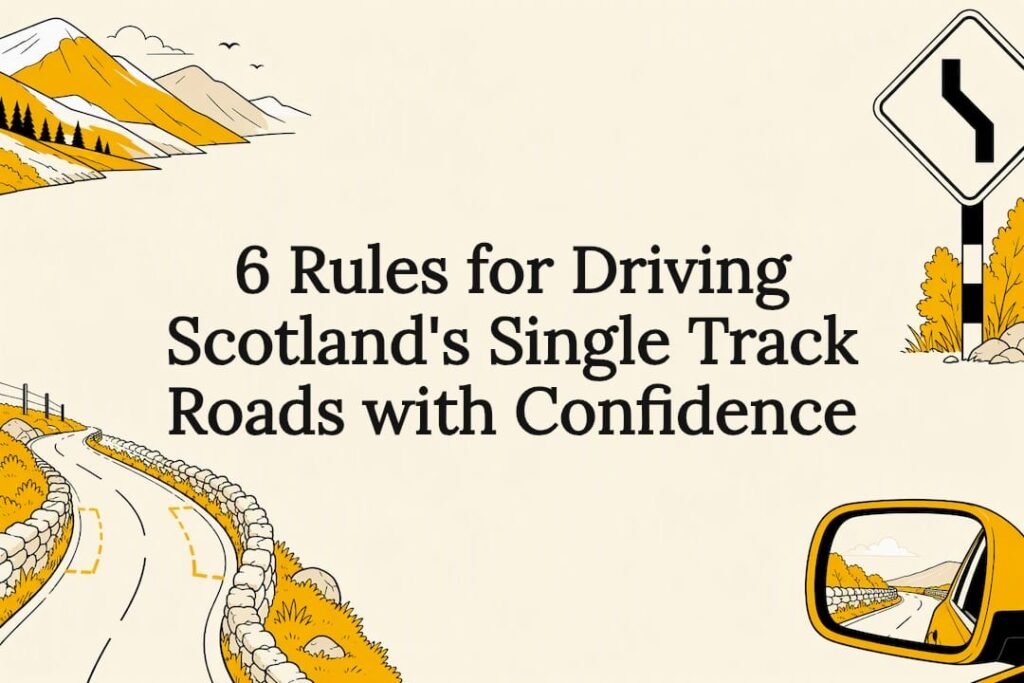
Read this illustrated guide to Scottish single-track roads before adding rural Scottish detours. These roads require patience, correct passing-place etiquette, and a willingness to let faster traffic through.
Planning Your Own Self Drive Adventure with Confidence
A Friday departure and a Tuesday departure demand different plans. Leave London after the morning rush on Tuesday and an eastern route can deliver a manageable arrival window in Edinburgh. On Friday, congestion leaving London and later delays around Newcastle make a scenic overnight stop a smarter choice than chasing a late check-in.
Choose the route before booking hotels. Use the eastern corridor when arrival time matters, and choose western or coastal roads when the journey is the main event. Add Bamburgh, the Lakes, or St Andrews only when those places are the reason you chose to drive.

Book a one-way rental early and allow two or three stopover nights for children, shared driving, or a mid-range EV. During August festival season, book Edinburgh accommodation with parking at least two to three weeks ahead. Set off outside commuter peaks, then treat the arrival time as flexible when Friday traffic is heavy.
BTOURS creates curated self-drive journeys across England and Scotland, including multi-day routes with planned overnight stops and flexible driving legs. Visit BTOURS to explore a London to Edinburgh itinerary built around your preferred pace, accommodation, and scenery.