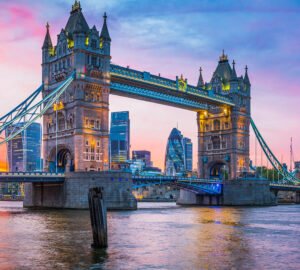

You've just arrived in London with a small bag, a phone full of saved places, and only two days to make the city feel real. The temptation is to race from Big Ben to the Tower, squeeze in a museum, then finish wherever your feet give up. Don't. A successful London 2 day itinerary is less about collecting every landmark and more about placing the busiest sights at the right time, keeping each day geographically tight, and leaving room for the moments you couldn't have planned.
Welcome to Your Perfect Two Days in London
Two days in London work best when you treat time and geography as the itinerary. Front-load landmarks with limited entry capacity, keep museums available for rainy hours, and group each day inside one practical zone. London's scale gives you plenty to choose from, but a casual route can turn famous sights into queues, detours and tired feet.
The latest London tourism trends summary records 20.9 million inbound visits in 2024, alongside 189 million day visits and 15.1 million overnight trips. That volume makes timing matter. Book the attraction you care about most, then arrange nearby walks, meals and flexible stops around its entry time.
Start early in Westminster and you can see the river, Parliament and Whitehall before sightseeing groups fill the streets. By lunchtime, stay beside the Thames instead of crossing London for a disconnected attraction. On the second morning, choose a museum based on the weather and your energy, then explore Notting Hill or Shoreditch at a more relaxed pace.
London accounted for 21% of England's day visits in 2024, while visitor nights reached about 154 million, according to the same report. The London Assembly tourism paper also highlights the value of free attractions, giving you room to combine one paid landmark with a museum, riverside walk and neighbourhood meal.
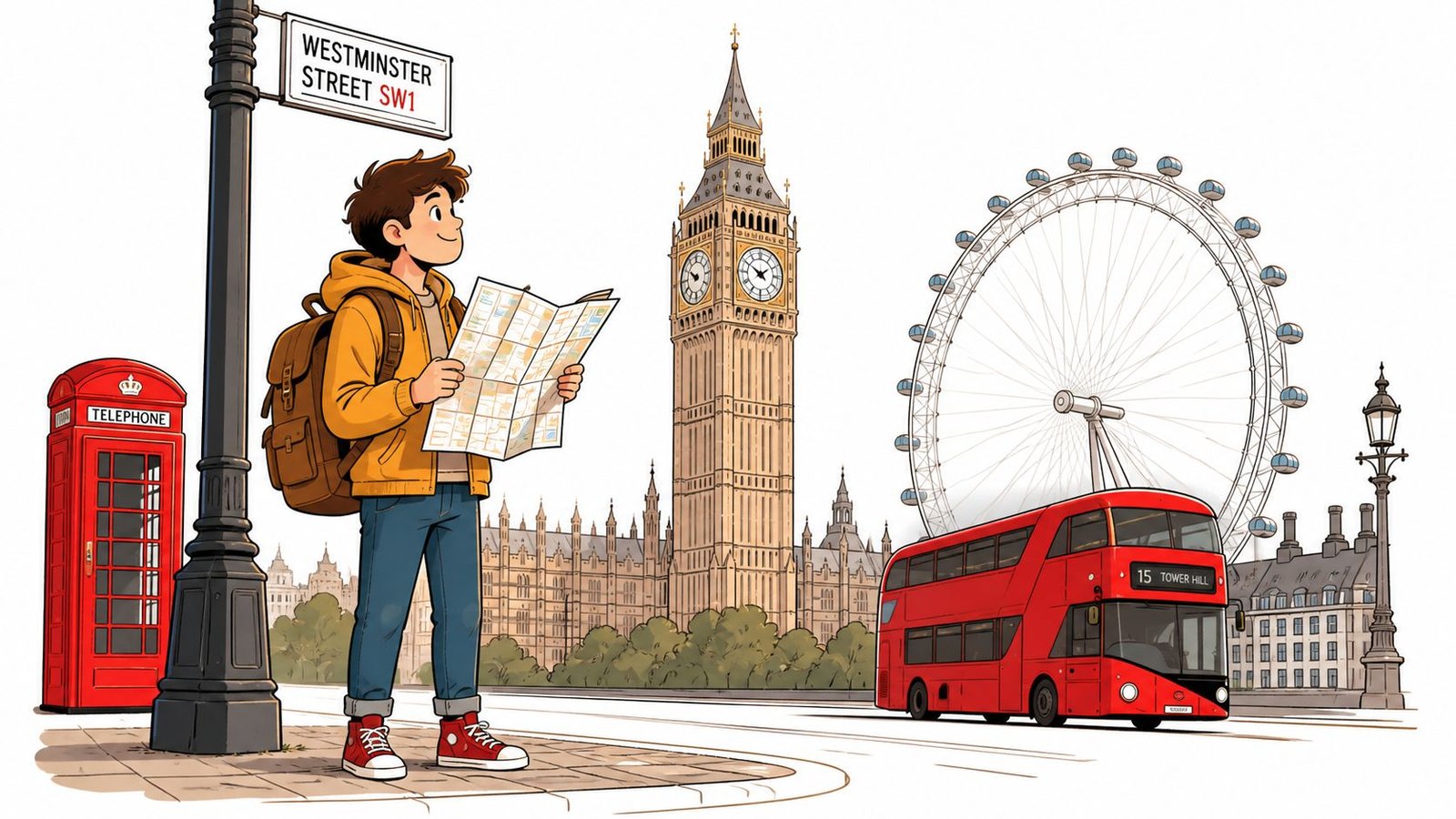
For a quick sense of the city's layout, browse this London overview image, then build your plan around zones rather than a list copied from a map. That approach keeps travel time under control and lets you swap flexible stops without rebuilding the whole day.
Day one delivers the grand central introduction, with capacity-sensitive sights scheduled first and a scenic route into the evening. Day two uses a museum as a weather-proof anchor before opening into local streets, markets, parks or a show. Families should shorten walks and reserve energy for one major interior. Couples can linger over lunch or replace a ticketed stop with a slow river walk. You will see the icons without spending every hour watching the clock.
Day One in Central London From Westminster to the South Bank
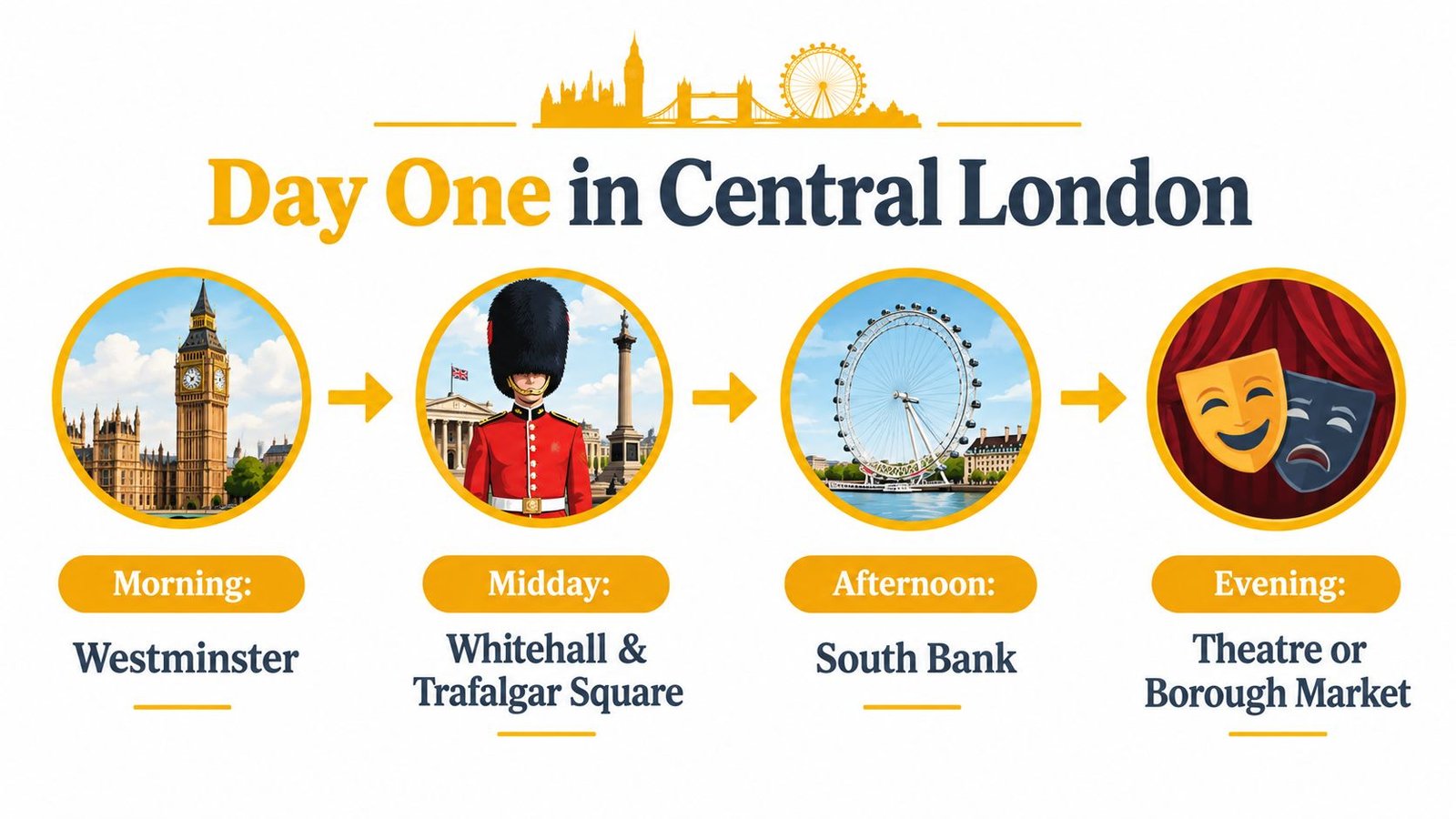
Start in Westminster early. This is the day when timing matters most, because the area concentrates Parliament, the Elizabeth Tower, Westminster Abbey, Whitehall and the river in a small footprint. The latest England visitor-attractions data identifies London as England's highest-volume day-visit destination, with 217 million day visits in 2023, equal to 21% of England's total. Don't arrive late and assume you'll move quickly between famous sights.
Morning in Westminster
Begin with an exterior circuit around Westminster Abbey, the Houses of Parliament and Big Ben. If Westminster Abbey is a priority, make it your fixed indoor booking and build the surrounding walk around its entry time. Keep the first route on foot. Westminster Bridge gives you immediate views across the Thames, while Parliament Square and the Abbey provide the architectural concentration you want from a first morning.
Walk along Whitehall towards Trafalgar Square rather than taking the Tube. You'll pass Downing Street, Horse Guards and the broad ceremonial spaces that make central London feel unmistakably imperial. Trafalgar Square is the natural pause point, with cafés and galleries nearby, and it prevents the common mistake of treating Westminster and the West End as separate excursions.
Afternoon beside the Thames
After lunch around Covent Garden, Soho or Trafalgar Square, head back towards the river and begin a west-to-east South Bank walk. Choose one paid interior, not several. The London Eye is a strong choice if the view matters more than museum time, while the National Gallery or a riverfront gallery suits travellers who want culture without another large queue.
Keep moving east along the Thames, stopping at the London Eye, Southbank Centre, Shakespeare's Globe and Tate Modern according to your interests. The route is forgiving. You can sit by the river, browse a bookshop, or step inside Tate Modern when rain arrives without breaking the geography.
For families with a pushchair, reduce the number of interior visits and use the South Bank as the main experience. Couples can pause for a drink with a river view before continuing towards Borough Market. If energy is fading, tap in on the Tube for a short connection rather than forcing every transfer on foot.
Evening choices
Finish near Borough Market, London Bridge or the West End. Borough Market works well for an informal meal, while a West End performance gives the first day a clear finale. Book a show in advance if it's central to the trip. If you prefer views, choose one observatory-style experience and reserve its time rather than hoping to enter at sunset.
The DLR can extend an east London evening when your plans move towards the docks. TfL's London visitor guide lists DLR services from 05:30 to 00:30 Monday to Saturday, and from 07:00 to 23:30 on Sunday. That makes it useful for travellers staying east or adding a riverside connection, although the central route above is best completed mostly on foot.
Day Two From Museums to Neighbourhoods and Markets
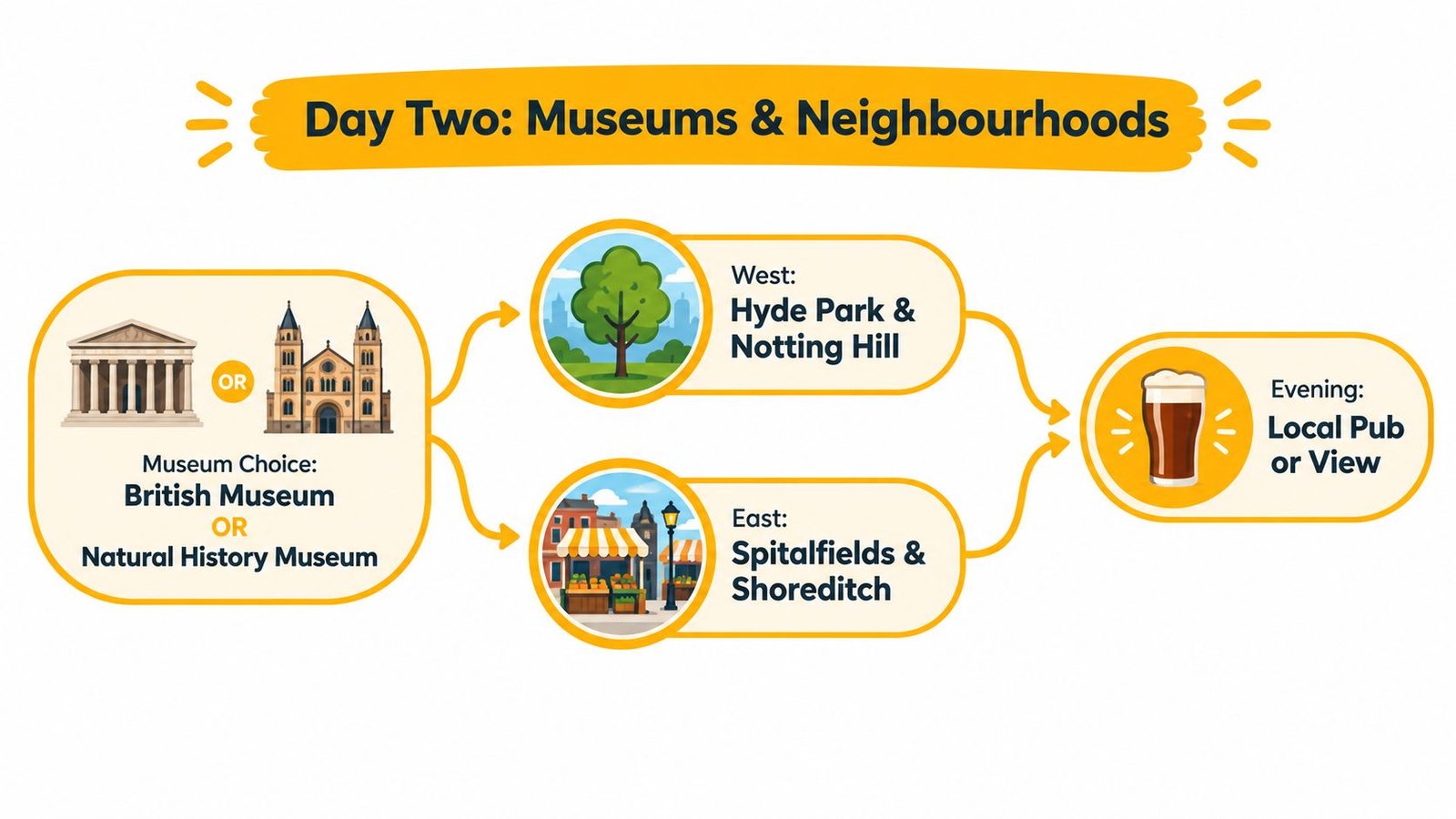
Day two works best as a flexible, crowd-aware day. Front-load one major museum while your energy is high, then choose a neighbourhood that matches the weather and your pace. Keep the afternoon local, because crossing London to collect another sight will make the day feel rushed.
Choose one museum before lunch
Book or plan an early start for the British Museum if world history and archaeology appeal to you. Choose the Natural History Museum for family-friendly galleries, an impressive building and a strong rainy-day option. Both museums can absorb an entire morning, but set a clear limit before you enter. See the highlights that matter to you, then leave while the visit still feels enjoyable.
Because the big museums here are free, you can treat the visit as a flexible block. Enter, focus on a few rooms, and leave without feeling that you wasted a ticket. That flexibility is useful on a two-day trip, especially when queues, tired children or poor weather change your plans.
Rain gives you permission to extend the museum visit, not cancel the day. Save these indoor daytime activities in London as nearby alternatives before travelling, and choose one option that suits your museum area. That small amount of planning prevents a wet-weather decision from consuming your afternoon.
West for parks and Notting Hill
From the Natural History Museum, walk towards Kensington Gardens and Hyde Park. Continue to Notting Hill only if everyone still has energy. The sequence works because open parkland follows a concentrated indoor morning, while cafés and independent shops provide natural places to rest.
Use Portobello Road as a loose centre rather than following a checklist. Stop for lunch where the menu appeals, then wander through the surrounding streets for colour, architecture and small discoveries. Families with young children should stay nearer the parks instead of turning the neighbourhood into another long walk.
East for markets and street food
From the British Museum, take the Tube towards Spitalfields and Shoreditch. The mood changes quickly, from grand institutions to food stalls, independent design, street art and a livelier evening scene.
Choose Spitalfields for a compact market visit with plenty of places to eat. Choose Shoreditch for creative shops, bars and a slower wander. Do not combine the western and eastern branches in one afternoon. Pick one zone and give it enough time to feel like a neighbourhood rather than a transfer route.
Finish at a local pub, a restaurant you booked, or a viewpoint. Make the evening atmospheric, not another compulsory ticket. If day one included a show, keep tonight quiet. If day one was relaxed, live music or theatre can provide the finale.
How to Get Around Eat Well and Choose Where to Stay
London rewards a simple transport rule: walk when the route connects several sights, tap in for longer jumps, and avoid crossing the centre merely to collect a single attraction. Contactless payment is usually the easiest choice for independent visitors. Oyster is useful if you prefer a dedicated travel card or need to manage payment separately from your bank account.
Sightseeing passes can make sense when you plan several included attractions close together. London options are sold for one, two, three, four, five, six, seven or 10 days, and one official London Pass itinerary describes access to more than 100 attractions, sights, tours and museums. For a two-day visit, calculate your likely paid entries first. A pass is most useful when you'll start early and keep moving, not when your ideal day includes long lunches and flexible free museums.
Two Day Transport and Pass Choices at a Glance
| Option | Best For | Watch Out For |
|---|---|---|
| Contactless bank card | Most independent travellers using Tube and buses | Use the same card or device consistently when tapping in and out |
| Oyster card | Visitors who prefer a separate travel card | You'll need to manage the card and its balance |
| Walking plus occasional Tube | Couples and active travellers following the zoned route | Wear supportive shoes and allow recovery stops |
| London sightseeing pass | Travellers booking several paid attractions | It can encourage overpacking if you chase value instead of enjoying the city |
DLR services are particularly useful for east London accommodation or docklands plans. For practical help, TfL Visitor Centres at Piccadilly Circus and Victoria are open Monday to Saturday from 09:00 to 16:30 and closed on Sundays, according to Transport for London's visitor-centre information. Don't rely on finding staffed advice late on a Sunday.
Food should follow the zone. Choose a quick café breakfast near Westminster, a market lunch around Borough or Spitalfields, and a proper sit-down meal close to your evening destination. Families benefit from flexible food halls and early dinners. Couples can reserve a riverside table or a West End restaurant, but keep the booking close to the final attraction so dinner doesn't create another cross-city transfer.
For accommodation, prioritise a station and evening comfort over a theoretical central pin on a map. Westminster and Victoria suit early starts, South Bank and London Bridge work well for riverside evenings, while Bloomsbury is convenient for the British Museum. Kensington is a strong fit for museum mornings and quieter residential streets. This guide to the best areas to stay in London is useful if you're comparing neighbourhood character before booking.
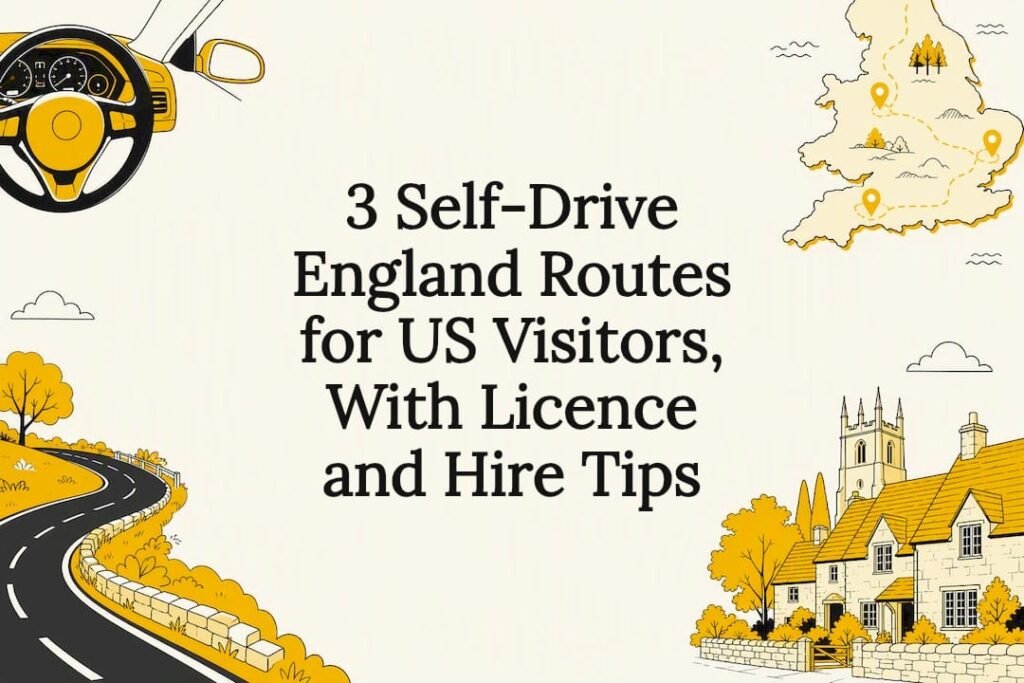
If you're weighing a wider England journey after the city, save this illustrated England self-drive route for later planning. A car belongs outside central London, not on this two-day route.
Smart Booking Packing and Accessibility Tips for a Smooth Trip
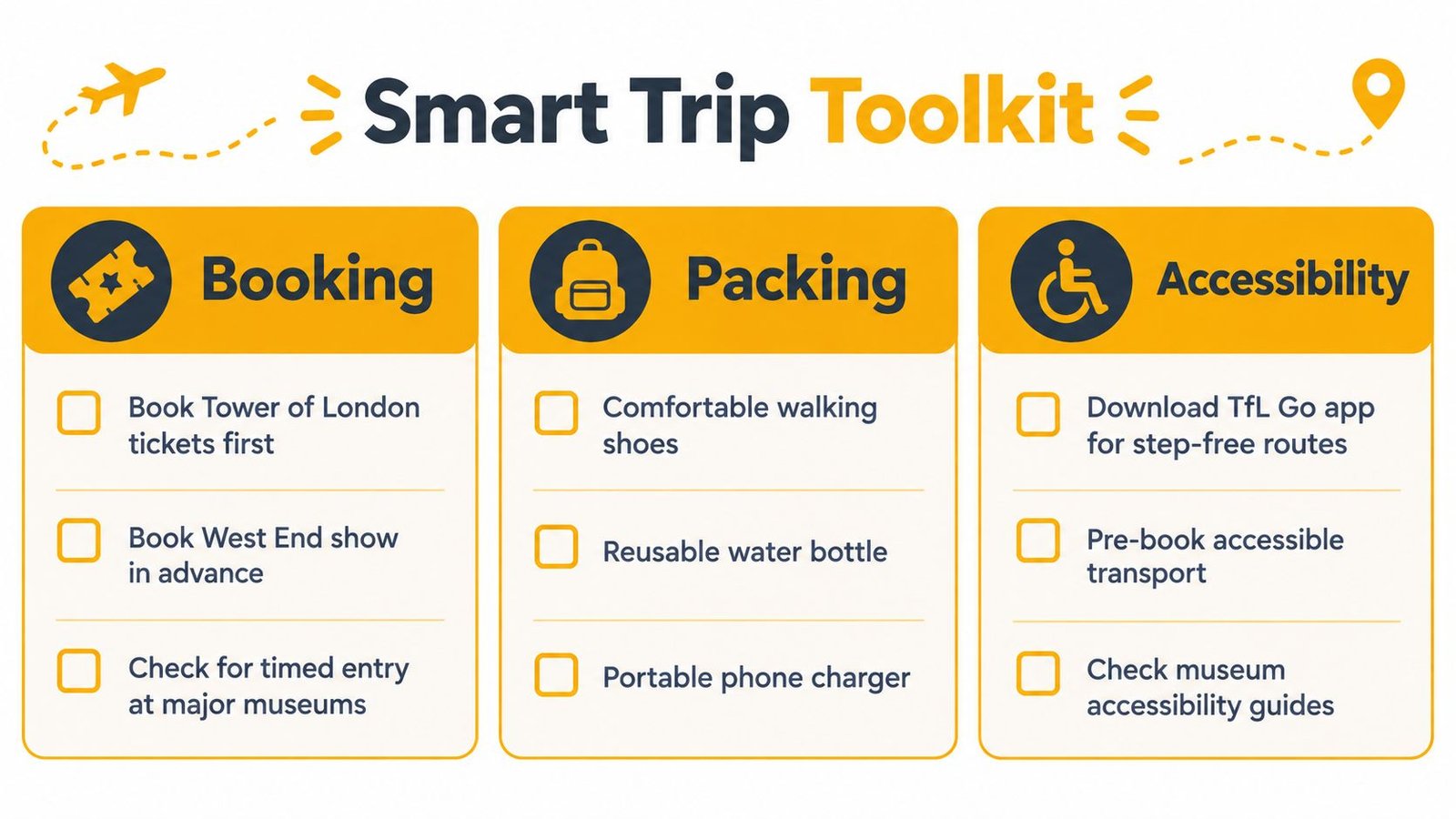
The smartest booking plan is selective. Reserve the landmark that controls your day, then leave the surrounding blocks open. A timed ticket for Westminster Abbey, the London Eye, the Tower of London or a major viewpoint can anchor your schedule, while free museums, parks and neighbourhood walks can absorb weather changes and tired legs.
Book the immovable pieces first
Use this order:
- Timed landmarks: Reserve the attraction you'd be disappointed to miss.
- Evening culture: Book a West End show or popular restaurant before arrival.
- Museum checks: Confirm opening arrangements and whether timed entry applies.
- Flexible fillers: Keep parks, river walks, markets and free galleries available as substitutions.
London's visitor demand makes this order practical rather than fussy. The State of London report reports that 65% of recent visitors prefer attractions or experiences. The same source records £22.8 billion in total tourism-related spending, so high-demand experiences deserve deliberate planning rather than an assumption that you can turn up whenever you like.
Pack for changing surfaces and weather
Wear shoes you can walk in for a full sightseeing day, bring a light waterproof layer, and carry a reusable bottle. A portable phone charger matters because your phone will handle maps, tickets, contactless travel and photos. Keep tickets accessible offline if possible, and pack a small snack for the gap between a late museum exit and dinner.
Step-free access needs advance checking. Look at station lift information, choose routes with fewer changes, and contact attractions directly about seating, accessible toilets and quieter entry arrangements. Travellers with pushchairs should favour wide riverside paths, parks and one substantial interior rather than several cramped galleries.
The useful rule: book the anchor, not the entire day.
A guided option can also reduce navigation pressure for families or first-time visitors. If you're travelling as a group and want someone else to handle the route, compare London tours for your group before you commit to moving between multiple independent bookings.
Save your essential documents and route notes somewhere easy to reach. This travel-aware visual can sit with your planning materials, but the practical preparation matters more than the format. Build one indoor alternative into each day, and London will remain enjoyable even when the forecast changes.
Make London Yours and Keep Exploring With BTOURS
A two-day visit shouldn't feel like an examination you pass by ticking every famous name. You'll have seen Westminster at its most impressive, followed the Thames through the South Bank, chosen a museum that suits your interests, and spent time in a neighbourhood where London feels lived-in rather than staged.
The strongest version of this itinerary leaves one decision open each day. Perhaps Tate Modern becomes a longer stop because the rain arrives, or you stay in Spitalfields for dinner instead of chasing another viewpoint. Those choices aren't failures of planning. They're how a short city break becomes your own.
London also works as the beginning of a longer journey. Add Windsor, continue into the English countryside, or build a themed drive around castles, gardens and historic towns. BTOURS offers curated journeys that combine selected accommodation, flexible routing and support with city breaks and self-drive travel across England and other destinations.
If you're travelling with children, keep the next trip spacious enough for parks and unexpected stops. If you're a couple, extend the city with a slower regional route and give each place enough time to develop its character. The London 2 day itinerary above gives you the essential framework. Your best memories will come from the moments you choose not to rush.
For a city break that combines central London accommodation, carefully arranged experiences and a flexible route beyond the capital, explore BTOURS. Choose a supported itinerary or use the London plan as the first stage of a longer England journey, then start shaping your next trip around the places you most want to linger.