Scotland is a land where myths whisper through misty glens and history is etched into every castle stone. From the vibrant pulse of its ancient cities to the profound silence of the Highlands, deciding what to see in Scotland can feel like a monumental task. This guide is crafted to lead you through the very best, offering a curated journey across its most iconic and breathtaking landscapes.
We’ve organised this list to cut through the noise, providing a clear roadmap to the country's essential treasures. You won't find generic suggestions here, but a practical guide designed for cultural explorers, independent travellers, and families alike. Each destination is chosen to showcase a unique facet of Scotland's character, from the raw drama of Glencoe to the Neolithic wonders of Orkney.
Whether you're planning a self-drive tour with the freedom of the open road or simply seeking inspiration for your next great adventure, these 12 destinations represent the soul of this incredible nation. Prepare to explore dramatic coastlines, walk in the footsteps of kings and clans, and discover the wild, untamed beauty that makes this country truly unforgettable. Your Scottish story starts now.
1. Edinburgh Castle
Dominating the capital's skyline from its perch on Castle Rock, Edinburgh Castle is an undeniable must-see on any Scottish adventure. This historic fortress isn't just a relic; it's a living chronicle of Scotland's turbulent and triumphant past. For centuries, it has witnessed royal births, fierce battles, and pivotal moments that have shaped the nation. Walking its ancient cobbles is to trace the footsteps of kings, queens, soldiers, and saints.
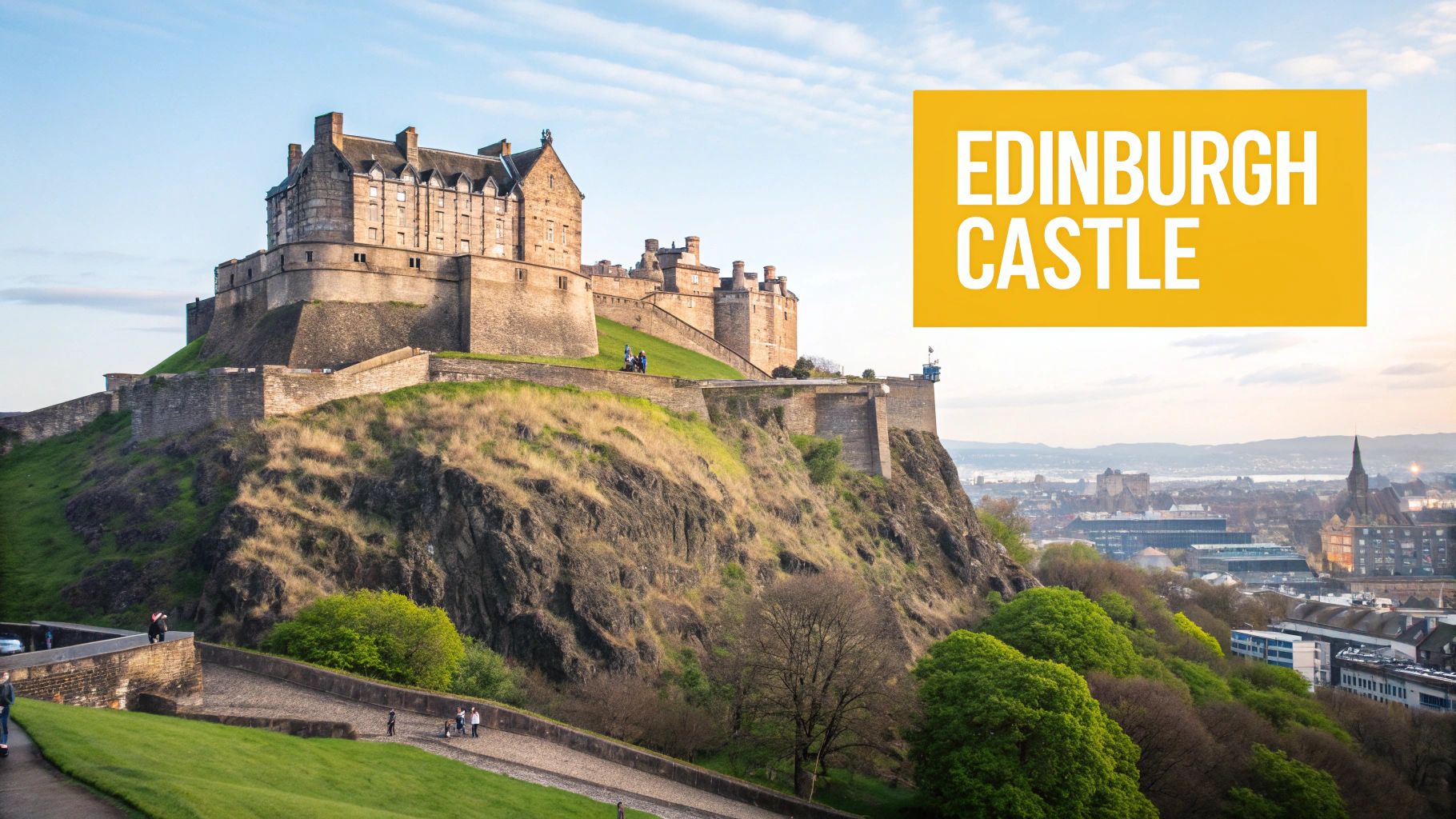
Exploring the castle is a journey through time. Inside its formidable walls, you can gaze upon the glittering Honours of Scotland (the Crown Jewels) and the legendary Stone of Destiny, an ancient symbol of the monarchy. The panoramic views from the battlements alone are worth the visit, offering a breathtaking perspective over the city and beyond. It truly is one of the most essential places for anyone asking what to see in Scotland.
Pro-Tips for Your Visit
- Timing is Everything: Arrive just as it opens around 9:30 am or later in the afternoon after 3:00 pm to sidestep the largest crowds and enjoy a more personal experience.
- Book Ahead: Always purchase your tickets online in advance. This not only guarantees entry but lets you bypass the often lengthy ticket queues.
- Plan Your Route: A visit can easily take 2-3 hours. Prioritise seeing the Crown Jewels first, as queues build quickly, then explore St Margaret's Chapel and the National War Museum.
- Combine and Conquer: Make a day of it by pairing your castle visit with a stroll down the historic Royal Mile, which connects the fortress to the Palace of Holyroodhouse.
2. Loch Ness and Urquhart Castle
Journey into the heart of the Highlands to experience the myth and majesty of Loch Ness, a place where natural splendour meets enduring folklore. This vast, deep body of water, stretching for 23 miles, is famous worldwide as the home of the elusive monster, Nessie. But the loch’s true magic lies in its breathtaking scenery, where dark waters reflect the dramatic, heather-clad mountains that line its shores. It is an essential stop for anyone wanting to see the wild soul of Scotland.
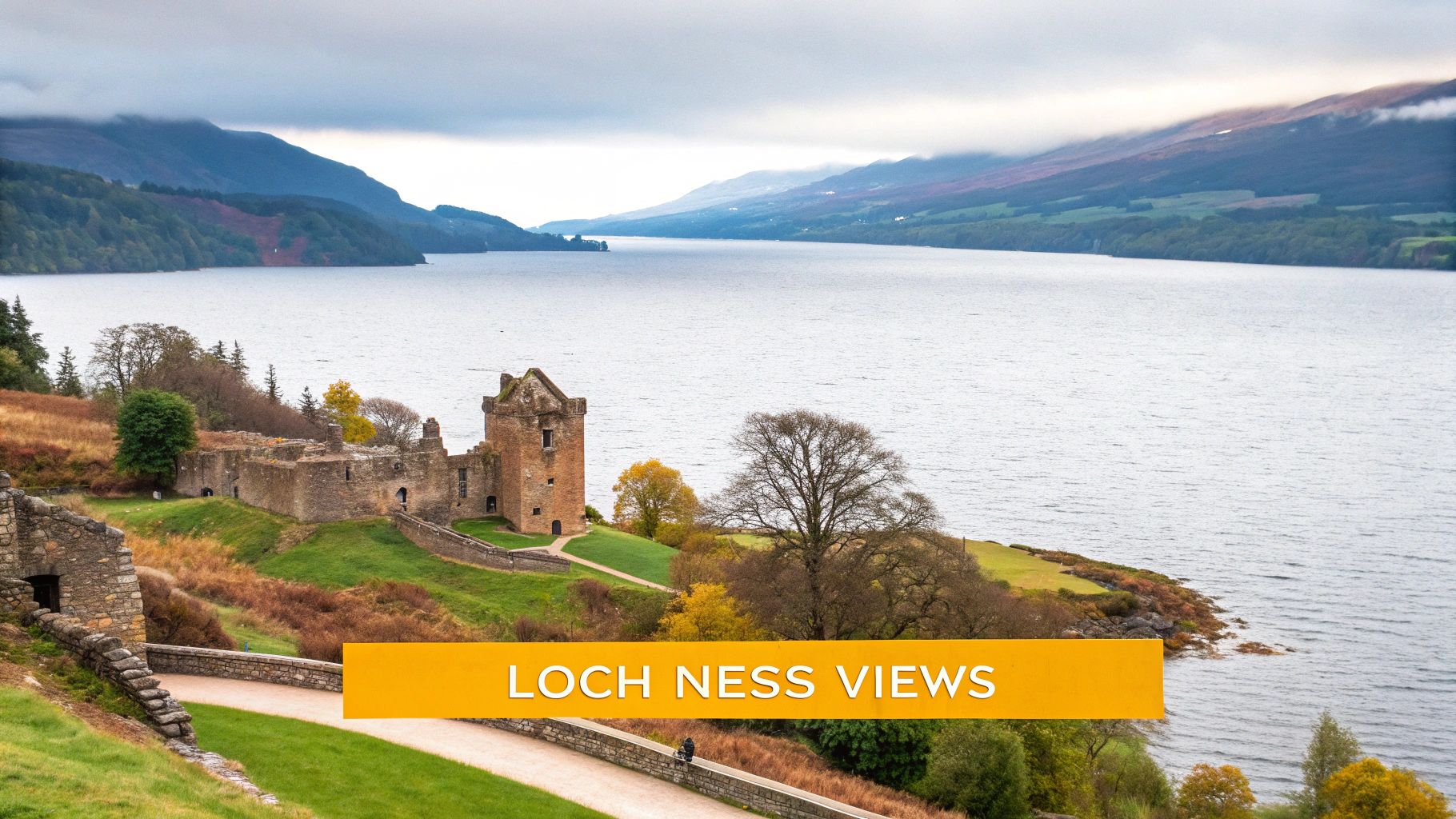
The iconic ruins of Urquhart Castle, perched dramatically on the loch's edge, provide a window into 1,000 years of Scottish history. Climbing the Grant Tower offers unparalleled views across the mysterious waters, inviting you to imagine the sieges and clan battles that once raged here. Exploring this legendary landscape is a quintessential part of any trip, solidifying its reputation as one of the top attractions for what to see in Scotland.
Pro-Tips for Your Visit
- Chase the Light: Visit Urquhart Castle in the late afternoon. The softer light is perfect for photography and you’ll often find fewer crowds.
- Strategic Base: For better accommodation options, base yourself in nearby Inverness (10 miles away) or Fort William (40 miles away).
- Scenic Detour: On your return journey, take the quieter B862 route along the loch’s eastern shore. It offers stunning, less-travelled viewpoints.
- Historical Pairing: Combine your trip with a visit to the nearby Culloden Battlefield to gain a deeper understanding of the Highlands' poignant history.
3. Isle of Skye and The Storr
The Isle of Skye is where Scotland's wild, untamed spirit comes to life, offering some of the most dramatic and otherworldly landscapes in the country. This mystical island captivates with its jagged Cuillin mountains, ancient landslips, and windswept moors. Its crowning jewel is the Trotternish Ridge, home to the iconic Old Man of Storr, a colossal pinnacle of rock that stands sentinel over the sound of Raasay. To see it against a brooding sky is to witness a truly primordial spectacle.
Exploring Skye is an adventure into the heart of Gaelic culture and raw nature. Driving its winding roads reveals hidden glens, fairy pools, and coastal villages that seem lost in time. For those wondering what to see in Scotland that feels truly epic and unforgettable, the raw beauty and profound sense of ancient history found on the Isle of Skye make it an essential and deeply rewarding journey.
Pro-Tips for Your Visit
- Beat the Crowds: To experience the magic of the Old Man of Storr, plan your hike either before 9:00 am or later in the afternoon after 4:00 pm to avoid the peak visitor rush.
- Book Well in Advance: Accommodation, especially in the popular summer months of July and August, can be scarce. Secure your bookings at least two to three months ahead.
- Give It Time: A fleeting visit won't do Skye justice. Plan a minimum of two to three full days to explore its main attractions without feeling rushed.
- Base Yourself in Portree: The island's charming capital, Portree, is an ideal base for accommodation and dining, and it's centrally located for exploring the Trotternish Peninsula and other key sights.
- Embrace the Weather: Scottish weather is notoriously unpredictable. Always check the forecast and have a plan for rainy days, such as visiting the excellent Talisker Whisky Distillery.
4. Stirling Castle
Perched strategically atop a volcanic crag, Stirling Castle is often called the "key to Scotland" for its commanding position between the Highlands and Lowlands. This magnificent fortress was a favoured royal residence for many Scottish monarchs, including Mary, Queen of Scots. It has been central to the nation's story, witnessing epic battles like the nearby victory at Stirling Bridge, and pivotal moments that defined Scotland's fight for independence.
Exploring its lavishly restored Royal Palace and Great Hall offers a vivid glimpse into the grandeur of Renaissance court life. The castle's ramparts provide unparalleled views across the Forth Valley and the site of historic battlefields, making it a powerful and evocative place to explore. For anyone wondering what to see in Scotland to truly connect with its past, Stirling Castle is an essential stop that brings history to life in spectacular fashion.
Pro-Tips for Your Visit
- Book in Advance: Purchase tickets online to skip the queues, especially during peak season. Advance bookings often come with a discount.
- Combine History: Pair your visit with a trip to the nearby Stirling Bridge battlefield and visitor centre to fully grasp the area's historical significance.
- Best Light: Visit in the late afternoon. The light beautifully illuminates the castle's stonework and provides stunning photography opportunities of the valley views.
- Park and Walk: Use a car park in the town and enjoy the short walk up through the historic centre to the castle, adding rich cultural context to your visit.
5. Glencoe
Carved by glaciers and steeped in history, Glencoe is the very soul of the Scottish Highlands. This dramatic valley, with its towering peaks and moody, atmospheric landscapes, is a place of profound and haunting beauty. Driving through its 14-kilometre expanse on the A82 reveals a raw, untamed wilderness of cascading waterfalls and sweeping vistas that have inspired artists and adventurers for generations. The valley’s breathtaking scenery is layered with the poignant history of the 1692 massacre, adding a deep emotional resonance to its geological grandeur.
Glencoe is more than just a drive-through; it’s an invitation to immerse yourself in nature’s masterpiece. The sheer scale of the landscape makes you feel small, connecting you to the ancient forces that shaped this land. Whether you're pulling over at a viewpoint to capture the perfect photograph or simply soaking in the silence, its wild spirit is unforgettable. It is an essential and powerful experience for anyone wondering what to see in Scotland.
Pro-Tips for Your Visit
- Beat the Clouds: Arrive early, around 7:00-8:00 am, for the best chance of clear skies and tranquil, crowd-free views before the mists roll in.
- Drive Safely: The road is winding. Drive slowly and only pull over in the designated, safe viewpoints to admire the scenery, never on the roadside.
- Plan Your Stay: Base yourself in nearby Ballachulish (5 miles) or Fort William (25 miles) for a range of accommodation and dining options.
- Combine and Explore: Pair your scenic drive with a visit to the Glencoe Visitor Centre to understand the area's geology and history, followed by exploring the historic village of Ballachulish.
6. The Royal Mile, Edinburgh
Stretching from the fortress of Edinburgh Castle to the regal Palace of Holyroodhouse, the Royal Mile is the historic heart of Scotland's capital. This isn't just one street but a succession of them, forming a cobbled artery pulsating with centuries of history. Walking its length is a journey through a medieval townscape, where towering tenements, hidden courtyards known as "closes," and ancient buildings tell stories of Scotland's past.
This thoroughfare connects the centres of royal and political power, and its stones have been trodden by everyone from monarchs and poets to rebels and reformers. Today, it’s a vibrant hub filled with unique shops, traditional pubs, and captivating museums. Exploring the Royal Mile offers an immersive look into the city's soul, making it an unmissable destination for anyone wondering what to see in Scotland.
Pro-Tips for Your Visit
- Beat the Crowds: Explore early in the morning (before 9:00 am) or in the evening to experience its atmospheric charm without the daytime crowds.
- Venture into the Closes: Don't just stick to the main street. The real magic lies in the narrow closes and wynds that branch off, leading to quiet courtyards and hidden gems.
- Step Back in Time: Visit Gladstone's Land, a beautifully restored 17th-century tenement, to see what life was like for the street's historic residents.
- Comfort is Key: Wear comfortable walking shoes. The charming but uneven cobblestones demand sturdy footwear for a pleasant stroll.
7. Hadrian's Wall and Borders Heritage
While its most famous stretches lie just south of the border, the story of Hadrian's Wall is deeply intertwined with Scotland's own. This monumental UNESCO World Heritage Site, built by Emperor Hadrian in 122 AD, marked the formidable northern frontier of the Roman Empire. For centuries, it defined the landscape and shaped the culture of the borderlands, witnessing countless raids and conflicts that forged the identity of both nations. To explore the wall is to walk the edge of an ancient empire and understand the forces that shaped this historic region.
Exploring this area offers a unique dual perspective, combining Roman history with the rich heritage of the Scottish Borders. Beyond the impressive forts like Housesteads and Birdoswald, you can discover charming towns and the romantic ruins of medieval abbeys in Melrose and Jedburgh. The dramatic, windswept landscapes provide a stunning backdrop for this historical journey, making it a compelling addition for anyone deciding what to see in Scotland for a deeper understanding of its past.
Pro-Tips for Your Visit
- Plan Your Base: Base your exploration in a town like Melrose on the Scottish side or Hexham in England to easily access both Roman sites and Borders abbeys.
- Context is Key: Begin at a museum like the one in Corbridge to get an overview of the Roman history before you visit the individual fort and wall sections.
- Combine Histories: Dedicate at least 2-3 days to fully appreciate the region. Pair a visit to a Roman fort with a tour of a nearby Scottish Borders abbey for a richer narrative.
- Prepare for the Weather: The exposed moorlands are beautiful but unpredictable. Pack waterproofs and sturdy walking shoes, as the weather can change in an instant, even in summer.
8. Culloden Battlefield
A visit to Culloden Battlefield, near Inverness, is a poignant and powerful journey into Scotland's heart-wrenching past. This windswept moor was the stage for the final, brutal confrontation of the 1746 Jacobite Rising, a battle that lasted less than an hour but irrevocably changed the course of Scottish history. To walk this sacred ground is to feel the weight of the past and honour the memory of the clansmen who fought and fell here.
The award-winning visitor centre masterfully sets the scene, using immersive exhibits to explain the complex political climate leading to the battle. Stepping outside, you can trace the front lines, marked by flags, and find the clan grave markers that serve as solemn reminders of the human cost. For anyone wondering what to see in Scotland to truly understand its national story, the solemn landscape of Culloden is an essential and moving experience.
Pro-Tips for Your Visit
- Context is Key: Begin at the visitor centre and watch the introductory film. This provides crucial context that transforms your walk across the battlefield from a simple stroll into a deeply meaningful experience.
- Dress for the Moor: The weather here is notoriously unpredictable. Bring waterproofs and sturdy footwear, even on a sunny day, as conditions can change in an instant.
- Allow Enough Time: Plan for at least 2-3 hours. You’ll want an hour for the immersive visitor centre and another 1-2 hours to walk the battlefield itself without rushing.
- Combine with History: Pair your visit with the nearby Clava Cairns, a fascinating prehistoric burial site dating back 4,000 years, offering a deeper sense of the region’s ancient heritage.
9. St Andrews and Fife Coastal Heritage
A jewel on Scotland’s east coast, St Andrews offers a unique blend of ancient history, world-class education, and golfing prestige. As Scotland’s oldest university town and former ecclesiastical capital, its medieval streets tell stories of scholars, saints, and royalty. Exploring the hauntingly beautiful ruins of St Andrews Cathedral and its dramatic castle, perched over the North Sea, provides a profound connection to the nation’s spiritual and academic roots.
From the hallowed grounds of the Old Course to the charming fishing villages of the nearby East Neuk, the entire Fife region is a treasure trove for explorers. The combination of stunning coastal scenery and deep cultural heritage makes this corner of the country a compelling answer for those wondering what to see in Scotland beyond the central cities. A drive along the Fife Coastal Trail reveals a landscape rich with character and history at every turn.
Pro-Tips for Your Visit
- Strategic Parking: Use the Scores car park on university grounds for a central location that provides easy access to the cathedral, castle, and town centre.
- Combined History: Purchase a single ticket type to access both the St Andrews Cathedral and Castle ruins, saving time and money. Allow 1-2 hours to explore them fully.
- Explore the East Neuk: Extend your trip with a 30-45 minute drive to the picturesque fishing villages of Crail, Anstruther, and Pittenweem for a taste of authentic coastal life.
- Book Well Ahead: Accommodation in St Andrews is in high demand, especially during university term time and major golf tournaments, so reserve your stay far in advance.
10. Glenfinnan Viaduct and West Highland Line
A true icon of the Scottish Highlands, the Glenfinnan Viaduct offers a scene of pure cinematic magic. This elegant 21-arch railway bridge curves gracefully through the dramatic landscape, a testament to Victorian engineering genius. Famously featured in the Harry Potter films, its appeal extends far beyond the silver screen, representing a romantic and historic gateway to the wild West Highlands and a must for anyone wondering what to see in Scotland.
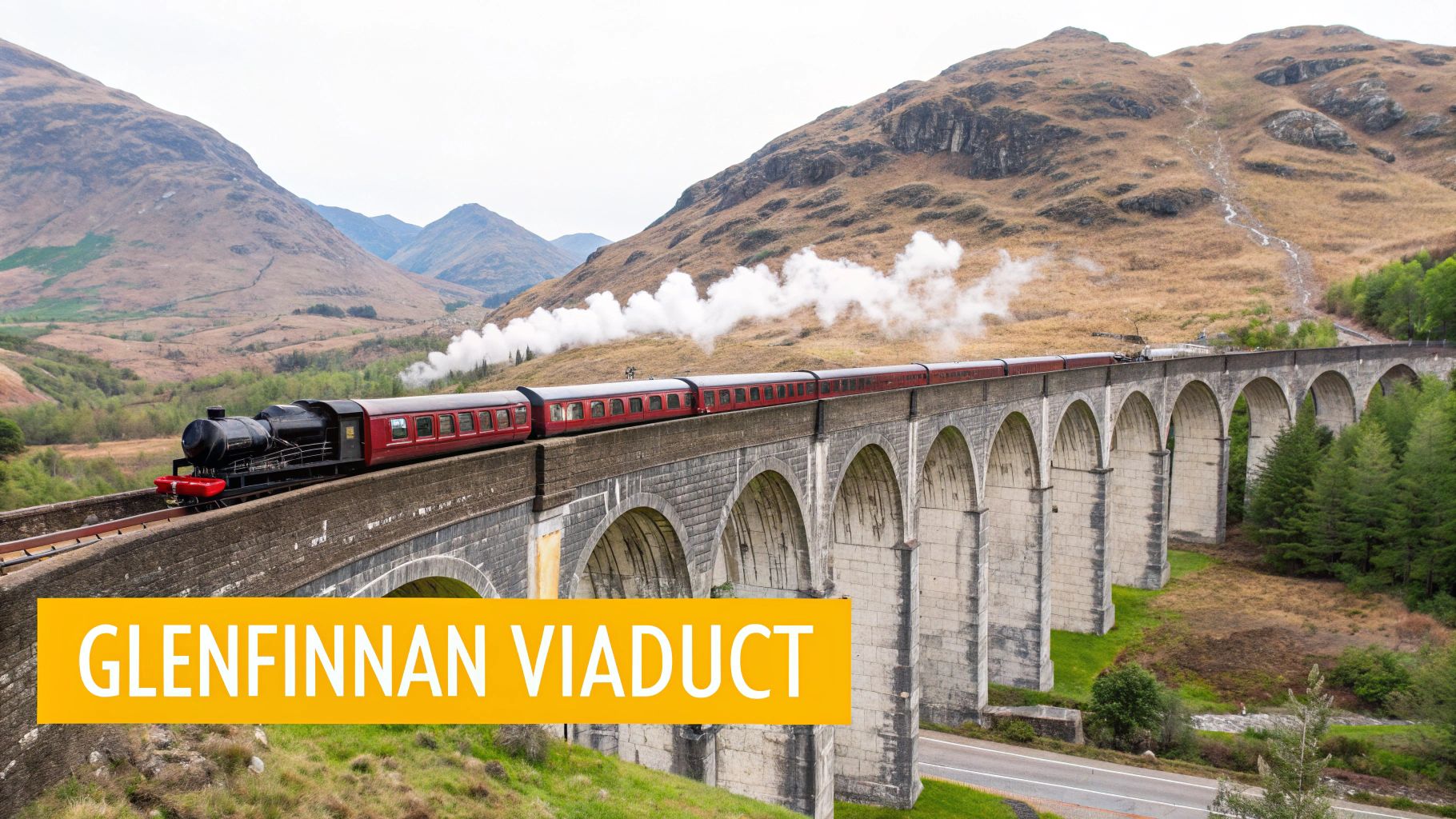
Watching the Jacobite steam train puff its way across the viaduct is an unforgettable experience, connecting you to a bygone era of travel. The structure itself is breathtaking, set against the backdrop of Loch Shiel and rolling green hills. Whether you're a film fan, a history buff, or simply a lover of epic scenery, the journey to witness this architectural marvel is an essential part of any Scottish itinerary.
Pro-Tips for Your Visit
- Timing is Everything: Arrive very early in the morning (around 7-8 am) or later in the evening to avoid the significant crowds that gather for the train crossings.
- Book Ahead: If you want to ride the Jacobite steam train, book your tickets months in advance, especially for summer travel, as they sell out incredibly quickly.
- Photography Note: Don't be disappointed by a grey day. Overcast light is often better for photography, as it brings out the details of the bridge and landscape without harsh shadows.
- Combine and Conquer: For the ultimate experience, combine a visit to the viewpoint with a journey on the West Highland Line from Fort William to Mallaig for unparalleled coastal views.
11. Skye Bridge and Trotternish Ridge Scenic Drive
Crossing the elegant curve of the Skye Bridge feels like passing through a gateway into another world. This modern marvel marks your entry to the Isle of Skye and the start of one of Scotland's most breathtaking journeys. The Trotternish Ridge scenic drive is an unforgettable loop that showcases the island's otherworldly geology, a landscape forged by ancient landslips and volcanic activity. It’s a journey through a real-life fantasy novel.
This route strings together a series of geological wonders, from the iconic pinnacle of the Old Man of Storr to the cascading waters of Kilt Rock and the crumpled, cinematic vistas of the Quiraing. For those asking what to see in Scotland from the comfort of their car, this drive delivers dramatic, ever-changing scenery around every bend, making it a perfect adventure for all travellers.
Pro-Tips for Your Visit
- Start Early: Visit the Old Man of Storr and the Quiraing between 7-9 am. This allows you to witness the magical morning light and beat the tour buses and campervans that crowd the small car parks.
- Plan Your Time: Allow a generous 4-6 hours for the full Trotternish loop. This gives you ample time for frequent photo stops without feeling rushed.
- Fuel Up: Ensure you have a full tank of petrol before leaving Portree, as there are no fuel stations along the scenic part of the loop.
- Drive with Care: Many sections of the road are single-track. Drive slowly, be prepared to use passing places to let others by, and enjoy the unhurried pace.
12. Orkney Islands: Neolithic Heritage and Archaeological Wonder
Step back 5,000 years into the past on the Orkney Islands, an archipelago off Scotland's northern coast that holds one of Europe's most profound archaeological landscapes. This isn't just a location; it's a portal to the Neolithic age, where ancient monuments stand as silent witnesses to a sophisticated prehistoric culture. Exploring the "Heart of Neolithic Orkney," a UNESCO World Heritage site, is a truly humbling experience.
Here you can wander through Skara Brae, a remarkably preserved prehistoric village older than the pyramids, and stand in awe within the monumental Ring of Brodgar stone circle. The islands seamlessly blend this ancient history with a rich Viking heritage, rugged coastal scenery, and a unique, welcoming culture. For anyone wondering what to see in Scotland that offers a deep connection to human history, Orkney is an unmissable destination.
Pro-Tips for Your Visit
- Book in Advance: During the peak season (June to August), book accommodation and car ferries well in advance, as availability is extremely limited.
- Travel Smart: Rent a car on the island to avoid vehicle surcharges on the ferry. The freedom to explore at your own pace is essential here.
- Plan for Time: Allocate a minimum of 2-3 full days. A 4-5 day trip is optimal to fully absorb the main historical sites and explore the islands' natural beauty without rushing.
- Go Guided: Visit the key UNESCO sites with a guidebook or audio guide. Understanding the archaeological context dramatically enhances the experience of places like Maeshowe and Skara Brae.
Top 12 Scottish Sights Comparison
| Site | Access complexity | Time & cost | Expected experience | Ideal use cases | Key advantages |
|---|---|---|---|---|---|
| Edinburgh Castle | Central urban site; uphill walk; pre-book recommended | 2–3 hours; entry ~£18–20 | Extensive museums, regalia, panoramic city views; crowded in summer | Heritage tourists, museum visits, city photography | UNESCO city heritage, Crown Jewels, prime central location |
| Loch Ness & Urquhart Castle | Car-accessible with parking; short walks to viewpoints | 3–4 hours typical; Urquhart entry ~£7.50; 30 min from Inverness | Loch vistas, castle ruins, mythic atmosphere; weather-dependent | Scenic drives, landscape photography, combined Highland history | Dramatic loch scenery, multiple viewpoints, easy self-drive access |
| Isle of Skye & The Storr | Island access via Skye Bridge/ferry; single-track roads | 2–4 days recommended; higher accommodation costs | Otherworldly geology, hiking, iconic pinnacles; changeable weather | Outdoor photographers, hikers, immersive island stays | Iconic formations (Old Man of Storr), varied landscapes, immersive experience |
| Stirling Castle | Short drive from major cities; 15-min uphill walk | 1.5–2 hours; entry ~£15–17 | Royal apartments, Renaissance details, battlefield context; less crowded | History-focused visitors, short heritage stops, combined day trips | Strategic historic significance, strong interpretation, proximity to Stirling Bridge |
| Glencoe | Roadside pull-offs on A82; minimal walking needed for key views | 30 min to full day; no major fees | Dramatic glacial valley scenery, hiking options, moody atmosphere | Scenic drives, landscape photography, flexible stop lengths | Spectacular mountain scenery, accessible viewpoints, relatively uncrowded |
| The Royal Mile (Edinburgh) | Pedestrian-only historic street; parking nearby | 1–3 hours; mostly free (attractions vary) | Dense medieval streetscape, shops, museums, busy atmosphere | Cultural strolling, architecture, combined castle/Palace visits | Authentic medieval townscape, concentration of attractions |
| Hadrian's Wall & Borders | Spread out; substantial driving between sites; walking on moorland | 2–3 days recommended; multiple site fees (~£8–10 each) | Archaeological trails, Roman forts, moorland panoramas | Archaeology enthusiasts, multi-day heritage tours, long-distance walking | UNESCO significance, Roman forts + Borders abbeys, varied itinerary options |
| Culloden Battlefield | Short drive from Inverness; accessible walking trails | 2–3 hours; entry ~£13 | Immersive visitor centre, solemn battlefield walking, strong emotional resonance | Jacobite history study, memorial visits, combined Highland touring | Excellent interpretation, site of 1746 battle, proximity to Loch Ness |
| St Andrews & Fife Coast | Car-accessible but limited town parking; compact area | 2–4 hours for main sites; 1–2 days for region | University town ambience, cathedral/castle ruins, golf heritage, coastal drives | Cultural heritage, golf enthusiasts, coastal touring | High concentration of historical sites, good tourist infrastructure |
| Glenfinnan Viaduct & West Highland Line | Car park + short walk; optional train bookings | 1–2 hours typical; steam train £25–40 (if used) | Iconic viaduct views, possible steam-train spectacle, cinematic recognition | Photography, rail enthusiasts, short scenic stops | Instantly recognisable landmark, easy viewpoints, combined rail experience |
| Skye Bridge & Trotternish Ridge Drive | Toll bridge access; single-track loop with passing places | 4–6 hours with stops; bridge toll ~£12.50 | Concentrated geological highlights viewable from car with short walks | Self-drive scenic touring, accessible viewpoint exploration | Complete scenic loop, minimal hiking required for major sights |
| Orkney Islands (Neolithic Heritage) | Ferry or flight required; island single-track roads | 2–5 days recommended; ferry ~£40–80 per car; logistics intensive | Exceptional Neolithic archaeology, island culture, remote landscapes | Archaeology specialists, multi-day exploratory trips, UNESCO site visits | Skara Brae & Ring of Brodgar (unique Neolithic sites), strong UNESCO value |
Crafting Your Perfect Scottish Itinerary
Our journey through Scotland has taken us from the dramatic, cloud-wreathed peaks of the Isle of Skye to the ancient, whispered stories of Orkney's Neolithic heartlands. We've walked the battle-scarred earth of Culloden, marvelled at the architectural might of Stirling Castle, and felt the immense, sorrowful beauty of Glencoe. Each destination offers a profound connection to the nation’s soul, a piece of a puzzle that forms the grand, unforgettable picture of Scotland.
The true art of exploring this magnificent country lies not just in seeing these places, but in how you weave them together into a personal narrative. The list of what to see in Scotland is a starting point, a collection of legendary notes from which you can compose your own unique symphony. It’s about creating an itinerary that resonates with your own sense of adventure, whether you’re drawn to the echoes of Jacobite history, the raw power of the Highlands, or the vibrant pulse of Edinburgh's Royal Mile.
Weaving Your Personal Scottish Story
Your perfect trip is a balance of iconic sights and spontaneous discovery. Think about how these diverse experiences connect. Perhaps you’ll start your adventure tracing the Roman frontier at Hadrian's Wall, moving north to the royal fortress of Edinburgh Castle before venturing into the Highlands to witness the Glenfinnan Viaduct, a testament to modern engineering amidst an ancient landscape.
Consider these approaches to personalise your journey:
- A Historical Pilgrimage: Connect the dots between key historical sites. Begin at Stirling Castle, the stage for epic battles, then journey to Culloden to understand a pivotal moment in Scottish history, and conclude in Edinburgh to see where queens and kings shaped the nation.
- A Landscape Photographer's Dream: Chase the light from the haunting valleys of Glencoe to the mystical Old Man of Storr on Skye. A self-drive tour is essential here, allowing you the freedom to pull over at a moment's notice when the Highland mist parts to reveal a sun-drenched loch.
- A Coastal and Island Escape: Follow the stunning Fife Coastal Path around St Andrews before island-hopping to the archaeological treasures of Orkney or the dramatic vistas of Skye. This path offers a slower, more immersive experience.
Practical Steps for an Unforgettable Adventure
Planning is part of the excitement. Before you set off, remember that Scotland's weather is famously unpredictable; packing layers is non-negotiable. Booking accommodation and popular attractions like Edinburgh Castle well in advance, especially during peak season, will ensure a smoother trip. For families mapping out their grand tour of the Highlands and islands, securing comprehensive coverage is a vital step. When planning your Scottish adventure, ensure peace of mind by exploring options for the best travel insurance for families to protect your journey against any unforeseen events.
Ultimately, let this guide be your inspiration, but allow your curiosity to be your compass. The most cherished memories are often found in the unplanned detours: the charming pub you stumble upon in a tiny village, the breathtaking view that appears around a bend in the road, or the friendly conversation with a local that reveals a hidden gem. This is the magic of Scotland; it’s a country that rewards the curious and captivates the soul. Go forth and write your own story in its ancient, beautiful lands.
Ready to turn your dream Scottish itinerary into a seamless reality? Let the experts at BTOURS craft a personalised self-drive tour for you, combining these incredible destinations with hand-picked accommodations and a perfectly paced route. Explore their curated journeys at BTOURS and start planning your unforgettable adventure today.