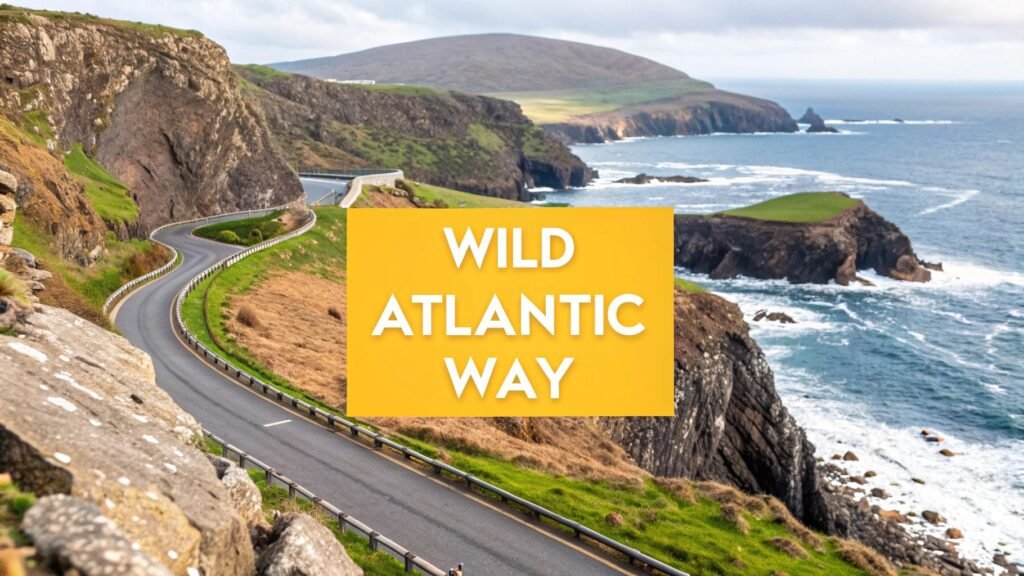
Picture this: you’re behind the wheel, the road snaking ahead of you, with dramatic, sea-battered cliffs on one side and rolling green hills on the other. That’s the feeling of the Wild Atlantic Way, an epic 2,500 km (1,553-mile) coastal drive that charts a course through the very soul of Ireland. It’s far more than just a route; it’s an open invitation to lose yourself in ancient history, vibrant culture, and the untamed beauty of the Irish west coast.
What Is the Wild Atlantic Way?
Think of the Wild Atlantic Way as less of a road and more of an adventure waiting to happen. Officially launched in 2014, this incredible journey hugs the entire western coastline of Ireland, all the way from the windswept tip of Malin Head in County Donegal down to the colourful, historic harbour of Kinsale in County Cork. It was a brilliant idea to string together all the wonders of the west into one single, unforgettable experience.
This isn’t just a drive; it's a story of the constant, beautiful struggle between land and sea. Along the way, you’ll be guided by distinctive blue zigzag signs that point you towards more than 180 key ‘Discovery Points’. These aren’t just quick photo stops. They’re gateways to exploration, leading you to wild peninsulas that jut defiantly into the ocean and quiet, hidden coves where local legends still echo in the breeze.
A Story of Vision and Success
The route was a bold and visionary project brought to life by Fáilte Ireland, the national tourism authority. Their dream was to create a world-famous brand that would tempt travellers to discover the wilder, less-trodden paths of the island. And what a success it has been. The Wild Atlantic Way has since blossomed into Ireland's most beloved tourism region, drawing in over 2.3 million international visitors and bringing in an incredible €2.37 billion in a single year. The route has completely revitalised local communities, a testament to its profound impact.
The magic of the Wild Atlantic Way lies in its authenticity. It wasn’t artificially created for tourists; it simply shines a spotlight on the genuine wonders that have been here for centuries:
- A Living Culture: Feel the warmth of a proper pub session, listen to the melodic Irish language in the Gaeltacht regions, and chat with the artists, farmers, and storytellers who call this incredible coastline home.
- Ancient Heritage: Stand in awe of prehistoric forts clinging to cliff edges, wander through mysterious stone circles, and explore the haunting ruins of castles that have weathered Atlantic storms for generations.
- Scenery Beyond Compare: Every bend in the road reveals a new masterpiece, from the jaw-dropping scale of the Cliffs of Moher to the peaceful, silver-sanded beaches of Connemara.
If you’re dreaming of making this epic road trip a reality, our thoughtfully designed self-drive tours of Ireland are the perfect way to soak in every moment of this legendary journey.
Exploring the Six Faces of the Atlantic Coast
The best way to think about the Wild Atlantic Way isn't as one single, long road. Instead, picture it as a collection of six incredible stories, each one unfolding against a landscape more dramatic than the last. Travelling this route is like diving into a great Irish epic; every new chapter reveals a different side of Ireland's wild, untamed character. Each of the six official regions has its own distinct personality, its own rhythm, and its own secrets just waiting to be found.
Think of the whole thing as a grand symphony. Some parts are powerful and thundering, like the soaring music of the Cliff Coast. Others are gentle and lyrical, like the quiet, hidden harbours of the Haven Coast. Your journey is all about finding the melody that speaks directly to you.
From Mythical North to Surfing Mecca
The adventure kicks off in the Northern Headlands of Donegal, a land steeped in myth and defined by its raw, untamed beauty. This is where you’ll find some of the most remote and rugged landscapes in all of Ireland, from the staggering sea cliffs of Slieve League to the very northernmost tip of the island at Malin Head.
Heading south, the atmosphere shifts as you enter the Surf Coast, a stretch of coastline running through Sligo and Mayo that lives and breathes the rhythm of the Atlantic. This is a place of legendary waves, vast sandy beaches like Strandhill, and the unmistakable, flat-topped Benbulben mountain standing silent guard over it all.
Culture, Cliffs, and Coastal Charm
Pushing further south brings you to the Bay Coast of Galway and Mayo, which feels like the cultural heartbeat of the Wild Atlantic Way. Here, the vibrant city of Galway serves as a gateway to the starkly beautiful wilderness of Connemara—a land of deep blue loughs, wandering sheep, and proud Gaelic traditions that still echo through the valleys.
Next up is the world-famous Cliff Coast in County Clare. This is home to the mighty Cliffs of Moher, a true geological masterpiece that plunges dramatically into the churning ocean below. But look beyond this iconic landmark and you’ll discover the unique limestone moonscapes of The Burren and the infectious energy of traditional music pouring from the legendary pubs of Doolin.
This diagram helps to visualise how the core ideas of length, journey, and destination all come together to define this incredible route.
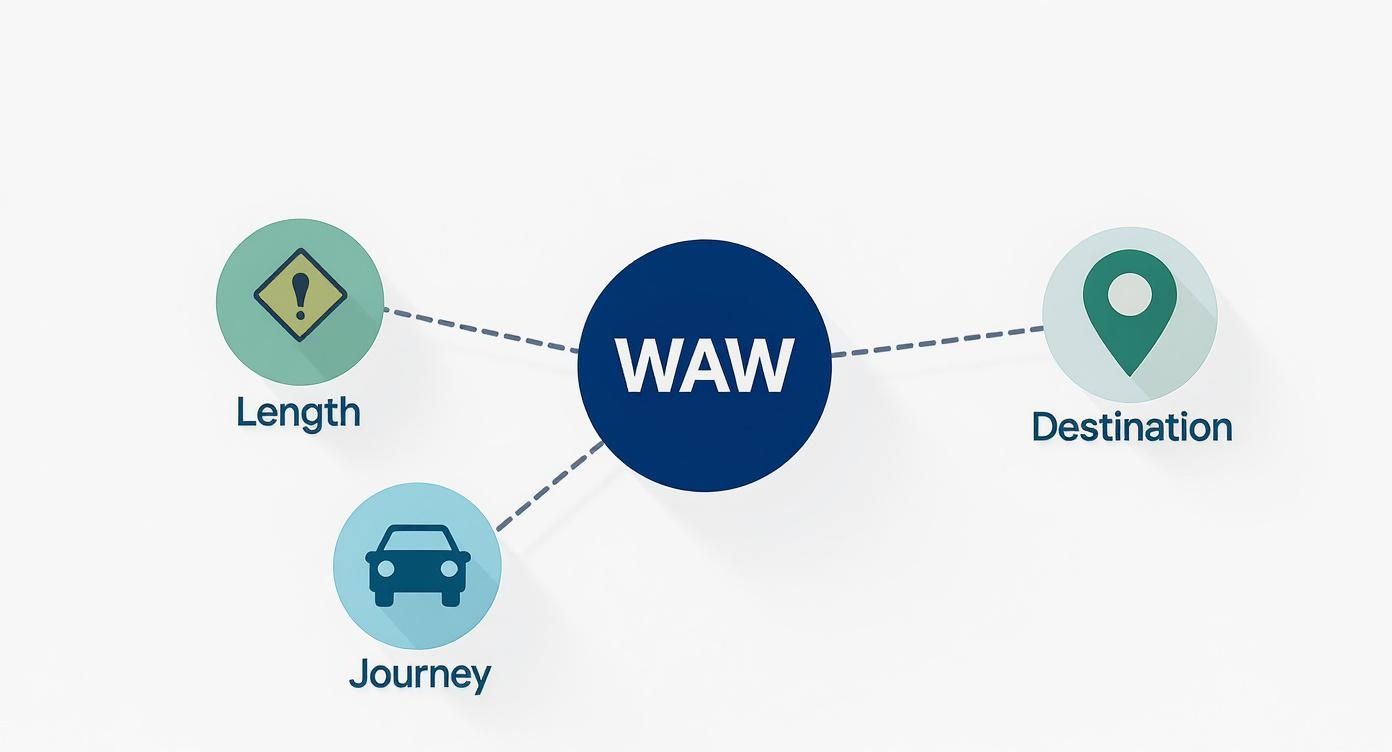
It really breaks down the Wild Atlantic Way into its essential parts, showing how the sheer distance, the act of travel itself, and the unforgettable places you'll see all combine to create the full, immersive experience.
Peninsulas and Peaceful Havens
The journey then winds its way through the Southern Peninsulas of Kerry and Cork, a breathtaking series of five fingers of land reaching defiantly out into the Atlantic. This region is home to the famous Ring of Kerry and the stunning Dingle Peninsula, where every turn in the road reveals another postcard-perfect village, ancient stone fort, or staggering coastal view. While the west coast offers this rugged beauty, you might also find yourself drawn to the lush, story-filled landscapes in our guide to Ireland's Ancient East.
Finally, your epic road trip finds its conclusion along the serene Haven Coast in County Cork. Here, the raw wildness of the Atlantic gives way to a gentler coastline of sheltered coves, colourful fishing villages, and a rich maritime history. It’s a peaceful and fitting end to a journey that began in the wild north, culminating in the historic gourmet town of Kinsale.
To help you get a better sense of each unique section, here’s a quick overview of what makes each of the six regions so special.
Regions of the Wild Atlantic Way at a Glance
A summary of the six official regions, highlighting their unique characteristics and starting points to help you plan your journey along the Irish coast.
| Region Name | Counties Covered | Key Landscape Feature | Signature Experience |
|---|---|---|---|
| Northern Headlands | Donegal | Towering sea cliffs & isolation | Standing at Malin Head, Ireland's northernmost tip |
| Surf Coast | Sligo, Mayo | Legendary waves & beaches | Watching the surfers at Mullaghmore Head |
| Bay Coast | Mayo, Galway | Deep inlets & fjord-like bays | Exploring the wild beauty of Connemara |
| Cliff Coast | Clare | Sheer, dramatic cliffs | Witnessing the sunset at the Cliffs of Moher |
| Southern Peninsulas | Kerry, Cork | Mountainous finger-like peninsulas | Driving the famous Ring of Kerry or Slea Head Drive |
| Haven Coast | Cork | Sheltered coves & gentle bays | Enjoying the gourmet food scene in Kinsale |
As you can see, each region offers a completely different adventure. Whether you choose to explore just one in depth or bravely tackle the entire 2,500 km, you’re guaranteed a journey that will stay with you forever.
Designing Your Unforgettable Road Trip Itinerary
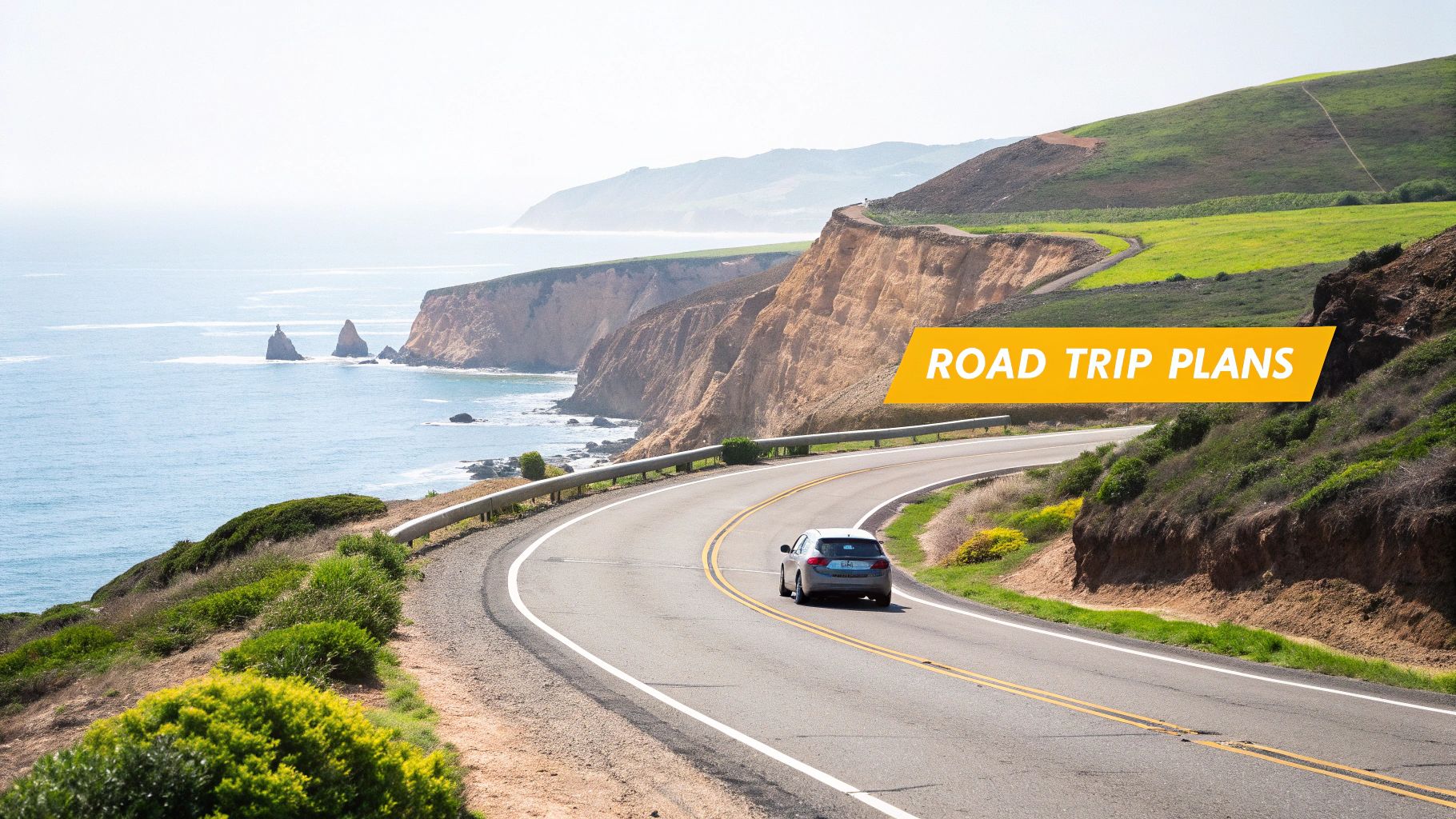
The real beauty of the Wild Atlantic Way is that it’s yours to shape. It isn’t a rigid route you have to follow, but a sprawling canvas for you to paint your own adventure, whether you’ve got a long weekend or an entire month up your sleeve. Pulling together the right itinerary is a bit like composing a song; it's all about finding the perfect tempo for your journey.
To help you find that rhythm, we’ve sketched out three itineraries that we know work beautifully for different kinds of trips. Think of them as starting points, ready for you to add your own personal flourishes and spontaneous detours. The trick is simply to match the length of your trip to the depth of experience you’re longing for.
The Weekend Coastal Escape (3-4 Days)
Short on time but hungry for a powerful hit of Atlantic drama? This one’s for you. A weekend escape is all about choosing one magnificent region and diving in deep, rather than trying to tick off endless miles. It’s a philosophy of quality over quantity, making every single moment sing.
For instance, you could focus entirely on the Cliff Coast. Picture basing yourself near the musical hub of Doolin, spending one day completely awestruck by the sheer scale of the Cliffs of Moher, and the next getting lost in the unique, moon-like limestone landscapes of The Burren. This kind of condensed adventure means you trade long hours behind the wheel for more time breathing in the salty air on a cliff-top walk or tapping your foot to traditional music in a cosy pub.
The Classic Explorer's Week (7-10 Days)
Give yourself a week to ten days, and a real story begins to unfold. This is the perfect amount of time to thread two or three neighbouring regions together, creating a trip that has a wonderful sense of flow and contrast. You’ll feel the landscape and the culture subtly shift as you travel from one county to the next.
A 7 to 10-day trip really hits the sweet spot for most people. It’s long enough to cover some serious ground without ever feeling rushed, giving you the freedom to pull over for that hidden beach you spotted or linger just a little longer in a village that steals your heart.
A fantastic route is to connect the Southern Peninsulas with the Cliff Coast. You could kick things off in lively Killarney, setting aside a few days for the legendary Ring of Kerry and the utterly breathtaking Slea Head Drive on the Dingle Peninsula. From there, it’s a stunning drive north into County Clare to witness the iconic cliffs and strange geology that make the region so famous. It's a journey that serves up some of Ireland's most celebrated scenery in one seamless, unforgettable adventure.
The Full Expedition (14+ Days)
For those lucky enough to have time on their side, tackling the entire 2,500 km is the ultimate Irish odyssey. This is so much more than a holiday; it’s a full-blown expedition, an opportunity to experience the complete, magnificent saga of Ireland’s west coast. Two weeks or more gives you the breathing room to properly explore every corner, from the wild, remote headlands of Donegal to the gentle, sheltered coves of Cork.
An extended trip like this means you can truly slow down and live by the rhythm of the tides. You’ll have time for that ferry trip to the Aran Islands, for full-day hikes in the wilds of Connemara National Park, and for quiet afternoons in villages that feel a world away from the main tourist trail.
If the thought of planning such a grand tour feels a bit overwhelming, looking into professionally planned self-drive tours can offer a brilliant framework. It ensures you see all the must-see sights while still giving you the keys and the freedom to explore. This is how you truly get to know the soul of the Wild Atlantic Way.
Essential Tips for Driving Ireland's West Coast
Every truly spectacular road trip begins long before you turn the key in the ignition. It’s built on smart preparation. Think of this as your insider’s guide to navigating the Wild Atlantic Way like a seasoned pro, making sure your journey is as smooth as it is unforgettable.
Embracing the unique character of Ireland’s west coast roads is all part of the adventure. Many of the most breathtaking routes are narrow, winding, and a world away from the motorways you might be used to. It helps to think of it less as a race and more as a slow dance with the landscape itself.
The real secret? Just take it slow. You’re not simply getting from A to B; you're here to soak in every last drop of the view. Sticking to the speed limits, which are often much lower on these rural roads, is vital for your safety and shows a bit of respect to the locals who call these lanes home.
Mastering the Roads and Your Rental
For anyone visiting from the UK, driving on the left will feel like second nature. But the single-track lanes are a different beast altogether. You’ll find them in the most remote, beautiful corners, and they run on a simple system of courtesy. Just pull into one of the designated passing places (lay-bys) to let oncoming traffic through, and don’t be surprised if you get a friendly wave for your trouble.
When it comes to hiring a car, a little thought goes a long way:
- Size Matters: A smaller, more compact car is your best friend here. It makes navigating narrow country lanes and finding a spot in tiny village car parks so much easier.
- Manual vs Automatic: Manual cars are everywhere in Ireland and usually cheaper to rent. However, opting for an automatic can be a real game-changer, saving you from constant gear changes on hilly, twisting roads and letting you focus on the scenery.
- Insurance is Key: Seriously consider getting comprehensive insurance coverage. It’s the difference between a stressful drive and a relaxed one, giving you total peace of mind if you happen to get a scrape or bump on a tight road.
Of course, a great trip is a safe trip. Beyond just the rules of the road, keeping your vehicle and belongings secure is paramount. For a deeper dive, check out this essential road trip safety and security advice.
Planning Your Timing and Logistics
The time of year you choose to travel will completely colour your experience. Sure, the summer months from June to August bring the best chance of sunshine and gloriously long evenings, but they also bring the biggest crowds and the highest prices.
The real sweet spot? The "shoulder seasons" of April-May and September-October. This is when you’ll find the perfect balance: milder weather, far fewer people at the star attractions, and a wonderfully tranquil feeling on the roads.
This isn’t just a traveller’s secret; it’s a core part of how Ireland promotes this incredible route. Tourism Ireland has long recognised that encouraging off-season travel helps create a more sustainable, year-round flow of visitors, especially from Britain, which is Ireland’s largest tourism market.
Whatever time you choose, book your accommodation well in advance. This is especially true for popular hubs like Dingle, Clifden, and Westport. Securing your B&Bs or hotels ahead of time means you can end a long day of exploring with a sigh of relief, not a frantic search for a room.
Using Ferries to Your Advantage
Don't forget to study the map for ferry routes! They can be brilliant strategic shortcuts, saving you hours of driving and offering a completely fresh perspective on the coastline. The Shannon Ferry, for instance, is a fantastic way to hop from County Clare to County Kerry, letting you skip the long drive around through Limerick city.
These short sea crossings are more than just a convenience; they’re part of the experience. They break up the journey, give you a chance to get out and stretch your legs, and serve up wonderful photo opportunities from the water, adding another rich layer to your adventure along the magnificent Wild Atlantic Way.
Living the Story Beyond the Steering Wheel

The real magic of the Wild Atlantic Way begins the moment you turn off the engine. As incredible as the drive is, the memories that stick with you are forged when you step out of the car and into the rhythm of life on Ireland’s west coast. This is where a great road trip becomes your own personal story.
It’s about more than just ticking off viewpoints. It’s the warmth of a peat fire in a pub that’s seen centuries of stories, the foot-stomping energy of a traditional music session that pulls you in, or the pure thrill of catching a wave off the coast of Bundoran. These are the moments that truly capture the untamed spirit of this place.
Immerse Yourself in Local Culture
The quickest way to the heart of the Wild Atlantic Way is by diving headfirst into its traditions. The culture here isn’t something you observe from a distance; it’s alive and well, and you’re invited to be part of it.
There's a simple, profound joy in hearing Irish spoken as a first language in a Gaeltacht (Irish-speaking) village, its lyrical flow connecting you directly to an ancient past. It’s this authentic thread that makes the entire experience feel so real and so powerful.
The most unforgettable travel moments are rarely planned. They happen in the spaces between destinations—a spontaneous conversation with a local artist, a shared laugh over a pint, or the discovery of a hidden cove that isn't on any map.
To really connect with the local spirit, make time for these experiences:
- Traditional Music Sessions: Find a pub in Doolin, Galway, or any small town in between. Don't just be an observer; let the energy of tunes passed down through generations sweep you up.
- Learn a 'Cúpla Focal': Try learning a few words of Irish (a "cúpla focal"). A simple "Go raibh maith agat" (thank you) goes a long way and is always met with a warm smile.
- Explore Local Crafts: Seek out the workshops of weavers, potters, and jewellers. You’ll find incredible artistry inspired by the raw, Atlantic landscape right outside their doors.
Savour the Flavours of the Atlantic
The food along this coastline tells its own story, one of unbelievably fresh ingredients and passionate local producers. The culinary scene here is honest and creative, with deep roots in the land and sea. You can taste the Atlantic in a freshly shucked oyster and appreciate the green fields in every bite of farmhouse cheese.
From seafood pulled from the ocean that morning to artisan producers tucked away on winding country lanes, every meal is an adventure. If you want to put food at the centre of your journey, our guide to a culinary indulgence self-drive tour is the perfect recipe for a delicious trip.
Once your journey is complete, think about a unique way to remember it. Capturing your exact path on a custom route poster is a brilliant memento of every incredible twist and turn. By truly engaging with the people, the traditions, and the flavours, you aren't just visiting the Wild Atlantic Way—you’re becoming part of its story.
What to Pack for the Wild Atlantic Way
Let’s be honest, packing for the Wild Atlantic Way is half the adventure. You’ve probably heard stories about Ireland’s famously fickle weather, and they’re all true. You can genuinely experience all four seasons in a single afternoon, so the key isn’t to pack for one type of weather, but for all of them.
The secret? Layering. It's an art form we’ve perfected out here on the west coast. Think of your clothing as a team: start with a moisture-wicking base layer, add a warm fleece for insulation, and finish with a seriously good waterproof and windproof jacket. This simple system means you can adapt in seconds when a bright, sunny walk along a cliff edge suddenly turns into a battle against a sideways Atlantic squall.
The Right Boots and a Few Lifesavers
Now, let's talk about what's on your feet. This is absolutely crucial. You need a pair of sturdy, waterproof walking boots, preferably with good ankle support. Trust me, you'll be so grateful you have them when you’re trekking across the boggy ground in Connemara or navigating the ancient flagstones of Dún Aonghasa. Keep a pair of comfy trainers for the pub, but for exploring, proper boots are a must.
With your clothing sorted, there are a few other bits and pieces that will make your trip that much better. You’ll quickly discover that mobile phone service can vanish in the most beautiful, remote spots, so never rely completely on your phone's GPS.
A physical, old-school road map is more than just a charming backup—it's a lifesaver. It works when technology doesn't and often reveals those tiny, winding roads that lead to the most unexpected discoveries.
Here are a few other things you’ll be glad you brought:
- A Power Bank: You'll be taking far more photos than you think. Keep your phone and camera juiced up for those long days on the road.
- Reusable Water Bottle: Stay hydrated and help keep this coastline beautiful. It’s easy to find places to refill your bottle.
- Daypack: A small, comfortable backpack is essential for carrying your extra layers, water, snacks, and that trusty map when you head out on foot.
- Sun Cream & Sunglasses: Don't laugh! The sun in Ireland can be surprisingly fierce, especially with the glare bouncing off the Atlantic.
Packing this way isn't just about being prepared for the rain. It’s about gearing up for the full, glorious, unpredictable experience of the Wild Atlantic Way. You'll be ready to embrace every moment, whatever the skies decide to do.
Your Wild Atlantic Way Questions, Answered
So, you're dreaming of that wind-in-your-hair, open-road adventure along Ireland's west coast? It’s an incredible journey, but before you hit the road, a few practical questions always pop up. Let's get those sorted.
Think of this as a chat with a friend who’s driven the route a dozen times. Once you have these answers, you can stop planning and start looking forward to the real adventure.
How Much Time Do I Really Need?
You could, in theory, blast down the entire 2,500 km route in a few days, but you’d see everything and experience nothing. To truly get a feel for the place, you need to slow down.
For a deep dive into one or two specific regions, give yourself at least 5-7 days. But if you want to tackle the whole epic journey from start to finish? You’ll want 14 to 21 days. That's the sweet spot for getting lost on purpose, taking that spontaneous hike, or just sitting on a cliff edge a little longer.
Which Way Should I Go: North or South?
The "official" advice is to drive south to north, from Cork up to Donegal. There’s a good reason for this: it puts the Atlantic on your left, giving your passenger (and you!) a front-row seat to the dramatic coastline. Crucially, it also makes pulling into the countless scenic viewpoints much safer and easier.
That said, there’s no wrong way to drive it. The magic is the same in either direction. If flying into Dublin and starting in Donegal makes more sense for your trip, go for it!
The real joy of the Wild Atlantic Way isn't about the direction you travel, but the discoveries you make along the journey. The key is to give yourself enough time to get lost in the moments between the signposts.
Should I Book My Accommodation in Advance?
Yes, absolutely. Especially if you're travelling during the peak season from June to August or over a bank holiday weekend. Charming spots like Dingle, Clifden, and Westport fill up months in advance.
Booking ahead means you get the cosy B&B or stunning hotel you’ve been dreaming of, instead of desperately searching for a room after a long day of exploring. Outside of the high season, you’ve got more wiggle room, but I’d still recommend booking your first and last nights just for peace of mind.
Do I Need a Special Car for the Drive?
Not at all. You don’t need a rugged 4×4 or a massive SUV. The entire Wild Atlantic Way is on paved roads, so a standard car will do just fine.
The real consideration isn't power, it's size. Many of the most scenic coastal roads are famously narrow and winding. A smaller, more compact car is genuinely less stressful and far easier to handle. When you’re picking your rental, think comfortable and fuel-efficient—that's the perfect combination for this trip.
At BTOURS, we live for the open road. We craft journeys that immerse you in the raw beauty and soul of a place. See how we bring the Wild Atlantic Way to life with our curated self-drive tours and start planning your own unforgettable adventure.