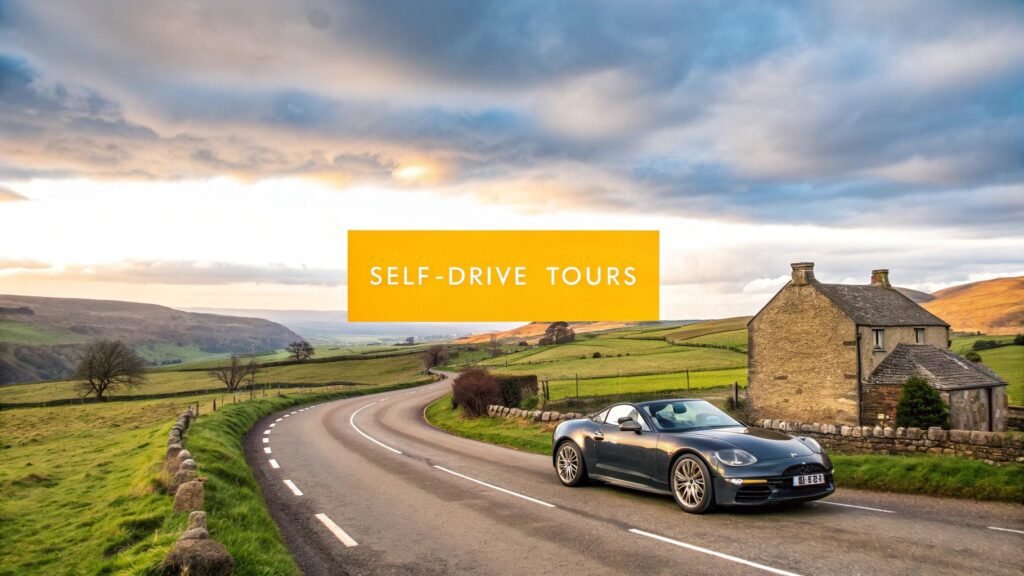

The United Kingdom is a driver's paradise, a tapestry of winding country lanes, dramatic coastal highways, and breathtaking mountain passes just waiting to be explored. From the rugged wilds of the Scottish Highlands to the charming, honey-coloured villages of the Cotswolds, the journey is often as spectacular as the destination. But with so many incredible routes to choose from, planning the perfect trip can feel overwhelming. Where do you even begin?
Forget the guesswork and endless searching. We've curated the definitive list of the best UK driving roads, designed for every type of traveller, from nature lovers and history buffs to families seeking a flexible adventure. This isn't just a simple list; it's your complete playbook for an unforgettable self-drive holiday. We've packed it with everything you need to hit the road with confidence.
Inside, you'll find comprehensive guides for each iconic route, including:
- Detailed route overviews and must-see stops.
- Practical driving tips and notes on road conditions.
- Expert BTOURS-style multi-day itineraries with accommodation suggestions.
- Advice on the best seasons to visit for optimal scenery and fewer crowds.
Whether you're yearning for a challenging mountain pass like Snowdonia's Llanberis Pass or a leisurely coastal cruise along the Causeway Coastal Route, our guide has you covered. It's time to fuel up the car, grab your map, and discover the unmatched freedom of the open road. Let's find your next great British adventure.
1. The North Coast 500 (NC500)
Often dubbed "Scotland's Route 66," the North Coast 500 is a spectacular 516-mile circular journey that starts and ends at Inverness Castle. Officially launched in 2015, it has quickly become one of the most iconic road trips in the world, showcasing the rugged beauty of the Scottish Highlands. This route is an absolute must for anyone seeking one of the best UK driving roads, offering an unforgettable mix of dramatic coastal cliffs, serene lochs, and vast, empty glens.
Route Highlights and Must-See Stops
The NC500’s magic lies in its sheer diversity. One moment you're navigating the nail-biting hairpin bends of Bealach na Ba (Pass of the Cattle), the UK's steepest ascent, and the next you're gazing at the pristine white sands of the Kyle of Durness. The remote and wild Assynt-Coigach peninsula provides jaw-dropping clifftop views, while charming villages like Applecross and Ullapool offer a warm Highland welcome. Don't miss Smoo Cave, a dramatic sea cave near Durness, or the fairytale-like Dunrobin Castle.
Practical Driving Tips
Success on the NC500 is all about preparation. The route includes many single-track roads with passing places, so a confident and courteous driving style is essential.
- Book Ahead: Accommodation, especially during peak season (May-September), gets booked up months in advance.
- Fuel Up: Petrol stations can be few and far between in the more remote sections. Never let your tank run low.
- Take Your Time: Rushing this route is a mistake. Allow at least 5-7 days to fully appreciate the scenery and potential detours. For a more structured experience, a self-drive tour can help you get the most out of your trip.
- Gear Down: On steep mountain passes like Bealach na Ba, use a low gear for better control on both ascent and descent.
The NC500 delivers an epic adventure, perfectly suited for independent travellers and nature lovers seeking the ultimate Scottish road trip.
2. Cotswolds Loop (Bourton-on-the-Water to Moreton-in-Marsh)
For a quintessentially English driving experience, the Cotswolds Loop offers a journey through honey-coloured stone villages, gentle rolling hills, and idyllic countryside. This roughly 50-mile scenic route takes you through the heart of one of England's most cherished landscapes, an Area of Outstanding Natural Beauty. This drive isn't about high-octane thrills; it's a relaxed tour that solidifies the region's reputation for offering some of the best UK driving roads for those seeking charm and serenity.
Route Highlights and Must-See Stops
The route's delight is in its chocolate-box villages. Start in Bourton-on-the-Water, often called the "Venice of the Cotswolds," where the River Windrush flows gently through the village centre. From there, a short drive takes you to the endlessly photogenic village of Bibury, home to the famous Arlington Row cottages. The route then winds towards historic market towns like Stow-on-the-Wold, perched on a hilltop with an impressive market square, and the bustling Moreton-in-Marsh, perfect for exploring independent shops. Each stop feels like stepping onto a postcard.
Practical Driving Tips
Navigating the Cotswolds is straightforward, but a few tips will enhance your journey through its narrow country lanes. The best approach is to combine driving with leisurely exploration on foot.
- Avoid Crowds: Visit on a weekday morning if possible. The most popular villages can get very busy, especially on summer weekends.
- Park Smart: Use designated car parks at the edge of villages. Street parking is limited and can cause congestion on narrow roads.
- Time for Tea: This is a route to be savoured. Allow plenty of time to stop for a traditional pub lunch or a classic cream tea.
- Road Strategy: Use the A429 (the old Roman Fosse Way) as the main artery connecting the larger towns, then peel off onto the smaller B-roads to discover hidden gems. Spring (April-May) is a wonderful time to visit, with blooming flowers and fewer tourists.
The Cotswolds Loop is the perfect choice for a peaceful and picturesque day trip, delivering a slice of classic English countryside at every turn.
3. The Great Glen Way (Fort William to Inverness)
Stretching for around 60 miles between two of Scotland’s most significant Highland towns, the drive along the Great Glen Way is a journey through the heart of myth and legend. This route, primarily following the A82, carves its way through a colossal geological fault line, flanked by dramatic mountains and the deep, mysterious waters of Loch Lochy, Loch Oich, and the world-famous Loch Ness. It’s an essential drive for those wanting a concentrated dose of classic Highland scenery, making it one of the best UK driving roads for its sheer iconic power.
Route Highlights and Must-See Stops
This drive is packed with legendary sights. The star of the show is undoubtedly Loch Ness, where you can hunt for Nessie from the banks or explore the atmospheric ruins of Urquhart Castle. Near Fort William, the gateway to Ben Nevis, a short detour leads to the breathtaking Glen Coe viewpoint, offering one of Scotland’s most photographed and hauntingly beautiful vistas. The Commando Memorial at Spean Bridge provides a poignant stop with incredible views of the Nevis Range, while Fort Augustus offers a charming spot to watch boats navigate the Caledonian Canal.
Practical Driving Tips
While a relatively straightforward drive, planning helps you avoid the crowds and find the best spots. The A82 is the main artery but can get busy, so timing is key.
- Avoid Peak Times: July and August are extremely busy. Try to travel in the shoulder seasons (May-June or September-October) for a more relaxed drive.
- Start Early: To avoid congestion at popular sites like Urquhart Castle and the Glen Coe viewpoint, aim to visit early in the morning.
- Fuel Up: While not as remote as other Highland routes, it’s wise to start with a full tank of petrol when leaving Fort William or Inverness.
- Embrace the Stops: The beauty of this route is in its viewpoints. Pull over safely in designated lay-bys to soak in the scenery of the lochs and mountains. This short journey through the Highlands is packed with wonders; consider a guided tour of Scotland to discover even more hidden gems.
4. Beachy Head to Brighton Coastal Drive (Sussex Coast)
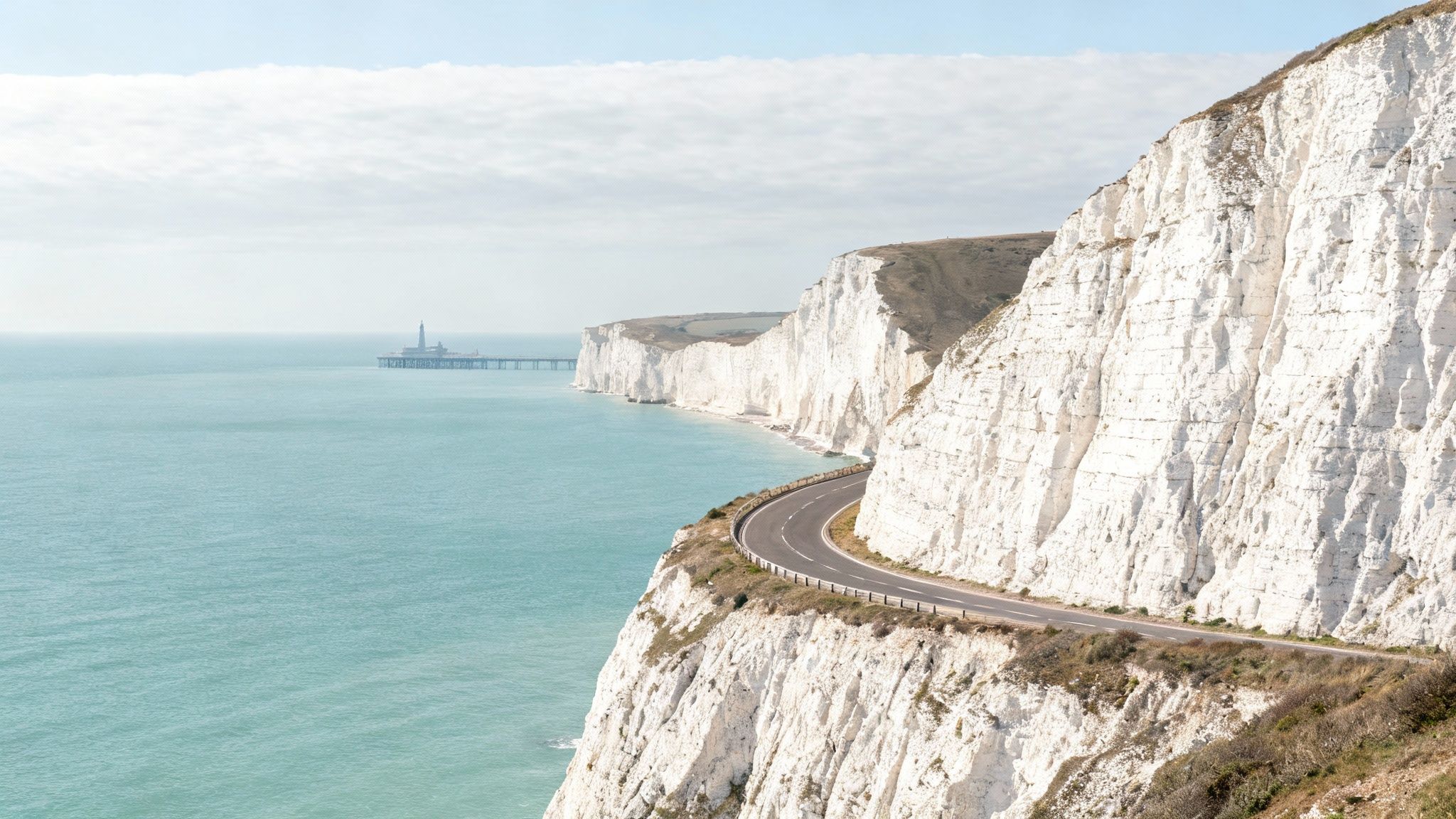
For a quintessential English seaside experience, this short but stunning 20-mile drive along the Sussex coast is hard to beat. Starting from the dramatic, gleaming white cliffs of Beachy Head, the route winds its way to the vibrant, bohemian city of Brighton. This journey perfectly captures the charm of the south coast, making it one of the best UK driving roads for those seeking breathtaking coastal views, classic seaside towns, and bracing sea air without committing to a multi-day epic.
Route Highlights and Must-See Stops
The drive is packed with iconic sights, beginning with Beachy Head, the UK's highest chalk sea cliff at 534 feet, offering unparalleled views over the English Channel. From there, you'll pass through the traditional seaside resort of Eastbourne before reaching the Seven Sisters Country Park. Here, you can park and walk to see the famous undulating cliffs and the picturesque Cuckmere Haven where a river meanders to the sea. The route culminates in Brighton, a city famous for its historic Palace Pier, the Royal Pavilion, and a lively, pebble-strewn seafront.
Practical Driving Tips
While this is a relatively straightforward drive, a few tips can enhance the experience and help you avoid the crowds.
- Go Early: Visit Beachy Head and the Seven Sisters in the early morning to find easier parking and enjoy the views in quieter, more atmospheric conditions.
- Scenic Detour: For a more peaceful drive, take the quieter B2103 route which passes through Birling Gap, a secluded spot with dramatic coastal erosion.
- Explore Inland: Consider a short detour inland to visit charming flint-stone villages like Alfriston, nestled in the Cuckmere Valley.
- Time for Stops: The drive itself is short, but its beauty lies in the stops. Allow at least half a day to fully explore the clifftop walks, coastal villages, and viewpoints.
This compact coastal route offers a fantastic day out, combining dramatic natural landscapes with classic British seaside culture.
5. Lake District (Borrowdale Valley to Buttermere Loop)
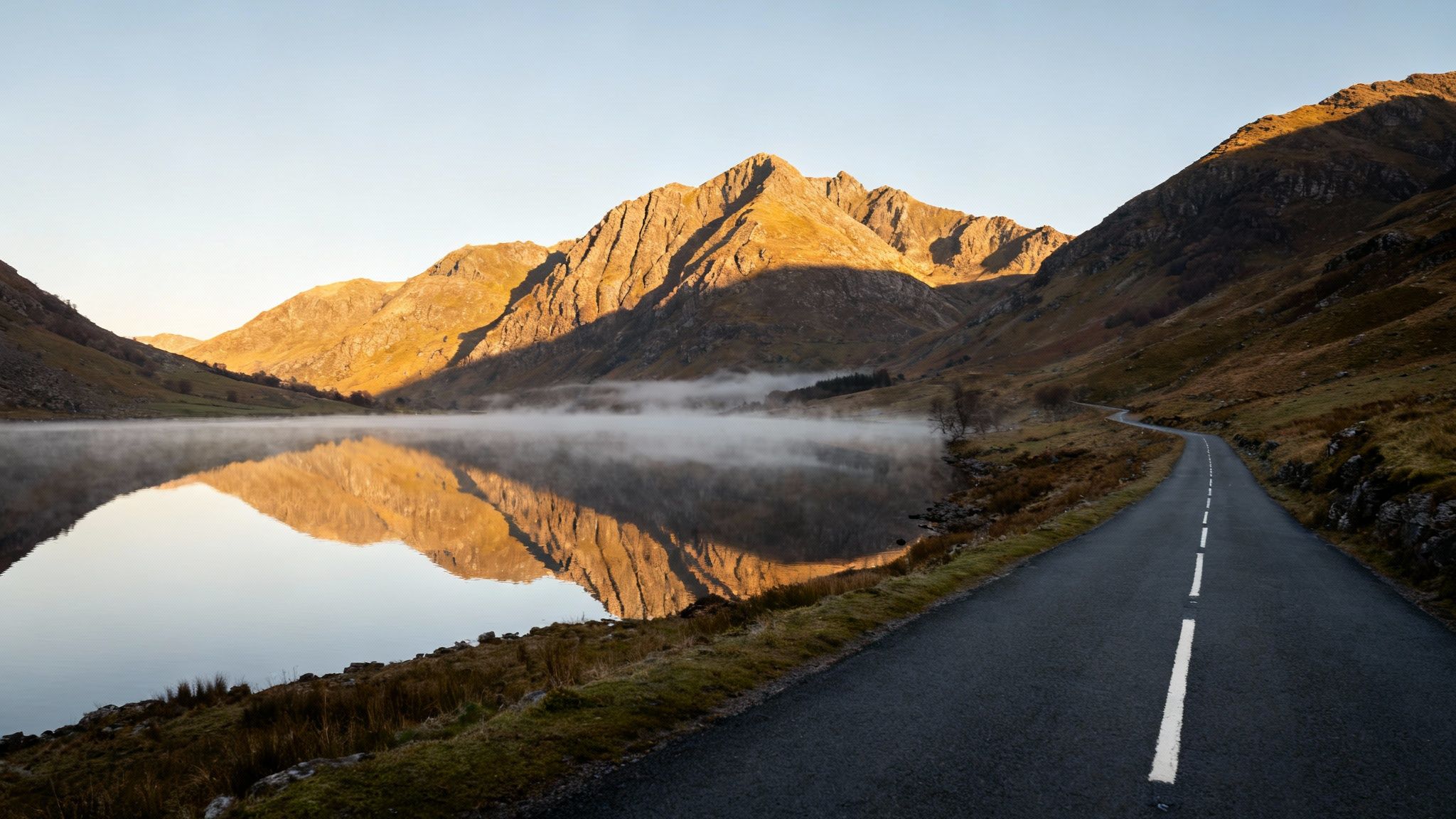
For a taste of England's most dramatic mountain scenery, this compact 30-mile loop through the heart of the Lake District National Park is unbeatable. Connecting the lush Borrowdale Valley with the serene shores of Buttermere, this route serves up a quintessentially Cumbrian experience. It’s a journey of towering fells, glassy lakes, and challenging passes, cementing its place as one of the best UK driving roads for those who love a blend of stunning vistas and engaging tarmac.
Route Highlights and Must-See Stops
The loop is packed with iconic Lakeland landmarks. The drive begins in the popular mountain town of Keswick, gateway to the dramatic Borrowdale Valley. The route then tackles the Honister Pass before descending towards the breathtakingly beautiful Buttermere lake, often called the most scenic in the region. For those with a taste for adventure and a suitable vehicle, a detour over the notorious Hardknott and Wrynose Passes offers a white-knuckle drive with gradients of up to 33%, rewarding brave drivers with Roman fort ruins and unparalleled views.
Practical Driving Tips
Navigating the Lake District's narrow, winding roads requires concentration and planning, especially on the high mountain passes. The beauty is immense, but the roads are demanding.
- Check Conditions: The high passes like Hardknott and Honister can be treacherous or closed in bad weather, particularly with ice or snow. Always check the forecast.
- Drive Early: To avoid the inevitable tourist traffic, especially in summer, start your drive early in the morning or visit on a weekday.
- Use Your Gears: On steep descents, select a low gear to use engine braking and save your brakes from overheating. This is crucial for passes like Hardknott.
- Allow Plenty of Time: This isn't a route to be rushed. The tight bends, steep gradients, and frequent photo opportunities mean a 30-mile journey can take several hours.
This spectacular loop can be a highlight of any English road trip, offering an intense and rewarding driving experience. Exploring this route is a key feature in a self-drive tour of England, allowing you to immerse yourself in the landscape at your own pace.
6. Causeway Coastal Route (Northern Ireland A2)
Often considered one of the world's great road journeys, the Causeway Coastal Route is a breathtaking 120-mile drive stretching from Belfast to Derry-Londonderry. While the entire route is spectacular, the 40-mile stretch of the A2 along the northeastern coastline is where the real magic happens. It connects dramatic basalt cliffs, geological marvels, and charming seaside villages, offering a journey steeped in myth and natural beauty, making it a strong contender for one of the best UK driving roads.
Route Highlights and Must-See Stops
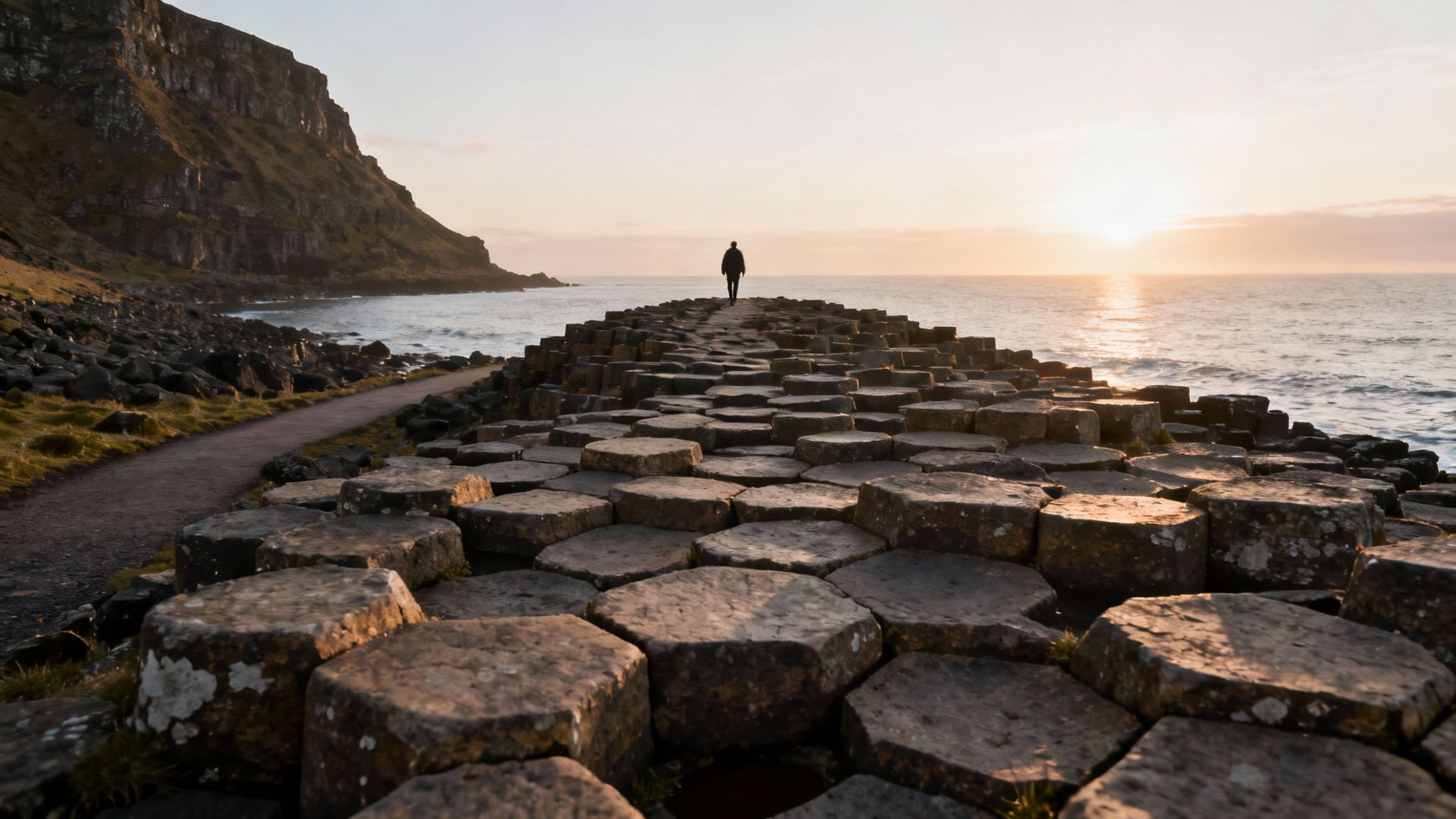
The route’s crown jewel is the Giant's Causeway, a UNESCO World Heritage site where 40,000 hexagonal basalt columns create an otherworldly landscape. For a thrilling experience, walk the Carrick-a-Rede Rope Bridge, which sways 30 metres above the sea. Explore the evocative cliff-top ruins of Dunluce Castle and delve into local history at Bushmills, home to the world’s oldest licensed whiskey distillery. The picturesque village of Cushendall, with its distinctive red sandstone, provides a perfect spot to pause and soak in the coastal atmosphere.
Practical Driving Tips
Navigating this popular route is straightforward, but a little planning goes a long way to enhance the experience and avoid the crowds.
- Go Early: Visit major attractions like the Giant’s Causeway early in the morning or later in the afternoon to avoid peak tourist times.
- Book Ahead: Accommodation in popular hubs like Portrush or Bushmills can fill up quickly, especially during summer months.
- Stick to the A2: While faster inland routes exist, the A2 coastal road offers all the best views and direct access to the main attractions.
- Allow Time for Wandering: Don’t just drive from A to B. Factor in plenty of time for impromptu stops, cliff-top walks, and photography. Many Game of Thrones filming locations are also found nearby, which you can explore on a dedicated itinerary like this Northern Ireland self-drive tour.
The Causeway Coastal Route is a journey through landscapes of epic legends and geological wonders, ideal for cultural explorers and anyone seeking a drive that’s as beautiful as it is memorable.
7. Peak District (Buxton to Castleton via High Peak)
This stunning 30-mile drive cuts through the dramatic heart of England's first national park, the Peak District. Journeying from the elegant spa town of Buxton to the historic village of Castleton, the route showcases some of the UK’s most impressive inland scenery, from high, heather-clad moorlands to deep limestone valleys. For those seeking a classic English landscape filled with challenging twists and breathtaking views, this is undeniably one of the best UK driving roads.
Route Highlights and Must-See Stops
The journey is packed with natural wonders and historic sites. The undisputed highlight is the drive through Winnats Pass, a spectacular limestone gorge with a road that climbs steeply between towering rock faces. At the top, you're rewarded with panoramic views from near Mam Tor, the 'Shivering Mountain'. The route concludes in the charming village of Castleton, famous for its four show caves, including Speedwell Cavern which you explore by boat. The nearby village of Edale, the official start of the Pennine Way, also offers fantastic walking opportunities.
Practical Driving Tips
Navigating the Peak District's narrow and winding roads requires care, especially on the steep gradients, but the rewards are immense.
- Go Early: Winnats Pass is incredibly popular. Arrive early in the morning to avoid traffic and get the best light for photographs.
- Gear for Gradients: Use a low gear for engine braking on steep descents like Winnats Pass to maintain control and save your brakes.
- Park and Walk: Village car parks in Castleton and Edale are the best way to explore. Park your car and walk to viewpoints and trailheads to fully appreciate the scenery.
- Seasonal Beauty: While beautiful year-round, spring brings lush green valleys and autumn offers spectacular rustic colours, often with clearer roads than during the busy summer peak.
This route provides a condensed yet powerful taste of England's wild beauty, perfect for a day trip focused on dramatic landscapes and geological wonders.
8. Amalfi-Inspired South Coast (Dorset Coastal A35)
Evoking the charm of a sun-drenched European coastline, this 25-mile drive through Dorset's Jurassic Coast UNESCO World Heritage Site offers a uniquely British take on the classic coastal road trip. The route combines the drama of ancient cliffs with the quaint appeal of seaside towns, making it one of the best UK driving roads for those who love geology and quintessential English charm in equal measure. This journey is a feast for the senses, with breathtaking sea views, historic villages, and world-famous landmarks at every turn.
Route Highlights and Must-See Stops
The A35 and the quieter B3157 are your guides through this remarkable landscape. Start at the historic seaside town of Lyme Regis, famous for its fossil-rich beaches and picturesque harbour known as The Cobb. Further along, you'll reach West Bay, instantly recognisable from the TV series Broadchurch for its magnificent golden sandstone cliffs. The traditional resort town of Weymouth provides a classic British seaside experience, while a short detour will take you to the iconic Durdle Door, a stunning natural limestone arch. The village of Abbotsbury, with its famous Swannery and subtropical gardens, adds another layer of unique charm to the drive.
Practical Driving Tips
Navigating this popular coastal route is straightforward, but a little planning goes a long way to enhance the experience, especially during busy periods.
- Go Off-Piste: While the A35 is the main artery, the smaller B3157 coastal road between West Bay and Weymouth offers more intimate sea views and a quieter drive.
- Park and Walk: To truly appreciate sights like Durdle Door or the cliffs at West Bay, park in designated car parks and take the time to walk along the coastal paths for the best perspectives.
- Timing is Key: Visit popular spots like West Bay or Lyme Regis early in the morning to secure parking and avoid the biggest crowds. For ideal weather with fewer tourists, plan your trip for May or September.
- Become a Fossil Hunter: Check the tide times before heading to Lyme Regis. The best time to find fossils is on a falling tide, especially after a storm has churned up the beach.
This Dorset coastal drive delivers a compact yet spectacular road trip, perfect for a day trip or a leisurely weekend exploring one of England's most treasured coastlines.
9. A82 Loch Lomond to Glen Coe (Trossachs to Highlands)
Stretching from the bonnie banks of Loch Lomond to the awe-inspiring valley of Glen Coe, this section of the A82 offers one of Scotland's most dramatic scenic transitions. Over approximately 50 miles, the landscape transforms from the gentle, wooded lochside of the Trossachs National Park to the vast, moody expanse of Rannoch Moor, culminating in the epic mountain theatre of Glen Coe. This is undoubtedly one of the best UK driving roads for witnessing the raw power and beauty of the Highlands unfold before your eyes.
Route Highlights and Must-See Stops
The journey’s magic is in its constant evolution. Starting alongside Loch Lomond, the UK's largest freshwater loch, the road hugs its shoreline, offering glimpses of its many islands. As you head north, the scenery becomes wilder, passing the jagged peaks of the Arrochar Alps. The road then climbs onto the desolate and beautiful Rannoch Moor, a vast plateau of bog and lochans that feels like another world. The drive culminates with the breathtaking descent into Glen Coe, a valley carved by glaciers and steeped in history, flanked by iconic peaks like Buachaille Etive Mòr and the Three Sisters.
Practical Driving Tips
While a major trunk road, the A82 requires careful attention, especially during peak tourist season and in poor weather conditions.
- Avoid Peak Times: The A82 can get very busy, especially on weekends during July and August. Consider an early start or travel during the shoulder seasons (spring/autumn) for a quieter drive.
- Use Viewpoints Safely: There are numerous lay-bys specifically for admiring the view. Use these designated spots rather than stopping on the road, which can be dangerous.
- Fuel Accordingly: Fill up your tank in a larger town like Balloch or Crianlarich before heading into the more remote stretches towards Glen Coe, where petrol stations are sparse.
- Be Weather-Aware: Conditions can change in an instant. The road across Rannoch Moor is exposed and can be challenging in high winds or snow, so always check the forecast.
10. Snowdonia Mountain Pass Loop (Wales – A5/A4086)
For drivers seeking a true alpine-style challenge, this 45-mile loop through the heart of Snowdonia National Park is an absolute gem. Combining sections of the A5 and the A4086, this route serves up some of the most dramatic mountain scenery in the UK, complete with steep inclines, tight hairpins, and breathtaking views of Yr Wyddfa (Snowdon) itself. This is without a doubt one of the best UK driving roads for those who appreciate raw, rugged landscapes and a technically rewarding drive.
Route Highlights and Must-See Stops
The route's centrepiece is the formidable Pass of Llanberis (A4086), a stunning drive that snakes its way up to an elevation of 359 metres, flanked by towering scree-covered mountainsides. Further along, the historic Pass of Aberglaslyn carves its way through a dramatic gorge. For those who love a challenging bend, the switchbacks near Pen-y-Gwyrd will test your cornering skills. The route provides constant, awe-inspiring vistas of iconic Welsh peaks and deep valleys like the Nantlle Ridge, making every mile a photo opportunity.
Practical Driving Tips
Navigating Snowdonia's passes requires focus and respect for the conditions. The roads can be demanding, especially for inexperienced drivers or those in larger vehicles.
- Weather is Key: This route is best attempted in good, dry weather. Avoid it entirely during winter or after heavy rainfall, when conditions can become treacherous.
- Use Your Gears: On the steep descents, select a low gear and use engine braking to avoid overheating your brakes. Take breaks if you notice any brake fade.
- Traffic Awareness: These are popular tourist roads. Start early in the morning to avoid congestion, particularly around Llanberis and Pen-y-Pass.
- Vehicle Suitability: This route is not recommended for large motorhomes or caravans due to the narrow sections and tight hairpin bends.
The Snowdonia loop offers a taste of continental mountain driving right here in Wales, rewarding careful and skilled drivers with an unforgettable journey through a landscape of myth and legend.
Top 10 UK Driving Routes Comparison
| Route | Implementation complexity | Resource requirements | Expected outcomes | Ideal use cases | Key advantages |
|---|---|---|---|---|---|
| The North Coast 500 (NC500) — 500 mi, 4–7 days | Moderate to high: long distances, single-track roads, mountain passes | Several days, advance accommodation booking, reliable fuel plan, suitable car | Dramatic coastal and mountain scenery, remote villages, iconic passes | Multi-day road-trip, scenic photographers, adventurous drivers | Compact loop with varied scenery and good tourism infrastructure |
| Cotswolds Loop (Bourton → Moreton) — ~50 mi, 1–3 days | Low: mostly A-roads and quiet lanes; some narrow village streets | Weekend- or short-break friendly; easy parking in designated lots; minimal vehicle demands | Honey-stone villages, rolling hills, market towns | Short weekend escape, cultural sightseeing, casual driving | Easily accessible, compact, excellent food and accommodation options |
| Great Glen Way (Fort William → Inverness) — ~60 mi, 1–2 days | Low to moderate: trunk A82 sections with some narrow alternatives | Day or overnight trip; fuel and stops readily available | Loch-side drives, mountain vistas, historic sites (Urquhart Castle) | Day trips, photographers, water-sport access seekers | Iconic loch scenery with manageable driving time |
| Beachy Head → Brighton (Sussex) — ~20 mi, half–full day | Low: coastal A-roads; some narrow/parking-limited sections | Half-day to full-day; close to London; parking can be limited at hotspots | White chalk cliffs, seaside towns, beach promenades | Day trips from London, coastal walks, family outings | Dramatic cliff scenery with vibrant seaside amenities |
| Lake District (Borrowdale → Buttermere) — ~30 mi, full day+ | Moderate to high: narrow mountain passes, hairpins (Hardknott/Wrynose) | Full-day minimum; cautious vehicle choice; check weather; parking at valleys | Mountain valleys, pristine lakes, hiking access | Outdoor enthusiasts, photographers, hikers | Compact loop with diverse mountain and lake scenery |
| Causeway Coastal Route (A2) — ~40 mi, full day | Low: well-maintained A-road with tourist stops; some busy nodes | Day trip from Belfast; book accommodation in peak season; visitor fees at sites | Basalt cliffs, Giant’s Causeway, rope bridge, coastal villages | Cultural and geological sightseeing, manageable day drive | Unique geology and excellent visitor infrastructure |
| Peak District (Buxton → Castleton) — ~30 mi, 1–2 days | Moderate: winding A-roads and narrow lanes; steep sections | Short break; good local facilities; parking limited at viewpoints | Limestone dales, high moorland, caves and gorges | Hikers, cave visitors, short multi-day trips | Strong outdoor activities and accessible from nearby cities |
| Amalfi‑Inspired South Coast (Dorset A35) — ~25 mi, full day | Low: well-maintained coastal roads; busy towns in season | Day trip from London; parking and accommodation scarce in summer | Jurassic cliffs, fossil beaches, coastal towns | Family beach days, geology enthusiasts, photographers | UNESCO coastline with family-friendly attractions |
| A82 Loch Lomond → Glen Coe — ~50 mi, full day/overnight | Moderate: major trunk road with busy tourist sections | Day or overnight; fuel and stops available; can be congested | Transition from lochs to highland passes, moorland vistas | Gateway drive to Highlands, photography stops, water activities | Highly varied scenery in one drive; strong infrastructure |
| Snowdonia Mountain Pass Loop (A5/A4086) — ~45 mi, full day | High: steep hairpins, narrow passes, challenging driving | Full day in clear weather only; not for large vehicles; vehicle in good condition | Alpine-like mountains, steep valleys, dramatic passes | Experienced drivers seeking challenging routes and views | Some of the UK’s most dramatic mountain roads and vistas |
Your Next Great British Road Trip Starts Here
From the wild, untamed beauty of Scotland's North Coast 500 to the quaint, honey-coloured villages of the Cotswolds, we've journeyed across the length and breadth of the United Kingdom. We've traced the dramatic Causeway Coastal Route in Northern Ireland, climbed the staggering mountain passes of Snowdonia, and navigated the serene loch-side roads of the Great Glen. Each route offers more than just a drive; it presents a unique narrative of history, culture, and breathtaking natural scenery.
The true magic of exploring the best UK driving roads lies in the freedom they afford. It's the ability to pull over for that perfect photograph of Glen Coe's majestic peaks, the spontaneity of discovering a hidden tearoom in the Peak District, or the choice to linger a little longer on the sun-drenched beaches of the Sussex coast. This guide is your map, but the adventure is yours to script. You are in the driver's seat, both literally and figuratively.
Key Takeaways for Your Adventure
As you transition from dreaming to planning, keep these essential insights in mind to ensure your journey is as smooth as the tarmac ahead:
- Plan, But Stay Flexible: While having an itinerary for routes like the NC500 or Causeway Coastal is crucial, especially for booking accommodation, always leave room for the unexpected. The most memorable moments often happen in the detours.
- Respect the Environment and Locals: These stunning landscapes are home to vibrant communities and delicate ecosystems. Adhere to local driving customs, use designated passing places correctly, and follow the principles of "leave no trace" to preserve their beauty for future adventurers.
- Match the Road to the Season: A drive through the Lake District offers a different character in the crisp autumn air than it does in the lush green of summer. Consider what you want to experience-fewer crowds, specific seasonal colours, or the best chance of sunshine-when choosing your travel dates.
Putting Your Plan into Motion
Feeling inspired? The next step is turning that spark of excitement into a concrete plan. Start by choosing one or two routes that truly capture your imagination. Research the specific points of interest we've highlighted and begin sketching out a rough daily schedule. Consider the type of vehicle you'll be driving; for many of these scenic but sometimes narrow roads, a smaller car is often more practical.
Furthermore, as we become more conscious of our travel footprint, planning a sustainable journey is more important than ever. When planning your great British road trip, considering the environmental impact of your vehicle choice is increasingly important; explore options for the best eco-friendly vehicles to make your journey more sustainable. A greener vehicle not only reduces your carbon footprint but can also enhance the experience, allowing you to quietly cruise through serene landscapes.
Ultimately, the best road trip is one that aligns with your personal style of travel. Whether you're a history enthusiast keen to explore ancient castles, a nature lover chasing waterfalls, or a family looking for a memorable holiday, the roads of the UK have a story waiting for you. The engine is waiting, the map is in your hands, and an unforgettable journey is just beyond the horizon.
Ready to swap the screen for the steering wheel? Let BTOURS handle the logistics of your UK road trip adventure. We specialise in creating bespoke self-drive itineraries that match your interests, booking hand-picked accommodations and ensuring your journey along the best UK driving roads is seamless and unforgettable. Start planning your perfect drive with BTOURS today!