England's green and pleasant land is criss-crossed by some of the most breathtaking roads in Europe. Forget motorways and mundane A-roads; we're talking about ribbons of tarmac that snake through dramatic mountain passes, hug spectacular coastlines, and meander through chocolate-box villages. Finding the single best driving road in England is a delightful challenge, as the 'best' depends entirely on what you seek: a white-knuckle test of skill, a tranquil countryside cruise, or a coastal epic with a fresh sea breeze.
This guide is your key to unlocking those unforgettable journeys. We've curated seven of the most remarkable routes, each offering a unique adventure behind the wheel. Whether you're a nature aficionado seeking the rugged beauty of the Lake District, a cultural explorer drawn to the Cotswolds' honey-stoned charm, or a family wanting a flexible tour of the Cornish coast, this list has something for you.
Inside, you'll find more than just a list. Each entry provides:
- Practical Route Maps: Clear guides to keep you on the right track.
- Must-See Stops: The essential viewpoints, pubs, and attractions along the way.
- Driving Tips & Difficulty: Honest advice on road suitability and what to expect.
- Sample Itineraries: Suggestions for turning a great drive into a perfect multi-day trip.
So, fill up the tank, prepare your playlist, and get ready to explore the roads less travelled. From the precipitous inclines of Hardknott Pass to the gentle, pony-strewn lanes of the New Forest, prepare to rediscover the pure joy of driving in a country made for memorable road trips. Let's explore the routes that make England a true driver's paradise.
1. The Corniche Coast Road (A39) – North Devon
Often hailed as England’s answer to the great coastal drives of the world, the A39 through North Devon is a journey of dramatic contrasts. This isn't just a road; it's a front-row seat to some of the most spectacular coastal scenery the UK has to offer. Winding its way from Barnstaple towards the Somerset border, the most thrilling section lies between Lynmouth and Porlock, where the road carves itself into the towering cliffs overlooking the Bristol Channel.
This stretch earns its nickname, "The Corniche," with its tight hairpin bends, steep gradients, and jaw-dropping vistas. You’ll feel a sense of adventure as you navigate the route, with each turn revealing a new panorama of rugged headlands, ancient woodlands clinging to the hillsides, and the vast, shimmering sea below. It’s a drive that demands your full attention but rewards it with an experience that feels truly wild and remote, making it a firm contender for the best driving road in England.
Route Highlights and Must-See Stops
The magic of the A39 is in its pit stops. Don’t rush this one; the journey is the destination.
- Lynton and Lynmouth: Known as "Little Switzerland," these twin villages are connected by a famous cliff railway. Park up in Lynmouth, wander along the harbour, and take the historic water-powered funicular up to Lynton for stunning views.
- Valley of Rocks: Just west of Lynton, this prehistoric-looking dry valley is a must-see. Feral goats roam freely amongst dramatic rock formations, and coastal paths offer breathtaking walks with views across the channel.
- Porlock Hill: For confident drivers, the original Porlock Hill is an infamous challenge with a gradient of 1 in 4 (25%). A less-demanding toll road offers a gentler, scenic alternative with equally impressive views.
- Dunkery Beacon: A slight detour will take you to the highest point on Exmoor, offering 360-degree views that, on a clear day, can stretch across 13 counties.
Practical Driving Tips
To make the most of your drive, a little planning goes a long way. This route is best enjoyed with a smaller, nimble car that can handle the tight corners with ease.
Insider Tip: To avoid the crowds and catch the best light for photography, aim to drive this route early in the morning on a weekday, especially outside of the peak summer months.
- Best Time to Go: Spring and early Autumn (April-June, September-October) offer pleasant weather and fewer crowds.
- Duration: While the key section can be driven in under an hour, allow at least 3-4 hours to include stops, photos, and a short walk.
- Fuel: Fill up your tank in a larger town like Barnstaple or Minehead. Petrol stations become scarce as you head into the more rural parts of Exmoor.
- Be Patient: You will likely encounter cyclists, walkers, and slower-moving traffic. Embrace a relaxed pace and use the designated lay-bys to pull over and soak in the views.
Exploring this remarkable coastline is a highlight of any trip to the region. To help plan your wider adventure, you can discover more about what this beautiful part of the country has to offer and explore detailed itineraries for your journey. Find inspiration for your next road trip and learn more about England's stunning landscapes.
2. Hardknott Pass & Wrynose Pass – Lake District
For drivers seeking the ultimate test of nerve and skill, the twin challenge of Hardknott and Wrynose Pass in the Lake District is an unmissable, white-knuckle rite of passage. This single-track ribbon of tarmac snakes through some of the most remote and formidable fell scenery in England, connecting Eskdale with the Duddon Valley. It's less of a road and more of a vertical adventure, with brutally steep gradients and a dizzying series of hairpin bends.
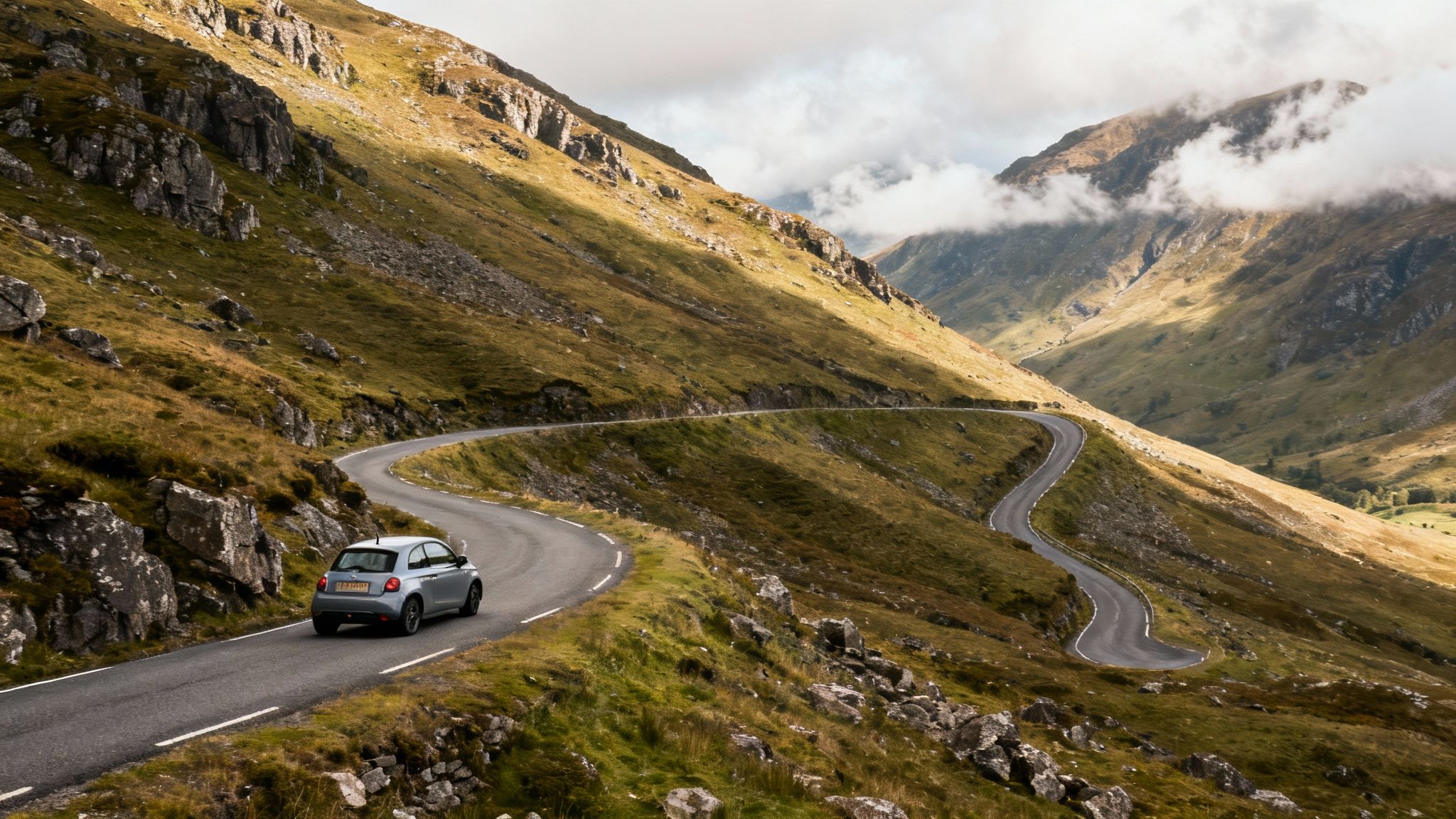
The drive is legendary, culminating in Hardknott Pass, which boasts the steepest section of road in England at an astonishing 1-in-3 (33%) gradient. This is a route that demands respect and total concentration, but the reward is a profound sense of accomplishment and access to views that are utterly breathtaking. Tackling this route successfully solidifies its place as a bucket-list drive and a true contender for the best driving road in England for the sheer thrill it delivers.
Route Highlights and Must-See Stops
The drama of the drive is punctuated by moments of serene beauty and fascinating history.
- Wrynose Pass: The "gentler" of the two, Wrynose still offers a thrilling drive with its own switchbacks and spectacular views looking back towards Little Langdale and Ambleside.
- Three Shire Stone: Located at the summit of Wrynose Pass, this stone marks the historic meeting point of the counties of Cumberland, Westmorland, and Lancashire. It's a great spot to pause and catch your breath.
- Hardknott Roman Fort (Mediobogdum): Perched high on the fells between the two passes, the remains of this 2nd-century fort are astonishing. Park up and take the short walk to explore the ruins and imagine the life of a Roman soldier in this wild landscape. The 360-degree views are simply unparalleled.
- Eskdale Valley: Once you've descended Hardknott, the tranquil beauty of Eskdale provides a welcome contrast. Stop at a traditional pub for a well-earned pint or take a ride on the Ravenglass and Eskdale Railway.
Practical Driving Tips
This is not a road to be taken lightly. Preparation and caution are paramount for a safe and enjoyable experience.
Insider Tip: Drive this route from East to West (from Ambleside towards Eskdale). This means you will be driving up the steepest 1-in-3 section of Hardknott Pass, which is generally considered easier and safer than attempting to descend it.
- Best Time to Go: A dry day between May and September is essential. Avoid this route entirely in wet, icy, or wintery conditions.
- Duration: The passes themselves take around 45-60 minutes to drive without stops, but allow at least 2-3 hours to include a visit to the Roman Fort and for photo opportunities.
- Vehicle Choice: A small, confident car with a good clutch and brakes is vital. Large vehicles, motorhomes, and caravans are completely unsuitable and should not attempt this route.
- Be Prepared: Check weather forecasts and road status before you set out. Drive slowly, stay in a low gear (especially on descents), and be ready to reverse for a considerable distance to a passing place if you meet oncoming traffic.
These passes form a memorable centrepiece for any Lake District adventure. If you're inspired by this kind of exhilarating journey, you can start planning your own trip with our range of expertly crafted self-drive tours.
3. The Cotswolds Circuit – A44 & Minor Roads
For a drive that feels like stepping into a classic English storybook, the winding roads of the Cotswolds are unparalleled. This circuit isn’t about one single road but a delightful network of routes, combining stretches of the A44 with a web of smaller B-roads and country lanes that connect some of England’s most picturesque villages. It’s a journey through a quintessentially English landscape of gentle, rolling hills, ancient stone walls, and idyllic, honey-coloured limestone cottages.
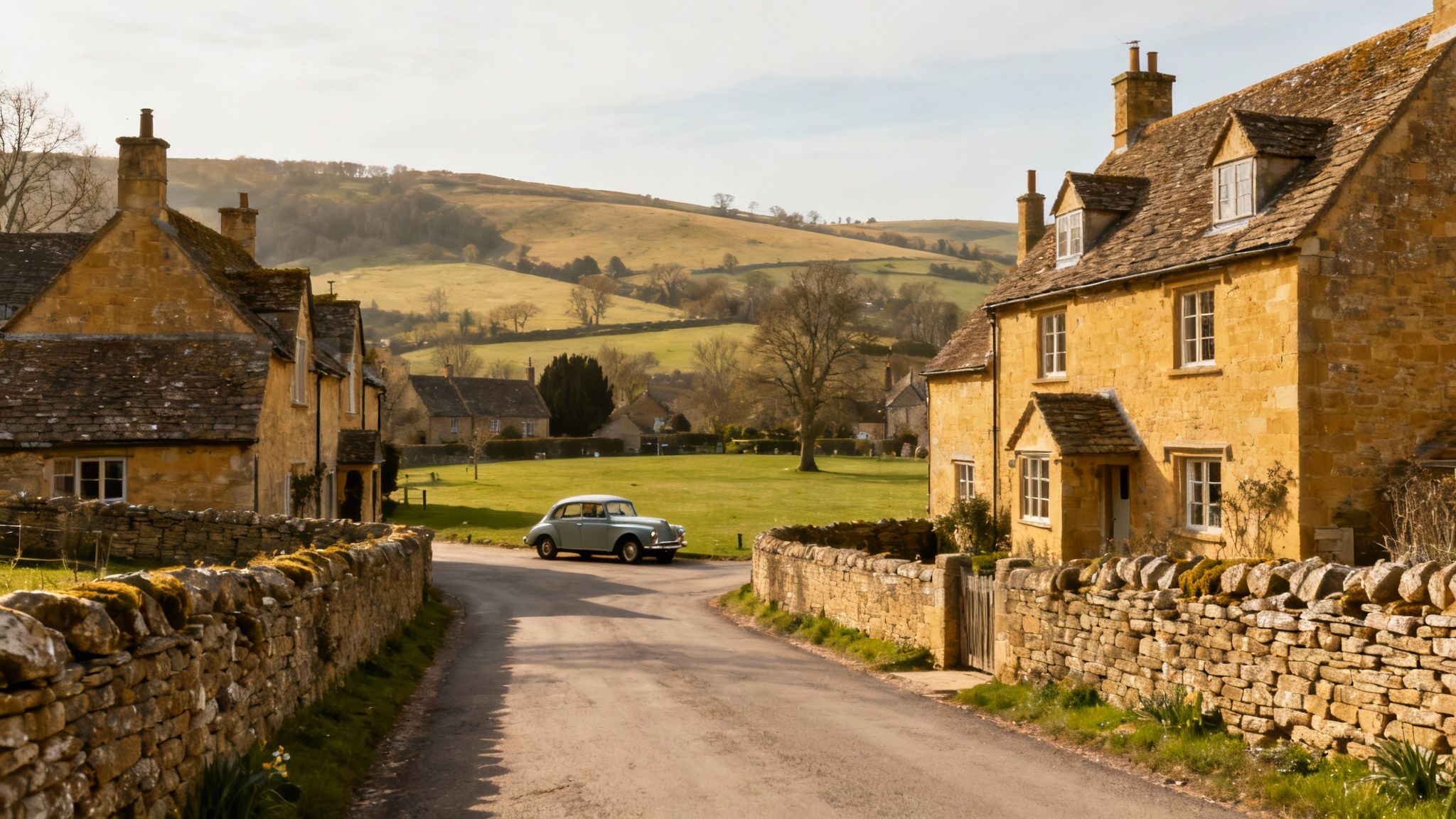
The drive is less about high-speed thrills and more about leisurely exploration and pure charm. As you meander from one chocolate-box village to the next, such as Bourton-on-the-Water or Stow-on-the-Wold, you are immersed in a region that feels preserved in time. The Cotswolds offers a serene and beautiful drive that captures the heart of rural England, easily making it a favourite and a strong candidate for the best driving road in England for those seeking beauty over sheer pace.
Route Highlights and Must-See Stops
The joy of the Cotswolds is getting lost on its quiet lanes and discovering hidden gems. Plan your route, but don't be afraid to take a spontaneous turn.
- Broadway Tower: A short drive from the village of Broadway, this iconic folly sits on the second-highest point in the Cotswolds. Climb to the top for breathtaking views that can span up to 16 counties on a clear day.
- Bourton-on-the-Water: Often called the "Venice of the Cotswolds," this village is famous for the River Windrush flowing through its centre, crossed by several low stone bridges. It’s a perfect spot to park and stroll.
- The Slaughters (Upper and Lower): These two impossibly pretty villages are connected by the River Eye and offer a peaceful walk away from the crowds. Lower Slaughter, with its old watermill, is particularly photogenic.
- Stow-on-the-Wold: Explore this historic market town, perched on a hill, and seek out the ancient yew trees framing the north door of St. Edward's Church, said to have inspired Tolkien's Doors of Durin.
Practical Driving Tips
A relaxed approach is key to enjoying the Cotswolds. The roads are often narrow, and the real pleasure comes from taking your time.
Insider Tip: Venture onto the unclassified single-track lanes between the main villages. This is where you'll find the most authentic and peaceful Cotswolds scenery, often with only sheep for company.
- Best Time to Go: Late Spring (May-June) for blooming gardens and mild weather, or Autumn (September-October) for beautiful colours and fewer tourists.
- Duration: You could spend a full day exploring, but to truly appreciate the area, allow 2-3 days to wander through villages and enjoy the atmosphere.
- Fuel: Major towns like Moreton-in-Marsh or Cirencester have petrol stations, but they are less frequent in the smaller villages, so keep an eye on your gauge.
- Be Patient: These roads are working country lanes. Expect to encounter farm machinery, cyclists, and horse riders. Drive slowly and be prepared to reverse for passing traffic.
This region offers a perfect escape into England’s pastoral heritage. For those looking to fully immerse themselves in the experience, a well-planned itinerary can make all the difference. You can explore a route that captures the essence of this area on a multi-day journey and learn more about a Taste of England self-drive tour.
4. South Coast Cornish Roads – A30/A39 to Penzance
This iconic journey through the heart of Cornwall is less about a single road and more about a quintessential British coastal adventure. Following a mix of the A39 and A30 towards the westernmost tip of England, this route is a tapestry of rugged Atlantic cliffs, sweeping golden beaches, and ancient history. It’s a drive that immerses you in the raw beauty and mythic soul of the Cornish peninsula, revealing postcard-perfect fishing villages and surf-battered coves around every bend.
The experience is a classic road trip, combining faster stretches on the main arteries with essential detours onto winding B-roads that hug the coastline. You'll transition from bustling towns to wild, windswept moorland, feeling the landscape grow more dramatic the further west you travel. This combination of accessibility and untamed scenery makes the drive to Penzance and beyond a legendary route and a strong candidate for the best driving road in England.
Route Highlights and Must-See Stops
The real charm of this drive is in the freedom to explore. Plan to pull over frequently to discover the hidden gems that define Cornwall.
- St Ives: A slight detour from the main A30, this world-famous artists' haven is a must-see. Navigate the narrow cobbled streets, explore the Tate St Ives, or simply relax on the pristine Porthmeor Beach.
- Minack Theatre: A true spectacle, this open-air theatre is carved into a granite cliff, offering breathtaking views over Porthcurno Bay. Check for performance times or simply visit to marvel at its construction and location.
- Land's End: Visit the most south-westerly point of mainland Britain. While commercialised, the sheer drama of the cliffs and the views out to the Atlantic Ocean are undeniably impressive.
- Sennen Cove: Just a mile from Land's End, this beautiful bay boasts a vast sandy beach and is a popular spot for surfers. It's a great place to stop for a bite to eat while watching the waves.
Practical Driving Tips
Navigating Cornwall requires patience, especially in peak season. A flexible itinerary will ensure you have the best experience.
Insider Tip: To escape the inevitable A30 traffic, explore the B3306 scenic route between St Ives and St Just. It's a narrow, winding road with stone walls, but the coastal views are absolutely unparalleled.
- Best Time to Go: Late Spring (May-June) and early Autumn (September) offer the best balance of good weather and manageable visitor numbers. Avoid July and August if you can.
- Duration: While you can drive the main route in a few hours, allow a full day or even two days to properly explore the detours, beaches, and villages.
- Fuel: Major towns like Truro and Penzance have plenty of fuel stations. It's wise to fill up before heading out on the smaller coastal roads.
- Be Patient: This is one of the UK's most popular holiday destinations. Expect to encounter slow-moving tourist traffic, farm vehicles, and cyclists. Adopt a relaxed pace and enjoy the journey.
This drive is a cornerstone of any tour through the region, showcasing the very best of the county's stunning landscapes and rich culture. For those looking to build a more comprehensive itinerary, you can find inspiration and ideas that blend this iconic route with other regional highlights. Discover a taste of South England.
5. Peak District Scenic Loop – Cat & Fiddle Road (A54)
Known for its wild, high-moorland scenery and challenging twists, the A537, famously nicknamed the Cat & Fiddle Road, is a legendary route for driving enthusiasts. Climbing to over 1,690 feet, it holds the title of the second-highest road in England, linking Macclesfield in Cheshire with Buxton in Derbyshire. This drive offers a raw, untamed experience, cutting through the heart of the Peak District National Park.
The road is a symphony of tight bends, blind crests, and dramatic open moorland that stretches as far as the eye can see. It demands respect and concentration, rewarding drivers with a profound sense of isolation and connection to the rugged landscape. As you navigate its famous curves, the views across the Greater Manchester conurbation to the west and the rolling hills of the Peaks to the east are simply breathtaking, making it a firm favourite for those seeking a drive that is both technically engaging and scenically spectacular.
Route Highlights and Must-See Stops
The thrill of the drive is matched only by the beauty of the surrounding area. Plan to make a few stops to truly appreciate this unique landscape.
- Cat & Fiddle Inn: The road’s namesake pub, now a distillery and pub run by the Forest Distillery. It's a perfect spot to break the journey, sample some local gin or whisky, and soak in the panoramic views from its lofty position.
- Buxton: A historic spa town at the eastern end of the route. Park up and explore the magnificent Buxton Opera House, stroll through the Pavilion Gardens, or taste the famous water straight from the source at St Ann's Well.
- Goyt Valley: A short detour from the main route leads you to this stunning valley. Here you can find serene reservoirs, peaceful woodland walks, and the intriguing ruins of Errwood Hall, offering a quiet contrast to the exposed moorland.
- Tegg's Nose Country Park: Just outside Macclesfield, this is an excellent stop for a short hike. Climb to the summit for incredible 360-degree views that take in the Cheshire Plain and the Peak District hills you’ve just conquered.
Practical Driving Tips
This is a road where preparation is key, as conditions can change in an instant. A car with responsive handling will make the most of the winding sections.
Insider Tip: This road is notorious for its challenging conditions in bad weather. Always check the local forecast and road status before setting off, particularly for fog, high winds, or ice. The route is often one of the first in the region to close in winter.
- Best Time to Go: Late Spring to early Autumn (May-September) on a clear, dry weekday to avoid the weekend rush of motorcyclists.
- Duration: The main A537 section can be driven in about 30 minutes, but allow 1-2 hours to drive it at a safe, relaxed pace and enjoy the scenery.
- Fuel: Ensure you have plenty of fuel before leaving Macclesfield or Buxton, as there are no petrol stations along the high-moorland stretch.
- Drive with Care: The road has many sharp, often blind, bends. Adhere strictly to the speed limits, be aware of oncoming traffic, and look out for wandering sheep.
This iconic drive is a must for any visitor to the Peak District. To build this route into a larger exploration, you can find inspiration for your road trip and learn more about England's stunning landscapes.
6. New Forest Scenic Roads – A35/Minor Roads
For a driving experience that feels truly enchanting, leave the coastal cliffs behind and journey into the ancient heart of the New Forest. This isn't about high-speed thrills, but a slow-burn immersion into a landscape where time seems to slow down. A network of roads, including parts of the A35 and the smaller "Ornamental Drives," weaves through a magical mosaic of ancient woodlands, sun-dappled heathlands, and picturesque villages where wild ponies and deer roam freely.
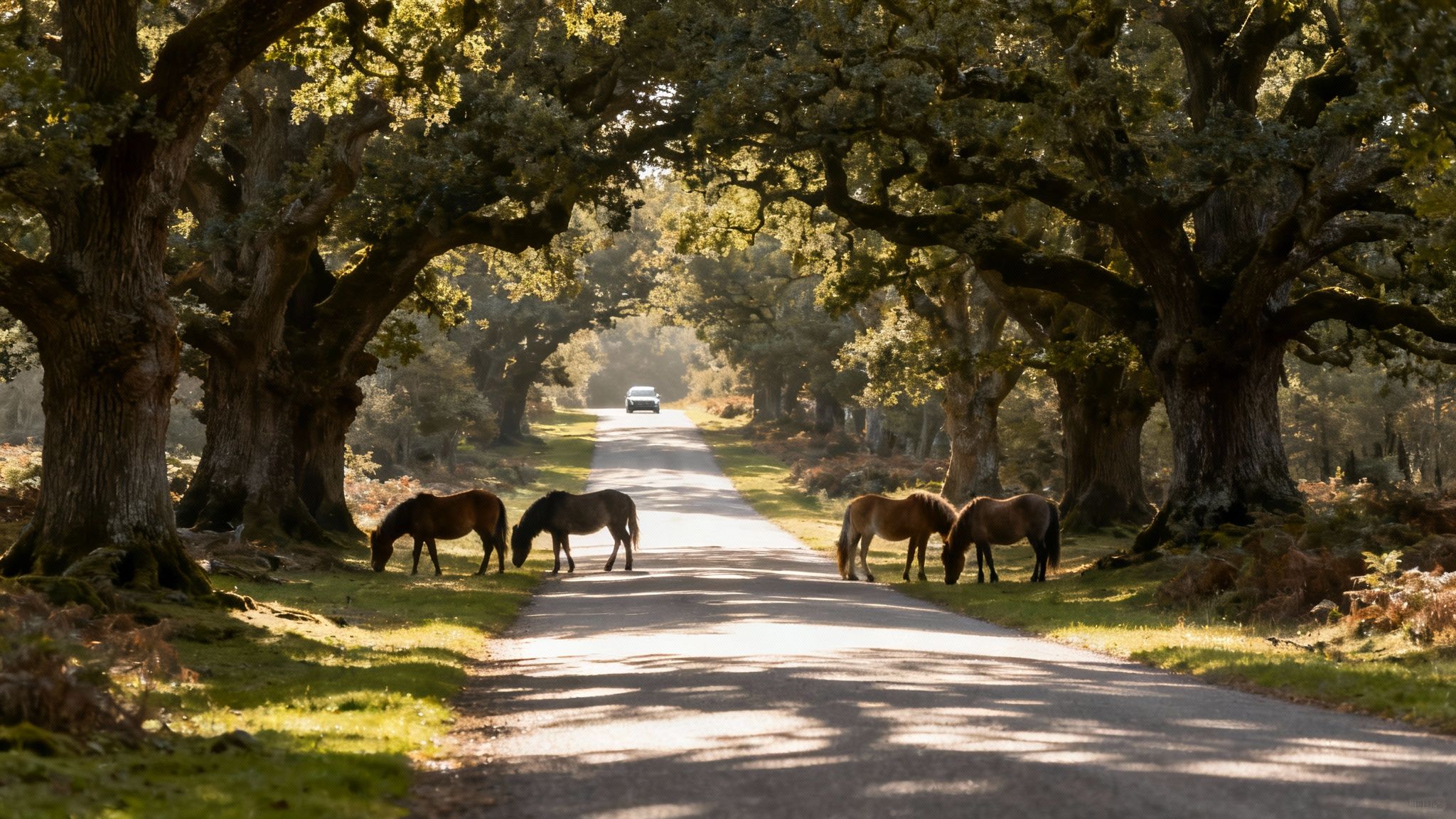
The drive here is a gentle affair, encouraging you to meander and explore. The real joy is turning off the main routes onto quieter lanes that plunge you into deep forest canopies or emerge onto vast, heather-clad plains. Every corner presents a potential postcard scene, from a cluster of thatched cottages to a herd of New Forest ponies grazing by the roadside. This unique, serene atmosphere makes it a powerful contender for the best driving road in England for those seeking peace and natural beauty.
Route Highlights and Must-See Stops
The New Forest rewards slow travel and frequent stops. The beauty is found not just on the road, but in the countless paths leading from it.
- Bolderwood Ornamental Drive: This is arguably the most famous scenic drive in the forest. This single-track road takes you through majestic, towering Douglas firs and ancient oaks. It leads to the Bolderwood Deer Sanctuary, which has a purpose-built viewing platform.
- Rhinefield Ornamental Drive: Known for its "tall trees trail," this route is lined with giant redwood and fir trees, creating a stunning natural cathedral. It’s a spectacular sight, especially when the sun filters through the canopy.
- Lyndhurst: Often called the "capital" of the New Forest, this bustling village is a great place to stop for lunch at a traditional pub. It’s also home to the New Forest Heritage Centre, offering insights into the area's unique history.
- Beaulieu: This charming village is home to the National Motor Museum, Beaulieu Abbey, and Palace House. It’s a perfect pit stop for history and automotive enthusiasts alike.
Practical Driving Tips
Navigating the New Forest requires a mindful approach, with respect for the unique environment and its famous free-roaming inhabitants.
Insider Tip: Early morning is the most magical time to drive. You’ll encounter less traffic and have the best chance of spotting deer and other wildlife as mist rises from the heathland.
- Best Time to Go: Late spring for the vibrant green foliage and newborn foals, or autumn (September-October) for the stunning bronze and gold colours of the heathland and woods.
- Duration: You can drive a scenic loop in a couple of hours, but to truly experience the area, allow a full day for multiple stops, short walks, and a pub lunch.
- Fuel: Top up your fuel in larger towns on the perimeter like Lyndhurst, Brockenhurst, or Ringwood. Petrol stations are infrequent within the core forest areas.
- Animal Awareness: Drive slowly and be prepared to stop at any moment. The ponies and deer have right of way and are often unpredictable. Never feed the animals.
Exploring this unique national park is a truly special experience. To help plan your wider adventure, you can discover more about what this beautiful part of the country has to offer and explore detailed itineraries for your journey. Find inspiration for your next road trip and learn more about England's stunning landscapes.
7. Welsh Border Scenic Route – A49 & Minor Roads through Shropshire
For those who crave a journey through England’s pastoral heartland, the drive along the Welsh border in Shropshire offers a serene and deeply historic experience. This isn't a route of dramatic coastal cliffs, but one of rolling hills, ancient market towns, and landscapes that seem lifted from a classic novel. Tracing parts of the A49 and dipping into a network of quieter B-roads, this drive reveals the quintessential British countryside in all its unspoilt glory.
The route through the Shropshire Hills Area of Outstanding Natural Beauty is a gentle adventure. It winds through valleys and over dramatic escarpments like the Long Mynd, offering sweeping views across the border into Wales. You’ll pass through sleepy villages with timber-framed pubs and ancient churches, creating a sense of travelling back in time. This drive is a perfect blend of comfortable cruising and scenic exploration, solidifying its place as a candidate for the best driving road in England for those seeking peace and pastoral beauty.
Route Highlights and Must-See Stops
The charm of this route is its unhurried pace and the countless discoveries waiting just off the main road.
- Ludlow: Widely regarded as one of England’s finest historic towns, Ludlow is a must-visit. Explore its magnificent medieval castle, wander the black-and-white timbered streets, and indulge in its renowned foodie scene with fantastic delis and restaurants.
- The Long Mynd: Take the single-track road known as "The Burway" from Church Stretton to the top of the Long Mynd for breathtaking panoramic views. On a clear day, you can see for miles across Shropshire and into the Welsh mountains. It’s a challenging but highly rewarding drive.
- Clun and Bishop's Castle: Venture off the A49 to explore these wonderfully characterful towns. Clun boasts a romantic ruined castle, while Bishop's Castle is a vibrant, quirky market town with two of its own breweries.
- Stokesay Castle: Just south of Craven Arms, this is the finest and best-preserved fortified medieval manor house in England. It's an incredible piece of history and a fascinating stop.
Practical Driving Tips
This drive is more about meandering and discovering than high-speed thrills, so a comfortable car is more important than a sporty one.
Insider Tip: Don’t be afraid to leave the A-road behind. The B-roads and unclassified lanes around the Long Mynd and Stiperstones offer the most authentic and scenic experiences. Just keep an eye out for farm traffic and passing places.
- Best Time to Go: Late spring (May-June) when the countryside is lush and green, or early autumn (September-October) for golden colours and fewer visitors.
- Duration: While the main route can be driven in a couple of hours, allocate a full day (5-6 hours) to properly explore Ludlow, drive over the Long Mynd, and stop in a village for lunch.
- Fuel: Main towns like Shrewsbury and Ludlow have plenty of fuel stations, but they become less frequent in the heart of the Shropshire Hills.
- Be Prepared: Some of the most scenic routes are single-track roads. Be confident with reversing and prepared to pull over for oncoming traffic. The relaxed pace is all part of the charm.
This journey through a timeless landscape is a true tonic for the soul. To fully plan your exploration of this historic borderland, you can find more details on local attractions and potential itineraries. Begin your adventure and learn more about England's stunning landscapes.
Top 7 Driving Roads in England — Comparison
| Route | Driving difficulty | Resource requirements | Expected outcomes | Ideal use cases | Key advantages |
|---|---|---|---|---|---|
| The Corniche Coast Road (A39) – North Devon | Moderate to Challenging — narrow lanes, sharp bends, steep gradients; busy in summer | Small/standard car recommended; allow 2–3 hours; fuel and parking limited in places | Spectacular clifftop coastal views, village stops, short hikes | Scenic day-drive, photography, coastal sightseeing (avoid large vehicles) | Uninterrupted coastal scenery, multiple viewpoints, good local cafes/services |
| Hardknott Pass & Wrynose Pass – Lake District | Very Challenging — extremely steep gradients (up to 1 in 3), tight hairpins, very narrow | Small, experienced-driver vehicle; check weather/road status; minimal facilities; short distance but slow progress | Intense mountain driving, panoramic fell vistas, remote Roman/heritage sites | Adventure driving for experienced drivers, bucket-list scenic challenge | Most dramatic driving in England, low traffic, exceptional mountain views |
| The Cotswolds Circuit – A44 & Minor Roads | Easy to Moderate — mostly gentle A/B roads; narrow village streets require care | Any standard car; full-day flexible; parking can be limited in villages | Gentle pastoral scenery, honey-stone villages, historic market towns | Family drives, relaxed sightseeing, food-and-stay itineraries | Well-maintained roads, abundant services, many stopping points |
| South Coast Cornish Roads – A30/A39 to Penzance | Moderate — generally good A-roads with narrower village sections; some steep stretches | Standard car; allow extra time for peak-season delays; good tourist infrastructure | Rugged Atlantic coast, beaches, historic sites (Land's End, Minack Theatre) | Coastal sightseeing, beach stops, combining drives with walks | Iconic coastline, many attractions, warmer seasonal weather |
| Peak District Scenic Loop – Cat & Fiddle Road (A54) | Moderate to Challenging — exposed moorland, sharp bends, variable weather | Capable vehicle; check weather (avoid winter/high winds); limited services; 1–2 hours typical | High-altitude moorland panoramas, authentic Peak District atmosphere | Short scenic loops, moorland photography, experienced drivers in good weather | Dramatic moorland views, relatively quiet off-peak, authentic landscape |
| New Forest Scenic Roads – A35/Minor Roads | Easy to Moderate — gentle forest roads; main hazard is wildlife on carriageway | Any car; flexible timing for stops/walks; good facilities; allow 1/2–full day | Tranquil woodland drives, frequent wildlife sightings, short nature walks | Wildlife watching, relaxed family drives, nature-oriented outings | Peaceful driving, abundant wildlife, multiple short-stop options |
| Welsh Border Scenic Route – A49 & Minor Roads through Shropshire | Easy to Moderate — mainly A/B roads with some narrow country lanes | Standard car; 3–4 hours recommended; some remote stretches with fewer services | Rolling escarpments, market towns, accessible panoramic viewpoints | Cultural touring, market-town exploration, quieter scenic driving | Dramatic escarpment views, quieter than major tourist routes, good towns for stops |
Your Great English Road Trip Awaits
So, which route has captured your imagination? We’ve journeyed through the alpine challenge of Hardknott Pass, cruised the sun-drenched Cornish coast, and meandered through the idyllic lanes of the Cotswolds. Each road we've explored offers far more than just a path between two points; they are destinations in their own right, rich with history, culture, and the kind of soul-stirring scenery that defines England.
From the dramatic cliffs of North Devon's 'Atlantic Highway' to the heather-clad moorlands of the Peak District's 'Cat and Fiddle Road', the diversity of experiences is astonishing. We've shown that the best driving road in England isn't a single, definitive route but rather the one that perfectly aligns with your sense of adventure. It's about finding the drive that speaks to you, whether that's a challenging ascent that tests your skills or a gentle, winding route perfect for a leisurely family picnic.
From Inspiration to Action: Planning Your Drive
The true magic of a road trip lies in the freedom it offers, but a little preparation ensures that freedom is joyful, not stressful. Remember the key takeaways from our guide:
- Match the Car to the Road: A nimble hatchback is ideal for the tight turns of Hardknott Pass, while a comfortable saloon or SUV might be better suited for the long stretches of the A49 along the Welsh border.
- Time Your Trip Wisely: Aim for the shoulder seasons (spring and autumn) to enjoy pleasant weather with fewer crowds. Summer is glorious but requires booking accommodations and attractions well in advance.
- Embrace the Detour: Some of the best discoveries are made when you venture off the main path. The B-roads of the New Forest or the hidden valleys of the Lake District are where unforgettable memories are often forged.
Thinking through the practicalities is just as important as dreaming about the vistas. Many of these incredible journeys begin or end in major cities. For instance, as you embark on your great English road trip, practical considerations like finding suitable parking options in London, a frequent starting or ending point, are essential for a smooth start.
Your Next Adventure is Just a Turn of the Key Away
The essence of these drives is the journey itself. It’s about the pub lunch in a forgotten village, the breathtaking viewpoint that appears around a bend, and the simple pleasure of watching the English landscape unfold through your windscreen.
Whether you choose a single route for a weekend escape or link several together for an epic multi-week tour, the open road is calling. These drives are an invitation to reconnect with nature, explore centuries of heritage, and experience the profound sense of liberty that only a road trip can provide. The best driving road in England is waiting for you to discover it. It's time to choose your route, pack your bags, and start exploring the beautiful tarmac that weaves through this historic land.
Ready to experience the ultimate English road trip without the hassle of planning? Let BTOURS craft a bespoke self-drive holiday for you, complete with perfectly planned routes, charming accommodations, and can't-miss local secrets. Visit BTOURS to turn your dream drive into a seamless and unforgettable reality.