Two days covers the essentials on an Isle of Skye road trip; three is the number most seasoned itinerary planners settle on, because it leaves room for weather and one flexible day. If you only have one day, drive the Trotternish Loop; with two or three, extend south to Neist Point, Dunvegan and the Fairy Pools. Book your ferry and hire car well ahead, and treat the island’s single-track roads as their own kind of driving.
Suggested itineraries for a Skye road trip
The right itinerary depends entirely on how many days you can give the island, and Skye punishes anyone who tries to cram too much into too little time. Distances look short on a map. They rarely feel short once you’re behind the wheel, dodging campervans and stopping for the view every ten minutes.
One day: the Trotternish Loop
If you have a single day, commit to the Trotternish Loop and nothing else. This circuit north of Portree packs in the island’s most photographed scenery into a manageable radius.
- Depart Portree by 08:00 to beat the coach parties.
- Old Man of Storr: allow 1.5 to 2 hours for the walk to the viewpoint and back.
- Kilt Rock and Mealt Falls: a 15-minute stop at the roadside viewpoint.
- The Quiraing: budget 1 to 2 hours depending on whether you do the short viewpoint walk or the fuller ridge route.
- Uig and the loop back to Portree via the west coast road.
That’s a full day, and it assumes good weather and no long queues at the Storr car park, which fills fast after 09:30 in summer.
Two days: a condensed circuit
Two days lets you add the island’s south west without feeling rushed.
- Day one: Trotternish Loop as above, condensed slightly, staying in or near Portree overnight.
- Day two: head south west to the Fairy Pools for a morning walk, then on to Neist Point and Dunvegan Castle in the afternoon, timing the Neist Point visit for late afternoon light if you want fewer people at the lighthouse.
This version means more driving per day and less breathing room, but it’s realistic if two days is genuinely all you have.
Three days: the classic loop
Three days is where an Isle of Skye road trip starts to feel unhurried rather than raced. Several well-regarded 7-day Scotland itinerary guides recommend exactly this pacing, splitting the island into Trotternish, the Cuillin and Fairy Pools, and a free day for weather or a boat trip.
- Day one: Trotternish Loop, based in or near Portree.
- Day two: Fairy Pools and Cuillin views, with an optional detour to Talisker Distillery on the way back.
- Day three: a flexible day, held open for a Loch Coruisk boat trip, a longer Cuillin walk, or simply a weather backup if day one or two got rained off.
Four days: relaxed pacing with extras
Four days removes almost all the time pressure. Split the driving across the island more evenly, add Elgol and the boat trip to Loch Coruisk as a dedicated half day, and give yourself a spare morning at Neist Point or Coral Beach near Dunvegan. Navigation apps routinely under-read how long these journeys actually take, since Skye’s travel guides warn that scenic stops, single-track passing and parking searches all eat into drive times that Google Maps simply doesn’t account for. Whatever plan you choose, add a cushion of extra time per driving leg.
Best routes on Skye and single-track driving rules
Three loops define almost every Isle of Skye itinerary: the Trotternish Loop in the north, the Duirinish peninsula out to Neist Point in the west, and the Cuillin approach roads that lead to the Fairy Pools and Sligachan. Each has a different character. Trotternish is dramatic geology and roadside pull-ins. Duirinish is quieter, with narrower roads and fewer facilities. The Cuillin roads are shorter but busier, since almost every visitor to Skye ends up on the same stretch heading for the Fairy Pools car park.
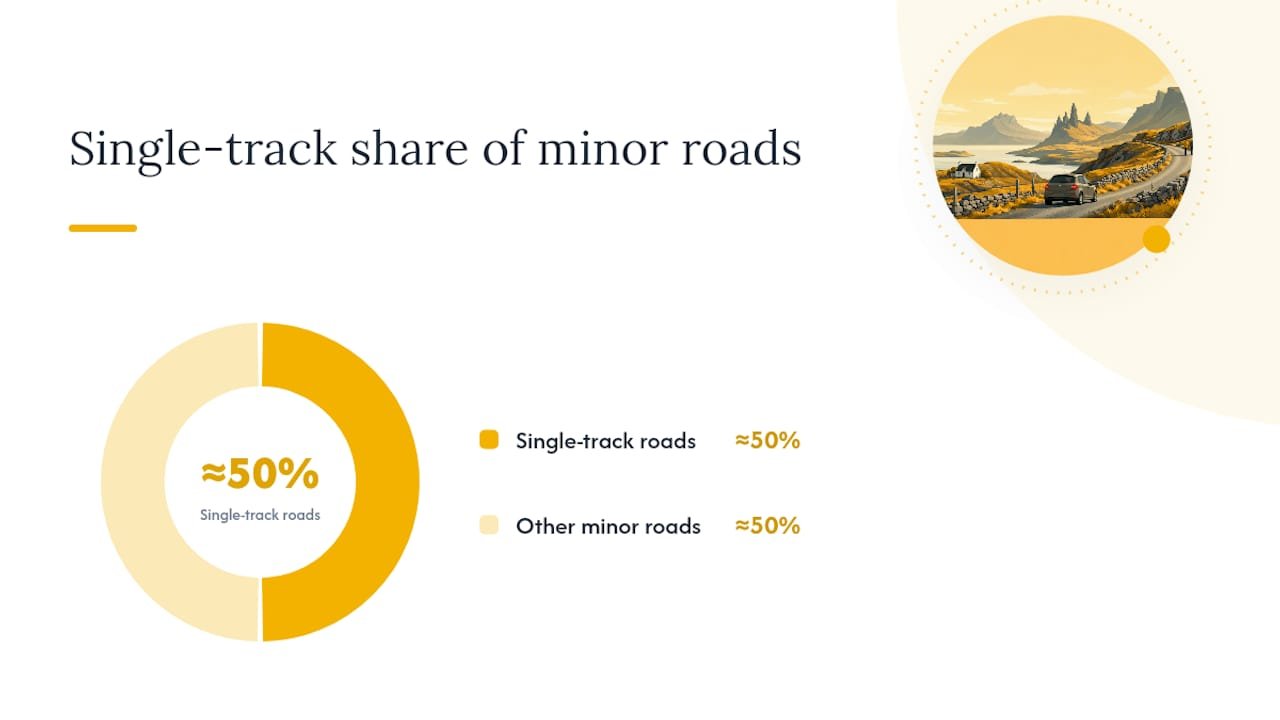
What catches most first-time drivers off guard is the single-track network that connects them. Roughly half of Skye’s minor roads are single-track with passing places cut into the verge every few hundred metres, and the etiquette isn’t optional. Local driving guidance is unambiguous: keep left, use the passing places, and the vehicle nearest a passing place reverses into it, regardless of which direction it’s travelling. Flash your headlights or raise a hand to say thanks. Don’t overtake on these roads, and don’t park in a passing place, even for two minutes to take a photo.
Pro Tip: If reversing on a narrow, sloping verge makes you nervous, hire the smallest practical vehicle and practise reversing into a gap in a quiet car park before you tackle anything remote. The soft verges on Skye’s back roads often hide drainage ditches that can damage a wheel or undercarriage if you misjudge the edge.
A few other things worth knowing before you set off:
- Speed limits are posted in mph, and local guidance stresses using designated parking rather than laybys or verges, which cause congestion and erosion.
- Sheep and deer wander onto the road without warning, especially at dawn and dusk, so slow down through open moorland even when the road looks clear.
- Night driving on Skye’s unlit single-track roads is genuinely riskier than daytime driving; if you’re not confident, avoid it and plan your day to finish before dusk, particularly outside summer.
- Fuel stations are limited to the main settlements: Portree, Broadford, Dunvegan and Uig. Fill up whenever you pass one, because you can easily burn half a tank on detours and there’s nothing on many of the back roads.
On getting to the island itself, you have two realistic options: drive over the Skye Bridge at Kyle of Lochalsh, which is free and open around the clock, or take the CalMac ferry between Mallaig and Armadale, which adds scenery and a slower start to your trip. The ferry requires advance vehicle booking, and sailings do sell out in peak season, so treat a booked crossing as a fixed appointment rather than something to wing on the day.
Day-by-day plans with timings and parking notes
A written itinerary only earns its keep if the timings hold up on the actual road, so here’s what each day looks like hour by hour, with the parking realities built in rather than glossed over.
Day one: Trotternish Loop from Portree
- 08:00 — Depart Portree. Early starts matter more here than almost anywhere else on the island, because the Old Man of Storr car park routinely fills before 09:30 in July and August.
- 08:30 to 10:15 — Old Man of Storr. Allow 45 minutes each way for the walk to the viewpoint, plus time to actually stand and look at the thing.
- 10:45 — Kilt Rock and Mealt Falls viewpoint, a quick 15 to 20 minute stop.
- 11:30 to 13:00 — The Quiraing. The short version, a there-and-back walk to the main viewpoint, takes about an hour; the full ridge route takes closer to three hours, so decide before you park.
- 13:30 — Lunch in Uig or Staffin, depending on which direction you looped.
- 14:30 to 16:00 — Drive the west coast back towards Portree, stopping at any viewpoints that catch your eye.
Shorter version: skip the full Quiraing walk and stick to the viewpoint, which saves close to two hours. Longer version: add the Fairy Glen near Uig, a strange, compact landscape of grassy cones that takes about 30 minutes but rewards the detour.
Day two: Fairy Pools, Cuillins and the west coast
- 08:15 — Depart Portree for the Fairy Pools car park, roughly 45 minutes away. Arriving before 09:00 in high season can roughly halve your parking wait compared with arriving mid-morning, since the car park is small and fills fast once coach parties arrive.
- 09:00 to 11:00 — Fairy Pools walk. The main trail out to the highest pools and back takes about two hours at a comfortable pace; swimming is popular but the water is cold year round, so only go in if you’re prepared for it.
- 11:30 — Drive past Sligachan, pausing for the classic Cuillin reflection photo at the old bridge if the weather is calm enough for still water.
- 12:30 to 13:30 — Lunch at Sligachan or continue to Carbost for the Talisker Distillery tour, which typically runs 45 to 75 minutes depending on the tour type.
- 14:30 to 17:00 — Head west to Neist Point. The walk down to the lighthouse is steep but short, around 20 to 25 minutes each way; time your visit for late afternoon if you want the crowds thinner and the light better.
- 17:30 — Return towards Portree or overnight closer to Dunvegan if that suits your route better.
Weather contingency: if the Cuillins are cloud-bound, swap the order and do Neist Point in the morning instead, since coastal viewpoints tend to clear faster than the mountains.
Day three: flexible day
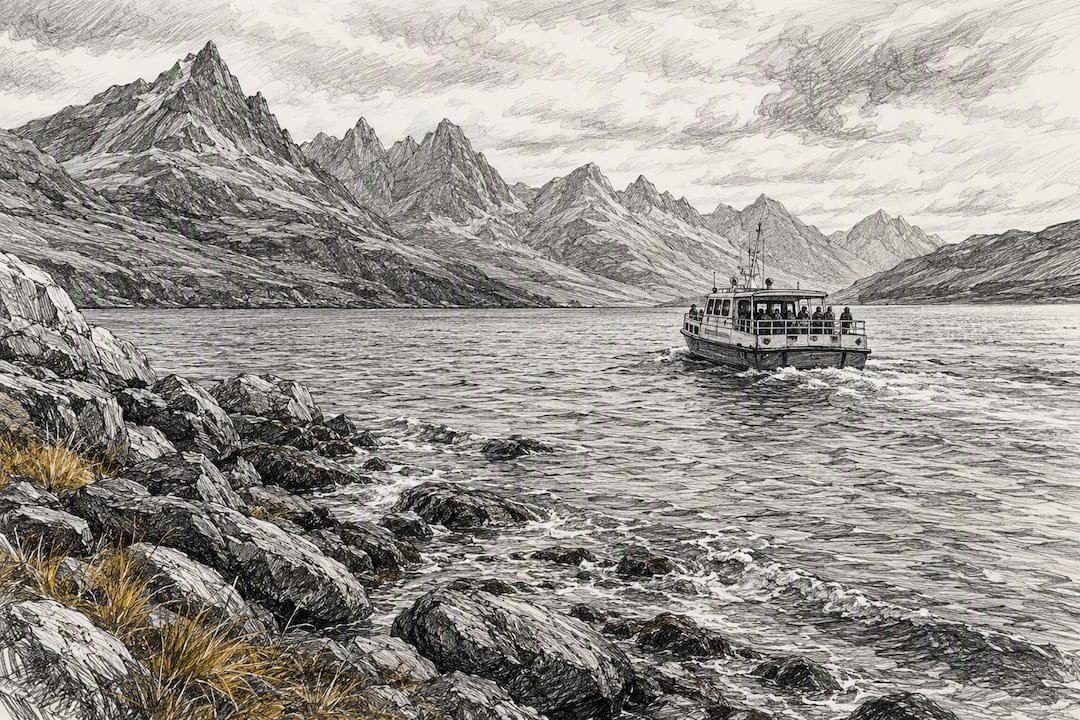
This is the day to hold in reserve rather than plan rigidly. Popular options include the boat trip to Loch Coruisk from Elgol, which takes most of a morning or afternoon and delivers a view of the Cuillin that’s genuinely impossible to get from the road; a longer walk into Coire Lagan below the Cuillin ridge for confident hikers; or simply a second, calmer pass through whichever loop got rained on earlier in the trip. Build this day around the forecast, not the plan.
Must-visit stops to slot into your itinerary
Every Isle of Skye itinerary revolves around a handful of fixed points. Here’s what each one actually demands in terms of time and effort.
- Old Man of Storr: the viewpoint is roughly a 45 minute walk each way on a well-maintained path; the full loop past the pinnacle takes closer to three hours for those who want the complete circuit.
- The Quiraing: the short viewpoint walk takes about an hour there and back; the full ridge walk to Trotternish’s famous rock formations runs two to three hours and needs sturdy footwear.
- Fairy Pools: budget two hours for the main trail, arrive before 09:00 in summer to avoid the worst of the parking queue, and only swim if you’re comfortable with genuinely cold water.
- Neist Point: the walk down to the lighthouse is steep but short, around 20 minutes each way; the car park is small and gets congested around sunset, which is also the most popular time to visit.
- Dunvegan Castle: allow 90 minutes for the castle and gardens together, longer if you want the boat trip to see the seal colony.
- Talisker Distillery: standard tours run 45 to 75 minutes, and booking ahead in summer avoids disappointment.
- Sligachan: a five-minute stop, but the reflection shot of the Cuillins from the old bridge is one of the island’s best-known photographs on a still day.
- Coral Beach: a 20 to 30 minute walk from the car park near Dunvegan, worth it for the unusual white sand made from bleached algae.
- Loch Coruisk boat trip: departs from Elgol, takes roughly half a day including the walk to the pier, and shows you a side of the Cuillin most road-based visitors never see.
Where to base yourself and how to book
Portree works as a base for most itineraries because it sits roughly central to both Trotternish and the routes south, though it gets busy and books up fastest. Broadford suits travellers arriving via the Skye Bridge who want an easier first night, while Uig suits anyone prioritising the north or catching the ferry to the Outer Hebrides.
Spring and autumn shoulder seasons bring noticeably lighter traffic at the major car parks and a better chance of spotting wildlife along quieter roads, without sacrificing much daylight. Book accommodation three to six months ahead for summer travel, since much of Skye’s lodging is small-scale and sells out early.
A few checklist items before you set off:
- Choose a smaller hire car if you’re not confident on narrow roads; a compact vehicle is far easier to reverse and manoeuvre in passing places.
- Confirm your insurance covers single-track and unclassified roads, and check the excess if you’re at all unsure about your reversing.
- Download offline maps before arrival, since mobile signal drops out across large stretches of the island.
- If you’re using the Mallaig to Armadale ferry, book your vehicle space well in advance; peak-season sailings sell out.
Why local expertise still matters on Skye
Timing an Isle of Skye itinerary well means juggling ferry schedules, single-track delays and unpredictable weather all at once. BTOURS builds self-drive itineraries around exactly these constraints, drawing on route planning experience across Scotland, England, Wales, Ireland and Greece, and its membership of the Adventure Travel Trade Association reflects that focus on properly planned independent travel. A planning enquiry starts with your travel dates and interests, and comes back with a paced route, booked accommodation and the logistics already handled.
What actually matters on a Skye itinerary
Most Isle of Skye guides obsess over which sights to see and barely mention the thing that actually breaks people’s plans: time management on roads that refuse to behave like normal roads. The conventional advice, “see the Old Man of Storr, the Quiraing, the Fairy Pools, Neist Point,” treats the island like a checklist. It isn’t one. A 50-mile loop that Google Maps says takes 90 minutes can eat three hours once you add a queue at a passing place, a car park that’s already full, and the ten minutes you’ll inevitably lose just staring at Kilt Rock.
The single biggest mistake is planning by distance rather than by daylight and buffer time. Two loosely scheduled days beat four crammed ones. If you take one thing from this article, take the buffer, not the checklist. And if the logistics of ferries, parking windows and single-track timing feel like more than you want to manage solo, a tailored self-drive itinerary removes that guesswork without removing your independence on the road.
— Theo
Get a self-drive Skye itinerary built around your dates
BTOURS is the alternative to piecing together an Isle of Skye itinerary from a dozen open browser tabs: a paced, day-by-day route with accommodation and ferry logistics already sorted, so you spend your evenings looking at the Cuillins instead of a spreadsheet.

Some self-drive plans factor in single-track delays, parking windows at the busiest stops, and the realistic driving times that map apps consistently underquote. Read what to look for in a self-drive tour package before you book to see exactly what a planning enquiry covers, or head straight to BTOURS to request a quote for your Skye dates. If you’re weighing up hiring a larger vehicle for a group trip, this guide to driving tourist routes on your own schedule is worth a look too. Either way, the next step is simple: send over your travel dates and we’ll return a route that actually fits them.
Sources
- Skye
- Isle of Skye travel guide – LiveScot
- Mallaig–Armadale route information – CalMac
- Driving Tips | Isle of Skye | Highland | Scotland
FAQ
How long does it take to drive around the Isle of Skye?
Driving the full Trotternish Loop alone takes around four to five hours with stops, and a complete circuit of the island’s main roads realistically needs a full day once you account for single-track sections and parking searches.
How many days do I need for the Isle of Skye?
Two days covers the highlights, but three days is the figure most itinerary planners recommend, since it leaves a flexible day for weather or a boat trip alongside the Trotternish and Cuillin loops.
What is the most scenic drive on the Isle of Skye?
The Trotternish Loop is generally considered the island’s standout drive, taking in the Old Man of Storr, Kilt Rock and the Quiraing within one 50-mile circuit north of Portree.
Is it difficult to drive on the Isle of Skye?
Skye’s main roads are straightforward, but its many single-track sections require specific etiquette, keeping left, using passing places, and reversing when you’re closest to one, which catches out drivers unfamiliar with rural Scottish roads.
Should I book the ferry or drive over the Skye Bridge?
The Skye Bridge is free, open all hours and requires no booking, while the Mallaig to Armadale ferry offers a scenic crossing but needs advance vehicle booking, since peak-season sailings can sell out.