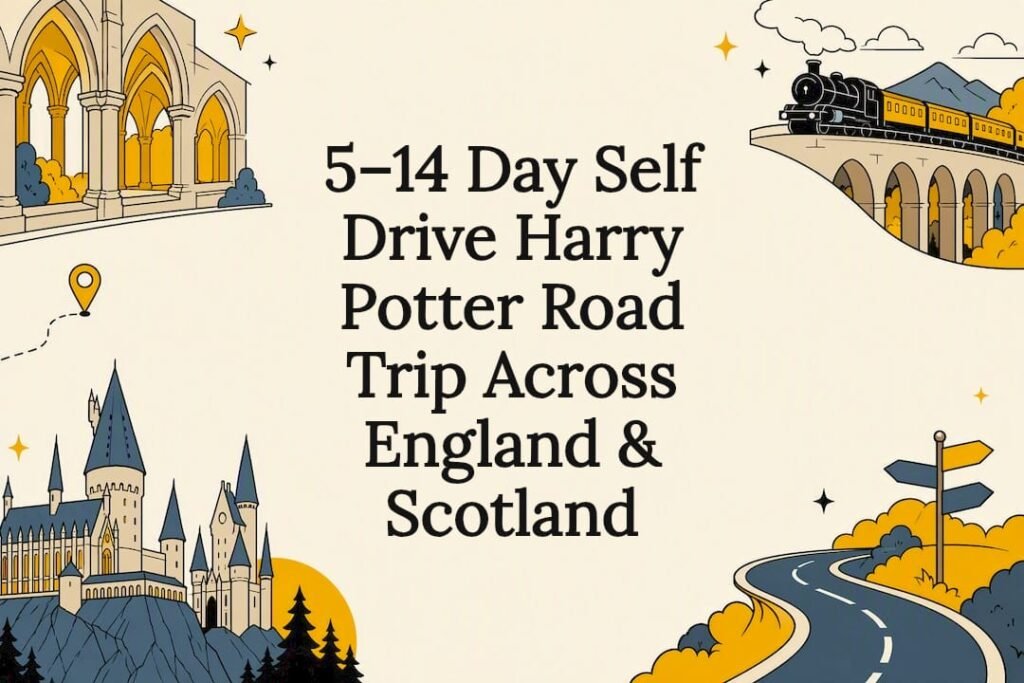
The strongest Harry Potter road trip pairs three things: a prebooked morning at Warner Bros. Studio Tour London, a slow drive through the English filming sites at Oxford and Lacock, then a Highlands loop through Glenfinnan and Glencoe. Give England a week, Scotland a week, or combine both into 10 to 14 days. Book the studio tour and the Jacobite Steam Train the moment you settle on dates. Everything else can flex around those two fixed points.
England highlights: what to see in London, Oxford, Lacock and the north
Start at the source. Warner Bros. Studio Tour London – The Making of Harry Potter sits in Leavesden, just off the M25, and it is the only stop on this whole trip you cannot wing on the day. Tickets are timed and must be booked in advance through the official visitor information page, and the postcode for satnavs is WD25 7LR. If you are driving, parking is on site and tied directly to your ticket confirmation, so bring your booking with you. The studio recommends arriving around 20 minutes before your slot to clear security and make full use of the time, and honestly, that advice is worth following. This is not a two-hour add-on; most fans spend four to five hours moving through the Great Hall, the Forbidden Forest, and the Diagon Alley set, so build the rest of your day around it rather than trying to squeeze it in.
For fans not driving, Leavesden is reachable by train from London Euston to Watford Junction, followed by a dedicated shuttle bus that runs on a loop from the station. It is a genuinely easy option if you would rather not deal with M25 traffic on the way in.
Once you are back in central London, the film-inspired sites cluster tightly enough to walk between them in an afternoon:
- King’s Cross Station for the Platform 9¾ trolley and sign, best photographed early morning before commuter traffic peaks
- Leadenhall Market, the Victorian arcade that stood in for Diagon Alley’s exterior, quietest on weekday mornings
- Millennium Bridge, glimpsed in the sixth film, worth a stop if you are already walking the Thames path
Statistic worth building your day around: the round trip from central London to Leavesden and back, including the tour itself, realistically eats a full day. Plan nothing else on studio day.
From London, Oxford is roughly an hour and a half by car and deserves a full afternoon. The Bodleian Library’s Divinity School doubled as the Hogwarts infirmary and featured in several film scenes, while Christ Church College’s dining hall inspired the Great Hall’s design and its cloisters appear on screen directly. Both operate on restricted access: the Bodleian runs paid guided tours at set times, and Christ Church closes to visitors during college events and exam periods, so check current opening hours before you build your afternoon around them.
Push west from Oxford and you reach Lacock Abbey, a National Trust property that doubled as several Hogwarts interiors in the early films, including Professor Sprout’s greenhouse classroom and the corridor where the Mirror of Erised was kept. The abbey cloisters and the village itself, largely untouched by modern signage, are worth wandering for an hour beyond the abbey ticket. National Trust membership or a day ticket covers entry, and booking ahead in peak summer avoids queuing at the gate.
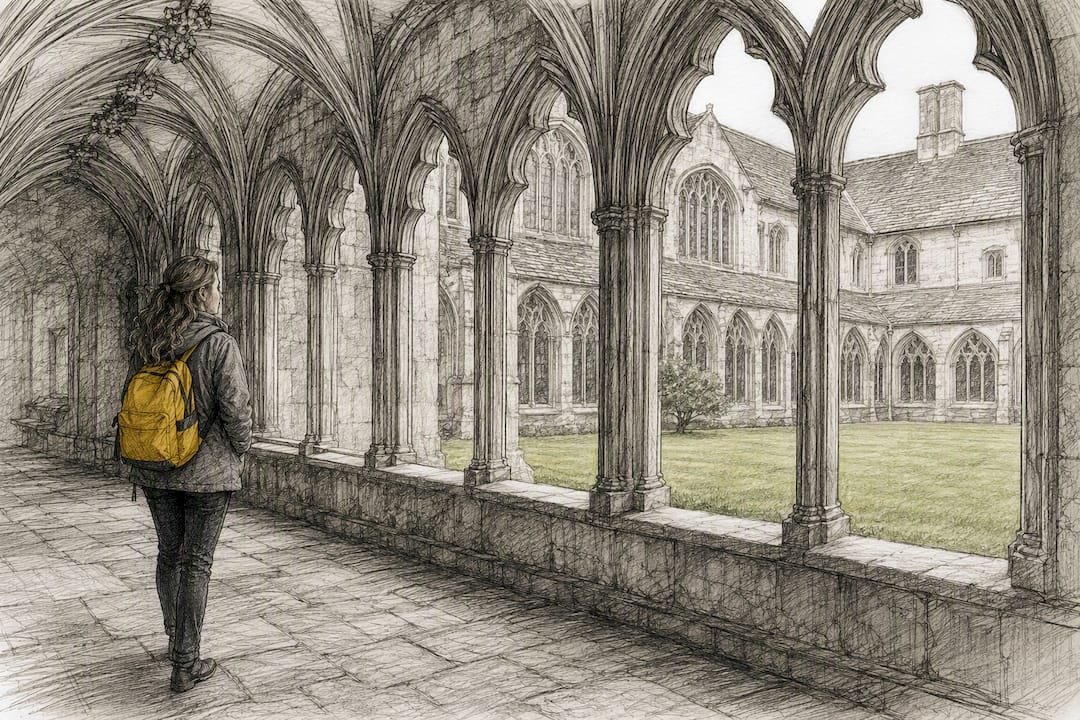
If your route runs further north, several England exteriors are worth a detour rather than a dedicated day: Alnwick Castle in Northumberland (broomstick training scenes), Durham Cathedral’s cloisters, and Gloucester Cathedral, whose fan-vaulted cloisters also stood in for Hogwarts corridors. None demand a full day, but each is a natural stop if you are already driving that stretch of England en route to Scotland.
Scotland highlights: Edinburgh and the Highland filming locations you must visit
The Highlands are where the wizarding world road trip earns its name. Glenfinnan Viaduct is the single most photographed location in the entire Harry Potter road trip UK circuit, the curved railway bridge the Hogwarts Express crosses on its way north. The best public viewpoint is a short, steep walk uphill from the National Trust car park, which charges roughly £3 to £4 for the day. Budget around 15 to 20 minutes each way for the walk, and arrive early before a scheduled train crossing since crowds form quickly.
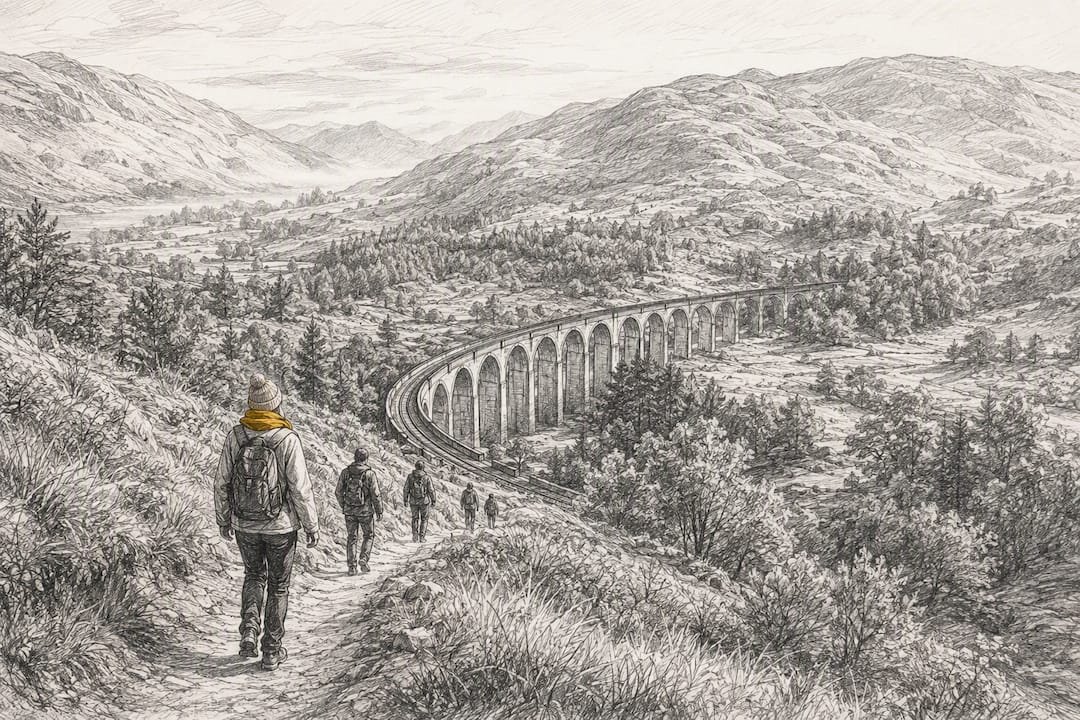
That train is The Jacobite Steam Train, the service that runs the actual locomotive across the viaduct. It operates seasonally between Fort William and Mallaig, running seasonally in spring, summer, and autumn, and the round trip covers a lengthy route taking several hours including a stop in Mallaig. It is a major tourist draw independent of any Potter connection, which means seats sell out well ahead of travel dates in peak summer. Book as soon as your Scotland dates are fixed, not the week before.
Before heading into the Highlands, Edinburgh deserves a day or two of its own. J.K. Rowling wrote much of the early series in the city’s cafés, and the Elephant House and Victoria Street (widely tied to the look of Diagon Alley) draw fans on foot. Greyfriars Kirkyard, with its headstones bearing names that echo characters in the books, rounds out a literary walking afternoon before you point the car west.
From Edinburgh, Fort William makes the most sensible Highlands base: it puts you within easy reach of Glenfinnan, the Jacobite departure point, and the wider Glencoe and Rannoch Moor landscape. Glencoe itself was used for several exterior sequences, including scenes near Hagrid’s hut, and Rannoch Moor’s bleak, open expanse appears in establishing shots throughout the franchise. Neither site has a formal visitor centre tied to the films; you are looking at roadside pull-ins and short waymarked walks, some on genuinely uneven, boggy ground.
- Glenfinnan Viaduct viewpoint: short, steep walk, moderate difficulty, not pushchair-friendly
- Jacobite Steam Train: book online, arrive at the station 30 minutes early
- Glencoe: mostly roadside viewing plus optional short hikes, check weather before longer walks
- Rannoch Moor: viewed from the A82, limited safe stopping points
Pro Tip: Late spring and early autumn hit the sweet spot for Highlands travel: the Jacobite is still running, the weather is more forgiving than midwinter, and the crowds at Glenfinnan thin out noticeably compared with peak July and August.
Three sample self-drive itineraries you can copy
Pick the one that matches your time, or lift days from each to build your own.
5-day England-only route
- Day 1, London arrival. Settle in, walk King’s Cross and Leadenhall Market in the afternoon.
- Day 2, Studio Tour day. Drive or take the train and shuttle to Leavesden. Budget the whole day; nothing else fits around it.
- Day 3, Oxford. Ninety minutes’ drive from London. Bodleian Library in the morning, Christ Church in the afternoon, overnight in Oxford.
- Day 4, Lacock and Bath. Lacock Abbey is under an hour from Oxford; continue on to Bath for the night, a scenic 40-minute add-on.
- Day 5, Northern detour or return. Either head home from Bath, or if time allows, swing north toward Gloucester Cathedral before looping back to London.
Total driving across the five days stays under four hours, so this route suits fans who would rather linger at each stop than clock miles.
7-day Scotland-only route
- Days 1 to 2, Edinburgh. Literary walking tour, castle, Old Town, and a day trip option to Stirling if you have spare time.
- Day 3, drive to Fort William. Around three and a half hours via Glencoe, so build in stops along the way rather than treating it as a transit day.
- Day 4, Glenfinnan and the Jacobite. This is the anchor day of the whole Scotland leg. Ride the train if booked, or drive to the viaduct viewpoint if not.
- Day 5, Glencoe deep dive. Short walks, photography stops along the A82, Rannoch Moor viewpoints.
- Day 6, Loch Shiel and Mallaig. Loch Shiel is the water used for the Hogwarts lake aerial shots; the road along its shore is one of the quieter, more scenic drives in the region.
- Day 7, return to Edinburgh or onward. Roughly three and a half hours back, or continue toward Glasgow if that suits your onward travel.
10 to 14-day combined route
Chain the two routes above with a driving day between them, roughly six to seven hours from Oxford or Bath up to Edinburgh depending on your exact stops. Fans who dislike changing accommodation nightly should base in Oxford for three nights (day-tripping to the Studio Tour and Lacock) and in Fort William for three nights (day-tripping to Glenfinnan and Glencoe), rather than moving hotels every single day. That base-and-day-trip pattern cuts packing fatigue substantially over a two-week trip, and it is the structure most routing guidance for this circuit tends to favour once you factor in realistic driving stamina. For inspiration on stitching longer UK routes together without over-scheduling yourself, BTOURS’ guide to UK road trips covers pacing patterns that apply just as well here.
How to plan the logistics: booking, driving, tickets and costs
Two bookings drive the whole trip, and both need attention before anything else. Warner Bros. Studio Tour tickets and Jacobite Steam Train seats both sell out during summer school holidays, sometimes weeks ahead. If your trip falls in July or August, book both the moment your dates are fixed.
Driving notes matter more than most fans expect. The UK drives on the left, and if you are used to right-hand-drive countries, give yourself a day to adjust before tackling anything narrow. Highland roads around Glencoe and Glenfinnan include single-track stretches with passing places, quite different from motorway driving further south. Average drive times worth knowing: London to Oxford is around 90 minutes, Oxford to Lacock under an hour, Edinburgh to Fort William roughly three and a half hours, and Fort William to Glenfinnan a short 25-minute hop.
Budget varies enormously by travel style, but the major cost drivers are consistent:
- Studio Tour tickets (priced per person, check current rates before booking)
- Jacobite Steam Train fares (higher for premium carriages)
- Car hire and fuel, which climb steeply in the Highlands versus England
- Accommodation, the single biggest swing factor between budget and comfort tiers
Cost driver worth flagging: Glenfinnan’s National Trust car park runs around £3 to £4 for the day, small money against everything else, but it catches out drivers who assume Highland viewpoints are always free.
Alternative transport exists for parts of this route if driving every leg feels like too much. The train-plus-shuttle option to Leavesden avoids the M25 entirely. ScotRail runs regular services between Edinburgh, Glasgow, and Fort William for travellers who want to skip the long Highlands drive and pick up a hire car locally instead. Most outdoor filming sites remain free to access, though budget for the odd parking fee and uneven, sometimes muddy ground at sites managed by the National Trust and National Trust for Scotland.
Choosing bases, pacing your days and travelling with limited mobility
Where you sleep shapes how much you enjoy the trip more than almost anything else. For the England leg, Watford or Wembley suit a Studio Tour day thanks to the shuttle link, while Oxford or Bath work well as a base for the southern cluster of Lacock, the Cotswolds, and the university sites. In Scotland, Edinburgh anchors the literary days, and Fort William is the only sensible base for the Glenfinnan, Glencoe, and Loch Shiel cluster.
On pacing: cap driving at around three hours a day where possible, and treat anything past four as a dedicated travel day with no sightseeing bolted on. A screen-free approach to road-trip days works particularly well here, since so much of the Highlands leg is about the landscape passing outside the window rather than anything to do at the destination.
- Families: self-catering cottages near Fort William give flexibility for early starts and tired kids
- Couples or solo fans: cosy B&Bs in Oxford or Edinburgh’s Old Town add character without the cost of a chain hotel
- Studio Tour visitors: a hotel near Watford Junction cuts the shuttle transfer to almost nothing
Pro Tip: If mobility is a concern, swap the Glenfinnan viewpoint walk for viewing the viaduct from the roadside layby below, and treat Christ Church’s cloisters as optional rather than essential, since both involve uneven stone paths and slopes that aren’t step-free.
Why a tailored itinerary beats a DIY spreadsheet
Piecing this route together yourself is entirely doable, but the two time-sensitive bookings, Studio Tour slots and Jacobite seats, are exactly where DIY planning goes wrong. Miss the booking window and your whole schedule has to shift around it. A planner who has already mapped this circuit can lock in those slots first and build sensible driving days around them, rather than discovering the mismatch after you have already booked flights.
BTOURS builds personalised self-drive itineraries across England, Scotland, and beyond, with curated accommodation chosen to match the pace of each day rather than picked at random along the route. As a member of the Adventure Travel Trade Association, BTOURS works to standards that matter when a trip depends on tight, sequential bookings. Practically, that means someone else chases the Studio Tour and Jacobite availability, sets sensible daily driving caps so no day turns into a slog, and stays reachable if plans need adjusting mid-trip.
Dining options with a wizarding world twist
Food along this route ranges from theatrical to genuinely excellent, and it is worth planning at least one meal around the theme rather than treating dining as an afterthought.
In London, several themed cafés near King’s Cross lean into the Potter aesthetic with House-branded drinks and Great Hall-style decor, best treated as a fun photo stop rather than a destination meal. Oxford offers something better: the dining hall at Christ Church, the inspiration for the Great Hall, sits above several traditional pubs in the city centre where you can eat under similarly vaulted ceilings without the queue. In Edinburgh, the Elephant House area has several cafés trading on the Rowling connection, though the food itself varies in quality, so check reviews before committing an evening to it.
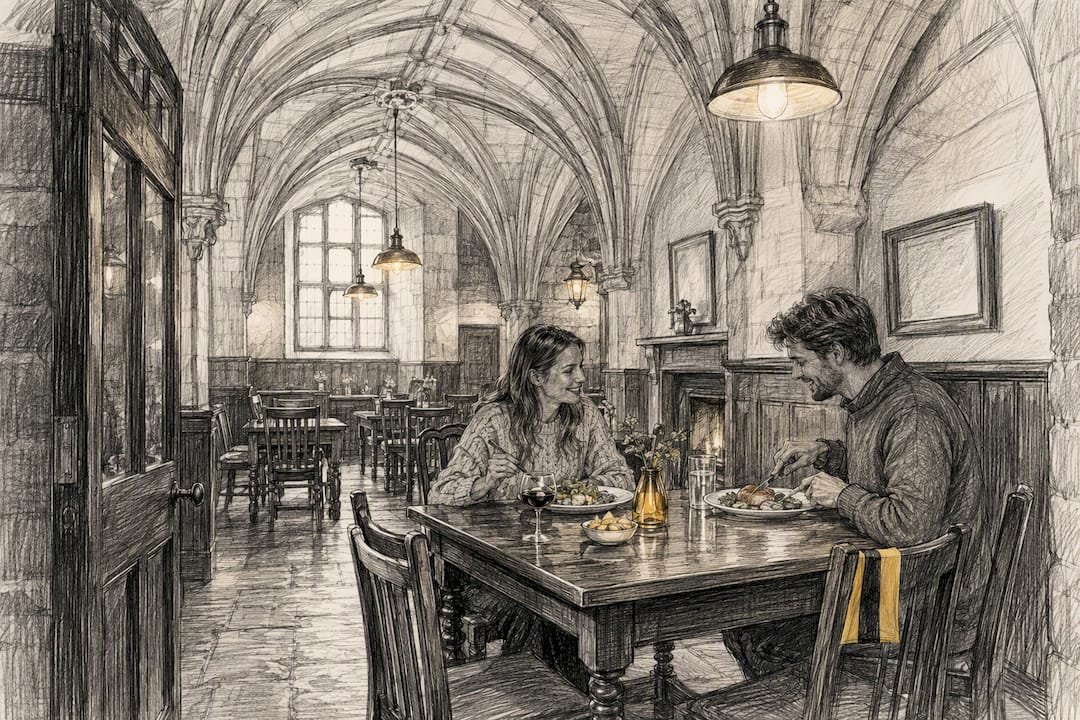
In the Highlands, the theming drops away entirely and the food gets simpler and better: seafood in Mallaig straight off the boats, and hearty pub food in Fort William after a long day on the road. That contrast, theatrical near the cities, unpretentious in the Highlands, is part of what makes the combined route interesting rather than one long photo opportunity.
Accessibility across the route
Access varies sharply between the indoor and outdoor sites on this trip, and it is worth planning around that difference rather than discovering it on the day.
Warner Bros. Studio Tour is fully step-free, with lifts, accessible toilets, and wheelchair loan available on request when booking. Oxford’s Bodleian Library and Christ Church both have some step-free routes through their main areas, though the older stone floors and thresholds mean not every corner is wheelchair accessible, so it is worth calling ahead if mobility is a concern.
Outdoors, it gets harder. Lacock Abbey has a mostly flat cloister but uneven ground in the grounds. Glenfinnan’s viewpoint involves a genuinely steep, unpaved climb that is not suitable for wheelchairs or those with limited mobility, though the viaduct itself is visible, at a distance, from a roadside layby without the walk. Glencoe and Rannoch Moor are largely roadside viewing with optional walks on rough terrain. If accessibility is a priority for anyone in your group, build in the roadside alternatives from the start rather than treating them as a fallback.
Why the pilgrimage still matters (and how to do it well)
There is something genuinely moving about standing where a scene you have watched fifty times was actually filmed. It is not really about the set piece, it is about closing the gap between a story that shaped your childhood and a real patch of ground you can stand on. That gap is smaller than most fans expect, and smaller still once you have walked it yourself.
The flip side is that these sites were not built for tourism at this scale, and it shows at Glenfinnan on a July afternoon. Travelling in late spring or early autumn, arriving early at outdoor sites, and following local signage without wandering off marked paths all protect places that were never designed to hold this many visitors. Spend money in the villages you pass through, not just at the big attractions; Mallaig’s harbour cafés and Fort William’s independent shops need that custom far more than any studio gift shop does. A Harry Potter themed journey done thoughtfully leaves these places better off, not worse.
— Theo
Let BTOURS handle the bookings while you enjoy the road
BTOURS is the alternative to piecing this trip together yourself, one email instead of a dozen browser tabs, and a fixed plan instead of a nagging worry that you have booked the Studio Tour on the wrong day. For a Harry Potter road trip UK route especially, where two of the best experiences (Warner Bros. Studio Tour and the Jacobite Steam Train) run on strict timed availability, having someone lock those in first and build the driving days around them removes the single biggest planning headache.
Personalised self-drive itineraries are available across England, Scotland, Wales, Ireland, and Greece, with route planning, accommodation, and on-trip support offered as part of the service. The service maintains recognized standards for how the trips are run, supported by relevant industry memberships. If you want a wizarding world road trip mapped out around your dates rather than a generic template, see what to look for in a self-drive tour package before you book, and get in touch to start shaping your route.
Where to check before you travel
Booking windows and access rules shift, so confirm details directly with these sources before you finalise dates:
- Warner Bros. Studio Tour London for tickets and travel directions
- VisitScotland’s Harry Potter itinerary for regional Highlands advice
- VisitBritain’s filming locations guide for England-wide sites
- National Trust for Lacock Abbey opening times and admission
Sources
- Visit Information – WBST Leavesden
- Harry Potter itinerary – VisitScotland
- Harry Potter Filming Locations in Scotland – A Fan’s Guide
- Explore Harry Potter filming locations – National Trust
FAQ
Where can I find Harry Potter locations in the USA?
None of the film’s real-world locations are in the United States; every filming site used for the movies sits in England or Scotland, from Leavesden Studios to Glenfinnan. US visitors typically fly into London or Edinburgh and build a road trip from there.
Is there a Harry Potter driving tour in Scotland?
Yes, and it centres on the Highlands: Glenfinnan Viaduct, the Jacobite Steam Train route between Fort William and Mallaig, Glencoe, and Loch Shiel form the core loop, usually based from Fort William with Edinburgh as a bookend city stop.
How much would a trip to Harry Potter World cost?
Costs depend heavily on trip length and travel style, with the main drivers being Studio Tour tickets, Jacobite Steam Train fares, car hire, fuel, and accommodation; Highland fuel and hire prices tend to run noticeably higher than in England.
Where can I visit Hogwarts in real life?
No single site is “Hogwarts”, since the castle is a composite, but Christ Church College and the Bodleian Library in Oxford, Lacock Abbey in Wiltshire, and Alnwick Castle in Northumberland each supplied real interiors or exteriors used to build it on screen.
Should I book a self-drive Harry Potter road trip myself or use a planner?
Either works, but the Studio Tour and Jacobite Steam Train both run on limited, time-sensitive availability, and a planner such as BTOURS can secure those first and pace the driving days around them.
Recommended
- Best Spring Self‑Drive Routes Across England, Scotland and Wales for 2026
- Spring 2026 Self‑Drive: The Most Scenic Routes Across England, Scotland and Wales
- Best Late-Spring Self-Drive Routes across England, Scotland and Wales: 2026 Edition
- Best Self‑Drive Tour Ideas for Spring 2026 across the UK & Ireland