Step back in time to an age of longships, legendary warriors, and Norse gods. The Viking story is etched into the very landscape of England, from the bustling streets of ancient Jorvik to the windswept battlefields that decided a nation's fate. This isn't just a history lesson; it's a call to adventure for the modern explorer.
This guide unveils 10 essential Viking sites in England, meticulously curated for the independent traveller. We move beyond simple descriptions to provide you with the tools to build your own epic road trip. For each location, you will find not only the crucial historical context but also practical visiting information, accessibility notes, and nearby points of interest to enrich your tour.
We've specifically designed this roundup for those who prefer to travel at their own pace. You will discover bespoke self-drive routes and multi-day itinerary suggestions, connecting these powerful historical sites into a seamless and unforgettable journey. Forget dusty museums and generic tours; we're charting a course through living history, where every ruin, every place name, and every winding country lane tells a story of conquest, settlement, and culture.
Prepare to discover the authentic legacy of the Vikings, perfectly suited for a memorable self-drive exploration. To truly embrace the spirit of discovery on your epic journey, you might even consider items adorned with symbols like the Vegvisir Viking Compass designs, a legendary wayfinder to ensure you never lose your path. Let's begin forging your saga.
1. Jorvik Viking Centre, York
Prepare to travel back in time at the Jorvik Viking Centre, an attraction that completely redefines the museum experience. Located in the heart of historic York, this world-renowned centre stands on the very ground where archaeologists in the 1970s unearthed the remarkably preserved remains of the 1,000-year-old Viking city of Jorvik. This isn't just a collection of artefacts; it's a multi-sensory journey into the sights, sounds, and even the smells of a bustling 10th-century street.
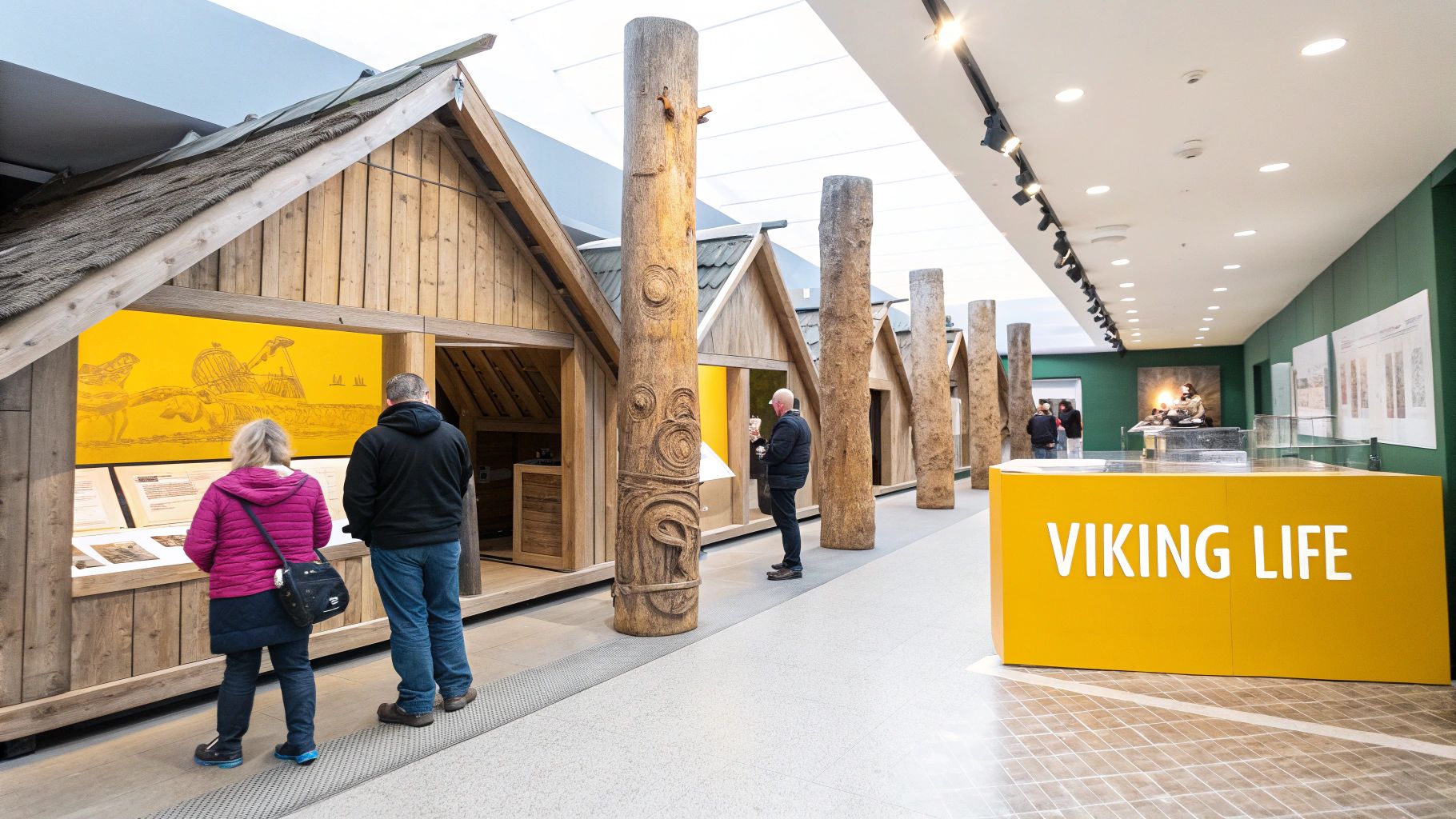
The centrepiece is an immersive ride that carries you through a meticulously reconstructed Viking settlement, complete with animatronic figures based on real skeletal remains found on-site. You'll hear Old Norse spoken, see artisans at work, and witness the daily life of the city’s inhabitants. Following the ride, you can explore the extensive gallery, showcasing thousands of incredible Viking-age objects from leather shoes and coins to panpipes and even fossilised Viking poo, offering unparalleled insights into their diet and health.
Visiting Jorvik
- Plan Your Visit: To get the most from your trip, book your tickets online in advance. This often provides a discount and helps you avoid the long queues, especially during peak season. Aim for a visit early in the morning or later in the afternoon for a quieter experience.
- Getting There: York is well-connected by rail. If driving, use the city’s Park & Ride services, as city-centre parking is limited. The centre itself is pedestrian-friendly.
- Extend Your Trip: Jorvik is a highlight of any tour of Viking sites in England. Consider a multi-day itinerary like the BTOURS York Medieval & Viking Trail, which allows you to also explore York Minster, walk the ancient city walls, and delve deeper into York’s rich past. Learn more about planning your unforgettable adventure in England.
2. Gateshead and Tyne Viking Heritage Trail
Venture into the North East to discover a landscape steeped in Viking history along the River Tyne. The area around Gateshead and Newcastle was a crucial frontier where Norse settlers and traders interacted with the powerful Anglo-Saxon kingdom of Northumbria. This isn't a single museum but a rich archaeological landscape featuring burial sites, settlement remains, and trading posts that highlight the region's vital connection to the wider Viking world across the North Sea.
Exploring this area offers a unique perspective on the everyday life, conflict, and commerce that defined the Viking Age in this part of England. The trail pieces together a narrative from scattered archaeological finds and preserved landscapes, allowing you to walk in the footsteps of Vikings who navigated this powerful river. It's an opportunity to connect with a more subtle, yet equally profound, side of the Viking story, away from the reconstructed cities and into the very terrain they once dominated.
Exploring the Tyne Trail
- Plan Your Visit: Start your journey at Newcastle's Great North Museum: Hancock to see artefacts unearthed locally and gain essential historical context. Before setting out, download heritage trail maps from local council or tourism websites to guide your exploration of the wider Tyne Valley.
- Getting There: Newcastle serves as the perfect hub, with excellent rail and road connections. A car is recommended for exploring the more remote archaeological sites scattered along the Tyne Valley, giving you the freedom to explore at your own pace.
- Extend Your Trip: This trail is a key part of any tour of Viking sites in England. Consider a self-drive itinerary like the BTOURS Northumbrian Kingdom Route, which blends Viking heritage with the region’s incredible Anglo-Saxon history, including sites like Lindisfarne and Bamburgh Castle. Discover more about crafting your perfect unforgettable adventure in England.
3. Sutton Hoo Anglo-Saxon Ship Burial Site, Suffolk
Step onto a sacred landscape that holds the key to England’s pre-Viking past at Sutton Hoo. While technically an Anglo-Saxon site dating from the 6th-7th centuries, this awe-inspiring royal burial ground provides essential context for the world the Vikings would later encounter. Managed by the National Trust, Sutton Hoo is where a magnificent ship burial, believed to be the final resting place of King Rædwald of East Anglia, was unearthed in 1939. This discovery revolutionised our understanding of the so-called "Dark Ages" and its Germanic cultural connections.
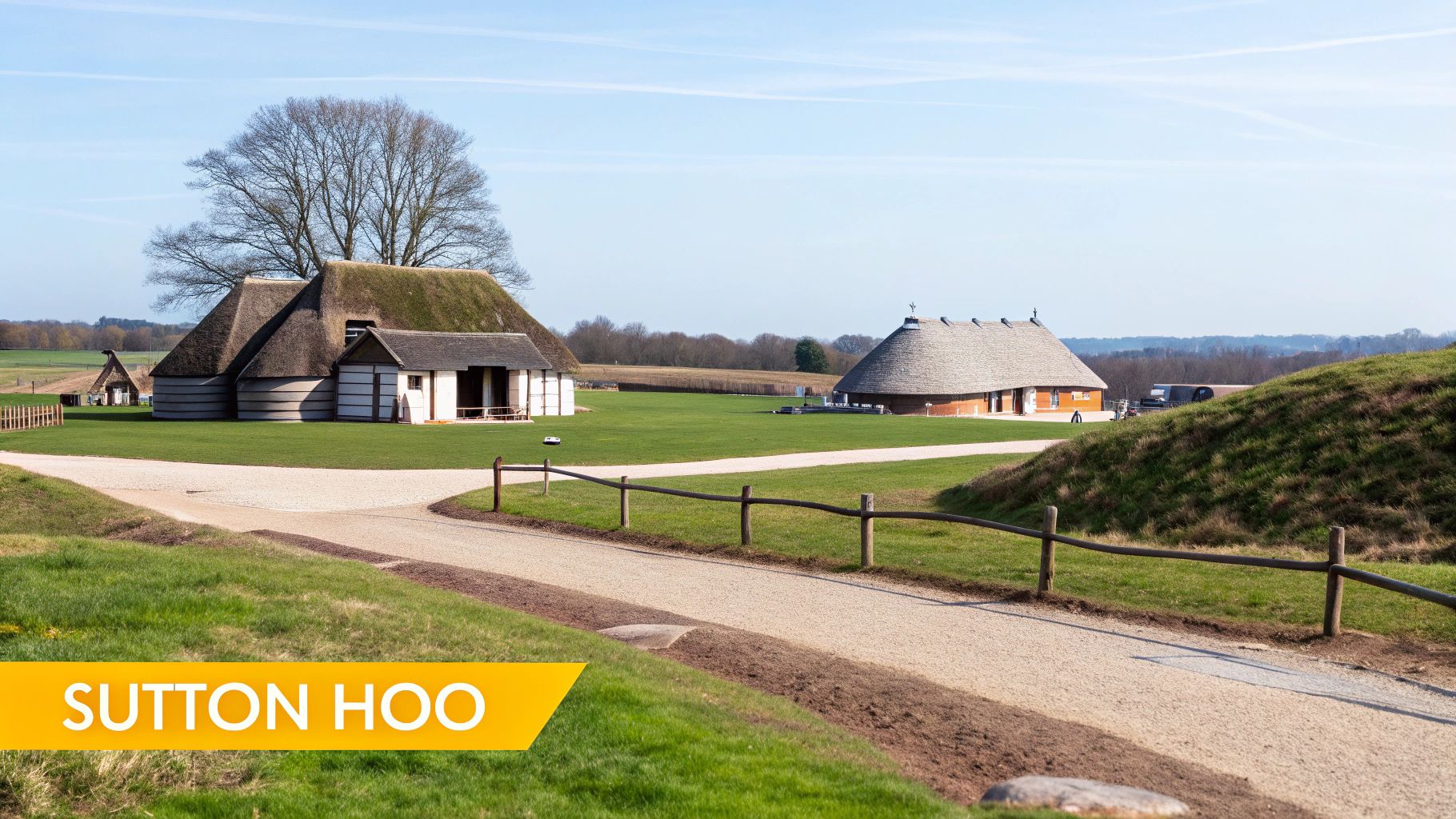
Exploring the serene yet powerful royal burial mounds offers a direct connection to this ancient era. The experience is deepened by the on-site museum, which displays stunning replicas of the treasures found within, including the iconic Sutton Hoo helmet. You can also step inside Tranmer House, the former home of Edith Pretty who instigated the dig, and visit a full-scale reconstruction of the burial chamber. Understanding the rich, organised, and internationally connected society that existed here is crucial for appreciating the full story of the Viking sites in England that would follow.
Visiting Sutton Hoo
- Plan Your Visit: The site is extensive, so allow at least 3-4 hours to fully appreciate the mounds, museum, and Tranmer House. Booking timed entry tickets online in advance is highly recommended, especially during school holidays and summer weekends, to guarantee admission.
- Getting There: Located near Woodbridge in Suffolk, Sutton Hoo is most easily reached by car. There is ample on-site parking available. The nearest train station is in Woodbridge, about two miles away.
- Extend Your Trip: Use Sutton Hoo as a foundation for a broader exploration of East Anglia's heritage. A BTOURS self-drive itinerary, like the Anglo-Saxon & Viking Cultural Context tour, allows you to combine this visit with other significant regional sites, creating a richer narrative of England's early history. Learn more about planning your unforgettable adventure in England.
4. Whitby Abbey and Harbor, North Yorkshire
Perched dramatically on a cliff overlooking the wild North Sea, Whitby Abbey is one of the most atmospheric and evocative viking sites in England. While the stunning Gothic ruins seen today post-date the Viking Age, they stand on the site of an earlier Anglo-Saxon monastery that was a prime target for Norse raiders. The first recorded Viking raid here in 867 AD led to its destruction, after which the area became a significant Viking settlement, known as Hvitaby (the 'white settlement').
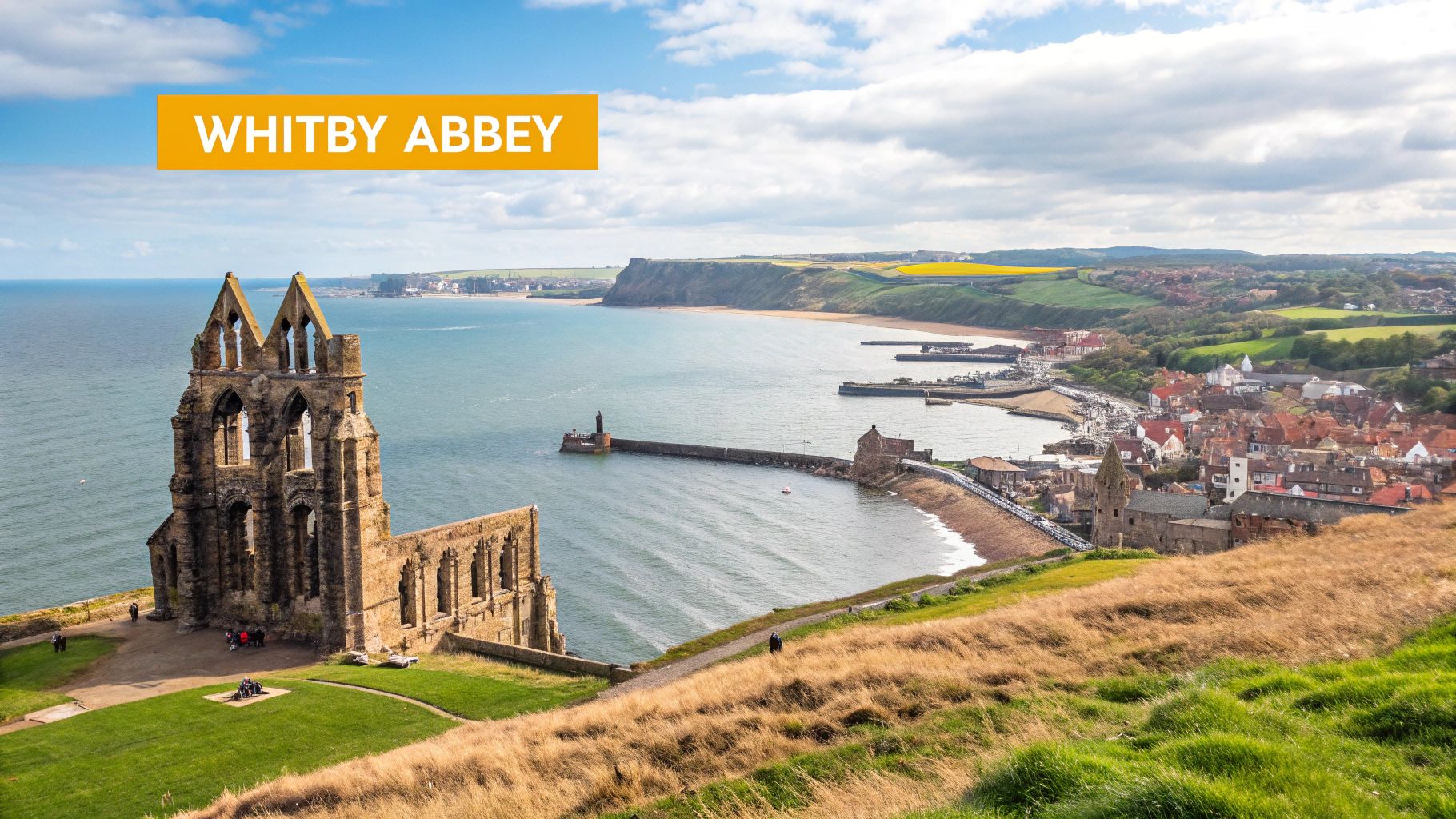
Exploring the haunting abbey ruins offers breathtaking views and a direct connection to this turbulent past. Descend the famous 199 steps into the old town, where the layout of narrow, winding streets still echoes the Norse settlement patterns. The bustling harbour, once a hub for Viking longships engaged in trade and exploration, remains the vibrant heart of Whitby. It’s a place where you can almost hear the echoes of history carried on the sea breeze, blending tales of saints, raiders, and Bram Stoker’s Dracula, who was famously inspired by this location.
Visiting Whitby
- Plan Your Visit: To capture the best photographs and avoid the crowds, plan to visit the abbey early in the morning or stay for the magnificent sunset views. Wear sturdy footwear suitable for the cliff-top paths and the steep steps down to the town.
- Getting There: Whitby is accessible by car, but parking can be challenging in peak season. Consider using the Park & Ride service. The town is also connected by the scenic North Yorkshire Moors Railway, offering a unique approach. For those exploring more widely, you can discover how to integrate this location into a grander journey with these excellent train routes across Britain.
- Extend Your Trip: Whitby is a perfect anchor for the BTOURS Yorkshire Coast Viking & Medieval Trail. Combine your visit with a trip to nearby Scarborough, whose castle also suffered Viking attacks. A multi-day itinerary could beautifully blend the coastal heritage of Whitby with the rich Viking history of York and the grandeur of Durham.
5. The Danelaw: Lincolnshire and East Midlands Viking Settlement Zone
Step beyond a single location and immerse yourself in an entire Viking kingdom. The Danelaw was a vast territory in eastern and northern England where Viking law and customs held sway from the late 9th century. This wasn't just a military occupation; it was a deeply rooted settlement that reshaped the landscape, language, and culture of the region. Exploring this area, particularly across Lincolnshire and the East Midlands, offers a unique opportunity to see the Viking legacy not in one spot, but written across the very fabric of the countryside.
Instead of a single attraction, the Danelaw is an experience traced through place names ending in "-by" (village) or "-thorpe" (outlying farmstead), ancient market town layouts, and archaeological finds housed in regional museums. From the stone carvings in Lincolnshire's churches to the strategic layouts of towns like Stamford and Grantham, you can piece together the story of this expansive Viking settlement. It’s a journey that reveals the profound and lasting impact of Norse culture on England's development, making it one of the most significant Viking sites in England to explore.
Exploring the Danelaw
- Plan Your Visit: The Danelaw is best explored over several days with a car. Use place-name maps to guide your journey, hopping between villages with Norse origins. Focus on a specific region, like Lincolnshire, for a deeper dive, and check local museum opening times in advance.
- Getting There: Lincoln, Nottingham, and Leicester are excellent starting points, all easily accessible by train. From there, renting a car is essential to reach the more rural heritage sites and appreciate the historical landscape.
- Extend Your Trip: A multi-day self-drive is the ideal way to experience the Danelaw. Consider the BTOURS East Midlands Danelaw Heritage Trail, a curated route that connects key archaeological sites, museums, and historic towns. Learn more about customising your unforgettable adventure in England to uncover this fascinating chapter of Viking history.
6. Stamford Medieval Town and Danelaw Heritage
Discover one of England’s most beautiful and well-preserved stone towns, where Viking influence is woven into the very fabric of its streets. Stamford was one of the powerful "Five Boroughs" of the Danelaw, a strategic administrative centre established by Viking settlers. While it lacks a single, central museum like Jorvik, the town itself is a living exhibit, with its market layout and ancient street patterns still reflecting its Scandinavian urban planning roots.
Walking through Stamford is a journey back through centuries. The town’s prosperity in the medieval period, built upon its Viking-era foundations, is evident in its stunning collection of 17th and 18th-century stone architecture, numerous medieval churches like All Saints, and the charming riverside walks along the Welland. Exploring Stamford offers a unique perspective on the long-term legacy of the Danelaw, showing how Viking settlement shaped the development, economy, and layout of English market towns for generations to come.
Visiting Stamford
- Plan Your Visit: To truly appreciate Stamford, plan for at least a full day or an overnight stay. Park on the outskirts and explore the town centre on foot. For a deeper historical context, consider hiring a local guide who can illuminate the town's Viking-era origins. Book accommodation well in advance, especially for summer visits.
- Getting There: Stamford is easily accessible by road, situated just off the A1. It also has a train station with connections to major hubs like Peterborough and Leicester. The compact town centre is best explored on foot.
- Extend Your Trip: Stamford is an essential stop on any tour of Viking sites in England. Create your own heritage trail with a self-drive itinerary like the Stamford-Lincoln-Nottingham Viking trail to visit other key Danelaw boroughs. For a structured experience, consider a multi-day itinerary like the BTOURS Stamford & Danelaw Market Towns tour. Learn more about planning unforgettable city breaks.
7. Edington Battle Site, Wiltshire
Step onto the very ground where the course of English history was dramatically altered. The landscape around Edington was the stage for the pivotal Battle of Edington in 878 AD, a clash that saw King Alfred the Great’s Wessex army decisively defeat the Great Heathen Army led by the Viking chieftain Guthrum. This victory was more than a single battle; it halted the Viking conquest of Wessex, the last unconquered Anglo-Saxon kingdom, and led to a negotiated peace that would shape the future of England.
While the site lacks a visitor centre, its power lies in its atmospheric, unspoilt terrain. Walking across these fields, you can visualise the shield walls clashing and understand the strategic importance of the landscape. It is a place of profound historical significance, marking the moment when Viking settlement transitioned from pure conquest to a negotiated reality, paving the way for the eventual unification of England. A visit here offers a unique, contemplative experience among the most important viking sites in England.
Visiting Edington
- Plan Your Visit: The battlefield is open countryside, so plan for a self-guided walking tour. Equip yourself with a detailed historical guidebook or map to appreciate the battle's key locations. Sturdy footwear is a must, as the terrain can be uneven.
- Getting There: Edington is best reached by car. It is located in rural Wiltshire, near towns like Westbury and Trowbridge. Parking is available in the village, from where you can explore the surrounding area on foot.
- Extend Your Trip: Immerse yourself in the era with the BTOURS Alfredian Wessex & Viking Settlement tour. For a self-drive adventure, create a heritage triangle connecting Edington with Glastonbury Abbey and the medieval city of Wells. You can discover more ways to explore this historic region by planning your next unforgettable adventure in England.
8. Repton Monastic Site, Derbyshire
Step onto ground that witnessed a pivotal moment in English history at the Repton Monastic Site. This seemingly quiet village in Derbyshire holds profound significance as one of the most important Viking sites in England, marking the location where the Great Heathen Army established its winter camp in 873-874 AD. The archaeological evidence unearthed here is extraordinary, confirming not just the army's presence but also a fascinating blend of Viking and Anglo-Saxon culture.
Here, a D-shaped earthwork defence enclosed the Anglo-Saxon monastery, which the Vikings commandeered for their use. Excavations revealed a mass grave containing the remains of at least 264 individuals, believed to be members of the army, buried around a central, high-status Viking warrior. This site offers a rare, tangible link to the Viking forces that reshaped the map of England, demonstrating their strategic use of existing religious centres and providing a haunting glimpse into the lives and deaths of these legendary warriors.
Visiting Repton
- Plan Your Visit: Start at St Wystan's Church to see the incredible 8th-century Anglo-Saxon crypt, one of England's architectural treasures. Access information can often be obtained from the local parish. Combine your trip with a visit to the small Repton School museum to see displays of artefacts found on-site.
- Getting There: Repton is a small village best accessed by car. It is located near Burton upon Trent and Derby. Parking is available within the village, but be mindful as it is a residential area.
- Extend Your Trip: Repton is a key stop on any tour of the ancient Danelaw. Consider the BTOURS Peak District Viking & Medieval Heritage Trail, which connects Repton to other significant historical locations. For a deeper dive, plan a multi-day itinerary like a Repton-Nottingham-Stamford exploration to trace the Viking footprint across the heart of England. Learn more about crafting your unforgettable adventure in England.
9. Danelaw Market Towns: Lincoln, Nottingham, Derby Regional Network
Step beyond individual sites and discover the strategic heart of Viking England by exploring the 'Five Boroughs' of the Danelaw. This network of fortified market towns, including Lincoln, Nottingham, Derby, Leicester, and Stamford, represents one of the most significant and lasting legacies of Viking settlement. Established as powerful administrative and military centres, or 'burhs', they showcase how Scandinavian settlers systematically organised their territory, creating urban infrastructure and a coordinated regional government that shaped the East Midlands forever.
Exploring these towns provides a unique perspective on the Vikings not just as raiders, but as town planners, traders, and administrators. Each city retains echoes of its Danelaw past, from street names with Old Norse origins to archaeological finds displayed in local museums. Visiting this network allows you to trace the very foundation of urban life in this part of England, understanding how these hubs integrated into a powerful political and economic force, leaving an indelible mark on the landscape and culture of the region.
Visiting the Danelaw Boroughs
- Plan Your Visit: Treat this as a regional exploration rather than a single-day trip. Allocate at least one to two days per town to fully appreciate their unique history. Consider a BTOURS 'Five Boroughs Viking Heritage' itinerary, which structures a week-long immersion into these foundational Viking sites in England.
- Getting There: The East Midlands is well-connected by major roads like the M1 and A1, making a self-drive tour the ideal way to travel between the boroughs. Each city has central train stations for those preferring public transport.
- Extend Your Trip: A multi-day self-drive tour is perfect for delving into the Danelaw. You can use one town as a central hub for daily explorations into the surrounding countryside, discovering villages with Viking place-names. This approach offers a rich, layered experience, as seen in our Taste of England 8 Days Self-Drive Tour.
10. East Anglia Coastal Viking Routes: Great Yarmouth to Norwich Heritage Trail
Embark on a journey through a landscape shaped by Viking ambition, where the rivers and coastline of East Anglia served as the gateway for settlement and conquest. This region was a primary target for the Great Heathen Army, and a self-drive trail from the coast at Great Yarmouth to the historic city of Norwich reveals the story of Viking interaction with the established Anglo-Saxon kingdoms. It’s a route that uncovers not just battle sites, but the foundations of towns and trade networks that persist to this day.
This heritage trail is less about a single location and more about understanding the strategic Viking mindset. Following the coastal paths and ancient riverways, you can visualise how Norse longships navigated these waters, establishing winter camps and eventually settling the land. The journey culminates in Norwich, a city with deep Viking roots, where you can discover incredible regional artefacts that bring this dramatic period of East Anglian history to life, making it a crucial part of any tour of Viking sites in England.
Visiting East Anglia's Viking Routes
- Plan Your Visit: This is a fantastic self-drive route best enjoyed over several days. Start your trip at the Great Yarmouth maritime museums to grasp the region's seafaring history. Due to the popularity of the Norfolk and Suffolk coasts, book accommodation well in advance, especially for summer travel.
- Getting There: Begin at Great Yarmouth, easily accessible by road. The scenic coastal route along the A149 offers stunning views. The journey inland towards Norwich follows historic river and trade paths.
- Extend Your Trip: For a comprehensive exploration, consider the BTOURS East Anglian Coastal Viking Trail. This 4-5 day itinerary allows ample time to visit Norwich Castle Museum, explore the dramatic coastal erosion at Dunwich, and even hire a local guide to reveal the sites of famed monastery raids. Find out more about tailoring your perfect unforgettable adventure in England.
Comparison of 10 Viking Sites in England
| Site | Planning complexity | Resource requirements | Expected outcomes | Ideal use cases | Key advantages |
|---|---|---|---|---|---|
| Jorvik Viking Centre, York | Low — easy visit planning, bookable tickets | Moderate — entry fee, 2–3 hours, York transport/accommodation | High immersion; hands-on learning and artifact viewing | Families, first-time visitors, museum-focused tours | Immersive ride, world-class artifacts, active research centre |
| Gateshead and Tyne Viking Heritage Trail | Medium — multi-site routing and map use | Low–Medium — self-drive, walking, flexible time | Landscape archaeology insight and river-trade context | Self-drive explorers, heritage walkers, scenic tourers | Scenic riverside route, quieter sites, museum + outdoor mix |
| Sutton Hoo Anglo-Saxon Site | Medium — timed entries recommended, planned visit | Moderate — museum entry, 3–4 hours, travel to Suffolk | Strong contextual understanding of pre-Viking England | History scholars, contextual tours, family educational visits | Outstanding museum, reconstructed buildings, high National Trust standards |
| Whitby Abbey and Harbor | Low–Medium — weather and fitness affect visit | Low — free ruins, 2–3 hours, parking/short stay | Dramatic coastal heritage and visual/photographic experience | Photographers, coastal self-drive tourists, general visitors | Spectacular cliff-top ruins, layered heritage, working harbor town |
| The Danelaw: Lincolnshire & East Midlands | High — wide-area planning and route research | High — multi-day self-drive, maps, local museums | Broad view of settlement patterns and place-name evidence | Multi-day itineraries, academic study, archaeological interest | Comprehensive regional narrative, authentic countryside exploration |
| Stamford Medieval Town | Low–Medium — easy town exploration, some planning | Moderate — overnight recommended, walking tours | Clear medieval urban fabric reflecting Viking foundations | Town-based stays, photographers, Danelaw hub visitors | Exceptionally preserved streets, walkable center, independent amenities |
| Edington Battle Site, Wiltshire | Medium — needs contextual research for full value | Low — short visit, walking, free access | Understanding of Alfredian victory and Viking negotiation | Military history enthusiasts, contextual day trips | High historical significance, accessible peaceful landscape |
| Repton Monastic Site, Derbyshire | Medium — some access coordination and local contact | Moderate — 2–3 hours, local museum visits, possible restrictions | Detailed archaeological evidence of Viking winter camp | Archaeology enthusiasts, researchers, quiet visitors | Rich finds, visible burial mounds, ongoing research |
| Danelaw Market Towns (Lincoln, Nottingham, Derby, etc.) | High — multi-town coordination, multi-day planning | High — 5–7 days suggested, accommodation, transport | Comprehensive picture of Danelaw urban governance and markets | Extended cultural tours, guided regional study groups | Networked sites, good infrastructure, coherent historical narrative |
| East Anglia Coastal Viking Routes (Great Yarmouth–Norwich) | Medium — coastal routing and weather planning | Moderate — 3–5 days, coastal driving, regional museums | Maritime settlement insight and coastal raid context | Coastal drives, maritime history enthusiasts, nature+history tours | Scenic coastal drives, harbor archaeology, flexible itineraries |
Your Viking Adventure Awaits
From the bustling, reconstructed streets of Jorvik to the windswept headland of Whitby Abbey, England’s Viking past is not a story confined to dusty textbooks. It is a living history etched into the very landscape. The journey through these ten remarkable locations reveals a narrative far more complex than simple tales of raids and plunder. It is a story of settlement, culture, trade, faith, and the profound fusion of Norse and Anglo-Saxon worlds that forged the England we know today.
We've traversed the heart of the Danelaw, from the strategic strongholds of Lincolnshire to the monastic wealth of Repton. We've stood on the ground where kings clashed at Edington and where legendary ships were laid to rest at Sutton Hoo. Each site, whether a world-famous museum or a quiet battlefield, offers a unique portal into this dynamic and transformative era. Exploring these viking sites in England is more than a historical tour; it is an immersive experience that connects you to the sagas, the people, and the enduring legacy they left behind.
Crafting Your Own English Saga
The true magic of exploring these destinations lies in the freedom of a self-drive journey. You are not merely a spectator but the author of your own adventure, free to linger where the history feels most palpable and to uncover the hidden stories that lie just off the main road. Imagine piecing together the puzzle of the Danelaw by driving between Lincoln, Stamford, and Derby, or tracing the coastal routes of East Anglia where longships once sought harbour. This is history you can touch, see, and feel.
Key Takeaway: The Viking story in England is not one single narrative but a rich mosaic of settlement, conquest, and cultural integration. By visiting these diverse sites, you piece together a more complete and nuanced understanding of how this period shaped the nation’s identity, language, and landscape.
Turning Inspiration into Action
Your journey into the Viking Age begins now, not when you turn the ignition key, but in the planning. Use the itineraries and practical tips in this guide as your starting point. Map out a route that captures your imagination, whether it's a deep dive into Yorkshire's Norse heartland or a broader sweep across the former Danelaw.
As you plan your epic journey through England's Viking heartlands, remember to also plan for essential modern amenities like staying connected. Researching opening times on the go, navigating to a remote site, or sharing photos of a newly discovered rune stone all depend on reliable connectivity. For a comprehensive guide on your options, from local SIM cards to portable Wi-Fi, it’s worth reading up on how to get internet access while traveling abroad to ensure you remain connected throughout your historical quest.
The road is open, and a thousand years of history are waiting. The echoes of the Norsemen can be heard in the place names, seen in the archaeological treasures, and felt in the ancient earth beneath your feet. Now is the time to go and listen.
Ready to transform your historical curiosity into an unforgettable journey? Let BTOURS craft a personalised self-drive itinerary that connects you with the most compelling viking sites in England, complete with curated routes, unique accommodation, and expert insights. Start planning your bespoke English saga with BTOURS today.