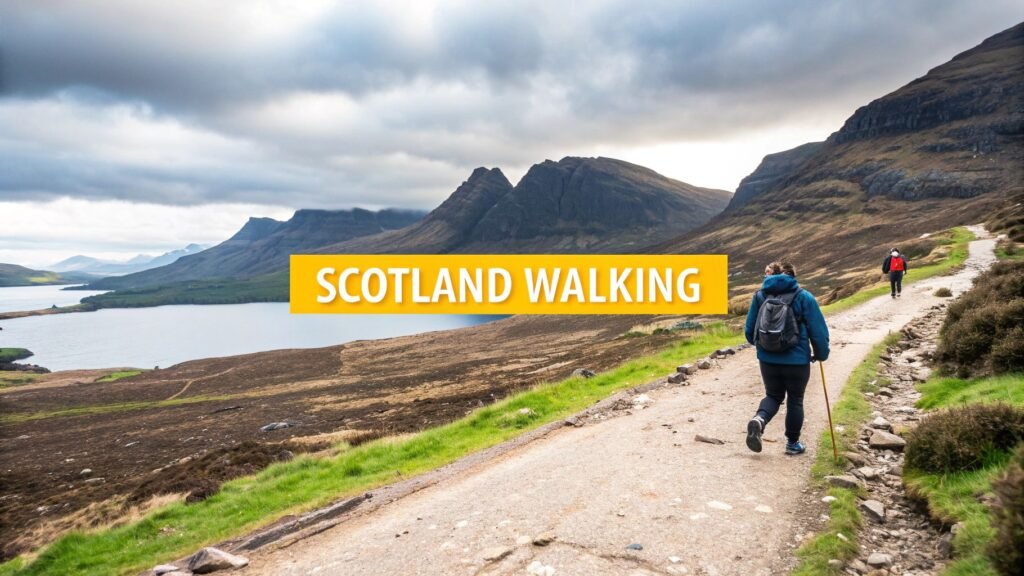
A walking holiday in Scotland is the perfect way to get away from it all, swapping the everyday for a world of rugged mountains, peaceful lochs, and coastlines that will take your breath away. It’s a chance to truly lose yourself in wild beauty, combining the freedom of a road trip with the simple joy of exploring ancient trails on foot. This isn’t just another holiday; it’s an invitation to connect with nature on your own terms.
Why a Scotland Walking Holiday Is an Unforgettable Adventure
Picture this: one morning, you’re behind the wheel, driving through the moody, magnificent valley of Glencoe as mountains loom like ancient giants on either side. By the afternoon, you’re lacing up your boots for a hike along a trail that opens up to views of a mirror-still loch, with nothing but the call of a bird breaking the silence. This is the magic of Scotland—that incredible mix of scenic driving and getting out there on your own two feet.
A self-drive walking holiday puts you in the driver’s seat, quite literally. You’re not locked into a strict tour schedule. You have the freedom to stay a little longer at a viewpoint that steals your heart, pick a hike that feels right for the weather, or follow that tempting country lane just to see where it leads. It’s this sense of freedom that lets you build a real, personal connection with the landscape. Our flexible self-drive itineraries across https://btours.com/scotland/ are designed to give you exactly that.
The Allure of the Scottish Wilds
What makes Scotland so special for walkers? A huge part of its appeal lies in its world-class hiking environment and the famous ‘right to roam’ laws, which give you the freedom to explore most of the country's unenclosed land. It’s like being handed a key to a vast natural playground where history is written into the very earth beneath your feet, from ancient standing stones to the crumbling castles guarding misty glens.
You can feel the magnetic pull of these landscapes. Hill walking is more than just a pastime here; it’s a way of life. In fact, recent figures show that an incredible 40% of all leisure overnight visitors went hiking during their trip in 2023. It’s clear that for so many people, a walking holiday is the definitive way to experience Scotland.
A walking holiday here isn’t just about the miles you cover. It's about the moments you collect—the taste of crisp, clean air on a summit, the sight of a stag on a distant ridge, and the quiet satisfaction of a path well-travelled.
And when you’re ready for a break from the trails, you can discover a huge range of other Scotland experiences to round out your trip, from whisky tasting to exploring historic sites. Think of this guide as your complete roadmap to planning your own legendary journey through this breathtaking country.
Finding Your Perfect Path: Scotland's Most Iconic Walking Routes
Choosing your trail is where the real adventure begins. Scotland is laced with paths that are so much more than just dirt tracks; they are gateways to the country's very soul. Each one tells a different story of its wild, untamed beauty. Let's forget the endless lists for a moment and instead wander through a few of Scotland's most celebrated walking experiences to find the one that truly calls to you.
Planning a Scotland walking holiday is all about matching your spirit to the right landscape. The country offers a staggering variety, from the classic Highland drama of lochs and glens to the otherworldly formations of its islands. This little diagram can help you picture what kind of Scottish escape you're really looking for.
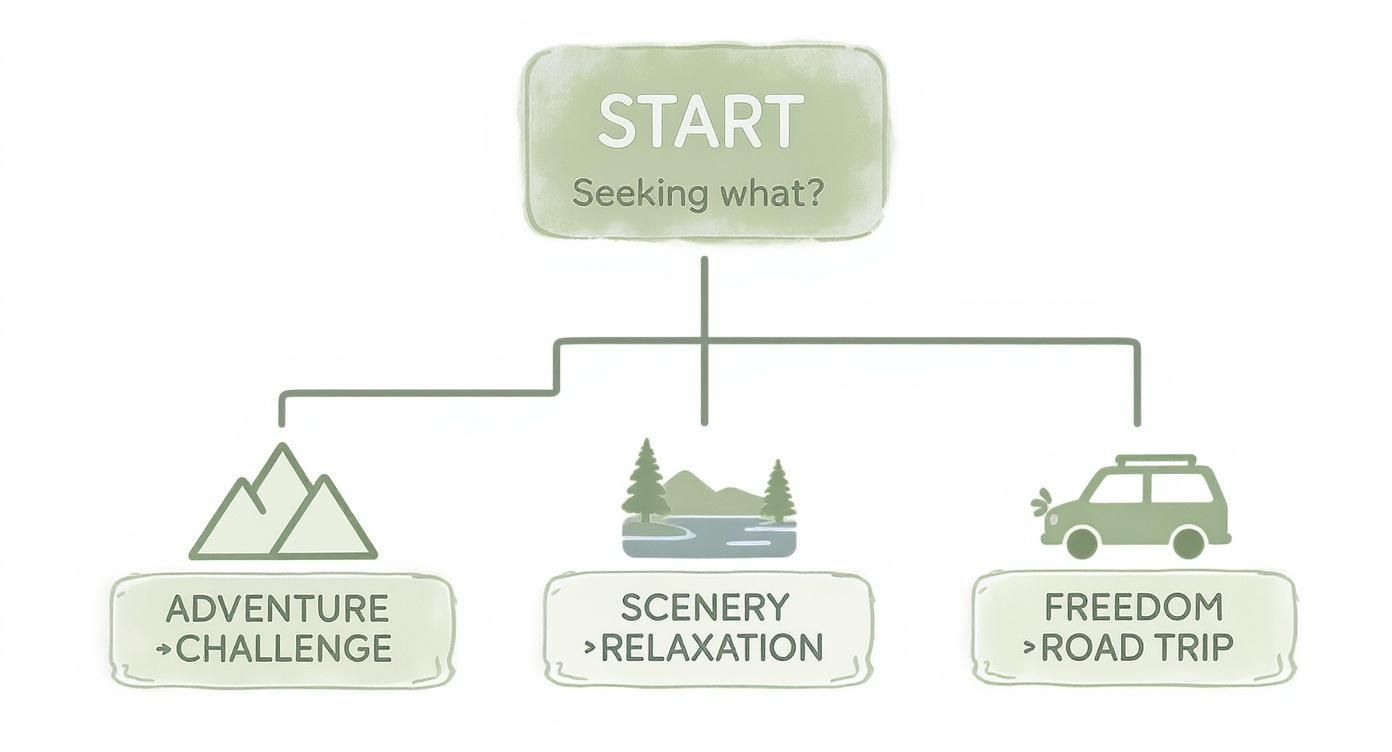
Whether you crave the burn-in-your-legs challenge of a mountain ascent, the soul-deep calm of stunning scenery, or the pure freedom of a road trip, there's a trail with your name on it. The best part? You can absolutely blend all three into one unforgettable journey.
The West Highland Way: A Legendary Journey
Often hailed as the quintessential Scottish long-distance trail, the West Highland Way is a proper pilgrimage for walkers from all over the globe. Stretching 96 miles (154 km) from Milngavie, just outside Glasgow, to Fort William at the foot of Ben Nevis, this route is a masterpiece of shifting landscapes. It’s a physical test, for sure, but it repays every ounce of effort with some of Scotland's most breathtaking scenery.
The journey starts gently, easing you through rolling lowlands before building to a stunning crescendo. You’ll trace the bonnie banks of Loch Lomond, cross the starkly magnificent Rannoch Moor, and climb the infamous Devil's Staircase for an unforgettable view over Glencoe. This isn't just a walk; it's a full immersion into the Highlands.
- Difficulty: Moderate to challenging, requiring a good level of fitness for back-to-back long days.
- Duration: Most people walk it in 6-8 days.
- Highlights: The serene beauty of Loch Lomond, the vast, desolate expanse of Rannoch Moor, and the epic mountain views in Glencoe.
The Isle of Skye: Otherworldly Landscapes
If you dream of landscapes that look like they've been ripped from the pages of a fantasy novel, then the Isle of Skye is for you. It's less about one single long-distance path and more a collection of the most spectacular day walks in the entire country. A self-drive holiday is the perfect way to unlock its treasures, giving you the freedom to hop between trailheads as the weather—and your mood—dictates.
The Trotternish Ridge is the island's geological crown jewel. It's here you can tackle two of Scotland’s most famous hikes:
- The Quiraing: A mind-bending landscape of hidden plateaus, bizarre rock pinnacles, and sheer cliffs. The loop walk here feels like stepping onto another planet.
- The Old Man of Storr: A tough uphill hike that brings you face-to-face with the iconic rock stack that has graced countless postcards and film scenes. The view from the top is simply sublime.
Walking on Skye is about more than just the trail; it's about feeling humbled by the sheer, raw power of nature. Every corner you turn reveals a new vista more dramatic than the last, from the jagged peaks of the Cuillins to the enchanting Fairy Pools.
Cairngorms National Park: Into the Wild
Welcome to the UK's largest National Park, a vast wilderness of high plateaus, ancient Caledonian forests, and hidden lochs. The Cairngorms offer a completely different kind of walking experience—one defined by immense space, genuine remoteness, and a profound sense of solitude. A Scotland walking holiday here feels like a true escape from the noise of the modern world.
The park is home to five of the UK's six highest mountains and contains a quarter of Scotland's precious native forest. You can choose from countless routes, from gentle strolls around Loch an Eilein with its romantic island castle to strenuous multi-day treks across the vast, Arctic-like Cairngorm plateau.
A self-drive approach is ideal for the Cairngorms, giving you the flexibility to reach remote trailheads in glens like Glen Feshie or use the ski centres as a high-altitude launchpad. Before you venture deep into the wild, why not soak up some history? To experience the incredible contrast between untamed wilderness and urban heritage that makes Scotland so unique, you can learn more about the captivating story of Edinburgh, the Athens of the North.
Crafting Your Perfect Self-Drive Walking Itinerary
This is where the magic really starts to happen—turning the dream of a Scotland walking holiday into a reality. The absolute joy of a self-drive adventure is the freedom it gives you. You're in charge. You can chase the sunshine, linger for an hour at a viewpoint that steals your breath, or follow a whim down a winding country lane that just looks too tempting to ignore.
To get your imagination fired up, we’ve put together two of our favourite, road-tested itineraries. They're designed to blend unforgettable drives with walks that will stay with you long after you've gone home.
Think of these as inspiring blueprints, not rigid schedules. They’re a starting point, a well-drawn map waiting for you to add your own discoveries. With the keys to your own car, you can flex each day around your energy levels and whatever piques your interest, creating a trip that’s truly yours.
The 7-Day Highland Explorer: A Whirlwind of Icons
If you want to dive headfirst into Scotland’s most legendary landscapes in a single, action-packed week, this one’s for you. This journey is a greatest hits album of the Highlands, a whirlwind tour through scenes of epic drama and staggering beauty.
Your adventure kicks off in the hauntingly beautiful valley of Glencoe. Spend a day wandering its trails, like the path into the Lost Valley, and you can almost feel the weight of history in the air. From there, it's a short drive north to Fort William, the undisputed outdoor capital of the UK, nestled right at the foot of Ben Nevis. It’s the perfect base for tackling a stretch of the Great Glen Way or just soaking up the buzzing atmosphere among fellow walkers.
The grand finale? A journey "over the sea to Skye." Your days on the Isle of Skye will be filled with some of the most spectacular hikes in the entire country, from the otherworldly landscape of the Quiraing to the iconic pinnacle of the Old Man of Storr.
Sample Day 3: Fort William & Glen Nevis
- Morning Drive: A beautiful, short drive from your Glencoe base to Fort William (approx. 30 minutes).
- Afternoon Walk: Hike to Steall Falls in Glen Nevis. This 3.5km (2.2 miles) walk is fairly easy and leads to Scotland’s second-highest waterfall. For the brave, there's a thrilling (and optional!) crossing over a wire bridge.
- Evening: Find a traditional pub in Fort William for a well-deserved meal, sharing stories with other adventurers.
This itinerary is all about maximum impact. It’s proof that even with just a week, you can experience the profound wildness and iconic views that make a Scotland walking holiday so special.
The 10-Day Grand Scottish Loop: A Deeper Connection
For those with a little more time to play with, this extended loop lets you delve deeper and experience a more varied side of Scotland. It builds on the Highland Explorer route but adds the vast, open wilderness of the Cairngorms and the legendary mystery of Loch Ness, giving you a much richer picture of the country's diverse character.
You'll start by venturing into Cairngorms National Park, the UK's largest national park. Here, you can wander through ancient Caledonian pine forests, explore gentle trails around serene lochs, and find a true sense of solitude in the wide-open spaces.
Next, the route guides you north along the shores of Loch Ness. While you can certainly keep an eye out for its famous monster, the real magic is found on the stunning walks along its banks and through the surrounding forests. The journey then arcs west to join the iconic scenery of the West Coast, passing through dramatic landscapes before looping back. This itinerary allows for a much more relaxed pace, leaving room for those spontaneous discoveries, like a hidden distillery tour or a quiet afternoon exploring a charming village.
This approach gives you the time to explore at a pace that feels just right. And if you're planning your own unique adventure, our complete range of self-drive tours is packed with even more ideas and inspiration.
Sample Day 7: Exploring the West Coast
- Morning Drive: Travel from the Loch Ness area towards the coast. We recommend the stunning A87 through Glen Shiel, home to the magnificent Five Sisters of Kintail ridge.
- Afternoon Walk: Stop at the picture-perfect Eilean Donan Castle before choosing a coastal walk near the village of Plockton. A gentle wander around the bay reveals palm trees (a surprising gift from the Gulf Stream!) and incredible views back towards the Applecross mountains.
- Evening: Settle into a cosy B&B in a coastal village and treat yourself to some fresh, locally caught seafood.
Getting the Practicalities Sorted
With a head full of incredible Scottish landscapes, it's time to bring your walking holiday down to earth and sort out the details. This is the fun part, where the dream starts to take shape and feel real. Getting the key logistics nailed down now means that when your boots hit the trail, your mind can be on the views, not the what-ifs.
So, let's dive into the biggest question of all: when should you actually go? Scotland’s weather is a character in its own right—wild, unpredictable, and a constant topic of conversation. But honestly, there’s no single "best" time, just the season that feels right for the adventure you have in mind.
What Time of Year is Best?
Each season paints Scotland in a different light, offering a completely unique experience for walkers.
-
Spring (April-May): This is the sweet spot for many hikers. The world is waking up, bursting with fresh colour, and the days are getting wonderfully long. Best of all, you'll beat the summer crowds and the infamous Scottish midge!
-
Summer (June-August): Welcome to the season of endless daylight! The sun barely sets in the far north, giving you all the time in the world for those epic, day-long treks. It is peak season, though, so expect more people and, yes, the midges will be out in force in the Highlands.
-
Autumn (September-October): For many, this is Scotland at its most breathtaking. The glens and hillsides are set ablaze with gold, red, and orange hues. The air turns crisp, the midges retreat, and that soft, low sunlight is a photographer's dream.
-
Winter (November-March): This is for the truly adventurous soul. If you have the right gear and experience, winter rewards you with stark, dramatic beauty. Picture snow-capped peaks, frosty glens, and trails that are blissfully all your own. Just be ready for short days and serious weather.
No matter when you visit, the golden rule is to be prepared for four seasons in a single day. Layering your clothes and investing in high-quality waterproofs isn't just a tip—it's essential for a happy walking holiday in Scotland.
Getting Around with Confidence
To truly unlock Scotland’s wild heart, a car is your best friend. A self-drive holiday gives you the freedom to chase the good weather, discover hidden trailheads, and linger wherever the mood strikes. While the main roads are fantastic, your adventure will likely lead you onto single-track roads.
Don't let them intimidate you! Navigating them is a quintessential part of the Scottish experience. The system is built on courtesy and common sense, using designated passing places. Just pull into a passing place on your left to let an oncoming car through, or wait opposite one on your right if the space is on the other side. A wee wave to the other driver is all part of the charm.
Our Taste of Scotland 8-Days Self-Drive Tour is designed to take the stress out of the drive, guiding you along the most spectacular—and manageable—routes.
Finding Your Home from Home
There's nothing better than returning to a warm, welcoming place after a long day on the trail. Scotland is brilliant at this, offering everything from cosy B&Bs run by hosts full of local secrets to historic inns with crackling log fires and plates piled high with hearty food.
When you book a planned trip, we take care of all of this for you, making sure your stop for the night is perfectly placed for your next day's walk and has a comfy bed waiting.
This boom in walking tourism is more than just a holiday trend; it’s a lifeline for these small communities. Your visit becomes part of a UK tourism industry expected to be worth $46.68 billion by 2029. Every pint you buy in the local pub and every night you stay in a village B&B helps sustain the very culture that makes this place so special. You can explore more about UK travel and tourism statistics on gowithguide.com.
With these foundations in place, you’re well on your way to an adventure that’s as seamless as it is unforgettable.
Packing and Safety for the Scottish Elements
In Scotland, there’s a piece of wisdom every walker learns to live by: "There's no such thing as bad weather, only the wrong clothes." This isn't just a quaint saying; it's the absolute truth when you’re planning a Scotland walking holiday. The right gear is what transforms a potentially miserable, damp slog into a soul-stirring day on the hills.
Think of your packing as creating a flexible toolkit. The secret isn't to bring the bulkiest jumper you own, but to build a system of versatile layers you can add or remove as the famously fickle Scottish weather shifts around you. A sun-drenched glen can become a windswept, misty ridge in a matter of minutes, so being able to adapt on the fly is your greatest strength.
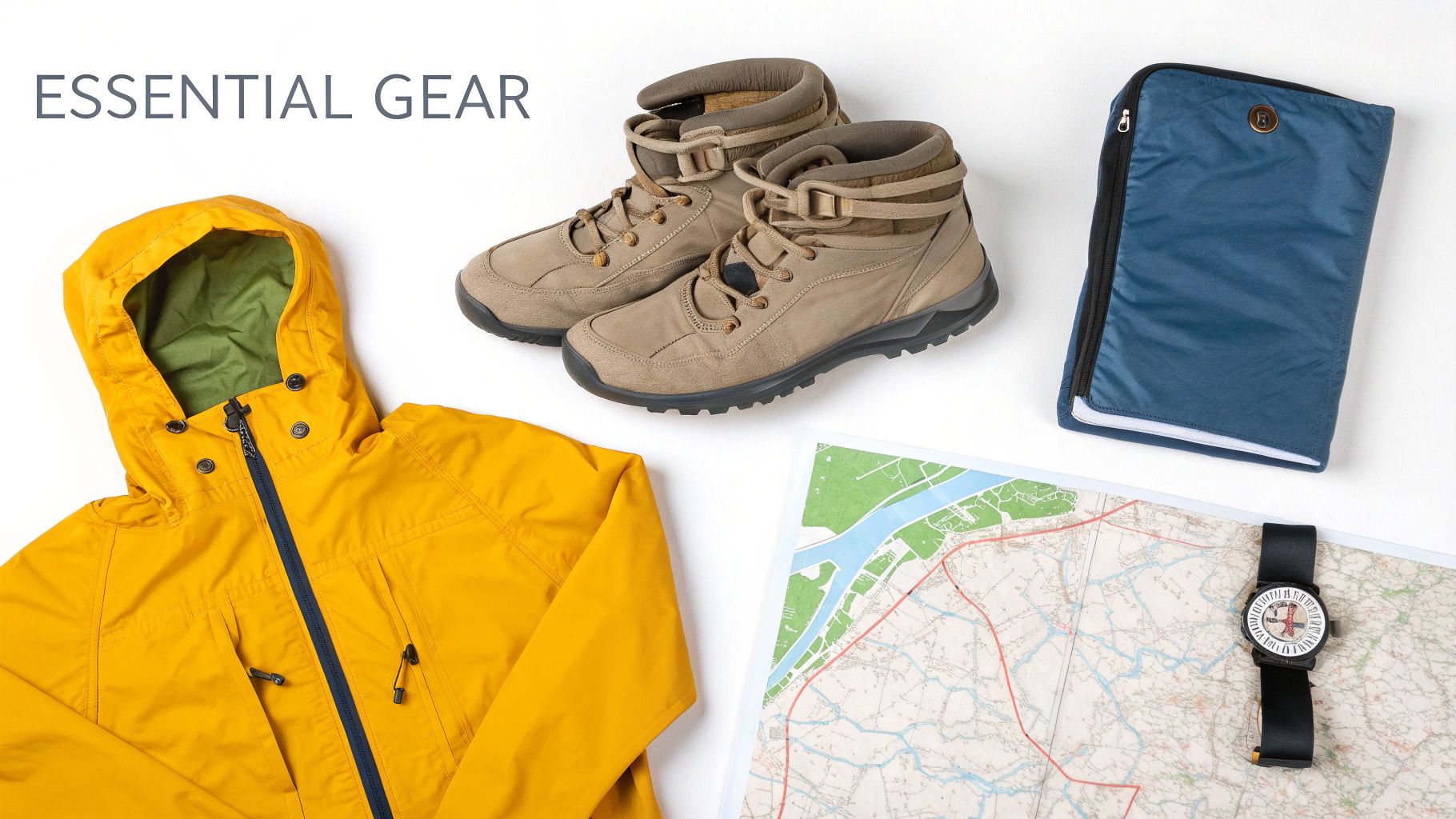
Your Essential Gear Checklist
This isn't about buying the most expensive kit on the market, but having the right tools for the job. Here are the absolute non-negotiables for your daypack:
- Waterproofs (Jacket and Trousers): Consider these your personal shield. A good waterproof jacket and overtrousers are worth their weight in gold. Look for breathable materials, otherwise, you'll get just as wet from the inside!
- Broken-in Walking Boots: Please, never take a brand-new pair of boots on a long walk. Your feet are your most important asset, and they need to be in comfortable, supportive, and waterproof boots that you know and trust.
- A Layering System: This is the heart of staying comfortable. Start with a moisture-wicking base layer next to your skin, add a warm fleece for insulation, and have your waterproof shell ready to throw on top. It’s a simple combination that works wonders.
- Navigation Tools: Your phone is a great tool, but it should never be your only one. A physical map and a compass are essential backups, especially in the remote glens and high tops where a phone signal is a rare luxury.
Beyond these essentials, a hat and gloves should live in your pack year-round, along with a reusable water bottle, some high-energy snacks, and a small first-aid kit. Oh, and for the summer months, a bottle of Smidge or another midge repellent is not a recommendation—it's a necessity.
Staying Safe in the Hills
The wild beauty of the Scottish hills is a huge part of the appeal, but it comes with a responsibility to be prepared. Treating the mountains with respect is the first step to a safe and unforgettable adventure.
Before you even think about lacing up your boots, check a mountain-specific weather forecast. A general town forecast is useless once you start gaining height. You need to know what’s happening at altitude—wind speed, visibility, and temperature. Websites like the Mountain Weather Information Service (MWIS) are invaluable and used by local walkers and mountain rescue teams alike.
The mountains will always be there. The most important part of any walk is coming back safely to plan the next one. Never be afraid to turn back if conditions worsen or you feel out of your depth.
Finally, always leave a route plan. Tell someone where you’re going, the route you intend to take, and what time you expect to be back. This simple act is a critical safety net. Whether you tell your B&B host, a family member, or a friend back home, make sure someone knows your plans. That way, you can head out with confidence, ready to soak in those breathtaking views, knowing you’re prepared for whatever Scotland throws at you.
Your Scotland Walking Holiday Questions Answered
Now for the nuts and bolts.## Your Scotland Walking Holiday Questions Answered
Now for the nuts and bolts. With dreams of misty glens and epic ridges swirling in your head, a few practical questions are probably starting to surface. That’s a good thing! It means your trip is becoming real.
Think of this as our fireside chat, where we tackle the common queries we hear from walkers time and time again. Getting these details sorted will give you the confidence to simply relax and soak it all in when you get here.
How Fit Do I Need to Be?
This is the big one, isn't it? And the honest answer is, it truly depends on what you want to do. Scotland’s trails don’t demand a single level of fitness; they offer a whole spectrum of experiences.
There’s a world of difference between a gentle, two-hour stroll alongside Loch Lomond and a strenuous, full-day trek up a Munro. The most important thing is to be honest with yourself about your current abilities. Our itineraries are all graded for difficulty, so you can easily find a trip that feels rewarding, not punishing.
Are the Walking Trails Well-Marked?
On the famous long-distance paths like the West Highland Way, you’ll find the waymarking is generally excellent. But venture off these popular routes, and the signposts can quickly become sparse, or disappear altogether.
Never, ever rely solely on trail markers. Having a map and compass—and knowing how to use them—is a non-negotiable skill for Scottish hillwalking. A GPS device or a phone app is a great secondary tool, but it should never be your only plan.
What Are Midges and How Do I Deal with Them?
Ah, the legendary Scottish midge. Yes, they’re real! These tiny biting flies are most active in the Highlands from May to September, especially on still, humid evenings near water. While they're harmless, a swarm can certainly test your patience.
But don’t let them put you off. Here’s how you stay comfortable:
- Repellent is your friend: Grab a bottle of a local brand like Smidge. It's designed specifically for Scottish midges and works brilliantly.
- Get a head net: It might not be a fashion statement, but on a calm day in the West Highlands, a midge net is worth its weight in gold.
- Pray for a breeze: Midges are terrible fliers. Even a gentle wind sends them packing, making coastal paths and high ridges a safe bet.
Can I Wild Camp in Scotland?
Absolutely! Scotland’s progressive outdoor access laws mean you can wild camp responsibly on most unenclosed land. It’s an incredible way to truly connect with the landscape.
The golden rule is to follow the Scottish Outdoor Access Code, which is built on the principle of "leave no trace." This means packing out everything you pack in, camping well away from buildings and roads, and being mindful of wildlife.
Ready to stop dreaming and start planning? At BTOURS, we handle all the logistics, from crafting the perfect route to booking walker-friendly accommodations, so you can focus on the adventure. Explore our curated self-drive walking holidays and find your perfect Scottish escape at https://www.btours.com.