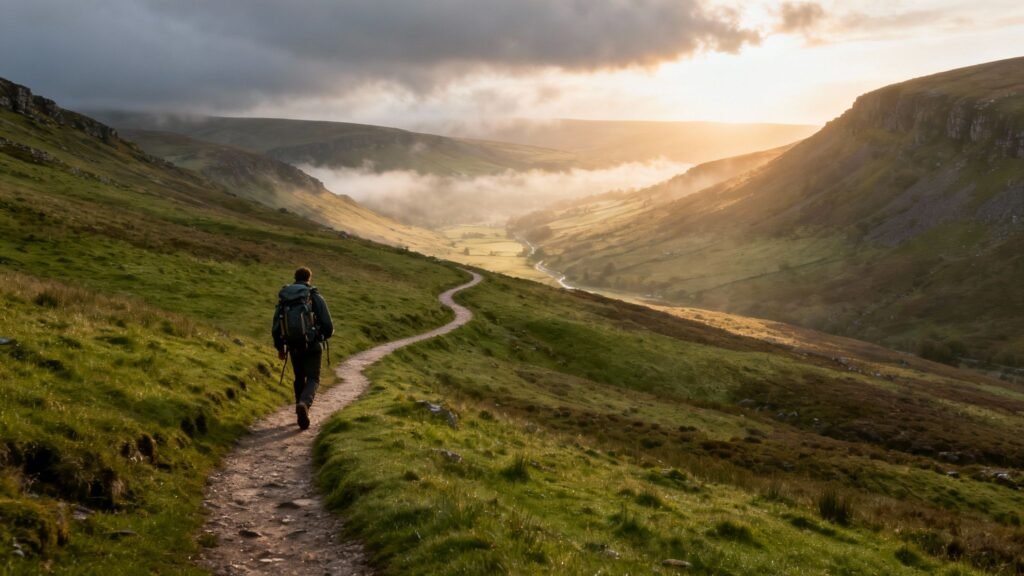
Taking on the Pennine Way is more than just a walk; it’s a classic British adventure. You’re looking at a 268-mile (431 km) journey along the very backbone of England, starting in the Peak District village of Edale and pushing all the way to Kirk Yetholm, just over the Scottish border. It's Britain's original National Trail, a true test of grit that winds through some of the wildest, most spectacular landscapes the country has to offer.
This isn't a stroll in the park. It demands solid preparation, a bit of resilience, and a genuine love for the raw, untamed outdoors.
Your Pennine Way Adventure Starts Here
So, the Pennine Way is calling your name? Fantastic. You’re about to embark on what many consider a rite of passage for any serious long-distance hiker. Think of this guide as your companion in the planning stage, the friend who’s been there and can give you the real story on tackling Britain's most revered (and, let's be honest, most demanding) trail.
We'll get you acquainted with the path's soul, from the brooding moorlands of the Peak District to the triumphant pint waiting for you at the finish line in Kirk Yetholm. You’ll be crossing a real variety of terrain:
- The dark, peaty groughs of Kinder Scout and Bleaklow.
- The gorgeous limestone valleys and rolling hills of the Yorkshire Dales.
- The vast, remote wilderness along Hadrian's Wall and through the Cheviots.
This is a full-on immersive experience. We’ll give you a clear-eyed view of both the tough bits and the incredible rewards, setting you up for a trek you'll never forget.
Here's a quick look at the key stats to help you understand the scale of your upcoming adventure.
The Pennine Way at a Glance
| Metric | Details |
|---|---|
| Total Distance | 268 miles (431 km) |
| Start Point | Edale, Peak District |
| End Point | Kirk Yetholm, Scottish Borders |
| Average Time | 16-19 days |
| Total Ascent | Over 11,885 metres (39,000 ft) |
| National Parks | Peak District, Yorkshire Dales, Northumberland |
This is a serious undertaking, but breaking it down makes it feel much more achievable. Now, let's dig into what makes this trail so special.
What Makes the Pennine Way Special
The Pennine Way has a legendary status among British walkers. It officially opened back on 24th April 1965, becoming the UK's very first National Trail. Its creation was the hard-won victory of a 30-year campaign championed by the journalist and rambler Tom Stephenson, who was inspired by the grand, long-distance trails of America. This path is more than just a route; it’s a living piece of history, a legacy of the 'right-to-roam' movement that opened up the countryside for everyone.
The Pennine Way is often called the "backbone of England," and once you're on it, you'll understand why. It follows the high Pennine hills, demanding a real physical effort but rewarding you with a sense of solitude and views that feel a million miles from anywhere.
To walk it is to embrace the unpredictable. One day you could be navigating by compass across a vast, windswept plateau with only the curlews for company; the next, you're thawing out with a well-earned pint in a cosy pub nestled in a tiny stone village. It’s exactly this contrast that makes the journey so compelling.
If this taste of raw British wilderness has you hooked, our broader guides on exploring England can give you even more ideas. But for now, let's focus on getting you inspired and ready for the detailed planning that lies ahead.
How to Plan Your Pennine Way Itinerary
Right, let's get down to the most important part of your prep: building a walking plan that actually works for you. This is where we go beyond the maps and mileage to create a realistic schedule that fits your fitness, the time you have, and how you like to walk.
The classic way to tackle the Pennine Way is in one continuous push, which usually takes anywhere from 16 to 21 days. Most people find a happy medium, so let's look at what a popular 18-day itinerary involves. This pace works out to roughly 15 miles (24 km) a day – it’s a proper challenge, for sure, but totally doable if you've put the training in.
The Classic 18-Day Schedule
Think of this as a solid starting point for your own plan. It balances the daily distances pretty well and lines you up with sensible overnight stops in villages or near farms where you can find a bed for the night.
- Day 1 Edale to Crowden (16 miles / 26 km)
- Day 2 Crowden to Standedge (11 miles / 18 km)
- Day 3 Standedge to Calder Valley (11 miles / 18 km)
- Day 4 Calder Valley to Haworth (17 miles / 27 km)
- Day 5 Haworth to Gargrave (12 miles / 19 km)
- Day 6 Gargrave to Malham (7 miles / 11 km)
- Day 7 Malham to Horton-in-Ribblesdale (14 miles / 23 km)
- Day 8 Horton-in-Ribblesdale to Hawes (14 miles / 23 km)
- Day 9 Hawes to Keld (12 miles / 19 km)
- Day 10 Keld to Tan Hill Inn (9 miles / 14 km)
- Day 11 Tan Hill Inn to Middleton-in-Teesdale (17 miles / 27 km)
- Day 12 Middleton-in-Teesdale to Dufton (21 miles / 34 km)
- Day 13 Dufton to Alston (20 miles / 32 km)
- Day 14 Alston to Greenhead (16 miles / 26 km)
- Day 15 Greenhead to Once Brewed (Hadrian's Wall) (7 miles / 11 km)
- Day 16 Once Brewed to Bellingham (15 miles / 24 km)
- Day 17 Bellingham to Byrness (15 miles / 24 km)
- Day 18 Byrness to Kirk Yetholm (26 miles / 42 km)
This isn't set in stone, of course. That final day is an absolute beast of a walk across the Cheviots. Plenty of experienced walkers break it into two, using one of the mountain refuge huts for the night and turning their trip into a 19-day adventure.
Prefer a Slower Pace or Section Hiking?
What if that 18-day schedule just sounds too rushed? There's no shame at all in taking it slower. Stretching it out to a 21-day trip brings the daily mileage down, giving you far more time to soak in the views, poke around the villages, and give your legs a well-earned rest. It also makes the really tough days, like that infamous slog over Cross Fell, feel much more manageable.
On the other hand, maybe you just don't have three weeks to spare. Breaking the Pennine Way into sections is a fantastic way to experience the whole trail without taking a huge chunk of time off work. You could split it into three separate week-long holidays or just chip away at it over a series of long weekends. It simplifies the logistics and lets you really savour each part of the journey.
Speaking of the journey, it took a long time for the Pennine Way to even become a reality. This timeline gives you a sense of the dedication it took to create this iconic trail.
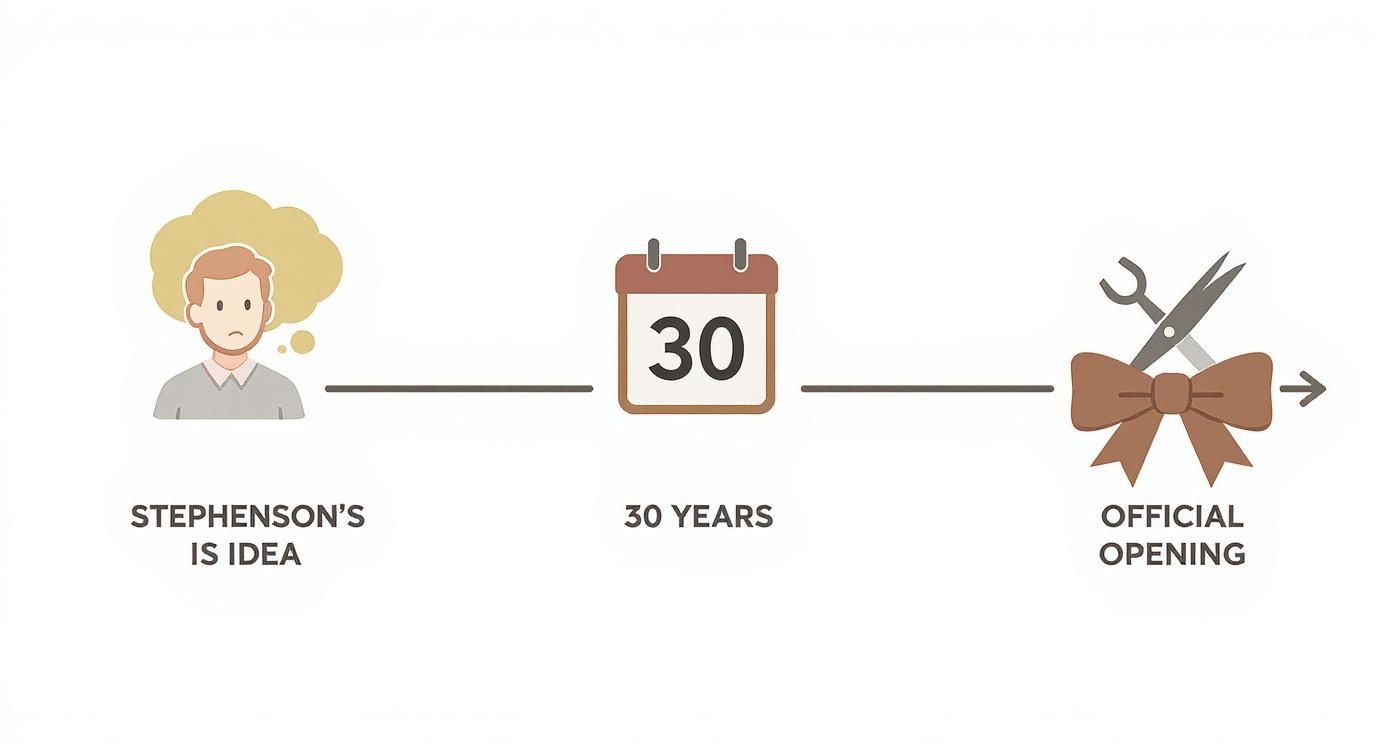
It just goes to show the passion behind Britain's first National Trail – a 30-year campaign that finally paid off when the route officially opened in 1965.
Sorting Out Your Travel Logistics
Once you've sketched out your walking schedule, you need to think about the practicalities: how are you getting to the start and getting home from the finish? Both Edale and Kirk Yetholm are reasonably well-connected, but they do require a bit of forward planning.
Getting to the Start in Edale
- By Train: This is easily the most straightforward option. Edale has its own little station on the beautiful Manchester to Sheffield line. Trains run regularly from both cities, so you can connect from pretty much anywhere in the UK. Seeing the country by rail is a great way to start an adventure, and you can get more ideas for seeing the best of Britain by train.
- By Car: There’s a big pay-and-display car park right by Edale station. The downside? Leaving your car there for three weeks can get expensive, and it creates the headache of getting back to it from Scotland. A smarter move might be to drive to a larger town on the train line, like Sheffield, park there for the long term, and just catch the train for the last leg.
Getting Home from Kirk Yetholm
Kirk Yetholm is a tiny village, so your journey home will have a few steps.
- Bus to Kelso: First, you’ll need to hop on a local bus from Kirk Yetholm to the nearby market town of Kelso.
- Bus to Berwick-upon-Tweed: From Kelso, another bus will take you to the coast at Berwick-upon-Tweed.
- Train Home: Berwick is a major stop on the East Coast Main Line, putting you on a direct train to Edinburgh, Newcastle, York, or London.
Figuring out this travel puzzle is just as crucial as packing the right gear. And while you're planning, consider the sheer number of obstacles you'll encounter. The full route involves navigating 287 gates, climbing over 249 wooden stiles and 183 stone stiles, and crossing 204 bridges. With 458 waymark signs pointing you in the right direction, it’s a clear picture of a trail that’s rugged but well-cared-for.
Finding the Right Places to Stay
A good night’s rest is your secret weapon on the Pennine Way. After a long day battling the elements or climbing endless stiles, where you lay your head can make or break the next day’s walk. Let’s look at your options, from a cosy pub room to a quiet spot under the stars.
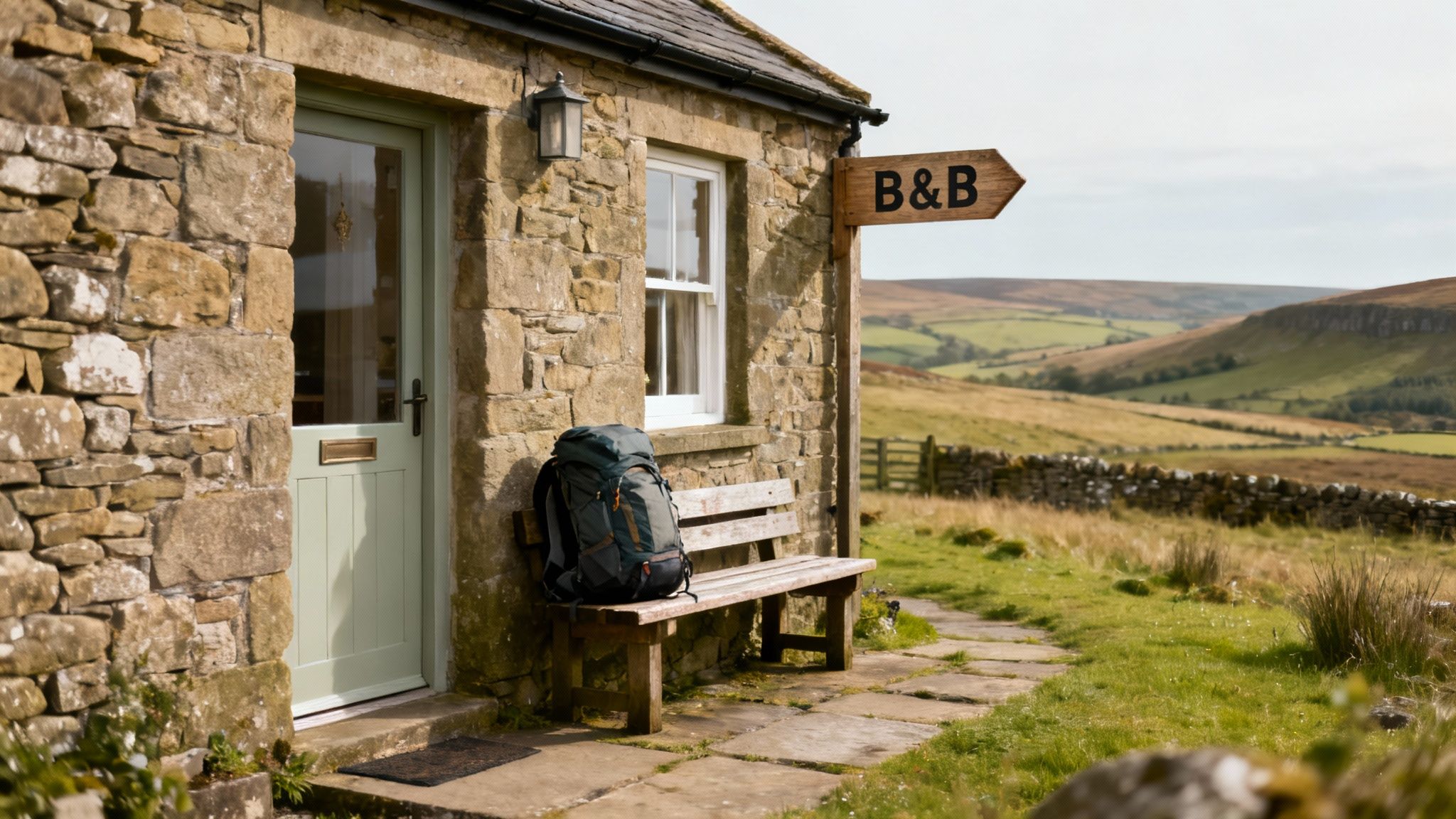
Honestly, how you plan your accommodation will have a huge impact on your budget and the whole vibe of your trip. It pays to get this sorted out early, as the best spots in the smaller villages can get snapped up months ahead, especially in high season.
Pubs, B&Bs, and Guesthouses
For most walkers, the thought of a proper bed, a hot shower, and a full English breakfast waiting for you is the best motivation to get through a tough day. Thankfully, the trail is dotted with traditional pubs offering rooms, friendly B&Bs, and guesthouses that know exactly what a weary hiker needs.
These places offer more than just comfort. They’re a chance to soak up a bit of local culture and chat with other people tackling the Way. Your hosts are often a goldmine of local knowledge, happy to share tips on the trail ahead, give you a real-time weather update, or sort you out with a packed lunch.
- Atmosphere: Think welcoming, comfortable, and social. It’s the perfect way to experience genuine northern hospitality.
- Typical Cost: You’ll be looking at around £50-£90 per person per night, which nearly always includes a fantastic breakfast.
- Best For: Walkers who put a premium on comfort, a good hot meal, and a guaranteed place to dry out their boots and gear.
Hostels and Bunkhouses
If you're watching the pennies or just enjoy a more communal, social atmosphere, then hostels and bunkhouses are a brilliant choice. The Youth Hostels Association (YHA) has several properties in key locations right along the route.
Don’t expect luxury, but you'll get all the essentials: a bunk bed, access to a shared kitchen to cook your own meals, and a common room to swap stories with fellow walkers. They're especially great if you're hiking solo and want to meet a few new people along the way.
A word of warning: book well in advance. Popular hostels, especially in places like Malham or near Hadrian's Wall at Once Brewed, can be fully booked almost a year ahead for peak summer weekends and school holidays.
The Freedom of Camping
For the true adventurers out there, nothing beats camping. It gives you incredible flexibility and connects you directly to the wild landscapes you’re walking through. You’ve really got two choices here: stick to official campsites or embrace the challenge of wild camping.
Official campsites are pretty common near the villages and farms on the route. They offer facilities like toilets, showers, and maybe a small shop, giving you a secure place to pitch your tent for roughly £10-£15 per night.
Wild camping, on the other hand, is the real deal. It’s about finding a quiet, discreet spot out in the wilderness. While it offers unparalleled freedom, it also comes with big responsibilities. Technically, the legality is a bit of a grey area, but it's generally tolerated in the remote, high moorlands of the National Parks as long as you are respectful. That means sticking to the "Leave No Trace" ethos without exception.
- Arrive late, leave early: Don't pitch your tent until dusk is setting in, and make sure you're packed up and gone by sunrise.
- Camp high and out of sight: Stay away from buildings, roads, and enclosed farmland (especially if there's livestock).
- Leave no trace: This is the golden rule. Pack out every single thing you pack in, including all your rubbish. Never light a fire, and leave the ground exactly as you found it.
- Be considerate: Keep noise to an absolute minimum and stick to small groups.
Wild camping demands more self-sufficiency, but the reward is an unforgettable night under a canopy of stars. It’s a completely different experience.
If you love the idea of planning adventures in beautiful places but prefer a bit more comfort, you might also find some inspiration in our guides to well-organised city breaks. Ultimately, choosing your accommodation style is a huge part of making the Pennine Way your own personal adventure.
Packing Smart for the Pennine Way
What you haul on your back for three weeks can make or break your entire Pennine Way adventure. Let's get this right. This isn't just a list of stuff; it's a tried-and-tested philosophy for packing a bag that's ready for anything the trail throws at you, without feeling like you're carrying a small car on your shoulders.
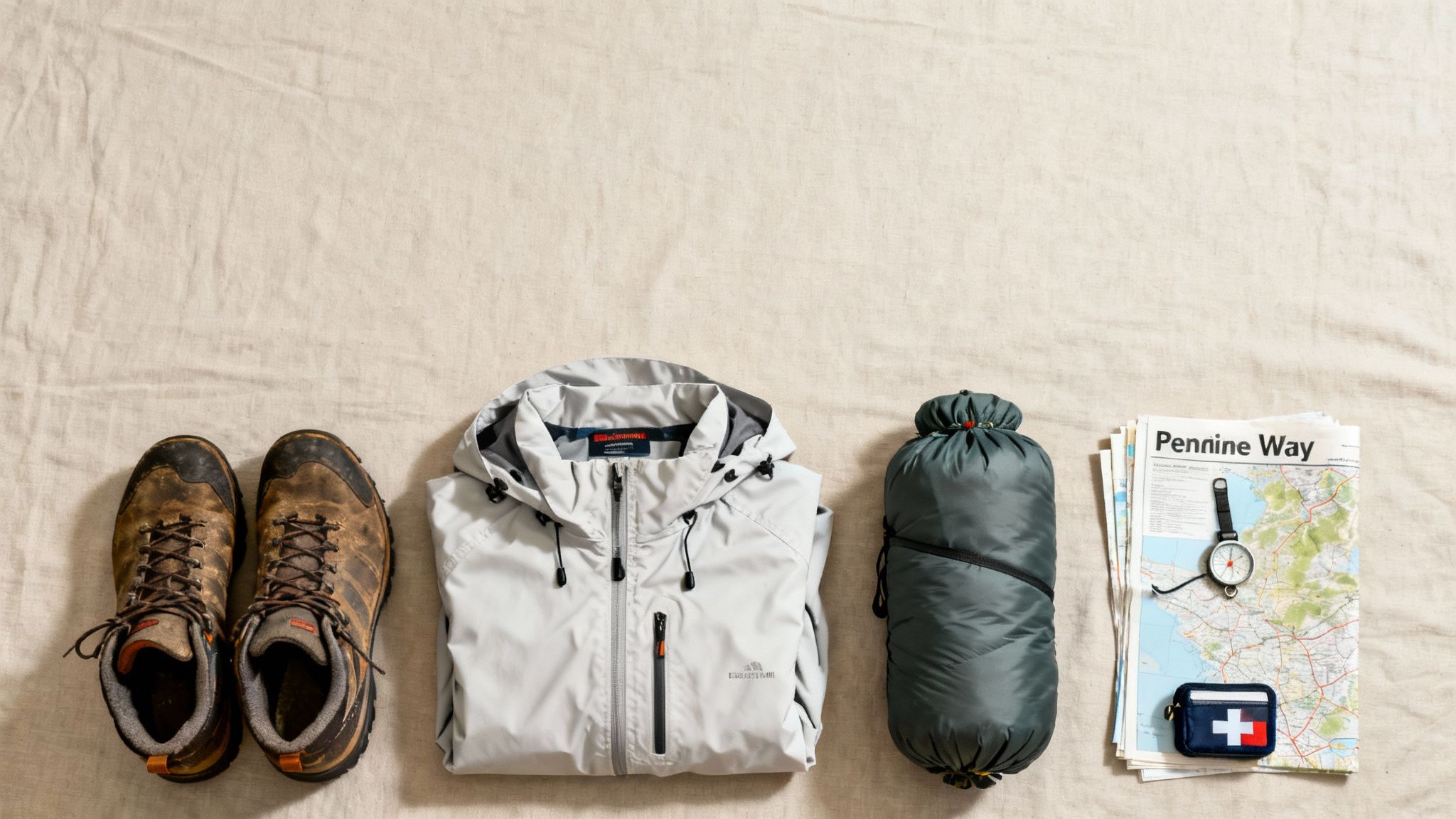
The secret is to think in systems, not just a pile of individual items. Your goal should be a lightweight, versatile pack where every single piece of kit has a clear purpose—and ideally, more than one.
The Great Footwear Debate
Your feet are your engine on the Pennine Way. Looking after them properly starts, and often ends, with what you put on them. The old-school approach always dictated heavy, stiff leather boots. They give you bomb-proof ankle support, for sure, but they can also be cumbersome and take an eternity to dry out after a classic bog-sodden day.
These days, many long-distance walkers are making the switch to much lighter gear. When it comes to your feet, a game-changer is choosing durable trail running shoes that are built to handle rough and varied terrain. They're far more breathable, dry out in a flash, and seriously cut down on fatigue over a long day's walk.
So, which way should you go?
- Traditional Hiking Boots: Stick with these if you know you need maximum ankle support, you're planning on carrying a really heavy pack, or you just feel more secure in stiff-soled footwear on rocky, uneven ground.
- Trail Running Shoes: Perfect for walkers who want to keep their pack weight down, let their feet breathe, and are happy with a bit less ankle support. They are an absolute blessing on the trail's many boggy sections because they drain and dry so much faster.
No matter what you choose, there's one golden rule: break them in properly. Wear them on every single training walk, paired with the exact socks you plan to use on the trail. This is, without a doubt, the most important piece of prep you can do.
Mastering the Layering System
The weather on the Pennines is notoriously fickle; it's no exaggeration to say you can get all four seasons in one afternoon. Staying comfortable is all about having a flexible layering system that you can adjust as you walk. Ditch the idea of one big, bulky jacket and think in terms of three distinct layers.
- Base Layer: This is what's right against your skin. Its only job is to wick sweat away from your body to keep you dry and comfortable. Go for merino wool or a good synthetic material. Never, ever wear cotton—it just soaks up moisture and will leave you feeling cold and clammy.
- Mid Layer: This is your insulation. A simple microfleece or a lightweight synthetic insulated jacket is ideal. It’s designed to trap your body heat and keep you warm, but it's also easy to whip off and cram into your pack when you start to warm up on a climb.
- Outer Shell: This layer protects you from the wind and rain. A high-quality, fully waterproof and windproof jacket and trousers are absolutely non-negotiable. Seriously, this is where you should spend your money. Look for taped seams and a well-designed hood—it'll be your best friend during a downpour on the summit of Cross Fell.
Your waterproofs aren't just for when it's raining. They are a critical piece of your safety equipment. In high winds, they act as an essential barrier against wind chill, helping you hold onto precious body heat.
Essential vs Optional Gear Checklist
Use this checklist to prioritise your pack and decide what's worth the weight and what to leave behind.
| Item Category | Essential Items | Optional (But Recommended) Items |
|---|---|---|
| Clothing | Waterproof jacket & trousers, fleece/mid-layer, 2-3 base layers, 3 pairs of wool socks, hat, gloves, hiking trousers | Spare fleece, camp clothes (lightweight trousers/top), sun hat/cap, gaiters |
| Footwear | Broken-in boots or trail shoes | Camp shoes (crocs or flip-flops), spare laces |
| Navigation | Map (OS or guidebook), baseplate compass | GPS device or phone with offline maps (as a backup), power bank |
| Safety & First Aid | First aid kit (blister plasters, antiseptic wipes, painkillers), head torch, whistle, emergency shelter/bivvy bag | Water filter/purification tablets, insect repellent (for midges!), emergency locator beacon |
| Miscellaneous Gear | 40-50 litre rucksack, pack liner/dry bags, water bottle/bladder (2L capacity), toiletries, sun cream | Trekking poles, notebook & pen, sit mat, ear plugs (for hostels), small microfibre towel |
| For Wild Campers | Tent, sleeping bag, sleeping mat, stove, fuel, cooking pot, spork | Inflatable pillow, portable wash basin (e.g., Sea to Summit Kitchen Sink) |
Remember, every gram counts when you're carrying it for 268 miles. Pack what you need, not what you might need.
Vital Kit Beyond Your Clothes
Aside from what you're wearing, a few other bits of kit are absolutely crucial for a safe and successful trek. Your navigation tools are at the top of that list. While a phone with a GPS app is a fantastic modern aid, it should never be your only way of finding your route. Batteries fail, screens smash, and mobile signal can be a distant memory in the remote valleys.
You must carry, and know how to use:
- A physical map of the route (like an OS map or a dedicated guidebook).
- A reliable baseplate compass.
Your first-aid kit is another non-negotiable. It doesn't need to be huge, but it has to include the essentials for dealing with blisters (Compeed is a godsend), some painkillers, antiseptic wipes, and of course, any personal medication you need. Lastly, a head torch is vital—not just for getting caught out in the dark, but also for rummaging through your pack in a dimly lit bunkhouse without waking everyone up.
Getting Your Body and Mind Trail Ready
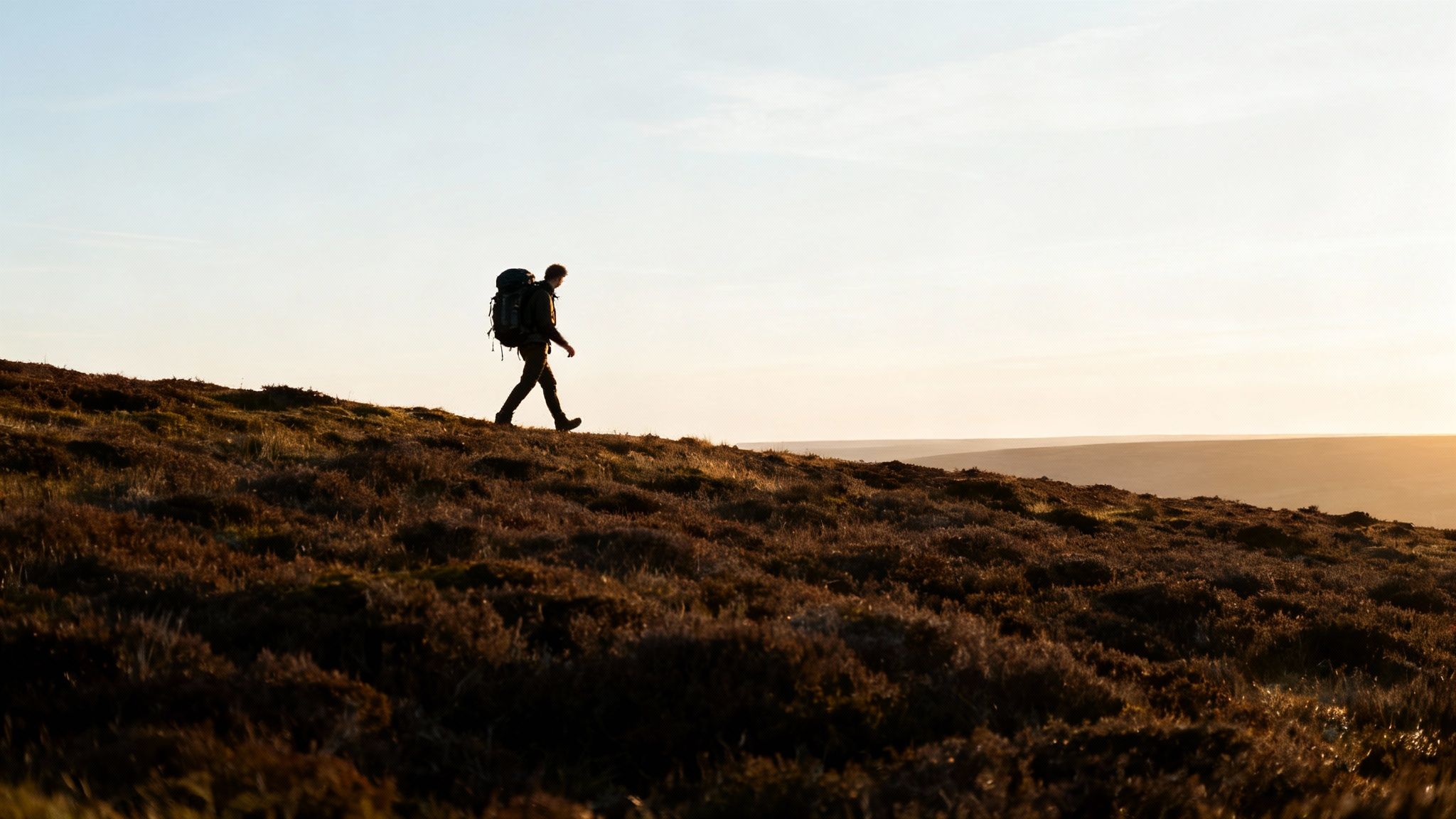
Let’s be honest, the Pennine Way is going to test you. It’s a magnificent challenge, but its wild beauty is matched by its toughness. Getting to the finish line isn't just about having the right kit; it’s about preparing your body and, just as importantly, your mind for the long haul.
Physical preparation is completely non-negotiable. You really can’t just rock up in Edale and hope for the best. The aim isn’t to become some super-athlete, but to build the endurance needed for back-to-back days of hard walking, often over punishing terrain.
This isn't just a gentle stroll. We're talking about a route that endures extreme upland weather, with some sections getting soaked by up to 2.5 metres of rain a year. With a total climb of around 11,225 metres (36,825 feet), it’s easily one of the most physically demanding National Trails in the UK.
Building Your Trail Endurance
I’d recommend starting a structured training plan at least 12 weeks before you head out. Your focus should be on building stamina and strength, especially in your legs and core. A slow and steady build-up is the best way to dodge injuries and make sure you arrive at the start feeling strong, not already worn out.
A good weekly plan should mix a few different activities to build a solid foundation.
- Long Walks: Make one long walk each weekend your priority. Start with a distance you know you can handle—maybe 8-10 miles—and gradually add a couple of miles each week. Your goal is to be comfortably knocking out 15-18 mile walks before you go.
- Back-to-Back Days: This is a game-changer. In the final month of training, try to do two long walks on consecutive days. It's the single best way to simulate the reality of the Pennine Way and teach your body how to recover and go again.
- Hill Repeats: Find a decent local hill and just walk up and down it several times. It might feel a bit daft, but it’s brilliant for building leg strength and cardiovascular fitness, getting you ready for the big climbs like Pen-y-ghent and Cross Fell.
The most crucial part of your training? Make sure you do at least a few of your long practice hikes wearing the exact boots and a fully loaded backpack you plan to take. This gets your body used to the weight and helps you spot any annoying pack-fit issues before they become a real problem on the trail.
Sharpening Your Mental and Safety Skills
Getting physically fit is only half the battle. Your mental resilience and practical skills are what will drag you through the tough moments, especially when the infamous Pennine fog rolls in.
Being prepared also means understanding how your body works. Your feet, in particular, are going to take a beating. Learning about the importance of foot health and choosing the right sneakers can genuinely prevent a world of pain later on.
Navigation is absolutely paramount. You simply cannot rely on your phone or a GPS alone. When visibility drops to just a few metres on a featureless moorland, knowing how to use a map and compass is essential for your safety. Practice these skills on your training walks. Get comfortable taking a bearing, reading contour lines, and pacing out distances.
Finally, prepare for the mental game. Trust me, there will be days when you’re wet, tired, and seriously questioning why you ever thought this was a good idea. That’s totally normal! The trick is to break the journey down. Don’t think about Kirk Yetholm; just focus on reaching the next village, the next trig point, or even just the next stile. Embrace the quiet moments, find a steady rhythm, and remember why you started in the first place.
So, How Much Does the Pennine Way Cost?
Let's talk about the brass tacks: money. Figuring out your budget is one of the most important parts of planning your Pennine Way adventure, and honestly, it can vary wildly from person to person. It all comes down to your personal style of hiking.
If you're a hardy wild camper, you can get by on a surprisingly small budget. Your main outgoings will be stocking up on food in villages, maybe paying for a proper campsite every few nights to grab a shower, and gas for your stove.
I’ve found a realistic daily budget for a camper is somewhere in the region of £15–£25. This should cover all your food from local shops and the odd campsite fee, making it the cheapest way to walk the trail by a country mile.
On the other hand, if you prefer a proper bed and a roof over your head each night, your costs are going to jump up. Staying in B&Bs or pubs is where most of your budget will go, but the reward is a hot shower, a full English breakfast, and often the option of a packed lunch for the day ahead.
A Look at Typical Daily Costs
Here’s a rough idea of what you might spend per person, per day, based on how you decide to walk the Pennine Way:
- Accommodation: Wild camping is free, of course. Campsites are usually £10-£15, hostels sit around £25-£35, and a cosy B&B or pub room will set you back £50-£90.
- Food & Drink: A food shop to resupply your pack will be about £10-£15. If you fancy a pub dinner, expect to pay £15-£25, and a well-deserved pint is usually £4-£5.
- The 'Just-in-Case' Fund: It’s always wise to have a bit extra tucked away. I’d recommend a buffer of at least £100-£150 for those unforeseen moments – replacing a broken bit of kit, needing a taxi to skip a section if you pick up a knock, or an unplanned night's stay.
A great way to keep costs down is to mix and match. A few nights in a bunkhouse or hostel can easily balance out a pricier B&B stay. Booking your accommodation well in advance is another smart move, as you’ll often get better prices, particularly in the summer. And don't forget to use those hostel kitchens – they're brilliant for saving a few quid on meals.
Your Pennine Way Questions Answered
Every walker, no matter how seasoned, has a few last-minute questions before tackling a big trail. It's completely normal. Getting these sorted is the final piece of the puzzle, giving you the confidence to just get out there and enjoy the walk.
Think of this as our final chat over a map before you set off. Here are the answers to the questions we get asked the most.
How Tricky Is the Navigation?
Let's be blunt: you can't just follow the signs. While the acorn waymarks are there, relying on them alone is a recipe for getting lost, especially when that famous Pennine mist rolls in without warning.
Being comfortable with a map and compass isn't just a nice skill to have—it's absolutely essential for your safety out there.
A few spots are notorious for catching people out:
- The huge, disorienting peat bogs of Kinder Scout and Bleaklow.
- The wild, high-level crossing over Great Dun Fell and Cross Fell.
- That final, lonely push across the Cheviot Hills.
A GPS or a good phone app with offline maps is a brilliant backup, and you should definitely have one. But batteries can die. Your map and compass should always be your go-to navigation tools. Some days are a simple stroll, but others will demand your complete concentration.
When’s the Best Time of Year to Go?
You'll have the best chance of a great trip by aiming for late spring to early autumn. In my experience, May, June, and September are the sweet spots.
These months usually give you longer daylight hours, a better shot at decent weather, and firmer ground underfoot. July and August are popular too, but you might get more rain, and you'll definitely see more people on the trail during the school holidays.
Thinking about a winter thru-hike? That’s strictly for expert winter mountaineers who are fully prepared for deep snow, ice, and precious few hours of daylight.
How Do I Resupply Food and Water?
With a bit of planning, keeping yourself fed and watered is pretty straightforward. The route conveniently passes through or near towns like Hebden Bridge, Hawes, and Bellingham, where you can pop into a local shop or small supermarket.
Just be mindful of the more remote stretches. There are a couple of sections, especially once you get further north, where you'll need to carry enough food for two or even three days. Mark these on your map and plan accordingly.
As for water, you can fill up at your B&B or hostel each morning. You'll cross countless streams up on the fells, but it's vital to always treat water from natural sources. A good filter or purification tablets are non-negotiable if you want to avoid a nasty stomach bug and keep your adventure on track.
If rugged, wild landscapes are your thing, you might also be drawn to another incredible long-distance route. Our guide to the Wild Atlantic Way in Ireland explores a stunning coastal journey.
Ready to stop dreaming and start planning? BTOURS can take the stress out of the logistics. We create seamless Pennine Way itineraries with hand-picked accommodations, leaving you free to focus on the walk itself. Find out more at https://www.btours.com.