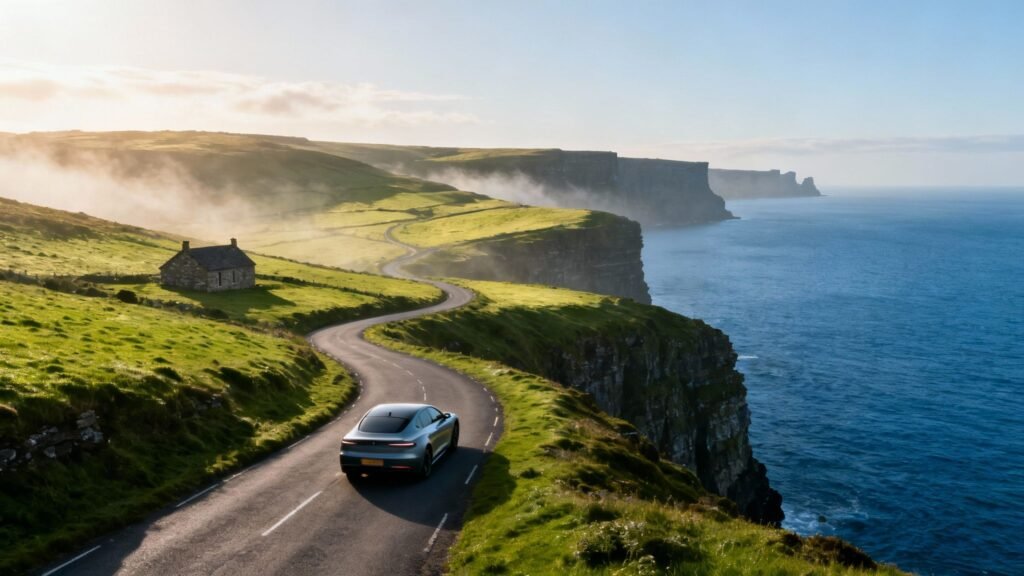
Picture this: you wake up in a charming B&B, and over breakfast, you decide to ditch the main road for a tiny, winding coastal lane. An hour later, you've stumbled upon a deserted, sandy cove that feels like your own private corner of the world.
That’s the magic of Ireland self drive tours. It’s about giving you the freedom to explore the Emerald Isle on your own terms, far away from the rigid timetables of a big group tour. You get to craft a trip that is genuinely yours.
Why a Self Drive Tour Is the Best Way to See Ireland
Opting for a self-drive tour is like being handed the keys to the kingdom. Instead of being herded along a set route by a tour guide, you’re the director of your own Irish adventure. This way of travelling puts spontaneity and discovery right at the heart of your holiday.
It helps to think of it like this: a traditional group tour is a bit like watching a film—the story is already written for you. A self-drive tour, however, is like writing your own book. You get to decide where the plot twists, which characters you meet along the way, and what detours lead to the most unforgettable chapters. It’s this complete freedom that makes the experience so special.
Embrace Ultimate Flexibility and Freedom
The biggest draw of Ireland self drive tours is the incredible flexibility. There’s absolutely no pressure to dash from one famous landmark to the next just to stick to a schedule.
Fallen head over heels for the dramatic beauty of the Cliffs of Moher? Linger for an extra hour and watch the sunset splash colour across the sky. Stumbled upon a lively trad music session in a tiny pub in Doolin? Go on, pull up a stool and soak it all in for the rest of the evening.
This laid-back approach works brilliantly for everyone:
- Couples: Find those romantic, hidden-away spots and enjoy quiet moments together without a crowd.
- Families: You can easily change plans to match your kids' energy levels, making spontaneous stops for ice cream or a run around on the beach.
- Solo Travellers: Let your curiosity guide you down any back road, staying longer where you feel a connection and moving on whenever you’re ready.
This freedom to explore at your own pace is what allows you to really connect with Ireland, turning a standard holiday into a collection of personal, unforgettable moments.
A Journey Tailored to Your Interests
It’s no surprise that self-drive tours are becoming the go-to choice for visitors who want a more personal trip. The appeal is especially strong for couples and families who love being able to shape their own days.
Holiday and leisure trips make up almost half of all visits to Ireland. We know that 43% of travellers are exploring with a partner and 35% are with family, which really shows a growing desire for independent, flexible travel. If you're curious, you can find more interesting stats on Irish tourism from the CSO.
At the end of the day, a self-drive tour lets you see the Ireland you've been dreaming of. You could spend days delving into ancient history among monastic ruins or dedicate your entire trip to navigating the stunning Wild Atlantic Way. For those looking for a bit of inspiration, our complete list of self drive tours has expertly planned routes ready for you to make your own.
Crafting Your Perfect Irish Road Trip Itinerary
Let's be honest, choosing your route is the best part of planning an Irish road trip. It's the heart and soul of your adventure, the narrative that will connect every pub, castle, and jaw-dropping view. Think of Ireland not as one single place, but as a collection of incredible stories waiting to unfold from behind your steering wheel.
So, the real question is, which story do you want to be a part of? Are you picturing yourself battling the wind on a dramatic cliff edge along the Atlantic? Or maybe you're dreaming of walking in the footsteps of ancient kings and monks through 5,000 years of history? Perhaps the epic myths and cinematic landscapes of the north are calling your name.
This section is all about matching your travel style to the right story. We'll dive into Ireland's most famous driving routes to help you piece together an itinerary that feels like it was made just for you.
To get started, let's look at what kind of trip you're after—whether it's a romantic getaway, a big family adventure, or a solo quest for discovery.
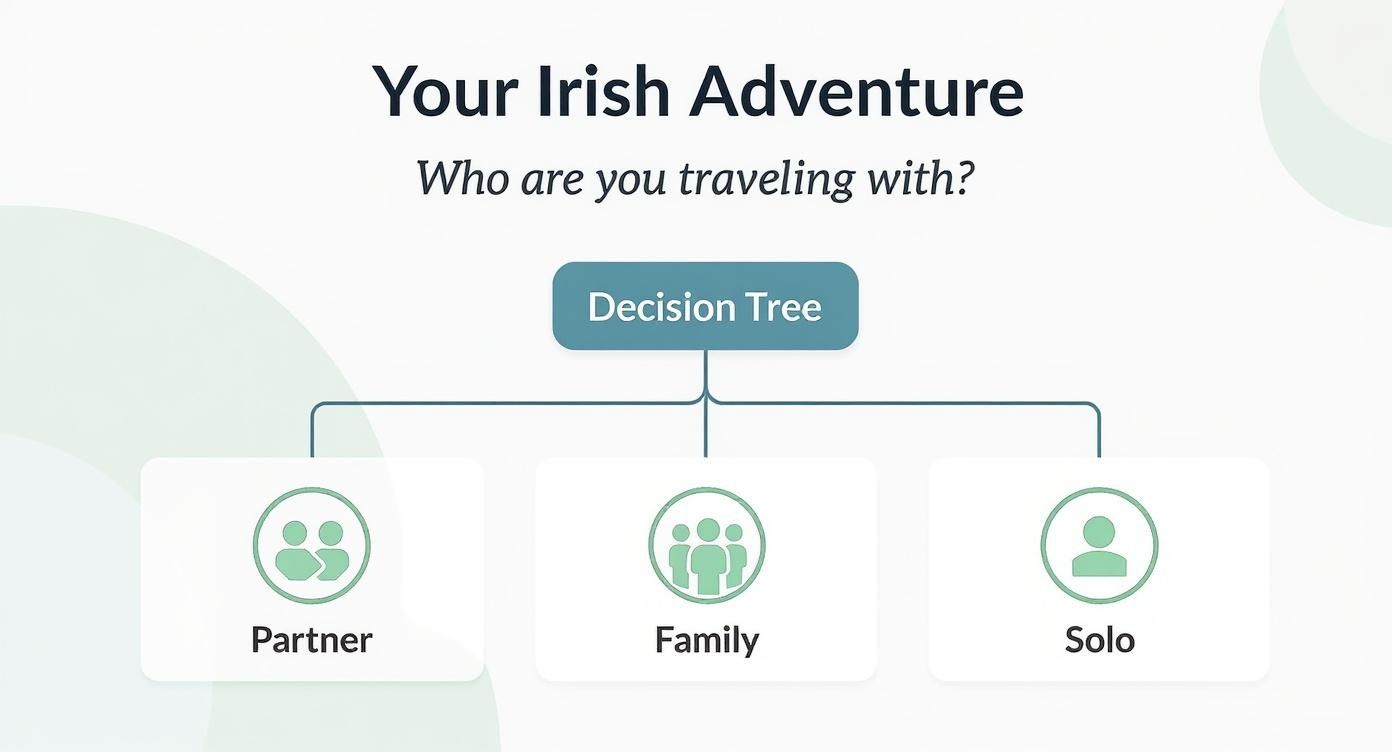
As you can see, certain routes and activities really lend themselves to different types of travellers, helping you narrow down the perfect Irish experience.
To help you decide which adventure best suits your travel style and interests, here’s a quick comparison of Ireland's most popular self-drive routes.
Choosing Your Ideal Irish Road Trip Route
| Route Name | Best For | Typical Duration | Key Highlights |
|---|---|---|---|
| The Wild Atlantic Way | Adventure seekers, nature lovers, and photographers looking for epic coastal drama. | 10-14 days | Cliffs of Moher, Ring of Kerry, Connemara National Park, Slieve League. |
| The Causeway Coastal Route | Fans of myths, legends, and TV shows like Game of Thrones. Great for shorter trips. | 3-5 days | Giant's Causeway, Carrick-a-Rede Rope Bridge, Dunluce Castle, The Dark Hedges. |
| Ireland's Ancient East | History buffs, families, and anyone wanting to trace Ireland's rich, 5,000-year story. | 5-7 days | Newgrange, Rock of Cashel, Glendalough, Kilkenny's Medieval Mile. |
Each route offers a completely different flavour of Ireland. Now, let’s get into the details of what makes each one so special.
The Wild Atlantic Way: Epic Coastal Drama
Stretching for a staggering 2,500 kilometres along Ireland’s entire west coast, the Wild Atlantic Way is less of a road trip and more of a life-affirming experience. This is a full-on sensory journey filled with jagged cliffs, the constant roar of the sea, and a culture that feels as wild as the landscape.
You’ll drive from the raw, untamed beauty of Donegal in the north all the way down to the colourful, harbour town of Kinsale in County Cork. The scenery is constantly changing but always, always breathtaking.
A few unmissable highlights along the way:
- The Cliffs of Moher: Standing a sheer 214 metres above the churning Atlantic, these world-famous cliffs offer views that will be burned into your memory forever.
- The Ring of Kerry: This classic 179-kilometre loop is famous for a reason, taking you through iconic mountain passes and impossibly charming coastal villages.
- The Burren: A truly unique limestone landscape in County Clare that feels almost lunar, dotted with ancient tombs and surprisingly delicate flora.
- Connemara National Park: A vast wilderness of mountains, bogs, and moody lakes that offers a profound sense of solitude and raw, natural beauty.
The Wild Atlantic Way is for adventurers who want to feel the untamed spirit of Ireland. It’s a journey of immense scale and pure, rugged beauty.
The Causeway Coastal Route: Myths and Legends
Up in Northern Ireland, the Causeway Coastal Route packs an unbelievable amount of drama into a relatively short and manageable drive. Winding its way from Belfast to Derry~Londonderry, this route hugs a coastline steeped in myth and cinematic splendour.
The undisputed star of the show is the Giant's Causeway. It’s a UNESCO World Heritage site made up of around 40,000 mind-boggling basalt columns. Legend says the giant Fionn mac Cumhaill built it, and when you’re standing there, it’s easy to believe in a little magic.
The Causeway Coastal Route is more than just a scenic drive; it's a journey through stories. Every castle ruin, every windswept headland, and every charming village has a tale to tell, connecting you to a rich tapestry of history and folklore.
But the wonders don’t stop there. You can test your nerve on the Carrick-a-Rede Rope Bridge, swaying high above the waves, or explore the majestic ruins of Dunluce Castle, perched precariously on a cliff edge. It’s one incredible stop after another.
For any fan of epic television, this region is a pilgrimage site. Countless iconic locations from Game of Thrones were filmed here, and you can even follow a specially curated Game of Thrones 8-day self-drive tour to fully immerse yourself in the world of Westeros.
Ireland’s Ancient East: Echoes of the Past
If you’re a history lover, welcome to your playground. Ireland’s Ancient East is a route that weaves through the lush green landscapes east of the River Shannon, uncovering 5,000 years of fascinating history. You’re literally driving through the pages of Ireland’s past.
Unlike the wild coastlines, this is a story told through rolling hills, gentle rivers, and sacred sites where history feels tangible.
Get ready to explore some of Ireland's most important landmarks:
- Newgrange: This prehistoric passage tomb is older than Stonehenge and the Great Pyramids of Giza. It’s an astonishing feat of ancient engineering.
- The Rock of Cashel: A spectacular gathering of medieval buildings set high on a limestone hill, once the traditional seat of the kings of Munster.
- Glendalough: A serene monastic city founded by St. Kevin in the 6th century, tucked away in a truly beautiful glacial valley.
- Kilkenny's Medieval Mile: A wonderful historic trail that connects the magnificent Kilkenny Castle to St. Canice's Cathedral, lined with ancient buildings and cosy laneways.
Picking your route is the first big, exciting step in creating your dream Ireland self drive tour. Whether you crave the wild drama of the Atlantic, the legendary tales of the north, or the deep historical roots of the east, the perfect road is out there waiting for you.
Getting to Grips with Driving in Ireland: Your Essential Guide
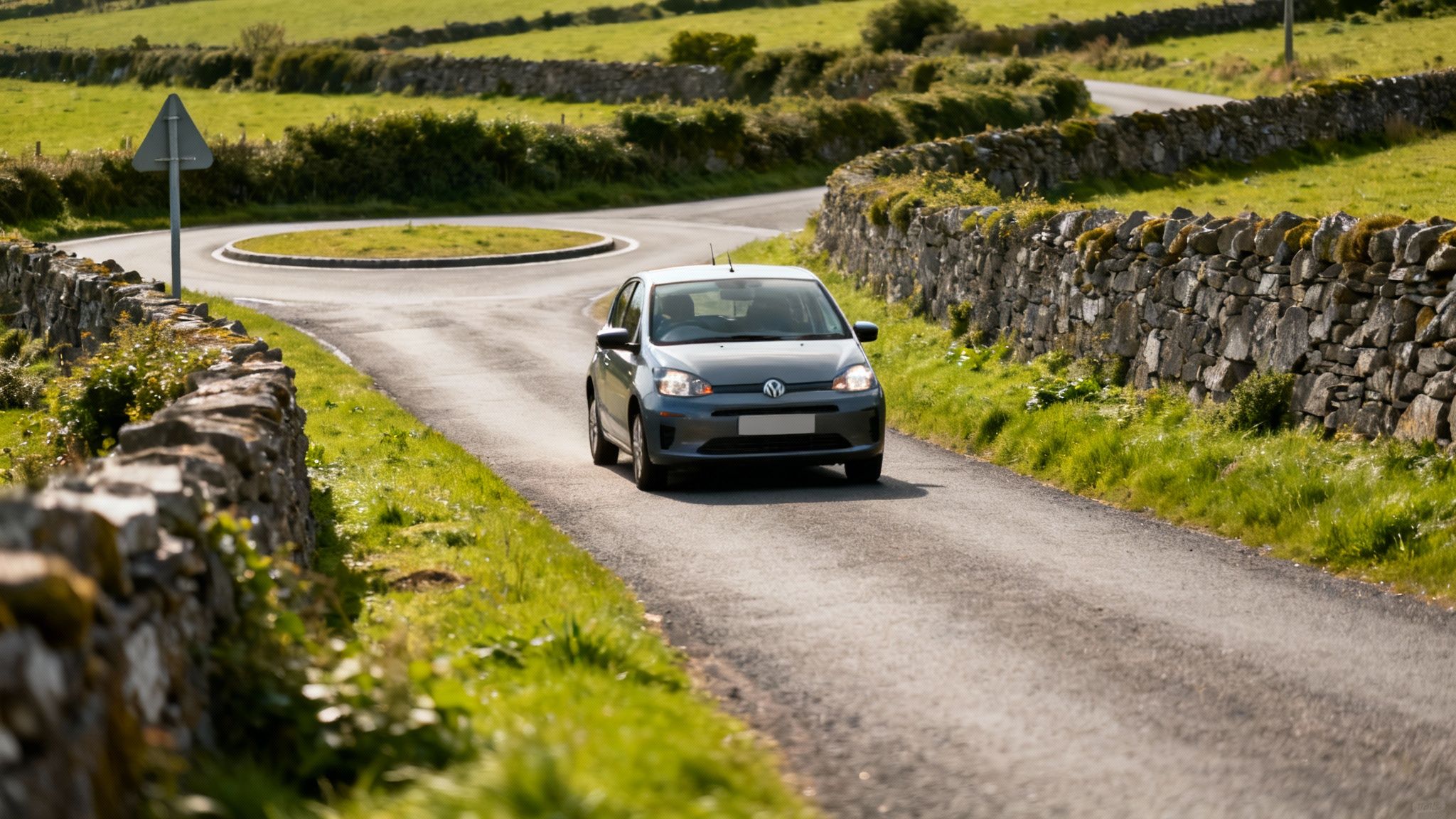
Hitting the road in Ireland is a huge part of the adventure. It’s how you’ll discover those hidden coves and stumble upon the best views that you just can't get any other way. But let's be honest, it can also be a bit daunting. A little bit of prep will turn what could be a white-knuckle ride into a brilliant, confident drive.
First thing’s first, and it’s the big one: you drive on the left-hand side of the road. If you’re coming from the UK, you’re all set. For everyone else, this is your golden rule.
Before you even leave the car park, take a few minutes. Get a feel for the car, especially if you’re in a manual and the gearstick is on your left. As you pull out, just keep repeating the mantra: "look right, stay left." It sounds simple, but it’s a lifesaver at junctions and roundabouts.
Understanding Ireland's Roads
You'll quickly realise that not all Irish roads are created equal. Knowing the difference will help you figure out your travel times, because a 50-kilometre trip on one road can take a wildly different amount of time than on another.
It helps to think of them in tiers, from motorways down to tiny country lanes.
- Motorways (M-roads): These are the big arteries connecting cities like Dublin, Cork, and Galway. Look for the blue signs. They’re multi-lane, the speed limit is 120 km/h, and they are hands-down the fastest way to cover long distances.
- National Roads (N-roads): One step down, these are your main routes between towns. You’ll spot them by their green signs. Some are modern dual carriageways, others are just single-lane roads. Speed limits here usually sit between 80 and 100 km/h.
- Regional Roads (R-roads): Now you're getting into the real countryside. These roads have white signs and are generally well-kept, but they're definitely narrower and slower than the N-roads.
- Local Roads (L-roads & Boreens): This is where the magic happens! These are the smallest, skinniest roads, often with a strip of grass growing down the middle. We call them 'boreens', and they demand slow, careful driving and a friendly wave as you pull in to let someone pass.
Navigating Roundabouts and Signs
Roundabouts are everywhere in Ireland, from tiny one-lane circles in villages to massive, sprawling interchanges. The rule is simple: yield to traffic already on the roundabout, which will be coming from your right. And don't forget to use your indicators to show where you're getting off.
Irish road signs are pretty straightforward. Distances are in kilometres, and speed limits are in kilometres per hour (km/h). While most signs are bilingual (English and Irish), the symbols are the ones you'll recognise from across Europe. Keep an eye out for the brown heritage signs – they point the way to all the cool historical sites and attractions.
A bit of local etiquette goes a long way. On those narrow roads, if you see a spot to pull in on your left to let an oncoming car pass, take it. Likewise, if a local is clearly in a hurry behind you, find a safe spot to let them by. It's just a common courtesy that keeps everyone happy and the traffic moving.
Picking and Insuring Your Rental Car
Choosing the right hire car is a massive part of planning your Ireland self drive tour. It’s tempting to go for a big, comfy car, but a smaller, more compact model is so much more practical for squeezing down country lanes and nabbing a parking spot in a busy town.
You’ll also need to choose between a manual and an automatic. Manuals are far more common here and usually a bit cheaper to hire. But if you’re not 100% confident with a stick shift, paying a bit extra for an automatic is money well spent for a stress-free trip.
Finally, the insurance chat. Your hire car will have basic insurance, but you'll likely be on the hook for a massive excess if anything happens. This is where Collision Damage Waiver (CDW) comes in. It’s an optional extra that dramatically reduces or even eliminates that excess. It adds to the daily cost, but for the peace of mind it brings when you're navigating a tight boreen, it’s worth its weight in gold. Always read the rental agreement properly to see what’s covered before you drive off.
Finding the Perfect Place to Stay on Your Trip
Where you rest your head each night is just as much a part of your Irish adventure as the breathtaking drives and ancient castles. The right accommodation isn’t just a bed for the night; it’s a way to genuinely connect with the country and create memories you'll be talking about for years.
Picking where to stay on your Ireland self drive tour is like choosing a different flavour of Ireland each night. One morning you could be waking up to the smell of a proper Irish breakfast in a cosy B&B, and the next, falling asleep tucked away inside the stone walls of a historic castle.
The Charm of a Classic Irish B&B
If you want a truly authentic dose of Irish hospitality, you really can't beat a family-run Bed & Breakfast. Think of it less like a hotel and more like staying with a local friend—a friend who just happens to make an incredible breakfast and knows all the area's best-kept secrets.
Your hosts are often your best tour guides. They’re the ones who will point you to the pub with the best live music, tell you about the hidden viewpoint that isn’t in the guidebooks, and share the shortcut to avoid the tourist buses. That personal touch is what turns a good trip into an unforgettable one.
Fairytale Stays in Castle Hotels
Ever dreamed of sleeping in a real castle? In Ireland, that’s not just a fairytale. Staying in a castle hotel is a genuinely magical experience, wrapping you in centuries of history while still offering all the modern comforts.
It’s pretty special to wander through grand hallways, dine in magnificent rooms, and gaze out over sprawling, ancient grounds. It’s an amazing way to soak up the romance and drama of Ireland's past. While it's certainly a splurge, booking even one night in a castle can easily become the highlight of your entire road trip.
The Freedom of Self-Catering Cottages
For families, small groups, or anyone who just wants a bit more space and independence, a self-catering cottage is a brilliant option. Having your own place gives you the complete freedom to set your own pace.
Renting a cottage has some real perks:
- Flexibility: You can cook your own meals, which is a godsend for picky eaters or if you’re looking to save a bit of money on eating out.
- Space: It's lovely to have separate bedrooms and a living area to properly unwind in after a long day of exploring.
- A Home Away from Home: You get a real chance to live like a local, maybe popping to the village shop for supplies before settling in for a quiet evening.
Choosing your accommodation is about more than just finding a place to sleep. It's about deciding what kind of experience you want to have, from the warm, personal welcome of a B&B to the grand, historic atmosphere of a castle.
Essential Booking Advice
Ireland is a hugely popular spot, especially during the peak summer months from June to August. The country sees a massive influx of visitors, and tourism spending can climb into the hundreds of millions of euros in a single month.
A huge chunk of that comes from people on self-drive holidays just like the one you're planning. That popularity means one crucial thing: book your accommodation well in advance. If you leave it to the last minute, especially in hotspots like Doolin or Killarney, you'll likely face sold-out signs or sky-high prices.
If the thought of booking a dozen different places feels a bit daunting, remember that a pre-packaged Ireland self drive tour takes care of all that for you. A good tour company will have already secured rooms in charming, well-located spots, taking all the stress off your plate so you can just focus on the adventure. To see how a city itinerary can be perfectly sorted, take a look at our guide on making Dublin feel like a hospitable village.
Embracing the Journey Beyond the Main Roads
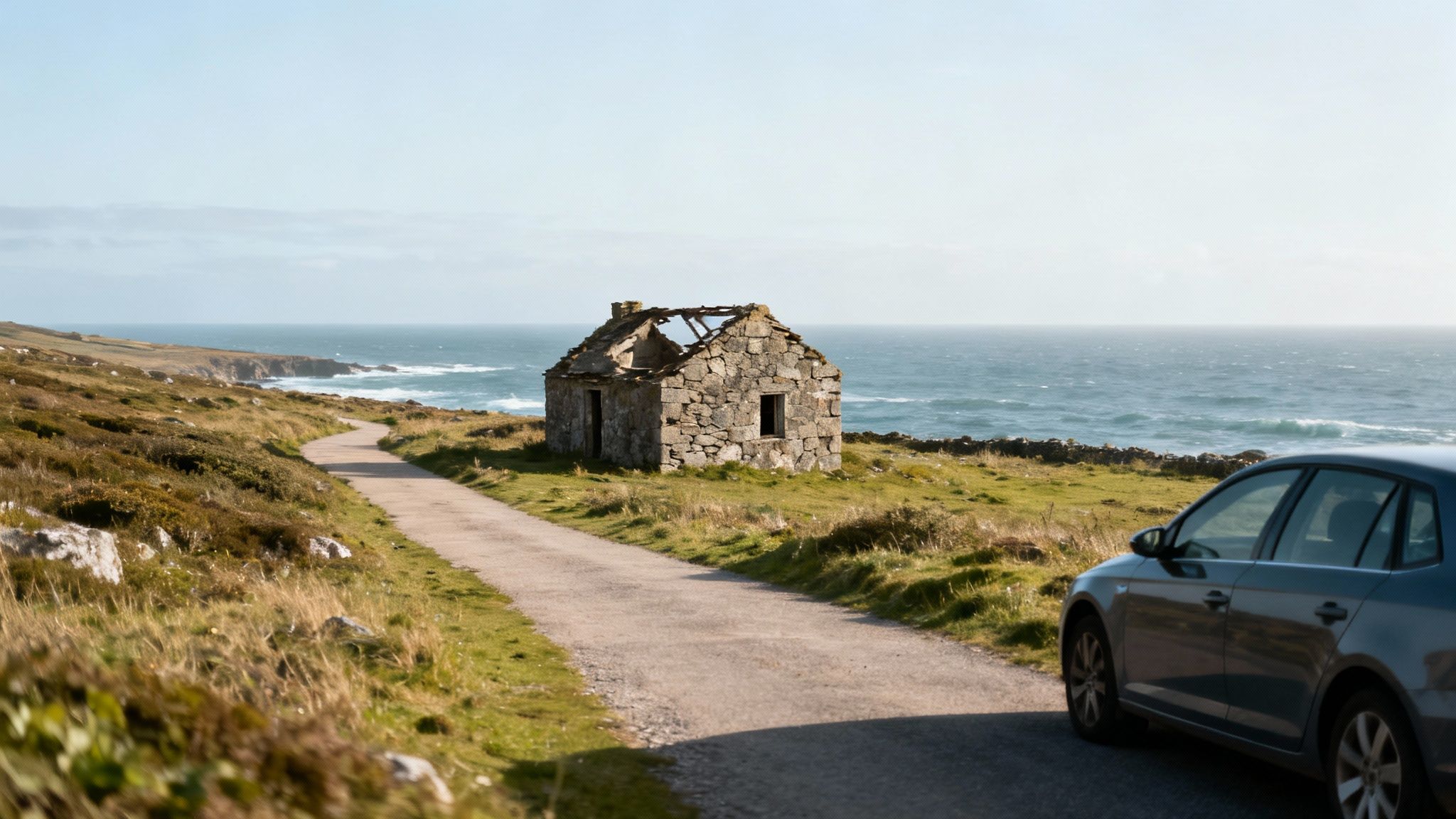
While a solid itinerary is your trusty roadmap, the real soul of Ireland self drive tours is often discovered in the moments you never planned. It's about that spontaneous decision to pull over for a jaw-dropping view that wasn't on any map or to follow a weathered sign pointing towards a "Prehistoric Fort."
These unplanned detours are what elevate a good holiday into a truly great one. Think of your itinerary as the spine of your adventure – it provides the structure. But it's the spontaneous discoveries that flesh out the story and give it life. In Ireland, the journey itself, not just the destinations, holds the most unforgettable experiences.
When you allow for a bit of spontaneity, you transform your trip from a checklist of sights into a collection of personal memories. It's the difference between just seeing Ireland and truly experiencing it.
Finding Magic in the Unplanned Moments
The absolute beauty of being behind the wheel is the freedom to let your curiosity lead the way. And trust me, Ireland rewards curiosity at every turn with hidden gems that tour buses will always speed right past.
Imagine you're driving along the coast and spot a tiny harbour filled with colourful fishing boats bobbing in the water. Instead of just snapping a photo and moving on, you decide to stop. You wander into the local pub, order a pint, and end up having a great chat with the fisherman who owns one of those very boats. That conversation is a souvenir you simply can't buy.
"The real Ireland isn't just in the famous landmarks; it's found in the warmth of its people, the sound of traditional music drifting from a pub, and the quiet beauty of a forgotten ruin. Embrace the detours, for they often lead to the heart of the journey."
These authentic moments are everywhere if you just leave a little wiggle room in your schedule. I can almost guarantee that some of the best parts of your road trip will be completely unexpected.
Ideas for Spontaneous Exploration
Being spontaneous doesn't mean having no ideas; it just means being open to possibilities as they pop up. So, keep your eyes peeled for opportunities to enrich your journey between the main highlights on your list.
Here are a few things to look out for:
- Local Farmer's Markets: Spot a sign for a weekend market? Pull over! It’s a fantastic chance to sample local cheeses, chutneys, and freshly baked soda bread, all while getting a real feel for the local community.
- Windswept Coastal Hikes: Many of the most famous routes, like the majestic Wild Atlantic Way in Ireland, have countless smaller walking trails branching off them. Park the car and take a 30-minute hike along a cliff path – the fresh sea air is unbelievably invigorating.
- Following the Music: In the evenings, especially in counties like Clare and Galway, you might hear the faint sound of a fiddle or a bodhrán. Follow your ears. You could stumble upon an impromptu traditional music session (a 'trad session') for a truly memorable night.
- Chatting with the Locals: Whether it's your B&B host or the person serving you a cup of tea, don't be shy. A simple question like, "What’s your favourite spot around here that tourists miss?" can lead you to a hidden waterfall or the best seafood chowder of your life.
These small, unplanned adventures add incredible depth and texture to your trip. They ensure the memories you make outside the car are just as powerful as the stunning landscapes you drive through. Ultimately, an Irish road trip is the perfect reminder that the best parts of any journey are often the ones you never saw coming.
Your Top Questions About Ireland Self-Drive Tours
So, you're planning a road trip around Ireland? Fantastic! It's an idea that gets the imagination going, but it's natural for a few practical questions to pop up too. Getting those sorted is the key to turning a great idea into a brilliant, stress-free adventure.
Think of this as your final pre-flight check before you hit the road. We'll tackle the big questions about timing, trip length, and all those little details that can make or break a holiday.
How Many Days Do I Need for a Good Irish Road Trip?
It's so tempting to try and squeeze everything in, but the best Irish road trips are all about soaking it all up, not just ticking boxes. If you're short on time, a 5-7 day trip can give you a wonderful taste of a single region, like the epic Causeway Coast or the historic wonders of Ireland's Ancient East. You’ll see the highlights without spending your whole holiday behind the wheel.
But if you really want to do the country justice, my honest advice is to aim for 10-14 days. This gives you the breathing room to properly tackle a big chunk of the Wild Atlantic Way or even combine two regions without feeling rushed. It's the difference between just seeing Ireland and truly experiencing it – allowing for those spontaneous detours to a hidden beach, long misty hikes, and unhurried evenings in a cosy pub.
A two-week trip strikes the perfect balance. It gives you enough time to unwind and explore deeply, turning your holiday from a rushed tour into a proper, soul-refreshing adventure.
What Is the Best Time of Year to Visit?
Honestly, Ireland has its own magic in every season, but the "shoulder seasons" are what I’d call the sweet spot for a road trip.
- Spring (April-May): This is when the countryside just explodes with life. Think vibrant wildflowers, newborn lambs bouncing around the fields, and lovely long daylight hours. It’s got all the charm of summer but with fewer crowds.
- Autumn (September-October): A truly wonderful time to visit. The landscapes are painted in gorgeous golds and reds, and the main tourist rush has died down, leaving a lovely, peaceful atmosphere in its wake.
Summer (June-August) definitely brings the warmest weather and the longest days, which is brilliant for packing in the sightseeing. Just be aware that it's also the busiest and priciest time, so you'll want to book your car and accommodation well in advance. Winter can be stunning with its crisp, frosty mornings and quiet attractions, but the shorter days and potential for challenging driving conditions mean it's probably best for more experienced travellers.
Do I Need an International Driving Permit?
This is a really common question, and thankfully, the answer is usually simple. If your driving licence was issued in the UK, EU/EEA, USA, Canada, or Australia, you're all set. You do not need an International Driving Permit (IDP) to hire a car in Ireland – your valid home licence is all you need.
If your licence is from a country not on that list, or if it isn't printed in English, then getting an IDP is a very good idea. It simply acts as an official translation of your licence. When in doubt, the best thing to do is quickly check the specific policy of your car hire company when you book.
Is It Easy to Find Petrol and Parking?
For the most part, you won't have any trouble finding petrol. Stations are everywhere in towns and along the main M-roads and N-roads. The one time you need to be mindful is when you venture into the more remote, rugged areas, like the stunning peninsulas out on the west coast. Stations there can be few and far between. My golden rule for any road tripper is this: fill up your tank when it gets to the halfway mark. Don't risk it by waiting for the warning light!
Parking is generally a breeze and often free in small villages and at rural sights. When you get into bigger towns like Killarney, Galway, or Cork, you’ll likely need to use paid 'pay and display' car parks. Just be sure to check the signs for any time limits to avoid getting a ticket. And if you're planning your trip in a campervan, remember that Ireland's weather can be unpredictable, so having reliable warmth is a must for comfortable nights. You can find some great info on campervan heating solutions to make sure you're cosy no matter what.
Ready to start your unforgettable journey? At BTOURS, we craft personalised self-drive tours that handle all the details, so you can focus on the adventure. Explore our expertly designed itineraries and book your dream Irish road trip today at https://www.btours.com.