

England's coastline is a treasure trove of dramatic cliffs, hidden coves, and windswept shores, offering some of the most spectacular walking experiences in the world. Whether you seek the fossil-rich heritage of the Jurassic Coast or the rugged, romantic wilds of North Cornwall, there is a path waiting for you. This guide delves into the 10 best coastal walks in England, providing detailed insights into distance, difficulty, highlights, and practical tips to help you plan an unforgettable journey.
Our curated list highlights some of the most breathtaking paths where you can immerse yourself in England's diverse landscapes and encounter its rich UK's natural beauty and wildlife. From leisurely strolls with panoramic views to challenging treks that test your endurance, prepare to discover the breathtaking beauty of England's diverse shoreline. Each entry is designed to give you actionable information, covering everything from key logistical considerations to the unmissable viewpoints along the way.
For those looking to explore these regions more deeply, a self-drive tour offers the flexibility to combine iconic walks with immersive cultural experiences at your own pace. Let this list be your starting point for an adventure along the magnificent English coast.
1. South West Coast Path – Dorset Section
The Dorset section of the South West Coast Path is arguably one of the most magnificent and geologically significant stretches of coastline in the UK, making it a front-runner for the title of the best coastal walk in England. Spanning 95 miles from Lyme Regis to South Haven Point, this trail is the heart of the Jurassic Coast, England's only natural UNESCO World Heritage Site. Walkers are treated to a 185-million-year journey through time, with landscapes featuring dramatic sea-stacks, iconic arches like Durdle Door, and fossil-rich cliffs.
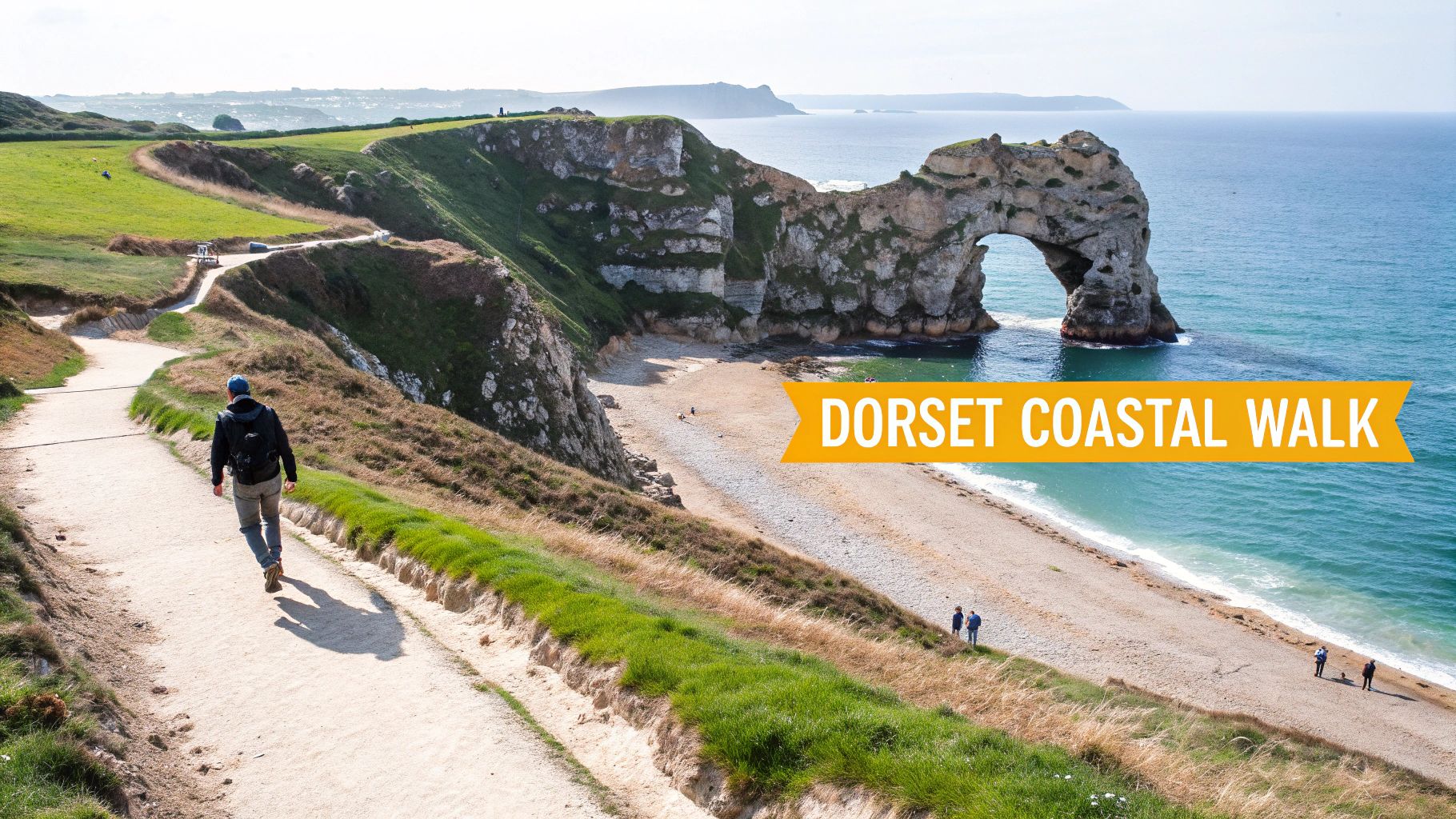
This route is not just a walk; it’s an immersive experience combining strenuous climbs with rewarding panoramas over Lulworth Cove and Golden Cap, the highest point on the south coast. The path is well-maintained and clearly signposted by the South West Coast Path Association, making it accessible for both seasoned long-distance hikers and those preferring shorter day-walks. Its popularity is cemented by features in numerous hiking guides and nature documentaries.
Planning Your Dorset Coast Walk
To make the most of this iconic route, preparation is key. The terrain is frequently challenging, with steep ascents and descents that demand good fitness and sturdy footwear.
- Break It Down: Few attempt the full 95 miles in one go. Plan manageable day sections, such as the classic walk from Lulworth Cove to Durdle Door, or the more demanding route from Seatown to West Bay.
- Check the Tides: Certain sections, like the walk around the Fleet Lagoon at Chesil Beach, are tide-dependent. Always check tide times before you set off.
- Go West to East: For a more comfortable journey, consider walking from Lyme Regis towards Poole. This orientation often puts the prevailing south-westerly wind at your back.
- Book Ahead: Accommodation in coastal towns like Weymouth and Swanage fills up quickly, especially during summer. Book your stays well in advance to avoid disappointment.
This section of the path offers a profound connection to England's deep history and natural beauty, making it a must-do for any serious walker. For those interested in exploring this region as part of a wider itinerary, you can explore tours of Southern England.
2. Pembrokeshire Coast Path – Wales
While technically in Wales, the Pembrokeshire Coast Path’s sheer magnificence and accessibility from England earn it a deserved place on any list of Britain's best coastal walks. This spectacular 186-mile National Trail traces some of the most dramatic coastline in Europe, managed by the Pembrokeshire Coast National Park Authority. Walkers are rewarded with towering sea cliffs, secluded sandy coves, and charming fishing villages, all framed by breathtaking sea views.
This route is a journey through a landscape rich in wildlife, offering chances to spot puffins on Skomer Island, seals basking on rocks, and even dolphins offshore. Its constant undulation makes for a challenging but immensely gratifying experience, with a cumulative ascent and descent equivalent to climbing Mount Everest. The path’s raw, untamed beauty has been celebrated in The Guardian's travel section and numerous hiking publications, cementing its legendary status.
Planning Your Pembrokeshire Coast Walk
Careful planning is essential to tackle this rugged and remote trail. The path is demanding, but its rewards are unparalleled for those who come prepared.
- Wildlife Watching: For the best wildlife encounters, especially puffins, plan your visit for May or June. Book boat trips to Skomer or Skokholm well in advance.
- Go North to South: Walking from St Dogmaels in the north to Amroth in the south generally keeps the prevailing south-westerly wind at your back, making for a more pleasant trek.
- Use Services Wisely: In more remote sections, amenities are scarce. Consider using a dedicated baggage transfer service to lighten your load for a more enjoyable multi-day walk.
- Prepare for the Weather: The Welsh weather is notoriously unpredictable. Pack high-quality waterproofs and layered clothing, even if the forecast looks clear. Sturdy, broken-in walking boots are non-negotiable.
This iconic trail provides an unforgettable immersion into wild coastal scenery. For those looking to integrate this walk into a broader trip, you can discover more about touring Wales.
3. Cornish Coast Path – North Cornwall
The North Cornwall coast offers some of England’s most dramatic and rugged scenery, firmly establishing its place among the best coastal walks in England. This stretch of the South West Coast Path is defined by its towering slate cliffs, legendary castles, and world-famous surfing beaches. Walkers are rewarded with breathtaking views over hidden coves like Port Quin and iconic landmarks such as Tintagel Castle, steeped in Arthurian legend.
This route is a demanding but deeply rewarding experience, featuring relentless climbs and descents that reveal pristine natural beauty and authentic Cornish culture in villages like Boscastle and Port Isaac. Its wild character has been showcased in numerous BBC travel programmes and films, drawing hikers seeking both a physical challenge and a connection to ancient myths. The path is managed by organisations like the National Trust, ensuring it remains accessible.
Planning Your North Cornwall Walk
Proper preparation is essential to safely enjoy this wild and exposed coastline. The terrain is often treacherous, requiring full attention and appropriate gear.
- Wear Proper Boots: The path is rocky, uneven, and can be slippery when wet. Sturdy, waterproof hiking boots with good grip are non-negotiable.
- Check the Weather: Conditions can change rapidly. Exposed clifftops are dangerous in high winds and poor visibility, so always check a reliable forecast before setting out.
- Stay Safe on Cliffs: Keep a safe distance from cliff edges. Coastal erosion is an ongoing process, and cliff falls can happen without warning.
- Plan Your Timing: Start early to secure parking at popular spots like Tintagel. Consider visiting in the shoulder seasons (May or September) for fewer crowds and more pleasant walking conditions.
This challenging walk offers an unparalleled sense of adventure. For those wanting the freedom to explore the region's many highlights at their own pace, you can plan a self-drive tour of Cornwall.
4. The Jurassic Coast Walk – Dorset and East Devon
Stretching 95 miles from Exmouth in East Devon to Studland Bay in Dorset, the Jurassic Coast is England's only natural UNESCO World Heritage Site, offering an unparalleled walk through 185 million years of geological history. This route is not just a scenic trail but an open-air museum, where every cliff, cove, and beach tells a story of Earth's past. Walkers can witness the dramatic transition of rock formations from Triassic, Jurassic, and Cretaceous periods, making it one of the most educational and best coastal walks in England.
The path's fame is well-deserved, managed by the Jurassic Coast Trust and prominently featured in documentaries like the BBC's 'Coast'. It even provided the dramatic backdrop for the crime series 'Broadchurch'. The trail combines rugged clifftop climbs with gentle beach strolls, passing iconic landmarks such as Durdle Door, Lulworth Cove, and the fossil-rich beaches of Charmouth and Lyme Regis, making it a truly world-class hiking destination.
Planning Your Jurassic Coast Walk
A successful trip along this historic coastline requires careful planning to fully appreciate its unique features. The terrain can be demanding, but the geological rewards are immense.
- Enhance Your Knowledge: Hire a local geology guide or visit interpretation centres in Charmouth and Lyme Regis before you start. This context will transform your walk from a simple hike into a fascinating journey through time.
- Time it Right: Always check tide times before setting out, as low tide reveals the best opportunities for fossil hunting and accessing certain beach sections safely.
- Travel Smart: Use the Jurassic Coaster bus service to explore different segments of the path without needing a car. This allows for flexible one-way walks and reduces parking congestion in popular spots.
- Go Digital: Download the official Jurassic Coast app for real-time information, interactive maps, and guides to the geology and wildlife you will encounter along your route.
This walk offers a deep connection to our planet's history, ideal for nature lovers and history enthusiasts alike. For those wishing to explore the wider region without a car, you can discover the Best of Britain by Train.
5. The Shingle Street to Dunwich Walk – Suffolk
For those seeking a coastal walk steeped in haunting history and quiet beauty, the Suffolk coast path offers a unique and atmospheric experience. The stretch between Shingle Street and Dunwich is less about dramatic cliffs and more about vast, shifting shingle beaches, whispering reedbeds, and the ghosts of lost communities. Shingle Street, a mysterious hamlet shrouded in WWII lore, gives way to a coastline that reveals the poignant story of Dunwich, a once-thriving medieval port now almost entirely lost to the sea.
This walk is an immersion in a landscape shaped by both nature and human history. The route's archaeological and historical intrigue, featured in BBC documentaries and local studies, sets it apart as one of the most intellectually stimulating coastal walks in England. It connects walkers with a profound sense of time and tide, where the sounds of the North Sea are said to carry the bells of Dunwich's sunken churches.
Planning Your Suffolk Coast Walk
A successful walk here is about appreciating the subtle landscape and its deep stories. Good planning ensures you can fully engage with the unique environment.
- Embrace the History: Enhance your walk by researching Dunwich's history beforehand. Visiting the excellent Dunwich Museum before you set off provides crucial context that transforms the landscape.
- Time the Tides: This is critical. Many of the beautiful sandy sections of the beach completely disappear at high tide, so always consult a tide table before your walk.
- Come Prepared: The terrain can be wet, especially through the marshes and on the shingle. Sturdy, waterproof boots are essential. Bring binoculars for superb birdwatching opportunities at RSPB Minsmere.
- Explore Local Culture: Plan a stop in the nearby town of Aldeburgh, famous for its world-renowned music festival and fantastic fish and chips, offering a perfect cultural and culinary end to your day.
6. Whitby to Robin Hood's Bay – North Yorkshire
For one of northern England's finest coastal walks, the route from Whitby to Robin Hood's Bay offers a spectacular journey through maritime history, gothic literature, and dramatic cliffscapes. This seven-mile stretch of the Cleveland Way National Trail showcases the raw beauty of the North Yorkshire and Cleveland Heritage Coast. The path combines bracing clifftop trekking with the unique atmosphere of Whitby, forever linked with Bram Stoker’s Dracula, and the smugglers' charm of Robin Hood's Bay.

This walk is more than just a scenic ramble; it's a cultural and geological expedition. Featured in programmes like the BBC’s 'Countryfile', its popularity is bolstered by literary tourists and fossil hunters searching for ammonites and jet along the shoreline. The route offers a moderately challenging experience, making it a perfect day out for most walkers looking for a quintessential English coastal adventure. Its blend of breathtaking views and rich heritage secures its place as one of the best coastal walks in England.
Planning Your North Yorkshire Walk
Proper planning ensures you can fully immerse yourself in the history and scenery of this iconic coastline. The walk is linear, so transport arrangements are essential.
- Start with History: Begin your day by climbing the 199 steps to Whitby Abbey. Exploring the gothic ruins provides context for the landscape and its Dracula connection before you set off.
- Book Your Return: The walk is one-way. Pre-book a taxi or check the schedule for the regular bus service (the X93) that runs between Robin Hood's Bay and Whitby to get back easily.
- Sturdy Footwear is Key: The path can be muddy and uneven, especially after rain. Good walking boots are essential for comfort and safety on the clifftops and rocky beaches.
- Time Your Arrival: Parking in Whitby can be challenging, particularly during peak season. Arrive early to find a space and enjoy the town's narrow streets before the crowds build.
7. Seven Sisters Cliffs Walk – East Sussex
The Seven Sisters Cliffs Walk in East Sussex offers one of the most iconic and visually stunning coastal experiences in England. This classic route, running between Seaford and Eastbourne, traverses a series of magnificent chalk cliffs within the South Downs National Park. Unlike the cliffs at Dover, which have a single sheer drop, the Seven Sisters are a series of undulating 'humps', creating a breathtaking, wave-like landscape that has famously featured in films and tourism campaigns.
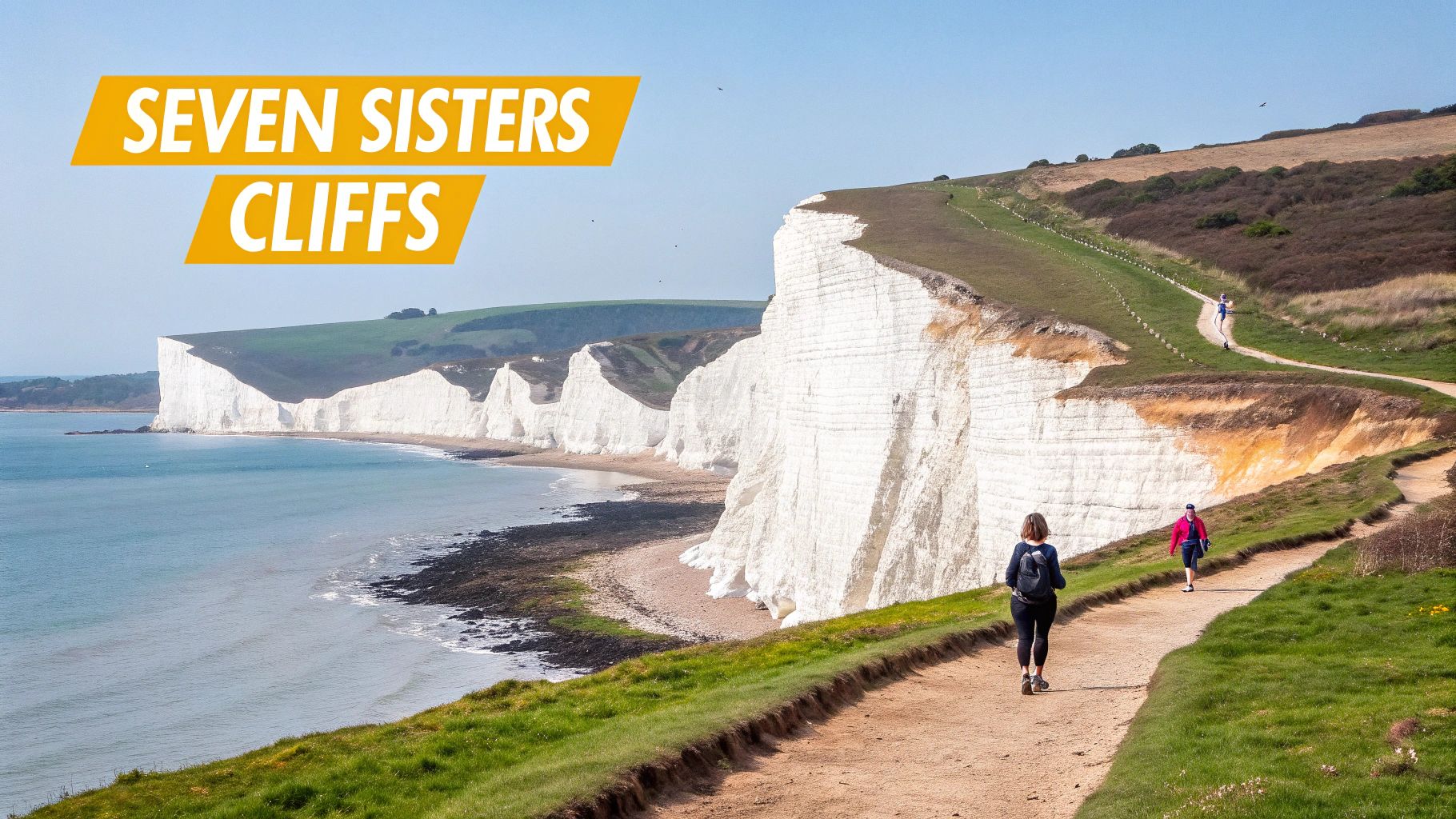
The walk is a true test of stamina, with a relentless series of steep climbs and descents, but the reward is unparalleled views over the English Channel and the pristine chalk downland. Managed by the National Trust, the path is well-maintained but remains a wild and exposed environment. Its dramatic beauty and challenging nature make it a contender for one of the best coastal walks in England for those seeking a memorable day hike.
Planning Your Seven Sisters Walk
To safely enjoy this spectacular but demanding walk, careful planning is essential. The exposed cliff-top path requires respect for the natural environment and weather conditions.
- Choose Your Route: The full 13.6-mile walk from Seaford to Eastbourne is a significant challenge. A popular shorter option is the 4-mile route from Birling Gap to the Cuckmere Haven viewpoint and back.
- Safety First: The chalk cliffs are notoriously unstable. Stay well away from the edge and adhere to all safety fences and signs. The area is also exposed to severe winds and sudden weather changes.
- Wear Proper Gear: Sturdy hiking boots are crucial for the uneven and often slippery terrain. A waterproof and windproof jacket is highly recommended, even on a sunny day.
- Time Your Visit: To avoid the significant crowds, try to walk mid-week or start very early on a weekend. Visiting in May offers the added bonus of seeing chalk downland wildflowers in full bloom.
8. Lizard Point to Mullion Cove – Cornwall
This rugged walk around England's most southerly point offers a spectacular glimpse into Cornwall’s wild, untamed coastline. The route from Lizard Point to Mullion Cove is defined by its unique geology, featuring dramatic cliffs of dark serpentine and granite rock that create an otherworldly landscape. This windswept path takes you past towering sea stacks, hidden coves like the stunning Kynance Cove, and the historic Lizard Lighthouse, which has guided ships for centuries.
Managed by the National Trust, this section of the South West Coast Path is not just a walk; it’s an adventure. The trail challenges walkers with steep, rocky sections that reward with unparalleled views and a profound sense of isolation. Its unique geological formations are featured in textbooks, while its raw beauty makes it a favourite for photographers and filmmakers, solidifying its place as one of the best coastal walks in England for those seeking raw, natural drama.
Planning Your Lizard Peninsula Walk
Proper preparation is vital for tackling this beautifully challenging coastal route safely. The weather can change in an instant, and the terrain demands respect.
- Dress Appropriately: The exposed headland is often battered by wind. Wear wind-resistant and waterproof layers, even on a sunny day. Sturdy hiking boots with excellent grip are essential.
- Check Tide Times: Access to some of the most beautiful spots, including the beach at Kynance Cove, is entirely dependent on the tide. Always check tide tables before setting out.
- Be Self-Sufficient: Facilities between Lizard Point and Mullion Cove are sparse. Pack plenty of water and snacks to keep you fuelled for the journey.
- Bring Binoculars: The cliffs are a haven for seabirds, including guillemots, razorbills, and kittiwakes. You might also spot Cornish choughs, a rare local species.
9. Start Point to Prawle Point – Devon
For those seeking a more rugged and remote experience, the stretch of the South West Coast Path between Start Point and Prawle Point in South Devon is a spectacular choice. This walk offers dramatic sea cliffs, a rich maritime history, and exceptional natural beauty with fewer crowds than more famous sections. Walkers are rewarded with a sense of genuine wilderness, passing the striking Start Point Lighthouse and exploring Prawle Point, Devon's southernmost headland.
This route is celebrated by serious walkers and maritime heritage enthusiasts for its unspoiled character. The landscape is raw and exposed, providing an authentic coastal adventure that feels worlds away from bustling tourist spots. Its challenging terrain and breathtaking views make it a standout contender for one of the best coastal walks in England for purists who appreciate solitude and untamed scenery.
Planning Your South Devon Walk
This exposed and demanding route requires careful preparation to be enjoyed safely. The scenery is wild, and so is the weather, so planning is essential.
- Plan Your Start/End: Begin your journey from the picturesque sailing towns of Dartmouth or Salcombe, using local transport to get to the trailhead.
- Visit the Lighthouse: Check opening times for the Start Point Lighthouse Visitor Centre to learn about its fascinating history and enjoy views from the top.
- Bring Binoculars: The cliffs are a haven for seabirds, including guillemots and razorbills. Spring brings migrating birds and a carpet of coastal wildflowers.
- Be Self-Sufficient: This is a remote section with limited facilities. Carry all necessary food, water, and weather-resistant clothing, as the path is fully exposed to the elements.
- Check Tides: Access to the historic ruined village of Hallsands, just north of Start Point, is dependent on the tide. Always check tide tables before you set out.
10. Clovelly to Hartland Quay – North Devon
For those seeking a walk of dramatic contrasts, the 10-mile route from the cobbled streets of Clovelly to the jagged cliffs of Hartland Quay in North Devon is an unforgettable experience. This strenuous section of the South West Coast Path offers a journey from a beautifully preserved, privately-owned medieval village to some of the most remote and wild coastal scenery in England. It's a walk that feels like a step back in time, combining picturesque charm with raw, untamed nature.
This challenging route is celebrated for its demanding terrain, featuring a series of steep ascents and descents through wooded combes and across exposed, windswept clifftops. The path’s literary connections, most notably to Charles Kingsley, add a layer of historical depth to the trek. Its isolation and striking beauty have made it a firm favourite among serious hikers, photographers, and those looking for a coastal walk that truly tests their mettle, solidifying its place among the best coastal walks in England.
Planning Your North Devon Coast Walk
Success on this demanding route requires careful preparation due to its remote and rugged nature. The rewards, however, are immense, offering solitude and breathtaking views.
- Start Early: Arrive in Clovelly early to explore the unique village before the crowds. Remember, you have to walk down its famously steep street to reach the harbour and the start of the path.
- Be Prepared: The terrain is serious and exposed. Sturdy, quality hiking boots are essential, as is extra water for the constant steep climbs. Navigation can be tricky, so carry a detailed map and compass.
- Check the Weather: The weather can change in an instant. The clifftop sections are extremely dangerous in high winds and poor visibility, so always check the forecast before setting off.
- Time Your Visit: For a truly spectacular experience, plan your walk for May or June when the coastal wildflowers are in full bloom, adding vibrant colour to the rugged landscape.
Top 10 Coastal Walks Comparison
| Trail | Difficulty & Logistics | Resources & Access | Expected Experience | Ideal Use Cases | Key Advantages |
|---|---|---|---|---|---|
| South West Coast Path – Dorset Section | Moderate–Challenging; steep climbs, exposed cliffs; full Dorset ≈95 miles or selectable day sections | Good village infrastructure; limited parking at some heads; guidebook/app recommended | Dramatic Jurassic Coast cliffs, coves, fossil-rich beaches | Multi‑day coastal walk or staged day hikes; geology and scenery focus | UNESCO geology, well‑waymarked, flexible day options |
| Pembrokeshire Coast Path – Wales | Moderate–Challenging; frequent elevation changes over long distance (186 miles full) | National Park services, good tourist facilities, some boggy sections; guidebook and baggage services available | Varied cliffs, beaches, rich marine wildlife (puffins, seals) | Wildlife viewing, long‑distance trekking, summer coastal walking | Exceptional biodiversity, varied terrain, less crowded than southern coasts |
| Cornish Coast Path – North Cornwall | Challenging; very steep cliffs, uneven terrain; popular sections 30–40 miles | Limited parking in spots; strong local hospitality but scarce in peak season | Rugged slate cliffs, surfing beaches, Arthurian sites | Adventure hiking, photography, surfing‑adjacent visits | Breathtaking rugged scenery, authentic Cornish culture |
| The Jurassic Coast Walk – Dorset & East Devon | Moderate–Challenging; clifftop and beach sections, 95 miles full | Excellent visitor centres, public transport (Jurassic Coaster), museums | Geological timeline, fossil beaches, iconic formations (Durdle Door, Lulworth) | Educational family walks, geology field trips, day hikes | UNESCO status, strong interpretation resources, family‑friendly options |
| Shingle Street to Dunwich – Suffolk | Easy–Moderate; relatively flat but shingle and marshland can be uneven (12–15 miles) | Good village amenities in Aldeburgh; limited parking at remote points; public transport access | Remote pebble beaches, WWII history, archaeological interest, marsh birds | Quiet historical/cultural walks, birdwatching, peaceful day hikes | Low crowds, rich heritage, accessible terrain for most |
| Whitby to Robin Hood's Bay – North Yorkshire | Moderate; initial steep climb from Whitby, otherwise well‑maintained 10 miles | Good amenities at start/end, limited parking in Whitby; day‑walk friendly | Cliffscapes, fossil hunting, literary and maritime heritage | Day walk combining culture, fossils and coastal views | Balanced natural and cultural highlights, accessible for moderate fitness |
| Seven Sisters Cliffs Walk – East Sussex | Moderate; rolling steep climbs/descents over ~7 miles, exposed clifftops | Good parking and visitor facilities nearby; popular so expect crowds | Iconic white chalk cliffs, downland wildflowers, dramatic sea views | Short day walk, photography, easy‑to‑reach iconic scenery | Instantly recognisable scenery, good facilities, manageable distance |
| Lizard Point to Mullion Cove – Cornwall | Moderate–Challenging; rocky, uneven paths and exposed cliffs (5–6 miles) | Limited facilities and parking; remote feel, few services on route | Granite/serpentine geology, secluded coves, working harbors | Geology enthusiasts, photographers, quieter Cornish experience | Unique rock formations, authentic fishing harbors, fewer crowds |
| Start Point to Prawle Point – Devon | Moderate; clifftop trails with steep sections (≈6 miles), remote access | Limited parking/facilities, nearest villages Dartmouth/Salcombe; minimal waymarking in places | Wild cliffs, maritime heritage, seabird watching | Solitude seekers, birdwatching, maritime history walks | Remote, dramatic scenery, low visitor density |
| Clovelly to Hartland Quay – North Devon | Challenging; significant elevation changes, rugged terrain (≈7 miles) | Sparse facilities en route; parking at Clovelly, steep village access | Medieval village charm, very high cliffs, wild Atlantic coast | Experienced hikers, adventure photography, cultural exploration | Dramatic, wild scenery, authentic village start, low crowds |
Your Coastal Adventure Awaits
From the fossil-rich cliffs of Dorset to the windswept headlands of North Devon, we have journeyed through some of the very best coastal walks in England. Each trail offers more than just a walk; it’s an immersive experience into the nation’s dramatic geography, rich maritime heritage, and vibrant local culture. You’ve seen how a single path, like the stretch from Whitby to Robin Hood’s Bay, can connect you to literary history, while another, such as the Seven Sisters walk, presents an iconic and breathtaking natural spectacle.
The key takeaway is the sheer diversity available. Whether you seek a gentle, one-day stroll along the Suffolk coast or a challenging, multi-day trek along a section of the South West Coast Path, there is a perfect route waiting for you. The practical details provided for each walk, from transport logistics to essential gear, are designed to transform your inspiration into a well-planned, achievable adventure.
Planning Your Next Coastal Walk
Before lacing up your boots, remember the essentials that turn a good walk into a great one:
- Check the Tides: This is non-negotiable for coastal walking. Always consult a reliable tide table before setting out, as some sections of these routes can be cut off at high tide.
- Embrace the Weather: England’s coastal weather is famously changeable. Pack layers, waterproofs, and sun protection, regardless of the forecast.
- Respect the Environment: Stick to the designated paths to protect fragile ecosystems and be mindful of wildlife. Follow the Countryside Code: leave no trace, take your litter home, and keep dogs under control.
For those planning a longer expedition or wanting to bring a four-legged friend along, securing the right base is crucial. A comfortable place to rest and recover makes all the difference. Exploring options for accommodation such as dog-friendly coastal cottages can significantly enhance your adventure, providing a home-from-home after a long day on the trail.
Ultimately, these walks are about connecting with the raw power and beauty of the English coastline. They offer a chance to disconnect from the digital world and reconnect with the rhythm of nature, the sound of the waves, and the feeling of the sea breeze. Each step is an opportunity to create lasting memories, whether it’s spotting a seal off Lizard Point or watching the sunset over the Atlantic from Hartland Quay. Your coastal adventure truly awaits; the only question is, which path will you choose first?
Ready to explore these spectacular trails without the stress of planning? Let BTOURS craft a bespoke self-drive itinerary that incorporates the best coastal walks in England, complete with curated accommodations and expert local recommendations. Visit BTOURS to start designing your unforgettable journey today.